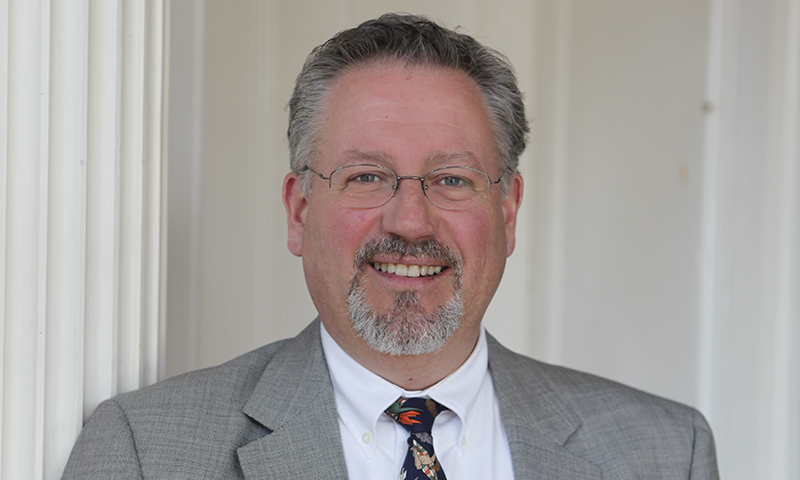
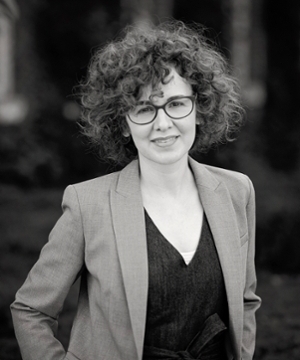
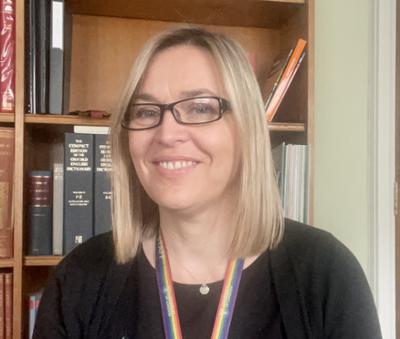
Jan Ragnar Hagland is a Professor at NTNU’s Department of Nordic Studies and Literature, specializing in Old Norse philology, runic studies, and the history of the Norwegian language. His research focuses on medieval legal texts, Icelandic sagas, and the intersection of literacy practices with socio-historical contexts. He has authored or co-authored numerous books and articles, including editions of medieval legal codes, translations of sagas, and studies on runic inscriptions. Affiliations: NTNU, Faculty of Humanities; Norwegian Academy of Science and Letters Key Projects: Trøndersk Språkhistorie (Trøndelag Language History Project), Runestone Analysis, Saga Translation Projects His work bridges textual analysis and historical context, examining how language and literature reflect cultural, legal, and social dynamics in medieval and early modern Scandinavia. Notably, he explores the role of literacy in shaping local identities and the transmission of legal and mythological knowledge.
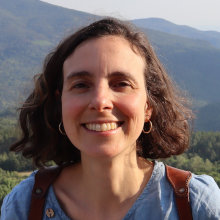
Michael C. Tinkler is an Associate Professor of Art and Architecture and Chair of European Studies at Hobart and William Smith Colleges, where he has been a faculty member since 1999. He holds a Ph.D. from Emory University and a B.A. from Rice University. His academic home is in the Department of Art and Architecture within the College of Arts and Sciences, where he teaches a wide range of courses spanning from ancient to modern art, with a special focus on the medieval period. Education: Ph.D., Emory University B.A., Rice University His research centers on eighth- to tenth-century Europe, particularly the art and architecture of the Carolingian court, with sustained attention to inscriptions, the interplay between words and images, and sites such as the mosaics of Santa Prassede in Rome. He also investigates medieval badges, pilgrimage culture, Gothic Revival architecture in American colleges, and humor in the Middle Ages. His pedagogical interests include interdisciplinary teaching and the use of digital tools in art history education. The trends in his scholarly articles reflect a deep engagement with material culture, epigraphy, and visual rhetoric of the early medieval period. His work often bridges art history, literature, and religious studies, focusing on how symbols function in both sacred and secular contexts. Recurring themes include authority, literacy, devotion, and the body in medieval art. Michael Tinkler has presented widely at international conferences such as the International Congress on Medieval Studies in Kalamazoo and has organized sessions on medieval humor and pedagogy. He has directed the Rome study-abroad program and collaborates with colleagues on interdisciplinary courses, particularly with Professor Laurence Erussard in English. He maintains digital resources for students, including image databases and virtual bookshelves, and is active in developing teaching tools for medieval studies. Current Research and Projects Include: Early medieval inscriptions and word-image-space interactions Analysis of the mosaics of Santa Prassede, Rome Study of medieval badges, including pilgrimage and carnival badges Investigation of Gothic Revival architecture at Hobart and William Smith Colleges Pedagogical innovations in teaching medieval humor and interdisciplinary humanities Collaborative digital scholarship and online teaching resources
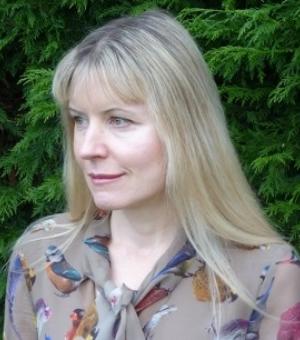
Agnes Kiricsi is an Associate Professor at the Department of English Literatures and Cultures within the Faculty of Humanities at Károli Gáspár Reformed University in Hungary. She has held this position while also serving as the Institute's ERASMUS coordinator since 2016 and organizing academic events such as the Research Day in Medieval English Studies (RDMES) workshop. Dr. Kiricsi earned her PhD in Medieval English Literature from Eötvös Loránd University (ELTE) in 2006 with a dissertation titled "Semantic Rivalry of Mod/Mood and Gemynd/Mynde in Old and Middle English Literature." She completed her MA in English Studies at the same institution in 1998. Her academic journey includes research stays at prestigious institutions including the University of Helsinki, Oxford University, and King's College London. Her research spans the intersection of medieval literature and atmospheric phenomena, with particular focus on how Old and Middle English texts represent cognitive concepts and optical phenomena. Dr. Kiricsi has made significant contributions to understanding the depiction of reason and spirit in medieval English sources, while also pioneering research on halo phenomena in early texts and illustrations. Her interdisciplinary approach bridges literary analysis with historical meteorology, creating a unique scholarly niche that examines how medieval writers interpreted atmospheric events through religious and philosophical frameworks. Her recent publications demonstrate a growing interest in urban archaeology and historical geography, particularly regarding London's vanished river Walbrook, while maintaining her core expertise in medieval literary culture. This expansion of research interests shows her ability to connect literary analysis with material culture studies. Lynne Grundy Memorial Trust Award from King's College London (2005) As an educator, Dr. Kiricsi teaches a wide range of courses including Medieval English Literature and Culture, Early English Literature, Reading Old and Middle English texts, and specialized topics like "Secrets of the Middle Ages" and "Vikings in Anglo-Saxon England." She has developed curriculum materials such as the "Civilisation in the United Kingdom and Ireland" workbook. Her research has been supported through various international collaborations including the EUTELL-EMJM program and multiple ERASMUS initiatives. Dr. Kiricsi maintains an active international research profile, with recent ERASMUS teaching assignments at Jesuit University Ignatianum in Krakow (2023) and Ivane Javakhishvili Tbilisi State University in Georgia (2024). She has organized international academic workshops connecting scholars from Károli Gáspár University with institutions including the University of Lausanne, University of Padova, and University of Warwick.
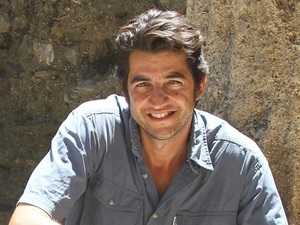
David Woods is a Senior Lecturer in the Department of Ancient Classics at University College Cork (UCC). He received his PhD from Queen's University Belfast in 1991 and has been at UCC since 1998, receiving a permanent post in 1999 and promotion to Senior Lecturer in 2008. Dr. Woods specializes in military and political history from AD 14-750, with particular focus on the reigns of Caligula, Nero, the Constantinian dynasty, and the early Arab-Byzantine wars. His research heavily engages with the works of Roman historians like Suetonius, Tacitus, and Ammianus Marcellinus, as well as Byzantine chroniclers. He also has a strong interest in ancient numismatics, studying Roman, Byzantine, Arab-Byzantine, and Anglo-Saxon coinage. His extensive publication record demonstrates expertise across Roman imperial history, early Byzantine studies, and numismatics. Recent work has focused on textual analysis of classical sources, reinterpretation of historical events through numismatic evidence, and exploration of religious transformations in the late antique period. His scholarship bridges literary analysis with material culture studies, particularly through coins. Dr. Woods has edited several volumes including Ammianus Marcellinus: From Soldier to Author (2022) and The Mystery of Christ in the Fathers of the Church (2012), and served as editor for multiple volumes of Classics Ireland (2004-2009).
Cecilia VALENTINI is a Research Fellow at the Department of Humanities, Ca' Foscari University of Venice. Research Areas: Her work focuses on Language Sciences Dialectology Digital Humanities Latin Dialects Historical Sociolinguistics Projects: She is involved in the Digital Latin Dialectology (DiLaDi) project, funded by the European Research Council (ERC) under Horizon Europe, which traces linguistic variation through ancient and early medieval sources. The project spans 60 months (2023–2028) and collaborates with scholars like Béla ADAMIK and Alessandro PAPINI.
Dr Elizabeth Solopova is a Research Fellow at the Faculty of English Language & Literature and New College, University of Oxford, and a Lecturer in English Literature at Christ Church. Her research focuses on Old and Middle English literature, book history, manuscript studies, historical linguistics, and poetics, with a particular emphasis on the Wycliffite Bible and its textual tradition. She leads major projects such as the AHRC-funded 'Towards a New Edition of the Wycliffite Bible' and co-edits critical works on medieval translation debates. Her work explores translation theory, vernacularisation processes, and the socio-cultural context of biblical transmission. She has pioneered digital methodologies for editing complex medieval texts, resulting in an online edition accessible at wycliffite-bible.english.ox.ac.uk . Her research also examines liturgical manuscripts like the Old Testament Lectionary and engages with debates about vernacular Bible translation in late medieval England. Key Projects AHRC-funded Wycliffite Bible Edition Project (2016-2019) Old Testament Lectionary Editing (2017-2018) Medieval Translation Debates (2018-2019) Publications Her outputs include edited volumes on Wycliffite studies, foundational chapters in The Wycliffite Bible: Origin, History and Interpretation , and articles analyzing dialectal variations and manuscript traditions. She also organized scholarly events like the 2019 'Translation Theory and Practice in the Later Middle Ages' workshop. Teaching At Christ Church, she teaches English Literature, integrating primary sources and digital tools to enhance student engagement with medieval texts.
David Hernandez is the Eli J. and Helen Shaheen Associate Professor of Classics at the University of Notre Dame, affiliated with the Department of Anthropology. He holds a PhD in Classical Archaeology from the University of Cincinnati and a B.A. in Physics from UC Berkeley. His research focuses on ancient urbanism in Greece, Albania, and Italy, particularly Roman imperialism and Hellenistic architecture. He directs the Roman Forum Excavations Project at Butrint, a UNESCO site in Albania, and co-directs projects at Rome's Mausoleum of Hadrian and Tivoli's Hadrian's Villa. Education: Ph.D. and M.A. in Classical Archaeology (University of Cincinnati, 2010 and 2004), B.A. in Physics (UC Berkeley, 1996). Research Interests: Archaeology of ancient urbanism, Roman colonization, imperial cult, Latin epigraphy, and excavation methodologies. His fieldwork includes projects at Butrint’s necropolis, Amantia, and Mursi. He has received grants from the Loeb Foundation, ACLS, Packard Humanities Institute, and Notre Dame’s Institute for Scholarship in the Liberal Arts. Publications include Butrint 7: Beyond Butrint (2020) and numerous articles on Roman urbanism, archaeobotany, and Epirus history. He teaches courses on Roman archaeology, Pompeii, and the archaeology of early Rome. Awards: Loeb Classical Library Fellowships, ACLS Fellowship, and keynotes at major archaeological conferences. His work bridges archaeology with environmental studies, examining how urban centers adapted to ecological challenges across antiquity.
Almira Poudrier is a Senior Lecturer in the School of International Letters and Cultures (SILC) at Arizona State University, specializing in Classics and ancient Mediterranean studies. She teaches foundational Latin and Greek courses, including lower-division language instruction and advanced topics in mythology, religion, and classical traditions. Her research focuses on Greek religious history, material culture in Herodotus' accounts, and medieval Latin texts. Education: Ph.D. Classics, State University of New York at Buffalo M.A. Ancient Greek, University of Minnesota B.A. Classical Civilizations, Beloit College Research Interests: Her work explores Greek and Roman religious practices, historiography, and the intersection of myth and material culture. She analyzes inscriptions, ancient hero cults, and comparative literature, particularly through medieval Latin authors like Bede and Geoffrey of Monmouth. Service & Outreach: As faculty sponsor of Solis Diaboli (Classics club) and liaison for Apples + Archaeology, she organizes the annual Fall Forum in Classics and the international poster contest at the SILC Language Fair. She serves as Vice-President of the Central Arizona Society of the Archaeological Institute of America and leads the ACMRS Medieval Latin Research Group.
Micela Andreatta is an Assistant Professor in the Department of Religion and Classics at the University of Rochester (since 2018), previously serving as Senior Lecturer (2015-2018) and Lecturer in Hebrew (2011-2015). She holds the Wilmot Professorship (2018-2023) and has been a Senior Visiting Fellow at the Maimonides Centre (Hamburg, 2022) and a Humanities Center Fellow at Rochester (2021). She earned her PhD from the University of Turin (Italy) in Oriental Studies, focusing on Renaissance Latin translations of Hebrew philosophical texts. Her research centers on the intellectual and literary history of early modern Italian Jewry, particularly Hebrew poetry, Jewish-Christian interactions, and Venetian Jewish communities. Key interests include Kabbalistic thought, cultural exchanges between Jews and Christians in Renaissance Italy, and devotional practices among Jewish confraternities. Her recent work includes a critical translation of Moses Zacuto’s Tofteh ‘Arukh (2023), analyzing early modern Jewish conceptions of the afterlife. This work was adapted into a theatrical production by Theatre Dybbuk. Her studies on Leon Modena explore intersections between Jewish identity, Venetian pluralism, and literary production. Awarded the NEH Fellowship (2020) and multiple post-doctoral fellowships, she has taught at Ca’ Foscari University (Venice) and the University of Tennessee. She also instructs incarcerated students through the Rochester Education Justice Initiative (REJI). Grants: NEH, Folger Institute, Memorial Foundation for Jewish Culture Key Publications: 10+ book chapters, 7 monographs, and 15+ journal articles Active in collaborative projects, she co-authored studies on Flavio Mithridates’ manuscripts and edited critical editions of medieval Hebrew texts. Her research bridges Jewish and Christian intellectual traditions, emphasizing the role of translation in cultural mediation.
Ulrich Huttner is a Professor of Ancient History at the University of Siegen, Faculty I (Arts and Humanities), where he has held a full professorship since April 2014. His research focuses on the cultural, religious, and political history of the Greco-Roman world, with a particular emphasis on early Christianity, epigraphy, and urban life in antiquity. He is actively engaged in digital humanities through the Inscriptiones Christianae Graecae database project. Professor of Ancient History, University of Siegen (2014–present) Research Associate, Humboldt University of Berlin, Cluster of Excellence 'Topoi' (2008–2014) Lecturer, University of Dortmund (2002–2007) Senior Assistant, University of Leipzig (1994–2002) Research Assistant, German Archaeological Institute, Munich (1992–1994) His research interests span Ancient History, Epigraphy, Early Christianity, Roman Antiquity, and Cultural Transfer in Late Antiquity. He specializes in analyzing inscriptions, numismatics, and textual sources to understand religious identities, urban development, and the transformation of the Roman Empire. His work bridges philology, archaeology, and social history. The most recent publications show a strong trend in late antique Christian studies, particularly on inscriptions, religious identity, and textual analysis of the New Testament, especially the Book of Revelation. His scholarship integrates epigraphic evidence with literary and historical analysis, contributing to interdisciplinary debates on early Christian communities in Asia Minor. Notable scholarly contributions include: Co-editor and contributor to the Inscriptiones Christianae Graecae digital corpus Author of authoritative encyclopedia entries in Reallexikon für Antike und Christentum and Scientific Bible Encyclopedia Monographs on Heracles in Greek rule, women's medicine, and early Christianity in Anatolia Huttner has supervised numerous academic projects and publications, particularly in epigraphy and early Christian history. He has been involved in major research clusters such as 'Topoi' at HU Berlin and contributes regularly to international scholarly volumes. His work is supported by sustained engagement with academic networks and collaborative research initiatives. He leads research on ancient inscriptions and digital epigraphy at Siegen and collaborates with international teams on projects related to early Christian identity, religious communities, and cultural continuity in the Roman East.
Dr Sara Charles serves as Editor of Historical Research and Journals Manager at the Institute of Historical Research within the School of Advanced Study, University of London. Holding a BA, MA in Library and Information Studies with distinction from UCL, and an MRes in History of the Book with distinction from the University of London, she bridges academic research and scholarly publishing. Her educational qualifications include: BA (University College London) MA in Library and Information Studies with distinction (UCL) MRes in History of the Book with distinction (University of London) Specializing in medieval manuscript culture, Dr Charles' research examines physical book production, literacy practices, and social contexts of manuscripts. Her work integrates material analysis with historical inquiry, focusing on English and European traditions from the twelfth to sixteenth centuries. Key areas include paleography, women's religious communities, and the transition from manuscript to print culture. Her publication trajectory reveals consistent engagement with manuscript materiality, evolving from specific case studies of individual manuscripts to broader analyses of production workshops and social networks. Recent work demonstrates increasing methodological sophistication in combining art historical analysis with provenance research and emotional history frameworks. Her professional recognition includes: Fellow of the Royal Historical Society Dr Charles actively translates research into public engagement, exemplified by her University of London Knowledge Exchange-funded workshop 'Making Medieval Manuscripts' with Green Shoes Arts. This initiative trained community participants in historical techniques including ink-making, quill-cutting, pigment preparation, and illumination practices, demonstrating her commitment to experiential knowledge transfer beyond traditional academic outputs.
Agnieszka Strycharczuk is an Assistant Professor at the Department of Foreign Languages within the Faculty of Theology at the John Paul II Catholic University of Lublin . Her work bridges Latin liturgical poetry , heraldic symbolism , and medieval hagiography . She has promoted Bachelor's theses and served as editor-in-chief for publications like Adam of St. Victor, Sequences .
Sonja Hermann is a Research Fellow at the University of Bonn, affiliated with the Department of Historical Fundamental Sciences and Archivistics. She has been a scientific staff member of the Arbeitsstelle Inschriften project since 2004, focusing on medieval epigraphy and material culture. Education: PhD (2011, University of Bonn, Dissertation: Die Inschriften der Stadt Essen ); Maîtrise d'histoire (2002, University of Bordeaux); BA in Medieval and Modern History, Art History, and Public Law (University of Bonn, 1998-2004). Research Interests: Epigraphy, historical graffiti, material culture, and interdisciplinary approaches to medieval inscriptions. Publication Trends: Her work spans medieval stone tablets, reliquaries, and architectural inscriptions, emphasizing digital documentation and cultural context. She contributes to epigraphic databases like German Inscriptions Online . Labs/Teams: Active in the Arbeitsstelle Inschriften team and serves on the scientific advisory board of In-Scription , an online journal for epigraphic studies.
Jitka Ehlers is a research associate at the Inscriptions Department of the University of Bonn's Institute of History, specializing in medieval epigraphy and image-text relations. She earned a Master's degree in Art History, Classical Archaeology, and Medieval Latin Philology from the University of Cologne. Current Role: Research Associate at University of Bonn (since 2013) Doctoral Research: Art History, University of Cologne (since 2012) Her research focuses on intermediality in medieval art, particularly analyzing inscriptions and visual elements on 12th-century Eucharistic vessels. She contributes to the North Rhine-Westphalian Academy of Sciences' "German Inscriptions" project. She has published a review in the Contributions to the History of German Language and Literature (2014), addressing medieval image-text relationships. Her work bridges art history, philology, and cultural studies.
Professor Elizabeth Gemmill serves as Professor of Medieval Economic and Social History in the Department for Continuing Education at the University of Oxford's Faculty of History, while also holding positions as Dean of Degrees and Official Fellow at Kellogg College. Her Oxford career spans nearly 40 years, beginning in 1986 at the Ashmolean Museum's Heberden Coin Room, followed by university administration roles in the 1990s, before joining the Department for Continuing Education in 2006. Her academic credentials include: BA, University of Manchester PhD, University of Manchester MA (by Special Resolution) Professor Gemmill's research centers on the interplay between economic structures, social organization, and ecclesiastical institutions in later medieval Britain. She examines how valuations and prices functioned as social and economic mechanisms, with particular focus on regional variations across Scotland and northeast England. Her work integrates quantitative analysis of price records with qualitative study of social relationships, revealing how economic practices shaped community life and institutional governance in medieval society. Her publications demonstrate a consistent trajectory from foundational studies of Scottish economic systems to current investigations of regional price formation in Durham, while maintaining a critical perspective on ecclesiastical valuation practices. This body of work bridges economic history with social and religious history, creating a multidimensional understanding of medieval British life. Her distinguished recognition includes: Most Acclaimed Lecturer award from Oxford University Student Union (2012) Oxford Lifelong Learning Inspiring Excellence Award for Living the Values (2023) Oxford Lifelong Learning Inspiring Excellence Award for Academic Excellence (2025) Fellowship of the Royal Historical Society (FRHistS) As an educator, Professor Gemmill directs the Postgraduate Certificate in Historical Studies and teaches within the MSc in English Local History and MSt in Historical Studies programs. She actively mentors graduate students, welcoming research proposals on medieval British economic, social, and ecclesiastical history. Her administrative leadership includes serving as Kellogg College's first Proctor (2016-17) and the University's Junior Proctor during the same period. Through editorial projects with major historical societies including the Scottish History Society and Canterbury and York Society, Professor Gemmill contributes to the preservation and interpretation of primary sources, strengthening scholarly infrastructure for medieval studies while advancing her research on regional economic patterns.