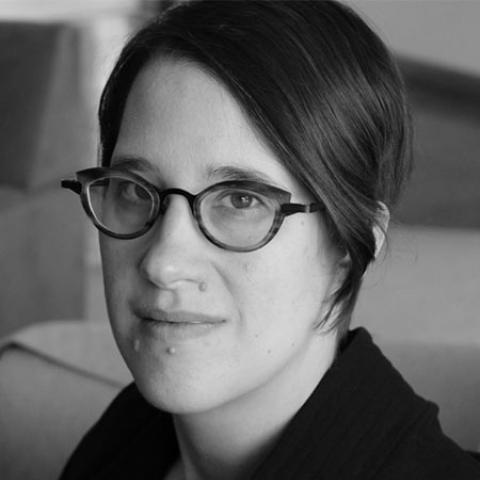
Soraya de Chadarevian serves as Professor in the Department of History and the Institute for Society and Genetics at the University of California, Los Angeles, where she bridges historical scholarship with contemporary bioscience through rigorous analysis of material practices and cultural contexts in the life sciences. Her academic trajectory spans over three decades with significant contributions to understanding molecular biology's development and human heredity's evolution from the nineteenth century to present. Her educational foundation includes a PhD in Philosophy from the University of Konstanz, Germany, and an Advanced degree (Diplom) in Biology from the University of Freiburg, Germany, providing unique interdisciplinary perspective. These qualifications enabled her dual expertise in scientific practice and philosophical inquiry that defines her scholarly approach. De Chadarevian's research centers on the intricate relationship between scientific practice and cultural context in the life sciences, with particular emphasis on visual and material dimensions of molecular biology and chromosome research. She examines how laboratory techniques, archival practices, and data systems shape biological knowledge, exploring themes like the microscope's role in heredity studies, genetic evidence in historical narratives, and pandemic responses. Her work reveals how scientific concepts like the double helix or human genome emerge through complex negotiations between technical possibilities, institutional frameworks, and societal concerns. Analysis of her recent publications shows a decisive shift toward contemporary scientific challenges including pandemic responses, data-intensive biology, and ethical dimensions of genetic research. While maintaining deep historical perspective, her scholarship increasingly engages with urgent present-day issues such as biobanking, forensic genetics, and the societal implications of genomic databases, demonstrating how historical understanding informs current scientific controversies. Her scientific recognition includes: National Science Foundation Scholar Award (2015-2021) Walther Rathenau Program Fellowship Max Planck Institute for History of Science Fellowship Fellowship at La Villette Fellowship at École des Hautes Études en Sciences Sociales Hamburg Institute for Social Research Fellowship Churchill College Cambridge Fellowship Institute for Advanced Studies in the Humanities Fellowship Research funding has been consistently secured through competitive grants, most notably the six-year NSF award supporting her chromosome history project. She actively mentors students through UCLA's graduate programs in History and the Institute for Society and Genetics, teaching specialized courses on genetics and society while supervising research on science-society intersections. Her collaborative approach extends to co-editing special journal issues and organizing international research networks. Through sustained engagement with institutions like the Max Planck Society and Cambridge University, de Chadarevian maintains active participation in global scholarly communities. Her current work involves interdisciplinary teams examining data practices in contemporary biology and historical dimensions of pandemic responses, positioning her at the forefront of science studies' engagement with pressing societal challenges.