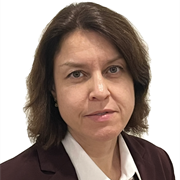
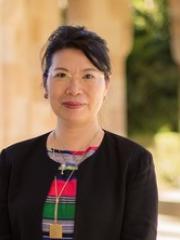
Anastasia Semykina is a Professor of Economics and Deputy Dean (Research and Innovation) at RMIT University's School of Economics, Finance & Marketing. She holds a PhD from Michigan State University (2006) and previously served as Charles and Joan Haworth Professor of Economics at Florida State University. Her expertise spans theoretical and applied econometrics, with a focus on panel data models, missing data estimation, and their application in labor economics, education economics, transition economies, and economic psychology. She teaches advanced econometrics and microeconomics courses at both undergraduate and graduate levels. Research Interests: Theoretical and Applied Econometrics Labor Economics Economics of Education Transition Economies Economics and Psychology Health Economics Her recent publications address topics such as panel data methodologies, healthcare cost-effectiveness analysis, and educational policy evaluation. She is actively involved in supervising PhD and Master's research students in econometrics and applied economics.
Dr. Mathew Todres is a Senior Lecturer in Management at the School of Business, Faculty of Business and Law, University of Wollongong. His research focuses on Management, Change Management, International Business Management, and Strategic Management, with a particular emphasis on Social Entrepreneurship and Workplace Value Congruence. He has conducted action research in Social Enterprise Development and published in journals such as the Social Enterprise Journal and Journal of Business Ethics . Dr. Todres currently supervises PhD candidates Douglas Opoku Agyeman (Micro Entrepreneurship in West Africa) and Grant Hughes (Sports Management). He has received a University of Wollongong Faculty of Business Start-Up Grant (2018). His peer-reviewed work spans organizational behavior, narrative analysis, and social enterprise innovation. His research interests include autoethnographic analysis, narratological analysis, and the application of social theory to entrepreneurial practices. Dr. Todres has contributed to journals such as Medical Education and serves as a reviewer for Journal of Spirituality, Leadership, and Management , among others. His work bridges theoretical frameworks with practical applications in organizational dynamics and social impact initiatives.
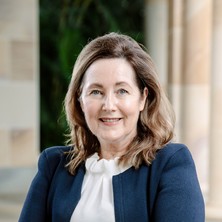
Associate Professor Nicole Hartley serves as MBA Director at UQ Business School and Future of Health Research Hub Lead at The University of Queensland. With 19 years of academic experience across institutions in Sydney and Queensland, she holds appointments across multiple faculties including Business, Economics and Law; Health, Medicine and Behavioural Sciences; and Engineering, Architecture and Information Technology. Her academic affiliations span the Centre for the Business and Economics of Health, Centre for Enterprise AI, and Queensland Digital Health Centre. Dr. Hartley is an internationally recognized research academic specializing in services marketing and digital technology. Her research interests encompass service technology, virtualized services, customer preference and adoption, new media, service innovation, and corporate digital responsibility. She particularly focuses on customer perceptions in response to technological disruption in service delivery, with special emphasis on healthcare services. Her work bridges business, technology, and healthcare domains, examining how digital transformation affects consumer behavior and service experiences. Her extensive publication record demonstrates consistent research output across multiple disciplines, with recent work concentrating on telehealth implementation, corporate digital responsibility, consumer trust in digital environments, and healthcare service innovation. The interdisciplinary nature of her research connects marketing theory with practical healthcare applications, particularly in the context of digital transformation and service delivery. Dr. Hartley has successfully supervised numerous PhD candidates to completion and currently mentors several doctoral students working on topics ranging from sustainable consumption to healthcare innovation and digital service experiences. Her research has been supported by significant funding from Queensland Health, NHMRC, and other organizations, focusing on telehealth, digital service transformation, and healthcare innovation. As Director of MBA and Executive Education at UQ Business School, Dr. Hartley combines her academic expertise with practical industry experience, having previously worked as Marketing Manager/Director in tourism, education, and communication industries in Australia and the UK. She is an award-winning educator with expertise in marketing strategy, digital media, consumer behavior, and experiential industry-based projects.
Professor Janet McColl-Kennedy is a leading figure in marketing and service science at The University of Queensland's Business School. She serves as Program Lead for Innovation Pathways (FaBA) and co-founded the Service Innovation Alliance (SIA) research hub, focusing on customer experience, AI, digital transformation, and sustainability. With Fellow status in the Academy of the Social Sciences in Australia and the Australian and New Zealand Marketing Academy, she holds international recognition including Research.com's World's Best Business Scientists ranking and the Christopher Lovelock Career Contributions to the Services Discipline Award (2025). University of Queensland Business School Honorary Visiting Professor, Cambridge Service Alliance Research Collaborator, University of Cambridge Her research spans customer experience management, service ecosystems, digital transformation, and healthcare services. She has pioneered frameworks for customer value co-creation and service recovery strategies, integrating AI and behavioral science. Her 2019 paper on customer experience insights was implemented by a major B2B organization, while her work on value co-creation improved outcomes at Lutheran Community Care. Recent publications focus on AI impacts in food and beverage services, sustainable service ecosystems, and digital health interventions. She has secured over $89 million in competitive grants, including multiple ARC Linkage and Discovery Projects, and leads cross-disciplinary teams with institutions like Cambridge University and Arizona State University. 2024 - ARC College of Experts appointment 2023 - Bo Edvardsson Industry Impact in Services Award 2022 - Elected Fellow of Academy of the Social Sciences in Australia 2021 - Clarivate Highly Cited Researcher 2018 - Ranked most influential marketing academic in Australia With over 220 publications and a Google Scholar H-index of 62, she has mentored 15 PhD students and examined theses at multiple universities. Her teaching spans 30+ years across undergraduate, postgraduate, and executive programs in Australia, USA, Italy, China, and Korea, with awards for blended learning and corporate education.
Zeyad Ibrahim is a Doctor of Philosophy student at the University of Western Australia, engaged in Casual Teaching and acting as a Multi-Discipline Contractor/Visitor. Affiliated with the School of Allied Health, UWA Medical School, and the UWA Centre for Medical Research (affiliated with the Harry Perkins Institute of Medical Research), he focuses on pharmacogenomics in pediatric cancer treatment. Education: Doctor of Philosophy, School of Allied Health, University of Western Australia. Research interests include methotrexate pharmacogenomics, CRISPR/Cas9 genomic models for drug efficacy assessment, and systematic reviews addressing gaps in pediatric cancer therapies. His work aligns with UN Sustainable Development Goals related to health and well-being. Publications include two peer-reviewed abstracts in the Asia-Pacific Journal of Clinical Oncology (2019), exploring methotrexate pharmacogenomics in pediatric cancers and a CRISPR-based genomic model. He received the Churchill Fellowship 2022 for pharmacogenomics research. Grants: Co-investigator on two major projects funded by the Western Australian Department of Health, focusing on personalized cancer treatment using pharmacogenomics to improve outcomes and reduce costs for seriously ill children (MiSSK initiative). Labs/Teams: Involved with the Centre for Optimisation of Medicines and collaborates with the Harry Perkins Institute of Medical Research.
Dr Fiona Hum is a Senior Lecturer at Monash University's Faculty of Law, where she conducts research and teaches. Admitted as a solicitor and barrister of the Supreme Court of Victoria, she previously practiced commercial litigation, criminal law, and personal injury law while consulting for major insurers and the Victorian police force. Her doctorate from the University of Melbourne focused on Northern Territory euthanasia laws. Education: Doctorate in Law, University of Melbourne (thesis on euthanasia laws) Admitted Solicitor and Barrister, Supreme Court of Victoria Research Focus: Dr Hum's work centers on Evidence Law , Wrongful Convictions , and Gender/Race Relations in Law , with pioneering studies on compassion training for law students now expanding into climate change law. Her research directly supports UN Sustainable Development Goals for justice, equality, and well-being through interdisciplinary approaches connecting legal theory with psychological and social frameworks. Publication Trends: Recent work (2022-2025) analyzes high-profile cases like Kathleen Folbigg and Cardinal Pell while advancing evidence law pedagogy through her Cambridge University Press textbook. Earlier scholarship (2010) established foundational critiques of gender bias in evidentiary processes, particularly regarding women complainants and pregnant patients. Scientific Awards: Faculty Teaching Award for Teaching Excellence (2010) Certificate of Recognition for S1 Unit Performance (2015) Certificate of Recognition for S2 Unit Improvement (2016) Nominee: Inspiring Woman Award (2021) Nominee: Australian Legal Education Award (2023) Advising & Professional Impact: Accepting PhD students, Dr Hum actively shapes legal education through curriculum innovation and peer review for top journals ( University of New South Wales Law Journal , Sydney Law Review ). Her external collaborations include specialist lectures for Monash's Faculty of Medicine and keynotes at national conferences like the Women's Lawyers Conference on 'Justice for All'. Institutional Roles: Current member of the Australasian Law Academics Association (2025-2028) and former Honorary Fellow at the University of Melbourne (2019-2021), she bridges academic rigor with real-world legal practice through ongoing consultancy work.
Dist. Professor Leslie Yeo is a distinguished faculty member at RMIT University's School of Engineering, where he leads the Micro/Nanophysics Research Laboratory (MNRL). With a PhD from Imperial College London (2002), he has held positions at Monash University and the University of Notre Dame before joining RMIT. His research focuses on the interactions between high-frequency sound waves and matter at micro and nanoscales. Leslie Yeo's educational background includes a PhD from Imperial College London (2002), where he received the Dudley Newitt prize for outstanding computational/theoretical work. Prior to his academic career, he worked as a Mathematical Modeller at Det Norske Veritas UK. He held prestigious Australian Research Fellowships (2009-2017) that supported his groundbreaking work in micro and nanophysics. Professor Yeo's research interests center around high-frequency (MHz order) sound waves interacting with various materials including fluids, two-dimensional and bulk crystals, biomolecules, cells and microorganisms. His work explores both fundamental physicochemical phenomena and practical applications in microfluidics, drug delivery, diagnostics, tissue engineering, and materials synthesis. His research has significant implications for health technologies, environmental applications, and sustainable energy solutions, aligning with UN Sustainable Development Goals 3 (Good Health and Well-Being) and 7 (Affordable and Clean Energy). Analysis of Professor Yeo's recent publications reveals a strong focus on acoustofluidics and its diverse applications. His work demonstrates expertise in using surface acoustic waves for bacterial inactivation, synthesis of metal-organic frameworks, cell membrane manipulation, and energy conversion technologies. The research spans multiple disciplines including biomedical engineering, materials science, and environmental technology, with particular emphasis on practical applications that address real-world challenges. 2023: Fellowship of the Institution of Engineering & Technology (FIET) 2021: RMIT University Science, Technology, Engineering & Medicine College Research Impact Award 2019: RMIT University Distinguished Professorship 2018: RMIT University Vice-Chancellor's Award for Research Excellence 2016: Johnson & Johnson World Without Disease Quickfire Challenge Award 2007: Young Tall Poppy Science Award Professor Yeo has supervised numerous research students across engineering and science disciplines, with current projects focusing on acoustomicrofluidic synthesis of nanomaterials, high-frequency mechanobiology applications, and diagnostic technologies. His editorial roles include Editor-in-Chief of the American Institute of Physics journal Biomicrofluidics and Associate Editor of Frontiers in Bioengineering & Biotechnology. His work has been widely featured in media outlets including ABC's Catalyst, The Economist, and Nature. The Micro/Nanophysics Research Laboratory under Professor Yeo's leadership is at the forefront of fundamental and applied research on nonlinear high-frequency electroacoustic interactions. The laboratory has discovered novel physicochemical phenomena and actively develops theories to explain the fundamental mechanisms behind these discoveries, with applications ranging from medical diagnostics to sustainable energy solutions.
Dongming Xu is an Associate Professor in Business Information Systems at the University of Queensland Business School. She holds a PhD from the City University of Hong Kong in Information Systems and has established herself as a prominent researcher in the field of information systems with over 100 publications in top-tier journals and conference proceedings. Her educational background includes a PhD from City University of Hong Kong in Information Systems, though specific details about earlier degrees are not provided in the available text. Dr. Xu's research focuses on the confluence of information technology use and innovation, with particular emphasis on IT entrepreneurship, social media applications in business contexts, and business intelligence systems. Her work explores how information systems influence society and business performance, with applications spanning disaster management, eFinance, eHealth, and knowledge management. She combines theoretical model building with laboratory and field experiments, often developing prototype systems to validate her research. Her publication record demonstrates consistent high-quality output across multiple domains of information systems research, with recent work emphasizing digital disruption, platform ecosystems, social media in disasters, healthcare technology, and micro-learning applications. Her research shows a clear trajectory from foundational work on intelligent agents and decision support systems toward contemporary topics in digital transformation and platform-based innovation. Associate Editor, Information & Management Associate Editor, Journal of Electronic Commerce Research Associate Editor, Australasian Journal of Information Systems Dr. Xu has supervised numerous PhD students to completion, with research topics spanning digital disruption, IT startup development, social media in disasters, conceptual modeling, and environmental management. She has received multiple research grants, including current funding for 'Empowering Australia's Visual Arts via Creative Blockchain Opportunities' (2023-2026) and past projects on 'Smart micro learning with open education resources' (2018-2022). Her research has been supported by various agencies including the Hong Kong Government Research Grant Council, The National Natural Science Foundation of China, The University of Queensland, and City University of Hong Kong. She leads research in several key areas including IT entrepreneurship, business intelligence systems, and social media applications across multiple domains. Her work often involves developing innovative systems such as web-service-agent-based family wealth management systems, decision support systems for securities exception management, and knowledge management systems for disaster management.
Mike Climstein serves as a Lecturer in Human Sciences within the Faculty of Health at Southern Cross University (SCU), where he coordinates the Master of Clinical Exercise Physiology program and acts as Deputy Academic Integrity Officer. He concurrently holds an adjunct Associate Professor position in the Physical Activity, Lifestyle, Ageing and Well-being Research Group at the University of Sydney and directs SCU's Aquatic Based Research initiative. His academic credentials include a PhD in Exercise Science & Human Performance from Oregon State University (1990), an MSc in Exercise Science from Utah State University (1986), and a BSc in Biology from Utah State University (1982). Climstein's research spans clinical exercise physiology with emphases on master athletes' health, chronic disease rehabilitation, sports injury surveillance (particularly surfing), cardiac rehabilitation, smart textile monitoring, and osteoporosis. His work integrates technology-driven health solutions with population-specific exercise interventions, notably for aging populations and athletes. Analysis of his recent publications reveals three dominant trends: 1) AI applications in dermatological diagnostics (e.g., melanoma detection systems), 2) physiological adaptations in aging populations through martial arts and aquatic exercise, and 3) epidemiological studies of chronic conditions in master athletes and occupational groups. These reflect his dual focus on technological innovation and practical health interventions. His scientific recognition includes: Fellowship by Sports Medicine Australia (FASMF) Fellowship by American College of Sports Medicine (FACSM) Fellowship by Exercise and Sports Science Australia (FAAESS) Climstein actively supervises 4 PhD and 2 Master's students while co-supervising 6 Doctor of Physiotherapy candidates. His research program is supported by 38 grants totaling over $7.8 million AUD, including studies on aquatic rehabilitation and smart textile monitoring. As Director of Aquatic Based Research, he leads interdisciplinary teams investigating water-based exercise interventions for chronic disease management, with ongoing projects in cardiac rehabilitation and osteoporosis prevention.
Dr. Nicole Mifsud is a Senior Research Fellow and Group Leader of the Clinical Immunology Laboratory at Monash University's Department of Biochemistry & Molecular Biology and the Monash Biomedicine Discovery Institute. She holds a PhD in Immunology (University of Melbourne, 2005), specializing in transplantation immunology. Her research focuses on T cell-mediated immune responses, particularly T cell cross-reactivity in human disorders like autoimmunity, drug allergy, and transplant rejection. She explores mechanisms underlying TCR/peptide/HLA interactions and their role in translational medicine and immunotherapeutics. Education: PhD in Immunology, University of Melbourne (2005) Honours (H1), Immunology, University of Melbourne (2000) Bachelor of Biological Sciences, La Trobe University (1992) Research interests include transplantation immunology, viral immunity, and T cell cross-reactivity. Her work contributes to UN Sustainable Development Goals related to health and well-being. Notable collaborations span institutions like the Ludwig Institute for Cancer Research, The Alfred Hospital, and international partners such as Leiden University Medical Centre. Awards include the NHMRC Peter Doherty Training Fellowship (2007) and Best Oral Presentation Awards (2001, 2002). She leads projects funded by NHMRC and Monash University, focusing on alloreactive T cell targets and immunopeptidome studies. Her lab actively collaborates in drug hypersensitivity research and immunotherapy development. Lab members include PhD students and alumni contributing to projects on T cell cross-reactivity and immunotherapy targets. The Mifsud Lab is part of the Immunity Program at Monash BDI, emphasizing translational research for clinical outcomes.
Andreawan Honora is a Lecturer in Marketing at the UWA Business School, University of Western Australia, since February 2024, previously serving as a Postdoctoral Research Associate at Ivey Business School, Western University, Canada. His academic qualifications include: Ph.D. in Business Administration (Marketing) from National Dong Hwa University (awarded January 31, 2022) Master of Management (Marketing) (awarded July 31, 2017) Bachelor of Science in Management (Marketing) (awarded February 1, 2016) Honora's research examines how digital technologies shape consumer and employee behavior, focusing on service management, consumer-brand relationships, and psychological impacts. His work explores business applications of technology and contributions to social goals like health and well-being through experimental methodologies. His 2024-2025 publications reveal interdisciplinary trends spanning healthcare informatics (telemedicine, electronic health records), AI-driven workplace dynamics, and social media psychology. Key themes include technology-induced behavioral changes, service recovery mechanisms, and health-focused digital interventions, bridging marketing, information systems, and public health. Honora serves as co-applicant on a 2025 SSHRC Insight Development Grant (CAD 58,165) from Canada's Social Sciences and Humanities Research Council. No student advising information is available.
Kimberley Owens is a Senior Lecturer and Curriculum Transformation Lead at James Cook University (JCU) within the College of Medicine and Dentistry. She holds a PhD from the Australian National University (2008) and a Bachelor of Social Science (Hons) from JCU (2001). Her work spans medical education, historical archaeology, and student well-being initiatives. Teaching focuses include Health Professional Education, Social Contexts of Health Systems, and Historic Archaeology. She coordinates modules like [MD3000] Selective Study (2021–2023) and led grants addressing mindfulness training for health students (2015–2019). Owens actively participates in university committees, including the Medicine Board of Studies and CMD Curriculum Management Committee. Her research bridges archaeology and education, with notable projects on Lord Howe Island colonization (2008) and mindfulness interventions in medical training (2020). She has presented widely on health education pedagogy and curriculum transformation at ANZAHPE conferences since 2010.
John William Mahoney serves as Academic Lead for ACU Thrive & HELTA at the Centre for Education and Innovation, Australian Catholic University (ACU), focusing on educational innovation and psychological research across academic and sporting contexts. His research spans educational psychology, sport psychology, and adolescent development, with emphasis on teacher-student dynamics, mental toughness development, psychological interventions for depression, and positive youth development in refugee/migrant populations. Methodologically, he employs systematic reviews, intervention studies, and psychometric validation. Analysis of his 14 publications (2011-2024) reveals consistent application of self-determination theory across educational and sports settings. Key trends include systematic reviews on exercise for depression (2024), mental toughness interventions in youth athletes (2014-2016), and work-integrated learning outcomes (2017), demonstrating interdisciplinary collaboration and real-world impact. Affiliated with ACU's Centre for Education and Innovation, Mahoney contributes to HELTA and ACU Thrive initiatives aimed at enhancing student employability, well-being, and educational outcomes through evidence-based psychological frameworks.
Dr. Premdass Ramdas is a Senior Lecturer at Monash University Malaysia, affiliated with the Jeffrey Cheah School of Medicine and Health Sciences. He joined in October 2023 with over 13 years of experience in medical biotechnology and health sciences, focusing on cancer research and bioactive natural compounds. PhD in Cancer Proteomics and Genomics, University of Malaya MSc in Medical Sciences (Cancer Genomics and Natural Products), International Medical University BSc with First-Class Honors His research focuses on the anticancer mechanisms of tocotrienols, utilizing proteomics, genomics, bioinformatics, and mouse models. He explores epigenetics, nutrigenomics, RNA/microRNA analysis, exosome biology, and AI-driven big data in cancer. His work contributes to UN Sustainable Development Goals in health and well-being. Recent publications show a strong trend in systematic reviews and mechanistic studies on vitamin E analogues in cancer, particularly colorectal and breast cancers. His research integrates molecular biology with computational approaches, including molecular docking and data mining. First-class honors for BSc Malaysian Palm Oil Board Scholarship for MSc MyBrain15 Scholarship for PhD Dr. Ramdas has secured research grants such as FRGS and actively supervises research projects. He is currently accepting PhD students and has co-supervised non-HDR reviews, indicating active mentorship. He has no known labs or teams explicitly mentioned, but collaborates extensively, particularly with Prof. Radhakrishnan A.K.
Zaza Lyons is a Senior Lecturer at the Department of Psychiatry within the UWA Medical School at The University of Western Australia. Their work focuses on medical education, particularly addressing recruitment of medical students into psychiatry and improving student well-being through programs like mindfulness initiatives. They have developed tools such as the Here and Now Aboriginal Assessment (HANAA) to address Indigenous mental health needs. Research interests include reducing stigma around psychiatry as a career choice, evaluating enrichment programs, and understanding barriers to mental health service utilization among medical students. Lyons has contributed to 25 publications, with recent work highlighting pandemic impacts on student mental health and program effectiveness evaluations. No specific scientific awards are listed, though their work has garnered significant citations. They collaborate on projects involving cross-disciplinary teams and have advised on curriculum development for psychiatry training. Their research aligns with UN Sustainable Development Goals related to health and well-being.