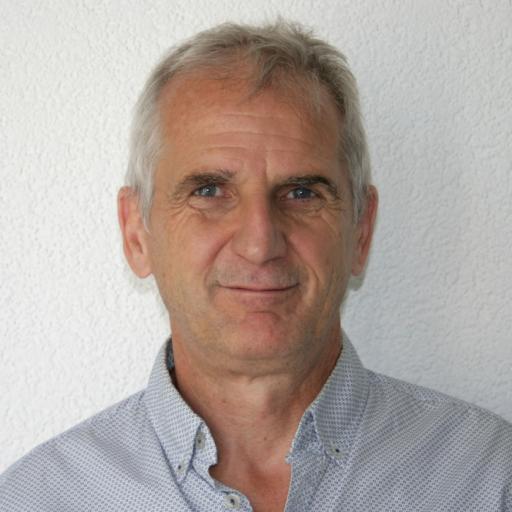
Stéphane Marchand-Maillet is an Associate Professor at the University of Geneva's Faculty of Science, Department of Computer Science, leading the VIPER research group since 2000. His work focuses on high-dimensional data analysis, modeling, and indexing, with applications in Medicine (flow cytometry, imaging, patient records) and Digital Humanities. He co-directs a SNF-funded project on semantic multilingual editions of Geneva Council registers (1545-1550) and collaborates with HUG (Geneva University Hospitals). Education : PhD in Applied Mathematics and Operational Research from Imperial College London (1997) Postdoctoral stay at EURECOM Institute (France) Research Interests : Analysis of high-dimensional data spaces, medical data applications, multimodal information management, and digital humanities. His work intersects machine learning, data mining, and information retrieval. Leadership & Collaborations : Vice-President of the Foundation Board of Idiap Research Institute (Martigny) Member of the Steering Committee Collaboration with Fondation de l'Encyclopédie de Genève and SNF-funded projects
Ash A. Alizadeh is the Moghadam Family Professor of Medicine, Oncology, and Hematology (by courtesy) at Stanford University, where he serves as leader of the Cancer Genomics Program at Stanford Cancer Institute. He holds multiple academic appointments including Professor in Medicine - Oncology, and membership in Bio-X, the Institute for Stem Cell Biology and Regenerative Medicine, and the Maternal & Child Health Research Institute (MCHRI). Dr. Alizadeh received his BS in Biochemistry from UCLA (1994), MD from Stanford Medical School, and PhD in Biophysics from Stanford. He completed additional training at the National Cancer Institute (NCI), the National Institutes of Health (NIH), and the Howard Hughes Medical Institute (HHMI). His primary research focuses on developing and applying genome technologies and computing (machine learning & data science) to problems in human disease, with special emphasis on cancer detection, classification, monitoring, and tumor immunology. His laboratory pioneers noninvasive cancer genomic techniques including CAPP-Seq, PhasED-Seq, and EPIC-Seq for "liquid biopsies" that analyze circulating nucleic acids for early cancer detection and monitoring therapeutic response. Using machine learning approaches, his group studies how cellular compositional variation impacts cancer behavior and therapeutic response, including anti-tumor immunity. His work spans molecular, cellular, organism and population levels of tumor behavior analysis. Dr. Alizadeh has received numerous prestigious awards including the Scholar Award from the American Society of Hematology (ASH), the Leukemia & Lymphoma Society (LLS), the V-Foundation, as well as awards from the American Red Cross, Damon Runyon Cancer Research Foundation, and Doris Duke Charitable Research Foundation. He is an elected member of the American Society for Clinical Investigation (ASCI) and serves on the Scientific Advisory Board of the Lymphoma Research Foundation (LRF). As an educator and mentor, Dr. Alizadeh advises numerous doctoral students, postdoctoral fellows, and medical scholars. He teaches in the Department of Medicine and Immunology and serves on various admissions panels at Stanford. His laboratory, the Alizadeh Lab, is a hub for interdisciplinary cancer genomics research that combines computational biology, molecular genetics, and clinical oncology to develop novel cancer diagnostics and therapeutics.
Jacques Rivière is an Assistant Professor at Pennsylvania State University , focusing on interdisciplinary research at the intersection of acoustics , geophysics , ultrasonics , and machine learning . His work combines experimental and computational approaches to address fundamental and applied problems in these areas. Research Interests Acoustics: nonlinear acoustics, acoustic emission, vibrations Geophysics: rock physics, earthquake physics, friction, granular physics Ultrasonics: nondestructive evaluation (NDE), structural health monitoring (SHM), material characterization and damage assessment, medical ultrasound Machine Learning: applications to ultrasonic/seismic data analysis, physics-informed models Advising and Collaboration Prof. Rivière is actively seeking a PhD student to join his research group and encourages motivated undergraduate/graduate students to apply by submitting CVs and expressions of interest.
Prof. Dr. Wolfgang Nejdl is a Professor at the Institute for Data Science within the Faculty of Electrical Engineering and Computer Science at Leibniz University Hannover. He serves as Executive Director of the L3S Research Centre and Leibniz Forschungszentrum Inclusive Citizenship. Web Science Information Retrieval Artificial Intelligence Deep Learning His recent research focuses on AI applications in medicine , multimodal data fusion , and ethical AI systems . Projects include CAIMed (AI in Causal Medicine) and DAISEC (AI & Cybersecurity). His publications span conferences like AAMAS, WWW, and SIGIR. Notable awards include membership in the National Academy of Science and Engineering (acatech) . Former students hold positions at institutions like Stanford, TU Dresden, and ETH Zürich. Current projects involve climate resilience AI , federated learning for healthcare , and quantum-inspired data science .
Olaf Ronneberger is an associate professor at the Albert-Ludwigs-Universität Freiburg and works at Google DeepMind . His research focuses on deep learning architectures , AI applications to scientific problems , and protein structure prediction . He leads seminars on deep learning and 3D image analysis, emphasizing vision-language integration and generative models. His publications include foundational work on U-Net architectures for biomedical image segmentation, AlphaFold 3 for biomolecular interaction prediction, and Gemini models for multimodal AI systems. Key subfields span medical imaging , protein folding , and vision-language models . Co-developer of U-Net , a widely used biomedical image segmentation framework. Contributor to AlphaFold 3 for structural biology. Research on Gemini 1.5/2.5 models for multimodal reasoning.
Danielle Butler is a Visiting Fellow at the National Centre for Epidemiology and Population Health, Australian National University, and a part-time General Practitioner/Researcher at the Institute of Urban Indigenous Health. With 20+ years clinical experience and a PhD (2018), her work focuses on healthcare access equity for underserved populations through linked data analysis, mixed-methods research, and telehealth evaluation. Current projects: Enhancing Safe Telehealth , Patient-Centered Medical Homes , Primary Care Data Linkage Key collaborations: ANU, IUIH, Australian Institute of Health and Welfare Her research combines multilevel modeling of administrative data with participatory action research to evaluate primary care innovations. Recent work examines telehealth impacts , out-of-pocket costs , and Aboriginal health service models . Publications span BMJ Open , BMC Health Services Research , and Health Policy , with emphasis on systematic reviews , linked data methodology , and health equity metrics . Research fingerprint shows dominant themes: Primary Health Care (100%), Aboriginal and Torres Strait Islander Health (66%), Health Services Research (49%), and Telehealth (100%).
Mannes Poel is a researcher specializing in Datamanagement & Biometrics with a focus on applied machine learning. His work spans healthcare analytics, sensor technology optimization, and meta-learning frameworks for missing data. ORCID: 0000-0002-3813-9732 Active Domains : Artificial Intelligence, Medical Predictive Modeling, Industrial Sensor Analytics Collaboration Network : Interdisciplinary work with institutions in healthcare (e.g., Diagnostics journal) and engineering (e.g., IEEE MEMS conference) Scientific Achievements : Best paper award at Intetain 2107 (2017) Research Trends : His recent publications (2024-2025) emphasize explainable AI for missing data in clinical contexts and machine learning-enhanced sensor systems for industrial fluid dynamics. These works combine traditional ML with real-time data processing and cross-domain model adaptation.
Ross Thyer is an Assistant Professor in the Department of Chemical and Biomolecular Engineering at Rice University. He holds a BSc (Hons) from the University of Western Australia and a PhD from the Harry Perkins Institute of Medical Research under Drs. Rackham and Filipovska. His postdoctoral training at the University of Texas at Austin with Prof. Andrew Ellington focused on engineered biosynthesis pathways and non-canonical amino acids. He co-founded GRO Biosciences, a Boston-based biotech startup, and leads the Thyer Lab at Rice. His research bridges synthetic biology, protein engineering, and molecular programming to address global challenges. Key areas include expanding genetic codes for therapeutics, engineering biosynthetic pathways via genetic circuitry, and developing microbial systems for environmental bioremediation. Core technologies include deep learning for protein design, modular DNA assembly, and high-throughput selections. The lab also develops tools like MutCompute for enzyme engineering and domesticates non-model bacteria for bioproduction. His work emphasizes technology innovation, with recent advances in selenocysteine incorporation, L-DOPA sensing systems, and actinobacteria toolkits. The Thyer Lab actively collaborates on biocatalyst development and translational applications in healthcare and industry.
Ming Lin is a Distinguished University Professor at the University of Maryland, College Park, holding joint appointments in Computer Science (Department of Computer Science), the Institute for Advanced Computer Studies (UMIACS), Electrical and Computer Engineering (ECE), and the Maryland Robotics Center. She holds the Dr. Barry Mersky and Capital One E-Nnovate Endowed Professorships. Her research focuses on physically-based modeling, virtual environments, haptics, robotics, and AI applications in healthcare and urban computing. Education: Ph.D., M.S., and B.S. in Electrical Engineering & Computer Sciences from UC Berkeley. She previously spent 20 years at UNC Chapel Hill before joining UMD in 2018. Research interests include collision detection algorithms (e.g., Lin-Canny algorithm), real-time physics simulation, virtual/augmented reality systems, and medical imaging applications. Her work has led to over 2 million downloads of her group's software tools and licenses with 60+ companies. Notable contributions include the Oculus Rift-related VR technologies and Amazon's virtual try-on system. Awards: IEEE Fellow (2012), ACM Fellow (2011), NAI Fellow (2022), and Washington Academy of Sciences Distinguished Career Award (2020). Active in professional service, she serves on the CRA Board and chairs the Committee on Widening Participation in Computing Research. Advising: Supervises 12+ PhD/Master's students. Her lab (GAMMA Group) focuses on AI-driven robotics, autonomous systems, and physically-based simulations. Key projects include traffic simulation frameworks, medical VR applications, and 3D garment modeling.
Melissa C. Smith is a Professor of Electrical and Computer Engineering and Associate Dean for Graduate Studies at Clemson University. She holds a Ph.D. from the University of Tennessee and degrees from Florida State University. Her research focuses on machine learning, reconfigurable computing, and high-performance systems, with applications in embedded systems and interdisciplinary scientific advancements. Before joining Clemson in 2006, she was a research associate at Oak Ridge National Laboratory (ORNL), contributing to projects like the Spallation Neutron Source and PHENIX experiments. Education: Ph.D., Electrical and Computer Engineering, University of Tennessee M.S., Electrical Engineering, Florida State University B.S., Electrical Engineering, Florida State University Research Interests: Machine Learning and AI High-Performance and Reconfigurable Computing System Performance Modeling Embedded Systems Articles Summary: Her recent work spans machine learning applications, GPU/FPGA architectures, speech enhancement, and medical systems. Key themes include optimizing heterogeneous computing for real-time and scientific workloads, and advancing interdisciplinary solutions through architecture-application co-design. Lab & Collaborations: Leads the Future Computing Technologies Lab and collaborates with ORNL and national labs on projects like GEMmaker and HPC-enabled medical systems.
Alan Sussman is a Professor and Associate Chair of Undergraduate Education in the Computer Science department at the University of Maryland. His research focuses on databases, high-performance computing, parallel systems, and educational curriculum development for computing disciplines. He holds a Ph.D. from Carnegie Mellon University (1991) and a B.S.E. from Princeton University (1982). His educational contributions include integrating parallel and distributed computing concepts into early undergraduate courses, supported by NSF-funded initiatives like the CyberTraining program. He has advised students such as Harshit Soora (Master's) and Xiaolong Tian (PhD). His research spans compiler optimizations for parallel programs, distributed data management systems, and scientific workflow frameworks like DYFLOW. He collaborates with UMIACS and contributes to interdisciplinary projects like the TASCS center. Key innovations include VeloxDFS for distributed dataset streaming, compiler techniques for irregular memory access in PGAS programs, and NetCDFaster for geospatial data optimization. His work emphasizes productivity improvements for high-performance applications and curriculum modernization to address emerging computational challenges. Awards: No individual awards explicitly listed; however, collaborator Jik-Soo Kim received a best paper award in 2006. Grants: NSF CyberTraining, TCPP Curriculum Initiative, and Center for Technology for Advanced Scientific Component Software (TASCS). Labs/Teams: Active in UMIACS and interdisciplinary collaborations, including the TASCS center and InterComm framework development.
Kirk Roberts, PhD, is an Associate Professor in the Department of Health Data Science and Artificial Intelligence at the McWilliams School of Biomedical Informatics, UTHealth Houston. He specializes in Natural Language Processing (NLP), with a focus on clinical information extraction, spatial information extraction, and medical information retrieval. His work bridges computer science, medicine, linguistics, and machine learning to improve accessibility and usability of biomedical data. Education: PhD (2013) and MS (2009) in Computer Science from the University of Texas at Dallas; BS (2005) in Computer Science from Georgia Institute of Technology. Research emphasizes NLP applications for healthcare, including question-answering systems, EHR analysis, and spatial relation extraction. He leads the TREC Clinical Decision Support track and has been recognized with a National Library of Medicine Career Development Award. His contributions span over 20 peer-reviewed publications in journals like JAMIA and conferences such as ACL and AMIA. Key areas include: advancing clinical decision support via NLP, optimizing biomedical literature retrieval, and improving health data dissemination through natural language systems.
Hatice Altug is a Full Professor at EPFL's Institute of Bioengineering within the School of Engineering, where she leads the Bionanophotonic Systems Laboratory. Her research integrates nanophotonics, plasmonics, and microfluidics to develop advanced biosensors for real-time molecular diagnostics. She holds dual roles in EPFL's doctoral programs and academic committees. Education: PhD in Applied Physics, Stanford University (2000-2007) B.S. in Physics, Bilkent University (1996-2000) Her research centers on creating label-free, high-sensitivity optical biosensors using nanophotonic technologies. Key innovations include dielectric metasurfaces for mid-infrared spectroscopy, AI-enhanced detection platforms, and portable nanoplasmonic imagers for point-of-care diagnostics. Her work bridges fundamental light-matter interactions with clinical applications like sepsis monitoring and cancer biomarker detection. Her publications emphasize nanophotonic biosensor design, metasurface applications, and single-cell analysis. Recent trends show increased focus on AI integration, vibrational spectroscopy, and wafer-scale manufacturing for clinical translation. Awards & Honors: Optical Society Fellow (2020) Presidential Early Career Award (PECASE, 2011) ERC Consolidator Grant (2016) IEEE Photonics Society Young Investigator Award (2011) She mentors numerous PhD students and leads interdisciplinary teams developing optofluidic platforms. Her laboratory pioneers nanoplasmonic microarrays and collaborates globally on projects like neurodegenerative disease biomarker detection. She co-directs EPFL's doctoral program in photonics and champions women in STEM through executive roles in diversity initiatives.
Carl Henrik Ek is a Professor of Statistical Learning at the Department of Computer Science and Technology (Computer Laboratory) at the University of Cambridge. He is also a fellow and Director of Studies at Pembroke College, and holds visiting positions at Karolinska Institute in Stockholm and the Royal Institute of Technology. He serves as co-Director for the UKRI AI Centre for Doctoral Training in Decision Making for Complex Systems, a collaboration between Cambridge and Manchester universities, and is involved with the Accelerate Program in the Computer Laboratory. Dr. Ek's educational background includes a MEng degree in Vehicle Engineering from the Royal Institute of Technology in Stockholm, followed by a PhD from Oxford Brookes University. During his PhD, he spent time at the University of Manchester and the University of Sheffield. His PhD supervisors were Professor Neil Lawrence and Professor Phil Torr, and his postdoctoral research was conducted at UC Berkeley with Professor Trevor Darrell and Professor Raquel Urtasun. Professor Ek's research focuses on statistical learning, particularly on developing data-efficient and interpretable machine learning methods. His work spans modeling and inference in machine learning, with special emphasis on Bayesian non-parametric methods and Gaussian processes. He explores how to specify assumptions that allow learning from small amounts of data, bridging theoretical foundations with practical applications in various domains. His recent publications demonstrate a strong trend toward applying machine learning to healthcare, drug discovery, and engineering design. There's significant work on Gaussian processes, reinforcement learning, and generative models, with applications ranging from medical diagnostics to structural engineering. His research shows an increasing interdisciplinary focus, connecting machine learning with fields like cardiology, pharmacology, and computational geometry. Professor Ek has received numerous teaching awards throughout his career: Pilkington Price for Teaching Excellence (2024) Teacher of the year in Computer Science at University of Bristol (2016) Docent in Machine Learning at Royal Institute of Technology (2016) Teacher of the year at Royal Institute of Technology, Sweden (2015) Teacher of the year from Student chapter in Industrial Economics at Royal Institute of Technology (2015) Teacher of the year in Computer Science at Royal Institute of Technology (2012) Professor Ek teaches Advanced Data Science, Advanced topics in machine learning, and Machine Learning and the Physical World. He has supervised PhD students throughout his career but is not currently accepting new PhD students for 2025/26 or 2026/27. His research is supported by various grants, including his role as co-Director of the UKRI AI Centre for Doctoral Training. He is an active member of the ml@cl research group at Cambridge and has previously been involved with research groups at University of Bristol and Royal Institute of Technology. His work connects with several interdisciplinary initiatives, particularly in healthcare AI and engineering applications of machine learning.
Dr. Thilina Halloluwa is a Teaching Focused Lecturer in the Department of Human-Centred Computing at The University of Queensland (UQ). He holds a PhD in Human-Computer Interaction from Queensland University of Technology (2019) and a Computer Science undergraduate degree from the Sri Lanka Institute of Information Technology. With over 15 years of academic and industry experience, his research emphasizes real-world impact in education technology, financial inclusion, smart agriculture, and HCI. Educational Background: PhD in Human-Computer Interaction, Queensland University of Technology (2019) Bachelor of Computer Science, Sri Lanka Institute of Information Technology Research Interests: Education for All: Leveraging technology to enhance collaborative learning and social experiences in education. Human Money Interaction: Designing ethical AI solutions for financial services, particularly for underserved communities. Smart Agro: Developing AI-driven tools for crop disease detection, yield optimization, and precision agriculture. Software Project Estimation: Improving effort estimation accuracy through explainable AI (Metrix project). Key Contributions: Developed UrbanAgro (tomato disease detection) and BellCrop (bell pepper disease datasets). Pioneered Dhana Labha , a financial management tool for rural Sri Lankan communities. Advanced online exam proctoring systems for low-resource settings. Previous Roles: Lecturer at University of Sydney (2023) Senior Lecturer at University of Colombo (2013–2023) Lab/Team Affiliations: Smart Agro Project: AI-driven agricultural solutions Metrix Initiative: Software project estimation frameworks