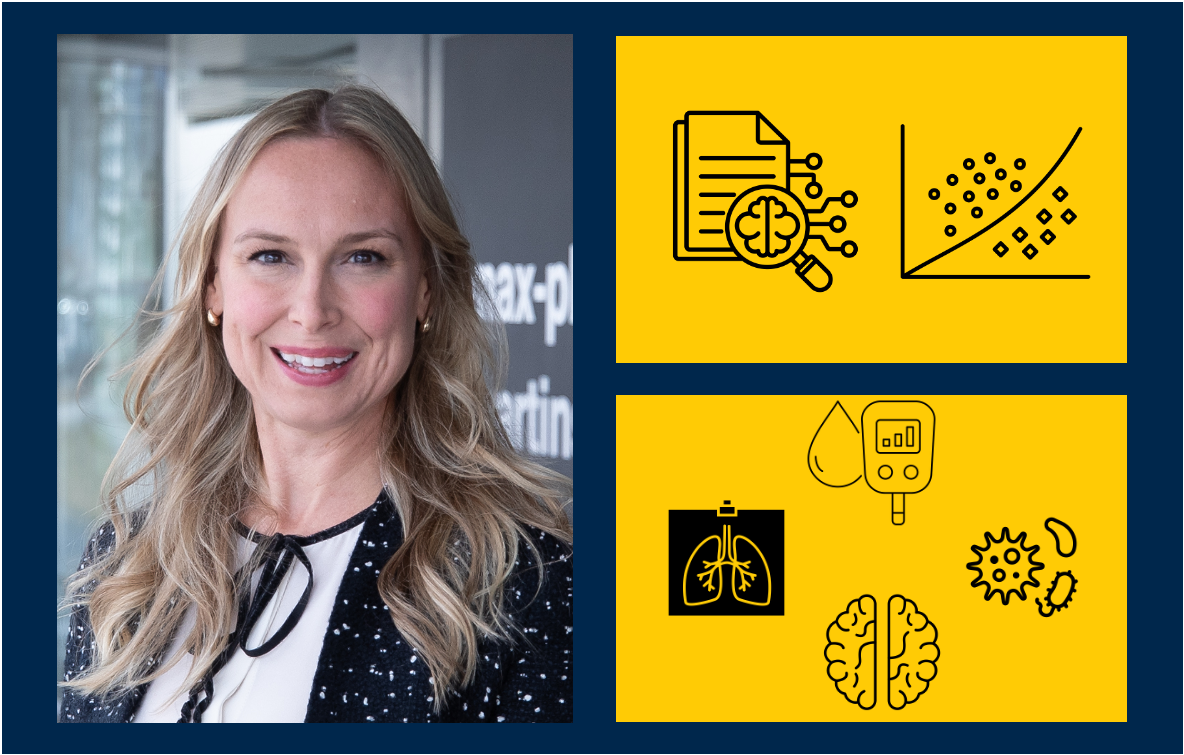
Jenna Wiens is an Associate Professor of Computer Science and Engineering at the University of Michigan's College of Engineering. She serves as Associate Director of the Artificial Intelligence Lab and co-Director of AI & Digital Health Innovation. Leading the MLD3 research group, her work focuses on machine learning and AI applications for healthcare data. PhD from MIT (2014) under John Guttag NSF CAREER Award recipient (2016) Humboldt Foundation Carl Friedrich von Siemens Award (2024) Her research addresses four key technical thrusts: Time-series analysis for predicting clinical outcomes Robust machine learning against spurious correlations Decision-making with causal inference and offline reinforcement learning Human-AI collaboration frameworks Notable methodological contributions include the FIDDLE preprocessing pipeline for clinical time-series data, foundational work on survival analysis, and novel approaches to model selection in healthcare reinforcement learning. Her work has led to real-world AI deployments in infection prevention and patient risk stratification. Scientific honors include: Forbes 30 Under 30 (2015) MIT Tech Review 35 Innovators Under 35 (2017) Sloan Research Fellowship in Computer Science (2020) Sarah Goddard Power Award (2023) Wiens collaborates with clinicians across disciplines, emphasizing clinician-in-the-loop AI systems and ethical implementation in healthcare workflows.
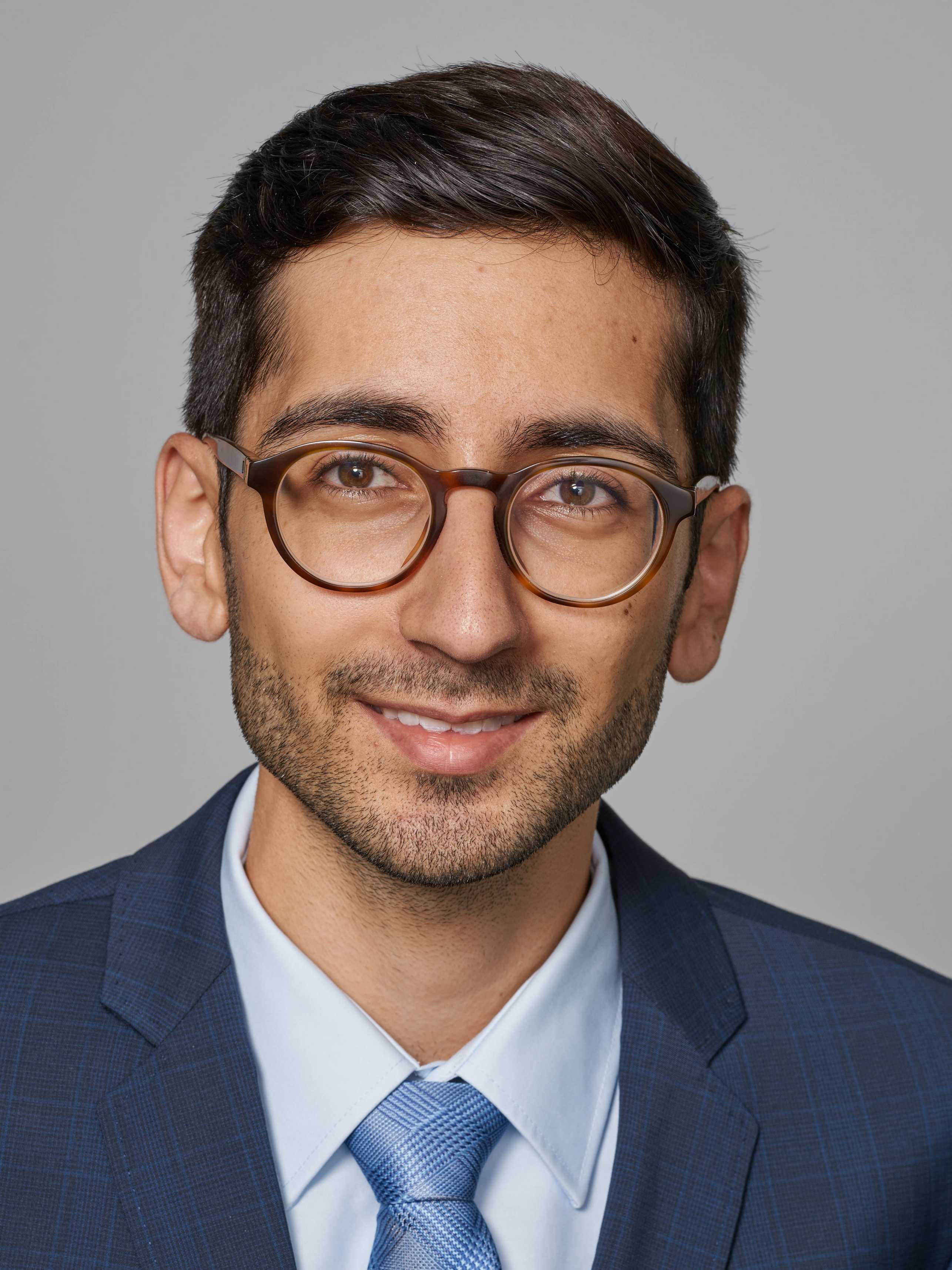
Jakob Merane is a postdoctoral researcher at ETH Zurich's Professorship of Law, Economics and Business, and a visiting researcher at the Max Planck Institute and Harvard Law School. He holds a Ph.D. from ETH Zurich and law degrees from the University of Basel, with additional studies in applied statistics. His research focuses on AI-driven legal enforcement, legal technology, and compliance-by-design approaches, leveraging computational and empirical methods. Merane's work includes developing tools like SwiLTra-Bench for multilingual legal translation and LEXam for benchmarking AI legal reasoning. He has contributed to GDPR compliance studies, automation of legal enforcement processes, and quantitative analyses of Swiss legal datasets. Awards include the 2024 Young Scholar Prize from the German Law and Economics Association. Teaching responsibilities include ETH's Law & Tech course since 2020, emphasizing AI regulation and interdisciplinary collaboration between law and computer science. Merane's research also addresses AI liability in medical contexts, digital advertising regulations, and ethical AI integration in legal systems. His work bridges legal theory with practical applications, aiming to enhance justice accessibility through technology.
Professor Sandra Wachter is a leading academic in legal and ethical implications of AI, Big Data, and robotics at the Oxford Internet Institute (OII) , University of Oxford, and as Humboldt Professor at the Hasso Plattner Institute. She leads the OII's governance of emerging technologies (GET) research programme , focusing on AI regulation, algorithmic bias, and human rights. Affiliations : Berkman Klein Center (Harvard University), World Economic Forum, UNESCO, IEEE, World Bank, Bonavero Institute of Human Rights, Oxford Martin School, and more. Research : Legal and ethical frameworks for AI, explainability (notably Counterfactual Explanations ), fairness metrics, and combating algorithmic discrimination through her Conditional Demographic Disparity (CDD) tool. Awards : Alexander von Humboldt Foundation Research Award (2025), O2RB Excellence in Impact Award (2021, 2018), Computer Weekly Women in UK Tech (2021), Privacy Law Scholar (2019), CognitionX Outstanding Achievements (2023, 2017). Impact : Her work is implemented by Google, IBM, Amazon, and Microsoft; influences NHS and MHRA policies; and has been cited in major media outlets including The New York Times, BBC, and Nature.
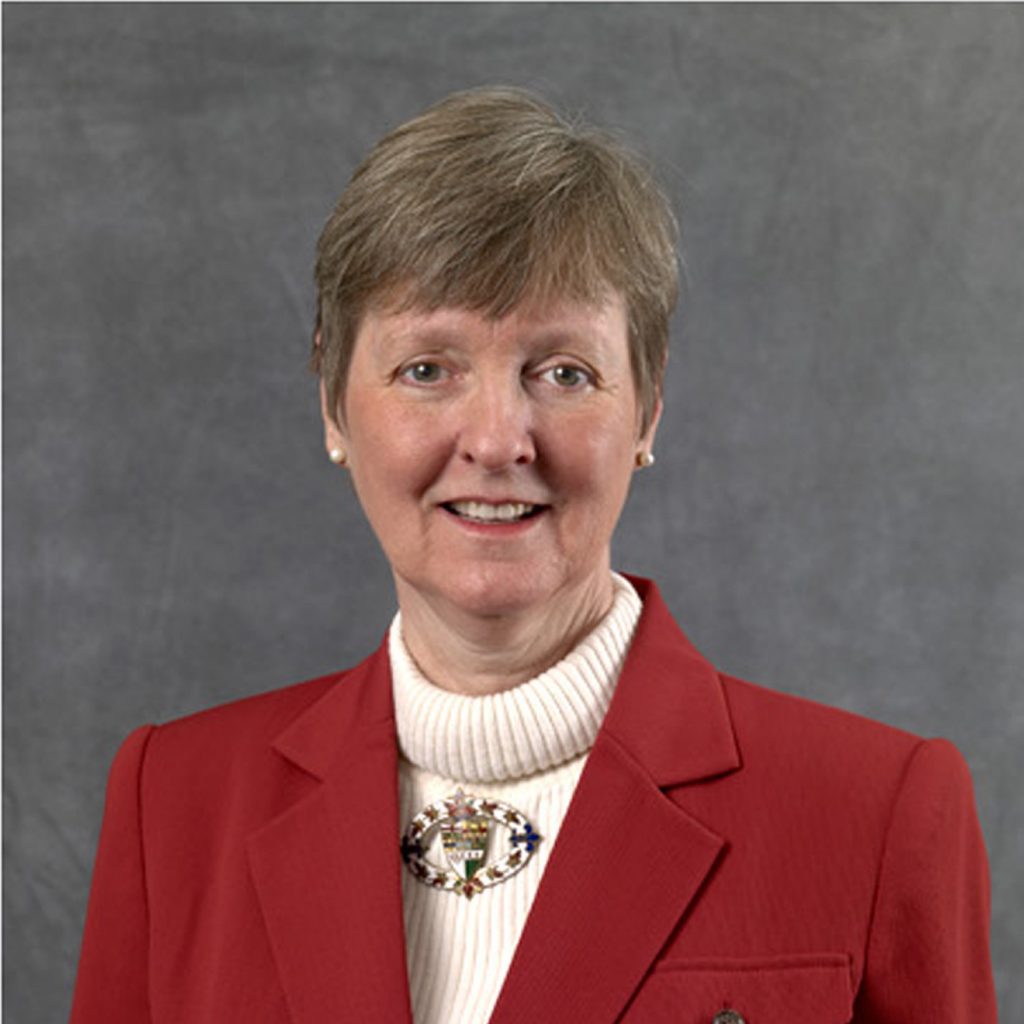
Prof. Diane DE SAINT AFFRIQUE is a full-time Professor at SKEMA Business School (France) since 2019, specializing in Business Law, Ethics, and Governance. She holds a Doctorat d'Etat en Droit (2002) from Université Paris 2 Panthéon-Assas, with additional qualifications from ESSEC Business School and other institutions. Her academic leadership roles include Head of the Contract Law Master program (2016–present), Head of the Law Department (2003–2014), and responsible for the Master in Business Law (2006–2016). Research Focus: Her work centers on corporate governance, sustainable finance, AI ethics in healthcare and business, and legal frameworks for responsible business practices (RSE). She explores tensions between regulatory compliance and corporate autonomy, with recent emphasis on duty of vigilance legislation and AI accountability. Key Contributions: Over 30+ publications include analyses of: Legal implications of AI in medicine and business Corporate social responsibility and judicialization trends Religious freedom in French workplaces Data sovereignty and AI governance Affiliations & Impact: She chairs the French Academy of Legal Studies and Business, serves on the Board of VITAMINE T, and advises institutions like IFSI Ambroise-Paré. Her work frequently bridges legal theory with practical business challenges, emphasizing interdisciplinary solutions for global governance issues.
Timo Minssen is Professor of Law at the University of Copenhagen (UCPH) and the Founding Director of UCPH's Center for Advanced Studies in Bioscience Innovation Law (CeBIL). He also holds affiliations as an LML Research Affiliate at the University of Cambridge and an Inter-CeBIL Research Affiliate at Harvard Law School's Petrie-Flom Centre. With extensive expertise in Intellectual Property, Competition, and Regulatory Law, Minssen focuses on the legal aspects of emerging health and life science technologies, including genome editing, big data, artificial intelligence, and quantum technology. His educational background includes a German law degree (Staatsexamen) from Georg-August-University in Göttingen, and Swedish biotech & IPR related LL.M., LL.Lic., and LL.D. degrees from Lund University and Uppsala University. His PhD thesis on the patentability of biopharmaceutical technology in the US & Europe received the prestigious Swedish King Oscar award. 2024: TUM Global Visiting Professor, Technical University of Munich (Germany) 2016: Visiting Research Fellow, University of Cambridge (UK) 2014: Visiting Research Fellow, University of Oxford (UK) 2013-14: Visiting Scholar, Harvard Law School (US) 2012: LL.D. - Doctor of Laws (Swedish "juris doktor"), EU/US patent law, Lund University, Sweden Minssen's research spans AI & Big Data in Health & Life Sciences, Sustainable and responsible innovation & tech transfer, Pharmaceutical-, Life Science- & Biotech Law, Comparative European & US Patent Law, Intellectual Property Law & Open Innovation, and EU Competition- & US Antitrust Law. His work addresses legal issues throughout the lifecycle of health and life science products and processes, from R&D regulation to technology transfer and commercialization. His extensive publication record includes 7 books and over 200 articles and book chapters published in leading journals such as Science, Nature Biotechnology, JAMA, and Harvard Business Review. His research has been featured in The Economist, Financial Times, and other major media outlets. Minssen's recent work shows a strong focus on AI regulation, quantum technology law, and data governance in health contexts, reflecting the evolving landscape of technology and law. Scientific Awards and Recognition King Oscar award for best Jur. Dr. thesis (2014) Jorcks Fonds Forsknings Pris (Jorck's Foundation Research Prize) (2017) Awapatent Research Prize (2009) Max Planck Research Scholarship (2005) Visiting Scholar appointments at Harvard Law School, University of Oxford, and University of Cambridge Recipient of a Novo Nordisk Foundation Grant for a "Collaborative Research Program in Biomedical Innovation Law" (2018) As an advisor, Minssen serves international organizations including the WHO, WIPO, and EU Commission. He has supervised numerous PhD students in areas including pharmaceutical law, biotechnology patents, and antimicrobial resistance. His current research projects include the Novo Nordisk Foundation's International Collaborative Bioscience Innovation & Law (Inter-CeBIL) Programme (50 million DKK), CLASSICA: EU Horizon Project on AI-assisted surgery, and AI@Care: Law and Ethics and Algorithmic Bias in Healthcare. Minssen leads the Center for Advanced Studies in Bioscience Innovation Law (CeBIL), which serves as a hub for interdisciplinary research on the intersection of law, technology, and innovation in the health and life sciences. The center collaborates with institutions worldwide to address pressing legal challenges in emerging technologies.
Dr. Jiahong Chen is a Lecturer in Law at the University of Sheffield School of Law . His research focuses on the intersection of law and technology, particularly Data Protection Law , Cybersecurity Law , Law and AI , and Internet Regulation . He serves as Departmental EDI Director and Deputy LLM Programme Director. PhD, University of Edinburgh LLM, China University of Political Science and Law LLB, China University of Political Science and Law His research examines regulatory challenges in smart homes , large language models , and data ethics . Current projects include the ESRC-funded "The Internet of Tactical Engagement (IoTE)" and RAI UK's "Addressing Socio-technical Limitations of Large Language Models" . Publications span GDPR interpretation, health data regulation, and smart device accountability. He teaches modules on Information Technology Law , Data Privacy and Governance , and Consumer Law .
Jennifer D. Oliva is a Professor of Law at Indiana University Maurer School of Law where she holds the Val Nolan Faculty Fellow position. She maintains significant interdisciplinary affiliations as a Research Scholar at Georgetown University Law Center's O'Neill Institute for National & Global Health Law and as a Senior Scholar with the UCSF/UC Law Consortium on Law, Science & Health Policy. Her academic work bridges legal scholarship with practical health policy development, focusing on the intersection of constitutional protections, public health needs, and modern surveillance technologies. Professor Oliva's research interests center on health law, privacy law, and drug policy with particular expertise in prescription drug monitoring programs (PDMPs), health information privacy, and the legal dimensions of the opioid crisis. Her scholarship critically examines how law enforcement surveillance of prescription data impacts patient privacy rights, particularly for vulnerable populations including those with substance use disorders. She has developed significant expertise in how constitutional privacy protections apply to health data in the digital age, especially following the Supreme Court's decision in Carpenter v. United States. Her recent publications reveal a growing focus on algorithmic regulation in healthcare, examining how risk scoring systems and coverage algorithms can perpetuate health disparities. She has published extensively on the intersection of reproductive rights and health data privacy in the post-Dobbs landscape, analyzing how prescription monitoring systems could be weaponized against individuals seeking reproductive healthcare. Her work consistently connects doctrinal legal analysis with public health realities, advocating for evidence-based policy approaches that prioritize patient privacy and health equity over punitive enforcement. Dosing Discrimination: Regulating PDMP Risk Scores (2022) The "New" Drug War (2024) Prescription Drug Policing: The Right to Health Information Privacy Pre- and Post-Carpenter (2020) Opioid Multidistrict Litigation Secrecy (2019) Surveillance, Privacy, and App Tracking (2020) Professor Oliva actively engages with policymakers and has contributed to amicus briefs in significant cases including Ruan v. United States. Her scholarship has been cited in legal proceedings and she regularly presents at major academic conferences including the Association of American Law Schools Annual Meeting. She has collaborated with scholars across disciplines including public health researchers, medical ethicists, and data scientists to address complex challenges at the intersection of law, technology, and healthcare.
Lena Wahlberg is an Associate Professor and Senior Lecturer at the Department of Law, Lund University, serving as Assistant Head of Department. Her roles include interdisciplinary research and teaching in medical law, evidence law, and jurisprudence. She leads the Law, Evidence and Cognition (LEVIC) research group and participates in the Science and Proven Experience (VBE) program funded by the Swedish Foundation for Humanities and Social Sciences. Her research focuses on legal causation, expert evidence evaluation, and the intersection of law with natural sciences/medicine. Notable projects include analyzing expert testimony reliability, legal implications of scientific evidence gaps, and defining 'science and proven experience' in healthcare decision-making. Recent publications (2024-2025) emphasize healthcare policy, data governance, and legislative reform in abortion laws and research ethics. She collaborates internationally with institutions like Harvard Medical School and Carnegie Mellon University. Teaching responsibilities include coordinating the doctoral course Theoretical Foundations for Doctoral Studies in Law . Supervised doctoral students include Amanda Bills (Public International Law) and Yana Litins’ka (Medical Law). Research funding includes projects from the Swedish Research Council and Riksbankens Jubilieumsfond. Key affiliations: Member of the VBE research consortium (2015-2020+), LEVIC group, and contributor to national policy consultations on health data and medical ethics.
Bertram Müller-Myhsok is a Research Professor and Research Group Leader at the Max Planck Institute of Psychiatry in Munich, Germany. His research focuses on statistical genetics and transcriptomic data analysis in psychiatric disorders, particularly major depression, PTSD, schizophrenia, and their treatment responses. He integrates machine learning with genetic and clinical data to develop predictive models and stratified treatment approaches. Professional activities include leadership roles in the International Max Planck Research School for Translational Psychiatry and collaborations with institutions like the Institut du Cerveau (Paris) and Bernhard Nocht Institute (Hamburg). His work spans genetic epidemiology, psychiatric genomics, and precision medicine, with over 400 publications in high-impact journals. Key research areas include identifying genetic risk factors for mental disorders, developing polygenic scores, and leveraging omics data to uncover disease mechanisms. He leads projects like Psych-STRATA, a Horizon Europe-funded initiative advancing personalized psychiatry through pharmacogenomics.
Dr Fiona Hum is a Senior Lecturer at Monash University's Faculty of Law, where she conducts research and teaches. Admitted as a solicitor and barrister of the Supreme Court of Victoria, she previously practiced commercial litigation, criminal law, and personal injury law while consulting for major insurers and the Victorian police force. Her doctorate from the University of Melbourne focused on Northern Territory euthanasia laws. Education: Doctorate in Law, University of Melbourne (thesis on euthanasia laws) Admitted Solicitor and Barrister, Supreme Court of Victoria Research Focus: Dr Hum's work centers on Evidence Law , Wrongful Convictions , and Gender/Race Relations in Law , with pioneering studies on compassion training for law students now expanding into climate change law. Her research directly supports UN Sustainable Development Goals for justice, equality, and well-being through interdisciplinary approaches connecting legal theory with psychological and social frameworks. Publication Trends: Recent work (2022-2025) analyzes high-profile cases like Kathleen Folbigg and Cardinal Pell while advancing evidence law pedagogy through her Cambridge University Press textbook. Earlier scholarship (2010) established foundational critiques of gender bias in evidentiary processes, particularly regarding women complainants and pregnant patients. Scientific Awards: Faculty Teaching Award for Teaching Excellence (2010) Certificate of Recognition for S1 Unit Performance (2015) Certificate of Recognition for S2 Unit Improvement (2016) Nominee: Inspiring Woman Award (2021) Nominee: Australian Legal Education Award (2023) Advising & Professional Impact: Accepting PhD students, Dr Hum actively shapes legal education through curriculum innovation and peer review for top journals ( University of New South Wales Law Journal , Sydney Law Review ). Her external collaborations include specialist lectures for Monash's Faculty of Medicine and keynotes at national conferences like the Women's Lawyers Conference on 'Justice for All'. Institutional Roles: Current member of the Australasian Law Academics Association (2025-2028) and former Honorary Fellow at the University of Melbourne (2019-2021), she bridges academic rigor with real-world legal practice through ongoing consultancy work.
Thomas Grote is a Research Fellow at the University of Tübingen's Ethics and Philosophy Lab within the Cluster of Excellence 'Machine Learning: New Perspectives for Science'. His research focuses on philosophical and ethical dimensions of artificial intelligence, particularly interpretability, fairness, and reliability in medical and social contexts. He co-supervises the Carl-Zeiss-Stiftung-funded project 'Certification and Foundations of Safe Machine Learning Systems in Healthcare' and co-organizes the 'Philosophy of Science Meets Machine Learning' conference series. Research Focus Grote's interdisciplinary work bridges philosophy of science and applied AI ethics. Key areas include: Methodological foundations of AI ethics and epistemology Clinical reliability and safety of ML systems Fairness metrics in sociotechnical healthcare systems Interpretability requirements for medical AI Computational psychiatry and evolving mental health frameworks His recent publications demonstrate strong emphasis on healthcare applications, with critical analyses of reliability in foundation models, ethical paradigms for LLMs, and rethinking evaluation methodologies at the epistemology-ethics interface.
Barbara J. Evans is a Stephen C. O’Connell Chair Professor of Law and Professor of Engineering at the University of Florida, with joint appointments in the Levin College of Law and Herbert Wertheim College of Engineering. She focuses on data privacy, AI/ML medical software regulation, genomic technologies, and diagnostic testing, and is a key member of the NIH Bridge2AI project. Education : J.D. from Yale Law School, LL.M. in Health Law from the University of Houston, postdoctoral training in clinical ethics at MD Anderson, and a Ph.D. in Earth Sciences from Stanford. Her research bridges law and engineering, emphasizing ethical and regulatory challenges in AI/ML medical applications, genomic data governance, and DIY biotechnology. She has led initiatives like the LawSeq SM project to standardize genomic analysis policies. The 15 most recent works highlight her interdisciplinary focus on AI ethics in healthcare, genomic privacy, and regulatory frameworks for emerging technologies. Key subfields include biomedical data sharing, FDA compliance, and equitable access to health data infrastructure. Scientific Awards : American Law Institute membership, IEEE Senior Membership, Greenwall Foundation Faculty Scholar. Evans has collaborated with institutions like the American College of Medical Genetics and Genomics (ACMG) and contributed to guidelines for genomic medicine. Her grants include NIH funding for Bridge2AI and LawSeq SM projects.
Amitabh Chandra is the Ethel Zimmerman Wiener Professor of Public Policy at Harvard Kennedy School (HKS) and the Henry and Allison McCance Family Professor of Business Administration at Harvard Business School (HBS). He holds dual roles as Director of Health Policy Research at HKS and chairs several initiatives, including the Pagliuca Harvard Life Lab and the joint MS/MBA program in life sciences. His research focuses on healthcare pricing, pharmaceutical innovation, racial disparities in care, and Alzheimer’s treatment economics. Dr. Chandra has advised the U.S. Congress, the Massachusetts government on healthcare reform, and serves on the Congressional Budget Office’s Health Advisors Panel. His affiliations include the Malcolm Wiener Center for Social Policy and the Mossavar-Rahmani Center for Business and Government at HKS. His research spans biopharmaceutical capital allocation, Medicare drug negotiation policies, and the economic implications of healthcare cost-sharing. Notable recent work addresses price regulation in healthcare, orphan drug exemptions, and the impact of the Inflation Reduction Act on pharmaceutical innovation. Key Awards: ASHE Medal (under 40), Kenneth Arrow Award, Eugene Garfield Award Committees: Blavatnik Fellows Board, Health Affairs Council on Spending Grants: NIH funding (NIA, NICHD), Robert Wood Johnson Foundation He explores how economic principles shape healthcare systems, focusing on aligning drug pricing with therapeutic value and improving equitable access to treatments. His work bridges academia and policy, influencing national dialogues on healthcare reform and innovation incentives.
Nora Freeman Engstrom is the Ernest W. McFarland Professor of Law at Stanford Law School and Co-Director of the Deborah L. Rhode Center on the Legal Profession. She holds leadership roles in the American Law Institute (ALI), serving as a Reporter for multiple Restatement projects and Adviser to initiatives on AI and civil liability. Her research focuses on tort law, legal ethics, access to justice, and complex litigation. Engstrom co-authors leading casebooks in Legal Ethics and Tort Law. Her expertise includes the tort system’s role in transparency, medical malpractice, and 'settlement mills.' She has pioneered studies on secret settlements, multidistrict litigation integrity, and legal technology’s impact on civil justice. Engstrom’s work bridges theoretical scholarship and practical reform, advocating for equitable legal systems. Awards : William L. Prosser Award (2025, AALS) R. Ammi Cutter Reporter’s Chair (2022, ALI) 2024 Lifetime Achievement Award (UC Berkeley) Grants & Advising : Engstrom advises governmental entities and law firms on ethics, including recent work with U.S. prosecutors and federal judges. Her ALI contributions modernize tort law principles. She previously served as Stanford Law’s Associate Dean for Curriculum and chairs AALS’s Torts Section. Labs/Teams : Co-directs the Rhode Center, advancing civil justice transparency through tools like the MDL Toolkit. Collaborates with interdisciplinary teams on projects like Common Benefit Fees and AI liability frameworks.
Pamela Ferguson is a Professor at Dundee Law School, University of Dundee, United Kingdom. She holds the Chair in Scots Law since 2000, with prior roles as Senior Lecturer (1995-1999) and Lecturer (1989-1995). Her career began in the Crown Office and Procurator Fiscal Service (1986-1989), followed by roles as an examiner and committee member for the Law Society of Scotland. Education: Doctor of Laws (PhD) from University of Dundee (1994), LLB with First Class Honours from University of Glasgow (1985). Her research focuses on Criminal Law , Criminal Procedure , and Healthcare Law , with notable work on medical liability, clinical trials ethics, and Scots criminal justice reforms. She authored the Draft Criminal Code for Scotland with Commentary (2003) and co-authored Scots Criminal Law: A Critical Analysis (2014). Recent publications highlight trends in Scottish criminal procedure , eyewitness identification , and medical injury compensation . Her scientific awards include the 2023 Chancellor’s Award for Teaching and the 1985 Dr John MacCormick Prize. Scientific Awards: Chancellor’s Award for Outstanding Contributions to Teaching (2023) Joint winner of the Dr John MacCormick Prize (1985) Professor Ferguson supervises PhD and Masters students in criminal justice , healthcare law , and comparative criminal law. She has served as an external examiner at multiple UK universities and contributed to law reform committees.