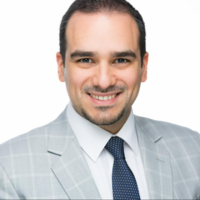
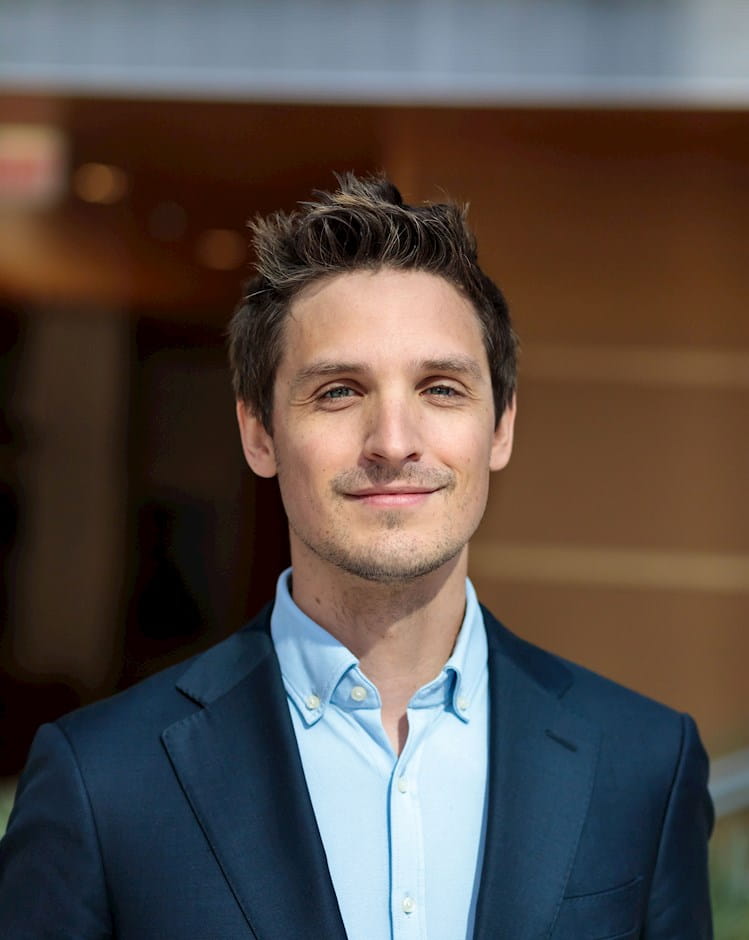
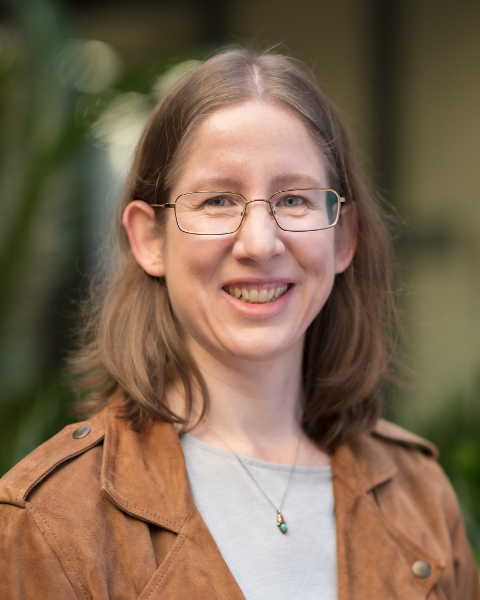
Hamidreza Mahyar is an Assistant Professor at the Faculty of Engineering , McMaster University , and an Associate Member of the Computing and Software department. His academic journey includes postdoctoral work at Boston University and TU Wien , and a Ph.D. in Computer Science from Sharif University of Technology . Research Focus: Mahyar's work bridges machine learning and network science , emphasizing graph neural networks for applications in social networks , recommendation systems , drug discovery , and generative AI . His research spans industrial AI (Industry 4.0 projects at Infineon Technologies), biomedical engineering (organoid morphology analysis), and semiconductor manufacturing (wafermap modeling). Scientific Recognition: McMaster Teaching Merit Award (2022) Vector Scholarship in AI (2023) NSERC USRA Award (2022) Google Cloud Platform for Research Award (2018) Best Paper Selection, Complex Networks (2018) Academic Leadership: He mentors PhD students (Taraneh Ghandi) and MSc students (Reza Namazi, Mohammad Khodadad, Ali Shiraei), while leading AI initiatives at Mind Lab 56 and BrainMaven . Former mentees include industry leaders at Google, Accenture, and ETH Zurich.
Maximilian Muhn is an Associate Professor of Accounting at the University of Chicago Booth School of Business. He joined Chicago Booth as an assistant professor of accounting in 2019 and was promoted to Associate Professor. His academic career focuses on empirical accounting research with particular emphasis on financial transparency and disclosure practices. Muhn received his PhD in accounting from Humboldt University of Berlin and holds an MSc and BSc in business administration from the University of Münster, Germany. Prior to his academic career, he gained professional experience in consulting (McKinsey & Company and Boston Consulting Group), auditing (KPMG and Deloitte), and management accounting (BASF and ThyssenKrupp Steel). His research primarily investigates the determinants and consequences of firms' financial transparency, as well as the effects of financial market and transparency regulation. Muhn employs diverse methodologies including field experiments, archival studies, and applications of large language models in financial analysis. His work examines how different stakeholders (investors, consumers, regulators) use and respond to corporate disclosures. Muhn teaches Financial Accounting in the Evening and Weekend MBA Program at Chicago Booth, where he aims to enable students to 'speak' the language of accounting and understand its economic foundations. His teaching emphasizes practical applications of accounting concepts in business decision-making. His scholarly contributions include publications in top accounting journals such as the Journal of Accounting Research, with recent work focusing on risk disclosures, financial transparency of private firms, consumer use of firm disclosure, and the application of generative AI in financial analysis. His research often combines traditional accounting approaches with innovative methodologies like large-scale field experiments. Muhn has collaborated with prominent scholars including Luzi Hail, David Oesch, Joachim Gassen, and Christian Leuz. His research has practical implications for corporate disclosure practices, regulatory policies, and investor decision-making. He maintains an active research agenda with several working papers in areas including private firm disclosure, generative AI applications in finance, and social disclosure decisions.
Dr Ana Cristina Vasconcelos is a Senior Lecturer in Corporate Information Management at the School of Information, Journalism and Communication, University of Sheffield. She holds a PhD from Sheffield Hallam University and has held academic roles at multiple institutions, including Leeds Metropolitan University and Sheffield Hallam University. Her research focuses on the intersection of knowledge management, information systems, and organizational adaptation. Education: BA in History, PGDip in Information Science (University of Lisbon), PhD in Information Systems (Sheffield Hallam University) Her research explores organizational learning, absorptive capacity, knowledge sharing, and boundary spanning practices, often applying theoretical frameworks like Arenas/Social Worlds Theory and Practice Theory. Funded by the European Community and AHRC, her work addresses challenges in information systems implementation and knowledge integration across sectors. Recent publications highlight trends in smart city datafication, interdisciplinary knowledge management, and virtual community dynamics. She supervises PhD students in areas spanning economic resilience to knowledge transfer in FinTech ecosystems. Teaching interests include qualitative research methods, organizational culture, and knowledge management systems. She has external examiner roles at multiple universities and serves on editorial boards for journals like Libri and the International Journal of Knowledge-Based Organizations.
Dr. Erik Linstead is an Associate Professor and Senior Associate Dean at Chapman University, affiliated with the Fowler School of Engineering, School of Pharmacy, and George L. Argyros College of Business and Economics. His expertise spans Machine Learning, GPU Programming, Autism Spectrum Disorder, Assistive Technologies, Predictive Analytics, and Virtual Reality. Education: Bachelor of Science, Chapman University Master of Science, Stanford University Ph.D., University of California, Irvine Dr. Linstead's research integrates machine learning with diverse domains, including autism treatment, environmental monitoring, and software engineering. His recent publications focus on coral reef health, land surface temperature trends, and embedded machine learning systems. His scholarly work includes collaborations in remote sensing, medical informatics, and neurodiversity support. Articles highlight his interdisciplinary approach, applying AI to ecological challenges (e.g., Red Sea coral reefs, Nile Basin droughts) and human-centered technologies (e.g., VR therapy for autism, medication adherence analysis).
Daniel Ventus is a Project Leader at Åbo Akademi University's Faculty of Education and Welfare Studies, specializing in interdisciplinary research across Psychology, Sexual Health, and Educational Technology. He leads the Experience Lab Health-related solutions and contributes to EU-funded projects like INTAKT and APOLLO2028 , focusing on academic procrastination interventions and healthcare worker resilience. Key research areas: Premature Ejaculation, High-Intensity Interval Training, Resilience Processes, Educational Robotics, and Mental Health interventions Recipient of the 2024 Best Poster Presentation Award at SWESrii for internet interventions His recent publications (2024-2025) examine: HIIT's impact on ejaculation control Real-time resilience assessment tools LLM-powered language learning systems for vulnerable children Physiological and psychological factors in sexual dysfunction As a peer reviewer for journals including Andrology and Scientific Reports , he contributes to multiple disciplines. Media visibility includes coverage in Finland-Swedish educational initiatives and sexual health research outreach (2018-2025).
Claudio Ulises Cortes Garcia is a Professor at the Department of Computer Science , Technical University of Catalonia, and leads the IDEAI-UPC (Intelligent Data Science and Artificial Intelligence Research Group) and KEMLG (Knowledge Engineering and Machine Learning Group). He is affiliated with the Barcelona Supercomputing Center (BSC-CNS) and the Barcelona School of Informatics (FIB). With a Doctor en Informática (PhD in Computer Science) and Ingeniero Industrial y de Sistemas (Industrial and Systems Engineering) degrees, his work spans Artificial Intelligence , Intelligent Agents , and Assistive Technology . His research integrates European Programs and Internet with applications in Second Life and Software . His recent publications focus on Post-COVID cognitive effects , AI ethics , and agent-based modeling for urban water management. He received the Doctor Honoris Causa from Universitat de Girona in 2024 and has collaborated on projects like DIGITAfrica and HUB D'INNOVACIÓ PEDIÀTRICA . His work bridges Neuroscience , Environmental Modeling , and Digital Humanities , with over 650 activities recorded in his academic career. ORCID : 0000-0003-0192-3096 WoS Researcher ID : B-7284-2009 Scopus Author ID : 7004065770
Krista A. Ehinger is an Associate Professor and co-lead of the AI group at the University of Melbourne's School of Computing and Information Systems. She holds a PhD from MIT and has held postdoctoral positions at York University and Harvard Medical School. Her research focuses on the intersection of human and computer vision, including scene recognition, visual search, and depth perception. Methodologically, she combines Bayesian models, deep learning, and behavioral experiments like eye tracking. Current projects explore AI applications in space systems (e.g., SpIRIT satellite) and ethical implications of workplace surveillance via computer vision. Recent work emphasizes amodal completion (e.g., reconstructing occluded objects) and AI reasoning systems. She collaborates on medical imaging (TCAM-Diff model), autonomous driving (truck speed detection), and 3D reconstruction. Her lab actively engages in open-source tools like the SUN Database for scene understanding. Professional activities include AI ethics discussions and academic service. She advises students on Masters/PhD projects and contributes to conferences like CVPR and NeurIPS.
Dr. Hong Ming Tan is a Senior Lecturer at the Department of Analytics and Operations, NUS Business School, and a Research Fellow at the Institute of Operations Research and Analytics (IORA) at National University of Singapore. He holds a PhD in Operations Research and Analytics (2021), MSc in Mathematics (2017), and BSc (Hons) in Applied Mathematics and Economics (2013) from NUS. Doctor of Philosophy, Operations Research and Analytics (2021) Master of Science, Mathematics (2017) Bachelor of Science (Hons), Applied Mathematics and Economics (2013) His research spans Business Analytics , Machine Learning , Operations Research , and Pharmacogenetics . Recent work includes: EcoVal Framework for efficient data valuation in ML Personalized Mental Health through adaptive testing and clustering Antibiotic Resistance modeling using antiresistic strategies CYP2D6 Methylation prediction for precision medicine His publications demonstrate expertise in ML optimization , healthcare informatics , behavioral analytics , and decision science . Current projects include AI-led Smart Data Centre Management and SIA Corp Lab research. He serves as Chair of the Department Finance Committee and advisor to student clubs like Business Analytics Consulting Team. His work addresses real-world challenges in industrial operations, healthcare diagnostics, and educational innovation.
Dr. Nicholas Cummins is a Lecturer in AI for Speech Analysis at King’s College London, specializing in applying machine learning to health conditions, particularly mental health disorders. He holds roles in the Department of Biostatistics & Health Informatics and is affiliated with the NIHR Maudsley Biomedical Research Centre. His research focuses on speech processing, affective computing, and digital phenotyping, with projects like RADAR-CNS and DE-ENIGMA. He earned his PhD from UNSW Australia (2016) and conducted postdoctoral work in Germany before becoming habilitation candidate at the University of Augsburg. Education: PhD in Electrical Engineering, UNSW Australia (2016) Habilitation Candidate, Chair of Embedded Intelligence for Healthcare, University of Augsburg Research Interests: Machine learning for mental health monitoring Speech-based biomarkers for depression and psychosis Wearable device integration for health tracking Multilingual speech analysis Key Projects: RADAR-CNS: Data analysis for neurological conditions DE-ENIGMA, TAPAS, sustAGE (Horizon 2020) National Science Foundation of China project on speech-based depression diagnosis Grants & Awards: Over 100 peer-reviewed publications (h-index: 23) NSFC-funded project on speech analysis for depression Reviewer for IEEE, ACM, ISCA journals Labs & Teams: Involved in the NIHR HealthTech Research Centre in Brain Health and the EMBRACE initiative for maternal/child health with AI.
Anis Yazidi is a Professor at Oslo Metropolitan University, affiliated with the Faculty of Technology, Art and Design and the Department of Information Technology. His research focuses on Artificial Intelligence, Machine Learning, Medical Technology, and IoT Security, with a particular emphasis on Applications of AI in Healthcare, EEG Signal Processing, and Digital Transformation. Active research projects include AI Mind (dementia diagnostics), Glycopathology in dry eyes, and Pain and mental distress analysis Completed projects: Digital hate speech analysis, AI in reproductive technology, Nano-antibiotics development His recent publications (2023-2025) demonstrate expertise in: Tsetlin Automaton algorithms for concept learning EEG classification using visibility graphs and vision transformers AI ethics frameworks for medical practice Deepfake detection methodologies Collaborative work spans institutions in Norway, Czech Republic, and international AI research communities.
Sam Abraham is a Professor at Murdoch University, affiliated with the School of Medical, Molecular and Forensic Sciences and leading the Antimicrobial Resistance and Infectious Disease Laboratory under the Centre for Biosecurity and One Health. His research focuses on antimicrobial resistance (AMR), genomics, and robotics in a One Health framework, bridging human, animal, and environmental health. BSc Zoology (2003–2006), Mahatma Gandhi University, India MSc Biotechnology (2006–2007), University of Wollongong, Australia PhD Microbiology (2008–2012), University of Wollongong His research explores AMR dynamics in production animals, zoonotic pathogens, and environmental reservoirs. Recent work includes robotic surveillance systems for AMR tracking, genomic analysis of livestock pathogens, and interventions for infectious disease control. Notable article trends include robotic AMR detection, pathogen genomics in livestock and wildlife, and interdisciplinary approaches combining virology, microbiology, and computational tools. Sam leads teaching and supervisory initiatives in microbiology and One Health, with projects spanning Australia and international collaborations (e.g., Cambodia, Iraq). His lab develops next-generation platforms for AMR surveillance.
Dr. Amal Zouaq is a Full Professor in the Department of Computer Engineering and Software Engineering at Polytechnique Montréal. She holds the FRQS (Dual) Chair in AI and Digital Health, serves as Director of the LAMA-WeST research laboratory, and is an Associate Member of MILA. Her work bridges artificial intelligence with applications in digital health, cultural heritage, and educational technologies, positioning her at the forefront of interdisciplinary AI research in Canada. Her research focuses on Artificial Intelligence , particularly Natural Language Processing and the Semantic Web . Specific interests include knowledge representation, ontology learning, SPARQL query generation, bias mitigation in language models, and clinical text processing. Her work spans multiple domains including healthcare, cultural heritage, and educational technology, with emphasis on developing practical AI solutions that address real-world challenges in knowledge management and information extraction. Analysis of her recent publications reveals a strong trajectory in advancing NLP techniques for knowledge-intensive applications. Her work increasingly focuses on domain-specific applications in healthcare and cultural heritage, with growing emphasis on ethical AI considerations like bias mitigation. The research demonstrates progression from foundational semantic web technologies toward more sophisticated neural approaches while maintaining strong theoretical grounding in knowledge representation. Scientific Recognition: Holder of the FRQS (Dual) Chair in AI and Digital Health Dr. Zouaq has supervised 23 graduate students to completion, including 1 PhD and 22 Master's theses, with research spanning ontology learning, knowledge representation, and NLP applications. Her supervision record demonstrates consistent mentorship in cutting-edge AI research with practical applications across multiple domains. She actively serves on program committees for major conferences in knowledge engineering, data mining, and semantic web technologies. She directs the LAMA-WeST (Web, Semantics and Text) laboratory , which specializes in natural language processing and artificial intelligence research. The lab focuses on knowledge representation, semantic technologies, and their applications in healthcare, cultural heritage, and educational contexts. As a member of IVADO and MILA, she collaborates with leading AI researchers across Montreal's vibrant AI ecosystem.
Dr. Stevan Rudinac is a Researcher at the University of Amsterdam's Faculty of Economics and Business , Section Business Analytics . His work focuses on interactive learning systems and multimodal data analysis, particularly in urban contexts and multimedia modeling. Education: PhD in Multimedia and Information Retrieval from Delft University of Technology (2013). Research Interests: Stevan specializes in multimedia modeling , hypergraph learning , and interactive video search . He develops frameworks for scalable analysis of social networks, urban imagery, and large multimodal datasets, bridging machine learning with practical applications in city planning and financial social media. Recent Trends: His 2024-2025 publications highlight large language model optimization , diffusion model evaluation , and dynamic graph embedding for meme stocks. Collaborative projects include the CASTLE 2024 dataset and Exquisitor , a system for 100 million image exploration. Labs & Teams: He contributes to the Business Analytics group at UvA, collaborating with Prof. Marcel Worring and Dr. Björn Þór Jónsson. He co-organized the UrbanMM'21 workshop and participates in ACM Multimedia and MMM conferences.
Daniele Apiletti is an Associate Professor at the Polytechnic University of Turin , affiliated with the Department of Control and Computer Engineering (DAUIN). He serves as a member of the Interdepartmental Center SmartData@PoliTO and acts as Academic Advisor for the Master's degree program in Data Science and Engineering. Research Groups: DBDM - Database and Data Mining Group (DAUIN) ERC Sectors: Algorithms, Artificial Intelligence, Machine Learning, Web and Information Systems Research Interests span Big Data Analytics, Data Science, Machine Learning, Computer Vision, and Quantum Computing. His work focuses on integrating data-driven and theory-guided approaches for heterogeneous data querying, cloud continuum machine learning, and spatio-temporal models for crisis management. Recent Publications highlight trends in medical image segmentation, predictive industrial modeling, and fault-tolerant data systems. Key subfields include AI in healthcare, scalable manufacturing analytics, and vision-language models for game tutorials. Teaching roles include course ownership of Big Data: Architectures and Data Analytics and Internships across multiple academic years. He has collaborated on courses in Data Science, Database Technologies, and Data Management. PhD Students Supervised: Etibar Vazirov (Cloud Continuum Machine Learning) Gabriele Scaffidi Militone (Cloud Storage Microservices) Daniele Rege Cambrin (Spatio-Temporal Ecology Models) Simone Monaco (Theory-Guided Data Science) Research Projects include commercial contracts on: - Natural language querying of corporate research archives - National tourism ecosystem platforms - AI for thermotechnical system design - Machine Learning in clinical trials and supply chains
Edna Andrews is the Nancy & Jeffrey Marcus Distinguished Professor of Slavic and Eurasian Studies and Professor of Linguistics and Cultural Anthropology at Duke University. She serves as Director of the Program in Linguistics, Director of Undergraduate Studies in the Linguistics Program, and Director of FOCUS, Duke's signature first-year seminar program. Her interdisciplinary work bridges Slavic studies, linguistics, anthropology, and cognitive neuroscience. Dr. Andrews earned her Ph.D. from Indiana University at Bloomington in 1984 and holds an honorary doctorate from St. Petersburg State University (Russia). Her academic journey has evolved from traditional Slavic linguistics to pioneering work at the intersection of language and brain sciences, reflecting her commitment to interdisciplinary scholarship. Professor Andrews' research focuses on cognitive neuroscience and multilingualism, semiotics (particularly Peircean and Lotmanian theories), and the neural basis of language processing. Her work examines how the brain processes multiple languages, the relationship between music and language cognition, and the semiotic foundations of linguistic structures. She has pioneered longitudinal fMRI studies of second language acquisition, challenging traditional linguistic models that often overlook the multilingual reality of most humans. Her research program has produced significant insights into how multilingualism affects brain structure and function, with implications for education, cognitive aging, and language rehabilitation. Andrews' work uniquely integrates theoretical linguistics with empirical neuroscience, creating a more comprehensive understanding of human language as situated within cultural and biological contexts. University Scholar/Teacher Award (2013) Richard Lublin Teaching Award Through her leadership of the Slavic & Eurasian Language Resource Center and numerous federally-funded grants from the U.S. Department of Education, Professor Andrews has secured significant research funding to advance understanding of language acquisition and multilingualism. Her collaborative approach brings together linguists, neuroscientists, anthropologists, and educators to tackle complex questions about language and the brain. Professor Andrews leads research teams through the Duke Institute for Brain Sciences and has developed innovative programs like Duke Intense Global (DIG), which combines intensive language training with neuroscience research. Her work with the Bass Connections in Brain & Society Research Team fosters interdisciplinary collaboration among students and faculty across multiple departments.