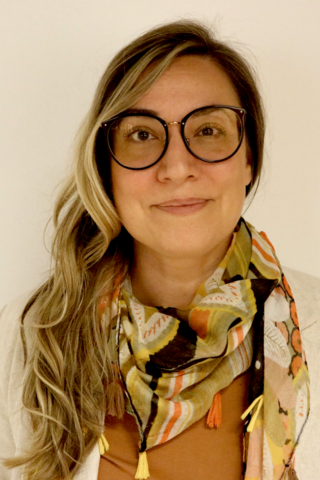
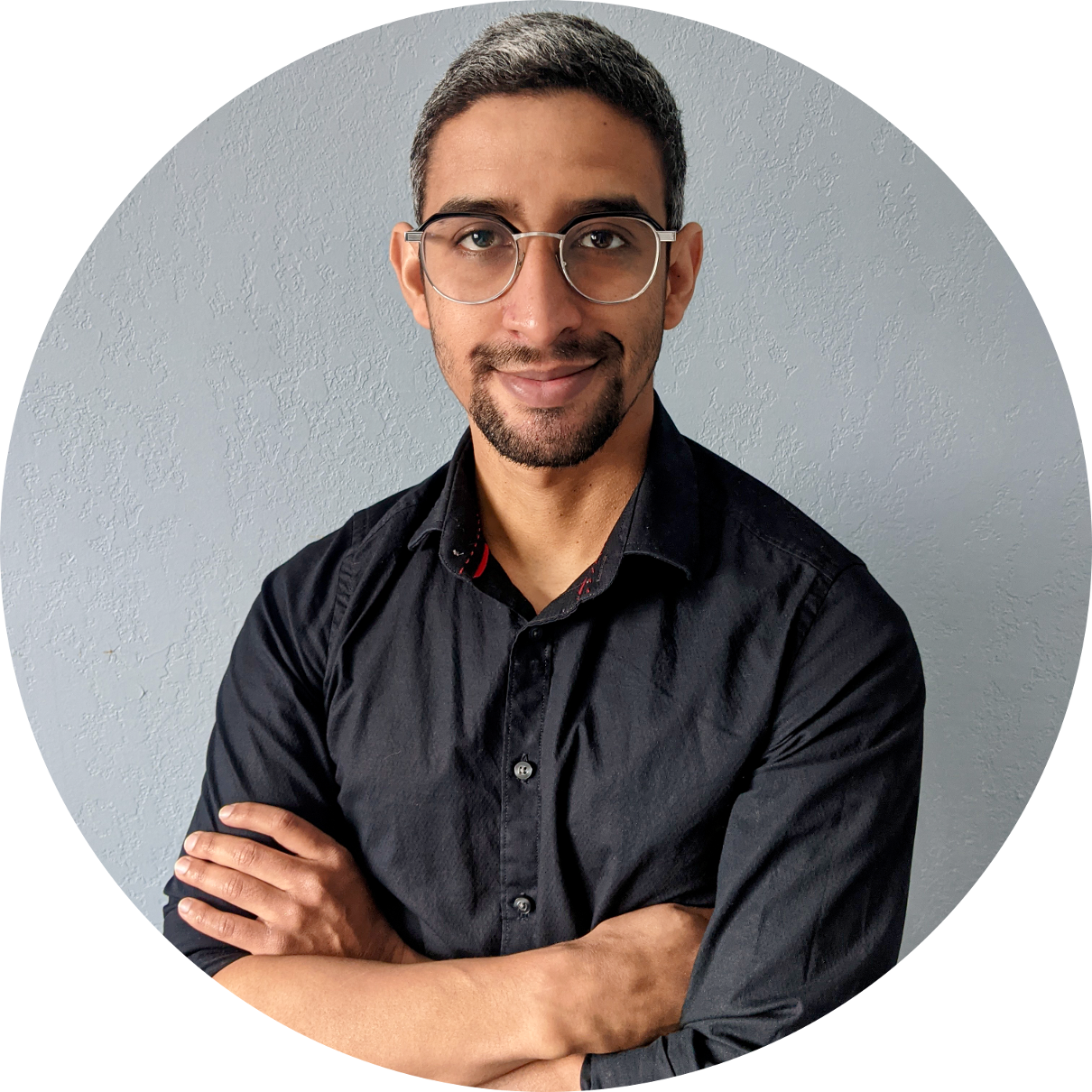
Line Katrine Harder Clemmensen is an Associate Professor at the Department of Applied Mathematics and Computer Science, Technical University of Denmark (DTU), affiliated with the DTU Microbes Initiative. She holds a Ph.D. from DTU's IMM (2006–2009) and previously served as Principal Data Scientist at the Maersk Group (2016–2017). Her research focuses on machine learning, statistical modeling, deep learning, and sparse methods, applied to environmental, biological, industrial, and financial domains. Notable projects include hydroacoustic modeling in aquaculture systems, AI-driven sea safety, and bio-based sustainability modeling. Her recent work addresses topics like parent-child interaction patterns in OCD, Alzheimer’s treatment via spectral flicker, and genomic studies on social trust. She supervises multiple PhD students, including those exploring Raman spectroscopy applications and contamination detection in drug products. Language skills include Danish, English, Spanish, French, and Portuguese.
Yong Zhang is affiliated with Tsinghua University's Research Institute of Information Technology in Beijing, China. His research focuses on machine learning, optimization algorithms, edge computing, and their applications in areas like time series analysis, federated learning, and sensor networks. He has collaborated on projects involving neural networks, scheduling problems, and privacy-preserving techniques. Education: Yong Zhang earned a PhD in Computer Science and Engineering from Fudan University in 2007. His academic career includes roles at institutions like the Chinese Academy of Sciences and the University of Hong Kong, reflecting a strong interdisciplinary background. Research Contributions: His work spans theoretical computer science, algorithm design, and applied machine learning. Notable areas include developing efficient scheduling algorithms for energy systems, creating robust federated learning frameworks for industrial demand forecasting, and advancing methods for sentiment analysis using multimodal data. He has also contributed to biomedical engineering through smartphone-based health monitoring systems. Collaborations: He frequently collaborates with researchers at institutions like the University of Electronic Science and Technology of China, Nanyang Technological University, and The Hong Kong Polytechnic University. Key projects involve data caching optimization in edge computing, distributed algorithms for dynamic networks, and combinatorial optimization problems. Labs & Future Work: His team explores cutting-edge topics in AI-driven systems, including trust-aware machine learning, distributed resource allocation, and real-time data processing for IoT applications. Current research emphasizes scalable solutions for complex optimization challenges in both academic and industrial settings.
Sojung Bahng is an Assistant Professor in the Department of Film and Media at Queen’s University, with a cross-appointment to the DAN School of Drama and Music. Her work bridges multidisciplinary art, practice-based research, and digital media innovation. She holds a PhD from Monash University’s SensiLab (Australia), recognized with the 2020 Mollie Holman Medal for her thesis on cinematic VR. Her research focuses on digital storytelling, VR aesthetics, and the intersection of technology with cultural narratives. Education: PhD in Information Technology (SensiLab, Monash University) Masters in Culture Technology (KAIST, South Korea) BFA in TV/Film Production & Art Theory (Korea National University of Arts) Research explores VR’s potential for reflexive storytelling beyond immersion, emphasizing ethical engagement and cross-cultural narratives. Notable projects include Sleeping Eyes (narcolepsy simulation), Anonymous (VR identity exploration), and Floating Walk (autobiographical documentary). She curates Somplexity , a posthumanist art project funded by Seoul Foundation for Arts and Culture. Awards include the Mollie Holman Medal (2020) and Excellence in Experience Design (Sleeping Eyes). Current SSHRC-funded project Meta-Metaverse investigates digital art approaches to the metaverse. Her work is exhibited globally at venues like Heide Museum (Melbourne), ISEA (Dubai/Montreal), and festivals such as BIAF and TSFM. Grants and collaborations include SSHRC funding and leadership in Research-Practice , a framework exploring research/practice intersections. Her academic contributions span peer-reviewed journals (SIGCHI, ACM Interactions) and conferences (ISEA, ICIDS).
Prof. Dr. Zeki Bayram is a full Professor and current Chairman of the Computer Engineering Department at Eastern Mediterranean University (EMU). He has served as the founding chairman of the Internet Technologies Research Center (2006) and chaired the departmental ABET committee from 2010 to 2023. His academic contributions span semantic web services, mobile payment systems, and XML-based technologies. Founded Cybersoft Bilişim Teknolojileri Limited, a dormant software company in North Cyprus Active in academic service, including thesis supervision and editorial roles Teaches courses on programming languages, automata theory, and software tools Research focuses on semantic web service composition, secure payment schemes, and declarative programming paradigms. His work integrates logic programming, constraint solving, and ontology engineering. Prof. Bayram has published extensively in journals and conferences since the 1990s, with notable contributions to formal methods in service-oriented architectures.
Chi-Chun Lee (Jeremy) is a Professor and Associate Chair in the Department of Electrical Engineering at National Tsing Hua University (NTHU), Taiwan. He also serves as Director of the NVIDIA-NTHU Joint Innovation Center and leads the Behavioral Informatics & Interaction Computation (BIIC) Lab. His academic journey includes a B.S. (magna cum laude) and Ph.D. in Electrical Engineering from the University of Southern California (USC), USA (2007 and 2012), followed by roles as a data scientist at id:a lab and technical consultant for companies like E.Sun Bank and Allianz Taiwan. Research focuses on speech processing, affective computing, health analytics, and behavior signal processing. He is an IEEE Senior Member and holds editorial roles in top journals such as IEEE Transactions on Affective Computing and Multimedia. Key contributions include leading teams to international competitions (e.g., 1st place in INTERSPEECH 2009 Emotion Challenge) and developing AI frameworks for clinical applications like respiratory sound classification and tumor image synthesis. Recipient of prestigious awards including the NTHU-Novatek Distinguished Talent Chair (2024), National Science and Technology Council Outstanding Research Award (2023), and multiple best paper awards. His work bridges academia and industry, with collaborations extending to NVIDIA and startups like AHEAD Medicine. Research has been featured in major media outlets including Scientific American and Discovery.
Samah Fodeh is an Associate Professor in the Department of Emergency Medicine at Yale School of Medicine, with a secondary appointment in Biostatistics and affiliation with the VA Connecticut Healthcare System. Her research focuses on leveraging AI and machine learning to improve patient-centered care, particularly in healthcare communication, opioid addiction, HIV outcomes, and pandemic response. She leads the Fodeh Lab and collaborates on NIH-funded projects like the Bridge2AI Program. Education: PhD in Biomedical Informatics from Michigan State University (2010). Research Interests: Her work integrates AI techniques to analyze patient-generated and clinical data, including social media and electronic health records. Key areas include detecting patient preferences, improving pain care quality, and addressing public health crises like opioid misuse and suicide risk through Twitter-based analyses. She also develops predictive models for fall risks in aging populations with HIV. Publications: Over 39 peer-reviewed articles, emphasizing AI-driven solutions in healthcare. Recent work includes risk models for HIV patients, opioid misuse detection on social media, and pandemic-related sentiment analysis. Labs/Teams: Director of the Fodeh Lab, part of Yale’s Data Mining and Health Informatics initiatives. Collaborates with interdisciplinary teams at the Yale School of Public Health and computational biology programs.
Prof. Dorothy Kenny is a full professor of Translation Studies at Dublin City University, affiliated with the School of Applied Language & Intercultural Studies. She holds a BA in French and German from DCU, an MSc in Machine Translation, and a PhD in Language Engineering from the University of Manchester. Her research focuses on AI in literary translation, corpus linguistics, machine translation ethics, and translation pedagogy. She led the EU-funded MultiTraiNMT project (2019–2022), developing materials for MT education. She co-edits the journal Translation Spaces and is an Honorary Fellow of the Chartered Institute of Linguists (UK). Education: BA in French and German, Dublin City University MSc in Machine Translation, University of Manchester PhD in Language Engineering, University of Manchester Research Interests: Her work bridges theoretical and applied translation studies, emphasizing corpus-based methods, machine translation ethics, and the impact of AI on literary translation. Recent projects explore customization of MT for literary texts and ethical workflows in MT. Awards & Recognition: 2020: Co-edited Fair MT: Towards Ethical, Sustainable Machine Translation 2017: Edited Human Issues in Translation Technology 2020: Honorary Fellowship from the Chartered Institute of Linguists Grants & Projects: Principal Investigator of MultiTraiNMT (EU-funded, 2019–2022) Recipient of Ulysses Travel Grant (2018–2019) for collaboration with Université Grenoble-Alpes Labs & Teams: She directs research at the Centre for Translation and Text Studies (CTTS) , fostering interdisciplinary work on translation technology and corpus linguistics.
Carolin Schwegler is a Senior Researcher at the University of Cologne’s Multidisciplinary Environmental Studies in the Humanities (MESH) and the Department of German Linguistics and Literature 1. Her work focuses on pragmatics, multimodal discourse, and conversation analysis, with an applied emphasis on environmental and medical humanities. She earned a Master’s in German Studies and Philosophy, and a doctorate in German Linguistics (summa cum laude) from Heidelberg University, where her thesis analyzed argumentation strategies in climate and sustainability discourse across media and corporate reports. Affiliations: MESH, Department of German Linguistics and Literature 1 Interdisciplinary Projects: Leads subprojects in PreTAD (predictive turn in Alzheimer’s), CCM (Cultural Climate Models), and HESCOR (Human and Earth System Coupled Research), funded by EU, DFG, and state grants. Her research interests include sustainability communication, risk and disaster communication, future imaginaries, green tourism, language and pain, and sociolinguistics of plant studies. She analyzes linguistic practices in predictive medicine, climate discourse, and interdisciplinary collaborations. Recent work explores dementia risk prediction ethics, social media climate imaginaries, and multimodal identity construction. Her publications span edited volumes on health literacy, mental illness, and language-nature links, alongside articles in LiLi , Alzheimer’s & Dementia , and OBST . She actively presents at conferences globally and collaborates internationally with teams in neuroscience, ethics, and environmental policy.
Weipeng Zhou is a Postdoctoral Associate at the Yale School of Medicine within the Department of Biomedical Informatics and Data Science . Working under Professor Hua Xu , he specializes in pre-training and evaluating large medical language models using electronic health records and medical claims data. His work bridges Natural Language Processing , Biomedical Data Science , and Clinical Informatics to address critical healthcare challenges. PhD in Medical Informatics from the University of Washington (2025) Bachelor's in Computer Science and Statistics from the University of Wisconsin (2019) His research involves NLP/LLM applications in healthcare domains such as: Long COVID characterization and prediction Cardiovascular disease analysis Suicide prevention through clinical text mining Clinical note section identification Emerging water contaminant detection via PubMed article analysis His publications focus on model transferability , automated cohort discovery , and contextual health research tools . Notable collaborations include work with teams at University of Washington and Yale .
Juan Rojas, MD, MS is an Assistant Professor in the Department of Internal Medicine at Rush Medical College. He holds multiple leadership roles including Associate Chief Medical Information Officer and Director of the Rush Health Equity Analytics Studio. He is also the Associate Program Director for the Clinical Informatics Fellowship. His research focuses on critical care medicine, healthcare informatics, and machine learning applications in healthcare. Dr. Rojas leads the Rush Health Equity Analytics Studio, addressing disparities through data-driven solutions. He is a key contributor to the Common Longitudinal ICU Data Format (CLIF) initiative, advancing multi-institutional critical care research. His work emphasizes standardizing ICU-to-ward handoffs via tools like the ICU-PAUSE framework, improving communication and patient outcomes. His research spans ventilator management, sepsis protocols, and AI-driven predictive models for ICU readmissions and discharge planning. Collaborations across institutions highlight his commitment to evidence-based practices in critical care and health equity. He has also explored the impact of cultural factors, such as patient language preferences, on sedation practices in intensive care settings. Dr. Rojas has led quality improvement projects to enhance resident education and patient care in pulmonary and critical care fellowships. His contributions to national surveys on AI adoption in healthcare provide insights into health system priorities and challenges. His work continues to bridge clinical practice, technology, and health equity in critical care environments.
Kevin Gary is an Associate Professor in the School of Computing and Augmented Intelligence (SCAI) within the Ira A. Fulton Schools of Engineering at Arizona State University (ASU). He joined ASU in 2004 after prior industry experience and faculty work at the Catholic University of America. His research focuses on software agility, open source software, and applications in healthcare and e-learning. He has contributed to mHealth platforms addressing pediatric chronic conditions and adaptive e-learning systems. Education: Ph.D. in Computer Science from Arizona State University (1999). Research Interests: Software Architecture, Agile Methods, Open Source Software, Healthcare Informatics, and Educational Technology. His recent work explores agile impact on regression testing and lean metrics in open source software. He has developed mobile health apps for asthma, epilepsy, and anxiety, leveraging agile principles and AI. Teaching & Innovation: Created the Software Enterprise program, an industry-aligned pedagogy integrated into ASU’s software engineering curriculum. This initiative earned the President’s Award for Innovation in 2011. He has taught courses in software engineering, web applications, and secure software systems. Grants & Projects: Led projects funded by NSF, industry partners (e.g., UNICON, GEORGETOWN UNIV MED CTR), and foundations (Children’s National Medical). Notable projects include the Image-Guided Surgical Toolkit and the ATIC-funded Software Enterprise pedagogy model. Service: Reviewed for journals/conferences, served as Associate Chair of computing programs, and contributed to professional organizations (IEEE, ACM, ASEE).
Prof. Peter van der Heijden is a Professor of Statistics for the Social and Behavioural Sciences at Utrecht University's Department of Methodology and Statistics. He also holds a professorship in Social Statistics at the University of Southampton. His roles include chairing the Ethical Review Board and the Committee for Policy on Integrity at Utrecht's Faculty of Social and Behavioural Sciences. He chairs the Advisory Council on Methodology and Quality of Statistics Netherlands and serves on the Executive Board of the European Statistical Advisory Committee (ESAC). Since 2017, he has led Utrecht's Applied Data Science focus area, focusing on human-centered AI and data-driven solutions. His research emphasizes population size estimation, fraud detection, and categorical data analysis, with applications for Dutch ministries and international bodies like the UN. He has pioneered methods for estimating human trafficking victims and optimizing healthcare treatments using multilevel models and neural networks. Key projects include the AI for Health initiative with Utrecht Medical Center and Wageningen University. His work bridges statistical rigor with societal impact, addressing challenges in criminal justice, public health, and policy-making through innovative methodologies. Universities: Utrecht University (Primary), University of Southampton Key Committees: European Statistical Advisory Committee, UN Human Trafficking Monitoring Research Themes: Multiple Systems Estimation, Data Science for Social Issues Research interests span statistical methods for complex societal problems, including: Register linkage and fraud detection Machine learning applications in healthcare Human trafficking prevalence estimation His publications (2019-2023) highlight advancements in multilevel modeling, randomized response techniques, and AI-driven clinical data classification. He has advised on policy frameworks for official statistics and contributed to global initiatives like the UN Sustainable Development Goals (Target 16.2). Grants and collaborations include projects with Dutch ministries, the EU, and international organizations. Current initiatives involve optimizing Hepatitis C treatment networks and improving criminal recidivism prediction models. His leadership in interdisciplinary teams ensures methodological innovation addresses real-world challenges.
Tania Cerquitelli is a Full Professor in the Department of Control and Computer Science (DAUIN) at Politecnico di Torino, where she leads research in data science, concept-drift management, and inclusive AI technologies. She is a member of SmartData@PoliTO, the GEDI Observatory for Gender Equality, and serves in leadership roles related to social affairs and community policies at the university level. She also acts as a scientific advisor for the partnership with Accenture. Her research interests span Data Science , Concept-Drift Management , Database Systems , Conversational Data Science , and Industry 4.0 . She applies AI and machine learning to industrial, societal, and ethical challenges, particularly in promoting inclusive communication and gender equality in research. The most recent publications highlight her work in explainable AI, concept drift detection, multimodal diagnostics, and AI for social good. Her research integrates machine learning, natural language processing, and computer vision to address real-world problems in manufacturing, healthcare, agriculture, and education. She is an Associate Editor for several prestigious journals including Expert Systems with Applications , Computer Networks , Future Generation Computer Systems , and Knowledge and Information Systems . She has served on the program committees of major conferences such as ECML PKDD, EDBT/ICDT, and ACM KDD, and has been a reviewer and selection committee member for ETH Zurich and EMPA. She actively supervises PhD students and teaches a wide range of courses including Data Science and Database Technologies, Business Intelligence for Big Data, and Gender and Diversity in Research. She is involved in multiple national and international research projects such as E-MIMIC, WEBFARE, and EnABLES, focusing on inclusive AI, smart data, and industrial applications. Her lab affiliations include the DBDM - Database and Data Mining Group (DAUIN) and the Interdepartmental Center SmartData@PoliTO - Big Data and Data Science Laboratory , where she contributes to advancing data science methodologies and their societal impact.
Diego Patiño is an Assistant Professor in the Department of Computer Science and Engineering at the University of Texas at Arlington (UTA), a position he began in September 2024. He earned his Ph.D. in Computer Engineering from the National University of Colombia in 2020, following M.S. and B.S. degrees from the same institution. Prior to joining UTA, he served as a Postdoctoral Fellow at Drexel University and a Postdoctoral Researcher at the GRASP Laboratory, University of Pennsylvania. B.S. in Computer Engineering, National University of Colombia, 2010 M.S. in Computer Engineering, National University of Colombia, 2012 Ph.D. in Computer Engineering, National University of Colombia, 2020 Dr. Patiño's research centers on geometric computer vision and machine learning, with applications in robotics and 3D vision. His primary interests include 3D reconstruction, graph neural networks, symmetry detection, physics-informed machine learning, and reinforcement learning. He develops algorithms that integrate geometric priors and physical constraints into deep learning models to improve robustness and generalization in real-world robotic systems. His recent publications demonstrate a strong trend in leveraging implicit neural representations for 3D shape reconstruction, applying graph neural networks to swarm robotics, and enhancing computer vision tasks with self-supervised and physics-informed learning. Work spans high-impact venues such as IEEE RA-L, ICRA, ICPR, and MICCAI, showing a consistent focus on geometric reasoning, robotic perception, and medical imaging applications. His scientific contributions have been recognized with awards from the UTA Division of Student Affairs for exceptional dedication and positive impact (2024 and 2025). He is actively involved in securing research funding, with multiple grants under review from NSF, Air Force SBIR, and industry partners like Sony. Exceptional dedication and positive impact recognition, UTA Division of Student Affairs (December 9, 2024) Exceptional dedication and positive impact recognition, UTA Division of Student Affairs (April 30, 2025) Dr. Patiño advises and serves on committees for multiple graduate students in computer science and engineering, including doctoral and master’s candidates. He is also leading or co-leading several research grants under review, covering topics such as aerial swarm navigation, neuromorphic sensing, and industrial computer vision. He teaches graduate courses in computer vision and is involved in service roles including PhD admissions and faculty appointments committees. He is affiliated with research initiatives at UTA, including the UTARI Research Institute, where he has presented on geometric modeling and physics-informed learning. His lab focuses on developing next-generation computer vision algorithms for robotics, industrial inspection, and safety-critical systems.
George Vouros is a Professor in the Department of Digital Systems at the University of Piraeus, Greece. He is the head of the AI Lab (http://ai-group.ds.unipi.gr/ai-group/) and director of the MSc in Artificial Intelligence program in collaboration with the Institute of Informatics and Telecommunications at NCSR Demokritos. He completed his BSc in Mathematics (1986) and PhD in Artificial Intelligence (1992) at the University of Athens. His research focuses on Expert Systems, Knowledge Management, Multi-Agent Systems, Reinforcement Learning, and Mobility Analytics. He has served as program chair and committee member for major conferences (AAMAS, AAAI, IJCAI) and editorial roles in journals like Discover Artificial Intelligence (Springer Nature) and Information (MDPI). He has supervised 13 PhD students and currently oversees 4. His work spans EU-funded projects and national initiatives, emphasizing scalable mobility analytics, air traffic management automation, and ontology engineering. He is also President of the Hellenic A.I. Society and actively promotes interdisciplinary applications of AI in healthcare, transportation, and environmental monitoring. Recent research highlights include deep reinforcement learning for tactical air traffic conflict resolution, LLM-integrated ontology engineering, and multimodal generative adversarial imitation learning for flight trajectory modeling. His work bridges theoretical advancements with real-world applications in critical infrastructure systems.