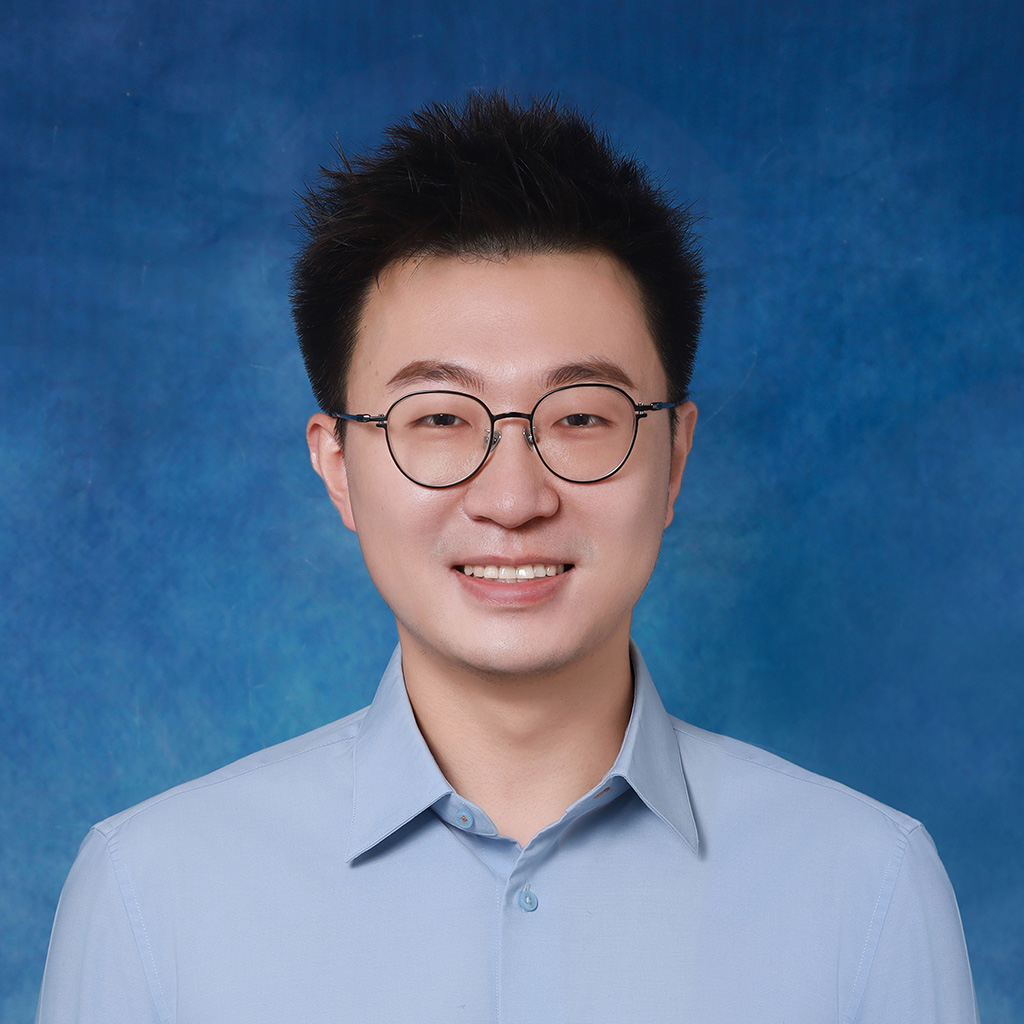
Wenzhuo Zhou is an Assistant Professor in the Department of Statistics at the University of California, Irvine (UCI), affiliated with the Donald Bren School of Information & Computer Sciences. His research bridges machine learning theory and practice, focusing on reinforcement learning, deep representation learning, and large language models. He emphasizes developing efficient, reliable AI algorithms to address challenges in healthcare, finance, and robotics. Research Interests: Statistical foundations of learning algorithms Sample efficiency and model generalization Alignment of AI models with human preferences Applications in healthcare (e.g., cancer, diabetes, Alzheimer’s), finance, and robotics Collaborations involve domain experts in medical research, semantic search, and financial systems. His team adapts existing methods and develops new pipelines for real-world problem-solving. No scientific awards or grants are explicitly listed in the provided text. Advising details are mentioned but without specific student names. The Center for Statistical Consulting is part of his professional environment.
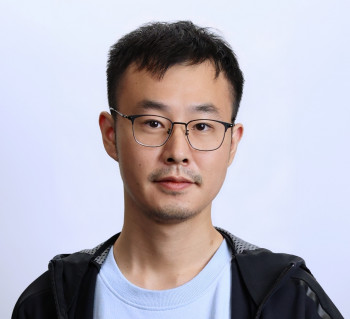
Dr. Ziquan Liu is a Lecturer (Teaching & Research) at Queen Mary University of London's School of Electronic Engineering and Computer Science, affiliated with the Centre for Multimodal AI. He holds a PhD from City University of Hong Kong (2023) and dual B.Sc./B.Eng. degrees from Beihang University (2017). His research focuses on trustworthy machine learning, adversarial robustness, and uncertainty quantification in foundation models. He has served as a reviewer for top conferences like NeurIPS, ICLR, and CVPR, earning an Outstanding Reviewer Award in 2021. His teaching includes modules on machine learning for visual data analysis and principles of machine learning. He supervises PhD students in AI safety and reliability, with notable work on conformal prediction, adversarial attacks, and multimodal learning. His research outputs span top venues such as ICML, CVPR, and NeurIPS, addressing challenges in algorithmic fairness, model certification, and cross-modal alignment.
Dr. Svetlana Yanushkevich is a Professor in the Department of Electrical and Software Engineering at the Schulich School of Engineering, University of Calgary. She is also a Full Member of the Hotchkiss Brain Institute and the Mathison Centre for Mental Health Research and Education. Her research focuses on biometric technologies, decision support systems, biomedical applications, and computational intelligence. She leads the Biometric Technologies Laboratory, developing strategies for risk assessment in biometric systems and healthcare monitoring through machine reasoning and signal processing. Education : BSc/MSc in Electrical Engineering (1989), State University of Informatics and Radioelectronics, Minsk PhD in Electrical Engineering (1992), same institution Dr. Habilitated in Technical Sciences (1999), Warsaw University of Technology Research Interests : Dr. Yanushkevich’s work spans biometric system design (e.g., gait analysis, facial attributes), decision support via probabilistic models (Bayesian networks, causal inference), biomedical applications (stroke rehabilitation, wearable sensors), and computational intelligence for data science. She emphasizes fairness, bias mitigation, and trustworthiness in AI systems, particularly in healthcare and accessibility contexts. Recent Research Trends : Her recent publications address causal modeling for accessibility barriers, UAV operator cognitive workload, and medical device optimization in radiation therapy. She explores AI ethics, stress contagion in human-robot teams, and cross-spectral biometric systems. Awards & Recognition : 2024 FEIC Fellow (Engineering Institute of Canada) 2019 Research Excellence Award (Schulich School of Engineering) 2001 Senior IEEE Membership Advising & Grants : She coordinates courses like ENCM 509 (Biometric Systems Design) and ENEL 610 (Biometric Technologies). Her research is supported by grants focusing on healthcare AI, accessibility technologies, and computational epidemiology. Labs & Collaborations : Her Biometric Technologies Lab collaborates with institutions like Hokkaido University and the IEEE Computational Intelligence Society. Projects include wearable health monitoring, decision support platforms, and AI-driven epidemiological modeling.
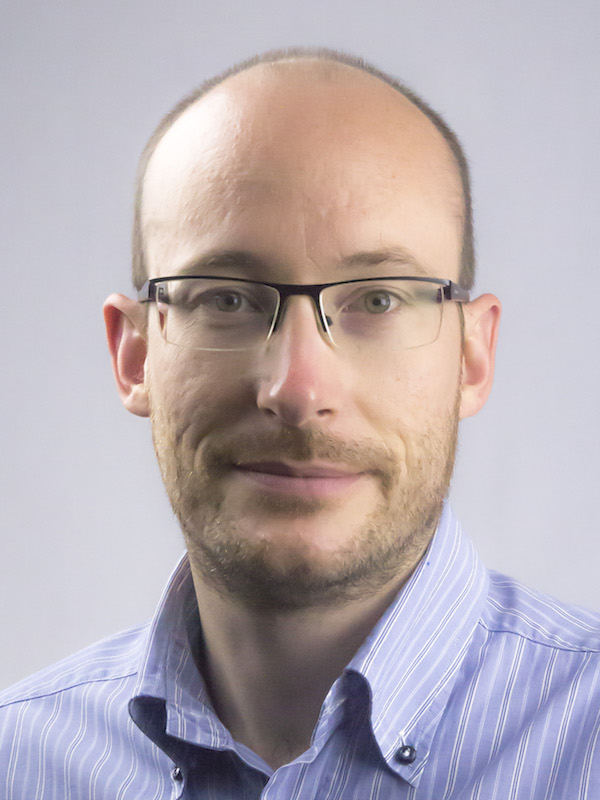
Professor Peter Chin is a Professor of Engineering at Dartmouth College and Director of the Learning, Intelligence + Signal Processing (LISP) Lab. He holds affiliations with the Thayer School of Engineering and serves as Associate Editor of IEEE Transactions on Computational Social Systems. His research bridges signal processing, machine learning, game theory, and differential geometry, with applications in cybersecurity, healthcare, and network analysis. Education: Bachelor of Science in Electrical Engineering, Computer Science, and Mathematics from Duke University (1993) Doctor of Philosophy in Mathematics from MIT (1998) Research Interests: Chin’s work focuses on fundamental questions at the intersection of machine learning, game theory, and signal processing. His lab explores topics like adversarial defense mechanisms, topological machine learning, and computational neuroscience. Recent projects include cybersecurity resilience modeling, medical imaging enhancements via GANs, and multi-agent reinforcement learning frameworks. Publications Trends: His most recent articles address cutting-edge challenges in cybersecurity (e.g., autonomous defense systems), medical AI (e.g., Alzheimer’s classification), and adversarial robustness. A notable 2025 focus is on quantitative resilience modeling for cyber defense, reflecting growing demand for AI-driven security solutions. Awards: Faculty Scholar Award, Duke University George Sherred III Award, Duke University Julia Dale Memorial Award, Duke University Grants & Leadership: Recipient of DARPA cybersecurity research grants Co-chair for SPIE/DSS Cyber Sensing Conference (2013–2020) Developed novel compressive sensing microscope for biological imaging LISP Lab: This interdisciplinary lab pioneers projects like nFlip (multiplayer security game models) and topological machine learning frameworks, emphasizing practical applications of theoretical advancements.
Eric Widera is a Professor of Clinical Medicine in the Division of Geriatrics at the University of California San Francisco (UCSF) School of Medicine. He serves as Director of the Hospice & Palliative Care Service at the San Francisco VA Medical Center, where he leads clinical, educational, and programmatic initiatives. He is a nationally recognized clinician-educator with leadership roles in the American Academy of Hospice and Palliative Medicine (AAHPM) and the Association of Directors of Geriatrics Academic Programs (ADGAP), where he served as past president. Dr. Widera completed his education with a B.S. in Biology from the University of California, Irvine, an M.D. from UCSF, followed by residency in Internal Medicine at Mount Sinai Hospital and fellowship in Geriatric Medicine at UCSF. He further enhanced his academic skills through the Teaching Scholars program and Diversity, Equity, and Inclusion Champion Training at UCSF. His research and academic focus centers on improving care for older adults with serious illness through educational innovation, prognostication, communication, and policy. He is deeply engaged in medical education, having directed the Geriatrics Fellowship at UCSF for over a decade and currently mentoring residents, fellows, and pharmacy trainees. A key interest is the role of digital media in medical education, exemplified by his co-founding of GeriPal, a leading podcast and blog, and ePrognosis, an online prognostic calculator tool. His recent publications span palliative care, Alzheimer’s disease, medical ethics, and health policy, often addressing critical issues in aging and end-of-life care. His scholarly output is extensive and impactful, with recent articles in JAMA , JAMA Internal Medicine , and The New England Journal of Medicine . The body of his work demonstrates a consistent focus on practical clinical challenges, ethical dilemmas, and system-level improvements in care for vulnerable older populations. Themes include prognostic communication, advance care planning, dementia care, and the integration of palliative services across specialties. Dr. Widera has received numerous scientific awards recognizing his excellence, including: Hastings Center Cunniff-Dixon Physician Award (2011) AAHPM Hospice and Palliative Medicine Leaders Under 40 (2015) PDIA Palliative Medicine National Leadership Award (2014) "Visionary in Hospice and Palliative Medicine" Award (2018) Excellence in Teaching Award, Academy of Medical Educators, UCSF (2022) Master Clinician, Council of Master Clinicians, UCSF (2024) He has been the recipient of multiple grants, including the Geriatric Academic Career Award (GACA), and his work has influenced national policy and clinical guidelines. He is an active advisor and educator, shaping the next generation of geriatrics and palliative care leaders. Through his clinical leadership, educational programs, digital platforms like GeriPal, and national advocacy, Dr. Widera plays a pivotal role in advancing the fields of geriatrics and palliative medicine. His work is supported by a robust interdisciplinary team at the San Francisco VA, and he collaborates widely with researchers across UCSF and nationally. His leadership in developing educational resources and digital tools has significantly expanded the reach and impact of geriatrics and palliative care knowledge.
Dr. Hamidreza Mohades Kasaei is an Associate Professor in the Department of Artificial Intelligence at the University of Groningen, Netherlands. He holds positions in both the Faculty of Science and Engineering and the Faculty of Medical Sciences/UMCG, focusing on Robotics and image-guided minimally-invasive surgery. His work bridges theoretical advances in machine learning with practical robotic applications. Dr. Kasaei's research focuses on developing algorithms for adaptive perception systems through interactive environment exploration and open-ended learning. His specific interests include 3D object perception, grasp affordance detection, object manipulation, and active perception. He has evaluated his research on various robotic platforms including PR2, UR5e, Kinova, Franka robotic arms, and humanoid robots. His work enables robots to learn from past experiences and intelligently interact with non-expert human users using data-efficient techniques. Analysis of his recent publications reveals strong trends toward increasingly sophisticated manipulation capabilities, particularly in dual-arm coordination and handling dense clutter. There's a clear progression toward integrating language models with robotic control systems, as seen in works like 'Lifelong Robot Library Learning' and 'Towards Open-World Grasping with Large Vision-Language Models.' His research consistently addresses real-world challenges in agricultural robotics, assistive technologies, and service robotics applications. Gratama Science Award (2022) Google Research Scholar Award in Machine Learning (2023) Outstanding Associate Editor for IEEE Robotics and Automation Letters (2023) Dr. Kasaei has successfully supervised multiple PhD students including Zhenxing Zhang (thesis on 'Generative Adversarial Networks for Diverse and Explainable Text-to-Image Generation') and Hamed Ayoobi (thesis on 'Explain What You See: Argumentation-Based Learning and Robotic Vision'). His research is supported by significant grants including the Google Research Scholar Award for 'Continual Robot Learning in Human-centered Environments' and various conference organization roles including workshops at RSS 2023 and NeurIPS 2022. He leads the Lifelong Interactive Robot Learning Lab (IRL-Lab), which focuses on six key research directions: Perception and Perceptual Learning, Object Grasping and Manipulation, Lifelong Interactive Robot Learning, Dual-Arm Manipulation, Dynamic Robot Motion Planning, and Exploiting Multimodality. The lab develops cutting-edge approaches for robots to learn in open-ended fashion through interaction with non-expert human users, with applications in assistive robotics for people with disabilities.
Sarah Collins Rossetti is an Associate Professor of Biomedical Informatics and Nursing at Columbia University’s Vagelos College of Physicians and Surgeons. She focuses on leveraging computational tools to reduce documentation burden in EHR systems and improve patient safety through predictive analytics. PhD in Nursing from Columbia University School of Nursing Post-Doctoral Research Fellowship at Columbia’s Department of Biomedical Informatics Her research emphasizes AI-driven patient deterioration prediction , user-centered design , and interprofessional collaboration to enhance clinical workflows. She co-leads the CONCERN Early Warning System study, which reduced mortality risk by 35% and sepsis risk by 7.5%. Recent publications highlight trends in generative AI limitations in EHRs, equity in predictive systems , and healthcare process modeling . She chairs AMIA’s 25×5 Task Force to reduce documentation burden by 75% by 2025. 2019 PECASE recipient 2024 Donald A.B. Lindberg Award for Informatics Innovation 2019 FAMIA recognition Rossetti collaborates with health analytics centers and trains future researchers through NIH- and AHRQ-funded projects, blending machine learning with clinical expertise in critical care settings.
Guido Zuccon is a Professorial Research Fellow at the School of Electrical Engineering and Computer Science , The University of Queensland (UQ), where he leads the Information Engineering Lab (ielab) . He serves as the AI Director for the Queensland Digital Health Centre (QDHeC) and is an Affiliate Professor at the UQ Centre for Health Services Research . He was previously a Lecturer and Senior Lecturer at Queensland University of Technology and a Postdoctoral Fellow at CSIRO. His research spans Information Retrieval , Health Search , Formal Models of Search , and Health Data Science , with a strong focus on consumer health search, cohort identification, clinical decision support, and systematic review automation. He has pioneered work on search interaction, semantic models, and the evaluation of retrieval systems in health contexts. His recent publications highlight a strong trend toward leveraging large language models (LLMs) for zero-shot retrieval, federated search, dense retrieval, and query formulation. His work integrates advanced neural methods with practical applications in healthcare, including systematic review automation and clinical AI. He frequently publishes at top venues such as SIGIR, ECIR, and WSDM, often in collaboration with key researchers like Bevan Koopman, Shengyao Zhuang, and Harry Scells. ARC DECRA Fellow (2018–2020) Best Paper Awards at AIRS 2017, CLEF 2016, ALTA 2015, ECIR 2012 Best Reviewer Award at ECIR 2014 Principal Investigator on ARC Discovery Projects and MRFF grants Guido Zuccon actively supervises a large cohort of PhD students, primarily in areas related to neural information retrieval, health search, and systematic review automation. He has led significant research projects funded by the ARC, Google, Microsoft, GRDC, and CSIRO. He is a key organizer of international evaluation labs such as the CLEF eHealth Consumer Health Search task and the TREC 2019 Decision Track. He leads the ielab , a vibrant research group focused on information retrieval and data science, and contributes to major open-source initiatives like Big Brother , a tool for logging user interactions in web studies.
Shweta Yadav is an Assistant Professor in the Department of Computer Science at the University of Illinois Chicago (UIC). Prior to this, she was a Bridge to the Faculty (B2F) fellow at UIC and a postdoctoral research fellow at the U.S. National Library of Medicine, NIH. She holds a Ph.D. in Computer Science from the Indian Institute of Technology Patna, India. Education: Ph.D. in Computer Science, Indian Institute of Technology Patna, India Research Interests Her research focuses on the intersection of Natural Language Processing (NLP), Healthcare Informatics, Biomedical Text Mining, and Computational Social Science. She develops machine learning algorithms to advance AI applications in healthcare, particularly in medical document summarization , disease progression modeling , and health outcome prediction using electronic health records and social media data. Her work emphasizes interdisciplinary collaboration to address real-world healthcare challenges. Recent Publications Her recent publications highlight advancements in Multimodal Mental Health Analysis , Perspective-aware Healthcare Summarization , and Biomedical Relation Extraction . She employs techniques like Transformer models , Contrastive Learning , and Attention Frameworks to tackle low-resource settings and extract insights from complex data sources.
Tianming Liu serves as a Distinguished Research Professor in the School of Computing at the University of Georgia, with courtesy faculty appointments in the Department of Epidemiology and Biostatistics at the College of Public Health and the Institute of Bioinformatics. His academic career at UGA spans from Assistant Professor (2008-2013) to Associate Professor (2013-2015) to full Professor (2015-present), culminating in his recognition as a Distinguished Research Professor in 2017. He also serves as Graduate Program Faculty in the School of Computing. Education: Ph.D. in Computer Engineering, Shanghai Jiaotong University, China (2002) Master of Science in Computer Science, Northwestern Polytechnical University, China (1999) Bachelor of Arts in Computer Science, Northwestern Polytechnical University, China (1998) Dr. Liu's research focuses on the intersection of computer science and neuroscience, with particular expertise in biomedical image analysis, computational neuroscience, and biomedical informatics. His work centers on cortical architecture imaging and discovery, developing advanced computational methods for analyzing brain structure and function. His research spans multiple disciplines including neurosciences, cognitive sciences, biomedical engineering, and clinical sciences, with applications in understanding Alzheimer's disease progression, brain connectomics, and neural architecture. Analysis of Dr. Liu's recent publications reveals a strong trajectory in applying deep learning techniques to neuroimaging data. His work increasingly focuses on developing sophisticated neural network architectures specifically designed for brain connectome analysis, with particular attention to spatiotemporal dynamics and hierarchical organization of brain networks. Recent publications demonstrate his leadership in applying neural architecture search methods to optimize brain network analysis pipelines, with applications spanning from Alzheimer's disease research to fundamental neuroscience questions about cortical folding patterns. Scientific Recognition: Distinguished Research Professor at the University of Georgia (2017) Dr. Liu has secured substantial research funding through multiple competitive grants from NIH and NSF, demonstrating the significance and impact of his work. His most notable projects include the NIH R01 grant "Developing an Individualized Deep Connectome Framework for ADRD Analysis," the NIH R01 grant "Mapping Trajectories of Alzheimer's Progression via Personalized Brain Anchor-nodes," and the NSF CRCNS grant "Exploring the Mechanism of 3-Hinge Gyral Formation and its Role in Brain Networks." These projects highlight his leadership in applying computational methods to address critical challenges in neuroscience and medicine, particularly in the domain of Alzheimer's Disease and Related Dementias (ADRD). Dr. Liu collaborates extensively across disciplines, working with researchers at institutions including University of Virginia, Emory University, UNC Chapel Hill, and UT Arlington. His work has contributed to the development of BiomedGPT, an open-source visual-language foundation model for biomedical applications, demonstrating his commitment to creating accessible tools for the broader research community.
Tara Salman is an Assistant Professor in the Department of Computer Science at Texas Tech University , focusing on distributed systems, blockchain technology, and security/privacy in next-generation networking applications. Her research bridges scalable distributed systems, AI, and security to address challenges in healthcare and financial systems. Research Interests: Distributed, intelligent, and secure networking applications Blockchains and scalable distributed systems Distributed artificial intelligence Security and privacy techniques Publication Trends: Recent work emphasizes federated learning, blockchain security, multi-cloud environments, and quantum blockchain applications. Her research combines machine learning, deep learning, and distributed consensus mechanisms to enhance security in heterogeneous networks.
Sathyanarayanan N. Aakur is an Assistant Professor in the Department of Computer Science and Software Engineering at Auburn University's College of Engineering. Previously, he was an Assistant Professor in the Department of Computer Science at Oklahoma State University. He is an IEEE Senior Member and has received the prestigious NSF CAREER award for his research on multi-modal event understanding. Dr. Aakur received his PhD from the University of South Florida, where he worked with Dr. Sudeep Sarkar in the Computer Vision and Pattern Recognition Group. He also holds a Master's degree in Management Information Systems from the Muma College of Business at the University of South Florida and an undergraduate degree in Electronics and Communication Engineering from Velammal Engineering College, Anna University, India. His research focuses on the intersection of computer vision, natural language processing, and psychology, with the goal of building intelligent agents that understand the visual world beyond simple recognition or captioning. His work encompasses self-supervised predictive learning for video event segmentation, commonsense reasoning to ground perception and prior knowledge, and generative modeling for building knowledge systems. Much of his group's current work focuses on analyzing, modeling, and synthesizing complex video scenes, with applications in agriculture and animal diagnostics. His recent publications demonstrate a strong focus on open-world visual understanding, neurosymbolic reasoning, and multimodal learning. His work spans from fundamental computer vision problems like egocentric action recognition and scene graph generation to applied research in agricultural technology and biomedical informatics. He has successfully published at top-tier conferences including CVPR, ICCV, ECCV, and WACV, as well as in high-impact journals like IEEE TPAMI. NSF CAREER Award (2022) IEEE Senior Member (2024) Dr. Aakur serves as Area Chair for major conferences including CVPR, WACV, ICML, and NeurIPS, and as Associate Editor for Pattern Recognition journal. He has successfully mentored numerous students who have published at top venues in computer vision and machine learning. His research group has received funding from sources including the NSF and USDA for projects related to multimodal time series classification and stress detection in precision agriculture. The lab maintains active collaborations with institutions including the University of South Florida and Florida State University.
Dr. Shweta Singh serves as an Assistant Professor of Information Systems and Management at Warwick Business School, University of Warwick. She concurrently holds prestigious appointments as a Fellow at the Warwick Institute for Global Sustainability Development (IGSD) and a Behavioral Data Science researcher at The Alan Turing Institute in London. Her academic journey includes a Ph.D. in Information and Decision Sciences from the Carlson School of Management at the University of Minnesota, complemented by dual Master's degrees in Computer Science and Applied Economics from the same institution. Ph.D. in Information and Decision Sciences, University of Minnesota Master's in Computer Science, University of Minnesota Master's in Applied Economics, University of Minnesota Dr. Singh's research centers on developing ethical and responsible artificial intelligence systems that address societal challenges. Her work specifically targets mitigating AI bias, creating explainable AI frameworks, and leveraging technology to combat societal injustice. She investigates how digital platforms, sharing economy models, and IT outsourcing create business value while ensuring these technologies promote sustainability and reduce inequalities. Her innovative approach combines technical AI expertise with deep social awareness, particularly focusing on gender equality and child protection in digital spaces. Her publication record demonstrates consistent high-impact contributions to Information Systems Research, International Conference on Information Systems, and related venues. The trajectory of her work shows increasing focus on practical applications of responsible AI, with recent projects addressing online child safety and human trafficking prevention. Her research increasingly intersects with policy development, as evidenced by her contributions to UK Parliamentary Office of Science and Technology briefs. Doctoral Dissertation Fellowship, University of Minnesota McNamara Fellowship, University of Minnesota Social Impact Project of the Year shortlist (2023) Asian Women of Achievement Award finalist (2023) British Indian Awards finalist (2019) Top 5 Women in Tech for Good Award shortlist (2022) Inspiring 50 UK recognition (2025) Dr. Singh actively mentors students and has been recognized with the Staff Social Inclusion Award (2024) for her teaching excellence. Her advisory roles extend beyond academia to include the UN Women UK delegation for the Commission on the Status of Women and the Advisory Board of AI retail company 'Love the Sales'. She serves as an external collaborator for Boston Consulting Group's Henderson Institute, bridging academic research with industry applications. Through her leadership in the ISM-Analytics (ISMA) Group at Warwick, Dr. Singh fosters interdisciplinary collaboration focused on creating socially responsible technological solutions. Her work with the IGSD specifically targets UN sustainability goals related to reducing inequalities and promoting inclusive societies through responsible AI implementation.
Sergiu Nisioi is an Associate Professor at the Faculty of Mathematics and Computer Science, University of Bucharest, with expertise in computational linguistics, machine translation, and text simplification. He bridges cognitive science with NLP through eye-tracking and EEG research, while also exploring sound art and digital autonomy via initiatives like HYPHA.ro. Current projects include PN-IV-P2-2.1-TE-2023-2007 (text complexity/readability), Legal Document Processing , and Europarl Dialectal Corpora Research spans computational psycholinguistics , LSTM-based translation models , and algorithmic composition for sound art His work integrates interdisciplinary methodologies, combining EEG signal processing for architecture data with the University of Architecture, and DSP for ecological projects at chlorophylla.live.
Allen Hsiao MD, FAAP, FAMIA is Professor of Pediatrics, Biomedical Informatics and Data Science, and Emergency Medicine at Yale School of Medicine. He serves as Chief Health Information Officer (CHIO) for Yale School of Medicine and Yale New Haven Health System, and as Vice Chair of Clinical Systems in Biomedical Informatics & Data Science. BA in Biomedical Ethics and MD from Brown University Pediatrics residency at Yale-New Haven Children's Hospital Fellowships in Pediatric Emergency Medicine and Medical Informatics at Yale His research focuses on leveraging health information technology to improve care delivery, with emphasis on electronic health records, clinical decision support, natural language processing, and AI applications. He actively explores how informatics can optimize systems, improve transitions of care, and advance health equity through diverse clinical trial participation. His work spans pediatric emergency medicine, gastroenterology, child abuse detection, and opioid safety. Dr. Hsiao's recent publications demonstrate leadership in AI-augmented clinical decision support, EHR-based machine learning models, and pandemic response infrastructure. His team has developed innovative tools for child abuse identification, gastrointestinal bleeding risk prediction, and collaborative research data platforms. 56 Hospital and Health System CMIOs and CNIOs to Know (Becker's Healthcare, 2023) Healthcare Diversity Leader Award (National Diversity Council, 2023) 48 CMIOs and CNIOs to Know (Becker's Hospital Review, 2022) Norman J. Siegel Faculty Award (Yale School of Medicine, 2022) As principal investigator and co-investigator on NIH and AHRQ-funded grants, he examines health information technology's impact on healthcare quality. He co-directs Yale's CTSA Informatics Core, working with Yale Center for Clinical Investigations to equip researchers with EHR (Epic) and clinical trials management (OnCore) tools. His leadership extends to national committees including American Academy of Pediatrics, HIMSS, and Children's Hospitals Association.