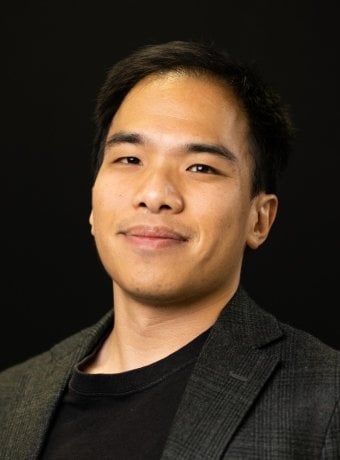
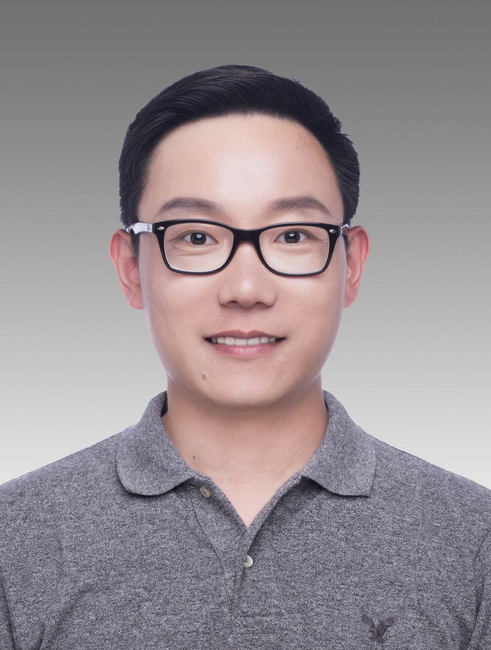
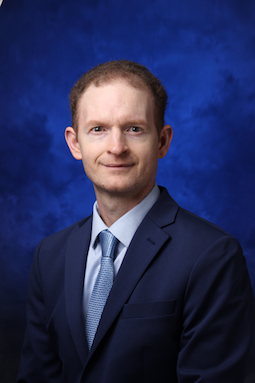
Devid Maniglio is an Associate Professor at the Department of Industrial Engineering, University of Trento. His research focuses on bioengineering, biomaterials, and tissue engineering, with a particular emphasis on bioprinting, surface modification, and functional materials. He has contributed to advancements in silk fibroin and hydrogel-based systems for medical applications. Research Interests Bioengineering for personalized medicine Biomaterials and surface engineering 3D bioprinting and tissue regeneration Molecular imprinting and biosensors Drug delivery and cell encapsulation Teaching Diagnostic and therapeutic technologies for personalized medicine Engineered materials for precision medicine Fundamentals of biomedical technologies Functional surfaces laboratory Labs & Collaborations Devid Maniglio is affiliated with the Functional Surfaces Laboratory at the University of Trento, collaborating with researchers such as Stefano Rossi and Flavio Deflorian. His work integrates interdisciplinary approaches in biomedical engineering and sustainable medical technologies.
Vinh Nguyen is an Assistant Professor in the Department of Mechanical and Aerospace Engineering at Michigan Technological University, where he directs the Michigan Tech Center for AI and coordinates the NIST-PREP program. His research focuses on advanced manufacturing through Industry 4.0, human-robot-machine interaction, and physics-based/data-driven modeling. He has developed solutions for machining, additive manufacturing, metal forming, and robotic assembly to promote smart and sustainable manufacturing. Prior to joining Michigan Tech in 2022, he was a National Research Council Postdoctoral Fellow at NIST (2020–2022). Dr. Nguyen earned his PhD (2020), MS in Mechanical Engineering (2017), and MS in Electrical & Computer Engineering (2017) from Georgia Institute of Technology. He received dual bachelor’s degrees in Electrical and Mechanical Engineering from Rensselaer Polytechnic Institute (2014). His research portfolio spans Advanced Manufacturing Industry 4.0 and 5.0 Human-Robot Interaction Physics-Based/Data-Driven Modeling Industrial Automation based on his lab’s interdisciplinary focus on human-centric, resilient solutions. His recent publications address trends in Machine Learning for Manufacturing Autonomous Vehicle Sensors Hybrid Additive/Subtractive Manufacturing Augmented/Mixed Reality Interfaces Industrial Robot Diagnostics Material-Specific Machining with keywords spanning Robotics, Data Science, and Industrial Engineering.
Dan Cox serves as Dean of Natural Sciences in The College of Liberal Arts and Sciences and Professor in the School of Life Sciences at Arizona State University. He holds a B.S. in Biology from Wake Forest University and a Ph.D. in Cell Biology from Duke University, where he was an NIH pre-doctoral fellow. His postdoctoral training included a Jane Coffin Childs Fellowship and HHMI Research Associate position at UCSF. His educational trajectory includes: B.S. magna cum laude with honors in Biology, Wake Forest University (1992) Ph.D. in Cell Biology, Duke University Medical Center (1999) Postdoctoral training: Jane Coffin Childs Fellow & HHMI Research Associate, UCSF (2000-2004) Cox leads an internationally recognized neuroscience research program focused on neuronal diversity, circuit construction, and neural mechanisms of behavior—particularly pain perception and sensory neuropathies. His expertise spans neurobiology, cell biology, genetics, and computational modeling, with emphasis on multimodal sensory processing and brain plasticity. His lab has maintained continuous NIH funding for 20 years. His recent publications reveal dual research thrusts: fluid dynamics studies on drag reduction in pipe flows (examining vortex dynamics, Reynolds number effects, and wall oscillation techniques) and genetic engineering work including CRISPR-Cas9 delivery systems for immune system gene screening. This combination reflects interdisciplinary collaboration across engineering and biological domains. Key recognitions include: NIH pre-doctoral fellowship Jane Coffin Childs Fellowship for Medical Research HHMI Research Associate appointment Cox demonstrates exceptional commitment to mentoring across career stages and advancing student success through innovative pedagogies. His leadership extends to directing research centers, imaging facilities, and graduate programs—including roles as Director of the Center for Neuromics and Neuroscience Institute at Georgia State University. His NIH-funded research supports extensive interdisciplinary collaboration and training initiatives. Throughout his career, Cox has cultivated collaborative research environments through leadership in core facilities and interdisciplinary clusters, notably directing the 2CI Neurogenomics Fellowship and Brains & Behavior initiatives. His current deanship emphasizes cross-college research integration within ASU's liberal arts framework.
Karan Ahuja is the Lisa Wissner-Slivka & Benjamin Slivka Assistant Professor in Computer Science at Northwestern University, where he directs the Sensing, Perception, Interactive Computing & Experiences (SPICE) Lab. He will begin this position in September 2024, transitioning from his role as a Visiting Research Scientist at Google where he led Augmented Reality initiatives. Education: Ph.D. in Human-Computer Interaction from Carnegie Mellon University (2023) B.Tech. in Computer Science (2017) His research creates cutting-edge technologies that sense, track, and understand humans to augment daily interactions. The SPICE Lab tackles high-impact problems in: Mobile health sensing : Developing unobtrusive monitoring systems Extended reality : Creating immersive AR/VR experiences Embodied perception : Advancing full-body motion capture Natural interfaces : Designing intuitive interaction paradigms The lab leverages expertise in novel sensors, embedded systems, computer vision, and on-device machine learning to deploy real-world solutions. Ahuja's publications demonstrate strong focus on human sensing technologies, particularly in motion capture (full-body and hand pose estimation), eye/gaze tracking, and multimodal interaction systems. Recent work shows increasing emphasis on practical applications of extended reality and wearable computing. Awards and honors: Forbes 30 Under 30 - Asia, Healthcare & Science (2024) MIT 35 Innovators Under 35 Asia Pacific ACM SIGCHI Special Recognition ACM SIGCHI Outstanding Dissertation Award He actively recruits post-docs, PhD students, and researchers for the SPICE Lab. His industry experience includes research positions at Apple, Microsoft Research, Meta Reality Labs, and IBM Research, with technologies shipped to over 100 million users.
Andrey Vladimirovich Savchenko is a prominent researcher and educator in computer vision and artificial intelligence at the National Research University Higher School of Economics (HSE) in Nizhny Novgorod. He holds multiple positions including Professor at the Faculty of Informatics, Mathematics, and Computer Science, Leading Researcher at the Faculty of Computer Science and Institute of Artificial Intelligence and Digital Sciences, and Academic Director of the "Artificial Intelligence and Computer Vision" educational program. His educational background includes: 2016: Doctor of Technical Sciences from Nizhny Novgorod State Technical University 2015: Academic title of Associate Professor 2011: Candidate of Technical Sciences 2008: Specialist degree in Applied Mathematics and Computer Science Savchenko's research focuses on computer vision, pattern recognition, and artificial intelligence, with particular emphasis on facial recognition, emotion analysis, and efficient deep learning algorithms. His work bridges theoretical foundations with practical applications, especially in mobile computing environments where computational resources are limited. He has developed innovative methods for making AI systems more efficient without significant loss in accuracy. His recent publications demonstrate a strong trend toward multimodal analysis, combining visual, audio, and textual data for more robust recognition systems. There's a clear emphasis on making AI systems more efficient, especially for mobile devices, and on developing methods that can work with limited computational resources while maintaining high accuracy. His work spans fundamental research on neural network architectures and practical applications in education, healthcare, and human-computer interaction. Among his notable scientific achievements: Gratitude from the Governor of Nizhny Novgorod region (2022) Multiple gratitude awards from HSE (2021-2022) Best Teacher Award (2018-2019) Leaders of IT Industry Award from NEYMARK IT Campus (2023) Academic Success Bonus at HSE (2011-2013) Savchenko has successfully supervised numerous master's students and currently mentors PhD candidates working on cutting-edge topics like large language models for recommendation systems and document analysis. He has secured significant research funding, including projects with Huawei, Sberbank, and the Russian Science Foundation, totaling millions of rubles. His laboratory focuses on developing efficient algorithms for computer vision and multimodal data analysis. He leads the Laboratory of Theoretical Foundations of Artificial Intelligence Models and has established strong industry partnerships that ensure his research has practical impact. His NVIDIA Deep Learning Institute certification demonstrates his commitment to staying current with the latest AI technologies.
Prof. Aldrik Velders is a full Professor and Chairholder of BioNanoTechnology at Wageningen University. He holds affiliations with the Interventional Molecular Imaging group at Leiden University Medical Centre (LUMC) and the Microwave and Sustainable Organic Chemistry group at the University of Castilla-La Mancha (UCLM, Spain). Previously, he served as an assistant and associate professor at the University of Twente (2004–2012), directing NMR & MS facilities there. He also led the MAGNEFY (MAGNEtic resonance research FacilitY) lab and participated in the Dutch national NMR initiative. His expertise spans analytical chemistry, bionanotechnology, biosensors, and spectroscopic techniques including nuclear magnetic resonance (NMR) and fluorescence emission. Education: Aldrik Velders earned his master’s in lanthanide chemistry (Utrecht University) and supramolecular chemistry (University of Pavia, Italy). He received his PhD in BioInorganic Chemistry from Leiden University in 2000. His postdoctoral work involved research at the University of Florence’s Centre for Magnetic Resonance and at Molteni Farmaceutici. Research Interests: He focuses on designing complex nanoparticle systems for biomedical and material applications, advancing microfluidics and nanotechnology, and developing Magnetic Resonance techniques for these fields. His work integrates supramolecular chemistry, diagnostics, and sensor technologies to bridge molecular science with practical applications in health and agriculture. Visual highlights include collaborations in nanomedicine and sustainable organic chemistry. Advising & Grants: Actively supervises BSc/MSc thesis projects in Biotechnology and Molecular Life Sciences, offering students opportunities in device design, coordination chemistry, and sensor development. His group collaborates across disciplines, evidenced by involvement in cross-institutional initiatives like MAGNEFY and Expeditie NEXT (e.g., 2024 participation). Labs/Teams: Leads the BioNanoTechnology (BioNT) research group at Wageningen. Runs the MAGNEFY lab and collaborates with teams studying supramolecular interactions, complex coacervates, and micro/Nano-NMR hardware development.
Anders Persson is Professor and Head of the Division of Diagnostics and Specialist Medicine at Linköping University, where he also serves as Director of the Center for Medical Image Science and Visualization (CMIV). His pioneering research develops advanced cardiovascular imaging techniques using photon-counting CT technology and computational fluid dynamics. Professor Persson's innovations include rapid cardiac imaging protocols capturing blood flow in a single heartbeat, AI algorithms for automated coronary calcium scoring, and patient-specific computational modeling of cardiac hemodynamics. His work with SCAPIS (Swedish CArdiopulmonary bioImage Study) examines population-level cardiopulmonary health patterns and atherosclerosis development. Recent publications focus on optimizing photon-counting CT for cardiac applications, reducing metal artifacts from implants, and developing deep learning solutions for cardiac segmentation. His research aims to enable earlier detection of cardiovascular disease through advanced imaging biomarkers. No scientific awards are documented in this profile. Professor Persson leads initiatives translating medical imaging innovations into clinical practice for improved cardiovascular diagnosis.
Professor Li Leida is a National Young Talent and doctoral supervisor at Xidian University's School of Artificial Intelligence. His research focuses on computer vision, image/video quality assessment, computational aesthetics, and visual sentiment analysis. He leads the Brain-like Visual Perception and Evaluation Laboratory and collaborates with industry partners like OPPO, Huawei, and Tencent. He has published over 90 papers in top venues like TPAMI and CVPR, with 6 highly cited papers and 8,400+ citations. He serves as deputy editor-in-chief of IEEE Transactions on Image Processing and is a senior member of IEEE/CCF/CSIG. Education & Academic Roles: PhD Supervisor/Master Supervisor Member of OPPO Computational Imaging Expert Committee Area Chair for ACM Multimedia 2025 Research Interests: Dr. Li's work bridges theoretical computer vision with practical applications in imaging quality, aesthetic evaluation, and sentiment analysis. His team develops benchmarks like AesBench for large model evaluation. Recent advancements include scanned image enhancement algorithms and personalized aesthetic datasets like PARA. Industry Impact: OPPO ColorOS integration Live broadcast camera technologies DXOMARK Portrait Quality Assessment Challenge winner (2024) Awards & Recognition: First Prize in Shaanxi Natural Science (2021) 2022 OPPO Industry Collaboration Award Stanford's Top 2% Global Scientists (2023-2024) Grants & Labs: Secured 5 National Natural Science Foundation projects. Active in lab collaborations with companies like DJI and Huawei's imaging teams.
Moncef Gabbouj is a Professor of Signal Processing at the Department of Computing Sciences, Tampere University, Finland. He holds a PhD from Purdue University and has held academic positions including Academy of Finland Professor (2011–2015) and Head of the Department of Signal Processing (2002–2007). His research focuses on artificial intelligence, machine learning, multimedia signal processing, and nonlinear signal/image processing. He has authored over 800 papers and supervised 64 doctoral and 72 master’s theses, earning accolades such as IEEE Fellow, Finnish Cultural Foundation Award, and TUT Foundation Grand Award. Education: BS (Electrical Engineering, Oklahoma State University, 1985), MS and PhD (Electrical Engineering, Purdue University, 1986–1989). Visiting roles include Hong Kong University of Science and Technology and University of Southern California. Research interests include Big Data analytics, multimedia content analysis, pattern recognition, and video coding. He leads the Artificial Intelligence Research Task Force of the Research Alliance on Autonomous Systems (RAAS) and directs the NSF IUCRC Center for Visual and Decision Informatics (CVDI). Awards highlight contributions to signal processing and AI, including IEEE Fourier Award Committee membership and leadership roles in EURASIP and IEEE. Grants and projects span EU Horizon programs, NSF, and industry collaborations.
Travis W. Hein, PhD, is a Professor in the Department of Medical Physiology at Texas A&M University's School of Medicine. His research focuses on microvascular dysfunction in diabetes, particularly in retinal and coronary microvessels, and its implications for vision loss and heart failure. He also investigates spaceflight-associated neuro-ocular syndrome (SANS) mechanisms in astronauts. Hein holds significant teaching awards, including the 2023 R. Kelly Hester Distinguished Teaching Award and membership in the Academy of Distinguished Medical Educators. Education: BA in Biology from St. Olaf College (1992), PhD in Medical Physiology from Texas A&M Health Science Center (1997). Research interests emphasize molecular mechanisms of vasomotor regulation, diabetes-induced vascular damage, and space health challenges. His work identifies therapeutic targets for microvascular diseases and explores ocular blood flow dynamics in space environments. Key publications highlight breakthroughs in retinal degeneration therapies (e.g., stanniocalcin-1), diabetic microvascular complications, and cardiovascular dysfunction mechanisms. His articles span 20+ years, demonstrating sustained contributions to vascular biology and translational medicine. Scientific awards: 2023 R. Kelly Hester Distinguished Teaching Award 2021 Elected to Academy of Distinguished Medical Educators 2017 Texas A&M Distinguished Teaching Award Grants and mentoring: Extensive NIH-funded research programs and training of graduate students/postdocs in cardiovascular and ocular physiology. Collaborates on space health initiatives through NASA partnerships. Labs/Teams: Directs Texas A&M's Microvascular Physiology Lab, focusing on translational research in diabetes and space health. Active in multidisciplinary teams addressing ocular vascular dysfunction and cardiac microcirculation.
Professor Steven J. Cahn is a renowned music theorist and pianist affiliated with the University of Cincinnati's College-Conservatory of Music. His work spans interdisciplinary research at the intersection of music theory, neuroscience, cultural studies, and Jewish identity. Education: BM in Piano Performance (Oberlin College, 1981), MA in Chamber Music (New York University, 1983), PhD in Music (Stony Brook University, 1996) Research Areas: Schoenberg Studies, Neuroscience of Music, Aesthetics, Historical Consciousness, Jewish Music Studies, and Musical Form (18th-19th Centuries) Current Projects: Hermeneutic analysis of Salomon Jadassohn's choral music, visual representation of musical performances via similarity matrices, and ethical considerations in music architecture His publications appear in top-tier journals like Musical Quarterly , Journal of the American Musicological Society , and Cognitive Neuropsychology , with a forthcoming contribution to Schoenberg in Context (Cambridge University Press). His research bridges historical analysis with cognitive science. Cahn has received prestigious funding from the National Institutes of Health, National Endowment for the Humanities, and University of Cincinnati Research Council. He actively contributes to academic governance as a member of the University Research Council and Graduate Council. Scientific Recognition: 2023 Society for Music Theory Outstanding Publication Award 2018 Fellow of the University of Cincinnati Graduate College Leadership Roles: Co-Director, CCM Thinking about Music Lecture Series (2000–Present) Artistic Director, concert:nova (2009–Present) Editorial Board Member, Music Theory Spectrum (2011–2013)
Lynne Grewe serves as a Professor in the Department of Computer Science at California State University, East Bay, where she maintains active research and teaching responsibilities with current office hours and contact information. Her work bridges theoretical computer science with real-world applications across healthcare, education, and emergency response domains. Her research portfolio centers on three interconnected thrusts: Medical Technology : Development of computer vision systems for stroke detection through facial pattern analysis (StrokeChange), infrared-based disease monitoring, and assistive navigation tools for the visually impaired (Seeing Eye Drone) Educational Innovation : Creation of multimodal systems like ULearn that detect student frustration using deep learning, alongside community college partnerships to broaden participation in computing Sensor Fusion Applications : Integration of multi-modal data for disaster response, infrastructure monitoring, and mobile health platforms using advanced machine learning techniques Publication analysis reveals consistent evolution toward real-time, deployable systems—particularly mobile health applications and educational tools—while maintaining foundational work in sensor fusion. Her 2020-2024 output shows increasing emphasis on healthcare applications (40% of recent work) and educational technology (25%), often combining computer vision with mobile platforms. Grewe demonstrates significant commitment to educational equity through the Faculty in Residence program, collaborating with community colleges to prepare underrepresented students for computing careers. Her Google partnership and focus on practical applications indicate strong industry engagement, though specific grant details aren't documented in source materials. Current projects suggest ongoing expansion into in-situ health monitoring and AI-driven educational support systems.
Dr. Muhammad Salman is an Associate Professor in the Department of Mechanical Engineering at Kennesaw State University (KSU), where he has served since 2012 after the merger of Southern Polytechnic State University into KSU. He holds a PhD in Mechanical Engineering from Georgia Institute of Technology (2012), an M.S. from Georgia Tech (2008), and prior degrees from the University of Engineering and Technology in Lahore, Pakistan, including a B.S. (1998) and M.S. (2003). He also completed M.S.-level courses in Mechatronics Engineering at TUHH, Germany (2005). His research focuses on biomechanics, particularly in dynamics and vibrations of human musculoskeletal systems, with an emphasis on non-invasive measurement techniques like surface wave and shear wave methods to assess muscle/tendon stiffness. He has developed cost-effective devices for stiffness quantification and published extensively in journals such as Journal of Biomechanics and Acoustical Society of America . Dr. Salman has received notable recognition, including the PhD Fulbright Scholarship (2006) , and has secured grants totaling over $500,000, including an NSF CAREER Award (though not funded) and OVPR grants for tendon stiffness research. His work involves collaborations with students on projects like motorcycle stability systems, muscle fatigue analysis, and biomedical sensor development. He teaches courses in dynamics, vibrations, thermodynamics, and design, and has mentored numerous undergraduates and graduates in research through programs like NCUR and GURC. His lab emphasizes experimental research, with a focus on biomechanical applications of vibration analysis and sensor technology. Recent projects include developing low-cost stiffness measurement tools and studying tendon behavior under fatigue. He actively participates in conferences such as ASME IMECE and the American Society of Biomechanics, showcasing innovations in both mechanical engineering and biomedical research.
Radu Grosu is a Professor at Technische Universität Wien (TU Wien), leading the Forschungsbereich Cyber-Physical Systems . His research focuses on Cyber-Physical Systems (CPS), Machine Learning, and autonomous robotics, with notable contributions to neural network architectures like Liquid Time-Constant Networks (LTC) and their applications in robotics and medical imaging. He is affiliated with the Network Lab and has supervised numerous PhD and Master's students, including Sebastian Michael Bittner, Daniel Scheuchenstuhl, and Sophie Neubauer. His work spans topics such as reinforcement learning, autonomous driving, and IoT ecosystems. Recent projects include developing robust AI systems for healthcare and robotics, such as tumor delineation using PET imaging and neuromorphic IoT architectures for smart villages. Grosu has published extensively on CPS, with over 146 contributions across peer-reviewed journals and conferences. His research emphasizes bridging theory and practice, addressing challenges in safety, scalability, and real-time control in autonomous systems. Key research interests include robotic perception, neural network robustness, and CPS/IoT integration. He has pioneered methods like DeepSTL for translating temporal logic requirements into neural network training objectives and developed frameworks like NimbleAI for neuromorphic sensing-processing systems. His team also explores distributed control algorithms for multi-agent systems, such as flocking drones and formation control using relative distance measurements. Recent work examines the generalization properties of deep filters in CNNs and quantum-classical reinforcement learning models for game AI. Grosu has advised over 20 students on topics ranging from deep learning in wafer defect analysis to bio-inspired neural circuits for auditable autonomy. His lab collaborates on interdisciplinary projects, such as applying AI to battery health estimation and prostate cancer diagnostics. He actively contributes to academic communities, editing special issues on AI in healthcare and CPS resilience, and has organized summer schools on CPS and IoT systems.
Professor Nan Jiang is a Professor and Head of the Department of Computing and Informatics at Bournemouth University (BU), where he has been a faculty member since 2010. He leads research and teaching in Human-Computer Interaction (HCI), digital health, and usability engineering. He co-founded the Bournemouth University Human-Computer Interaction (BUCHI) research group in 2012, contributing significantly to the university’s research excellence in REF 2021. MSc in Advanced Methods, Queen Mary, University of London (2002) PhD in Web Usability, Queen Mary, University of London (2009) His research focuses on data-driven usability evaluation, with recent emphasis on digital health applications, explainable AI (XAI), and accessible technologies. He investigates how user interactions can be optimized for health services on mobile devices, particularly for chronic conditions like multiple sclerosis and mental health. His work bridges technical innovation with user-centered design principles. The 15 most recent publications reflect a strong trend in human-AI interaction, digital health interventions, and accessibility. Key themes include trust calibration in AI systems, co-design of health technologies, and the development of assistive tools using smartphone sensors. His research spans both technical AI modeling and deep user experience evaluation. Active reviewer for top HCI conferences and journals Reviewer for UKRI research councils and SBRI External Examiner at Kingston University and University of East London Member of W3C China Former public expert for W3C HTML Working Group Professor Jiang has secured significant research funding from the European Commission (H2020), ERDF, HEIF, and Innovate UK. He has supervised six PhD students to completion and continues to mentor graduate researchers. He has led major projects such as the FACETS digital toolkit for MS patients and Authentibility Pass for accessible authentication. He also contributes to public engagement through workshops and media appearances on digital addiction and CAPTCHA design. He co-founded and co-chaired the HCI Research Group at BU from 2015 to 2023 and has led initiatives in gamified learning, e-recruitment modeling, and intelligent interfaces. His team, often collaborating with Dr. Huseyin Dogan and Dr. Shamal Faily, focuses on real-world applications of HCI in healthcare, security, and social computing.