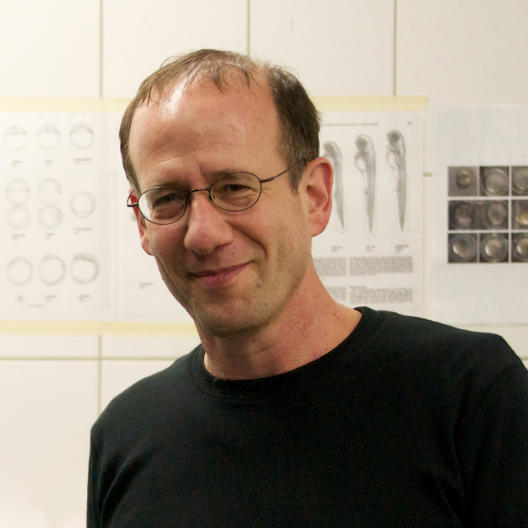
Wolfram Drews is a Professor of Medieval History specializing in early and high middle ages, with a focus on transcultural history at Westfälische Wilhelms-Universität Münster since March 2011. He is actively involved in the Cluster of Excellence as both a Principal Investigator and member of the Board of Directors. His research spans multiple fields including cultural history of politics, world and global history, and strategies of integration between Christian and Islamic societies in the medieval period. His academic background includes: Habilitation at the University of Cologne (2007) PhD from Freie Universität Berlin (2000) MA in History, Jewish Studies and Theology from Freie Universität Berlin (1998) MA (Diploma) in English and Spanish from Humboldt-Universität Berlin (1991) Drews' research primarily explores the complex interrelationships between Christian, Jewish, and Islamic societies during the medieval period, with particular emphasis on Spain. His work examines how political power was constructed and maintained across cultural boundaries, how religious identities were negotiated, and how knowledge systems interacted across the Mediterranean world. He has developed innovative approaches to transcultural history that move beyond traditional national and religious frameworks to examine the fluid interactions between different medieval societies. His scholarship reveals how medieval societies constantly redefined their boundaries through processes of entanglement, conflict, and coexistence. His recent publications demonstrate a consistent focus on religious interactions, political legitimacy, and cultural entanglements in medieval Spain and the broader Mediterranean world. Drews frequently examines how religious communities negotiated their identities and political positions within pluralistic societies, with particular attention to Jewish communities in Christian and Islamic contexts. His work shows increasing engagement with global and comparative frameworks for understanding medieval political and religious dynamics. Drews has received significant recognition for his scholarly contributions: Member of Academia Europaea (2018) Dumbarton Oaks Fellowship (2012) Friedrich-Meinecke-Preis (2001) DAAD Scholarship (1994) TEMPUS Scholarship (1991) As an academic leader, Drews serves as executive director of the Institute of Early Medieval Studies and editor of the journal "Frühmittelalterliche Studien." He has supervised doctoral students including Franziska Kleybolte (2022) and Nadeem Khan (2017), focusing on topics related to religious minorities and political structures in medieval Spain. His leadership extends to various research initiatives including the Excellence Cluster "Religion und Politik" and the research group "Xenokratie vor Ort." Drews leads significant research projects including "Discourses of Purity and Purification in Medieval Spain" and previously directed "Monarchical Rule and Religious Community-Building" until 2018. His work is situated within several theoretical frameworks examining differentiation, conflict, ambiguity, decision-making, and migration within medieval transcultural contexts.