Matthias Hein is a Professor at the Department of Computer Science, Faculty of Mathematics and Natural Sciences, University of Tübingen. His research focuses on Machine Learning , Adversarial Robustness , and Out-of-Distribution Detection , with applications in computer vision and medical imaging. He has received notable recognition including the Best Paper Honorable Mention Prize at ICLR 2021 and Outstanding Paper Award at CVPR 2021. His work includes developing benchmarks like RobustBench and Spurious ImageNet , and frameworks such as Sparse-RS and DIG-IN . His recent publications emphasize adversarial robustness across multiple domains (vision, text), counterfactual explanations for classifiers, and improved OOD detection methods . Collaborators include prominent researchers like Francesco Croce, Julian Bitterwolf, and Alexander Meinke. Scientific Awards : Best Paper Honorable Mention (ICLR 2021) CVPR 2021 Outstanding Paper Award Key Research Areas : Adversarial Robustness Vision-Language Models Medical Imaging AI Neural Network Calibration
Francesca De Benetti is a Researcher at the Chair of Computer Aided Medical Procedures (Prof. Navab) at the Technical University of Munich (TUM), affiliated with the Interdisciplinary Research Laboratory (IFL) and NARVIS Lab at the Garching Campus. Her research focuses on Nuclear Medicine and Machine Learning for medical image processing, particularly in internal radiation therapy simulations and AI-driven segmentation. Education : M.Sc. in Biomedical Computing (TUM, 2018-2020), B.Sc. in Information Engineering (Università di Padova, 2015-2018) Francesca's recent publications highlight her work in Monte Carlo dosimetry , dynamic PET tracer modeling , and deep learning-based anomaly detection in medical imaging. Her projects emphasize personalized radiation therapy and cross-modality image translation , often involving collaborations with nuclear medicine experts and radiologists. She contributes to teaching at TUM, leading lectures and practical courses on topics including Medical Augmented Reality , Computer Aided Medical Procedures , and Deep Learning for Medical Applications . Francesca is actively involved in labs such as the IFL Lab and NARVIS Lab , focusing on interdisciplinary applications of computer vision and generative AI in medicine.
Dr. Benjamin Busam is a Senior Research Scientist at the Technical University of Munich , affiliated with the Chair for Computer Science Applications in Medicine under Prof. Nassir Navab. Starting September 2025, he will hold the Professorship for Photogrammetry and Remote Sensing at TUM. His career includes leadership roles at FRAMOS Imaging Systems and Huawei Research in London. Education: Mathematics (TUM), Mathematics and Physics (ParisTech, University of Melbourne), PhD in Mathematics (TUM, 2014) His research focuses on 3D computer vision , multi-modal sensor fusion , and their applications in collaborative robotics and augmented reality . He specializes in projective geometry , 6D pose estimation , and neural radiance fields , with a particular emphasis on photometrically challenging environments. Recent publications highlight advancements in 3D scene understanding , neural rendering , and medical imaging , often leveraging machine learning and vision-language models . His work has been recognized through awards like the EMVA Young Professional Award (2015) and Innovation Pioneer of the Year (2019) , along with multiple Outstanding Reviewer distinctions at leading conferences. Dr. Busam has supervised numerous PhD and MSc students on topics including 6D pose estimation , medical augmented reality , and robotic ultrasound , collaborating with institutions like MIT , École Polytechnique , and University of Padova .
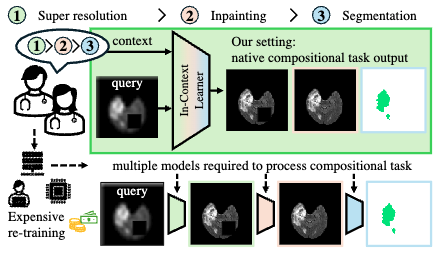
Prof. Dr. Erik Rodner is a faculty member at the University of Applied Sciences Berlin (HTW Berlin), where he serves as a Professor for Machine Learning and Data Science. He also contributes to the School of Engineering Sciences - Technology and Life. His research spans computer vision, machine learning, and biomedical applications, with a focus on learning with limited data, robust visual recognition models, and medical image analysis. He has developed innovative methods for medical diagnostics, industrial classification, and anomaly detection. Recent publications (2025-2016) highlight his expertise in visual in-context learning, semi-weakly segmentation, and active learning frameworks. He has collaborated with institutions such as ZEISS Group, Friedrich Schiller University Jena, and UC Berkeley. Scientific Awards: Award for Excellent Teaching (2023)
Arpan Gujarati is a Sessional Lecturer in the Department of Computer Science at the University of British Columbia (UBC), affiliated with the Systopia Lab. He teaches graduate and undergraduate courses such as CPSC 538G (Distributed Systems), CPSC 416 (Operating Systems), and CPEN 432 (Real-Time System Design). He holds a PhD from the Max Planck Institute for Software Systems and TU Kaiserslautern, where he was supervised by Björn B. Brandenburg. PhD: Max Planck Institute for Software Systems & TU Kaiserslautern (2020) Undergraduate: Birla Institute of Technology and Science (BITS Pilani) Postdoctoral Researcher: MPI-SWS Research Associate: UBC Software Development Engineer: Citrix R&D, India His research focuses on real-time and distributed systems, with applications in cyber-physical systems, fault tolerance, and machine learning reliability. He investigates scheduling algorithms, reliability analysis, and the integration of learning-enabled components into safety-critical systems. His work combines theoretical analysis with practical system implementations, often involving real-world testbeds and open-source tools. His recent publications span top-tier venues including RTSS, OSDI, ECRTS, DSN, and Middleware, with a strong emphasis on performance predictability, resilience of ML systems, and real-time communication. His work frequently addresses challenges in timing guarantees, fault tolerance, and system reliability in both cloud and embedded environments. SIGBED Paul Caspi Memorial Dissertation Award Best Paper Award at RTSS 2022 Distinguished Artifact Award at OSDI 2020 Best Student Paper Award at Middleware 2017 Outstanding Paper Award at RTCSA 2025 He advises several PhD students and undergraduate researchers at UBC, including Heng Zhao, Aida Aminian, Zainab Saeed Wattoo, and Philip Schowitz. He has led multiple research projects involving robotic arms, NVIDIA Holoscan, FreeRTOS, and distributed key-value stores. His lab work emphasizes reproducibility, open datasets, and practical system building. He has served on program committees for RTSS, RTAS, ECRTS, and Middleware, and contributes to journals such as Real-Time Systems and JSys.
Florian Leiser is a Professor at the Chair of Information Infrastructures (led by Prof. Dr. Ali Sunyaev) at Technical University of Munich's Heilbronn campus. His research focuses on human-AI collaboration, privacy-preserving algorithms, and explainability in machine learning systems. Current research areas include Hybrid Intelligence, Human-centered Generative AI (LLMs), Federated Learning, and Health Information Systems Recent publications demonstrate expertise in Explainable AI for medical imaging LLM hallucination detection Federated learning architectures Human-in-the-loop systems Healthcare data applications He contributes to teaching through Human-Centered Artifact Design courses Collaborative teaching roles in machine learning Supervising student projects
Zhang Yang is an Associate Professor at the School of Medical Engineering, Harbin Institute of Technology (Shenzhen), with a joint appointment as Visiting Professor at the University of Tokyo starting in July 2024. He holds a PhD from the University of Cambridge's Department of Pathology and an M.Phil. from the University of Hong Kong's HKU-Pasteur Research Center. Previously, he served as an Assistant Professor at Harbin Institute of Technology (Shenzhen) from September 2015 to December 2020. His research integrates computational and experimental approaches to address challenges in pathogen and cancer research. On the computational side, his work focuses on developing AI-powered microscopic imaging systems, applying deep learning to analyze multi-omics data (including proteins, DNA, miRNAs, LncRNAs, and mRNAs), and utilizing deep learning in cheminformatics for drug discovery. On the experimental side, his laboratory combines imaging, high-throughput sequencing, mass spectrometry, and chemical biology to understand disease mechanisms at the molecular level. His publication record demonstrates significant impact, with over 50 SCI-indexed papers in high-impact journals including Nature Communications, Briefings in Bioinformatics, Bioinformatics, Analytical Chemistry, and Trends in Biotechnology. His work has been cited by prestigious journals such as Nature Reviews Methods Primers and Nature Communications, with three ESI highly cited papers. His research spans multiple interdisciplinary fields, combining artificial intelligence with biomedical applications to advance diagnostic and therapeutic approaches. World's Top 2% Scientists 2021 Fellow of the Royal Society of Biology Three ESI Highly Cited Papers Five authorized national invention patents As an academic leader, he serves as Associate Editor for BMC Biology and Frontiers in Microbiology, Academic Editor for PLOS Genetics, Editorial Board Member for Communications Biology, and Guest Editor for a Special Issue on AI in analytical chemistry in Trends in Analytical Chemistry. His laboratory actively collaborates with international institutions, with graduates pursuing further studies at Hong Kong Chinese University, Hong Kong University of Science and Technology, Hong Kong Polytechnic University, Macau University, and the University of New South Wales. He teaches Introduction to Modern Biology for undergraduates and Bioanalytical Chemistry for graduate students.
Andrés Bruhn is a Professor for Intelligent Systems and Dean of Computer Science Studies at the University of Stuttgart, where he leads research in the Institute for Visualization and Interactive Systems (VIS). His academic career spans over a decade with significant contributions to computer vision, particularly in optical flow, scene flow, and motion estimation. As Dean of Studies, he oversees academic programs while maintaining an active research agenda focused on cutting-edge computer vision problems. Bruhn's research interests center around computer vision with emphasis on optical flow estimation, scene flow, motion analysis, and adversarial machine learning. His work bridges theoretical foundations with practical applications, developing algorithms that address real-world challenges in motion estimation, image processing, and visual understanding. His research group has pioneered approaches that combine variational methods with deep learning, creating robust systems for motion analysis that can withstand adversarial attacks and challenging environmental conditions. The publication record demonstrates a strong focus on advancing the state-of-the-art in motion estimation, with recent work exploring adversarial attacks on optical flow systems, high-resolution datasets for benchmarking, and multi-frame fusion techniques. His research shows consistent innovation, moving from traditional variational methods to modern deep learning approaches while maintaining mathematical rigor. The work spans both theoretical contributions and practical implementations with real-world applicability. Bruhn has mentored numerous researchers who appear as first authors on publications, including Jenny Schmalfuss, Lukas Mehl, and Azin Jahedi, indicating his commitment to developing the next generation of computer vision researchers. His leadership role as Dean of Studies demonstrates institutional recognition of his expertise and administrative capabilities.
Univ.-Prof. Dr.-Ing. habil. Volker Rodehorst is a full professor of computer vision at Bauhaus-Universität Weimar, holding positions in both the Faculty of Media and Faculty of Civil Engineering. His research focuses on photogrammetric computer vision, image analysis, 3D reconstruction, and structural health monitoring with applications in civil infrastructure inspection and urban modeling. He leads projects like ev.AI.luate and InfraCloud, leveraging AI and UAS technologies for infrastructure assessment. Education: PhD (2003): Technical University of Berlin, Faculty of Civil Engineering & Applied Geosciences Habilitation (2013): TU Berlin, Faculty of Electrical Engineering & Computer Science Computer Science Diploma (1994): TU Berlin Research Interests: UAS-based structural inspection using multi-view stereo and deep learning Crack detection and segmentation in concrete structures Automated building age estimation for energy modeling Flight path planning optimization for complex structures Integration of computer vision into BIM workflows Publications: Recent work emphasizes robust algorithms for crack detection (Omnicrack30k benchmark), UAS flight path optimization, and semantic segmentation challenges in bridge inspections. Key contributions include MVCrackViT and CISOL datasets advancing structural analysis methodologies. Awards: Best Academic Performance Prize (1994) - TU Berlin ISPRS Presidential Citation (2008) for WG III/2 leadership Grants & Labs: Leads Bauhaus' 3D-RealityCapture-ScanLab and coordinates EU projects like AISTEC-PRO. Active in developing modular solutions like smoodPLAN for infrastructure inspection. Teaching: Offers courses in photogrammetric computer vision, geodesy, and parallel systems. Supervises PhD students in structural health monitoring and computer vision.
Dr. Mahdi Jampour is a Researcher at the Centre for the Study of Manuscript Cultures (CSMC), University of Hamburg, and a member of the Cluster of Excellence ‘Understanding Written Artefacts’ (UWA). He holds a Ph.D. in Computer Science (Artificial Intelligence) from Graz University of Technology (2016), with postdoctoral research at Iran Telecommunication Research Center (ITRC) (2016–2017). He previously served as Assistant Professor at Quchan University of Technology (2017–2024) and led Project RFA05 (2022–2025) focusing on visual pattern similarity in written artefacts. Education: Ph.D. in Computer Science (Artificial Intelligence), TU Graz, Austria (2016) Postdoctoral Fellowship, ITRC, Iran (2016–2017) Assistant Professor, Quchan University of Technology (2017–2024) Research Interests: Dr. Jampour specializes in applying AI and computer vision to cultural heritage preservation, including palimpsest analysis, historical document digitization, and pattern recognition. His work integrates generative models, deep learning, and semi-supervised methods to address challenges in manuscript analysis and multispectral imaging. Publications Trends: Recent work focuses on generative AI for palimpsest deciphering, dataset creation for sports and cultural heritage analysis, and facial expression recognition surveys. His articles bridge computer science with digital humanities, emphasizing cultural artifact preservation through technological innovation. Awards: Kazemi-Ashtiani Award (2019) Chamran Award (2017) KUWI Prize (2015) Marshal Plan Fellowship (2015) Best MSc Thesis Award (2009) Advising & Grants: Led UWA’s Project RFA05 (2022–2025) and contributed to international preservation initiatives like the Timbuktu Manuscript Training Project. His research is supported by grants from the Iran National Elites Foundation and the Iranian Ministry of Science. Labs & Collaborations: Active in CSMC’s labs, including the Written Artefact Profiling Guide and Mobile Lab Container projects. Collaborates with institutions globally on digitization and cultural heritage safeguarding.
Ulrich Eck is a Professor and Vice-Director of the Chair for Computer Aided Medical Procedures at the Technical University of Munich (TUM). His research focuses on Medical Augmented Reality for surgery and training, Intra-Operative Navigation , and Haptic-Enabled Simulators . Key Research Areas: Medical Augmented Reality Computer Vision Robotics Surgical Data Science Human-Computer Interaction Notable Scientific Awards: Best Student Conference Paper Honorable Mention, IEEE ISMAR 2024 Best Paper Award, MICCAI 2022 Special Issue Best Demo Honorable Mention, IEEE VR 2021 Best Teaching Award, TU Munich 2020 Chancellor's Letters of Commendation, University of South Australia 2011 Best Demo Award, IEEE ISMAR 2011
Julia Heideklang is a Scientific Researcher at the Philologisches Seminar of Eberhard-Karls-Universität Tübingen since 2022, specializing in early modern translation cultures and paratextual strategies in scientific literature. Her work bridges Neo-Latin studies with the history of botany, examining how marginal textual elements shaped scientific knowledge formation. PhD in Classics at Humboldt-Universität zu Berlin (2017-2024) Doctoral candidate at DFG Graduate School 2190 (2017-2021) LBI Fellow at Ludwig Boltzmann Institute for Neo-Latin Studies (2022) Her research focuses on paratexts in early modern prints and their role in constructing botanical knowledge. She investigates how title pages, dedicatory letters, and marginal annotations in works like the Herbarius Latinus (1484) functioned as epistemic catalysts during science's institutionalization. Current publications analyze translation functions in Machiavelli's Il Principe adaptations, Campanella's spatial concepts in Latin translations, and database methodologies for tracking early modern translation processes. Her work reveals critical insights into knowledge transmission through textual framing devices. 2025: Paul-Oskar-Kristeller Fellowship, Renaissance Society of America 2022: LBI Fellow, Ludwig Boltzmann Institute for Neo-Latin Studies Active in academic events, she presented on topics ranging from gender diversity in translation cultures to Machiavellian thought recreation in Latin. As blog contributor to Übersetzungsgeschichte(n) , she promotes public engagement with translation research.
Chang Liu is a Research Associate at NHR@FAU (Center for National High Performance Computing Erlangen) at Friedrich-Alexander-Universität Erlangen-Nürnberg (FAU), where he joined the AI group in April 2025 to support AI-oriented projects across diverse research fields. Prior to this position, he was a doctoral researcher at the Pattern Recognition Lab at FAU until March 2025. Chang Liu earned his degree in Medical Engineering at FAU. His academic journey at FAU began in September 2016 as a student, progressed to a researcher at the Pattern Recognition Lab starting in March 2020, and culminated in his doctoral research until March 2025. Dr. Liu's research focuses on medical image processing and analysis, with particular emphasis on the automated segmentation of computed tomography (CT) images and the generation of high-quality CT images. His work bridges computer science and medical applications through artificial intelligence to solve complex healthcare problems. Beyond his core research, he has contributed to applying AI technologies in diverse fields including second language education and nail disease diagnosis, demonstrating his interdisciplinary approach to problem-solving. His expertise spans data augmentation techniques, multi-organ segmentation, CT reconstruction, and radiation dose optimization. His publication record reveals consistent advancement in medical image analysis techniques, particularly in CT imaging and segmentation. His work shows a progression from foundational deep learning applications to more sophisticated approaches incorporating anatomical knowledge and addressing practical clinical constraints like limited annotations and radiation safety. Dr. Liu has mentored numerous students through their thesis work, guiding them in cutting-edge research at the intersection of AI and medical imaging. His advisees have completed projects on breast cancer risk stratification, medical segmentation annotation, U-Net architecture configuration, and other innovative topics in medical image analysis. As part of NHR@FAU, Dr. Liu works with the AI group to enhance research projects using modern high-performance computing systems, applying his expertise in medical image analysis to support diverse research fields across FAU.
Prof. Laura Leal-Taixé is an Associate Professor at the Technical University of Munich (TUM) leading the Dynamic Vision and Learning group. She holds the Rudolf Mößbauer Tenure Track Chair, promoted from a 2017 Tenure Track Assistant Professorship. Her work focuses on advancing computer vision and machine learning, particularly in video analysis, multi-object tracking, and autonomous systems. She received a Sofja Kovalevskaja Award (2017) for her project socialMaps, which integrates dynamic social data into traffic modeling. Education: B.Sc./M.Sc. in Telecommunications Engineering, Technical University of Catalonia (UPC), Barcelona Ph.D. in Information Processing, Leibniz University Hannover (2014) Postdoc at ETH Zurich (2014–2016), and Senior Researcher at TUM’s Computer Vision Group (2016–2019) Research Interests: Multi-object tracking and segmentation in videos Motion analysis and semantic segmentation for autonomous driving Deep learning for video understanding Social dynamics modeling in urban environments Awards & Grants: €1.65M Sofja Kovalevskaja Award (Humboldt Foundation, 2017) DAAD Australia-German Joint Research Scheme (2017) Multiple travel grants from CVPR and Women in Computer Vision Labs & Collaborations: Dynamic Vision and Learning Group at TUM Collaborations with ETH Zurich, Northeastern University, and NVIDIA
Oliver Eberle is a Researcher at the Machine Learning Group within the Technical University of Berlin (TU Berlin), affiliated with BIFOLD – Berlin Institute for the Foundations of Learning and Data. He holds a Joint M.Sc. in Computational Neuroscience (2017) and a Ph.D. in Machine Learning (2022) from TU Berlin and Humboldt-Universität zu Berlin. His research focuses on Explainable AI (XAI), Natural Language Processing (NLP), and their applications in Digital Humanities and Cognitive Science. Notable projects include XAI methods for transformer architectures, historical corpus analysis, and collaborations with the Max Planck Institute for the History of Science on the Sphaera Corpus. Key contributions include developing frameworks like BiLRP for similarity models, MambaLRP for sequence models, and xMIL for medical imaging. His work bridges technical advancements in AI with interdisciplinary applications in humanities and science.