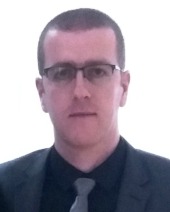
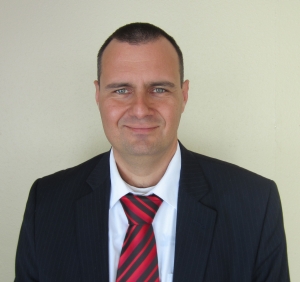
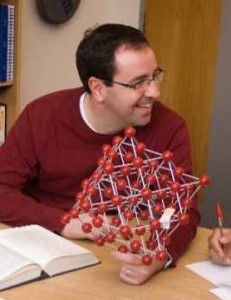
Dr. Seyyed Hamed Hosseini Nasab is a Lecturer at the Department of Health Sciences and Technology at ETH Zürich, affiliated with the Institute for Biomechanics and the Laboratory for Movement Biomechanics. His research focuses on biomechanical analysis of musculoskeletal systems, particularly knee mechanics, implant design, and ligament behavior in total knee arthroplasty. He integrates experimental, computational, and clinical approaches to improve surgical techniques and prosthetic design. Key research interests include knee joint loading, ligament elongation patterns, and the influence of implant conformity on post-surgical outcomes. He has contributed to standardized methods for measuring tibiofemoral implant loads and kinematics, earning the European Society of Biomechanics SM Perren Award in 2022. His publications emphasize computational modeling, in vivo testing, and finite element analysis to address challenges in orthopedic engineering. Recent work explores artificial neural networks for real-time knee contact force estimation and the biomechanical implications of surgical procedures like posterior cruciate ligament substitution.
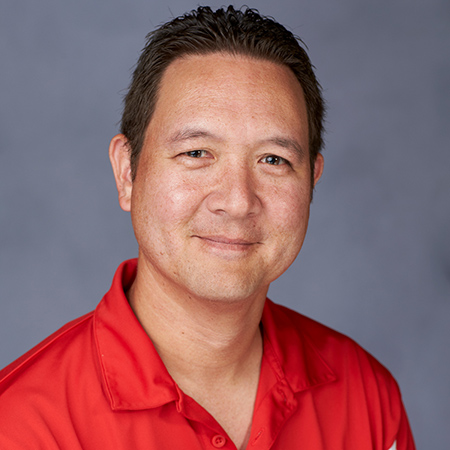
Assoc Prof Ng Teng Yong is an Associate Professor at the School of Mechanical & Aerospace Engineering (NTU), specializing in numerical modeling and simulation. With a background as Research Manager at A*STAR Institute of High Performance Computing, his work spans materials science, nanotechnology, and aerospace engineering. Current focus on graphene-based desalination membranes Expertise in molecular dynamics simulations Investigates nanoscale fluid mechanics and structural dynamics Recent publications highlight advancements in energy-efficient electrodialysis, smart robotics, and nonlinear vibration analysis. His interdisciplinary approach integrates computational methods with experimental validation in additive manufacturing and soft material mechanics.
Professor Hala Zreiqat AM is a leading biomedical engineer at The University of Sydney , serving as the Director of the ARC Training Centre for Innovative BioEngineering . A Fellow of all major Australian academies (AAS, ATSE, FAHMS, FRSN), she develops 3D printed bioceramics for bone regeneration while championing diversity through initiatives like the IDEAL Society and BIOTech Futures mentorship program. Her work bridges academia, clinical practice, and industry in musculoskeletal research . Research Focus: Her lab creates synthetic bone scaffolds that mimic natural bone architecture, strength, and porosity, enabling non-rejected bone regeneration via patient-matched implants. Key applications include orthopaedic, dental, and maxillofacial repair , with over $18M in competitive funding and multiple patents. Current projects explore AI-driven scaffold performance prediction and anti-senescence strategies for aging-related bone loss. Scientific Trends: Recent publications highlight 3D printed nanovoxelated ceramics , antisenescence biomaterials , and multifunctional theranostic platforms . Her team integrates machine learning for scaffold design, atom probe tomography for interface analysis, and two-photon imaging for cellular monitoring in 3D environments. 2021-2022 Fulbright Senior Scholar 2018 NSW Premier's Woman of the Year 2019 Eureka Prize for Innovative Use of Technology Fellow of Australian Academy of Science (2021) Over $18M in research funding Teaching & Leadership: She designed core courses like Tissue Engineering and Nanomaterials in Medicine , mentoring 158 students in 2020 alone. As Chair of CAAR (2020-2023), she strengthens Australia-Arab collaborations. Her lab trains early-career researchers , with alumni now in academia and industry.
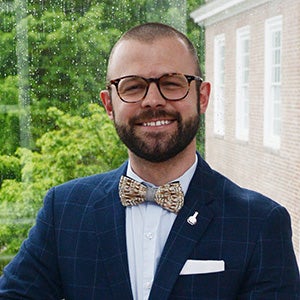
Nedim Pervan is a Full Professor at the Faculty of Mechanical Engineering, University of Sarajevo, Bosnia and Herzegovina. His academic position focuses on mechanical engineering with emphasis on product design, structural analysis, and biomechanical applications. He maintains an active research profile with numerous publications and collaborations across various engineering disciplines, with office hours every workday from 09:00 to 10:00 in room 314. Professor Pervan's research interests span multiple domains of mechanical engineering. He has made significant contributions to additive manufacturing, particularly in polymer gear production and analysis. His work explores mechanical properties, failure mechanisms, and service life of polymer gears manufactured through additive processes. Additionally, he has conducted extensive research on external fixation devices used in orthopedic treatments, analyzing their biomechanical characteristics and structural stability under various loading conditions. His expertise extends to finite element analysis, structural optimization, and the application of 3D scanning technologies within Industry 4.0 contexts. His research demonstrates a strong connection between theoretical engineering principles and practical applications across automotive, medical devices, and manufacturing industries. His recent publication record reveals a strong trend toward interdisciplinary research bridging mechanical engineering with biomedical applications and advanced manufacturing technologies. A significant portion of his work focuses on polymer gears and additive manufacturing, examining material properties and performance characteristics. Another substantial research stream involves biomechanical engineering, particularly the analysis of external fixation devices. His publications demonstrate a methodological approach combining experimental testing with finite element analysis. More recently, his research has expanded into 3D scanning applications in manufacturing and the electrification of transportation systems in Bosnia and Herzegovina. Professor Pervan has been involved in numerous research projects that have advanced the capabilities of the Faculty of Mechanical Engineering. These include the "Integrated Intelligent CAD System for Interactive Design, Analysis and Prototyping of Compression and Torsion Springs" (2022), "Opremanje Laboratorije za razvoj i dizajn proizvoda" (2020), and "Modernizacija Laboratorije za ispitivanje mašinskih konstrukcija" (2019-2020). These projects have focused on developing advanced laboratory facilities, intelligent CAD systems, and equipment for mechanical design and analysis, with several specifically targeting 3D scanning technology implementation. His collaborative work extends across multiple research teams within the Department of Mechanical Constructions at the University of Sarajevo. He frequently collaborates with researchers including Adis Muminović, Elmedin Mešić, and Muamer Delić on projects related to additive manufacturing, biomechanical engineering, and structural analysis. His research group appears actively involved in both theoretical and applied engineering research with practical industrial and medical applications, contributing significantly to Bosnia and Herzegovina's engineering research landscape.
Dr. James W. Navalta is an Associate Professor in the Department of Kinesiology and Nutrition Sciences at the University of Nevada, Las Vegas. His research focuses on physiological responses to outdoor exercise (hiking, trail running) and the validity/reliability of wearable technology. He earned his B.S. in Physical Education and Biology from Brigham Young University–Hawaii, M.S. in Kinesiology from UNLV, and Ph.D. in Exercise Physiology from Purdue University. Education: B.S. - Physical Education & Biology, Brigham Young University–Hawaii M.S. - Kinesiology, University of Nevada, Las Vegas Ph.D. - Exercise Physiology, Purdue University His research portfolio includes: Wearable technology validation for physiological measurements Comparative studies of indoor vs outdoor exercise environments Impact of gender-inclusive approaches on sports science Metabolic and cardiovascular responses to unconventional workouts Psychological benefits of nature immersion Recent publications demonstrate expertise in: Wearable device accuracy testing VO2max and lactate threshold validation Environmental influence on exercise physiology Methodological improvements in data collection Gender-inclusive research design Outdoor activity impact assessment As co-founder and executive editor of the International Journal of Exercise Science, he contributes significantly to academic discourse. He also serves on editorial boards for journals related to digital health and exercise technology.
Associate Professor Javad Tavakoli holds a dual appointment at RMIT University’s School of Engineering (Department of Biomedical Engineering) and serves as a Visiting Fellow at the University of Technology Sydney’s School of Biomedical Engineering. His research focuses on biomechanical engineering , biomaterials , and orthopaedic applications , with notable contributions to intervertebral disc-on-a-chip models and hydrogel-based drug delivery systems . He has pioneered cutting-edge technologies such as microfluidic platforms for hydrogel characterization and aggregation-induced-emission fluorogens for biomedical sensing. His academic journey includes a PhD from Flinders University (2015–2018) and postdoctoral work at Flinders University’s China-Australia International Laboratory for Health Technologies (2018–2020). He received the Chancellor’s Research Fellowship from UTS in 2020, enabling the development of the world’s first disc-on-a-chip model, which won the AO Spine Discovery and Innovation Award (2022) and David Findlay Award (2022). Key research interests include organ-on-a-chip systems , mechanobiology , and nanofabrication of biosensors . He leads a team recognized for student achievements such as the UTS Capstone Showcase Judges’ Choice Award (Stephanie Weiss, 2022) and Engineering Female Scientist Award (Maryam Rad, 2022). His work aligns with UN Sustainable Development Goals 3 (Good Health) and 9 (Industry Innovation). Notable awards also include the Best Spinal Research Award (2023), Engineers Australia Excellence Award (2023), and multiple Excellence in Reviewing Awards . His research outputs span biomechanical engineering , additive manufacturing , and microfluidics , with over 70 peer-reviewed publications and three commercialized products. Current initiatives include advancing 3D-printed orthopaedic implants , low back pain diagnostics , and fluorescent hydrogel applications . Collaborative projects with industry and global institutions underscore his translational research impact.
Jingyi Chen is a Professor in the Department of Chemistry and Biochemistry at the University of Arkansas. She serves as Vice Chair in the College of Arts & Sciences and leads the Chen Research Group focused on rational design and synthesis of functional nanomaterials for energy conversion and human-health applications. PhD, Chemistry & Nanotechnology – University of Washington (2006) MA, Chemistry – State University of New York College at Buffalo (2002) BS, Chemistry – Sun Yat-sen University (1997) Her research spans three major projects: Project I: Developing cost-effective catalysts for fuel cell applications through precise synthesis of copper-based bimetallic nanocrystals. Project II: Surface modification of nanoparticles with polydopamine for bio-related applications like low-friction coatings. Project III: Creating nanoplatforms for targeted drug delivery against antibiotic-resistant infections and cancer. Recent publications focus on nickel phosphide nanoparticles (2024), perovskite oxide oxygen evolution catalysts (2023-2024), and silver nanoparticle antimicrobial mechanisms (2020-2023). Her group has produced 15+ recent publications in journals like ACS Nano , J. Phys. Chem. C , and ACS Infectious Diseases . Award highlights include: Thomson Reuters Top 1% Highly Cited Researcher (2015-2018) Arkansas Research Alliance Fellow (2018) Women’s Giving Circle Award (2014) Ralph E. Powe Junior Faculty Enhancement Award (2011) She has mentored over 20 graduate and undergraduate students , including Ryan Manso (PhD 2022), Isabelle Niyonshuti (PhD 2021), and David Thompson (DOE SCGSR awardee 2022). Her lab (CHBC 304/306/309) employs advanced tools like synthesis setups , electrochemical stations , and laser irradiation systems .
Tegoeh Tjahjowidodo is a Senior Lecturer at the Faculty of Industrial Engineering Sciences , KU Leuven , affiliated with the Department of Mechanical Engineering and the Manufacturing Processes and Systems (MaPS) unit at Campus De Nayer. He serves as Head of Education for Electromechanics programs and leads Subdivision 17 at the campus. Research Areas: Additive Manufacturing (Wire-Arc Additive Manufacturing), Process Monitoring, Control Systems, Laser Micromanufacturing, Wear Analysis, Robotics, and Condition Monitoring. Publication Trends: Focus on in-situ monitoring of laser micromanufacturing, machine learning for abrasive belt grinding, WAAM parameter optimization , and multi-sensor fusion for process control. Scientific Contributions: Co-promotor for MultiTRIBO (tribology), Promotor for WAAM structural integrity and pedicle screw surgical simulators . Active in international collaborations (e.g., 25th International Symposium on Laser Precision Microfabrication, Spain 2024).
Cecilia Persson is a Professor at Uppsala University in the Department of Materials Science and Engineering; Biomedical Engineering. She leads the BioMaterial Systems (BMS) research group within the Division of Biomedical Engineering, focusing on the development of new biomaterials through additive manufacturing. She also directs a Competence Centre in Additive Manufacturing for the Life Sciences and the national Research Technology Platform WISE Additive. 2018, Professor in Materials Science, Uppsala University 2015, Docent (Assoc. Prof.) in Engineering Science with Specialization in Materials Science, Uppsala University 2009, PhD in Mechanical Engineering, University of Leeds 2004, MSc in Materials Engineering, European degree (EEIGM) with triple diploma Persson's research focuses on biomaterials, biomechanics, materials science, and additive manufacturing. Her work takes an integrated approach to solving clinical and sustainability problems, combining materials science, mechanical and biological engineering with new technologies like 3D printing and machine learning. Key research areas include magnesium-based alloys for bone substitutes, titanium-based alloys for permanent implants, and machine learning methods to enhance manufacturing efficiency. Analysis of her recent publications shows a strong emphasis on additive manufacturing of biomaterials, particularly magnesium and titanium alloys. Her work explores microstructure control, mechanical properties optimization, antibacterial properties, and patient-specific implant design. The research demonstrates a clear trajectory toward more sustainable, patient-adapted medical solutions using advanced manufacturing techniques. Persson has received funding from prestigious organizations including the Swedish Research Council (VR), the Knut and Alice Wallenberg Foundation (KAW), the Swedish Foundation for Strategic Research (SSF), Sweden's Innovation Agency (VINNOVA), and the EU. As an academic leader, Persson has served as Section Dean of Engineering (2020-2023), President of the Scandinavian Society of Biomaterials (2019-2023), and Coordinator of EU Innovative Training Network NU-SPINE (2019-2023). Her BioMaterial Systems research group takes an integrated approach to solving clinical and sustainability problems, bridging fundamental scientific mechanisms with high societal relevance.
Henrik Myhre Jensen is a Professor at the College of Engineering , Aarhus University, specializing in Mechanics of Materials , Solid Mechanics , and Mechanical Engineering . His research focuses on fracture mechanics, composite materials, and computational modeling of structural behaviors. Research Focus Fracture mechanics in composites and layered materials Computational modeling of kink band propagation Surface wear and coating technologies Ultrasound imaging applications in mechanical systems Notable Contributions Henrik has contributed to understanding crack propagation in cantilever beams, developed numerical methods for simulating delamination in composites, and explored buckling instabilities in solids. His recent work connects machine learning (holomorphic neural networks) to traditional fracture mechanics problems. Key Projects MAGFLY (2017-2021): Magnets for Flywheel Energy Storage InnoVacc (2009): Pressure Testing of Vacuum Chambers Simulation of composite structures (2011-2020): Micro-mechanical modeling
Ryan Chapman is an Assistant Professor in the Department of Kinesiology at the University of Rhode Island (URI), leading the Biomechanics & Wearables Laboratory (BWL). His research focuses on musculoskeletal biomechanics, wearable sensor technology, and clinical decision-making, with applications in joint replacement, rehabilitation, and sports performance. Chapman earned his B.S. in Electrical Engineering from the University of St. Thomas, M.S. in Biomedical Engineering from the University of Iowa, and Ph.D. in Biomedical Engineering from Dartmouth College. He held teaching roles at Dartmouth before joining URI. His work integrates optical motion capture, machine learning, and AI to monitor human movement clinically and in daily life. Education highlights include: B.S.E.E., University of St. Thomas (200X) M.S., Biomedical Engineering, University of Iowa (20X) Ph.D., Biomedical Engineering, Dartmouth College (2018) Research interests emphasize wearable sensor validation, joint biomechanics post-surgery, and data-driven clinical tools. His studies on knee and hip arthroplasty recovery, published in journals like Journal of Biomechanics and Journal of Shoulder & Elbow Surgery , highlight his technical expertise. Awards include the 2022 URI College of Health Sciences Research Award and the 2019 ISTA Young Investigator Award. Chapman’s lab develops innovative systems for postoperative monitoring, such as gyroscopic alignment tools and IMU-based motion tracking. He advises students on biomechanical projects, including hip biomechanics in expectant mothers and neural network applications for joint angle quantification. His patents include leg alignment systems and movement monitoring technologies, reflecting his translational research impact.
Dr. Alex A. Volinsky serves as Associate Professor in the Department of Mechanical Engineering at the University of South Florida's College of Engineering. His research program focuses on advanced materials characterization with specialization in thin films processing, adhesion/fracture mechanics, and nanoindentation techniques. Current projects investigate pattern formation in irradiated materials and biomaterial interfaces. Volinsky's research explores fundamental relationships between material processing, microstructure evolution, and mechanical properties across diverse material systems including superalloys, shape memory alloys, and nanocomposites. Recent work emphasizes additive manufacturing processes, surface engineering solutions, and biomaterial development for medical applications. Publication analysis reveals consistent focus on: Advanced characterization of deformation mechanisms Performance optimization of additive manufactured components Novel approaches to fracture toughness assessment Surface engineering for functional applications Biomaterial-tissue interactions His laboratory develops experimental methodologies for nanoscale mechanical testing and maintains active collaborations with medical researchers on implant material design.
Lee Nissim is a Lecturer in the Department of Mechanical Engineering at the University of Bath, affiliated with the Centre for Bioengineering & Biomedical Technologies (CBio). He holds a PhD in Aeronautical Engineering from Imperial College London (2021), an MRes in Fluid Dynamics (2016), and a Master of Engineering from the University of Cambridge (2015). His research focuses on biomedical engineering, particularly in hemocompatibility, computational fluid dynamics (CFD), and magnetic levitation systems for medical devices like ventricular assist devices (NeoVAD). He also explores tribology in prosthetic joints and pediatric cardiovascular support systems. Key projects include the KTP collaboration with Modini Limited, advancing NeoVAD design through CFD and machine learning. His work integrates CFD simulations, experimental validation, and machine learning to optimize biomedical device performance. Recent articles highlight innovations in blood-contacting bearing design, energy-efficient rotary pumps, and pediatric LVAD prototypes. His contributions span over 15 peer-reviewed publications, emphasizing design optimization, hemodynamic analysis, and wear-resistant prosthetics. Nissim is actively supervising doctoral students and advancing interdisciplinary solutions in bioengineering and mechanical systems.
Professor James Busfield FREng, MA, PhD, CEng, FIMMM, FHEA is Professor of Materials and Deputy Head of the School of Engineering and Materials Science and Director of Strategy at Queen Mary University of London. He leads the Centre for Intelligent Transport and the Soft Matter Group, which is currently the largest such research group in the UK with a team of 14 postdoctoral researchers and PhD students. Research Interests Prof Busfield's research focuses on examining the physical behaviour by experiment and modelling techniques of polymers and soft matter such as elastomers and rubber materials. His work covers properties including abrasion, friction, fracture, creep, fatigue, viscoelastic behaviour, modulus enhancement, self healing, recycling, ageing and composite filler reinforcement. He is also developing smart soft materials that can sense their environment and soft actuating materials that can change shape in response to physical stimuli. His research has significant applications in the automotive industry (particularly tires), sustainable materials development, and advanced polymer composites for various engineering applications. The interdisciplinary nature of his work bridges materials science, mechanical engineering, and polymer physics. Publication Trends Prof Busfield's recent publications show a clear trend toward sustainable materials development, with increasing focus on recycling rubber and polymer waste, developing self-healing materials, and creating bio-based alternatives. His work increasingly incorporates advanced modeling techniques to understand material behavior at multiple scales, from molecular interactions to macroscopic performance. There's also a growing emphasis on applications in electric vehicles, wind energy, and sustainable fashion technologies. Scientific Awards and Recognition Fellow of the Royal Academy of Engineering (2020) National Teaching Fellow (2009) T B Marsden Professional Medal (2024) George Stafford Whitby Award (2021) Colwyn Medal (2009) Sparks-Thomas Award (2010) Fellow of the Higher Education Academy Fellow of the Institute of Materials, Minerals and Mining Chartered Engineer Research Leadership and Grants Prof Busfield has secured substantial research funding from diverse sources including EPSRC, EU Horizon 2020, Royal Academy of Engineering, and major industrial partners such as Aston Martin F1, Continental Tires, Bridgestone, Schlumberger, and Jaguar Land Rover. His current portfolio includes multiple PhD studentships and collaborative projects focused on sustainable elastomer products, tire technology, and smart materials development. He serves as Associate Editor for "Plastics Rubber Composites: Macromolecular Engineering" and "Rubber Chemistry and Technology" and has organized numerous conferences for the rubber community. Research Group Prof Busfield leads the Soft Matter Group at Queen Mary University of London, which includes research assistants like Dr. Thomas Griggs and numerous PhD students working on projects related to rubber reinforcement, tire technology, self-healing materials, and smart polymer composites. His group has strong industry connections and collaborates with leading automotive and materials companies worldwide.
Professor Stuart Reid FRSE serves as Head of Department and Royal Society Industry Fellow in Biomedical Engineering at the University of Strathclyde. He leads a multidisciplinary research team working at the intersection of medical science and advanced physics, with significant contributions to both regenerative medicine and gravitational wave detection technologies. His research encompasses two major thrusts: Nanokicking Technology: As co-inventor of 'nanokicking,' he developed a method using precisely controlled nanoscale vibrations to stimulate stem cells to differentiate into bone tissue. This groundbreaking work, published in ACS Nano (2013) and Nature Biomedical Engineering (2017), is now being translated to clinical applications through nanokick.com, with support from Find A Better Way charity for land mine injury treatment. Advanced Optical Coatings: His laboratory has pioneered the world's first high-energy ECR ion beam deposition facility, producing the lowest absorption sputtered amorphous silicon coatings (PRL 2018) for next-generation gravitational wave detectors. This work enables detectors to approach quantum noise limitations. Professor Reid's publications reveal a consistent trajectory from fundamental science to clinical and industrial applications, demonstrating exceptional translational impact across disciplines. His recent work increasingly focuses on commercialization and clinical translation of both nanokicking technology and advanced optical coatings. His scientific recognition includes: Appointment to the RSE Young Academy of Scotland (2014) Membership on the Royal Society's Research Grants Board (2020) 12 total prizes as documented in his academic profile Currently overseeing 49 research projects (16 active, 33 completed), Professor Reid directs significant research funding including the BIOME project (2025-2026) and EPSRC DTP research on extracellular vesicles. He established the Extreme Performance Optical Coatings testbed (www.epoc.scot) within the National Manufacturing Institute Scotland, creating a national resource for advanced optical coating development and testing.