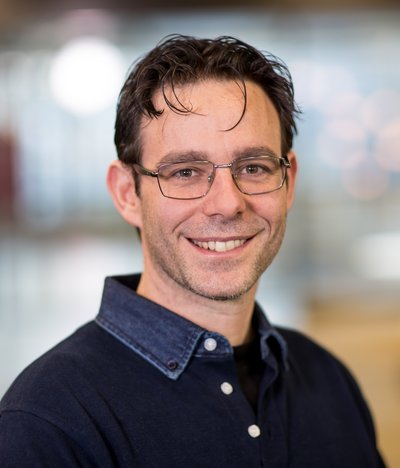
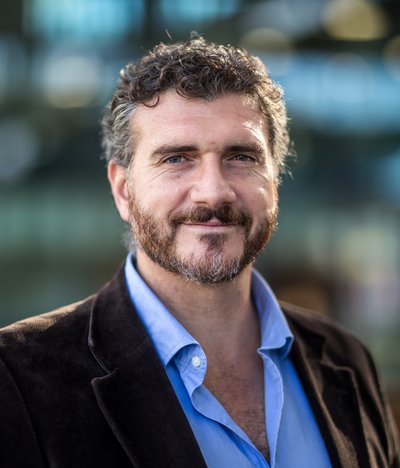
Massimo Mischi is a Full Professor at the Faculty of Electrical Engineering of the Eindhoven University of Technology (TU/e) and chairs the Signal Processing Systems (SPS) Division , the largest division at TU/e with over 250 researchers. He founded the Biomedical Diagnostics (BM/d) Lab in 2012, which now includes 180 researchers and clinical/industrial advisors, focusing on biomedical signal processing for diagnostics and monitoring.
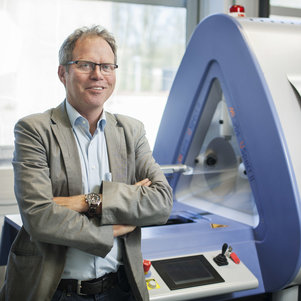
Said Hamdioui serves as a full Professor in the Department of Computer Engineering within the Faculty of Electrical Engineering, Mathematics and Computer Science at Delft University of Technology. His research focuses on cutting-edge hardware architectures for neuromorphic computing and energy-efficient AI acceleration, with particular emphasis on memristor-based systems, emerging memory technologies, and fault-tolerant designs for edge applications. His research interests span Neuromorphic Computing , Memristor-Based Architectures , and Energy-Efficient AI Hardware , addressing critical challenges in hardware security, computation-in-memory, and reliable edge AI deployment. Recent work demonstrates significant advancements in RRAM/FeFET testing methodologies, spiking neural network implementations, and spin wave computing alternatives to traditional CMOS. His publications reveal strong trends toward real-world deployment of brain-inspired hardware with practical constraints like power efficiency, testability, and security. Award highlights include: DATE'20 Best Paper Award DFT'21 Outstanding Student Paper ETS 2021 Best Paper Award LATS 2018 & 2022 Best Paper Awards Professor Hamdioui actively contributes to the research community through editorial roles at IEEE Transactions on VLSI Systems , IEEE Design & Test , and Journal of Electronic Testing from 2017-2018. His leadership in multi-partner projects like CONVOLVE and NEUROKIT2E demonstrates strong industry-academia collaboration for edge AI solutions. Current work shows increasing focus on practical deployment challenges including in-field fault monitoring, security vulnerabilities in neuromorphic systems, and realistic brain simulation frameworks.
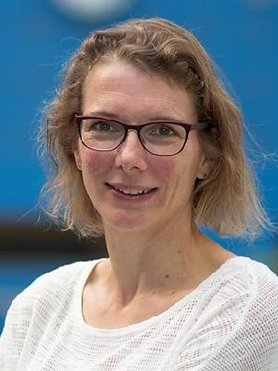
Dr. Rong-Hao Liang is an Assistant Professor at Eindhoven University of Technology (TU/e), affiliated with both the Future Everyday Group (Department of Industrial Design) and the Signal Processing Systems Group (Department of Electrical Engineering). His research bridges intelligent sensing systems and user interface technology for ubiquitous computing and embodied human-computer interaction . He co-organized international ACM conferences (CHI, UIST, DIS) and has over 70 peer-reviewed publications and 10 patents. PhD in Computer Science (2014) and MSc in Electrical Engineering (2010) from National Taiwan University Founded GaussToys Inc. in 2015, focusing on magnetic-field sensors Cross-appointed to Electrical Engineering in 2021 His research explores intelligent sensing systems , tangible user interfaces , and physiological sensors for real-world challenges. Key trends in his work include ubiquitous health monitoring (e.g., preterm infants), wearable technology , and innovative interaction design . Articles like GaussBits and NFCStack demonstrate his focus on magnetic and RFID-based tangible systems . Scientific awards include the ACM CHI 2013 Best Paper Award , 2014 Honorable Mentions , and the ACM SIGGRAPH Asia 2012 Emerging Technologies Prize . He mentors passion-driven projects in user interface design and embedded systems , emphasizing technical rigor and creativity. His STRAP project (2020–2025) addresses heart disease prevention via big data and AI . Labs and teams include the Future Everyday Group and Signal Processing Systems Group , with collaborations across healthcare , education , and technology startups . His work aligns with UN Sustainable Development Goals , particularly good health and well-being .
Sveta Zinger is a Full Professor in context-informed dynamic image analysis for clinical decision support at Eindhoven University of Technology (TU/e). She holds affiliations with the Biomedical Diagnostics Lab, NeuroPlatform, and EAISI Health. Her research focuses on medical image/video analysis, temporal data analysis, and machine learning for clinical applications. She has led projects funded by ZonMw, NWO, Philips, and others. She is also Co-Editor-in-Chief of Computer Methods and Programs in Biomedicine and serves on the Vidi committee for NWO. Education: MSc (2000) from Dnepropetrovsk State University; PhD (2004) from École Nationale Supérieure des Télécommunications, France. Postdoctoral roles at the French Atomic Agency and University of Groningen. Research Projects: Includes FORSEE (video monitoring for adverse events in healthcare) and NEUROTREND (fMRI biomarkers for depression). Awards: Second place in the CAMELYON17 challenge for metastases detection. Her teaching includes courses on DSP fundamentals, medical image processing, and cognitive neuroscience. She collaborates with clinical and industrial partners to advance biomedical diagnostics and healthcare technology.
Prof. Robbert Jan Kok is a Professor of Drug Delivery Technology at Utrecht University's Utrecht Institute for Pharmaceutical Sciences (UIPS) and Programme Director for the Bachelor of Pharmacy. He obtained his Pharmacy degree (1993) and PhD in renal drug targeting (1998) from the University of Groningen, followed by postdoctoral research on endothelial-targeted drug delivery. His work spans curriculum development for pharmacy programs and interdisciplinary research in drug innovation. Research Focus: Kok specializes in advanced drug delivery systems, including nanomedicines for kinase inhibitors, 3D-printed formulations, and stimuli-responsive carriers. Key areas include: Targeted delivery to tumors, kidneys, and inflamed tissues Polymeric micelles, liposomes, and microspheres for sustained release Biopharmaceutics and pharmacokinetic optimization Publication Trends: His recent work emphasizes nanotechnology-enabled therapies (e.g., curcumin nanodelivery, photodynamic micelles) and device-integrated drug release (3D-printed implants, macroencapsulation). Studies frequently combine material science with preclinical validation in cancer, renal diseases, and inflammatory disorders. Academic Leadership: Kok oversees student advising, laboratory operations, and international collaborations at UIPS. His team explores translational applications of drug delivery platforms, including partnerships for vascularized tissue engineering and combination therapies.
Carlijn Bouten is Full Professor of Cell-Matrix Interactions in Cardiovascular Regeneration at Eindhoven University of Technology. She leads the Soft Tissue Engineering & Mechanobiology group, investigating cellular interactions with extracellular environments in tissue growth, adaptation, and regeneration. Her research develops biodegradable heart valve prostheses that enable in vivo tissue regeneration, applying tissue engineering approaches to cardiovascular medicine. Professor Bouten holds an MSc from Vrije Universiteit Amsterdam and a PhD from TU/e. She completed postdoctoral research at Université Laval and University of London before joining TU/e's faculty. She directs the national Gravitation program 'Materials-Driven Regeneration' and received an ERC Advanced Grant for cardiac tissue organization research. Research Focus: Her interdisciplinary program spans: Mechanobiological cues in tissue regeneration Development of living heart valve replacements Advanced biomaterials for cardiovascular applications In vitro models for tissue development Soft robotic systems for cardiac assistance Recent publications demonstrate innovations in biohybrid devices, standardized biomaterial testing, and novel tissue patterning techniques. Her work integrates engineering, materials science, and clinical translation through collaborations with medtech spin-offs. Leadership and Recognition: Fellow of the European Alliance for Medical and Biological Engineering President-elect of the Heart Valve Society Member of AcademiaNet for Outstanding Female Scientists Recipient of NWO VICI grant and Aspasia award She leads multinational consortia in regenerative medicine and teaches courses on heart/blood physiology and regeneration. Her lab develops model systems spanning cellular to tissue levels to quantify mechanobiological processes.
Prof. Sarthak Misra is a Full Professor in Medical Robotics at the University of Groningen’s Faculty of Medical Sciences, affiliated with the University Medical Center Groningen (UMCG). He leads research in the Robotics and image-guided minimally-invasive surgery (ROBOTICS) group and the Basic and Translational Research and Imaging Methodology Development in Groningen (BRIDGE) team. His work focuses on advancing medical robotics, microrobotics, and magnetic actuation technologies for surgical and biomedical applications. He holds an ORCID identifier and has published over 127 research outputs, including high-impact articles in journals like Advanced Materials Technologies and European Heart Journal . His research addresses challenges in minimally invasive surgery, soft robotics, and smart materials. Media engagements highlight his contributions to robotic surgery and addressing healthcare workforce shortages through automation. Research interests include: Microrobotics and fluidic systems Magnetic and acoustic actuation for medical devices Soft robotic systems for surgical applications Image-guided interventions 3D printing for biomedical robotics His recent articles emphasize innovations like MagNoFE3D printing and magnetic probes for endovascular interventions. Collaborations span global institutions, reflecting his interdisciplinary approach. No explicit awards are listed, but his extensive media coverage and 127+ publications underscore his impact. He is involved in grants, including OTP-funded projects, and mentors students in advanced robotics and medical engineering.
Prof. Freek J. Beekman is a Full Professor and head of the Biomedical Imaging section within the Department of Radiation Science & Technology at Delft University of Technology (TU Delft), Faculty of Applied Sciences. He is a leading figure in biomedical imaging, with extensive contributions to nuclear imaging technologies, including SPECT, PET, and CT. His research spans detector development, image reconstruction algorithms, hybrid photonic imaging, and the application of artificial intelligence in medical imaging. Research Interests: His work focuses on advancing imaging modalities through innovations in hardware (e.g., multi-pinhole collimators) and software (e.g., deep learning for attenuation correction). He has pioneered ultra-high-resolution imaging systems, particularly for preclinical and clinical SPECT, and has developed integrated platforms like U-SPECT-BioFluo. His recent research explores glymphatic delivery of nanoparticles, infection imaging, and AI-driven reconstruction techniques, reflecting a strong translational focus. Publication Trends: His most recent publications (2021–2023) emphasize deep learning in SPECT, multi-isotope imaging, high-resolution ex vivo systems, and applications in neuroimaging and oncology. The articles demonstrate a consistent focus on improving image quality, resolution, and clinical utility through physics-informed and AI-enhanced methods. Scientific Awards: NWO Physics Valorization Prize Innovation of the Year Award by the World Molecular Imaging Society (2015, 2018) Edward Hoffman Memorial Award (2017) Bruce Hasegawa Memorial Award (2021) FOM Valorization Award (2013) TU Delft Entrepreneurial Award (2010) Advising and Grants: While specific student names are not listed, his leadership in large collaborative projects and supervision of numerous publications suggests active mentoring. He has secured significant funding through national and international grants, evidenced by his invention of over 20 patent families and successful technology transfer. His founding and leadership of MILabs BV (sold to Rigaku) highlights his impact on commercialization and industry-academia collaboration. Labs and Teams: He leads the Biomedical Imaging research group at TU Delft, which develops cutting-edge imaging systems such as VECTor (SPECT-PET) and EXIRAD-HE. His teams have produced technologies used globally in academic and pharmaceutical research, contributing to tracer development and therapeutic innovation.
Dr. Dierck Hillmann is an Associate Professor at the Faculty of Science, Department of Biophotonics and Medical Imaging, Vrije Universiteit Amsterdam. He holds a PhD in Holoscopy from Luebeck University (2013). His research focuses on advanced optical imaging techniques, particularly Optical Coherence Tomography (OCT), with applications in retinal imaging, functional signal analysis, and computational imaging. He is affiliated with the LaserLaB - Biophotonics and Microscopy research group. Key research areas include improving OCT resolution through holographic methods, functional imaging of retinal neurons and photoreceptors, and developing computational adaptive optics to enhance imaging quality. His work addresses challenges like speckle reduction, aberration correction, and real-time data processing in biomedical imaging. Dr. Hillmann’s contributions span over 37 publications, including innovations in full-field OCT, optoretinography, and phase-sensitive measurements. He teaches courses such as Computational Optical Imaging and Light-Tissue Interaction. His current project explores imaging individual retinal cells and their functions using advanced techniques. No scientific awards are explicitly listed, but his extensive publication record reflects significant academic impact. Students advised are not specified in the provided materials.
Sonja Paus-Buzink is an Assistant Professor in Human Factors at TU Delft’s Faculty of Industrial Design Engineering, specializing in the Human-Centered Design department. Her research focuses on integrating human factors/usability evaluation into medical device and healthcare service design, emphasizing inclusive design perspectives. She teaches courses on human factors, usability, and medical device regulation, supervising students in research and graduation projects. Academic Background: PhD from TU Delft (Medisign Research Group), co-funded by Catharina Hospital, focusing on patient safety in image-based surgical procedures and VR/AR simulation tools. Postdoctoral work on surgical skillslabs and scientific coordination of the European Laparoscopic Surgical Skills Program. Previously a Managing Human Factors Specialist at UL-Wiklund R&D, advising medical device manufacturers on regulatory compliance. Research Interests: Human factors, ergonomics, medical device design, patient safety, inclusive design, surgical training, and healthcare technology. Her work bridges clinical, engineering, and psychological disciplines to enhance healthcare outcomes. Awards: Summa Cum Laude MSc in Industrial Design Engineering (TU Delft). Best IDE Graduate of the Year award at TU Delft. Grants & Collaborations: Collaborations with medical institutes, simulator companies, and organizations like the European Association for Endoscopic Surgery (EAES). Her research emphasizes cross-disciplinary teamwork to address challenges in surgical training and medical device usability. Labs/Teams: Engaged with TU Delft’s Medisign research group and skillslab initiatives. Active in developing tools for surgical training and patient safety in operating rooms.
Dr. Ye Wang is an Assistant Professor at the Department of Microsystems , Mechanical Engineering School , Eindhoven University of Technology . Active in UN Sustainable Development Goals related to biomedical technology, their work focuses on magnetic artificial cilia for microfluidic applications. Academic Rank: Assistant Professor University: Eindhoven University of Technology School: Mechanical Engineering Department: Microsystems Research Interests : Fluid dynamics in microsystems, magnetic actuation, biomechanical stimuli response, and biomedical device development. Key areas include programmable artificial cilia, shear-thinning fluid transport, and biofouling prevention through microscale engineering. Scientific Trends : Recent works emphasize cilia-based microfluidic mixing, non-Newtonian fluid dynamics, and organ-on-chip platforms. Collaborative projects with Prof. J.M.J. den Toonder and P.R. Onck dominate current publications. Advising : Supervised multiple student theses on topics ranging from microrheology to microheater reliability. Graduate students include F.W. Boots , M.H.J. Dekkers , and Y.-T. Lan . Projects : Currently involved in Accelerating Innovation in Microfabricated Medical Devices (2020-2023) with focus on continuous monitoring and advanced diagnostics. Scientific Impact : 1231 citations (Scopus) with collaborative networks spanning fluid dynamics, magnetic actuation, and biomedical applications. Featured in PNAS and Lab on a Chip publications.
Frans N. van de Vosse is a full Professor at the Department of Biomedical Engineering , Eindhoven University of Technology. He leads the Cardiovascular Biomechanics research group, focusing on computational and experimental analysis of cardiovascular systems, medical devices, and clinical applications. Academic Background: MSc in Applied Physics (1982), PhD in Numerical Carotid Artery Flow Analysis (1987) from TU/e Professional Affiliations: Full Professor (since 2001), Lecturer in Fluid Mechanics (1987–2001) Research Interests span cardiovascular biomechanics, including Blood in Motion , Heart at Work , and Vessels under Stress . His work emphasizes computational models, experimental techniques, and medical devices for clinical diagnosis and intervention. Key Article Trends include fetal hemodynamics, virtual patient cohorts for coronary disease, abdominal aortic aneurysm progression, and fluid-structure interaction studies in heart valves. Many publications align with UN Sustainable Development Goals related to health and well-being. Media and Public Engagement highlights his contributions to artificial womb technology discussions and clinical device validation studies. His research has been featured in Professional Commentary and PR Activities in cardiovascular engineering.
Edwin H.F. van Asseldonk is an Associate Professor at the TechMed Centre , University of Twente. His work bridges Biomechatronics and Rehabilitation Technology , focusing on integrating robotics and artificial intelligence to enhance mobility and autonomy in neurological patients. Key Research Areas: Exoskeleton development, motion control algorithms, gait analysis, neuromuscular modeling, and AI applications in rehabilitation. Recent Article Trends: Research emphasizes AI-driven exoskeletons for gait stability, biofeedback systems, and open data initiatives in biomechanics. Scientific Awards Best Paper Award at BioRob 2024 Best Poster at Dutch Biomedical Engineering Conference (2017) Best Student Paper Finalist (2018) Labs & Collaborations: Active in the TechMed Centre and 4TU.ResearchData, with international collaborations in Spain and beyond. Regular invited speaker on exoskeletons and rehabilitation robotics.
Prof. Elisa Giaccardi is a Professor in Industrial Design Engineering at Delft University of Technology, specializing in Human-Technology Relations. Their research focuses on sustainable energy practices, AI ethics, decolonial design, and material interactions in everyday life. Giaccardi has led projects exploring heat pump adoption, clinical AI development, and microbial coexistence with humans. They are affiliated with TU Delft’s 4TU.ResearchData repository and hold editorial roles in design conferences such as EKSIG 2017. Notable contributions include datasets on heat pump practices and awards like the 2023 Best Paper Honourable Mention. Giaccardi actively participates in international conferences, emphasizing interdisciplinary collaboration across design, technology, and social sciences. Research interests span decolonizing design methodologies, energy transition practices, and the ethical implications of AI. Their work bridges technical innovation with human-centered approaches, addressing societal challenges through speculative and critical design frameworks. Recent publications analyze household improvisation with heat pumps, hauntological critiques of AI, and material care for cyanobacteria in domestic contexts. Giaccardi has supervised 5 academic works and contributed to over 70 research outputs. They organize conferences, review journal submissions, and advocate for inclusive, equitable design practices. Current activities include exploring AI’s societal integration and fostering dialogue between designers, engineers, and marginalized communities.
Ramiro Serra is an Associate Professor at the Department of Electrical Engineering at Eindhoven University of Technology (TU/e) in the Netherlands. He is affiliated with the Electrical Energy Systems group and the High Tech Systems Center , focusing on Power Conversion and Electromagnetics . Research Interests include Electromagnetic Compatibility (EMC) , Statistical Electromagnetics , Wireless Coexistence , and Interference Studies . His expertise spans the design, modeling, and operation of Electromagnetic Mode-Stirred Reverberation Chambers , noise propagation in IC substrates, and EMC aspects in large infrastructures. Notable Contributions involve novel methods for EMI Reduction in mixed electrical class modules, VNA-Based TRP Measurements , and quantifying Loading Effects in reverberation chambers. His work impacts domains like Consumer Electronics , Automotive , and Medical Devices . Academic Leadership includes roles in international committees such as the International Steering Committee of EMC Europe , Chair of URSI Commission E , and Secretary of the General National URSI Committee . He also contributes to standardization efforts via IEC 61000-4-21 and CIRED/CIGRE joint working groups.