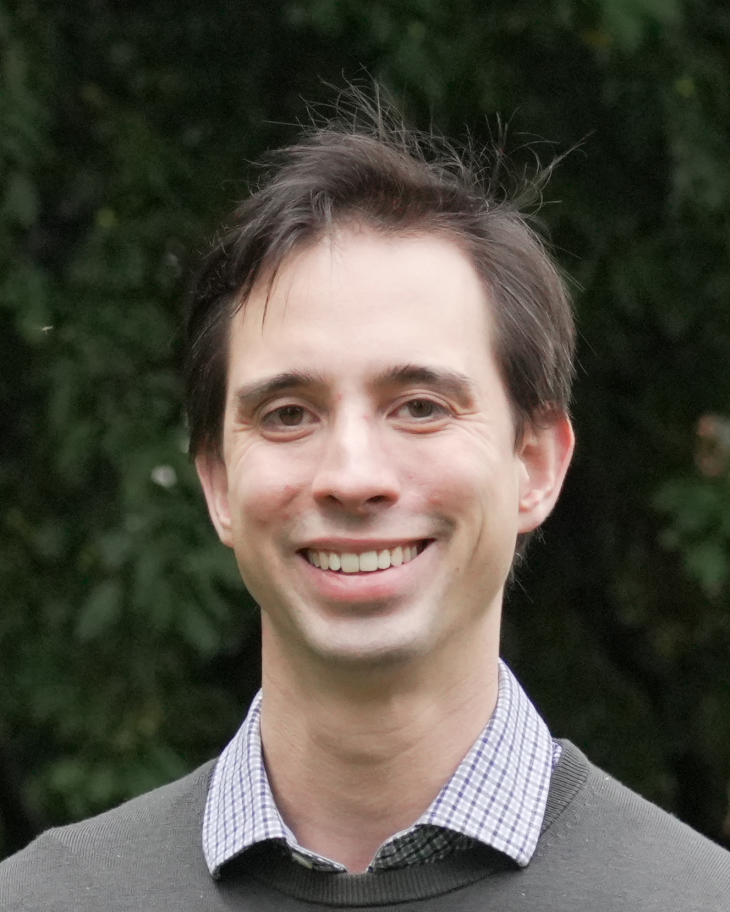
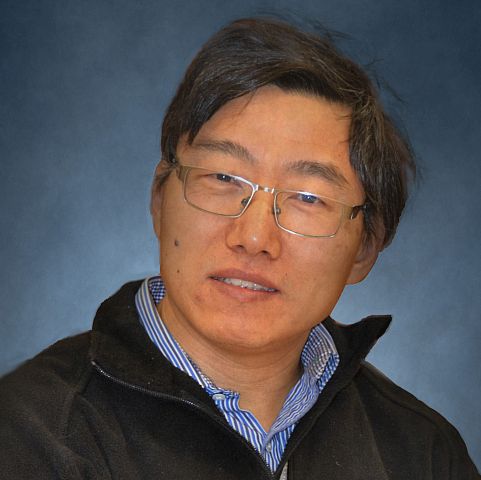
Dylan Campbell is a Lecturer in Computing at the Australian National University (ANU), affiliated with the ANU College of Systems & Society. His research focuses on computer vision, optimization, and robotics, particularly in 3D vision and deep learning applications. He has held prior roles as a Research Fellow at the University of Oxford’s Visual Geometry Group and ANU’s Australian Centre for Robotic Vision. Campbell holds a PhD from ANU (2018) and a BE in Mechatronic Engineering from UNSW (2012). Research interests include geometric sensor alignment, neural radiance fields, and differentiable optimization layers. He actively supervises students (7 PhD/DPhil, 3 MEng, 9 honours) and teaches advanced courses in computer vision and robotics. Notable awards include the Marr Prize Honourable Mention (2017) and the IEEE Australia Council Postgraduate Student Paper Competition (2018). He has organized workshops at ECCV and CVPR, served as a reviewer for top conferences like CVPR/ICCV/ECCV, and contributed to datasets like SEED4D and RefRef. His work emphasizes efficient training of neural networks and leveraging symmetries in data for long-range connections.
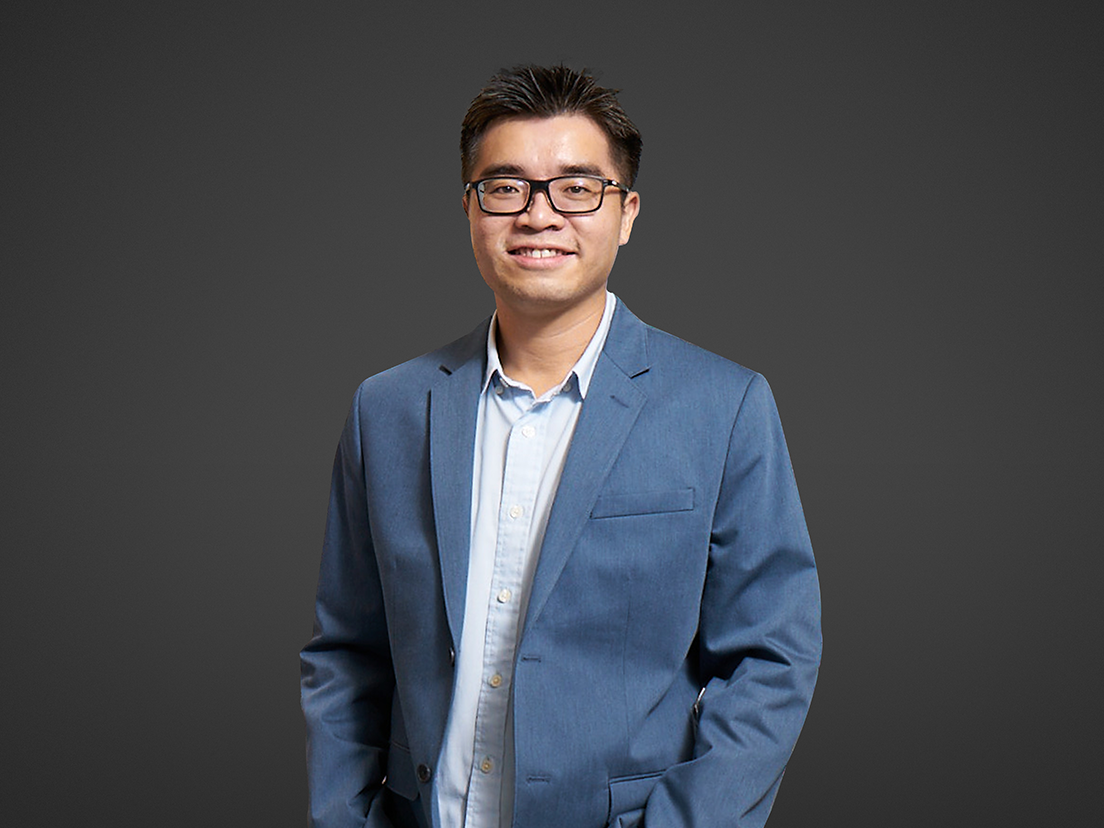
Dr. Foong Shaohui is an Associate Professor and Associate Head at the Engineering Product Development (EPD) pillar of the Singapore University of Technology and Design (SUTD), with prior experience as a Visiting Assistant Professor at MIT's Mechanical Engineering department (2011). He leads the Aerial Innovation Research (AIR) Laboratory @ SUTD and actively collaborates with Singapore's Ministry of Defence (MINDEF) and medical institutions like National University Hospital (NUH) and Changi General Hospital (CGH). PhD, MS, and BS in Mechanical Engineering from Georgia Institute of Technology (2005-2010) Research Interests span multiple domains: Robotics & UAVs : Nature-inspired aerial craft design (Project MONOCO), hybrid flight dynamics, and transformable rotorcraft Medical Device Innovation : Magnetic localization systems for nasogastric tubes and ventriculostomy procedures Engineering Education : Design-Centric pedagogy and pre-university Aerial Craft Workshops Autonomous Systems : Deep tunnel sewer inspection drones (NRF/PUB funded) and soft robotics Scientific Contributions include patented magnetic localization technologies (licensed to Medergo Pte. Ltd.), over 20 peer-reviewed publications, and 5 granted patents. His work bridges aerospace engineering with biomedical applications through innovative mechatronic solutions. Best Application Paper Award at SCIS & ISIS (2014) Research Grants include projects funded by Singapore's National Research Foundation (NRF), Public Utilities Board (PUB), and National University Hospital partnerships. He mentors PhD/Master's students through interdisciplinary research in aerial robotics and medical device development.
Rita Cucchiara is a Full Professor at the Department of Engineering 'Enzo Ferrari' of the University of Modena and Reggio Emilia. She leads the AImageLab research laboratory, part of the Artificial Intelligence Research and Innovation Center (AIRI) in Modena. Her research focuses on Computer Vision, Pattern Recognition, Machine Learning, and Multimedia, with applications in video surveillance, medical imaging, human-centered AI, and generative models. She is actively involved in interdisciplinary projects like ELIAS (European Lighthouse for AI Sustainability) and ELSA (European Lighthouse on Secure AI). Her recent roles include being elected Rector of the University of Modena and Reggio Emilia in 2025. She has organized and participated in major AI events, including workshops at NeurIPS, CVPR, and ECCV, and has contributed to advancements in multimodal models, deepfake detection, and trustworthy AI. Education details are not explicitly provided, but her extensive academic and research experience at the University of Modena underscores her expertise. She collaborates with institutions like NVIDIA, CINECA, and industry partners such as Digital Design and NVIDIA's AI Technology Center. AImageLab's projects include developing systems for medical imaging, ethical AI, and generative adversarial networks (GANs) for design surfaces. She co-organizes initiatives like the ELLIS Summer School on Large-Scale AI and contributes to policy discussions on AI ethics and societal impact. Her work spans from foundational research (e.g., vision transformers, continual learning) to applied projects (e.g., DDGan system for surface printing). Key grants and collaborations include the FAIR project and PNRR-M4C2 initiatives. She advises students and researchers in AI, with 7 PhD positions funded under national programs. Her leadership roles in AIRI and AImageLab highlight her commitment to bridging academia and industry, fostering innovation in AI-driven solutions for sustainability and healthcare.
Dr A. I. Shihab is a Senior Lecturer at Kingston University's Faculty of Engineering, Computing and the Environment, Department of Networks and Digital Media. He teaches programming languages (C++/Java), data structures, web development, and AI/machine learning. His research focuses on affective computing and machine learning applications including: Acoustic event detection in sports environments Audio signal analysis for tennis match modeling Multi-camera visual surveillance systems Medical imaging analysis using fuzzy clustering techniques Publications demonstrate expertise in combining audio/video modalities for sports analytics (tennis rallies, court-shots) and developing Markov models for sound event sequence analysis. Contact: a.shihab@kingston.ac.uk
Jianming Liang is a full professor at Arizona State University's College of Health Solutions, specializing in biomedical informatics, data science, and computer vision. His research focuses on self-supervised learning, foundation models, and improving transfer learning techniques for medical imaging applications. National Academy of Inventors Fellow (2021) ASU Faculty Innovation Award (2019) ASU Distinguished Faculty Award (2023) NIH R01 grant recipient Led lab producing FDA-approved medical imaging products His lab has developed multiple open-source frameworks like Ark , Foundation_X , and ModelsGenesis for medical image analysis. Team has received over 70 student research awards including NCWIT Collegiate and AMIA Ph.D. Dissertation honors. Key research contributions include: Anatomically consistent foundation models Domain-adaptive pretraining strategies Annotation-efficient deep learning Integrated classification/localization/segmentation frameworks 40+ US patents (50+ pending) Major publications demonstrate leadership in self-supervised learning for chest radiography, pulmonary embolism detection, and medical AI explainability.
Sanghyun Hong is an Assistant Professor at Oregon State University's School of Electrical Engineering and Computer Science , focusing on Trustworthy AI and Cybersecurity . He holds a Ph.D. in Computer Science from the University of Maryland, College Park (2021) and a B.S. in Electrical Engineering and Computer Science from Seoul National University (2015). His research bridges machine learning , security , and privacy-preserving systems . Current research themes: Robustness of AI systems to adversarial attacks Privacy-preserving machine learning Security of pre-trained and large language models Hardware fault vulnerabilities in neural networks Cybersecurity workforce development Publication Trends (15 most recent): Focus on adversarial machine learning (jailbreaking LLMs, membership inference) Advances in physics-informed neural networks and time series forecasting Key contributions to AI security and malware detection Interdisciplinary work in visualization design and tsunami warning systems Scientific Accolades : Google Faculty Research Award (2023) Samsung Global Research Award (2022, 2023, 2024) DARPA Riser (2022) NSF SFS Award (co-PI, 2023) USENIX Enigma Speaker (2021) Academic Leadership : Mentors 5 Ph.D. students and has graduated 8 M.S. and B.S. students. Currently developing next-generation auditing frameworks for AI systems while on medical leave until Winter 2026.
Clark Olson is a Professor in the Division of Computing & Software Systems at the University of Washington Bothell, part of the School of Science, Technology, Engineering & Mathematics. He earned his Ph.D. in Computer Science from UC Berkeley (1994), M.S. in Electrical Engineering (1990), and B.S. in Computer Engineering (1989) from the University of Washington, Seattle. Education: Ph.D. in Computer Science (2017) from University of California, Berkeley M.S. in Electrical Engineering (1990) from University of Washington, Seattle B.S. in Computer Engineering (1989) from University of Washington, Seattle His research focuses on computer vision, robot navigation, and clustering algorithms. He has developed techniques for Mars rover terrain mapping, subspace clustering, and geometric feature matching. His work bridges theory and application in autonomous systems and image analysis. Analysis of his publications reveals expertise in computer vision (8 papers), clustering algorithms (4 papers), and robotics (5 papers). Key subtopics include Mars exploration (3 papers), Hough transforms (3 papers), and probabilistic methods (3 papers). Professor Olson teaches courses ranging from introductory programming (CSS 161-162) to advanced topics in computer vision (CSS 487-587) and algorithm design (CSS 549). He also advises on the CSSE Capstone (CSS 497) projects requiring rigorous prerequisites and structured evaluation criteria.
Devis Tuia serves as Associate Professor at the Swiss Federal Institute of Technology Lausanne (EPFL), holding appointments in the Institute of Environmental Engineering (IIE) within the School of Architecture, Civil and Environmental Engineering (ENAC). He leads the Environmental Computational Science and Earth Observation Laboratory (ECEO) since 2020 and contributes to EPFL's Doctoral Program in Civil and Environmental Engineering. His academic journey began in Lausanne with studies at UNIL and EPFL, culminating in a PhD in remote sensing from UNIL. Postdoctoral research followed at institutions in Valencia, Boulder, and EPFL, focusing on machine learning model adaptation. He progressed from Research Assistant Professor at University of Zurich to Associate and Full Professor at Wageningen University before joining EPFL. Tuia's research bridges Earth observation with artificial intelligence, specializing in interpretable deep learning for environmental applications. His lab develops algorithms for making remote sensing accessible, with particular emphasis on digital wildlife conservation through automated censuses using drone and satellite imagery. Current projects tackle the 'black box' problem in environmental modeling while advancing spatial intelligence for sustainable urban development. His 2023-2025 publication portfolio reveals three dominant trends: (1) species distribution modeling using incomplete observations, (2) multimodal fusion of satellite/drone data with textual descriptions, and (3) interpretable AI frameworks for environmental decision-making. This work consistently addresses real-world challenges like wildfire forecasting and biodiversity monitoring. As an educator, Tuia supervises 12 current PhD students and has graduated 4 former EPFL doctoral candidates. His teaching portfolio includes Frontiers of Deep Learning for Engineers , Sensing and Spatial Modeling for Earth Observation , and Image Processing for Earth Observation courses. The ECEO laboratory maintains active collaborations with ESA-NASA initiatives and conservation organizations globally.
Bertrand Schneider is an Associate Professor of Education at Harvard University's Graduate School of Education (GSE). He holds a Ph.D. in Learning Sciences and Technology Design from Stanford University (2015) and previously served as a postdoctoral researcher at Stanford's Transformative Learning Technologies Laboratory. His research focuses on educational interfaces (e.g., augmented reality, tangible tools) and multimodal learning analytics, particularly in collaborative and informal learning environments. He investigates how technologies like gaze-tracking and motion sensors can assess student learning trajectories and improve instructional strategies in makerspaces and remote teaching contexts. Education : Ph.D., Learning Sciences and Technology Design, Stanford University (2015) Postdoctoral Researcher, Transformative Learning Technologies Laboratory, Stanford University Research Interests : Educational technologies (AR, tangible interfaces, multitouch) Multimodal data analysis (gaze, body movement, speech) Collaborative learning in formal/informal settings Remote teaching strategies using shared gaze visualizations AI applications in personalized feedback and misinformation discernment Key Contributions : Developed methodologies for capturing joint visual attention in collaborative learning Advocated for ethical implementation of multimodal learning analytics Explored AR's dual-edged impact on student engagement and collaboration Labs/Teams : Current research aligns with GSE's focus on innovative learning technologies Prior affiliation with Stanford's Transformative Learning Technologies Lab
Qingguo Li is a Professor and Associate Head at the Department of Mechanical and Materials Engineering , Queen's University , and a member of the Ingenuity Labs Research Institute . He specializes in biomechanical system design, energy harvesting, wearable sensors, gait analysis, and load carriage systems. His research integrates robotics, biomedical engineering, and sensor technology to develop human-centric devices and mobility aids. Current Roles : Professor, Associate Head, Queen's University Research Institute : Ingenuity Labs Research Institute Lab : Bio-Mechatronics and Robotics Laboratory His work focuses on biomechanical energy harvesting , IMU-based motion analysis , and assistive device development . Key applications include stroke rehabilitation, gait monitoring, and wearable power generation systems. Articles span cable-driven robots , smart walkers , and 3D printing mechanisms , emphasizing human-robot interaction and dynamic modeling . The lab explores sensor calibration , adaptive control algorithms , and human movement optimization . Areas of impact include rehabilitation engineering , load carriage stability , wearable sensor accuracy , and assistive robotics . His team develops solutions for gait asymmetry detection , post-stroke mobility , and low-cost energy systems , leveraging machine learning and kinetic modeling .
Professor Khin Than Win is a leading academic in health informatics and digital health at the University of Wollongong (UOW), holding appointments as Professor in the School of Computing and Information Technology, Head of Postgraduate Studies, and Deputy Head (Research). She also serves as Academic Program Director for UOW's Master of Health Informatics and Graduate Certificate in Health Analytics programs. Her research focuses on applying information technology to healthcare, particularly in behavior change support systems, persuasive technology, and ethical AI applications. She has supervised over 20 PhD students and holds leadership roles including Deputy Chair of UOW's Health and Medical Research Ethics Committee, and membership in international committees like the Persuasive Technology Steering Committee. Education: MBBS from Rangoon University, Master's and PhD in IT from Assumption University (Bangkok) and UOW (Australia) Research Interests: Health data analytics, AI in healthcare, privacy/security of health systems Leadership: Program/General Chair roles at ACIS and Persuasive Technology conferences Awards: Best Paper Awards (2023, 2018) Her extensive funding portfolio includes ARC grants and NHMRC projects, totaling over 24 funded initiatives. Current research explores blockchain in medical passports, AI ethics, and culturally tailored health interventions.
Tiancheng Zhao is a principal researcher at the Binjiang Institute of Zhejiang University and founder of the Om Artificial Intelligence Laboratory (Om AI Lab), dedicated to frontier open multimodal AGI research for building next-generation agents that transform work and life through advanced human-machine interaction. His academic credentials include: Ph.D. in Computer Science from Carnegie Mellon University (2016-2019) under Prof. Maxine Eskenazi, Prof. Louis-Philippe Morency, Prof. William W. Cohen, and Dr. Dilek Hakkani-Tur, with pioneering dissertation “Learning to Converse With Latent Actions” in end-to-end generative conversational models M.S. in Computer Science from Carnegie Mellon University (2014-2016) B.S. in Electrical Engineering from UCLA (2010-2014) with Summa Cum Laude, focusing on speech signal processing under Prof. Abeer Alwan Dr. Zhao’s research centers on multimodal foundation models and agents, tackling three core challenges: Multimodal Models for cross-modal representation learning in high-dimensional data, Learning to Learn for effective skill acquisition from diverse signals (supervised labels, rewards, meta-learning), and AI Agents for open-world understanding and complex decision-making. His work bridges computer vision, natural language processing, and real-world applications including healthcare analytics and remote sensing. Analysis of his 50+ publications reveals accelerating innovation in multimodal large language models (2024-2025), with emphasis on stable vision-language architectures (VLM-R1), agent orchestration frameworks, and domain-specific applications in geospatial analysis and healthcare. Key trends include solving long-tail distribution challenges in satellite imagery, developing human-like zooming capabilities for multimodal LLMs, and creating unified benchmarks for autonomous GUI testing. His scientific recognition includes: National Breakthrough Technology Award by Ministry of Science and Technology (2021) Microsoft Research Best & Brightest PhD (2018) BEST PAPER AWARD at SIGDIAL 2018 Best Paper Nomination at SIGDIAL 2016 Top 1 Outstanding Bachelor of Science Award at UCLA (2014) As Om AI Lab founder, Dr. Zhao leads research teams developing computational building blocks for human-AI collaboration. While specific student mentorship details aren’t public, his extensive publication record with junior co-authors indicates active research supervision. Current projects focus on practical system implementations for real-world multimodal agent deployment across diverse domains.
Dr. Christina Allen is a Professor of Orthopaedics & Rehabilitation at Yale School of Medicine, where she serves as Chief of Yale Sports Medicine and Vice Chair of Athletic Medicine and Community Outreach. She is the Orthopaedic Team Physician for Yale Athletics and has extensive experience with U.S. national teams, including U.S. Soccer and USA Taekwondo. Education: BS in Biomedical Engineering, Duke University (1983); MD, UCLA School of Medicine (1995) Training: Orthopaedic Residency and Sports Medicine Fellowship, University of Pittsburgh Research Interests focus on: Revision ACL reconstruction outcomes and predictors Meniscus transplantation and cartilage repair Proximal hamstring avulsion repair Quantitative MRI for joint kinematics and cartilage changes Post-ACL revision infection risk factors Scientific Awards include: Kappa Delta Ann Doner Vaughn Award (2019) NIH R01 Competitive Renewal Grant (2017) AOSSM O’Donoghue Award (2014) Clinical Roles span: Team physician for U.S. Soccer (Women's/Men's National Teams) Former team physician for San Francisco Deltas (NASL Champions 2017) Medical Board member, World Taekwondo (London Olympics 2012, Rio Olympics 2016) Publications highlight a 20-year longitudinal focus on: Machine learning models for surgical outcome prediction Graft choice impact on revision ACL longevity Cartilage degeneration after meniscectomy Biomechanical MRI analysis of joint kinematics Infection rates in revision surgeries Return-to-sport protocols for athletes
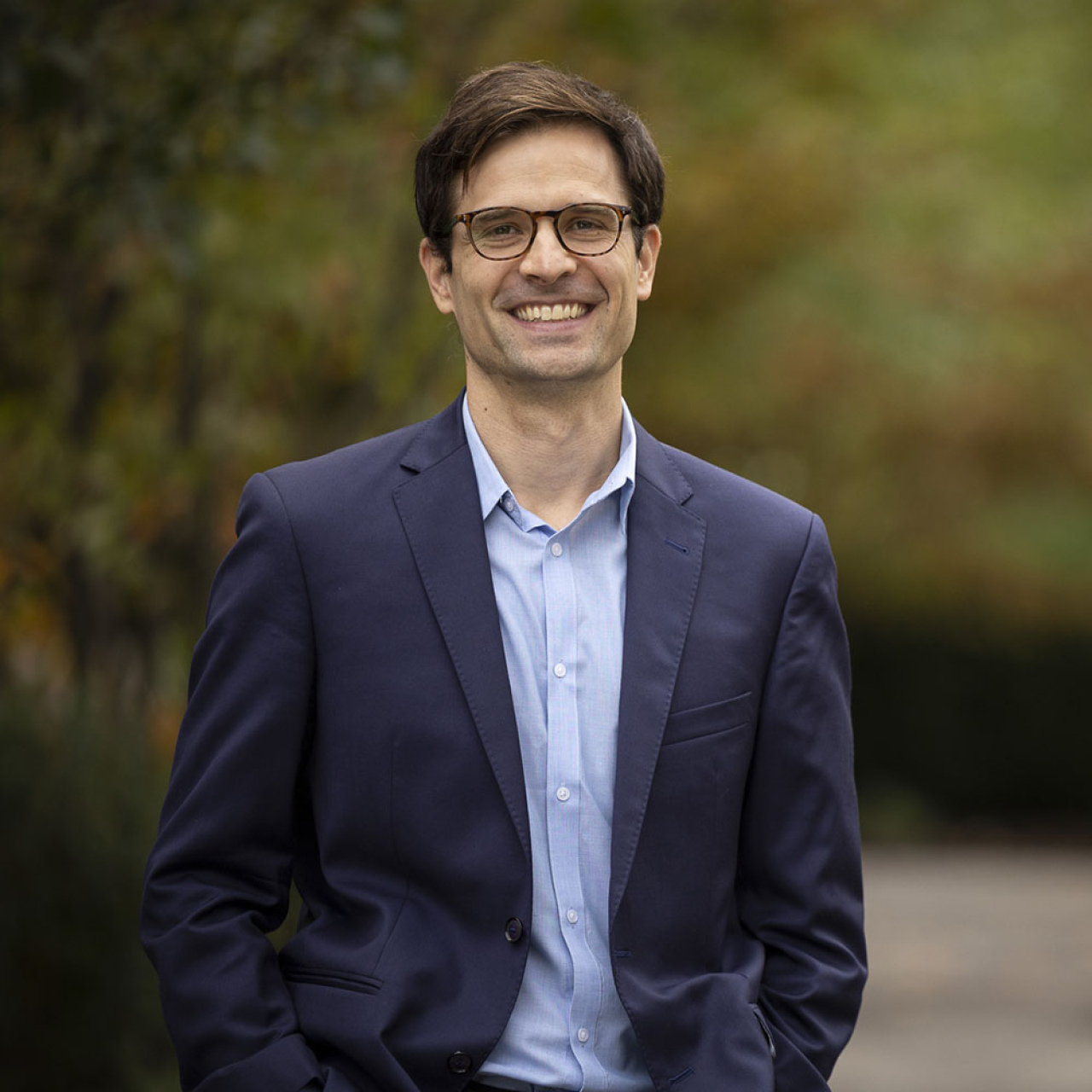
Matthew B. Blaschko is a Professor in the Department of Electrical Engineering at KU Leuven, Belgium. He serves as director of the KU Leuven ELLIS unit and is a fellow in the ELLIS Health program. He is a Core PI in the Flanders AI Research Program, working as a workpackage lead for Decision Support Systems and Medical Imaging. Blaschko is also a member of the KU Leuven Institute for Artificial Intelligence and one of the leaders of the working group on Machine Learning and Data Science. Professor Blaschko received his B.S. from Columbia University, M.S. from the University of Massachusetts Amherst, and Dr. rer. nat. from Technische Universität Berlin (awarded for work at Max Planck Institutes Tübingen). He was a Newton International Fellow at the University of Oxford and received his Habilitation (HDR) from École Normale Supérieure de Cachan. Prior to joining KU Leuven, he was a Permanent Research Scientist in the INRIA Saclay Research Center and a Faculty Member at Ecole Centrale Paris. His research focuses on machine learning techniques applied to visual data, with particular emphasis on calibration in deep learning, medical image analysis, and federated learning. Blaschko's work bridges theoretical foundations with practical applications, as evidenced by technology developed in his research being incorporated into MONA, software for ophthalmic image analysis. His research group has made significant contributions to the fields of model calibration, uncertainty estimation, and medical imaging analysis, with recent publications showing strong trends toward improving reliability of AI systems in medical contexts and advancing theoretical understanding of calibration metrics. Professor Blaschko has been recognized with several awards including the Université Paris-Saclay STIC Doctoral School Best Scientific Contribution Award, Best Paper Award at CVPR 2008, Main Award at DAGM 2008, and Best Student Paper Award at ECCV 2008. Professor Blaschko has supervised numerous PhD and Master's students, with current and former students including Deniz Soysal, Claire Marchal, Dongli Xu, Sebastian Gruber, Jiameng Li, Marco Mezzina, and many others working on diverse topics from Alzheimer's disease analysis to surgical phase recognition. His research has been supported by various funding sources including the Flanders AI Research Program. He has co-organized several influential workshops including the "Another Brick in the AI Wall: Building Practical Solutions from Theoretical Foundations" at CVPR 2025, Commands 4 Autonomous Vehicles workshop at ECCV 2020, and the Learning from Limited Labeled Data workshop series at NIPS 2017 and ICLR 2019. His laboratory focuses on machine learning for medical image analysis, with applications in ophthalmology, neurology, and surgical robotics. The group maintains active collaborations with medical institutions and participates in international challenges such as the KNee OsteoArthritis Prediction (KNOAP2020) challenge.
Gerold Schneider is an Associate Professor at the University of Zurich , affiliated with the Department of Computational Linguistics under the Faculty of Arts and Social Sciences and Faculty of Business, Economics and Informatics . He leads the Text Crunching Center (TCC) , focusing on interdisciplinary research at the intersection of NLP, Digital Humanities, and Health Data Science. Research Interests His work spans Text Analytics , Digital Humanities , Corpus Linguistics , and Health Data Science , with applications in: Biomedical NLP (e.g., Alzheimer’s detection, clinical trials) Digital Humanities projects (e.g., analyzing Charles Dickens, UN archives) Migration discourse framing across languages Adversarial data collection for hate speech detection Interdisciplinary methodologies for digital unstructured data Recent Publications 2025–2024 research highlights include annotated corpora for preclinical and neurological studies, AI-driven analysis of historical linguistic variation, and innovative tools for language learners. His NLP applications address health diagnostics, ethical AI, and cross-lingual political discourse. Labs & Teams As TCC leader, he spearheads collaborative projects within the Digital Society Initiative (DSI) communities (AI & Law, Health, Ethics, etc.), integrating computational methods with humanities and health research.