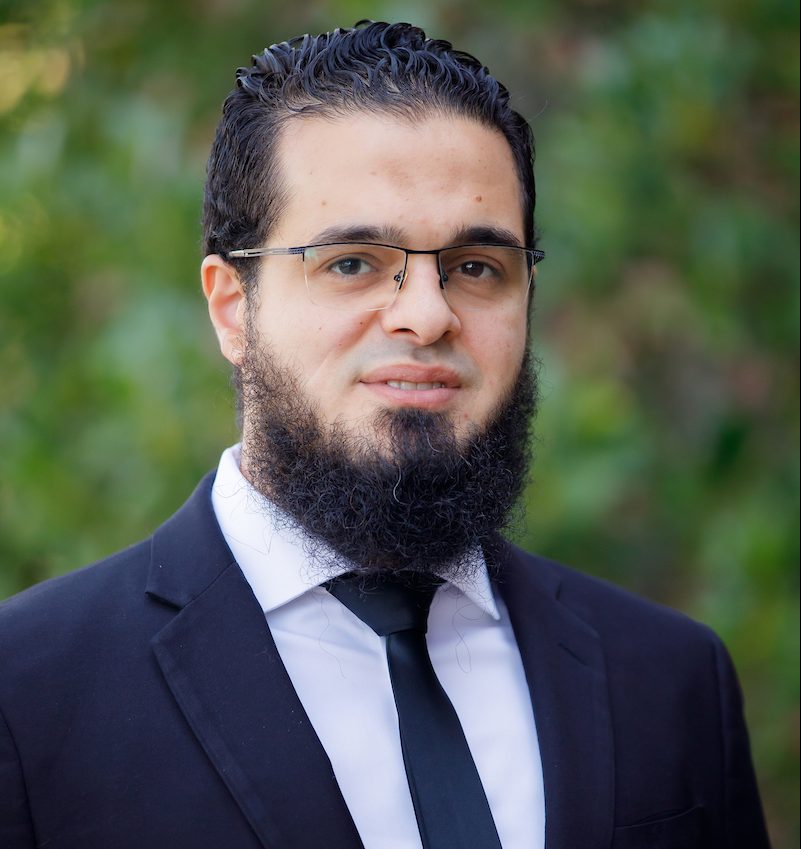
Esfandiar Mohammadi is an Associate Professor at the Institute for IT Security, University of Lübeck, leading the Privacy & Security (PrivSec) group and directing the AnoMed competence cluster. He has held tenured faculty positions since 2019 after postdoctoral research at ETH Zürich (2016-2019) and a PhD at Saarland University (2015). University of Lübeck (2015-present) ETH Zürich (2016-2019) Saarland University (2015) His research focuses on privacy-preserving technologies in machine learning, anonymous communication protocols, and formal verification of security properties. Recent work includes advancements in Mixnet scalability and federated learning with differential privacy guarantees. Key publication trends reveal a strong emphasis on privacy-preserving algorithms for machine learning (2024), cryptographic protocols for anonymous communication (2025), and security analysis of decentralized systems (2023-2025). Collaborations span institutions like ETH Zürich, Saarland University, and industry partners EnergieDock/NAECO Blue for the VeDS project. His group includes 11 researchers (5 PhD students) and software engineers working on topics like Differential Privacy Secure Multi-Party Computation Trusted Execution Environments
Aamir Anwar is a researcher affiliated with the University of West London , focusing on interdisciplinary applications of artificial intelligence, machine learning, and human-computer interaction. His work bridges technology with education, healthcare, and cybersecurity, as evidenced by his publications on topics like emotion-aware online learning , malware detection in IoT devices , and smart systems for people with disabilities . Research Interests : Machine Learning, Sentiment Analysis, Online Learning, EEG Signal Processing, Smart Systems, Healthcare Informatics. Key Collaborations : Co-authored studies with researchers in cybersecurity, nursing education, and neuromarketing. Publication Trends : Recent articles span 2021–2024, emphasizing AI in education (emotion detection), deep learning for cybersecurity , and health-focused technologies (frailty assessment, seizure prediction).
Dr. Dima Alhadidi is an Associate Professor in the School of Computer Science at the University of Windsor. His research focuses on Cybersecurity, Data Privacy, Machine Learning, and their applications in Health Informatics, Cloud Computing, and Smart Grids. He holds a PhD in Computer Science and Software Engineering from Concordia University (2010). His research interests include secure federated learning frameworks, privacy-preserving techniques for genomic and health data, and adversarial machine learning defenses. Notable contributions include Trustformer (2025), secure aggregation methods in federated learning, and hybrid malware classification using deep learning. Recent work emphasizes mitigating membership inference attacks and developing privacy-preserving analytics for distributed systems. Dr. Alhadidi actively advises graduate students on topics like social network clustering (NICASN 2022) and federated learning security. No scientific awards are explicitly listed. His research spans theoretical frameworks (e.g., λ_AOP calculus) to applied systems in smart grids and healthcare informatics.
Stefan Decker is a full University Professor (Universitätsprofessor) at RWTH Aachen University, Germany, where he heads the Chair of Information Systems and Databases (Informatik 5) within the Faculty of Mathematics, Computer Science and Natural Sciences. He is actively involved in teaching, research, and the supervision of numerous ongoing and completed doctoral, master’s, and bachelor theses. Education & Academic Background Doctorate (Dr. rer. pol.) – field of Information Systems or related (exact institution/year not stated in text). Appointed as University Professor and Chair of Information Systems and Databases at RWTH Aachen University. Research Interests Prof. Decker’s work lies at the intersection of databases, knowledge graphs, semantic web technologies, data science, and cybersecurity . He investigates architectures and algorithms for large-scale, privacy-preserving, decentralized data analytics , develops ontology-driven information systems , and explores the use of large language models (LLMs) for educational technology, anomaly detection, and incident-response playbooks. Additional focal areas include smart energy systems, mixed-reality learning environments, FAIR data principles, and federated machine learning . Scientific Contributions & Trends His recent publications (2022-2025) demonstrate a clear trend toward explainable AI, LLM-enhanced systems, secure data spaces, and semantic interoperability . Key contributions include novel anomaly-detection frameworks for encrypted power-grid communications, knowledge-graph-driven chatbots for higher-education support, and methodological advances in decentralized analytics and FAIR data sharing. These works are disseminated in top-tier venues such as AAAI, IEEE ISGT Europe, ESWC, IDEAL, and various Springer LNCS and IEEE Transactions. Supervision & Grants Doctoral Theses Advised: A. T. Neumann – “Chatbots as professional companions in large-scale community information systems” (2024) S. M. Welten – “Methods for practical data sharing and decentralized analytics” (2025) Master’s Theses Co-Advised: A. R. Küsters – “Object-centric process constraints using variable bindings” (2025) Additionally supervising more than 30 ongoing bachelor, master, and doctoral projects covering topics such as LLM-driven cybersecurity playbooks, knowledge-graph construction for German law, privacy-preserving analytics in smart grids, and mixed-reality learning agents. Principal investigator or senior researcher in large collaborative projects including NFDI4DS, WestAI, champI4.0ns and several EU/national initiatives on sovereign data spaces and AI services. Labs & Teams Prof. Decker leads the Information Systems & Databases (DBIS) Research Group . The group operates well-equipped laboratories for knowledge-graph engineering, mixed-reality applications, privacy-enhancing technologies, and secure distributed analytics . Current team size exceeds 30 researchers including PhD candidates, postdocs, and scientific programmers, supported by national and EU funding streams.
Charles Gillan is a Senior Lecturer at Queen's University Belfast's School of Electronics, Electrical Engineering and Computer Science, affiliated with the High Performance and Distributed Computing department and the Institute of Electronics, Communications & Information Technology. His research bridges HPC systems, AI applications in healthcare, and computational physics. Key projects include managing ICU patient care via neural networks, exascale-ready mathematical packages, and edge computing architectures. Research interests focus on high-performance computing (HPC), quantum computing, real-time data analytics, and electron-molecule scattering simulations. Notable contributions include developing microserver architectures for edge analytics and advancing AI-driven clinical decision support systems. Gillan has collaborated on interdisciplinary projects like food authenticity testing using spectroscopy and improving ventilator management in intensive care units. Publications span AI in healthcare, HPC system design, and computational methods for physics problems. He has secured funding for initiatives such as the KTP partnership with Foods Connected Ltd and the HANDHELD olfactory detection project. Gillan's work emphasizes practical applications of advanced computing across healthcare, engineering, and cybersecurity domains.
Hyojoon Kim is an Assistant Professor in the Department of Computer Science at the University of Virginia. His research focuses on computer networks and distributed systems, emphasizing in-network computing, programmable networks, software-defined networking (SDN), network measurement, and security. He received his Ph.D. from Georgia Tech (2015) and B.S. from the University of Wisconsin-Madison (2005). Prior to UVA, he worked as an Associate Research Scholar at Princeton University. Education: Ph.D. in Computer Science, Georgia Institute of Technology, 2015 B.S. in Computer Science, University of Wisconsin-Madison, 2005 Research Interests: Programmable Networks & SDN Network Measurement & Performance Analysis Network Security & Privacy In-Network Computing & Real-Time Monitoring Teaching: CS 7457: Advanced Computer Networks (Graduate) CS/ECE 4457: Computer Networks (Undergraduate) CS 6501: Software-Defined Networking & Programmable Networks (Graduate) Lab & Group: The Network Mechanics Group at UVA focuses on improving network monitoring, troubleshooting, and configuration through SDN, P4, and programmable data planes. Advising: Current advisees include Di Zhu (PhD) and Carson Kuzniar. The group actively seeks PhD students interested in systems and networking research.
Nick Antipa is an Assistant Professor at the University of California, San Diego, affiliated with the Jacobs School of Engineering and the Department of Electrical and Computer Engineering. His work focuses on computational imaging systems that integrate optics, sensors, and algorithms to enable novel imaging modalities. PhD in Electrical Engineering from UC Berkeley Former optical metrology engineer at Lawrence Livermore National Lab Research interests span computational imaging , lensless camera design , and single-shot high-dimensional optical signal capture . His lab develops systems like DiffuserCam for compressive 3D imaging and Miniscope3D for miniature fluorescence microscopy. Recent publications address differentiable wave optics, high-speed video reconstruction, and marine imaging applications. Awards include Best Paper at ICCP 2016/2019 and Best Demo at ICCP 2017. His lab explores machine learning-driven optical design and differentiable rendering frameworks for end-to-end optimization of imaging systems. Current projects include oceanographic imaging, computational photography, and infrared spectroscopy acceleration.
Nele Mentens is a full professor at both KU Leuven and Leiden University, where she leads cutting-edge research in applied cryptography, hardware security, and secure embedded systems. At KU Leuven, she is affiliated with the Faculty of Engineering Technology and the Electrical Engineering Department (ESAT), leading the Emerging Technologies, Systems & Security (ES&S) research group at the Diepenbeek campus. Simultaneously, she holds a full professorship at Leiden University’s Leiden Institute of Advanced Computer Science (LIACS), focusing on applied cryptography and security. She has been instrumental in numerous national and international research initiatives, including Horizon Europe and NWO-funded projects. Full Professor, KU Leuven (since 2023) Full Professor, Leiden University (since 2020) Associate Professor, KU Leuven (2014–2023) Post-doctoral Researcher & Lecturer, KHLim / KU Leuven (2007–2014) Ph.D. in Engineering Science, KU Leuven (2007) M.Sc. in Electrical Engineering, KU Leuven (2003) Her research focuses on secure and efficient hardware design, particularly for cryptographic applications on FPGAs, reconfigurable architectures, IoT security, and neuromorphic computing. She explores physical attack resistance, side-channel analysis protection, and trusted computing architectures, with applications in healthcare, industrial monitoring, and endpoint AI. Her work bridges theoretical cryptography with practical hardware implementations, emphasizing energy efficiency and real-time performance. The 15 most recent publications reflect a strong trend toward secure, energy-efficient, and intelligent embedded systems. Topics include neuromorphic AI accelerators, trusted IoT architectures, dynamic reconfiguration for side-channel protection, and secure medical data processing. These works span disciplines such as computer architecture, cybersecurity, digital design, and embedded systems, with a focus on hardware-software co-design and real-world deployment. Nele Mentens has received recognition for her contributions, including: Best Paper Award, DATE'16 Best Paper Nomination, AsianHOST'17 Best Paper Award, CHES'19 She has supervised over 15 Ph.D. students and post-docs, both current and former, and has served as principal investigator in approximately 25 funded research projects. Her work has attracted significant grants from Horizon Europe, NWO, FWO, and national innovation programs. She actively contributes to the academic community through editorial roles in top journals and leadership in major conferences. Nele Mentens leads the ES&S research group at KU Leuven and collaborates closely with LIACS at Leiden University. Her team includes Ph.D. students, post-docs, and research experts working on projects like NimbleAI, NeuroSoC, and TrustedIoT. She has also established secure electronics labs through infrastructure grants and maintains strong international ties with institutions such as EPFL, Ruhr University Bochum, and ETH Zurich.
Dr. Mohammad Saidur Rahman is a Lecturer in Computing Technologies at RMIT University's School of Computing Technologies. His research focuses on Data Security and Privacy, Blockchain, IoT, and Machine Learning. He joined RMIT as a Lecturer in July 2023 and previously held a Postdoctoral Research Fellow position from January 2020 to August 2022. His academic work includes supervising projects such as Advanced Automotive Intrusion Detection and Prevention Systems and Privacy-Preserving Models in Edge-Cloud Interplay for Smart Systems . He teaches courses like Introduction to Cyber Security (INTE2625) and Computer and Internet Forensics (COSC 2301). His research emphasizes secure IoT integration, blockchain applications in supply chain and healthcare, and privacy-preserving machine learning frameworks. Rahman has published extensively on blockchain-based systems for smart cities, edge computing, and industrial IoT security. His contributions span technical innovations in consensus protocols, federated learning frameworks, and data integrity models. He is open to supervising Masters and PhD students in Cyber Security, IoT, and Blockchain domains.
Dr ASM Kayes serves as Senior Lecturer in Cybersecurity and Cyber Curriculum Lead at La Trobe University's Department of Computer Science and Information Technology, where he shapes cybersecurity education programs including Master's, Bachelor's, and Double Degrees. His academic journey began with a PhD from Swinburne University of Technology in 2015, followed by postdoctoral research at La Trobe before joining as Lecturer in 2019 and promotion to Senior Lecturer in 2022. His research spans critical cybersecurity domains including data security, privacy preservation, context-aware access control, malware/ransomware defense, and IoT/fog/cloud security leveraging AI/ML techniques. Dr Kayes has established himself as a leading voice in blockchain security frameworks, privacy policy analysis, and cyber incident response through publications in top-tier venues like ACM Computing Surveys, IEEE Internet of Things Journal, and Computers & Security. His recent publications reveal a strong trajectory toward integrating AI with traditional security frameworks, particularly in blockchain risk assessment (2025), cross-domain access control (2025), and IoT behavior prediction (2024). The research demonstrates consistent focus on practical security solutions addressing ransomware mitigation, privacy breaches, and emerging threats in decentralized systems. Over $880,000 secured as Chief Investigator for cybersecurity projects Australian Government Department of Social Services grant (2023-2026) for cyberbullying prevention AustCyber research funds with industry partners (2020-2023) SmartSat CRC and ASCRIN PhD scholarship grants (2021) Dr Kayes has successfully supervised 5 PhD candidates to completion and currently mentors 5 doctoral students across diverse topics including AI-driven threat hunting, satellite network security, and blockchain risk frameworks. His collaborative network spans UK, USA, Europe, and Asia, with active industry partnerships through Westpac, BHP, and Quantum Victoria. He serves on editorial boards for leading cybersecurity journals and has examined HDR dissertations globally, reflecting his significant standing in the academic community.
Amitabh Mishra is an Adjunct Professor at the University of Delaware. His research focuses on three core areas: computer-communication networks (wireless architectures, cross-layer design, mobile cloud computing), network performance analysis (stochastic models, numerical optimizations), and network security (vulnerability assessments, authentication protocols). He has contributed to interdisciplinary fields including IoT security, smart healthcare frameworks, and socio-technical systems analysis. His work spans technical domains like wireless sensor networks, tactical network management, and quantum dot material studies, alongside applied research in tourism economics, healthcare data analytics, and educational technology. Notable contributions include frameworks for energy-efficient physiological monitoring, secure IoT configurations, and machine learning-driven security protocols. Recent research highlights include: Developing secure mobile cloud computing paradigms Modeling Multipath TCP capacity bounds using stochastic theory Investigating AI applications for deepfake ethics and tourism marketing His publications span technical journals in computer networks, medical IoT systems, and interdisciplinary studies in cultural tourism and climate change resilience.
Dr. Tao (Kevin) Huang is a researcher at James Cook University's College of Science and Engineering, with expertise spanning autonomous driving, wireless communication systems, and medical imaging applications. His work integrates machine learning, sensor fusion, and multimodal data analysis to address complex challenges in vehicular networks, environmental monitoring, and healthcare technology. Research Interests: Dr. Huang's research focuses on Autonomous driving perception systems IoT-enabled vehicular networks AI for medical diagnostics and environmental sensing Signal processing and privacy-preserving communication protocols Recent Publications: His 2025 work emphasizes advancements in V2X cooperative perception, radar-LiDAR-camera fusion, and diffusion models for medical imaging. Key trends include cross-modal robustness, real-time processing for autonomous systems, and AI applications in sustainability.
Glenn Gulak is a Professor in the Department of Electrical and Computer Engineering at the University of Toronto's Faculty of Applied Science and Engineering. He holds the Canada Research Chair in Signal Processing Microsystems and the Edward S. Rogers Sr. Chair in Engineering. A Senior IEEE Member and Professional Engineer in Ontario, he received his Ph.D. from the University of Manitoba. His research spans: Digital Communication Systems: VLSI implementations of MIMO detectors, lattice reduction algorithms, and homomorphic encryption accelerators Lab-on-Chip Microsystems: CMOS biosensors for rapid pathogen detection and integrated fluorescence imaging Recent publications (2019-2025) demonstrate a dominant focus on privacy-enhancing technologies, with 73% concentrated in cryptographic hardware and homomorphic encryption. This reflects industry-aligned work on confidential computing and secure data processing. Awards & Honors: IEEE Millennium Medal (2001) Canada Research Chair in Signal Processing Systems (Tier 1, 2005-2012) Edward S. Rogers Sr. Chair (2005-2010) RBC Research Prize L. Lau Chair (1999-2004) Teaching Award (1999) He has supervised 44+ graduate students (PhD/MASc) with thesis topics spanning VLSI communication systems, CMOS biosensors, and cryptographic accelerators. Notable industry collaboration includes serving as CTO of a semiconductor startup (2001-2003). His lab develops hardware for quantum cryptography and secure medical computation.
Dr. Ahmad Alsharif is an Assistant Professor in the Department of Computer Science at the University of Alabama's College of Engineering. His research expertise spans applied cryptography, IoT security, cyber-physical systems security, and blockchain applications. He received his B.S. and M.S. in Electrical Engineering from Benha University, Egypt, and Ph.D. in Electrical and Computer Engineering from Tennessee Tech University. Research focuses on security challenges in critical infrastructure systems including smart grids, IoT networks, and UAV systems. Current projects investigate privacy-preserving machine learning techniques, adversarial attack resilience, secure data marketplaces, and attack detection mechanisms for distributed energy systems. His work combines cryptographic protocols with machine learning for trustworthy systems. Awards include the NSF Research Initiation Initiative Grant (NSF CRII) and Young Innovator Award from Egyptian Industrial Modernization Center.
Aftab Ahmad is a Professor in the Department of Computer Science at the City University of New York (CUNY), specializing in cybersecurity and machine learning applications. He holds a Doctor of Science from George Washington University. His research focuses on developing machine learning algorithms for cyber threat intelligence (CTI) and public health prediction, along with designing secure generative deep learning models resistant to reverse-engineering. Key research areas include: Cybersecurity frameworks and privacy-preserving architectures Generative adversarial networks (GANs) with embedded security features Biomedical signal analysis and human body channel modeling Secure wireless protocols for critical infrastructure His publication trends emphasize: Privacy metrics and data protection mechanisms Smart grid and IoT security Neuroscience-inspired machine learning models Wireless network vulnerability assessments No scientific awards or grants were explicitly mentioned in the provided texts. He teaches advanced courses in computer security and network forensics at undergraduate and graduate levels. No advising relationships or lab affiliations were detailed in the available information.