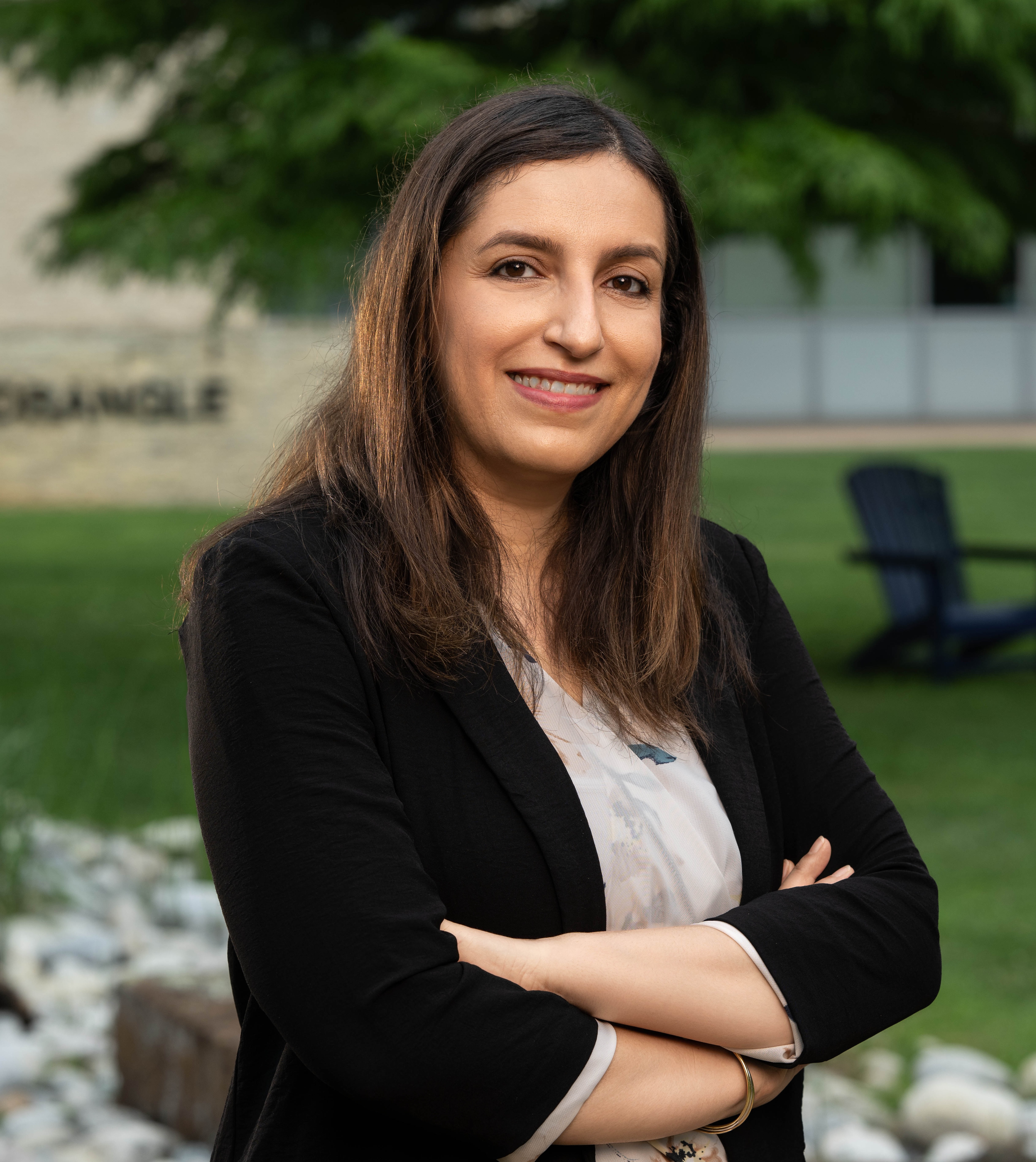
Zhanna Sarsenbayeva is a Lecturer in the School of Computer Science at the University of Sydney. Previously, she held a Doreen Thomas Postdoctoral Research Fellowship at the University of Melbourne. Her research focuses on Human-Computer Interaction (HCI), Ubiquitous Computing, Accessibility, and Affective Computing. She earned a PhD in Engineering from the University of Melbourne, an MSc in Computer Science and Engineering from the University of Oulu, and a BSc in Computer Science from University College London. Research Interests: Dr. Sarsenbayeva explores how technology can enhance accessibility, improve emotion recognition in mobile contexts, and address situational impairments. Her work spans wearable sensors, mobile health applications, and ethical AI methodologies. Awards & Honors: 2022–2023: Australia-Germany Joint Research Cooperation Scheme 2021: CIS ECR Grant 2020: Doreen Thomas Postdoctoral Fellowship 2019: Gaetano Borriello Outstanding Student Award Advising & Grants: She currently supervises five PhD students researching topics like mixed reality collaboration and emotion recognition. Her grants include projects on accessibility standards and fairness in AI. International Collaborations: Engages with researchers at Aalborg University (Denmark), University of Oulu (Finland), and LMU Munich (Germany) on interdisciplinary projects.
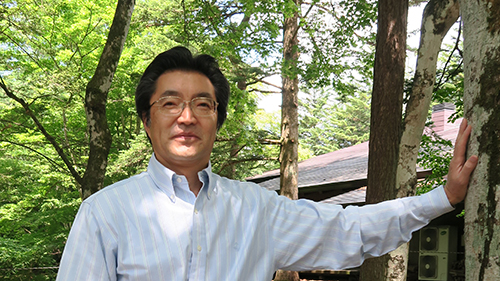
Professor Masatoshi Okutomi is affiliated with the Department of Systems and Control Engineering at the School of Engineering, Institute of Science Tokyo. His research focuses on advanced medical imaging techniques, particularly in endoscopy and 3D reconstruction, leveraging deep learning and neural networks. Key interests include virtual chromoendoscopy for cancer detection, image restoration, and stereo matching under challenging conditions. His work bridges computer vision and healthcare, addressing real-world applications such as MRI reconstruction and foggy stereo matching. Notable contributions include developing lightweight medical segmentation networks for edge devices and advancing neural radiance fields (NeRF) for novel view synthesis. His research spans diverse domains: from improving video quality assessment to enhancing object detection in high-dynamic-range images. Collaborative projects emphasize practical solutions for medical diagnostics and robust image processing in adverse environments. Recent articles highlight advancements in temporally-consistent video restoration, few-shot view synthesis, and degraded image classification using knowledge distillation. These innovations underscore his commitment to pushing boundaries in both theoretical computer vision and applied medical technology.
Maria Chiara Fiorentino is a Research Fellow at the Department of Information Engineering, Polytechnic University of Marche, Italy. Her work focuses on applying deep learning techniques to medical image analysis, particularly in ultrasound, MRI, and CT imaging. Education Master’s in Biomedical Engineering, Università Politecnica delle Marche (Honors) Ph.D. in Information Engineering, Università Politecnica delle Marche (Laude) Research Interests: Dr. Fiorentino specializes in deep learning for medical imaging, with applications in diagnosing neurodegenerative diseases like Parkinson’s, cardiovascular conditions, and musculoskeletal disorders. Her recent work includes federated learning for fetal ultrasound analysis, AI-driven vocal fold pose estimation, and domain adaptation in MRI segmentation. Scientific Awards: Paolo Marziali Thesis Prize for her Master’s research Gruppo Nazionale di Bioingegneria award for her Ph.D. thesis Publications: Dr. Fiorentino’s work spans fetal brain image synthesis, zero-shot learning robustness, and machine learning for catheterization management and stenosis detection.
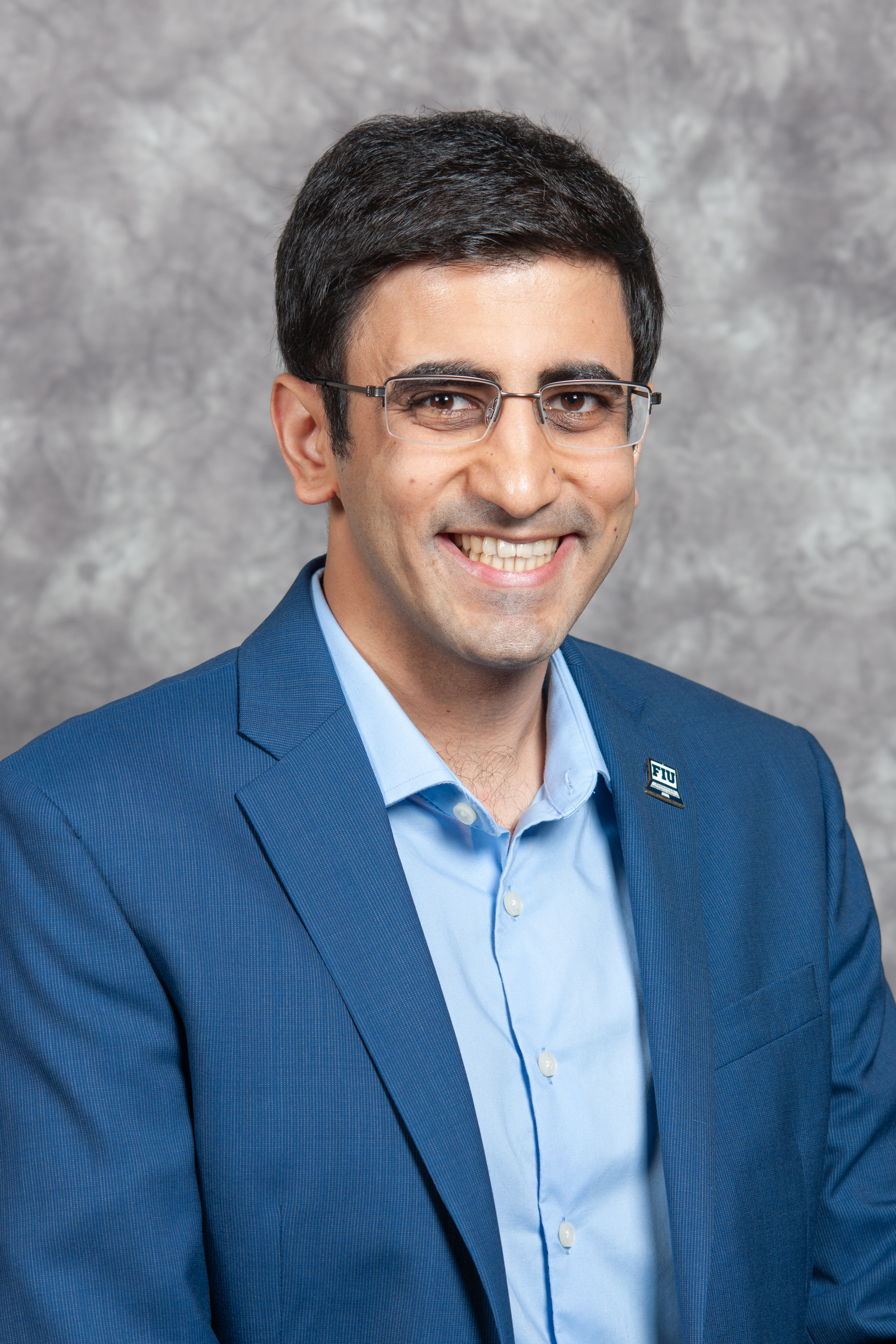
M. Hadi Amini is an Assistant Professor at Florida International University's Knight Foundation School of Computing and Information Sciences. He founded and directs the Sustainability, Optimization, and Learning for InterDependent networks (SOLID) laboratory, focusing on cyber-physical-social systems and distributed AI applications. Ph.D., Electrical and Computer Engineering (2019), Carnegie Mellon University M.Sc., Electrical and Computer Engineering (2015), Carnegie Mellon University M.Sc. (2013), Tarbiat Modares University B.Sc. (2011), Sharif University of Technology His research spans federated learning, interdependent network optimization, and AI applications in smart cities , energy systems , and healthcare . Recent work emphasizes privacy-preserving techniques, quantum encryption, and blockchain integration for secure distributed learning. The 15 most recent publications highlight trends in large language models , edge computing , medical imaging security , and infrastructure resilience , with interdisciplinary emphasis across computer science, systems engineering, and urban planning. Best Paper Award, IEEE Conference on Computational Science & Computational Intelligence (2019) Best Journal Paper Award, Springer Nature Operations Research Forum (2021) Excellence in Teaching Award, FIU (2020) Multiple Best Reviewer Awards, IEEE Transactions NSF Travel Awards (2019) As Associate Editor for Frontiers in Communications and Networks and book series editor for Sustainable Interdependent Networks , he actively shapes research discourse. His lab has secured $3.6M in federal/state funding for AI-driven infrastructure projects.
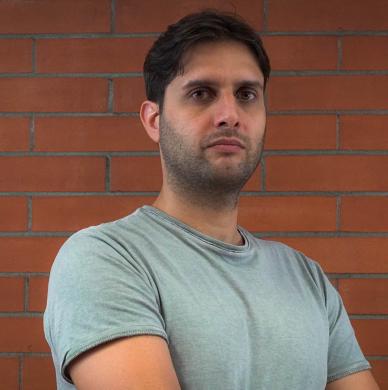
Dr. Alexander Plopski is an Assistant Professor at the Institute of Visual Computing, Technische Universität Graz. His research focuses on advancing augmented reality (AR) technologies, human-computer interaction (HCI), and optical display systems. He holds a PhD, M.Sc., and BSc in relevant fields. His work emphasizes perceptual optimization in AR displays, eye tracking integration, and accessibility solutions for color vision deficiencies. Key research areas include gaze-contingent AR interfaces, light field manipulation for extended reality, and multimodal interaction techniques. Notable contributions include the development of the 'guitARhero' interactive AR guitar tutorial system and studies on focal distance effects in optical see-through displays. His publications span topics from AR display calibration to gesture recognition using radar sensing. He has explored applications in industrial training, medical AR, and robotic telemanipulation. His work often bridges theoretical perceptual studies with practical system implementations, aiming to enhance user experience and accessibility in AR/VR environments.
Marina L. Gavrilova is a Professor at the University of Calgary, Canada. Her research focuses on biometric systems, computer vision, and machine learning with an emphasis on multimodal recognition and security applications. She has authored numerous publications in top journals and conferences, contributing to advancements in fields like emotion-aware de-identification, generative adversarial networks, and ethical AI frameworks in healthcare. Her work spans social behavioral biometrics, gait recognition, masked face recognition, and aesthetic-based person identification. Key contributions include frameworks for ethical AI in care systems, fusion algorithms for multi-biometric systems, and innovations in visual and audio signal processing. Collaborations with experts like Osvaldo Gervasi, Jon G. Rokne, and Padma Polash Paul highlight her interdisciplinary approach. Publications emphasize practical applications such as privacy-preserved biometrics, emotion detection from social media, and adaptive systems for template aging. Despite no explicit mention of grants or labs, her extensive co-author network and frequent citations indicate significant academic influence.
Donato Romano serves as Associate Professor at The BioRobotics Institute of Scuola Superiore Sant'Anna, Italy, where he coordinates the Bio-Robotic Ecosystems Lab and co-founded the spin-off company HUBILIFE srl. His interdisciplinary work bridges robotics, biology, and AI to develop biohybrid systems for biodiversity preservation, sustainable environmental management, and life support in extreme scenarios including space exploration. With over 90 publications and an H-index of 27 (Scopus, March 2025), he has established significant academic leadership through editorial roles across 12+ international journals. Romano's educational foundation includes advanced degrees with honors: an M.Sc. in Agriculture Science and Technologies (2014) and a PhD in BioRobotics (2018), both from Scuola Superiore Sant'Anna. His academic journey includes visiting scholar positions at Khalifa University and substantial industry-academia collaboration through HUBILIFE srl, which commercializes bioinspired devices for human daily life improvement. His research program focuses on bioinspired and biomimetic robotics with particular emphasis on animal-robot interaction, biohybrid systems, and natural intelligence. Key projects address critical global challenges: SENSORBEES develops biohybrid environmental surveillance for ecological monitoring; REGOLIFE investigates lunar soil-terrestrial organism interactions for space agriculture; and OCEAN ROBOCTO explores marine ecosystem solutions. This work demonstrates a strategic progression from fundamental behavioral studies toward applied ecological and extraterrestrial systems. Analysis of his recent publications reveals strong trends in AI-driven behavioral analysis, with deep learning increasingly applied to entomological studies and pest management. The research spans agricultural applications (precision monitoring traps, larval detection systems), ecological conservation (biodiversity surveillance), and extreme-environment adaptation (lunar regolith studies). A distinctive feature is the consistent integration of biohybrid approaches where living organisms and robotic systems create synergistic capabilities exceeding either component alone. Romano's scientific recognition includes election as Junior Fellow of the Italian Academy of Engineering and Technology (2025), the Lucani fuori dal Comune award (2024), and multiple best-thesis prizes. His editorial leadership spans high-impact journals including IEEE Transactions on Medical Robotics and Bionics and Pest Management Science, where he serves as Associate Editor. As principal investigator, Romano coordinates major international projects totaling over €15M in funding: HORIZON-EIC's SENSORBEES (2024-2029), ASI's REGOLIFE (2024-2027), National Geographic's OCEAN ROBOCTO (2024-2026), and PRIN's COSMIC (2023-2025). His teaching portfolio includes PhD courses in Biosystems for Biorobotics and M.Sc. instruction in Bionics Engineering at Scuola Superiore Sant'Anna and University of Pisa. The Bio-Robotic Ecosystems Lab under Romano's direction pioneers biohybrid technologies where living organisms and robotic systems create integrated solutions. Current initiatives include SENSORBEES' environmental monitoring swarms, REGOLIFE's moonworm colonization systems, and HUBILIFE's commercial vector-control devices. The lab maintains active collaborations with space agencies, agricultural institutes, and conservation organizations, positioning biohybrid systems as next-generation tools for planetary-scale challenges.
Paul J. Kennedy is a Professor at the University of Technology Sydney's Centre for Artificial Intelligence. He holds a PhD from the same institution (1999). His research focuses on machine learning applications in healthcare, bioinformatics, medical imaging, and data mining. Key areas include developing algorithms for genomic data analysis, healthcare pathway modeling, and edge-cloud frameworks for omics data. Education: PhD in Artificial Intelligence (1999, UTS). Research interests span machine learning, health informatics, and data compression. Notable work includes studies on administrative health records, lung nodule detection, and virtual reality-based cancer cohort analysis. He has co-authored over 100 publications across journals like BMC Bioinformatics, IEEE Transactions, and Artificial Intelligence in Medicine. Advising: Collaborates extensively with students/researchers but no explicit student list provided. Grants and labs: Active in interdisciplinary projects involving medical and computational teams, though specific grants are not detailed here.
Yong-Bin Kim is a Professor in the Department of Electrical and Computer Engineering at Northeastern University, part of the College of Engineering. He has held prior positions at Intel Corp., Hewlett Packard Co., Sun Microsystems, and the University of Utah. His research focuses on integrated circuit design, nanoelectronics, bio-chip interfaces, and low-power VLSI systems. He has contributed to initiatives like the HPVLSI Lab and Microsystems and Electron Devices Lab. Education includes a B.S. in Electronic Engineering from Sogang University (Seoul, South Korea), an M.S. from the New Jersey Institute of Technology, and a Ph.D. in Computer Engineering from Colorado State University (1996). Research interests encompass high-speed low-power VLSI design, system-on-chip (SoC), physical VLSI CAD, and nanoelectronics. Specific areas include bio-sensor interface circuits, electronic neuron design, and adaptive robot controllers. Key projects involve compact power-efficient integrated circuits and high-speed transceiver design. Outstanding Paper Award, 2020 IEEE ISOCC South Korean Patent for Autonomous Impedance Calibration (2021) Best Paper Award, 2016 International SoC Design Conference Patent for Improved Receiver Circuit (2020) Patent for Method to Detect Trojan Circuits (2018) Advisees include graduate student Yixuan He. He has led research projects funded by Winchester Technology and Hynix Semiconductor, focusing on semi-self-calibration transceivers and tunable RF inductors. Labs include the HPVLSI Lab and Microsystems and Electron Devices Lab at Northeastern University, which focus on high-speed/low-power IC design and microfabrication technologies.
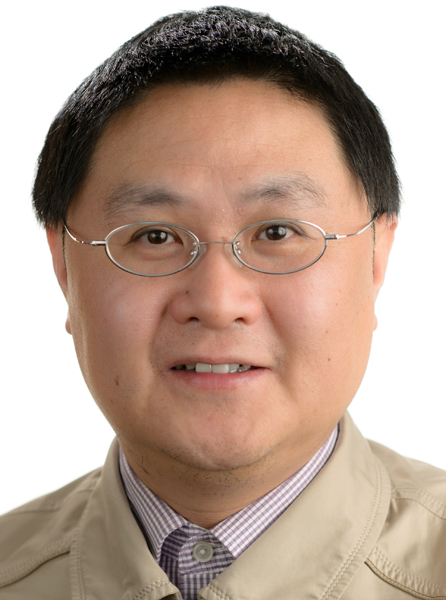
Dr. Minglun Gong is a Professor and Director of the School of Computer Science at the University of Guelph (since 2019). Previously, he served as Professor and Head of the Department of Computer Science at Memorial University of Newfoundland. He holds a Ph.D. from the University of Alberta (2003), M.Sc. from Tsinghua University (1997), and B.Engr. from Harbin Engineering University (1994). His research focuses on visual computing, including computer graphics, computer vision, visualization, image processing, and pattern recognition. He has authored over 150 referred papers and holds patents in the field. He is an Associate Editor for Pattern Recognition and IEEE Signal Processing Letters , and has received awards such as the Izaak Walton Killam Memorial Award and multiple best paper awards. Dr. Gong has advised numerous students, including Ph.D./M.Sc. candidates and visiting scholars. His lab's recent work includes UAV path planning for urban reconstruction, image stylization techniques, and 3D human pose estimation. He actively participates in academic service, including editorial roles, conference program committees, and administrative roles at multiple institutions. His teaching spans courses in image processing, computational photography, and technical communication. He is also involved in administrative committees, such as Graduate Studies and Promotion at Memorial University. Key research contributions include advancements in transparent object modeling, underwater 3D reconstruction, and image-to-image translation. His work emphasizes practical applications in fields like medical imaging, autonomous systems, and environmental modeling.
Professor Dong Xu is a Tenured Professor in the Department of Computer Science at the University of Hong Kong (HKU), part of the School of Computing and Data Science. He holds a B.Eng. and Ph.D. from the University of Science and Technology of China (USTC). His career includes tenured roles at Nanyang Technological University and the University of Sydney, alongside postdoctoral research at Columbia University. His research focuses on Artificial Intelligence, Computer Vision, Multimedia, and Machine Learning , with applications in autonomous driving, AR/VR, medical image analysis, and video surveillance. Xu has authored over 150 papers in top journals and conferences, including CVPR, ICCV, and IEEE Transactions. He actively contributes to the academic community as an editorial board member for journals like ACM Computing Surveys and IEEE Transactions, and through leadership roles in conferences such as ACM Multimedia and ICME. Notable awards include Fellowships from IEEE and IAPR, and the IEEE Signal Processing Society Distinguished Lecturer title (2021–2022). Education: B.Eng. (USTC, 2001), Ph.D. (USTC, 2005) Professional Service: Program Coordinator of ACM Multimedia 2024, Guest Editor of over ten special issues.
Roziana Ramli is an academic affiliated with Northumbria University, holding a PhD in Computer Science. Her research focuses on medical imaging techniques, cybersecurity in healthcare systems, and bio-inspired optimization algorithms. She has contributed to advancements in retinal fundus image registration and IoT security protocols. Her work integrates computer vision with biomedical applications, addressing challenges in healthcare monitoring and assistive technologies. Key research areas include federated learning in healthcare networks, prosodic feature analysis for language recognition, and secure communication for drone networks. Her systematic literature reviews and algorithmic innovations highlight her interdisciplinary approach to solving technical and clinical problems. Though no formal awards are listed, her active publication record from 1999 to 2024 demonstrates sustained academic engagement.
David E. Breen is a Professor in the Department of Computer Science within the College of Computing & Informatics (CCI) at Drexel University. He leads the Geometric Biomedical Computing Group and is affiliated with the Metadata Research Center and the Center for Biological Discovery from Big Data. His research spans interdisciplinary domains including biomedical image informatics, geometric modeling, textile modeling, and bio-inspired self-organization algorithms. Education: PhD, Computer and Systems Engineering, Rensselaer Polytechnic Institute MS, Computer and Systems Engineering, Rensselaer Polytechnic Institute BA, Physics, Colgate University His research interests focus on computational methods for biomedical applications, including shape and image analysis for cancer diagnosis, 3D reconstruction of biological tissues, and video analysis of animal behavior. He also investigates geometric modeling techniques for textiles and self-organizing systems. His work integrates computer science with biology, medicine, and engineering to solve complex problems in biomedical computing. The recent publications highlight a strong trend in computational modeling of textiles, biomedical image informatics, and AI-driven data analysis. Key themes include geometric modeling of knitted fabrics, deep learning for medical image classification, agent-based modeling of cancer metastasis, and metadata generation for biological image collections. His work bridges fundamental geometric algorithms with practical applications in healthcare and digital archives. Scientific Awards: No specific awards mentioned in the provided text. Breen has advised numerous students and collaborators across multiple domains, particularly in biomedical computing and textile modeling. His research has been supported through affiliations with major centers and collaborations with institutions such as Johns Hopkins University and the Max Planck Institute. He has been involved in projects related to NSF Center for Visual & Decision Informatics and has contributed to over 100 technical publications. He leads the Geometric Biomedical Computing Group , which conducts research at the intersection of biology, medicine, engineering, and computer science. The group develops algorithms and software for geometry-related computing problems in biomedical applications. Collaborations include the Drexel Integrated Laboratory for Cellular Tissue Engineering, Dr. Dan Marenda's Lab, and Dr. Aleister Saunder's Lab in Drexel's Biology Department.
Keith D. Paulsen is the MacLean Professor of Engineering at Dartmouth College’s Thayer School of Engineering and holds the title of Professor of Radiology & Surgery at the Geisel School of Medicine. He serves as Scientific Director of the Center for Surgical Innovation at Dartmouth-Hitchcock Medical Center and Co-Director of the Translational Engineering in Cancer Research Program at the Norris Cotton Cancer Center. His roles emphasize interdisciplinary collaboration between engineering, medicine, and oncology. Paulsen earned a BSc in Biomedical Engineering from Duke University (1981), followed by MS (1984) and PhD (1986) degrees in Engineering Sciences from Dartmouth College. His research focuses on biomedical imaging, cancer therapeutics, and image-guided surgery, with particular expertise in optical and electromagnetic methodologies. He has pioneered technologies such as fluorescence-guided surgery, quantitative scatter imaging, and non-linear image reconstruction techniques, aiming to enhance surgical precision and cancer diagnosis. His awards include fellowships from OSA, SPIE, AIMBE, IEEE, and the National Academy of Inventors. Paulsen’s work has led to startups like CairnSurgical (where he serves as CTO) and InSight Surgical Technologies, translating research into clinical tools. Key projects include intraoperative imaging systems for brain and spine surgery, microwave imaging for breast cancer, and optical molecular imaging for real-time surgical guidance. Paulsen teaches advanced computational methods (ENGS 205, 105) and courses on medical device innovation (ENGM 189.1/2). His lab, part of Dartmouth’s Optics in Medicine cluster, collaborates with radiology, surgery, and oncology departments to develop clinical technologies funded by NIH, NCI, and DoD grants.
Dr. Shirin Nilizadeh is an Associate Professor in the Department of Computer Science and Engineering at The University of Texas at Arlington's College of Engineering. She leads the Security and Privacy Research Lab, conducting interdisciplinary research at the intersection of cybersecurity, privacy, machine learning, and social media analysis. Her work addresses critical societal issues related to online security, privacy, and safety through data-driven approaches. Dr. Nilizadeh received her PhD in Computer Science from Indiana University in 2014, followed by MS in Computer Science from Amirkabir University (2007) and BS in Computer Engineering from Islamic Azad University (2004). Her research focuses on security and privacy in systems and social networks, employing techniques from machine learning and big data analytics. She takes a highly interdisciplinary approach, integrating AI, NLP, social sciences, and public health to address societal issues in cybersecurity and privacy. Her research objectives include: (1) detecting and characterizing emerging threats in online social networks like social engineering attacks, misinformation, and online hate speech; (2) advancing the adversarial robustness and fairness of ML and NLG systems; and (3) studying humans' online behaviors through data-driven interdisciplinary research. Analysis of her recent publications reveals a strong focus on AI-generated security threats, particularly phishing scams using LLMs, NFT fraud detection, social media toxicity analysis, and content moderation systems. Her work bridges theoretical security research with practical applications, often addressing real-world security challenges through innovative technical solutions. Among her notable scientific achievements are the prestigious NSF CAREER award (2023), Comcast Innovation Awards (2022 and 2024), College of Engineering Outstanding Early Career Research award (2024), and IEEE SP 2024 Distinguished Paper Award. Her work has also received best paper and technical poster awards at eCrime 2021 and NDSS 2022. Dr. Nilizadeh has successfully mentored numerous doctoral and master's students while securing significant research funding, including multiple NSF grants and Comcast Innovation Fund awards. She leads a vibrant research group that has produced impactful work cited in official reports submitted to The Supreme Court and the EU Committee on Civil Liberties, Justice, and Home Affairs. Her lab has also received coverage from WIRED, MIT Technology Review, Orange's Hello Future, and Communications of the ACM. She serves on numerous program committees for top international conferences including ACM CCS, USENIX Security, and POPETS, and has organized outreach programs like OurCS@DFW to broaden participation of underrepresented students in computing.