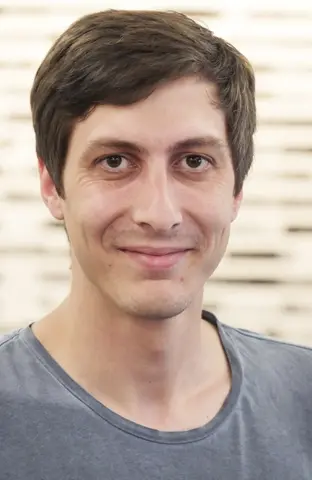
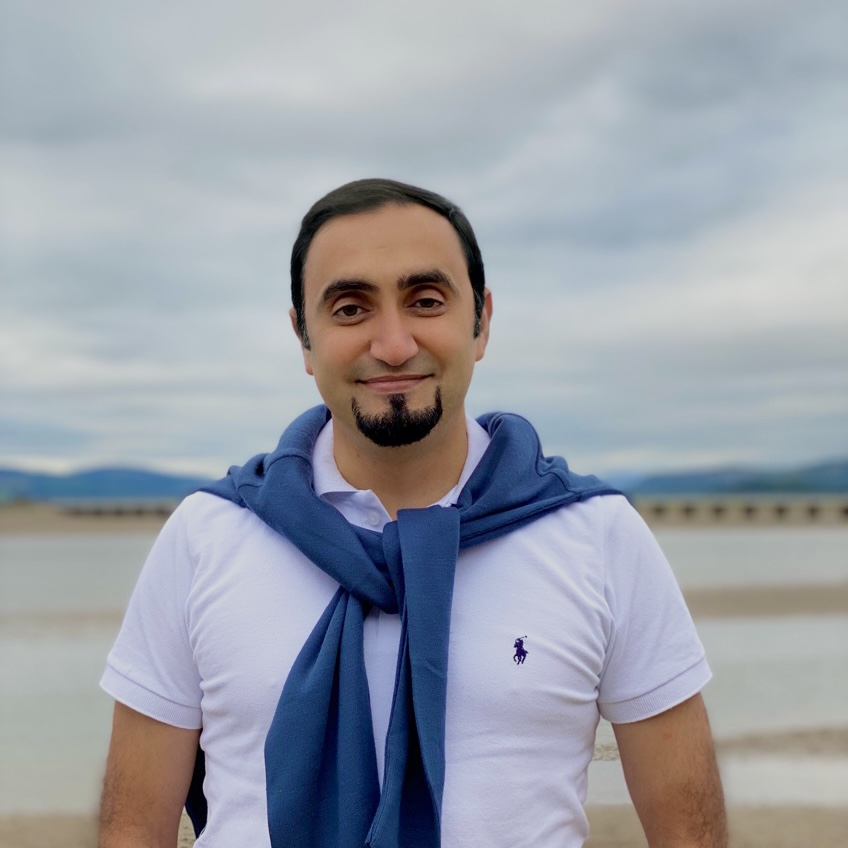
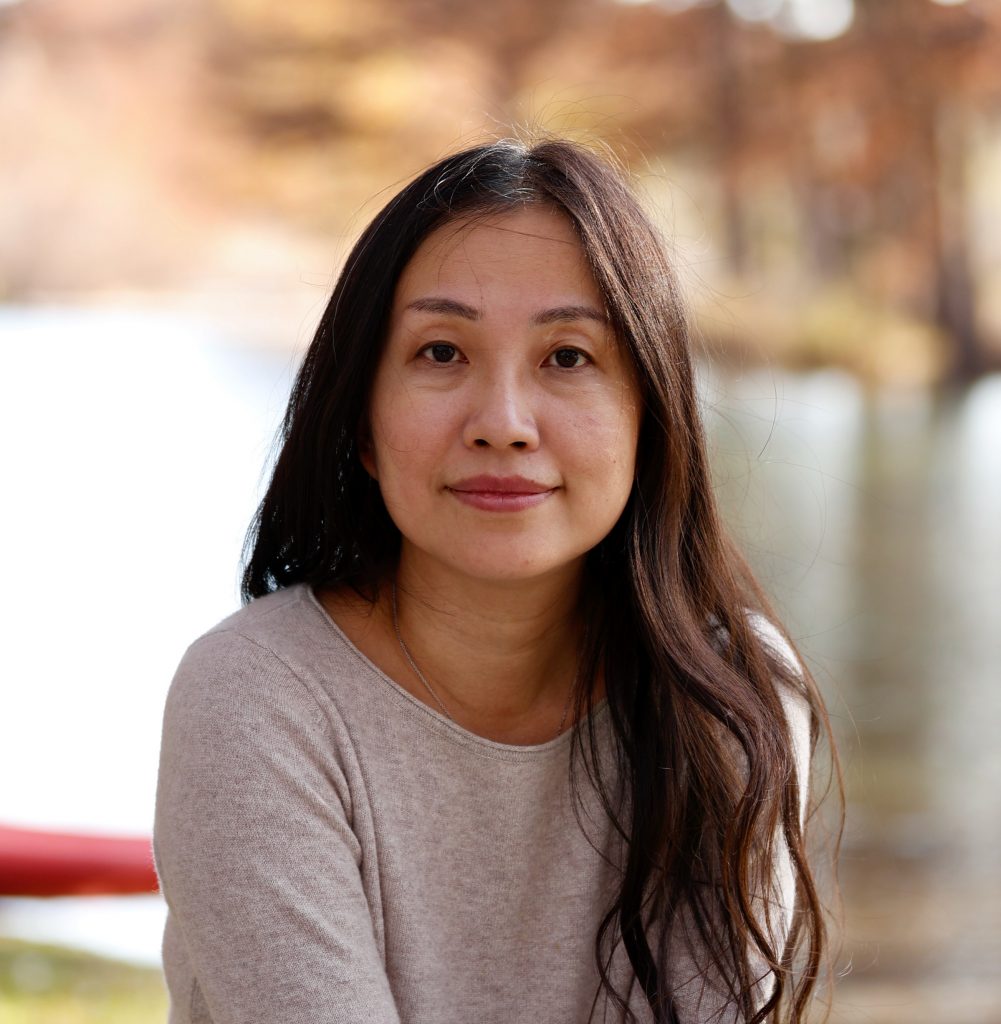
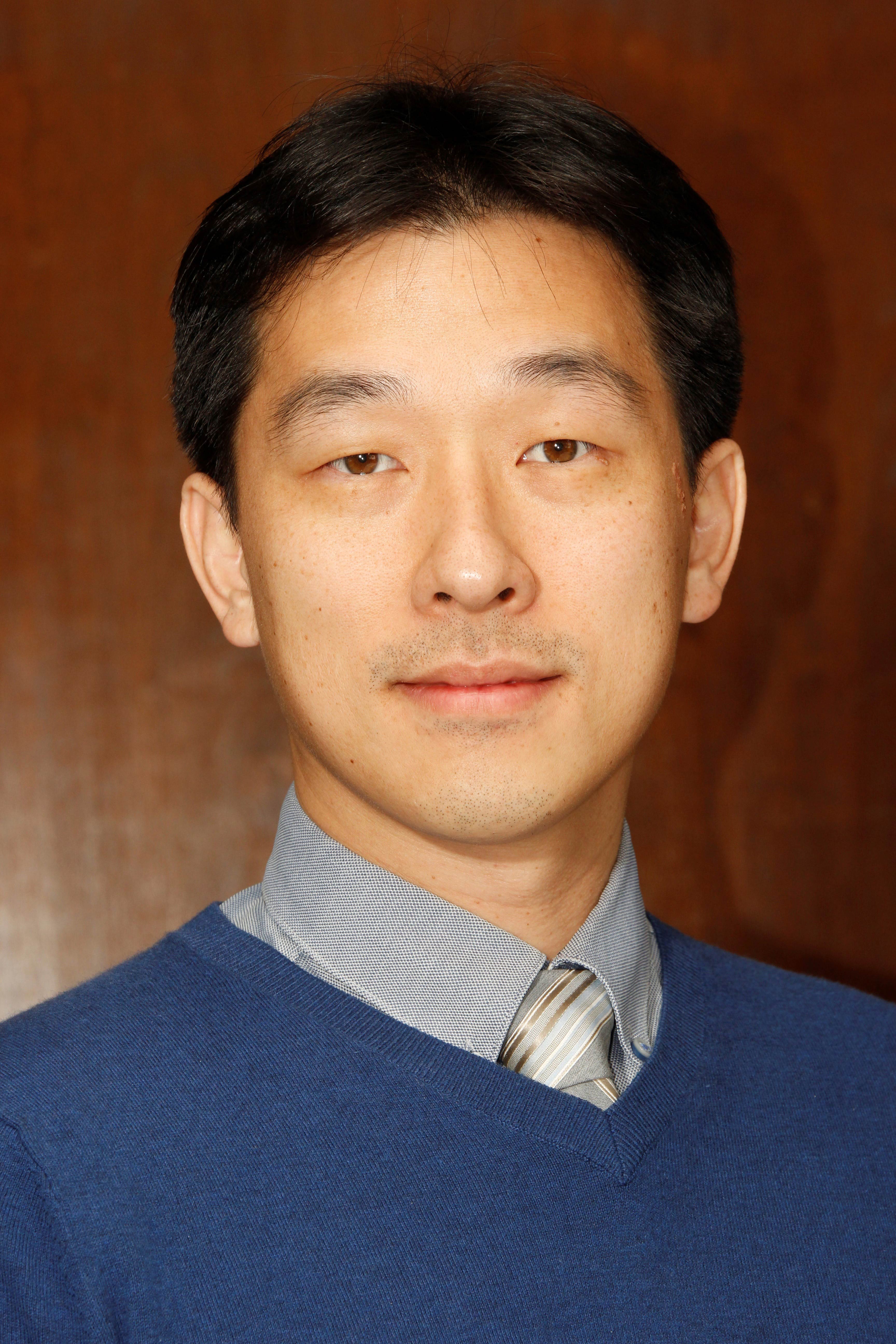
Dr. Jakob Henke is a Researcher at the Department of Media and Communication Sciences, Faculty of Philosophy, University of Erfurt. His work focuses on media trust, journalism research, political communication, and digital privacy. Academic Affiliation: University of Erfurt, Faculty of Philosophy Core Research Areas: Media credibility, audience perception, mHealth app privacy, data journalism His recent publications explore dynamics of news trust restoration, privacy decision-making in health apps, and the impact of statistical evidence on media credibility. Presentations include topics on journalistic independence, error tolerance in news, and cognitive effort in digital news consumption. Key trends in his work include: Media Trust & Accountability Digital Privacy & Health Informatics Political Communication & Data Journalism Dr. Henke actively collaborates on interdisciplinary projects, including studies on mHealth adoption and cross-cultural migration reporting. His methodological expertise spans experimental research, panel studies, and audience-focused media analysis.
Francesca Fallucchi is an Associate Professor at Guglielmo Marconi University in Rome since 2008 and an information scientist at Georg-Eckert-Institut (GEI) since July 2017, working in the Human-Centered Technologies for Educational Media department. Her research focuses on the intersection of computer science and humanities, with particular emphasis on knowledge organization , information retrieval , semantic technologies , and big data management applied to educational media and cultural heritage. Her work bridges theoretical computer science with practical applications in digital humanities. Analysis of her recent publications (2021-2024) reveals a research trajectory spanning multiple domains: from foundational work in semantic web and NLP to emerging applications in metaverse technologies, blockchain for energy monitoring, and explainable AI for healthcare. Her work consistently demonstrates interdisciplinary approaches combining computer science with domain-specific challenges. Dr. Fallucchi has been actively involved in academic service, including organizing the 17th International Conference on Metadata and Semantics Research (MTSR 2023) and serving as editor for Computers trade magazine since 2021. Her professional activities include significant project leadership as Deputy Project Manager for Edumeres Toolbox and contributions to numerous research projects including GLOTREC, GEI-Digital, PalTex, DemoS, PVE-E, and WorldViews.
Tyler McCormick is a Professor in both the Department of Statistics and Department of Sociology at the University of Washington. He also serves as a Senior Data Science Fellow at the eScience Institute and maintains affiliations with the Center for Statistics and the Social Sciences, the Center for Studies in Demography and Ecology, and the Responsible AI Systems & Experiences (RAISE) initiative. Dr. McCormick earned his Ph.D. in Statistics from Columbia University in 2011. His academic journey has established him as a leading researcher at the intersection of statistical methodology and social science applications. McCormick's research program focuses on developing innovative statistical approaches to address complex societal challenges: Bayesian methods for modeling high-dimensional dependence structures in social networks Estimating vital demographic rates from sparse data sources Developing interpretable predictive models with proper uncertainty quantification Creating methodological frameworks for verbal autopsy analysis in global health His publication record reveals a consistent trajectory of methodological innovation with practical impact. Recent work demonstrates increasing sophistication in handling network interference, integrating machine learning with statistical theory, and addressing data scarcity challenges in global health contexts. His research bridges theoretical advances with applications that inform public health policy and social science understanding. McCormick has received significant recognition for his scholarly contributions: NIH Director's New Innovator Award (2019) Election as Fellow of the American Statistical Association (2023) As an educator, McCormick teaches advanced graduate courses including Hierarchical Modeling for the Social Sciences and Quantitative Techniques in Sociology. His research has been supported by competitive grants from NICHD (2015-2020) focused on vital rate estimation in developing countries and NSF (2016-2018) funding for compact Bayesian models of social networks. His work has influenced policy discussions through media coverage in the Wall Street Journal and Washington Post. McCormick leads the OpenVA initiative, providing open-source tools for verbal autopsy analysis, and has developed multiple R packages implementing his methodological contributions to network analysis and causal inference. His research continues to address critical challenges at the intersection of statistical theory, computational methods, and societal impact.
Yifeng Hu is a Professor in the Department of Communication Journalism & Film at The College of New Jersey (TCNJ), with a focus on intercultural communication, health communication, and digital media. His work critically examines the intersection of technology, race, and societal stereotypes. Education: Ph.D. in Mass Communications from Pennsylvania State University (2007) His research explores racial stereotyping in healthcare and communication technologies, generative AI literacy, and digital interventions for health equity. Recent publications include analyses of AI-generated stereotypes and ethnographic studies on intercultural learning. Key trends in his scholarship emphasize technology’s role in perpetuating or combating stereotypes, with a focus on Asian American experiences during the pandemic. He integrates game studies into health education through projects like the Fresh Start video game for mindful drinking. Scientific Awards: TCNJ Innovation in Teaching Award ASIANetwork-Mellon Foundation Grant for AAPI Voices and Stories National Communication Association Creative Project/Performance Award TCNJ Diversity, Equity, and Inclusion Faculty Award
Corinne Wallace is an Adjunct Assistant Professor in the Department of Civil Engineering at McMaster University , with research expertise at the intersection of water security, climate change, public health, and gender equity. Her work spans both technical engineering analysis and community-engaged studies, particularly focusing on marginalized populations in Canada, East Africa, and South America. Dr. Wallace's research interests include: Water-Health Nexus Climate Change Impacts on Disease Gender Equity in Water Access Indigenous Water Governance Mosquito-Borne Disease Modeling Rainwater Harvesting Systems Her publication trends show increasing focus on climate-health interactions (2025), gender-water linkages (2024), and machine learning applications for water quality analysis (2025). She employs mixed-methods approaches and works closely with First Nations communities and international development organizations. Dr. Wallace utilizes art-science communication strategies like the Virtual Water Gallery to transform water and climate knowledge dissemination. Her recent work explores EDI (Equity, Diversity, Inclusion) implementation in large research networks and conceptual frameworks for climate-water equity.
James Boorman is an Associate Professor of Practice in Monash University's Department of Software Systems & Cybersecurity, and Co-Director of the Information Empowered Communities Lab. He holds dual roles as Chief Investigator in major projects including the Post-Quantum Cryptography in the Indo-Pacific initiative and the Algorand Centre of Excellence on Sustainability Informatics for the Pacific. His research focuses on cybersecurity capacity building in the Pacific region, national cyber strategy development, and critical infrastructure protection. Boorman has extensive experience across academia and government, including roles as CIO/CSO in the Australian Government, Head of Research at the Oceania Cybersecurity Centre (OCSC), and collaborations with global institutions like the University of Oxford's GCSCC. His work emphasizes policy implementation, capacity maturity assessments, and international cooperation through platforms like the Global Forum on Cyber Expertise (GFCE). Key contributions include co-designing the Pacific government regional dialogue with Partners in the Blue Pacific (PBP), developing national cybersecurity roadmaps for Micronesia and Nauru, and advising 10 Pacific Island nations on cyber policy. His research integrates cybersecurity with sustainable development goals, focusing on climate-resilient infrastructure and digital transformation in developing nations. Boorman teaches FIT5129 - Cyber Operations within the Faculty of IT. His projects are funded by entities such as DFAT, UK FCDO, and the World Bank. Recent work explores post-quantum cryptography applications and blockchain-based digital ledgers for national cybersecurity frameworks.
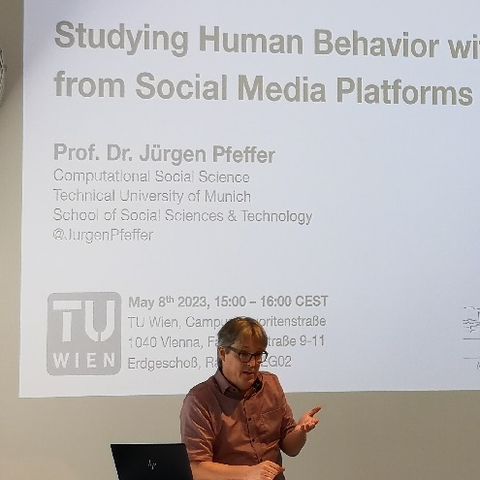
Jürgen Pfeffer is a Professor of Computational Social Science & Big Data at the Technical University of Munich's School of Social Sciences and Technology, with an additional appointment as Adjunct Professor at Carnegie Mellon University's Institute for Software Research. His interdisciplinary work bridges computer science and social science with a focus on analyzing large-scale socio-technical systems. His research expertise spans computational social science, network analysis, and big data methodologies. Pfeffer's work examines methodological, algorithmic, and theoretical challenges in analyzing dynamic social systems, with current projects focusing on modeling and detecting negative dynamics from social media, particularly online firestorms and hate speech against politically active women. His research combines network science approaches with computational methods to understand complex social phenomena. Pfeffer's publication record demonstrates significant contributions to the field since his 2010 doctorate, with high-impact papers in journals like Science and EPJ Data Science. His work on social media analysis, particularly the influential 2014 Science paper 'Social Media for Large Studies of Behavior' co-authored with Derek Ruths, has shaped methodological approaches in the field. His research shows consistent evolution from foundational network analysis to contemporary applications in political discourse, hate speech detection, and multi-layer network analysis. Hennig, M., Brandes, U., Pfeffer, J., & Mergel, I. (2012). Studying Social Networks. A Guide to Empirical Research Ruths, D., & Pfeffer, J. (2014). Social Media for Large Studies of Behavior Pfeffer, J., Morstatter, F., & Mayer, K. (2018). Tampering with Twitter's Sample API As an advisor and collaborator, Pfeffer has worked extensively with researchers including Raji Ghawi, Mirco Schönfeld, Momin Malik, and Kathleen Carley. His work demonstrates strong connections between theoretical network science and practical applications in social media analysis. His current research continues to address pressing issues in online discourse, with recent work focusing on hate speech classification, lexical change in negative word-of-mouth, and polarization dynamics in social media environments. Pfeffer leads the Pfeffer Lab, which focuses on developing methodological approaches for analyzing complex social systems through computational methods. His work has implications for understanding political legitimacy, social influence, and community dynamics in both online and offline contexts.
Dr. Mo El-Haj is a Reader (Associate Professor) in Natural Language Processing (NLP) at the College of Engineering & Computer Science, VinUniversity, Hanoi, Vietnam, and holds a visiting role at Lancaster University. He specializes in NLP with a focus on Financial NLP, Arabic NLP, and multilingual systems for under-resourced languages. Education: PhD in Computer Science (University of Essex, 2012), MSc in Information Systems (University of Jordan, 2008), BSc in Computer Information Systems (University of Jordan, 2005). Awards include the FHEA Fellowship (2021) and the 2016 BBC NewsHack Best Tool award. Research interests include text summarization, financial narrative processing, biomedical NLP, and corpus linguistics. He leads the VinNLP research group and has supervised/co-supervised over 20 PhD students. Notable projects include the Welsh Automatic Text Summarisation tool (ACC) and the FreeTxt bilingual analysis toolkit, funded by the Welsh Government and AHRC. Publications span 92+ works in top journals/conferences like Computational Linguistics and LREC. Active in organizing workshops (e.g., WACL-4, FinNLP) and has served as external/internal PhD examiner at UK universities.
Dr. Lu Tang is a Professor of Communication and Director of the Data Justice Lab at Texas A&M University’s Department of Communication and Journalism. She holds a doctorate from the Annenberg School for Communication at the University of Southern California. Her research focuses on the ethical and social justice implications of emerging technologies in health communication, including AI, chatbots, and virtual reality. She uses computational methods like natural language processing and social network analysis to study health information dissemination on social media, with an emphasis on minority health and cultural contexts. Education: Ph.D., Annenberg School for Communication, University of Southern California Research Interests: Dr. Tang’s work spans three key areas: 1) Ethical integration of AI in healthcare and health promotion; 2) Analysis of health misinformation and information diffusion on platforms like YouTube and Twitter; and 3) Cultural dimensions of health communication among minority populations. Her research is funded by the NIH, Cancer Prevention and Research Institute of Texas, and Robert Woods Johnson Foundation. Grants & Funding: NIH Cancer Prevention and Research Institute of Texas Robert Woods Johnson Foundation Labs & Teams: Director of the Data Justice Lab , affiliated with the Texas A&M Institute of Data Science.
Kang Namkoong serves as an Associate Professor in the Department of Communication at the University of Maryland's College of Arts and Humanities. His research explores the dynamic interplay between emerging media technologies and health communication, with dual emphases on treatment-oriented health interventions and prevention-focused health campaigns targeting underserved populations. Education Ph.D., University of Wisconsin Research Expertise Dr. Namkoong specializes in Health Communication , Digital Media , and Communication Science , with particular focus on eHealth systems, cancer communications, occupational health and safety education, and mental health interventions. His work examines how interactive communication technologies can improve patient outcomes and reduce health disparities through innovative applications of mobile and immersive media. Publication Trends Analysis of Dr. Namkoong's 15 most recent publications (2020-2025) reveals consistent focus on digital health interventions for agricultural safety, opioid misuse prevention, and weight management. His research increasingly incorporates immersive technologies (VR/AR) and artificial intelligence, while maintaining strong methodological diversity including systematic reviews, meta-analyses, and experimental designs. Research Funding National Institute for Occupational Safety and Health (NIOSH) grants supporting development of smartphone-based health communication apps and VR/AR interventions for agricultural safety in rural communities Current Research Initiatives Dr. Namkoong leads interdisciplinary projects exploring mobile and immersive media technologies for public health interventions, with particular emphasis on addressing health disparities among underserved populations through culturally-tailored digital solutions.
Gwenn Englebienne is an Assistant Professor at the Digital Society Institute and Human Media Interaction group of Utrecht University. Their research focuses on Artificial Intelligence, Computer Vision, and Human-AI Interaction, with applications in robotics, health, and social computing. They have contributed to over 80 research outputs since 2007, emphasizing embodied AI, social robotics, and explainable machine learning. Research interests span activity recognition, teleoperation systems, and ethical AI design. Notable work includes developing GNN-based group detection algorithms and evaluating chatbot reliability through automated question-answering frameworks. Their studies often bridge technical innovation with human-centered design, such as measuring embodiment via pupil dilation or addressing asymmetry in video-conferencing interactions. Key collaborations include work on social robotics, telepresence systems, and health monitoring using ambient sensors. Publications span conferences like IDA, CogMI, and LREC-COLING, reflecting interdisciplinary impact. A dataset on robot social positioning behavior is publicly accessible via 4TU.Centre for Research Data. Current work explores semi-supervised domain adaptation, spiking neural networks, and the psychological dimensions of AI trustworthiness. They lead initiatives in the Digital Society Institute to align technological advancements with societal needs.
Dr. Ewilly Liew is a Senior Lecturer at the Econometrics and Business Statistics Department of Monash University's Malaysia School of Business. She holds multiple administrative roles, including Director of Undergraduate Studies, Course Director for Bachelor of Business and Commerce (BBusCom), and Deputy Course Director for Bachelor of Digital Business (BDigBus). Her academic journey includes a Postgraduate Research Degree Full Scholarship (2013-2015) and a Data Science Microcredential from Monash Australia (2020). Dr. Liew has received notable awards like the Monash Vice Chancellor's Citation for Outstanding Contribution to Student Learning (2020). Her research focuses on emerging technology adoption, digital transformation, and behavioral analysis in public healthcare, higher education, and service sectors. Methodologies include data visualization, statistical learning, and structural equation modeling. She has led interdisciplinary projects on AI-driven healthcare analytics and collaborated with clinical specialists using Electronic Medical Records systems. Internationally, she served as a visiting research fellow at Harvard University (2015) and organized the IEEE International Conference on Industrial Engineering and Engineering Management (IEEM 2022). Dr. Liew's teaching innovations include developing four new Business Analytics units. Her students excel in national and regional data science competitions. She actively participates in conferences and workshops, contributing to topics like geopolitical data security and healthcare service quality decision analytics. Her work aligns with UN Sustainable Development Goals, emphasizing thriving communities in developing contexts.
Anne Daubmann is a Research Fellow at the Institute of Medical Biometry and Epidemiology within the Faculty of Medicine at the University Medical Center Hamburg-Eppendorf (UKE) . Her work focuses on Medical Biometry and Health Services Research , with significant contributions to Mental Health , Multiple Sclerosis , and Primary Care domains. Her research spans: Digital health interventions for cancer patients Nutritional strategies in MS management Family-oriented mental health policies AI reliability in medical guidelines Resuscitation training methodologies Scientific Awards: Certificate in Medical Biometry (2020) from GMDS and IBS-DR She holds memberships in the International Biometric Society, German Region (IBS-DR) . Her methodological expertise includes statistical analysis in clinical trials and health outcomes evaluation .
Thomas Finholt serves as the Dean of the School of Information at the University of Michigan . His academic work focuses on the intersection of people, information, and technology , with particular emphasis on creating inclusive environments for collaborative research. Current leadership role: Dean of the School of Information Core research areas: Cyberinfrastructure, virtual organizations, distributed teams Key contributions: Studies on data sharing, collaboration technology, and science policy His article trends reflect a deep engagement with cyberinfrastructure design , collaborative systems , and data governance across scientific domains. The research spans from virtual team dynamics to economic models for resource allocation in digital environments. Finholt has no explicitly listed scientific awards in the provided text but maintains active involvement in advising and grants through projects like the NSF CAREER grant on networked ecological sciences. His lab and team work focuses on large-scale scientific collaboratories, including the Upper Atmospheric Research Collaboratory (UARC) and earthquake engineering cyberinfrastructure.
Isak Samsten is a Senior Lecturer at Stockholm University's Department of Computer and Systems Sciences (DSV), specializing in data science and machine learning. He leads research in temporal machine learning, counterfactual explanations, and interdisciplinary applications in healthcare and environmental science. His work includes developing the wildboar Python module for time series analysis. Current research projects focus on AI for insurance fraud detection and environmental remediation. Samsten is affiliated with the Data Science Research Group, which bridges algorithmic innovation with practical decision-making. He holds an ORCID identifier (0000-0002-3056-6801) and is active in publishing influential papers on topics like time series classification, ESG performance prediction, and clinical decision support systems. Education: Unspecified in text (assumed doctoral degree given academic rank) Affiliations: DSV, Stockholm University; Data Science Research Group Research Interests: Time series analysis, interpretable machine learning, healthcare informatics, environmental sustainability metrics, and AI ethics. Key contributions include shapelet-based classification methods (e.g., Castor algorithm) and counterfactual explanation frameworks (e.g., Glacier system). Grants & Awards: None explicitly listed in provided text. Labs/Teams: Leads the Data Science Research Group, collaborating on projects like AI to detect unclear insurance claims and Toxicity guided inverse design of materials .