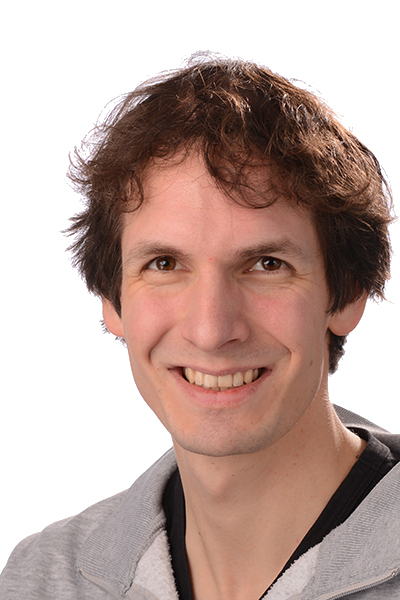
Dr. Martin Hellwig serves as a Researcher at Hochschule Rhein-Waal within the Faculty of Technology and Bionics. He is affiliated with the Drive and Automation Technology organizational unit, focusing on engineering applications in mechanical and electrical systems integration. His research expertise spans multiple engineering disciplines: Mechanical Engineering with specialization in drive systems Electrical Engineering applications for industrial automation Advanced control systems for manufacturing processes Integration of mechatronic components in industrial applications Based at the Kleve Campus in office 05 01 003, Dr. Hellwig contributes to both academic instruction and applied research at this German University of Applied Sciences. His work emphasizes practical implementations of automation technologies in industrial contexts, bridging theoretical knowledge with real-world engineering solutions.
Fredrik Danielsson is a Professor of Automation at University West, where he serves as an employee of the Department of Industrial Automation. He leads a research group focused on flexibility in industrial automation systems and teaches in University West's master's program in robotics. Professor Danielsson's research spans multiple areas of industrial automation, with a particular emphasis on flexible manufacturing systems. His work explores human-machine interaction to increase operator intervention possibilities in automated processes. He has made significant contributions to the development of Plug and Produce systems, which enable more adaptable and reconfigurable manufacturing environments. His research also encompasses robotics, mechatronics, and the application of Industry 5.0 principles to create human-centric smart manufacturing systems that balance technological advancement with human well-being. An analysis of Professor Danielsson's recent publications reveals a strong focus on making manufacturing systems more adaptable through multi-agent systems, digital twins, and advanced path planning algorithms. His work consistently addresses the challenge of implementing flexible automation that can be easily reconfigured by in-house personnel without requiring extensive programming knowledge. A notable trend is the increasing emphasis on safety management and hazard identification within reconfigurable manufacturing systems. Professor Danielsson supervises graduate students, including Anders Nilsson who completed a licentiate thesis on human-centric process planning for Plug & Produce systems under his guidance. His research group has developed a Plug & Produce test bed in cooperation with industrial representatives, particularly from the prefabricated wooden house industry, demonstrating practical applications of their theoretical work. The research group's approach emphasizes extracting information directly from computer-based product designs and incorporating in-house process knowledge through graphical configuration tools. Their work on intelligent products that 'know how to be finalized' represents an innovative approach to manufacturing automation that reduces complexity for human operators while maintaining high levels of flexibility.
Malaka Kaluarachchi serves as a Lecturer in Mechatronic Engineering at Anglia Ruskin University (ARU Peterborough) within the Faculty of Engineering, Agri-tech and the Environment. His expertise bridges theoretical robotics with practical applications across industrial, agricultural, and medical domains. His academic credentials include: PhD in Mechanical (Robotics) Engineering from University of Nottingham MEng (Hons) in Mechatronic Engineering from University of Nottingham PG Cert in Learning and Teaching in Higher Education from Kingston University Dr. Kaluarachchi's research centers on advanced robotics systems , with pioneering work in energy-efficient manipulator design , underactuated mechanisms , and tendon-driven robotics . His approach emphasizes reducing mechanical complexity while enhancing functionality, particularly through single-motor actuation and bistable electromagnetic systems. Current investigations target agricultural robotics applications within the 5G Connected Forest project framework. Publication trends reveal consistent innovation in robotic mechanism design, with 70% of recent work focusing on energy optimization and underactuation techniques. His research demonstrates strong translational potential, evidenced by industrial implementations of teaching pendants and mobile forest monitoring systems. Key recognitions include: Nomination for Most Innovative Use of 5G Technology award (UK 5G Week Awards) Top-ten all-time most-read paper status in Taylor & Francis journal As an active research supervisor, he mentors students in robotics thesis projects while contributing to the 5G Connected Forest initiative. His grant portfolio includes Birmingham City University's Smart Systems and Robotics project, with current focus on securing agricultural robotics funding. Dr. Kaluarachchi maintains industry partnerships through his role as Session Chair for IEEE WIESymp's Intelligent Systems track and extensive journal reviewing activities. He leads mechatronics development within ARU's engineering research group, specializing in physical implementations of theoretical robotic concepts for real-world deployment.
Geert Folkertsma is a Researcher at the Faculty of Electrical Engineering, Mathematics and Computer Science of the University of Twente, Netherlands. Based in Room Carré 3413 with contact number +31534894416, he specializes in robotics research and maintains an active academic profile through his university email g.a.folkertsma@utwente.nl. His primary research domains include Robotics , Control Systems , and Dynamic Modelling , with specific expertise in energy-efficient robot control frameworks and Localization and Mapping techniques for autonomous mobile systems. These interests directly support his work with the RaM laboratory, which focuses on advancing robotic autonomy through integrated mechanical and computational solutions. Dr. Folkertsma's professional identity is marked by his Dutch engineering doctorate (dr. ir.) and Chartered Engineer (CEng) designation, reflecting both academic rigor and professional engineering standards in his robotics research.
David Christopher Balderas-Silva serves as a Research Professor at Tecnológico de Monterrey's Institute for Advanced Materials for Sustainable Manufacturing in Mexico City. His interdisciplinary work bridges biomedical engineering, computer science, and advanced manufacturing with emphasis on sustainable industrial solutions and accessibility. His educational credentials include: B.Eng. in Mechatronics Engineering from Universidad Panamericana MSc in Biomedical Engineering from Delft University of Technology PhD in Engineering Sciences from Tecnológico de Monterrey Dr. Balderas-Silva's research centers on computer vision , artificial intelligence , and brain-computer interfaces , with applications in healthcare accessibility, robotics, and Industry 4.0. His work on EEG-based speech decoding and 3D-printed assistive devices demonstrates commitment to inclusive technology, while metaheuristic optimization research advances sustainable manufacturing. Recent publications reveal strong focus on neural signal processing (40% of 2022-2024 output) and computer vision for robotics (30%), with growing emphasis on UN Sustainable Development Goals related to disability inclusion and clean energy. His recognition includes: Mexican Researcher Certification - Level 1 As a member of the Mexican National Researchers System, he has co-authored over 20 publications and multiple inventions. His Education 4.0 pedagogy initiatives for machine learning and neurotechnology training highlight academic leadership. While specific grant details aren't provided, his Institute affiliation indicates active participation in collaborative research addressing sustainable manufacturing and assistive technology gaps. He contributes to the Institute for Advanced Materials for Sustainable Manufacturing through projects integrating brain-computer interfaces with industrial robotics, developing low-cost eye-tracking systems, and optimizing PCB manufacturing via digital twins. His lab work emphasizes cross-disciplinary teams focused on translating AI research into practical solutions for Industry 4.0 challenges.
Associate Professor Yong Zhu is a faculty member in the School of Engineering and Built Environment at Griffith University, Australia, specializing in Electrical and Electronic Engineering. He is a full member of the Queensland Micro and Nanotechnology Centre (QMNC) and the Queensland Quantum and Advanced Technologies Research Institute (QUATRI). His work focuses on advanced manufacturing and sensing technologies to improve how we interact with and understand our physical environment. Education: Doctor of Philosophy in Microelectronics, Peking University (2002-2005) Graduate Certificate in Higher Education, Griffith University (2016-2017) Associate Professor Zhu specializes in Microelectromechanical Systems (MEMS) and sensing technologies. His research interests span Microelectromechanical Systems (MEMS) devices (including resonators, oscillators, RF devices, charge sensors), Microelectronics, Nanotechnology, Mechatronics and Robotics, Sensors in renewable energy systems, Wearable sensors for health monitoring, Energy harvesting, and Remote sensing of bushfire. His work aims to develop more accurate, reliable, and efficient sensing technologies to improve our quality of life and environmental sustainability. His recent publications show a strong focus on MEMS, sensors, and nanotechnology applications, particularly in Silicon Carbide (SiC) technology for harsh environments, wearable sensors for health monitoring, and energy harvesting systems. There's a clear trend toward practical applications of fundamental research in areas like structural health monitoring, IoT systems, and biomedical applications, demonstrating the translational impact of his work. Scientific Awards: 2022 Griffith Outstanding Teachers 2021 Griffith Outstanding Teachers Griffith Sciences Learning and Teaching Citation (2020, 2015) 2019 SDVC Commendation Griffith Excellent Teacher 2013 Pro Vice Chancellor's Excellence Awards 2015 Fellow of The Higher Education Academy Professor Zhu has supervised numerous doctoral and masters students across diverse topics including hydrogen sensors, MEMS, energy harvesting, and biomedical applications. His research is supported by multiple funded projects, including an ARC Discovery Project "Nano optoelectronic coupling: towards an ultrasensitive sensing technology" ($631,080) and several internal Griffith University grants focused on MEMS, sensors, and energy systems. He has served as Program Director for the Bachelor of Engineering (Honors) and as a Mentor for the Griffith Honours College. Professor Zhu is actively involved with the Queensland Quantum and Advanced Technologies Research Institute (QUATRI) and the Queensland Micro and Nanotechnology Centre (QMNC), where he contributes to cutting-edge research in micro and nanotechnology. His collaborative work spans multiple disciplines, connecting engineering with healthcare, environmental monitoring, and renewable energy systems.
Professor Yoshihiro Tanaka is a faculty member at Nagoya Institute of Technology in the Department of Electrical and Mechanical Engineering, Mechanical Engineering Major, and Mechanical Engineering Program. He earned his Ph.D. in Engineering from Tohoku University, where he also completed his undergraduate studies advancing a year through the Faculty of Engineering (1998-2001). His academic career includes positions at Daido University (2012), Fujita Health University (2011-2012), and Utrecht University as a Visiting Assistant Professor (2011). He was also a Specially Appointed Associate Member of the Science Council of Japan (2010-2014) and a Japan Society for the Promotion of Science Research Fellow (2005-2006). Professor Tanaka's research focuses on the intersection of haptics, robotics, and human perception. His work explores tactile perception mechanisms, wearable haptic interfaces, and body integration systems. He has made significant contributions to understanding how humans perceive touch, pressure, and vibration, and how this knowledge can be applied to create advanced haptic technologies. His research program examines vibrotactile stimulation, force feedback, skin deformation, and collaborative robotic systems where multiple people can share control through body integration. His recent publications (2023-2024) demonstrate leadership in tactile perception, wearable devices like the Tactile Clip for inducing softness illusions, multimodal remote watching systems using avatar robots, and collaborative robotics. His work often involves interdisciplinary collaboration with researchers like Hikari Yukawa and Kouta Minamizawa, and spans applications from surgical robotics to automotive interface design. Scientific Recognition Japan Society of Mechanical Engineering Robotics and Mechatronics Division Interdisciplinary Research Excellence Award (2024) Nagoya Institute of Technology Faculty Evaluation Special Excellence Award (2024) Nagoya Institute of Technology Faculty Evaluation Excellence Award (2023) SI2022 Excellent Presentation Award (2022) MIPE Award 2022 (2022) Professor Tanaka maintains active professional service as evidenced by his committee roles including Deputy Committee Chair for the Japan Society of Mechanical Engineering's IIP Division Editorial Committee and program committee memberships for multiple robotics conferences. His professional affiliations include the Global Young Academy, Science Council of Japan, IEEE, Society of Instrument and Control Engineers, and The Robotics Society of Japan. His research has resulted in numerous industrial property rights related to tactile evaluation methods, skin vibration analysis systems, and wearable hardness meters, demonstrating strong industry impact.
Sebastian Brol serves as a Professor in the Department of Mechatronics of Vehicles and Machines at Opole University of Technology. His office is located in room D-103, and he can be reached via email at s.brol@po.edu.pl or by phone at +48 77 449 8435. Dr. Brol holds the academic titles of Doctor of Science (DSc) and Engineer (Eng.), reflecting his extensive contributions to mechanical and mechatronic engineering disciplines. Dr. Brol's research spans critical engineering domains including vehicle and component testing, drive systems development, and the construction of machines, hybrid vehicles, and wheeled robots. His expertise integrates mechatronics with microcontroller programming, Linux-based systems, and advanced diagnostics through signal analysis. This multidisciplinary approach drives innovation in automotive and robotics applications, emphasizing practical implementation and system integration for real-world engineering challenges.
Dr. Ahmet Tekin is an Assistant Professor at the Department of Electrical and Electronics Engineering, Boğaziçi University. His research focuses on analog/mixed-signal/RF/microwave VLSI design, with emphasis on biomedical electronics, wireless communication systems, and integrated circuit innovation. He specializes in developing advanced sensor technologies, antenna arrays, and energy-efficient RF systems for healthcare, IoT, and aerospace applications. Key research areas include continuous glucose monitoring devices, optoelectronic blood pressure sensors, phased array transmitters for satellite communication, and resonance-based wireless charging systems. His work integrates cutting-edge semiconductor technologies like 22nm FDSOI and SOI CMOS with innovative circuit architectures. Dr. Tekin's recent publications highlight advancements in ultra-wideband antennas, adaptive sampling techniques, and biomedical IoT communication protocols. His research bridges electronics engineering with practical applications in healthcare, robotics, and renewable energy systems. Though no awards are explicitly mentioned, his prolific output in high-impact journals underscores his contributions to the field. He advises on interdisciplinary projects at the intersection of electronics and biomedical engineering, with a focus on wearable technologies and smart medical devices. His lab collaborates on energy harvesting systems and low-power biomedical sensors, reflecting a commitment to both foundational research and real-world solutions.
Kyrre Glette is a Professor at the University of Oslo's Department for Informatics, affiliated with the RITMO Centre for Interdisciplinary Studies in Rhythm, Time and Motion and the Robotics and Intelligent Systems (ROBIN) research group. His work focuses on co-designing robot bodies and behaviors using AI methods, particularly through the open-source robotic platform DyRET. Research interests include evolutionary robotics, bio-inspired computing, and embodied AI. Research Groups: Robotics and Intelligent Systems (ROBIN) RITMO Centre of Excellence fourMs Lab Projects: COCOMO: Co-evolution of Control and Morphologies Multimodal Elderly Care Systems (MECS) Predictive and Intuitive Robot Companion (PIRC) His publications explore topics like evolutionary algorithms for morphological adaptation, embodied music interfaces, and neural mechanisms of auditory prediction. Advising focuses on MSc projects in evolutionary robotics and modular robot control.
Roles and Affiliations: Distinguished Emeritus Professor at QUT's School of Electrical Engineering & Robotics. Former Director of the QUT Centre for Robotics (2020-23) and the ARC Centre of Excellence for Robotic Vision (2014-2020). Technical advisor to LYRO Robotics, Emesent, and ARMHub. Chair of Robotics Australia Group's Robotic Council. Education: PhD in Mechanical and Manufacturing Engineering from the University of Melbourne. Undergraduate and master’s degrees in Electrical Engineering from the same institution. Research Focus: Robotic perception (vision and force), dynamics and control, applications in mining, agriculture, and environmental monitoring. Pioneered open-source robotics software (MATLAB/Python) and the Robot Academy, impacting millions of students globally. Editor-in-chief roles at IEEE Robotics & Automation Magazine and founding editor of the Journal of Field Robotics. Awards: Fellowships from the IEEE, Australian Academy of Science, and Australian Academy of Technology and Engineering. 2017 Australian University Teacher of the Year. Recognized for innovations like the COTSBot (Eureka Prize finalist) and Starbug (Engineering Excellence Award).
Jack Collins is a Researcher and AI Research Scientist at Collaborative Robotics, focusing on robotics foundation models for collaborative robots. Previously, he served as a Postdoctoral Researcher at the University of Oxford's Applied Artificial Intelligence Lab and completed his PhD at Queensland University of Technology (QUT) in collaboration with CSIRO. His research emphasizes sim-to-real methods, robot simulation, and bridging the 'Reality Gap.' He holds a Bachelor of Engineering (Mechatronics) with First Class Honours from QUT. Education: PhD in Robotics (2018-2022), QUT/CSIRO BEng (Mechatronics) (Honours) (2014-2017), QUT Research Interests: Robot simulation and sim-to-real transfer Bimanual/mobile robotic manipulation Generative models and world modeling Task planning for long-horizon tasks Evolutionary robotics and component design Publications: Over 15 peer-reviewed articles focusing on simulation realism, robotic manipulation benchmarks, and generative modeling techniques. Key work includes the COMBO-Grasp framework and TWIST distillation method for sim-to-real transfer. Lab Affiliations: QUT Centre for Robotics (QCR), Oxford Robotics Institute's Applied AI Lab.
Professor Christopher McCool is a faculty member at Queensland University of Technology (QUT), specializing in Artificial Intelligence and Electrical Engineering. He holds a PhD from QUT and has contributed extensively to robotics and automation in agriculture, focusing on applications such as precision agriculture, weed management systems, and robotic vision for fruit detection. His work integrates computer vision, mechatronics, and environmental sustainability. Education: PhD in Electrical Engineering, Queensland University of Technology Research Interests: Development of agricultural robotics for crop monitoring and harvesting Computer vision techniques for environmental and agricultural analysis Autonomous systems for obstacle detection and navigation Unsupervised learning methods in robotic weed management Key Contributions: Co-edited special issues on agricultural robotics in the Journal of Field Robotics Advanced fruit detection and ripeness estimation through robotic vision systems Designed mechatronic systems for precision weed management Grants and Collaborations: Active in interdisciplinary projects involving robotics and environmental science Partnerships with industry for agricultural automation solutions
Dr. Zihao Wang is a Lecturer at the School of Aerospace, Mechanical and Mechatronic Engineering , University of Sydney. His research focuses on autonomous systems, particularly Unmanned Aerial Vehicles (UAVs) for agricultural pest control, with extensions into biomedical microfluidics and satellite technology. He holds a PhD (2021) on Intelligent UAVs for Pest Bird Control and a Bachelor of Engineering (Honours Class 1, 2014). Research Focus Dr. Wang’s work integrates aerospace engineering, biomimetics, and autonomous systems to solve real-world challenges. Primary domains include: Development of UAV-based bird deterrent systems using psychological warfare tactics Biomedical microfluidic platforms for thrombosis modeling Satellite attitude estimation and fault recovery systems Robotic aerial manipulation and perching mechanisms Publications Overview His multidisciplinary publications span UAV applications in agriculture (bird psychology, swarm systems), aerospace (satellite control, magnetorquers), and biomedical engineering (microfluidic thrombosis models). Recent work shows increasing convergence of autonomous systems with healthcare technology. Grants and Advising Grant (2022): Accelerating Australia's Space Innovation: Enhancements to the VR Flight Simulator (James N Kirby Foundation) Current Student : Advising Lucien on 3D Printing Molding Equipment for Pan-Space Specialty Environments Media Recognition Featured in The Newcastle Herald , Wine Australia , and Daily Democrat for pioneering UAV-based bird control solutions in vineyards.
Dr. Xiaofeng Wu is a Senior Lecturer in Space Engineering at the University of Sydney's School of Aerospace, Mechanical and Mechatronic Engineering. His research focuses on space systems, robotics, and control engineering with applications in satellite technology, additive manufacturing, and autonomous navigation. He holds a BEng from Northwestern Polytechnical University and a PhD from Loughborough University. **Education**: BEng in Space Engineering, School of Astronautics, Northwestern Polytechnical University (China) PhD in VLSI Design for Real-Time Control, Loughborough University (UK) **Research Interests**: Dr. Wu's work spans space engineering innovations such as satellite attitude control systems, on-orbit 3D printing, and robotic manipulators. He integrates neural networks, Kalman filters, and reinforcement learning to address challenges in space robotics and autonomous navigation. Recent projects include lunar navigation systems and fault-tolerant manufacturing solutions for space environments. **Grants & Collaborations**: He leads projects funded by NSW Space Research Network (SRN) and SmartSat CRC, focusing on lunar navigation, on-orbit refueling, and satellite communication networks. Collaborates with Reach Robotics on space robotics solutions. **Teams & Labs**: Member of the Sydney Institute of Agriculture. Involved in the INSPIRE-2 CubeSat project and QB50 initiative. Teaches courses like Spacecraft Design and Instrumentation.