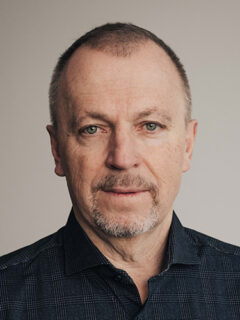
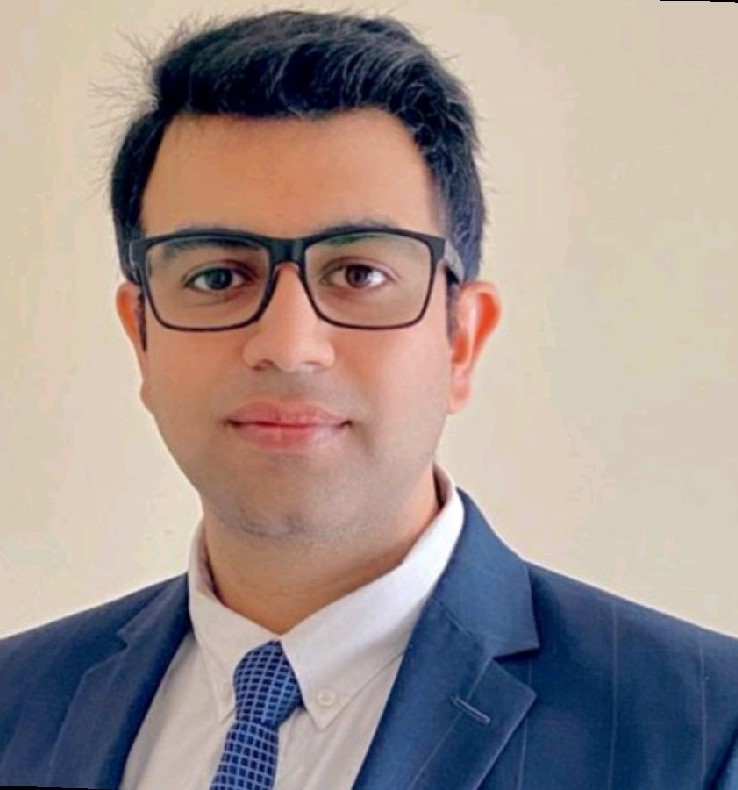
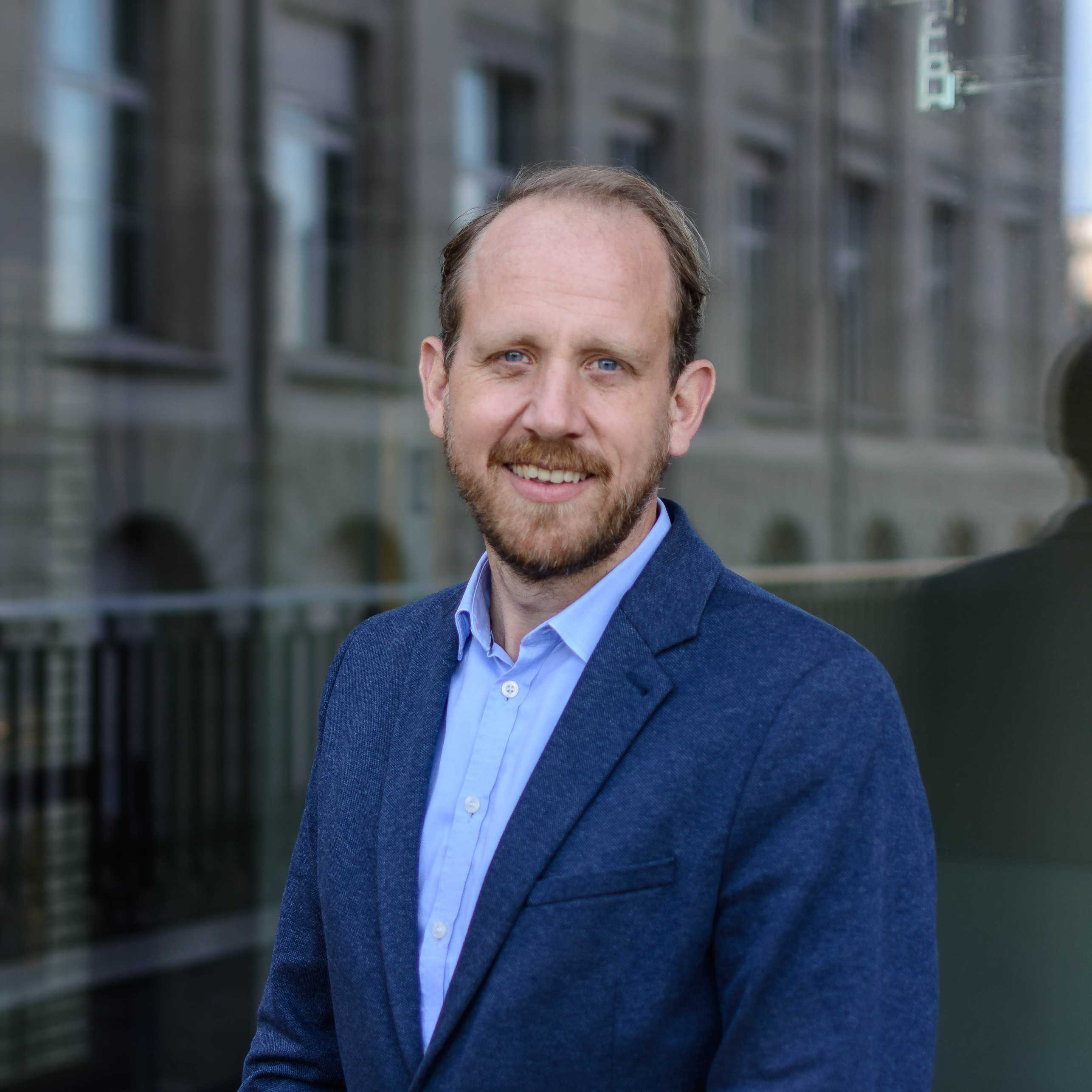
Prof. Dr. Andreas Hirsch is a Professor in the Department of Chemistry and Pharmacy at Friedrich-Alexander University Erlangen-Nürnberg (FAU) . His research focuses on organic chemistry , graphene functionalization , carbon nanomaterials , and molecular solar thermal systems , with significant contributions to 2D material engineering and supramolecular chemistry . Chair of Organic Chemistry II (FAU Erlangen-Nürnberg) ResearchGate: Profile Google Scholar: Profile His work spans graphene patterning via laser writing , black phosphorus stabilization using perylenediimides , and covalent functionalization of 2D materials like MoS 2 and carbon nanotubes . Recent studies include non-covalent passivation of BP nanosheets and electroswitchable catalysis for solar thermal energy storage . His scientific awards include the Second Place Poster Award (2023) and Robert C. Haddon Research Award (2021) . Collaborative projects highlight smart nanoparticle systems for radiation therapy and environmental remediation applications.
Dr. Vishal Sharma is a Senior Lecturer in the School of Electronics, Electrical Engineering and Computer Science at Queen's University Belfast. His research focuses on Cyber-Physical Systems (CPS), 5G/6G Security, Unmanned Aerial Vehicles (UAVs), Blockchain, and Digital Twins. He has held roles at institutions like Singapore University of Technology and Design (SUTD) and Soonchunhyang University, South Korea. Notable achievements include Best Paper Awards at ICCMIT 2017, IEEE SITE 2024, and HUCAPP/VISIGRAPP 2025. He leads the Innovation-by-Design Lab and is a Fellow of the Higher Education Academy (FHEA). Research Interests: Cyber Defence, UAV Security, Secure Computing, Network Security, and Sustainable Edge Computing. He has collaborated on projects like RapidRANDefender (QRICSec) and Traceable Procurement for Net-Zero Processes. Awards include the Royal Society International Exchanges Committee appointment (2025) and QUB's Individual Performance Award (2024). Grants and Projects: Principal Investigator for projects such as Exploring Operational Capabilities of Arm Morello for UAV Security (2023) and TUDOR: Ubiquitous 3D Open Resilient Network (2023). Active in editorial roles for IEEE Communications Magazine and IET Networks. His work aligns with UN Sustainable Development Goals (SDGs) related to climate action and innovation. Publications span 150+ articles in top journals/conferences, with a focus on secure communication, edge computing, and UAV networks. Supervises PhD students in cyber defence, AI security, and distributed ledger technologies.
Krishna Gummadi is a Scientific Director and Professor at the Max Planck Institute for Software Systems (MPI-SWS) in Germany, where he leads the Networked Systems Research Group. He also holds a professorship at the University of Saarland, demonstrating his dual commitment to research and academic instruction in computer science. His educational background includes: Ph.D. in Computer Science and Engineering from the University of Washington (2005) B.Tech. in Computer Science and Engineering from the Indian Institute of Technology, Madras (2000) Gummadi's research spans networked and distributed computer systems with a current focus on social computing systems. His work addresses critical challenges in algorithmic fairness, privacy in social media, trustworthiness of online identities, and information dissemination in social networks. He approaches these problems through interdisciplinary methods combining user-centric studies, data-centric analysis, and systems-centric design to create practical solutions that enhance fairness, transparency, and user control in online platforms. His methodology integrates large-scale observational studies, computational modeling, and system implementation to tackle complex human-computer interaction challenges at societal scale. His recent publications reveal a strong emphasis on fairness in algorithmic decision making, with significant contributions to quantifying and addressing discrimination in machine learning systems. His work bridges computer science, social science, and ethics, creating frameworks for fair classification, understanding media bias, and developing privacy-preserving techniques that maintain functionality while protecting user data. The research demonstrates a progression from technical system design to addressing societal implications of computing systems. Among his notable scientific achievements: ERC Advanced Grant in 2017 for 'Foundations for Fair Social Computing' Test of Time Awards at ACM SIGCOMM and AAAI ICWSM Casper Bowden Privacy Enhancing Technologies (PET) and CNIL-INRIA Privacy Runners-Up Awards IW3C2 WWW Best Paper Honorable Mention Multiple Best Paper awards across prestigious conferences Gummadi has advised numerous PhD students and postdoctoral researchers who have gone on to prominent positions in academia and industry. His ERC Advanced Grant has supported extensive research into fair social computing, while his leadership in major conferences (including serving as General Chair for ICWSM 2016 and Program Chair for WWW 2015) has shaped research directions in the field. His teaching portfolio includes courses on Distributed Systems, Human-Centered Machine Learning, and Social Media Analysis. He leads the Networked Systems Research Group at MPI-SWS, which has developed several publicly available systems including tools for fair classification, privacy risk assessment, trust evaluation in social media, and information diet management. The group's work bridges theoretical advances with practical implementations that address real-world challenges in social computing, with numerous software releases and datasets made available to the research community.
Kay Severin is a full professor at the Laboratory of Supramolecular Chemistry (LCS) within École Polytechnique Fédérale de Lausanne (EPFL) , Switzerland. His research focuses on the design and reactivity of metal-ligand assemblies, including coordination cages, metalloligands, and supramolecular receptors. He has pioneered the use of metalloligands for constructing heterometallic architectures and developed systems for anion extraction and stimuli-responsive hydrogels. Key funder: Swiss National Science Foundation (FNS) Collaborative work with Rosario Scopelliti and Farzaneh Fadaei Tirani Research Interests: Severin's work spans supramolecular chemistry, organometallic synthesis, and functional materials. Recent projects include: Dynamic palladium-based hydrogels with anion-responsive crosslinks Gold(I)-driven nano-onion structures via π-stacking Triazene-derived ligands for Sandmeyer-type reactions Metalloligand assembly of Fe/Pd/Au heterotrimetallic cages Publication Trends: Over 300 publications since 1994, with recent emphasis on: Coordination-driven self-assembly (2024: 6 articles) Triazene and diazoolefin reactivity (2025: 4 articles) Metal-ligand interactions in nanogels and vesicles (2024-2025: 3 articles) Environmental applications in anion extraction (2025: 1 article)
Svitlana Rogovchenko is a Professor at the Department of Engineering Sciences, University of Agder, Norway. Her academic work bridges pure mathematical research in differential equations with innovative pedagogical approaches in engineering and interdisciplinary education. Educational Background: Doctor of Philosophy in Differential Equations (1988), Institute of Mathematics, National Academy of Sciences, Kyiv, Ukraine Master of Science in Mathematics (1983), Kyiv State University, Ukraine Research Interests: Qualitative theory of ordinary and impulsive differential equations, asymptotic methods in nonlinear mechanics, mathematical modeling, and the intersection of mathematics education with engineering and biology curricula. She focuses on conceptual understanding, pedagogical challenges, and commognitive conflicts in learning differential equations. Recent Publications Trends: Her work spans mathematical modeling of vehicle crashworthiness, interdisciplinary education for biologists and engineers, and pedagogical innovations in ordinary differential equations. Articles emphasize assessment design, group work tensions, and bridging mathematical theory with applied contexts.
Prof. dr. Tessa Quax is an Associate Professor at the Faculty of Science and Engineering, University of Groningen, leading research in Molecular Microbiology . Her work focuses on archaeal virology and virus-host interactions, supported by prestigious grants including an ERC Starting Grant (2022) and NWO Vidi Grant (2023). Key Research Areas: Archaeal virus entry/egress mechanisms Cell surface dynamics and motility Extreme environment microbiology Genetic tool development for archaea Recent publications in Nature Reviews Microbiology (2025) and Current Opinion in Microbiology (2024) highlight her work on viral host recognition and structural diversity. Her lab's 44 research outputs span archaeal cell biology, viral evolution, and ecological impacts of virus-induced lysis. Scientific Recognition: KNAW Beijerinck Premium (2022) KNAW Early Career Award (2021) Hector Research Career Development Award (2021) ERC Starting Grant (2022) As Chair of the International Society for Viruses of Microbes SAB and Speaker of the German Microbiology Society's Microbial Viruses group, she coordinates global research networks including a HFSP grant (2023) with Japan/Australia/USA collaborators. Her lab currently includes PhD candidate Zaloa Aguirre Sourrouille and multiple postdoctoral researchers.
Peter Huybers is a Professor of Earth and Planetary Sciences and Environmental Science and Engineering at Harvard University , where he investigates the climate system and its societal implications, including interactions between volcanism and glaciation , extreme temperature predictability , and climate change impacts on food production . Research interests span climate change attribution , paleoclimate reconstruction , drought dynamics , crop yield modeling , and earth system feedbacks . His work often integrates art-historical analysis with climate science, as seen in studies of 19th-century air pollution through Turner and Monet paintings . Scientific awards include funding from Harvard Data Science Initiative (2023) for projects on climate change and food supply volatility Amazon Web Services (2023) grant His 20+ peer-reviewed articles since 2020 focus on climate proxies , hydrological modeling , solar forcing , and agricultural-climate interactions , with recent work in Nature , PNAS , and Science Advances . Advising : Mentored 10+ PhD students including Parker Liautaud , Duo Chan , and Marena Lin , while leading research teams with current members like Greta Berendes and Caro Park . Former staff include Jon Proctor and Lucas Vargas Zeppetello , the latter now at UC Berkeley (2024).
Alec Wright is a Chancellor’s Fellow in Audio Machine Learning at the University of Edinburgh, affiliated with the Edinburgh College of Art and the Music department. He focuses on applying machine learning to musical audio signal processing and synthesis, particularly through neural network-based audio effects modeling. Education: Doctor of Science (DSc) in Neural Modelling of Audio Effects, Aalto University (2023) Master of Science (MSc) in Acoustics and Music Technology, University of Edinburgh (2018) Master of Engineering (MEng) in Mechanical Engineering, University of Manchester (2014) His research explores neural network architectures for real-time audio processing, guitar amplifier emulation, and diffusion-based distortion restoration. Key methodologies include Recurrent Neural Networks (RNNs), neural ordinary differential equations, and synthetic data generation for foundation models. Recent publications highlight sample rate conversion techniques, interpolation filters, and nonlinear distortion modeling. These works span domains like signal processing, computational audio, and physical modeling synthesis. Scientific Awards: Chancellor’s Fellow, University of Edinburgh As an active researcher, he collaborates internationally and contributes to frameworks like Open-Amp for audio effect modeling. No formal student advising details are currently available.
Prof. Dr. Mirko Meboldt serves as a Full Professor at ETH Zurich's Department of Mechanical and Process Engineering, where he holds dual leadership roles as Head of Lecturers' Conference and Deputy Head of the Institute of Machine Tools and Manufacturing. His office is located at Leonhardstrasse 21 in Zürich, Switzerland. Professor Meboldt's research spans multiple engineering domains with particular emphasis on: User-oriented product innovations New production technologies Mechanical engineering applications Biomedical device development CAD/PDM systems standardization Engineering education methodologies His recent publication portfolio reveals a distinctive interdisciplinary approach that bridges traditional mechanical engineering with cutting-edge medical applications. Key research trends include human-robot collaboration systems, intelligent medical devices for neurosurgery, augmented reality training platforms for medical procedures, advanced manufacturing processes, and AI-assisted healthcare communication analysis. This diverse research portfolio demonstrates his commitment to solving complex real-world engineering challenges through cross-disciplinary innovation. Professor Meboldt places significant emphasis on the educational impact of his work, explicitly stating that he 'regards the impact on the education of young engineers and its relevance for industry as a key motivation and benchmark for his research.' His industrial background at Hilti AG informs his practical approach to academic research, ensuring strong industry relevance across all his projects.
Juha Järvelä is a Staff Scientist at the Department of Built Environment , Aalto University, and a member of the Aalto Environmental Hydraulics Lab . His research focuses on environmental hydraulics, particularly on Hydraulics of environmental channels Modeling of vegetated flows Environmentally sound hydraulic engineering Järvelä's research spans fluid dynamics in river systems, with an emphasis on vegetation-flow-sediment interactions. Key areas include flow resistance in flexible and rigid vegetation, hydrodynamic modeling of floodplains, and nature-based solutions for water management. His recent publications investigate Blockage effects of woody vegetation Longitudinal dispersion in patchy vegetation Two-stage channel performance in agricultural settings Hydrodynamic characterization of natural-like plants Järvelä has received notable scientific recognition, including 2014 : Outstanding Reviewer Award from the American Geophysical Union for Water Resources Research 2005 : Doctoral Dissertation Award from the Oskari Vilamo Foundation Contact: juha.jarvela@aalto.fi | Phone: +358505626727 | Postal: Tietotie 1 E, 02150 Espoo, Finland
Andreas Jentys is a Professor at the Department of Technical Chemistry within the TUM School of Natural Sciences at Technische Universität München (TUM). His research focuses on understanding surface reactions and transport phenomena in mesostructured, micro- and mesoporous oxides with acid/base or redox properties, as well as supported metal catalysts for gas and condensed phase reactions. He prepares materials with tailored functionality and studies their sorptive and catalytic properties using in situ electron and vibrational spectroscopy combined with microkinetic experiments. Education: PhD (Dr. techn.) in Chemistry from TU Wien (1991) Postdoctoral: Royal Institution of Great Britain (1992-1993) with Prof. Richard Catlow Academic Career: TU Wien (1998: Associate Professor), TUM (1999: Senior Scientist; 2011: Professor) Teaching: Active in TUM Asia since 2006 Research interests span catalysis, surface chemistry, material science, and chemical reaction engineering. He specializes in zeolites, bimetallic catalysts, and in situ spectroscopic methods. Recent work examines: Hydrogen evolution and carbon-carbon coupling on Cu Methane activation via Co²⁺ sites in ZSM-5 Photocatalytic systems using metal-organic frameworks Solvent effects in palladium-catalyzed hydrogenation CO₂ hydrogenation over bifunctional catalysts Publications trend toward heterogeneous catalysis, with emphasis on: Design of mesoporous and microporous materials Characterization of metal clusters and oxo species Microkinetic modeling of catalytic systems Environmental applications (NOx/CO₂ reduction) Hydrogen and hydrocarbon processing Teaching includes courses on: Reaction Engineering and Kinetics Industrial Chemical Processes I & II Fundamentals of Catalysis TC Praktikum (internship)
Dustin Tingley is a Professor of Government at Harvard University and holds a joint appointment at the Harvard Kennedy School of Public Policy . He serves as Interim Vice Provost for Advances in Learning and directs the Data Science and Technology Group and the Harvard Initiative on Learning and Teaching . He earned a PhD in Politics from Princeton and a BA in political science and math from the University of Rochester. Key Roles : Deputy Vice Provost (past), Chair of Harvard's Standing Committee on Climate Education Research Focus : Climate change politics, data science, causal inference, and international political economy His recent work explores the political economy of climate transitions , public opinion on carbon policies , and machine learning applications in social sciences . He co-founded ABLConnect , a repository for active learning pedagogy, and organized conferences on causal mechanisms , teaching with AI , and equitable classrooms . Awards : Gladys M. Kammerer Award (2015) for co-authored book Sailing the Water’s Edge Notable Publications : Uncertain Futures: How to Unlock the Climate Impasse (2023, with Alex Gazmararian) The Political Economy of the Clean Energy Transition (2025)
Prof. Yon Visell is an Associate Professor at the University of California, Santa Barbara (UCSB) with appointments in the Department of Bioengineering, Department of Electrical and Computer Engineering, and Department of Mechanical Engineering. He directs the RE Touch Lab, which focuses on haptics, robotics, and interactive technologies, including sensorimotor augmentation, soft robotics, and virtual reality applications. The lab is affiliated with the Media Arts and Technology Program, Communication and Signal Processing group (ECE), Dynamic Systems and Control group (ME), California NanoSystems Institute, Center for Polymers and Organic Solids, UCSB Research Center for Virtual Environments and Behavior, and UCSB Robotics Group. Education: PhD in Electrical and Computer Engineering from McGill University, MA in Physics from University of Texas, Austin, and BA in Physics from Wesleyan University His research spans robotics, haptics, biomechanics, and soft electronics, aiming to advance human-computer interaction and wearable technologies. Recent work includes light-driven tactile displays, biomechanical filtering in tactile encoding, and haptic systems for VR and healthcare. The lab has received numerous awards at IEEE Haptics Symposium, World Haptics Conference, and EuroHaptics Society events. 2025 Best Demonstration Awards at IEEE World Haptics Conference 2024 Best Paper at IEEE Haptics Symposium 2023 Best Journal Paper at IEEE Transactions on Haptics Visell's group has pioneered wave-based haptic rendering, tactile holography, and soft wearable robotics. They have developed tools like SkinSource for tactile biomechanics simulation and collaborated with institutions in North America, Europe, and Japan. Current projects involve photonics-driven tactile systems, soft robotics for therapy, and next-generation haptic interfaces while mentoring students like Gregory Reardon (2024 EuroHaptics Best Dissertation), Max Linnander (IEEE Haptics awards), and Neeli Tummala (SWE Intel Scholar). Research Grants: Funded by NSF, tech, and healthcare industries Lab: RE Touch Lab at California NanoSystems Institute Collaborations: with TU Dresden, Northwestern University, NC State, UCLA, and others
Dr. Mario Rebosura serves as a Postdoctoral Research Fellow at the Australian Centre for Water and Environmental Biotechnology (ACE), part of the Faculty of Engineering, Architecture and Information Technology at the University of Queensland. His work bridges fundamental research and practical engineering solutions for sustainable urban water systems. His academic credentials include: Bachelor of Science in Chemical Engineering (2009) from the University of the Philippines Los Banos Masters of Engineering in Environmental Engineering (2012) from the Catholic University of Korea PhD in Chemical Engineering (2020) from the University of Queensland Rebosura specializes in integrated urban water management with emphasis on anaerobic technologies and resource recovery. His research investigates iron salt applications throughout urban water cycles, contaminant fate analysis, and advanced wastewater treatment processes. He combines chemical engineering principles with environmental science to develop circular economy solutions that transform waste streams into valuable resources while improving infrastructure resilience. His publication record reveals consistent focus on optimizing iron-based interventions across the urban water system—from sewer networks to treatment plants—with recent expansion into micropollutant management and enhanced anaerobic digestion. This trajectory demonstrates increasing sophistication in addressing complex water-energy-resource nexus challenges through interdisciplinary experimentation. Rebosura actively contributes to scholarly discourse as Editor for the International Research Journal on Innovations in Engineering, Science and Technology and as a reviewer for leading water research journals. His conference presentations have generated international recognition through speaking invitations and workshop leadership. He has secured significant research funding including: Australian Research Council project 'An integrated approach to iron salt use in urban water systems' (2014–2019) Meat & Livestock Australia initiative 'Wastes to Profits: Advanced Anaerobic Digestion' (2018–2022) As a core member of ACE, Rebosura leverages world-class facilities for laboratory and pilot-scale water research, collaborating within multidisciplinary teams to advance sustainable water management solutions for global challenges.
Dr. Chenming Zhang is an Advanced Queensland Industry Research Fellow at the School of Civil Engineering, The University of Queensland. His research focuses on hydrological processes in coastal and terrestrial groundwater systems, with particular emphasis on evaporation-driven mass and heat transport in soils and tailings, and hydrogeochemical dynamics in aquifers and mine waste systems. Specializes in IoT-based environmental monitoring Develops numerical models for coastal aquifer dynamics Conducts field and laboratory experiments on tailings behavior Research interests span coastal hydrology, groundwater modeling, mine waste management, and environmental monitoring. He works on contamination transport, aquifer protection, and climate impacts on water systems. Recent publications analyze: Iron curtain formation in subterranean estuaries Sea water intrusion mechanisms Salinity dynamics in tidal wetlands Smart sewer monitoring systems Scientific awards include the prestigious Advanced Queensland Industry Research Fellowship. He supervises multiple PhD projects on mine waste hydrology and coastal aquifer management, with notable collaboration on: Evolution Mining's gold tailings projects ARC Discovery Projects on coastal processes Grange Resources' PAF cell instrumentation His work combines field measurements, laboratory testing, and computational modeling to address critical environmental challenges in mining and coastal zones.