Milica S. Stojanović is an Assistant Professor at the Faculty of Electronics, University of Niš, Serbia, where she works in the Department of Measurements. Her academic focus lies in metrology and measurement technology, particularly within automated and industrial systems. Research Interests: Her research spans metrology, automatic control, systems management, and non-destructive testing. She specializes in measurement technologies, particularly electromagnetic methods such as eddy current testing for metal conductivity assessment. Her work integrates principles of process automation and industrial instrumentation, contributing to quality control and material characterization in engineering applications. Publication Trends: Her early research output focuses on practical measurement techniques in electrical and industrial engineering, particularly the use of eddy currents for non-invasive material evaluation. The work reflects a strong applied orientation in instrumentation and sensor development within the domain of electrical metrology. Awards and Honors: Advising and Grants: There is no public information available regarding formal student advising, research grants, or funded projects. Labs and Research Teams: She is affiliated with the academic and research infrastructure of the Department of Measurements at the Faculty of Electronics, which supports research in precision instrumentation, sensor systems, and industrial measurement technologies.
Noel Crespi is a Professor and Director of Studies at Telecom SudParis, part of Institut Polytechnique de Paris. He leads research in the NeSS group and is affiliated with SAMOVAR, a prominent research laboratory focusing on networks, systems, and services. His work spans multiple domains in telecommunications, networking, and smart systems. His primary research interests include digital twins for smart cities, blockchain technologies, Internet of Things (IoT) security and applications, 5G/6G networking, and machine learning applications in network management. He has published extensively on these topics, with over 100 publications in top-tier journals and conferences. His recent work shows a strong focus on digital twin applications for urban management, particularly in traffic and air quality monitoring. He has developed modular frameworks for smart city digital twins that integrate real-time data from multiple sources. His research also explores blockchain applications for network security, access control, and service provisioning in next-generation cellular networks. Dr. Crespi has received significant recognition for his work on digital twins, with his 2020 paper "Digital twin in the IoT context" in Proceedings of the IEEE being highly cited. His current research explores the integration of AI with digital twin technologies for sustainable urban development. He has supervised numerous PhD students and collaborates extensively with researchers across Europe and internationally. His work often involves interdisciplinary approaches, bringing together computer science, networking, urban planning, and environmental science. Dr. Crespi has been instrumental in developing frameworks for network digital twins, with applications in traffic management, air quality monitoring, and resource allocation in smart cities. His research demonstrates practical implementations in cities like Madrid, showing measurable improvements in urban management.
Stefan Kragh Nielsen is a Professor and Section Leader in the Department of Physics at the Technical University of Denmark (DTU), specializing in Plasma Physics and Fusion Energy. He is actively involved in experimental and theoretical research related to fusion plasma diagnostics, particularly collective Thomson scattering and microwave-based measurements in tokamak devices such as ASDEX Upgrade and Wendelstein 7-X. His research interests include: Plasma Physics and Fusion Energy Collective Thomson Scattering Fast Ion Dynamics Electron Cyclotron Resonance Heating Parametric Instabilities Microwave Diagnostics The recent publications highlight a strong focus on advanced diagnostics, nonlinear wave interactions, and fast ion behavior in fusion plasmas. His work spans theoretical modeling, experimental validation, and instrumentation development, particularly in high-frequency microwave systems for continuous plasma monitoring. Trends show increasing emphasis on reduced modeling techniques and real-time diagnostic capabilities for next-generation fusion reactors. Scientific contributions include: Development of ultrafast digitizers for microwave diagnostics Commissioning of 174 GHz CTS systems at W7-X Modeling of metaplectic geometrical optics for plasma waves Investigation of parametric decay in gyrotron beams He actively supervises multiple PhD students on topics such as non-linear processes in electron Bernstein wave heating, ion dynamics via CTS, and parametric decay instabilities in spherical tokamaks. His projects are well-funded and aligned with international fusion research goals. He has collaborated extensively with major fusion facilities including ASDEX Upgrade, Wendelstein 7-X, and JET. No formal awards are listed in the provided text. He leads a research team focused on advancing plasma diagnostic capabilities for future fusion reactors.
Jay I. Frankel is a Professor and Department Head at the Department of Mechanical & Aerospace Engineering at New Mexico State University (NMSU). He earned his Ph.D. (1986), M.S.M.E. (1982) from Virginia Tech and a B.S.M.E. (1980, Magna Cum Laude) from the University of Maryland. Ph.D., Virginia Tech (1986) M.S.M.E., Virginia Tech (1982) B.S.M.E., University of Maryland (1980) His research focuses on thermal sciences in aerospace contexts, including: Inverse heat conduction problems Calibration methods for thermal sensors Uncertainty and sensitivity analysis High-temperature measurements for hypersonic vehicles His work often employs integral equations and advanced mathematical techniques to solve real-world thermal challenges in propulsion and aerospace systems. Recent publications explore: Calibration methods for heat flux estimation Experimental validation of thermal models Time-spectral approaches for dynamical systems Nonlinear diffusion modeling Key honors include: 2018 AIAA Special Award for CIEM development 2010 General H.H. Arnold Award for thermal analysis in propulsion 2005 AIAA Associate Fellow 2000 Fellow of Computational Mechanics at Wessex Institute He has secured significant funding from the National Science Foundation, Air Force Research Laboratory, NASA, and Department of Energy for projects related to: Hypersonic thermal protection systems Advanced sensor development Calibration methodologies under extreme conditions His laboratory team collaborates on emerging thermal diagnostics and inverse problem solutions.
Nichole Barry is a Scientia Lecturer (Level B) in the School of Physics at the University of New South Wales (UNSW), where she began her tenure-track journey in 2024. Previously, she has worked at the University of Melbourne and Curtin University, following completion of her PhD at the University of Washington. Dr. Barry earned her educational credentials from prestigious institutions: a Doctor of Philosophy in Physics from the University of Washington (2018), a Master of Science Minor in Astrobiology and a Master of Science in Physics from the University of Washington (2018 and 2016), and a Bachelor of Science in Physics from the University of California Davis, Integrated Studies Honors Program (2012). As an avid researcher in observational cosmology, radio science, and precision analysis, Dr. Barry specializes in Epoch of Reionisation searches, developing unique analysis approaches that push the boundaries of achieved precision within the radio-science community. Her work primarily focuses on the detection of the 21 cm cosmological signal using radio interferometers like the Murchison Widefield Array (MWA), with particular expertise in instrumental calibration, foreground removal, and power spectrum analysis. Her research bridges theoretical cosmology with practical observational techniques, making significant contributions to our understanding of the early universe. Analysis of Dr. Barry's most recent publications reveals a consistent focus on improving the precision and reliability of Epoch of Reionization measurements. Her work demonstrates increasing sophistication in handling instrumental systematics, foreground contamination, and radio frequency interference - the primary obstacles to detecting the faint cosmological signal. Recent papers emphasize the critical importance of accurate beam modeling, careful data processing pipelines, and innovative approaches to extracting the cosmological signal from noisy observational data. Discovery Early Career Researcher Award, Australian Research Council, 2024 ($381,237 AUD for three years) Astronomy Data & Compute Services Merit Allocation Program, six semesters from 2021 to 2024 ($217,000 AUD equivalent) Louise Webster Prize for Early Career Researchers from the Astronomical Society of Australia, 2023 (co-winner) Forrest Research Foundation Forrest Fellowship 2020 Laby ECR Travel Scholarship, 2019, 2021 Dr. Barry actively supervises research students, with Aman Chokshi being one of her current supervisees at the University of Melbourne. Her grant portfolio demonstrates strong research support, with significant funding from the Australian Research Council and other competitive programs. She is always welcoming conversations about pursuing Honours or PhD projects in early Universe cosmology using radio interferometers, indicating her commitment to mentoring the next generation of astronomers. As a key contributor to the Murchison Widefield Array (MWA) collaboration, Dr. Barry works within a large international team of radio astronomers focused on detecting the faint signal from the Epoch of Reionization. Her work involves close collaboration with researchers across multiple Australian institutions and international partners, contributing to one of the most promising approaches to studying the formation of the first stars and galaxies in our universe.
Julieta Galante is a full-time researcher at the University of Cambridge, affiliated with the Department of Engineering and Cambridge Public Health. Her work focuses on preventative medicine, mental health, and the application of mindfulness interventions. Holding a PhD from Cardiff University, she leads the evaluation of mindfulness courses for university students and explores the integration of machine learning into public health strategies. Galante's research spans randomized trials, systematic reviews, and economic evaluations, addressing stress reduction, dementia caregiver support, and digital health engagement. Primary Affiliation: University of Cambridge, Department of Engineering Research Pillars: Mindfulness, Preventative Medicine, Mental Health Methodologies: RCTs, Meta-Analyses, Cohort Studies Her recent publications highlight dose-response effects of mindfulness, public health ethics, and population-level meditation trends. She collaborates on global health initiatives and develops tools like the Inventory of Meditation Experiences (IME) to assess intervention impacts.
Dr. Michael Smith serves as a Departmental Visitor in the Nuclear Physics & Accelerator Applications department at the Australian National University, where he is affiliated with the Nuclear structure research group. His research spans nuclear structure physics, gamma spectroscopy techniques, and nuclear instrumentation development. His primary research interests focus on nuclear isomers, high-spin states in atomic nuclei, and neutron-rich nuclear systems. Dr. Smith employs advanced spectroscopic techniques to investigate nuclear structure in rare-earth elements and heavy nuclei, with particular expertise in francium, dysprosium, holmium, and erbium isotopes. His methodological approach combines experimental measurements with sophisticated data analysis. Analysis of his 11 publications from 2008-2024 reveals consistent research themes in nuclear structure physics, with recent work emphasizing instrumentation development. His 2024 paper describes a new conversion electron spectrometer, while his 2021 research examined neutron-rich niobium isotopes. The publications demonstrate strong collaboration with the Heavy Ion Accelerator Facility at ANU and international laboratories. Dr. Smith maintains active research collaborations across multiple institutions, particularly with researchers in the Nuclear structure group at ANU. His work bridges fundamental nuclear physics with practical applications in reactor physics and nuclear engineering, as evidenced by publications on reactor fuel testing and radiation shielding.
Professor Theresa Gannon is a Chartered Forensic Psychologist and Director of the Centre of Research and Education in Forensic Psychology at the University of Kent . Her research focuses on arson , sexual offending , and treatment effectiveness for offenders. She has developed standardized treatment programs like the Firesetting Intervention Programme for Prisoners (FIPP) and FIP-MO . Her work includes creating the Compositional Explanatory Theory of Pedophilia (CEToP) and leading meta-analyses on sexual offender treatment. She has contributed to legislation on polygraph testing in the UK and examined virtual reality for firesetting rehabilitation. Scientific Awards : ESRC Outstanding Impact in Society Award (2016) Lifetime Significant Achievement Award, British Psychological Society (2019) Elected Fellow of ATSA and the Academy of Social Sciences Selected Research Trends from her 15 most recent articles include arson typologies , sexual aggression in universities , unapprehended offender studies , and forensic treatment evaluation . Notable Grants : Youth Endowment Fund Enterprise Award (2021-2024, £333,813) ESRC grants for firesetting treatment development (2011-2014, £563,311) Ministry of Justice tender for polygraph evaluation (2010-2012, £324,417)
Assistant Professor in the Department of Anesthesia and Department of Health Research Methods, Evidence, and Impact at McMaster University's Faculty of Health Sciences. Her research focuses on evidence synthesis and evaluation to guide complex healthcare and public health decisions through systematic reviews and meta-analyses. Research Interests Evidence Synthesis: Developing methodologies for integrating conflicting health research findings Meta-Analysis: Specializing in network meta-analyses for comparative treatment effectiveness Public Health Decision-Making: Translating evidence into actionable health policies Clinical Epidemiology: Addressing methodological challenges in health research interpretation Systematic Reviews: Optimizing approaches for rapidly evolving evidence landscapes Recent publications (2023-2025) demonstrate expertise across respiratory medicine, hematology, ophthalmology, and public health, with emphasis on methodological rigor in evidence synthesis. Her work consistently addresses the challenge of conflicting evidence and rapid publication cycles in health research. Awards Gairdner Early Career Investigator Award for contributions to evidence-based healthcare Her scholarly activity includes developing risk-of-bias instruments like ROBUST-RCT and contributing to clinical practice guidelines. Current projects include living systematic reviews for long COVID management and methodological improvements in nutritional epidemiology. She teaches Statistics & Epidemiology courses and maintains active collaborations across multiple medical specialties.
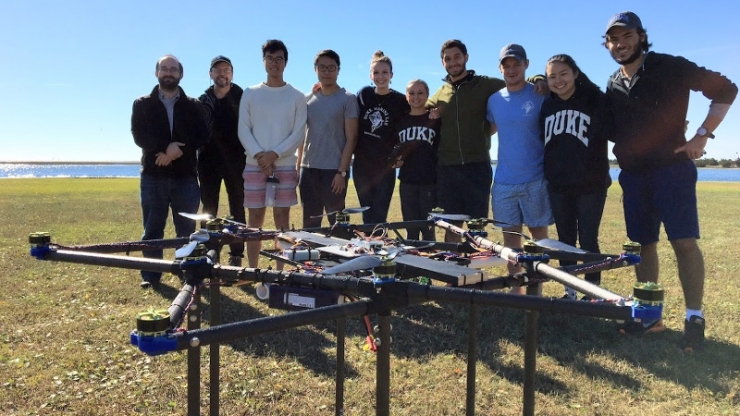
Martin Brooke is an Associate Professor of Electrical and Computer Engineering at Duke University's Pratt School of Engineering. He earned his B.E. in Electrical Engineering (First Class Honors) from Auckland University, New Zealand (1981), followed by M.S. (1984) and Ph.D. (1988) degrees from the University of Southern California. His career includes positions at Georgia Institute of Technology (1988-2003) before joining Duke. Dr. Brooke's research spans analog/RF/optoelectronic circuits, sensor interfaces, and deployable sensor systems with applications in ocean engineering and biomedical imaging. He leads innovative projects including ocean pH monitoring sensors and X Prize seafloor mapping initiatives, focusing on solving 'open-ended problems' through interdisciplinary approaches combining engineering with marine science. His extensive publication record (160+ articles) demonstrates consistent focus on sensor technologies, integrated circuits, and engineering education. Recent works emphasize biomedical applications (cancer margin assessment), environmental monitoring (ocean sensors), and educational innovations (remote microelectronics labs), showing a trend toward multidisciplinary solutions for real-world challenges. Awards and Honors: Capers and Marion McDonald Award for Teaching/Research Excellence (2022) Georgia Tech Outstanding Thesis Advisor Award (2003) IEEE Midwest Symposium Best Paper Award (1992) NSF Research Initiation Award (1990) Analog Devices Career Development Award (1988-1993) He has graduated 23 PhD students and mentors teams for major challenges like the X Prize ocean robotics competition. His research group develops deployable sensor systems with funding from NSF, X Prize Foundation, and industry partners. Current projects include drone-based ocean floor mapping systems and advanced pH sensors for marine ecosystem monitoring. Dr. Brooke leads the Brooke Research Group focusing on analog/RF systems and sensor integration. The team collaborates with Duke Marine Lab on ocean engineering initiatives and maintains eight U.S. patents. Future work emphasizes scalable sensor networks for environmental monitoring and biomedical diagnostics.
Prof. Dr. Rainer Heintzmann serves as Head of the Microscopy Department at the Leibniz Institute of Photonic Technology (Leibniz-IPHT) in Jena, Germany. His research focuses on advancing optical microscopy techniques, particularly super-resolution methods that surpass the diffraction limit to visualize cellular structures at nanoscale resolution. His primary research interests center on structured illumination microscopy (SIM), point spread function modeling, and computational imaging techniques. He has made significant contributions to developing automated multicolor SIM systems, extreme ultraviolet microscopy approaches, and deep learning-enhanced image analysis methods. His work bridges optical physics, computational algorithms, and biomedical applications, with particular emphasis on making advanced microscopy techniques more accessible through open-source hardware and software solutions. Analysis of his recent publications reveals a strong focus on overcoming fundamental limitations in optical microscopy. His research spans from theoretical modeling of optical systems to practical implementations for biological imaging. Key trends include the development of more accurate point spread function calculations, expansion of super-resolution techniques to new wavelength regimes, and integration of machine learning for image analysis and segmentation. Prof. Heintzmann actively collaborates with researchers across multiple institutions, as evidenced by his co-authorship on numerous interdisciplinary publications. His work has appeared in high-impact journals including Nature Methods, Nature Reviews Molecular Cell Biology, and Optics Express, reflecting the significance of his contributions to advancing microscopy techniques. His laboratory at Leibniz-IPHT appears to focus on developing novel microscopy instrumentation, particularly open-source implementations of super-resolution techniques. Recent projects include the openSIMMO platform for automated multicolor structured illumination microscopy and work on extreme ultraviolet microscopy that could potentially extend super-resolution capabilities into the X-ray regime.
Qian Huang is an Assistant Professor at the Department of Journalism & Media Production within Washington State University's Murrow College of Communication. Her research integrates quantitative and qualitative methodologies to examine psychological, behavioral, and social determinants of health behaviors, with a focus on vaccination and public health interventions. PhD in Communication from the University of Miami As a health communication researcher, Huang's work emphasizes message design, interpersonal communication, and innovative strategies to promote health behaviors. Key research areas include: Cues to action in health campaigns Perspective-taking for intergroup relations in healthcare Optimizing health messaging for underserved populations Recent publications address rural colorectal cancer screening, emotional drivers of vaccination, and information overload during the pandemic. Her work has been recognized with top paper awards at the National Communication Association (Chinese Communication Studies Division, 2018; Communication and the Future Division, 2023). Scientific contributions include awards for: Top Paper at NCA Communication and the Future Division (2023) Top Paper at NCA Chinese Communication Studies Division (2018) Huang teaches courses on science communication (COM 400) and science communication research (COM 541), with research activities aligned with Murrow College's health communication initiatives.
Manuel Jesus Espinosa Gavira is a researcher at the Department of Automation, Electronics, Architecture and Computer Networks Engineering at the University of Cádiz, Spain. He is affiliated with the TIC168 Computational Instrumentation and Industrial Electronics research group under the Information and Communication Technologies PAIDI area. Research Focus: His work centers on power quality analysis, wireless sensor networks, and smart grid technologies. Key contributions include developing instrumentation systems for voltage supply characterization, cloud-induced photovoltaic transient analysis, and synchronized sensor networks for industrial applications. His PhD thesis (2023) explored sensor networks for short-term solar prediction in microgrids and smart cities. Publications Trends: Recent work focuses on higher-order statistics (HOS) for power quality monitoring, photovoltaic plant optimization using weather forecasts, and frequency domain analysis for grid stability. These publications reflect expertise in computational instrumentation, renewable energy integration, and real-time monitoring systems.
Yves Blaquière is a Professor in the Department of Electrical Engineering at École de Technologie Supérieure. He is affiliated with the Communications and Microelectronic Integration Laboratory (LaCIME), focusing on microelectronics, integrated circuit design, and power integrity in advanced electronic systems. His research spans VLSI/ASIC design, FPGA-based reconfigurable computing, MEMS for avionics, and radiation effects on electronics. Aeronautics and Aerospace Intelligent and Autonomous Systems Microelectronics and VLSI Power Integrity Modeling MEMS Switch Design Radiation-Resilient Circuits His recent publications highlight innovations in GHz-range power integrity for SiP, FPGA-based SHEPWM inverters, and MEMS switches for avionic power systems. Collaborations with researchers like Frédéric Nabki and Nicolas Constantin reflect his focus on industrial applications and technology transfer. Professor Blaquière co-supervises PhD candidates including Hachem Bensalem, Gabriel Nobert, and Abdurrashid Hassan Shuaibu, covering topics such as heterogeneous optimization, power converter modeling, and MEMS switch development. His work contributes to wafer-scale prototyping platforms like WaferBoard and advanced tools for radiation testing in FPGAs. LaCIME, under his involvement, emphasizes equity, diversity, and inclusion, offering students opportunities to engage in cutting-edge projects from materials to communication protocols. The lab's expertise includes micro/nanofabrication, photonic microsystems, and signal processing.
Dr. Simone Schieskow (née Kreimeier) is a researcher at Bielefeld University's Faculty of Health Sciences, working in Working Group 5 Health Economics and Health Management since October 2010. She holds a B.Sc. in Health Communication and M.Sc. in Public Health from Bielefeld University, and completed her doctorate in November 2020 with a thesis titled "Conceptual and Methodological Development of Quality of Life Assessment in Children and Adolescents Using the EQ-5D-Y as an Example." Education : B.Sc. Health Communication (Bielefeld University), M.Sc. Public Health (Bielefeld University) Her research focuses on health-related quality of life (HRQoL) in children and adolescents, specializing in patient-reported outcomes and EQ-5D-Y instrument development. She has contributed to international collaborations through the EuroQol Group, particularly its Youth Working Group where she serves as deputy chair since 2025. Recent publications highlight methodological advancements in EQ-TIPS (EuroQol Toddler and Infant Populations) preference elicitation (2025), molecular risk scoring for childhood asthma (2024), and comparative studies on adult-vs-adolescent health state preferences (2021). Her work spans from psychometric testing to policy-oriented stakeholder engagement. Key Affiliations : EuroQol Group (since 2016), Youth Working Group (deputy chair since 2025) Contact : simone.schieskow@uni-bielefeld.de | Office: UHG S5-227