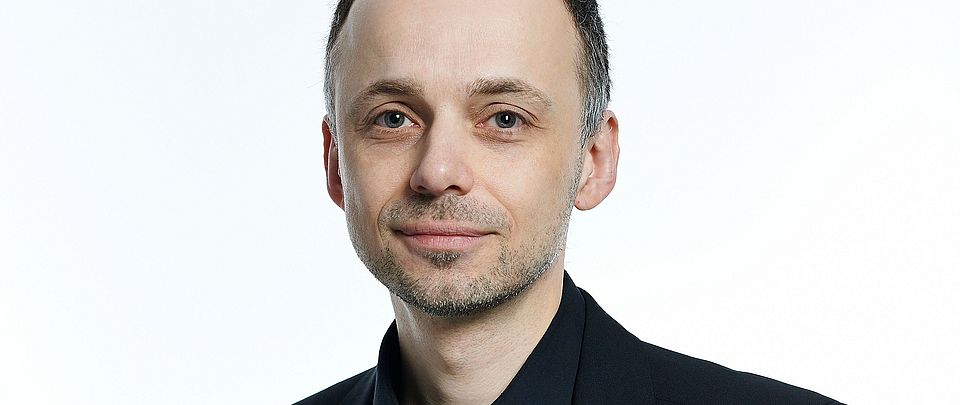
Christian Kleiber is a Professor of Econometrics and Statistics at the University of Basel (Faculty of Business and Economics) since 2006. Trained as a statistician in Germany and the UK, he obtained his PhD from the Technical University of Dortmund. Research Interests: Heavy-tailed phenomena, income distribution, inequality measurement, statistical distributions, stochastic orders, data science foundations, count data regression, time series analysis, econometric computing, and the history of statistics. Methodological Focus: Specializes in statistical modeling of economic data, reproducibility in research, and computational methods. Recent Publications span count data regression, structural change detection, reproducible research frameworks, and statistical distribution theory. Key contributions include software packages like countreg , strucchange , and plm for R programming.
Rishikesh Yadav is a postdoctoral researcher at the Department of Mathematics and Mathematical Statistics, Umeå University, Sweden , and previously held a postdoctoral position at the Namur Institute for Complex Systems (naXys), University of Namur, Belgium . He earned his Ph.D. in Approximation Theory from Sardar Vallabhbhai National Institute of Technology Surat, India. His research focuses on Approximation Theory, Functional Analysis, Dynamical Systems, Operator Theory, and Optimization Theory. Notable contributions include work on Koopman operators, control theory, and compressed sensing. He has received awards such as the V. M. Shah Prize (2020) and Best Oral Presentation Award (2019). Recent research emphasizes developing algorithms for convex optimization on measure spaces, supported by the Kempe Foundation (2024–2026). His work bridges approximation theory with dynamical systems, including publications on Szász-Mirakjan operators, statistical convergence, and Koopman operator approximations via Bernstein polynomials. Grants/Fellowships: Kempe Foundation (2024–2026) Labs/Teams: naXys Institute (Belgium), Umeå University's Department of Mathematics
Yan Cao is an Associate Professor in the Department of Mathematical Sciences at the School of Natural Sciences and Mathematics, The University of Texas at Dallas, where he has served since 2006 after joining as an Assistant Professor. His research bridges computer vision, pattern theory, and biomedical applications with a focus on mathematical foundations for shape analysis. His educational background includes: Ph.D. in Applied Mathematics from Brown University (2003) M.S. in Mathematics from The University of Iowa (1997) B.S. in Computational Mathematics from Peking University (1996) Dr. Cao's research centers on enabling computers to recognize shapes and understand structural variations through advanced mathematical frameworks. He investigates 2D/3D shape analysis using tools like diffeomorphic matching and geometric PDEs, addressing fundamental challenges in three-dimensional geometry where traditional methods like medial axis transforms are inadequate. His work spans medical image analysis, computational anatomy, and computer vision, with emphasis on translating theoretical advances into biomedical applications such as medical imaging and anatomy modeling. His publication record reveals a consistent focus on diffeomorphic deformation techniques applied to medical imaging and computer vision. Key trends include the development of spectral methods for mesh deformation, atlas-based segmentation for anatomical structures, and quantitative approaches for spinal cord and diffusion tensor imaging. These works demonstrate interdisciplinary integration of computer science, mathematics, and biomedical engineering with strong emphasis on practical medical applications. His scientific recognition includes: IEEE International Conference on Computer Vision Travel Award (2005) Brown University's Stella Dafermos Award for academic excellence (2003) Multiple graduate fellowships from Brown University, The University of Iowa, and Peking University Dr. Cao has secured significant research funding including a $273,650 NSF grant for diffeomorphic deformation of textured shapes (2009-2012) and a $63,891 NIH subcontract for spinal cord perfusion measurement (2009-2011). He teaches advanced mathematics courses including Mathematical Analysis, Real Analysis, and specialized topics in medical image analysis, while maintaining active collaborations evidenced by invited talks at Texas A&M University-Commerce, Peking University, and UT Southwestern Medical Center. His research operates within UT Dallas's interdisciplinary mathematical sciences environment, leveraging collaborations across medical imaging and computational fields without dedicated lab facilities specified in available records.
Kwan H. Lee is a prominent researcher in computer graphics and augmented reality, affiliated with the University of Alberta in Canada. With a publication record spanning over three decades (1990-2020), he has established himself as a leading figure in visual computing research with 56 documented publications. His research interests focus on Computer Graphics , Augmented Reality , 3D Modeling and Reconstruction , Computer Vision , and Cultural Heritage Computing . Dr. Lee's work demonstrates particular expertise in material appearance modeling, projection mapping techniques, and spatial augmented reality applications. His research has evolved from foundational work in manufacturing systems to cutting-edge applications in cultural heritage preservation and industrial visualization. Analysis of his recent publications (2015-2020) reveals a strong emphasis on practical applications of augmented reality in construction, museum exhibitions, and cultural heritage preservation. His work consistently bridges theoretical computer graphics concepts with real-world implementations, particularly in projection mapping systems and 3D reconstruction techniques. The publications show increasing focus on industrial applications and cultural heritage preservation in his later career. Dr. Lee has collaborated extensively with researchers from Korean institutions, suggesting strong international connections. His co-author network includes Yong Yi Lee, Jong Hun Lee, Min Ki Park, and other frequent collaborators who appear across multiple publications spanning more than a decade.
Jiří Šíma is a senior scientist at the Department of Theoretical Computer Science, Institute of Computer Science, Czech Academy of Sciences. He holds the academic title of Research Professor (DrSc.) and has been a key researcher at ICS CAS since 1994. He has also served as head of the department (2010–2012, 2021–2023) and has held external lecturing positions at Charles University, Masaryk University, and Czech Technical University. His educational achievements include a CSc. (Ph.D.) in 1993, an Associate Professor qualification (doc.) and RNDr. in 2000, and a DrSc. in 2009 from the Slovak University of Technology. These qualifications reflect his deep expertise in theoretical computer science and neural networks. Šíma's research focuses on the theoretical foundations of neural computation, including the computational power of analog and spiking neural networks, energy complexity in deep learning models, formal language recognition by neural automata, and complexity theory. His work bridges theoretical computer science and artificial intelligence, with a strong emphasis on mathematical rigor and computational models. The 15 most recent publications highlight a consistent trend in analyzing the computational capabilities and energy efficiency of neural networks. His recent work (2020–2024) centers on energy complexity in fully-connected and convolutional networks, while earlier work explores analog neuron hierarchies, hitting sets for branching programs, and the limitations of spiking neurons. The research spans subfields such as formal languages, computational complexity, dynamical systems, and neurocomputing, demonstrating a cohesive and long-term research trajectory in theoretical machine learning. Best ICS Paper Award (2024) Best ICS Paper Award (2021) Second/Third Best ICS Paper Award (2019) Best ICS Paper Award (2018) Otto Wichterle Award (2003) Award of the CAS for young scientists (1998) Šíma has been principal investigator on multiple Czech Science Foundation grants, including LEDNeCo (2025–2027), AppNeCo (2022–2024), and FoNeCo (2019–2021). He has also served on grant evaluation panels and scientific councils, including at the Czech Science Foundation and Charles University. Although no formal students are listed, he has collaborated extensively with researchers such as J. Cabessa, P. Vidnerová, S. Žák, and P. Orponen. He is actively involved in the academic community, serving on program committees for major conferences such as ICANN, ICONIP, SOFSEM, and MFCS. His work is primarily conducted within the Department of Theoretical Computer Science at ICS CAS, a leading research group in theoretical computer science in the Czech Republic.
David Ribeiro Lamas is a Professor of Human-Computer Interaction at Tallinn University's School of Digital Technologies, where he heads the Human-Computer Interaction group. He also serves as the chair of the Estonian chapter of ACM's SIGCHI and as an expert member of IFIP's TC13. With an extensive international career spanning the USA, UK, Portugal, Cape Verde, Mozambique, Afghanistan, and Estonia, he has developed deep expertise in designing organizations, communities, and human technologies. His educational background includes a PhD in Human Computer Interaction from Portsmouth University (1998), an MSc in Computer Science from Minho University (1994), and an Honours BSc in Informatics/Applied Mathematics from Portucalense University (1989). He also completed specialized studies in Strategic Management at the Polytechnic University of Catalunya and a postdoc in Augmented and Virtual Environments at Michigan State University. Lamas' research primarily focuses on design theory and methodologies, with recent work emphasizing trust in technology, facial recognition systems, and vibrotactile interfaces. He has pioneered academic programs including the Master in Human-Computer Interaction and the Masters in Interaction Design (run online with Cyprus University of Technology). His approach combines theoretical rigor with practical application, particularly in cross-cultural contexts. His publication record shows a strong trend toward understanding human trust in technology systems, with significant work on facial recognition, vibrotactile feedback systems, and trust frameworks. His research spans both theoretical contributions to HCI methodology and practical applications addressing real-world challenges in digital accessibility and user experience. 2025 HCI Pioneer Award from IFIP TC13 2025 Tallinn Conference Ambassador 2024 IFIP Service Award 2015 Badge of Merit from Tallinn University 2011 Best Paper Award for work on Estonia's M-Government Services 2000 Best Paper Award for research on Web navigation guidance Lamas has successfully supervised forty-eight master students, seven doctoral students, and two post-doc researchers, and currently supervises twelve doctoral students. His leadership extends to numerous research projects including COST Actions on Interactive Narrative Design and Human-Computer Interaction methodologies. He founded and leads STARTS.EE, Tallinn University's initiative promoting encounters between science, technology, and the arts. He has been instrumental in building the Estonian HCI community through seasonal courses on Experimental Interaction Design, Research Methods in HCI, and the Design of Human Technologies since 2010. His World Usability Day events bring together over 600 researchers and practitioners annually from the Baltics, Nordic countries, and beyond. Lamas has chaired major international conferences including INTERACT 2019, NordiCHI 2020, AfriCHI 2021, and ICIDIS 2021.
Al Bovik is a Visiting Professor at the University of Texas at Austin's Department of Electrical and Computer Engineering, part of the College of Engineering. His research focuses on digital video, visual neuroscience, and deep learning, with an emphasis on developing perceptual theories for high-quality streaming video and virtual/augmented reality systems. He has pioneered advancements in video quality assessment, compression, and AI-generated media evaluation. He has received prestigious awards including the IEEE Edison Medal, Primetime Emmy, and membership in multiple national academies. Bovik co-founded the IEEE Transactions on Image Processing and established the IEEE International Conference on Image Processing in 1994, which he chaired. His influential books include The Essential Guides to Image and Video Processing . Key Research Contributions: HDR/SDR video quality metrics, perceptual artifact detection, and AI-driven quality assessment frameworks. Labs/Teams: Leadership in IEEE initiatives and collaborations in media quality and signal processing. His work bridges theoretical research with practical applications in video streaming, medical diagnostics, and user-generated content analysis.
Dr. James Law serves as a Senior Experimental Officer at Sheffield Robotics and leads the Collaborative Robotics Group within the School of Computer Science at the University of Sheffield. He holds a joint appointment between the Department of Computer Science and the Advanced Manufacturing Research Centre, and serves as Director of Innovation and Knowledge Exchange at Sheffield Robotics. His work integrates academic research with industrial applications in advanced manufacturing. His research focuses on human-robot collaboration, trustworthy autonomous systems, and responsible innovation in manufacturing robotics. Law develops safety assurance frameworks and digital twinning solutions for collaborative workspaces, with particular emphasis on trust engineering, user authentication, and graphical communication systems that reduce human anxiety in robot co-working environments. His interdisciplinary approach bridges computer science, engineering psychology, and industrial implementation requirements. Law's publication portfolio demonstrates consistent advancement in collaborative robotics safety, with recent work (2022-2024) focusing on verified safety controllers, digital twin frameworks, and trust modeling in human-robot triads. His research shows progression from foundational developmental robotics (2010-2015) toward applied industrial solutions, with increasing emphasis on security, safety assurance, and human factors in manufacturing contexts. As an active science communicator, Law serves on the UK Robotics and Autonomous Systems network (UK-RAS) management board and the EPSRC Early Career Forum in Manufacturing Research. EPSRC STAMAN: Robotic skill transfer for manufacturing (Co-PI, £1M+) Horizon Europe OpenSwarm: Energy-aware swarm orchestration (Co-PI, £463k) EPSRC Security of Digital Twins in Manufacturing (Co-PI, £775k) EPSRC UKRI Trustworthy Autonomous Systems Node (Co-PI, £3M) Law leads the Collaborative Robotics Group and contributes to the Complex Systems Modelling research group, focusing on translating theoretical safety frameworks into practical industrial implementations through close collaboration with manufacturing partners and policy stakeholders.
Linbo Wang is an Associate Professor at the Department of Statistical Sciences , University of Toronto, with cross-appointments to the Department of Computer and Mathematical Sciences at U of T Scarborough and the Department of Computer Science at U of T. He is also an Adjunct Associate Professor at the University of Washington and a Canada Research Chair in Causal Machine Learning. B.Stat. from Peking University (2011) PhD in Biostatistics from the University of Washington (2016) Postdoctoral Fellowship at Harvard T.H. Chan School of Public Health His research focuses on causal inference , machine learning , and biostatistics , particularly causal modeling, graphical models, and robust inference for high-stakes domains like healthcare and justice. Recent work includes causal mediation analysis, instrumental variable methods, and trustworthy AI frameworks emphasizing fairness , explainability , and stability . His publications span causal inference for longitudinal studies, missing data, high-dimensional models, and biomedical applications. Awards include the NSERC Discovery Accelerator Supplement , Ontario Early Researcher Award , and recognition as a Canada Research Chair . He is affiliated with the Vector Institute and the Data Sciences Institute , co-organizing conferences like the 23rd Meeting of New Researchers in Statistics and Probability and serving as tutorial co-chair for the 39th Conference on Uncertainty in Artificial Intelligence . Currently, he is accepting students and postdocs for research in causal inference and machine learning.
Professor Peter Grassberger is a distinguished researcher at the Jülich Supercomputing Centre (JSC) within the Jülich Research Centre, one of Germany's leading national research institutions. His work spans multiple decades in theoretical physics and computational science, with a particular focus on complex systems and statistical mechanics. His research has significantly advanced our understanding of critical phenomena and phase transitions in various physical systems. Grassberger's research interests center around statistical physics and complex systems, with specializations in percolation theory, self-organized criticality, and random walk models. His work explores the universal properties of phase transitions, critical phenomena, and the behavior of complex networks. His theoretical contributions have provided fundamental insights into how simple local rules can lead to complex global behavior in physical systems. His recent work continues to push boundaries in understanding extreme-value statistics, entropy estimation methods, and the dynamics of interface models. Through his extensive publication record spanning over 40 years, Grassberger has established himself as a leading authority in computational statistical physics. His work shows consistent focus on understanding universal properties of critical systems while developing innovative computational methods to analyze complex phenomena. His research bridges theoretical physics with practical computational approaches, making significant contributions to both fundamental understanding and methodological development in the field. Grassberger's scientific impact is evident through his numerous influential publications and his development of important computational techniques like the Grassberger-Procaccia algorithm for estimating fractal dimensions. His work on self-organized criticality, particularly his 2022 review "Self-Organized Criticality, Three Decades Later," demonstrates his enduring contribution to this important field. His recent publications continue to explore cutting-edge questions in statistical physics, showing active engagement with contemporary research challenges.
Marcel Campen is a Professor at Osnabrück University specializing in Computer Graphics and Geometry Processing. His research focuses on surface parametrization, quad mesh generation, and computational geometry. He has made significant contributions to the field of geometry processing, particularly in developing algorithms for quad layout generation, surface mapping, and mesh repair. His research interests span Computer Graphics, Geometry Processing, Surface Parametrization, Quad Mesh Generation, 3D Modeling, and Mesh Repair. Campen's work addresses fundamental challenges in representing and processing complex geometric shapes, with applications ranging from animation and simulation to reverse engineering and meshing. His research often combines theoretical insights with practical implementations, resulting in algorithms that are both mathematically sound and computationally efficient. Campen's publications demonstrate a strong focus on developing robust and efficient methods for geometry processing. His work on quad layout generation, parametrization techniques, and surface mapping has resulted in several award-winning papers, including Best Paper Awards at SGP 2021 and 2022. His research often bridges theoretical concepts with practical implementations, making his contributions highly influential in both academic and industrial settings. Best Paper Award (1st place) at SGP 2022 Best Paper Award at SGP 2021 Campen has made significant contributions to the field through his doctoral thesis on quad layout generation and numerous publications in top-tier conferences including SIGGRAPH, Eurographics, and SGP. His work on directional field synthesis, similarity maps, and bijective mappings has advanced the state of the art in geometry processing. He has also contributed to practical tools like libQEx for robust quad mesh extraction, demonstrating his commitment to making theoretical advances accessible to practitioners.
Andrew McGregor is a Professor in the Department of Computer Science at the University of Massachusetts Amherst, affiliated with the Manning College of Information and Computer Sciences. He is a core member of the Theory Group and directs the TRIPODS Institute for Theoretical Foundations of Data Science. His research focuses on algorithms for massive data sets, data streams, and information theory, with applications in clustering, approximation algorithms, and coding theory. Education: PhD, Computer Science, University of Pennsylvania (2007) MEng, Computer Science, University of Pennsylvania (2002) BA, Mathematics, University of Cambridge (2000) Research Interests: Design and analysis of algorithms for data streams and massive datasets Clustering algorithms and approximation techniques Coding theory and information-theoretic approaches Algorithmic fairness and combinatorial optimization Recent Article Trends: Advances in streaming algorithms for dynamic graphs and parameterized complexity Graph reconstruction and allocation problems under noisy conditions Quantum communication and scheduling policies for satellite networks Entropy estimation and probabilistic methods in data analysis Awards: NSF CAREER Award (2010) ACM PODS Test-of-Time Award (2020) Lilly Teaching Fellowship (2012) Outstanding Teacher Award (2016) Grants & Labs: Director, TRIPODS Institute for Theoretical Foundations of Data Science Collaborations with Microsoft Research and UCSD's Information Theory & Applications Center Active in Center for Data Science and Theoretical Computer Science Group Future Work: Expanding research on quantum algorithms, scalable causal inference, and fair data diversification techniques.
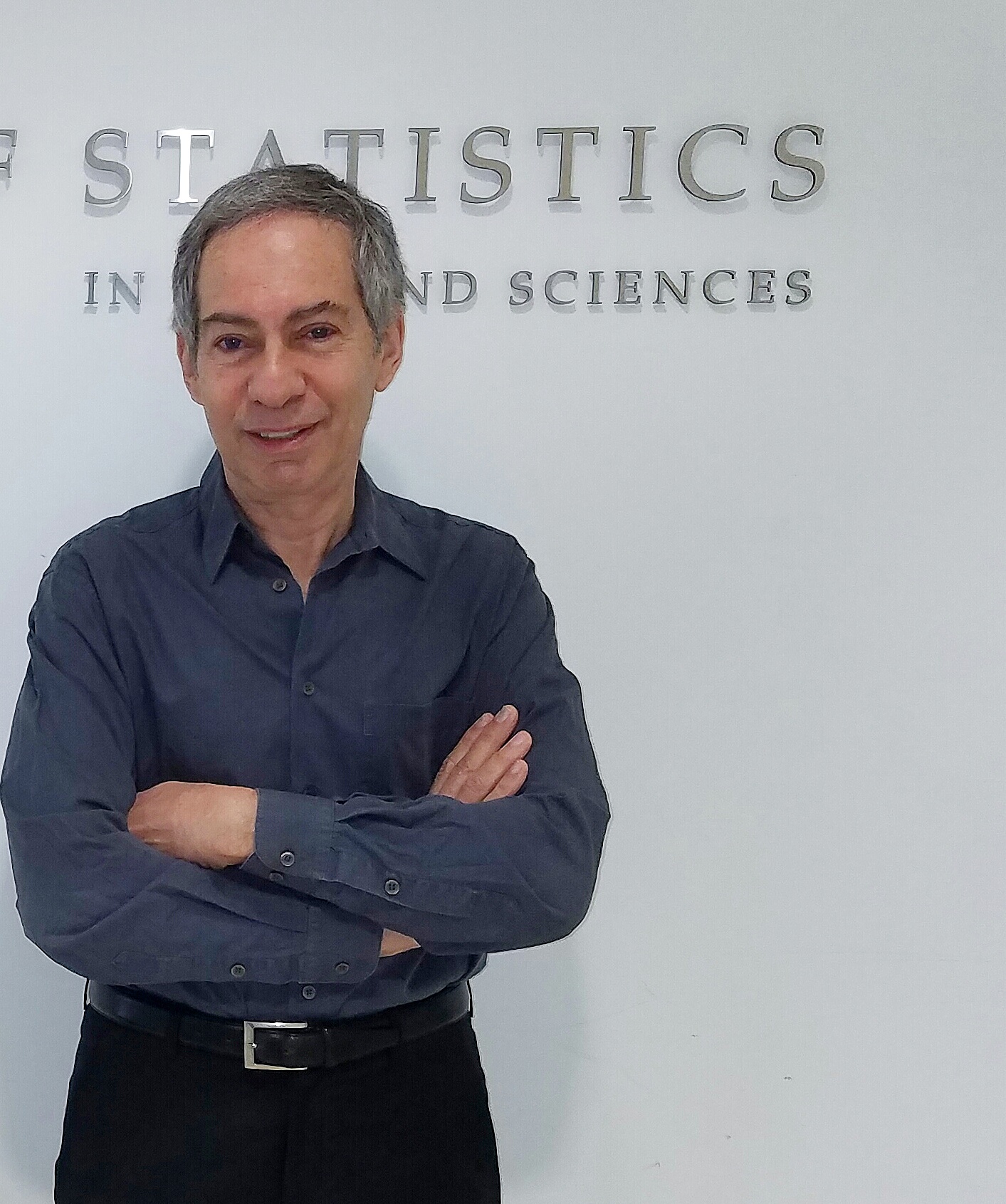
Michael E. Sobel is a Professor in the Department of Statistics at Columbia University. His research focuses on causal inference, functional magnetic resonance imaging (fMRI), and social statistics. He has contributed extensively to methodologies for analyzing causal effects in complex observational and experimental data, particularly in neuroimaging, social policy evaluation, and longitudinal studies. His work bridges statistical theory and applied social science, addressing challenges such as mediation analysis, compliance modeling, and interference effects in randomized trials. Notable contributions include advancements in causal inference for fMRI data and frameworks for interpreting mobility effects in sociological studies. Sobel’s research spans interdisciplinary applications, including public health, political science, and urban policy. He has authored influential papers on topics like the causal interpretation of fMRI connectivity, the analysis of treatment effects with all-or-nothing compliance, and the evaluation of housing mobility programs. His methodologies have been adopted in diverse fields, emphasizing rigorous statistical approaches to real-world problems.
Emanuele Taufer is a Full Professor of Statistics at the Department of Economics and Management of the University of Trento. His academic career includes roles as Vice Director of the Department of Computer Science and Business Studies and Faculty Delegate for International Relations. He holds a Ph.D. in Statistics from Cardiff University, an M.Sc. in Mathematical Statistics from George Washington University, and a Laurea in Economics from the University of Trento. His research focuses on statistical inference, stochastic processes, goodness-of-fit tests, and applications in ESG analysis. Notable contributions include work on exponentiality testing, graphical models, and financial dependence modeling. He has been recognized for his 2002 paper on mean residual life characterization at the SIS2002 conference. Recent research trends emphasize methodological advancements in ESG performance measurement, sparse network estimation for heavy-tailed data, and generalized precision matrices for financial risk modeling. His work spans theoretical statistics, applied econometrics, and interdisciplinary topics like environmental governance. Education: Ph.D. in Statistics, Cardiff University (UK) M.Sc. in Mathematical Statistics, George Washington University (USA) Laurea in Economics, University of Trento (Italy) Professional Roles: Full Professor of Statistics at University of Trento (2003–present) Associate Professor (2003–2003), Assistant Professor (1996–2002) Awards: 2002 SIS2002 Recognition for innovative statistical testing methodology Key Research Themes: Stochastic processes and estimation ESG methodology and financial reporting High-dimensional data analysis Goodness-of-fit tests and tail index estimation
Barbaros Yet is an Associate Professor in the Department of Cognitive Science at the Graduate School of Informatics, Middle East Technical University in Ankara, Turkey. His research focuses on decision-making under uncertainty, integrating human judgment, published evidence, and uncertain data into Bayesian approaches and probabilistic graphical models. Applications span healthcare (clinical decision support, trauma care modeling), agriculture (climate resilience policy), and operational systems (fleet reliability prediction). Research interests include Bayesian networks, causal reasoning, knowledge representation, and decision support systems. He has developed tools for shared clinical decision-making, trauma outcome prediction, and agricultural policy prioritization. His work emphasizes interpretable models that align with expert reasoning processes. Notable contributions include Bayesian network-based frameworks for spinal pathology assessment, aircraft reliability modeling, and trauma care prediction systems. His articles frequently bridge theoretical probabilistic modeling with practical applications in medicine and engineering. Active in interdisciplinary collaborations, he contributes to global health initiatives like the UKRI Action Against Stunting Hub. Professional links include ORCID (0000-0003-4058-2677), ResearchGate (https://www.researchgate.net/profile/Barbaros-Yet), and a Twitter presence (@barbarosyet). Contact via byet@metu.edu.tr.