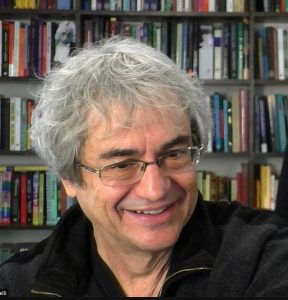
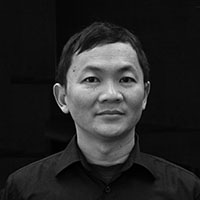
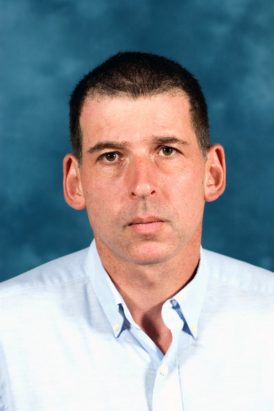
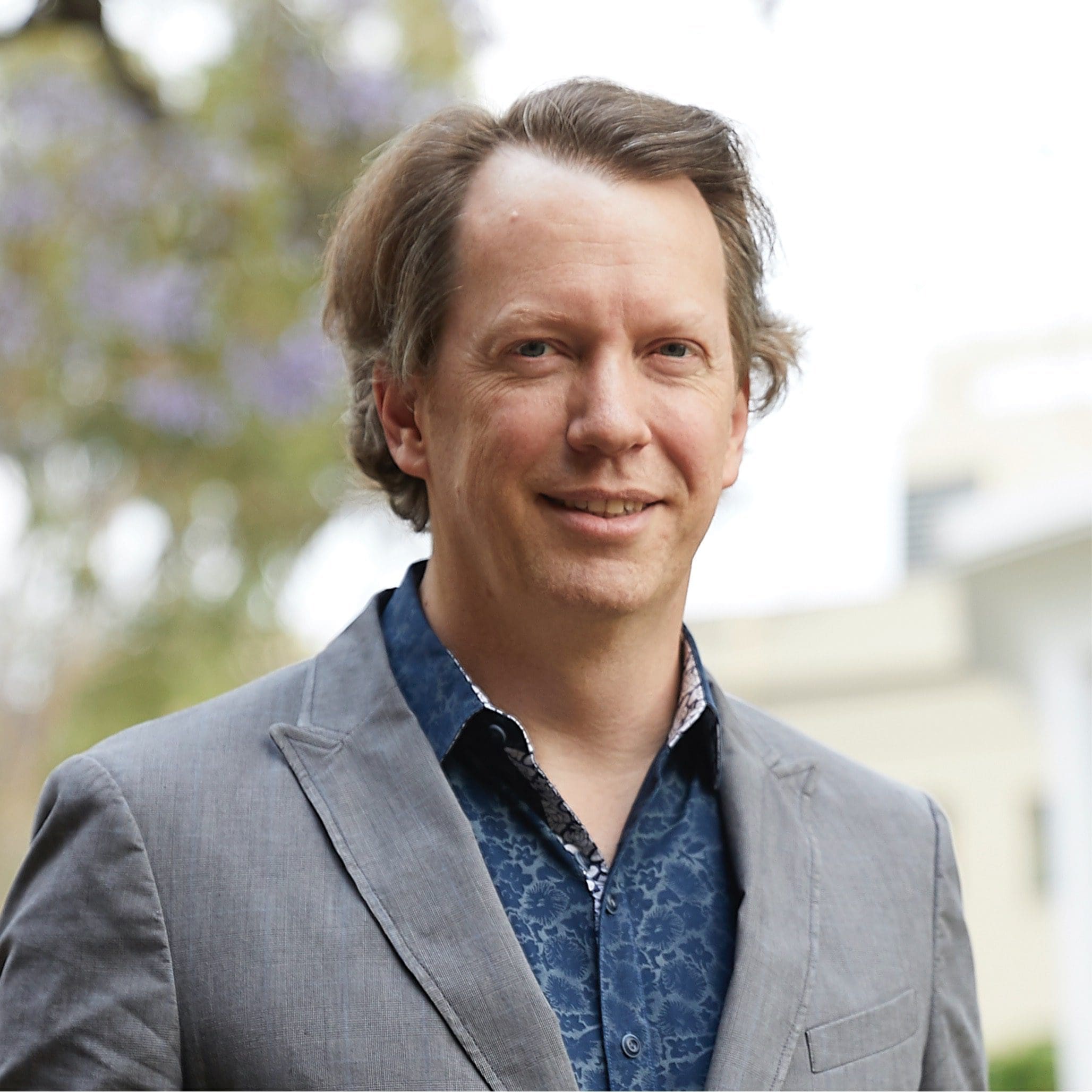
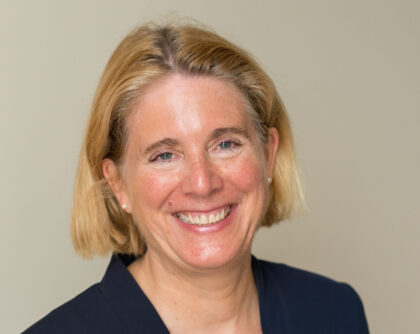
Carlo Rovelli is a Professeur de classe exceptionnelle in the Department of Physics at Aix-Marseille University, holding adjunct roles at Western University's Department of Philosophy and a Distinguished Visiting Research Chair at the Perimeter Institute. He founded the quantum gravity group at the Centre de Physique Théorique (CPT) and is an associate member of the Rotman Institute of Philosophy. His research focuses on loop quantum gravity, relational quantum mechanics, and the history/philosophy of science. He authored influential popular science books including Seven Brief Lessons on Physics (41 languages, 1M+ copies sold) and Helgoland: Making Sense of the Quantum Revolution . Rovelli's work bridges theoretical physics with philosophical inquiry, exploring foundational questions in quantum mechanics, spacetime structure, and the interpretation of physical theories. His recent publications address topics like quantum information theory, gauge symmetries, black hole evaporation, and cosmological implications of quantum gravity.
Sean Carroll serves as the Homewood Professor of Natural Philosophy at Johns Hopkins University and holds External Faculty status at the Santa Fe Institute. His research bridges cosmology, quantum mechanics, and philosophy, focusing on foundational questions about spacetime emergence, quantum interpretation, and complexity across cosmic scales. Carroll earned his Ph.D. from Harvard University in 1993. His academic trajectory reflects deep engagement with theoretical physics and philosophical inquiry, culminating in his current named professorship at Johns Hopkins. Carroll's research centers on the intersection of physics and philosophy, with significant contributions to quantum foundations, cosmology, and the nature of emergence. He is a leading proponent of the many-worlds interpretation of quantum mechanics and has pioneered work on the thermodynamic arrow of time, quantum decoherence, and the fine-tuning of initial cosmic conditions. His recent investigations explore discretized quantum systems, holographic principles in gravity, and the philosophical implications of quantum gravity. Analysis of his 2022-2025 publications reveals a pronounced shift toward computational approaches in quantum gravity, with increasing emphasis on finite-dimensional Hilbert spaces and GPU-accelerated modeling. His work consistently integrates quantum information theory with cosmological questions, particularly examining how spacetime geometry emerges from quantum entanglement and how complexity evolves in closed systems. Carroll's scientific recognition includes: National Science Foundation Fellowship NASA Fellowship Sloan Research Fellowship Packard Fellowship Fellow of the American Physical Society American Institute of Physics Award Fellow of the Royal Society Guggenheim Fellowship Fellow of the American Association for the Advancement of Science His research has been sustained through major fellowships from NSF, NASA, Sloan, and Packard foundations, enabling interdisciplinary collaborations across physics and philosophy. Carroll actively mentors graduate students at Johns Hopkins and contributes to public discourse through his popular science books (including the Biggest Ideas in the Universe series) and the weekly Mindscape podcast. As Fractal Faculty at the Santa Fe Institute, Carroll participates in cross-disciplinary research on complex systems, exploring how emergent phenomena arise from fundamental physical laws. His work bridges theoretical physics with broader questions about complexity in biological, cognitive, and social systems.
Professor August Evrard is a distinguished academic at the University of Michigan, holding the Arthur F. Thurnau Professorship in Physics and Astronomy. He is affiliated with the Department of Physics within the College of Literature, Science, and the Arts. Known for his contributions to cosmology and astrophysics, he pioneered the Problem Roulette tool, recognized with the Provost's Teaching Innovation Prize. His research focuses on galaxy clusters, dark matter, and cosmological surveys like the Dark Energy Survey (DES) and XXL Survey. He has been honored as an AAS Fellow (2025) and has contributed to advancements in physics education through innovative teaching methods and technologies. In research, Prof. Evrard explores topics such as dark matter halo dynamics, galaxy cluster properties, and weak lensing analyses. His work spans observational cosmology, computational modeling, and multi-wavelength astronomy. Notable projects include studies on galaxy cluster mass distributions, the relationship between X-ray emissions and velocity dispersions, and the application of machine learning to astrophysical data analysis. His contributions to education highlight the integration of AI-driven tools to enhance learning, as seen in initiatives like the Problem Roulette and course recommendation systems. Prof. Evrard's awards include the Provost's Teaching Innovation Prize for Problem Roulette and his AAS Fellowship. His academic leadership and innovative approaches to both research and education solidify his role as a pivotal figure in astrophysics and STEM pedagogy.
John Lott is a Professor in the Department of Mathematics at the University of California, Berkeley, specializing in Differential Geometry , Geometric Analysis , and Optimal Transport since his appointment in 2008. His research explores the interplay between Ricci curvature , metric-measure spaces , and geometric flows , with notable contributions to Ricci flow and noncommutative geometry . He has supervised multiple PhD students including Thunwa Theerakarn and Patrick Wilson , and maintains an active publication record with over 40 research papers. Selected Research Areas : Differential Geometry, Geometric Analysis, Optimal Transport, Mathematical Physics, Noncommutative Geometry Recent Publications (2020-2025) focus on Kähler manifolds , collapsing geometry , and quasilocal mass in general relativity. His work on Ricci curvature via optimal transport with Cédric Villani has become foundational in the field. Academic Affiliation : Position: Professor Institution: University of California, Berkeley Department: Mathematics
Zackaria Chacko is a Professor in the Department of Physics at the University of Maryland and a founding member of the Maryland Center for Fundamental Physics (MCFP). His research focuses on theoretical particle physics, addressing unresolved questions in the Standard Model through novel frameworks like weak scale supersymmetry, extra dimensions, and composite Higgs models. His work intersects with experimental efforts at the Large Hadron Collider, dark matter detection, neutrino oscillation studies, and gravitational tests. Affiliations: Maryland Center for Fundamental Physics (MCFP) Teaching: Courses include Mathematical Methods for Physics I/II, Advanced Quantum Mechanics, and Advanced Quantum Field Theory. Research Interests: Chacko explores dark matter, baryogenesis, and neutrino physics, with connections to cosmological observations (e.g., cosmic microwave background) and precision measurements. His theories aim to resolve gaps in fundamental physics, such as the hierarchy problem and matter-antimatter asymmetry. Awards: Elected Fellow of the American Physical Society (APS). Labs/Teams: Active contributor to MCFP’s theoretical physics initiatives, collaborating on projects bridging particle physics and cosmology.
Raphael Bousso is a Professor and holds the Chancellor's Chair in Physics at the University of California, Berkeley, within the Department of Physics. He maintains strong affiliations with the Lawrence Berkeley National Laboratory (LBNL) and the Berkeley Center for Theoretical Physics, reflecting his dual institutional presence in theoretical physics research. His academic journey commenced with a Ph.D. from Cambridge University in 1998, followed by pivotal postdoctoral appointments at Stanford University and the Kavli Institute for Theoretical Physics. In 2002/03, he was a fellow at Harvard University's physics department and the Radcliffe Institute for Advanced Study before joining UC Berkeley in July 2003. Bousso's research centers on quantum gravity and theoretical cosmology , where he confronts fundamental conflicts between quantum mechanics and general relativity. His seminal work on the black hole information paradox—particularly the 'firewall paradox'—challenges whether information is preserved during black hole evaporation. He has pioneered the covariant entropy conjecture and quantum focusing conjecture, reshaping understanding of holography. His landscape research in string theory provides critical frameworks for explaining the cosmological constant and matter abundance coincidences. Analysis of his publication record reveals persistent focus on holographic principles applied to black holes and cosmology. His work consistently bridges abstract quantum gravity concepts with observable cosmological phenomena, demonstrating exceptional continuity in addressing the measurement problem in eternal inflation and the implications of string theory's landscape. No specific scientific awards are documented in the provided materials, though his Chancellor's Chair appointment signifies institutional recognition of his scholarly impact. While student advising details are absent from the source text, his leadership of the Bousso Group drives collaborative research in quantum gravity. The text provides no explicit grant information, though his sustained publication output implies active research funding. He directs the Bousso Group at UC Berkeley, which serves as the primary research hub for exploring holography, black hole physics, and cosmological implications of string theory through theoretical and mathematical approaches.
Ue-Li Pen is a Professor at the Canadian Institute for Theoretical Astrophysics (CITA), which is part of the Faculty of Arts & Science at the University of Toronto. His research focuses on theoretical astrophysics where basic physical effects can be isolated from astronomical complexities. His research interests include n-body and hydro simulations, origin of galaxy spin, dark energy studies through 21cm cosmology, baryon acoustic oscillations (BAO), absorber acceleration, and research on Fast Radio Bursts (FRBs) and pulsars related to gravitational waves, wave optics, and lensing. Current projects involve the non-linear dynamics of the cosmic neutrino background, 21cm intensity mapping, pulsar VLBI scintillometry, and the Canadian Hydrogen Intensity Mapping Experiment (CHIME). Analysis of recent publications shows Pen's work spans multiple cutting-edge areas in astrophysics, particularly focused on radio astronomy techniques, gravitational wave detection methods, black hole imaging, and cosmological measurements using 21cm radiation. His research often involves innovative applications of wave optics and interferometry to solve astrophysical problems. Professor Pen maintains an active research program with numerous recent publications in top astrophysics journals, demonstrating his continued leadership in the field of theoretical astrophysics and cosmology.
Anthony Bloch is the Alexander Ziwet Collegiate Professor of Mathematics and Professor of Mathematics at the University of Michigan, serving as Chair of the Department of Mathematics. He is affiliated with the Center for the Study of Complex Systems (CSCS) in Weiser Hall. His research focuses on: Geometric Mechanics : Hamiltonian/Lagrangian mechanics, symplectic geometry, and integrable systems including Toda lattices and rigid body dynamics Nonlinear Dynamics : Nonholonomic systems with nonintegrable constraints, stability analysis, and continuous-discrete flow relationships Control Theory : Nonlinear and optimal control applications extending to quantum dynamics and astrophysical systems Recent publications demonstrate geometric methods applied to nonholonomic control, virtual constraints, and stabilization, with growing interdisciplinary work in network dynamics, quantum control, and cosmological models like cosmic reheating. Through the Center for the Study of Complex Systems, Professor Bloch collaborates across disciplines to investigate complex phenomena in natural and engineered systems, leveraging geometric frameworks to address fundamental questions in mechanics and dynamics.
Sean Carroll is the Homewood Professor of Natural Philosophy at Johns Hopkins University and Fractal Faculty at the Santa Fe Institute. His research spans philosophy of physics, quantum mechanics, cosmology, and complexity. He holds a PhD in Philosophy from Harvard University and explores foundational questions in physics, including spacetime, statistical mechanics, and the nature of reality. He is the author of The Biggest Ideas in the Universe: Quanta and Fields and hosts the Mindscape podcast, discussing diverse intellectual topics. His work focuses on bridging theoretical physics and philosophy, addressing topics like quantum measurement, cosmological fine-tuning, and the emergence of macroscopic phenomena. Articles emphasize quantum gravity, black hole physics, and interpretations of quantum mechanics. Despite no explicit awards listed, his contributions to science communication and interdisciplinary research are notable. He advises no listed students, and his professional roles prioritize research and public engagement.
Jacqueline N. Hewitt is the Julius A. Stratton Professor of Physics at the Massachusetts Institute of Technology (MIT), affiliated with the MIT Kavli Institute for Astrophysics and Space Research. She has been a faculty member since 1989 after completing her Ph.D. at MIT and postdoctoral appointments at MIT's Haystack Observatory and Princeton University. From 2002 to 2019, she served as Director of MIT's Kavli Institute. Her research focuses on radio astronomy techniques applied to fundamental astrophysical problems. She pioneered wide-area radio surveys leading to the discovery of the first Einstein ring gravitational lens. Current investigations include low-frequency studies of the Cosmic Dawn and Epoch of Reionization through leadership roles in the Murchison Widefield Array (Australia) and Hydrogen Epoch of Reionization Array (South Africa) projects. Major Awards: American Academy of Arts and Sciences Fellow (2016) Time Magazine's 25 Most Influential People in Space (2012) American Physical Society Fellow (2004) Maria Goeppert Mayer Award (1995) Presidential Young Investigator Award (1991-1996) She leads the Hewitt Research Group exploring radio instrumentation and observational cosmology, with recent work measuring intergalactic medium heating from the first stars using novel radio telescope arrays.
Anastopoulos Charis is an Associate Professor in the Department of Physics at the University of Patras. He holds dual appointments in the Theoretical and Mathematical Physics Division and the Technical Institute of Patras (Optics and Optometry). His career includes postdoctoral research at Imperial College London, University of Barcelona, University of Maryland, Utrecht University, and extended research roles funded by Marie Curie Fellowships and national grants. Education: B.Sc. (University of Patras), M.Sc. and Ph.D. (Imperial College London). Research focuses on gravity theory (black hole thermodynamics, gravitational quantum physics), quantum gravity (time in quantum mechanics, quantum measurement), and quantum information (entanglement dynamics, relativistic quantum information). Notable contributions include a Princeton University Press book on quantum concepts and over 50 journal articles. His work bridges foundational quantum theory with gravitational physics, emphasizing quantum-classical transitions and spacetime structure. Awards include journal highlights (Class. Quant. Grav. 2008/2013) and Scientific American Book Club recognition. Research spans quantum decoherence, gravitational cat states, and relativistic measurement theory, with recent focus on deep space quantum experiments and holographic thermodynamics.
Prof. Adam Deller is a Professor at Swinburne University of Technology, affiliated with the School of Science, Computing and Emerging Technologies. His academic journey includes a BSc, BE (1st class honours), and PhD in Astrophysics from Swinburne. He specializes in radio interferometry, neutron star physics, fast radio bursts (FRBs), and space domain awareness. His research focuses on compact objects like pulsars and black holes, using radio telescopes for high-resolution imaging. He co-founded Fourier Space Pty Ltd, developing signal processing solutions for radio astronomy and space industries. **Research Interests**: Radio interferometry instrumentation, neutron star magnetospheres, FRB localization and cosmological applications, and space domain awareness through radio observations. **Awards**: Includes the Pawsey Medal (2020), Newcombe Cleveland Prize (2022), and multiple grants from ARC and industry partners. His grants focus on SKA pulsar timing, FRB studies, and gravitational wave astronomy collaborations. **Teaching**: Teaches Computational Astrophysics, emphasizing numerical simulations for astrophysical problems. **Grants & Collaborations**: Key roles in ARC Centre of Excellence for Gravitational Wave Discovery, SKA pulsar timing projects, and international telescope collaborations like ASKAP and VLBI networks.
Yashar Hezaveh is an Associate Professor at the University of Montreal's Faculty of Arts and Sciences, Department of Physics. He holds the Canada Research Chair in Astrophysical Data Analysis and Machine Learning. His work focuses on using gravitational lensing and machine learning to map dark matter distributions in galaxy halos, advancing our understanding of dark matter's nature. He completed his PhD at McGill University in 2013, earning recognition for groundbreaking research on high-redshift dusty star-forming galaxies. Education: PhD in Physics (McGill University, 2013) Affiliations: Kavli Institute for Theoretical Physics, Flatiron Institute's Center for Computational Astrophysics Research interests include applying deep learning to analyze gravitational lensing data, Bayesian neural networks for dark matter mapping, and cosmological simulations. Notable projects include the CASTOR mission and advances in radio interferometry image reconstruction. His work bridges astrophysics and machine learning, addressing challenges in cosmic structure analysis. Awards: Hubble Fellowship (2015), Top 10 Quebec Science Discoveries (2013). Grants: Leads multiple projects on dark matter, AI-driven stellar mass measurement, and astrophysical data analysis funded by NSERC, FQRNT, and the Simons Foundation. Students: Supervised four Master's theses on topics like Bayesian lensing inversion and machine learning for galactic archaeology. He contributes to collaborative initiatives like the Centre de recherche en astrophysique du Québec (CRAQ), fostering interdisciplinary astrophysics research.
Suzanne T. Staggs is the Henry DeWolf Smyth Professor of Physics at Princeton University. She holds leadership roles as Co-Director of the Simons Observatory and Principal Investigator of the Advanced ACTPol project. Her research focuses on measuring the cosmic microwave background (CMB) radiation to study the early universe's physics. Staggs earned her Ph.D. in physics from Princeton University (1993) after completing her undergraduate studies at Rice University. Her research interests include cosmology, particle physics, and observational astronomy, with a strong emphasis on CMB analysis and instrumentation. She leads large-scale projects like the Atacama Cosmology Telescope (ACT) and contributes to next-generation experiments like the Simons Observatory aimed at mapping the CMB with unprecedented precision. Staggs has received prestigious awards, including membership in the National Academy of Sciences and American Academy of Arts and Sciences, as well as the Sloan Fellowship and Maria Goeppert-Mayer Award. Her work bridges fundamental physics and observational astronomy, with a focus on uncovering clues about cosmic inflation, dark matter, and dark energy through CMB observations. As an educator, she contributed to Princeton Problems in Physics, with Solutions , a resource for undergraduate students. Her current projects aim to advance CMB measurement techniques and interpret data from state-of-the-art telescopes in the Atacama Desert.
Sven Schewe is a Professor in the Department of Computer Science at the University of Liverpool, affiliated with the School of Electrical Engineering, Electronics and Computer Science. He leads the AI Section and is a founding member and former leader of the Verification Group. He also has secondary affiliations with the Algorithms, Complexity Theory and Optimisation Group and the Institute for Risk and Uncertainty. Research Interests: His research centers on automata theory and game theory, particularly their applications in the verification and synthesis of reactive and safety-critical systems. He investigates infinite-duration games, automata over infinite words and trees, and develops algorithms and tools for automated verification, synthesis, and learning of optimal control strategies. His work extends to reinforcement learning with formal guarantees, cyber-physical systems, and AI safety. Recent Research Trends: His recent publications demonstrate a strong integration of formal methods with machine learning, particularly in adversarial training, neural network robustness, and model-free reinforcement learning under omega-regular objectives. He also applies formal reasoning to interdisciplinary domains such as chemical space exploration and materials science. Scientific Awards: Finalist for the ERCIM Cor Baayen Award 2010 Dr. Eduard Martin Preis 2009 GI Dissertation Award 2008 Advising and Grants: He actively supervises numerous PhD students and postdoctoral researchers. He is Principal Investigator (PI) or Co-Investigator (CI) on multiple major grants, including EPSRC Programme Grants, Royal Society Fellowships, and Horizon Europe projects. His funded research spans topics such as game theory, verification, synthesis, reinforcement learning, and risk analysis. He has hosted visiting researchers and collaborated internationally with institutions in Germany, France, India, Taiwan, and the US. Labs and Teams: He co-founded and led the Verification Group and previously led the AI Section at the University of Liverpool. These groups focus on formal methods, automata, games, and their applications in AI and safety-critical systems.