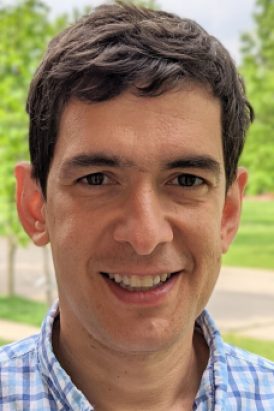
Jacob Gardner is an Assistant Professor in the Department of Computer & Information Science at the School of Engineering and Applied Science, University of Pennsylvania. His research bridges machine learning and scientific discovery with emphasis on computational biology and molecular design. His primary research interests include: Machine Learning Bayesian Optimization Computational Biology Molecular Design Artificial Intelligence Gaussian Processes Analysis of his 2024-2025 publications reveals a dominant focus on Bayesian optimization techniques integrated with large language models for biological applications. Key trends include therapeutic design using knowledge distillation from scientific literature, RNA splicing prediction, antibiotic development, and scalable Gaussian process methods. His work consistently addresses dimensionality challenges in molecular modeling while improving computational efficiency for high-dimensional biological data. No scientific awards were mentioned in the provided text. No information regarding student advising or research grants was provided in the source material. His research appears supported by institutional initiatives including Penn AI, Innovation in Data Engineering and Science (IDEAS), and the Data Driven Discovery Initiative (DDDI).
Garnet K. Chan is the Bren Professor of Chemistry and Director of the Rudolph A. Marcus Center for Theoretical Chemistry at the California Institute of Technology. He received his B.S. from the University of Cambridge in 1996 and his M.A. and Ph.D. from the University of Cambridge in 2000. Dr. Chan's research lies at the interface of theoretical chemistry, condensed matter physics, and quantum information theory, focusing on quantum many-particle phenomena and the numerical methods to simulate them. His group has developed numerous methodologies including density matrix renormalization and tensor network algorithms, canonical transformation-based down-foldings, local quantum chemistry methods, quantum embeddings, and new quantum Monte Carlo algorithms. His work addresses problems that appear naively exponentially hard but where understanding of physics, particularly entanglement structure, allows for calculations of polynomial cost. Analysis of his recent publications reveals a strong focus on quantum simulation techniques, particularly tensor network methods applied to strongly correlated systems. His research spans fundamental theoretical developments to practical applications in quantum computing, molecular simulation, and materials science, with increasing integration of machine learning techniques and GPU acceleration in computational chemistry frameworks. Dr. Chan leads an active research group at Caltech dedicated to simulating chemical and physical systems at the level of many-particle quantum mechanics. His group has welcomed numerous researchers including Kasra Hejazi, Zuxin Jin, Zhihao Cui, Ke Liao, Henrik Larsson, and Wenyuan Liu. He teaches courses in Physical Chemistry (Ch 21 abc) and Advanced Quantum Chemistry (Ch 225), contributing significantly to theoretical chemistry education at Caltech.
Nathan Ng is a Professor in the Department of Mathematics and Computer Science at the University of Lethbridge , Canada, and has served as the PIMS Site Director since 2019. His research lies at the intersection of analytic number theory and L-functions, with a particular focus on the Riemann zeta function, prime number distribution, and multiplicative number theory. Education: He earned a B.Sc. from the University of British Columbia (1994), an M.Sc. from the University of Toronto (1995), and a Ph.D. from UBC (2000). His doctoral thesis, Limiting Distributions and Zeros of Artin L-functions , laid the groundwork for his subsequent research. Research Interests: His work spans a wide range of topics in analytic number theory, including: Mean values and moments of L-functions Non-vanishing of L-functions Distribution of zeros of the Riemann zeta function Prime number races and comparative prime number theory Chebotarev density theorem and applications Convolution sums of arithmetic functions Publications: He has published extensively in leading journals such as Proceedings of the London Mathematical Society , Duke Mathematical Journal , and Advances in Mathematics . His recent work includes studies on the sixth and eighth moments of the Riemann zeta function, subconvexity bounds for L-functions, and effective versions of Chebotarev's density theorem. Awards and Honors: He received the Canadian Mathematical Society Doctoral Prize in 2001 for his outstanding doctoral dissertation. Student Supervision: He has supervised or co-supervised numerous graduate students and postdocs, including: Ph.D. Students: Farzad Aryan (2016), Sourabhashis Das (ongoing), Quanli Shen (ongoing) M.Sc. Students: Allysa Lumley (2014), Majid Shahabi (2012) Postdocs: Lee Troupe, Peng-Jie Wong, Alia Hamieh, Timothy Trudgian, Brandon Fodden Seminar and Conference Organization: He is an active organizer of the Lethbridge Number Theory and Combinatorics Seminar and has co-organized major conferences such as the Canadian Number Theory Association (CNTA XII) meeting in 2012 and the Analytic Number Theory and Diophantine Approximation Summer School in Ottawa (2008). Labs and Teams: He is affiliated with the Lethbridge Number Theory Group , a vibrant research collective within the department that fosters collaboration and supports graduate training in number theory.
Arthur Bousquet is an Associate Professor of Mathematics at Lake Forest College, affiliated with the Math and Computer Science department. He holds a PhD in Applied Mathematics from Indiana University (Bloomington, IN) and a MS in Engineering in applied mathematics and scientific computing from SuP Galilee Engineering School (Paris, France). His research focuses on numerical methods for partial differential equations, including finite volume and finite element techniques, with applications to geophysical fluid dynamics, climate modeling, and biomedical problems like viral shell mechanics. Notable areas include shallow water equations, phase field modeling, and computational methods for atmospheric dynamics. Bousquet has published extensively on topics such as numerical weather prediction, electrokinetic equations, and virus nanoindentation modeling. His work often combines theoretical analysis with computational simulations to address complex systems in fluid dynamics and materials science. He has received the Rothrock Award for teaching excellence (2014) and held research fellowships including an NSF Graduate Fellowship (2009-2013). His teaching includes courses like Computational Mathematics, Multivariable Calculus, and Real Analysis.
Subhabrata Sen is an Assistant Professor of Statistics at Harvard University, located in Science Center 713, Cambridge. His research focuses on Applied Probability, Statistics of Networks, Signal Detection, and Machine Learning. He holds a PhD from Stanford University (2017), advised by Amir Dembo and Andrea Montanari, and prior degrees from the Indian Statistical Institute, Kolkata. His work bridges statistical theory, high-dimensional data analysis, and applications in networks and physics-inspired methods. Key contributions include foundational studies on spin glasses, community detection, and causal inference in complex systems. His research often employs mean-field techniques and explores universality principles in estimation problems. Selected awards and recognition are not explicitly mentioned in the provided text. His advising and grants include postdoctoral mentoring at Microsoft Research and MIT (2017-19). He collaborates on projects involving spectral methods, random matrix theory, and multi-layer network analysis. Labs/teams: Active in Harvard's Statistics Department research groups focused on statistical theory and network science. Maintains an academic website with preprints and resources.
Ankush Agarwal is an Associate Professor in the Department of Statistical and Actuarial Sciences at the University of Western Ontario. His research focuses on mathematical finance, financial statistics, and Monte Carlo methods, with applications to risk management and derivatives pricing. He supervises PhD students in quantitative finance and has taught courses on Monte Carlo methods and advanced financial modeling at Western University. Education: PhD in Mathematics from Tata Institute of Fundamental Research (2015) Research interests span regime-switching models, longevity risk hedging, stochastic differential equations, and rare event simulation. His work combines theoretical probability with computational techniques for financial applications. Recent publications include studies on McKean-Vlasov SDEs, implied Sharpe ratio estimation, and optimal portfolio strategies under stochastic volatility. These works demonstrate his expertise in stochastic processes and financial engineering. Supervision: Current PhD advisees include Ying Liao, Buchun Wang, and Shuya Zhang at the University of Glasgow. Former advisees include Yongjie Wang and Yihan Zou.
Alain Durmus is a Professor at École Polytechnique, affiliated with the applied mathematics department (CMAP). His research focuses on computational statistics, machine learning, and stochastic methods, including Monte Carlo algorithms, Bayesian inference, and optimization. He explores topics such as Markov chain Monte Carlo (MCMC), stochastic approximation, and generative models. His work emphasizes theoretical guarantees for algorithms like Langevin Monte Carlo and Hamiltonian Monte Carlo, with applications to high-dimensional Bayesian inference and inverse problems. Key contributions include hypocoercivity analysis of piecewise deterministic MCMC processes, convergence guarantees for stochastic gradient methods, and the development of efficient sampling techniques. He has also contributed to Bayesian imaging and federated learning through works like the QLSD algorithm. Awarded the Best Student Paper Award at ICASSP 2020 for his work on the Sliced-Wasserstein distance. His teaching spans mathematical statistics, stochastic methods, and probability at École Polytechnique and ENS Paris-Saclay. He has also contributed to conferences and workshops on topics ranging from MCMC convergence to optimization in machine learning.
Associate Professor Ivan Guo is a faculty member at Monash University's School of Mathematics, where he leads research in mathematical finance and stochastic modeling. He obtained his PhD in Mathematics from the University of Sydney in 2014 and currently accepts PhD students. His work bridges theoretical mathematics and practical financial applications, with active projects spanning 2022-2026. Research Focus Dr. Guo's research centers on three interconnected areas: Optimal Transport Applications : Developing transport-based methods for financial model calibration and derivatives pricing Market Microstructure : Analyzing market-making strategies, liquidity, and high-frequency trading dynamics Sustainable Finance : Modeling green investment impacts and energy market transitions using game-theoretic approaches Active Projects Can green investors drive transition to a low-emission economy? (2022-2026) Integrating energy storage into electricity markets (2022-2024) Data61 CRP #46 - Risklab mathematical sciences (2020-2023) Efficient computational techniques for econophysics (2019-2021) The role of liquidity in financial markets (2017-2020) His research consistently addresses model uncertainty, volatility dynamics, and computational methods across 18+ publications since 2012.
Asu Ozdaglar is the EECS Department Head and MathWorks Professor at MIT, serving as Deputy Dean of Academics in the MIT Schwarzman College of Computing. Her research bridges optimization theory, machine learning, and network science with societal implications, focusing on AI ethics, data-driven decision systems, and strategic interactions in networked environments. Her technical contributions include foundational work on large-scale optimization algorithms (e.g., distributed methods, first-order methods), game-theoretic models for network systems, and federated learning frameworks. Recent work addresses critical societal challenges like misinformation dynamics, data market inefficiencies, and algorithmic fairness in AI systems. Publications from 2023-2025 highlight advancements in graphon-based network game analysis, privacy-preserving data mechanisms, and multi-agent learning dynamics. She co-leads initiatives in MIT's AI+D program, emphasizing interdisciplinary education and ethical AI development. Notable institutional roles include oversight of MIT's computing education strategy and contributions to pandemic-related research on infection control through testing optimization. Her work integrates technical rigor with policy-relevant insights, influencing both academic and real-world systems.
Pankaj Mehta is a Professor in the Department of Physics at Boston University, with additional affiliations in the Department of Biomedical Engineering. His research bridges statistical physics, theoretical biology, and interdisciplinary systems approaches. Key areas include ecological dynamics, synthetic biology, and the application of machine learning principles to biological systems. His work focuses on understanding emergent phenomena in biological systems, such as cell fate decisions, ecosystem stability, and signal processing in cellular networks. He has pioneered methods combining physics-based modeling with computational tools to study complex systems, including gene circuits, microbial communities, and cancer dynamics. Recent contributions highlight the use of order parameters for interpreting cellular states, geometric frameworks for ecological niches, and machine learning analogies to ecological principles. His interdisciplinary approach integrates experimental data with theoretical models to address questions in biomedicine, environmental science, and fundamental physics.
Reed Essick is an Assistant Professor at the Canadian Institute for Theoretical Astrophysics (CITA), University of Toronto. His research focuses on experimental gravity, astrophysical signals, and nuclear physics, with particular emphasis on neutron stars, black holes, and gravitational waves. He develops advanced statistical methods like hierarchical Bayesian inference and nonparametric analysis for interpreting observational data from pulsars and gravitational wave detectors. Dr. Essick collaborates extensively with international observatories such as LIGO, Virgo, and KAGRA, contributing to cutting-edge projects like multimessenger astronomy and precision cosmology. His work bridges computational astrophysics with observational techniques, addressing fundamental questions about dense matter and strong-field gravity. Key contributions include studies on gravitational wave equation-of-state constraints, pulsar timing analysis, and the application of machine learning to detector data. His research leverages both ground-based interferometers and space-based observations to explore extreme astrophysical environments.
C. Lanier Benkard is the Gregor G Peterson Professor of Economics at the Graduate School of Business, Stanford University. He is a prominent researcher in industrial organization, game theory, and econometrics, focusing on dynamic models of market competition and structural estimation. Research Interests: His work spans Dynamic games and equilibrium modeling Hedonic pricing and demand estimation Econometric tools for imperfect competition Computational methods for large-scale industries Publication Trends: His research emphasizes oblivious equilibrium approximations, strategic interactions in concentrated industries, and empirical analysis of markets with heterogeneous consumers. He frequently collaborates with scholars like Gabriel Weintraub and Patrick Bajari. Tools & Extensions: He has developed computational resources, including C++ and Matlab code, to analyze oblivious equilibrium. Current work includes extensions to Markov Perfect Industry Dynamics and aggregate shock modeling.
Andrea Pinamonti is an Associate Professor at the University of Trento. His research focuses on geometric analysis, partial differential equations, calculus of variations, and functional analysis in metric measure spaces, particularly in sub-Riemannian and Carnot group settings. He frequently collaborates with researchers from institutions such as the Universities of Pisa, Jyväskylä, and others, addressing topics like geometric measure theory, regularity of solutions, and nonlocal functionals. His recent work examines structures in Heisenberg groups, such as perimeter minimization, CR geometry, and differentiability theorems. He has also explored equations involving the p-Laplacian, fractional operators, and universal differentiability sets in non-Euclidean spaces. These studies reflect a sustained engagement with the interplay between geometry and analysis in sub-Riemannian frameworks. Events and Contributions: Speaker at Warsaw Analysis Days Event WADE25 (2025), Summer school in fluid dynamics (2024), and Workshop on Synthetic Curvature Bounds (2024). Organizer of Three days between Analysis and Geometry in Trento (2025, 2024) and EUregio School on Control Theory and Applications (2024). He has maintained a prolific publication record across high-impact journals such as Journal of Geometric Analysis , Advances in Mathematics , and Communications in Contemporary Mathematics . His academic activities include promoting collaborative research through workshops and open positions at his institution.
Giorgio Ferrari is a Full Professor for Mathematical Finance at the Institute for Mathematical Economics (IMW), Faculty of Economics, Bielefeld University. His research bridges stochastic control theory with applications in economics, finance, actuarial science, and epidemiology. Education: B.Sc. and M.Sc. in Physics and Mathematical Physics from the University of Rome La Sapienza, Ph.D. in Mathematics for Economic-Financial Applications (2012). Academic Appointments: Post-Doctoral Researcher (2012–2015), Substitute Full Professor (2015), Junior Professor (W1) (2016–2017), Associate Professor (2017–2023), and Full Professor (2023–present) at Bielefeld University. Research Interests focus on Singular Stochastic Control , Optimal Stopping , and Stochastic Games , with applications to economic policy, financial markets, and epidemic modeling. His work extends to Mean-Field Games for large-scale strategic interactions and Free-Boundary Problems for investment decision-making under uncertainty. Scientific Contributions include groundbreaking publications in Stochastic Processes and their Applications , Mathematical Finance , and SIAM Journal on Control and Optimization . His research projects, such as the DFG SFB 1283 subproject C4 and the Research Training Group 2865 , address uncertainty in dynamic economies through game-theoretic and stochastic frameworks. Notable Awards: AMASES Best Young Researcher Paper (2014), YITP Research Prize (2017), and multiple research fellowships from the University of Padova. Leadership: Director of the Bielefeld Graduate School in Theoretical Sciences (2023–present) and Principal Investigator in major DFG-funded initiatives.
Erhan Bayraktar is a Professor of Mathematics at the University of Michigan, holding the Susan Smith Chair. He serves as Director of the Quantitative Finance and Risk Management Masters Program, which he established in 2015. His academic career at the University of Michigan spans since 2004, progressing from T. H. Hildebrandt Research Assistant Professor to his current full professorship. Professor Bayraktar earned his Ph.D. from Princeton University in 2004, following dual Bachelor's degrees in Electrical Engineering and Mathematics from Middle East Technical University in Turkey. His academic journey reflects a strong foundation in both theoretical and applied mathematical disciplines. Bayraktar's research focuses on mathematical finance, applied probability, machine learning, mean field games, stochastic analysis, stochastic control, and optimal stopping. His work bridges theoretical mathematics with practical applications in finance and risk management. He has developed sophisticated mathematical frameworks for analyzing complex financial systems, market behaviors, and optimal decision-making under uncertainty. His contributions to mean field games have provided new insights into large-scale interacting systems, while his work on stochastic control has advanced methodologies for optimal decision processes. His publication record demonstrates a consistent trajectory of high-impact research, with recent work focusing on Wasserstein space analysis, graphon particle systems, and applications of machine learning to financial mathematics. His research shows increasing interdisciplinary connections between traditional mathematical finance and modern computational approaches. Susan M. Smith Professorship (2010-present) National Science Foundation CAREER Grant (2010-2016) SIAM Activity Group on Financial Mathematics and Engineering Early Career Prize (2010) Professor Bayraktar has mentored 14 Ph.D. students (13 graduated) and approximately 40 post-doctoral researchers. His students hold prestigious positions in academia and industry, including tenure-track positions at Boston University, University of Colorado, University of Sydney, and University of Toronto. He has secured continuous funding from the National Science Foundation, including the current grant DMS-2507940 (2025-2028) and previous grants totaling over 15 years of continuous NSF support. As Director of the Quantitative Finance and Risk Management Masters Program, Bayraktar has built a robust academic community through the Financial/Actuarial Math seminar series, which hosts about 10 outside speakers annually, and by organizing international workshops in stochastic analysis for finance and insurance in Ann Arbor.