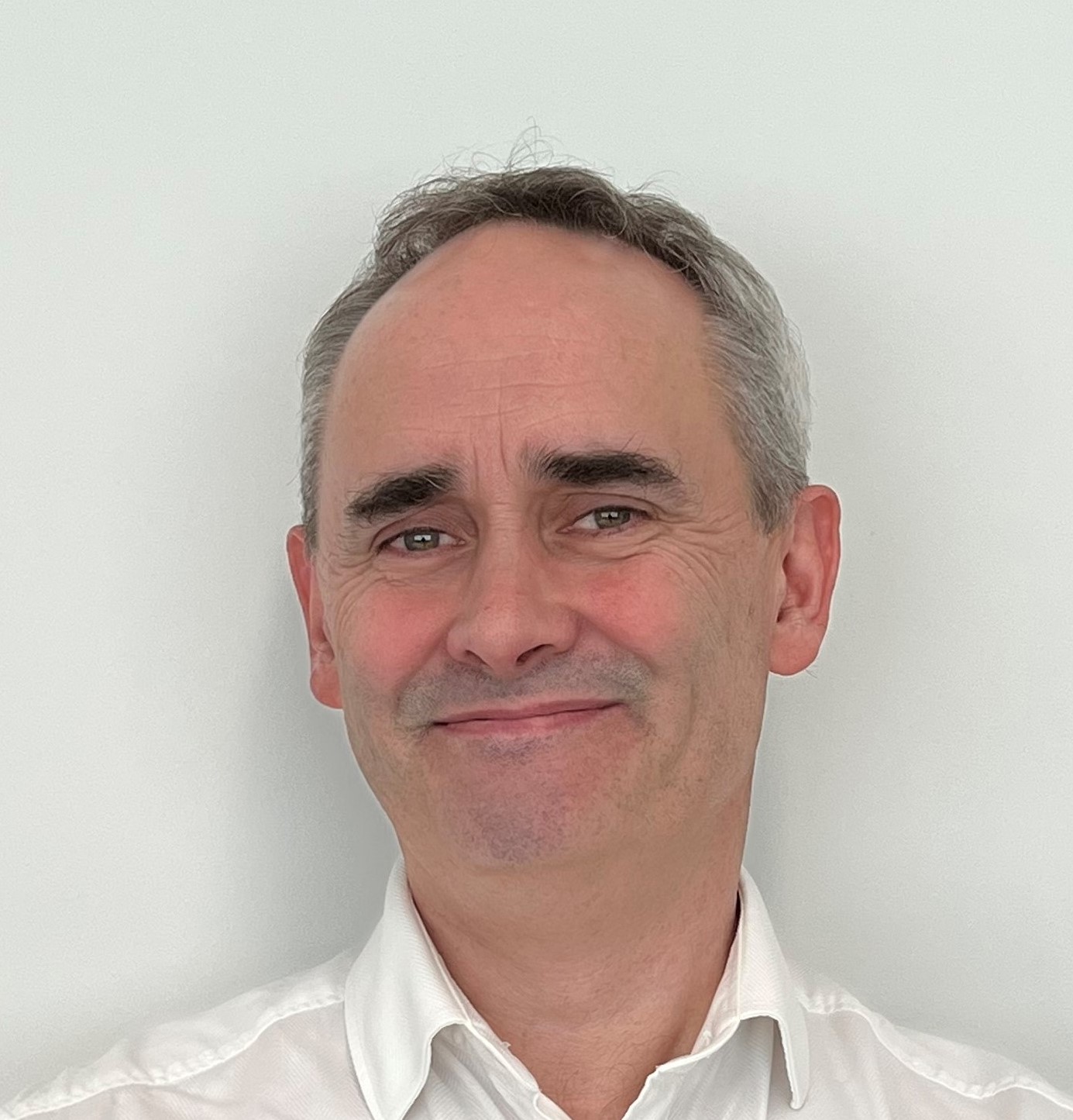
Željko Ivanović is an Associate Professor at the Faculty of Electrical Engineering at the University of Banja Luka. His work focuses on power electronics , renewable energy systems , and industrial automation , with a particular emphasis on solar energy optimization , network protocols , and embedded systems . Current research involves smart grid automation and EtherCAT network performance. Collaborates on projects funded by entities like the Republic of Serbia Ministry of Science. Co-authorship patterns indicate strong partnerships with Mladen Knežić and Branko Dokić . His publications span topics including boost converters (2011-2022), industrial networks (2010-2020), and hardware security (2014-2020). Projects include: "Sistem automatske regulacije i kontrole navodnjavanja" (2023-2024) "Implementacija FTT paradigme u TSN standardima" (2019-2022) "Razvoj multifunkcionalnog sistema za mjerenje" (2018-2020) He has contributed to textbooks on microcontrollers (2022) and power electronics (2020).
Professor John Fletcher is a world-leading academic in electrical power engineering at the University of New South Wales' School of Electrical Engineering and Telecommunications. He serves as Director of the Digital Grid Futures Institute (appointed May 2022), UNSW's Director of the NSW Government's Electrification and Energy Systems Network, and leads the TRaCE-funded $2M Technology Translation Squad. His research portfolio totals $15 million with $4.7 million awarded since 2022. Fletcher's research focuses on electrical power engineering , with highly-cited works in HVDC and wind generation integration, multi-phase drive systems, and novel electrical machines. His expertise spans renewable energy integration, smart grids, power electronics, and electrical machines. He has made significant contributions to wind turbine technology, photovoltaic integration, and power semiconductors for energy applications. His publication record shows consistent high-impact output with 156 journal articles, demonstrating strength in renewable energy integration, power system stability, and advanced power electronics. His work shows increasing emphasis on practical implementation challenges of renewable energy systems and grid modernization. Fletcher has completed 56 PhD students throughout his career (12 in 2022-2025), making him the top professor in his school for PhD completions during that period. He has secured substantial funding including ARC Discovery Projects, DSTG Next Generation Technology Fund, CRC, CSIRO, ARENA, and CRC-P grants totaling $4.7 million. As an educator, he developed UNSW's first microcredential in Hydrogen engineering and manages a full teaching load with classes exceeding 380 students, receiving outstanding student feedback (myExperience scores 5.5 to 5.63). He also manages two VIP projects (Sunswift and Atomcraft). Fletcher actively engages with industry and government, representing UNSW's stake in electrification to high-level officials including Penny Sharpe, Grant King, Chris Bowen, Mary O'Kane, Paul Fletcher, and Victor Dominello, as well as presenting to the Board of the Climate Change Authority and delegations from AEMO, Pearcey Foundation, and CEFC.
Dr. Mahmoud Shahbazi is an Associate Professor and Deputy Director of Research in the Department of Engineering at Durham University. He holds a PhD in Electrical Engineering from Université de Lorraine, France (2012), and has held prior roles as a lecturer at Azad University and a postdoctoral researcher at Sharif University of Technology. His research focuses on modern energy systems reliability, fault-tolerant control, renewable energy integration, and power system optimization. He has secured over £14M in research funding, leading projects such as the EPSRC-funded VPP-WARD (£1.84M) and ROADsTER (£230K). His work emphasizes hybrid AC/DC grids, microgrid control, and renewable energy resilience. Education: PhD in Electrical Engineering (Université de Lorraine, 2012) Grants: £6M EPSRC Centre for Doctoral Training in Offshore Wind Energy and Environment Research Interests: Microgrid operation, power electronics innovation, renewable integration strategies, and fault-tolerant systems. He explores advanced control methodologies for smart grids and energy resilience under dynamic conditions. Grant Portfolio: Key projects include optimizing offshore wind energy systems and developing AI-driven microgrid control for decarbonization. His funding includes EPSRC and NERC collaborations. Students: Supervising six research postgraduates in the Electrical Power Node. Expertise bridges theoretical models and practical implementation, with contributions to converter design, grid optimization, and renewable energy systems.
Prof. Goran Rafajlovski is a Full Professor at the Faculty of Electrical Engineering and Information Technologies (FEIT), Ss. Cyril and Methodius University of Skopje. He holds a Ph.D. in Electrical Engineering and has extensive experience in academia, industry, and diplomacy. His roles include former General Director of Electrostopyanstvo Macedonia (1998–2001) and Ambassador of the Republic of Macedonia to Germany (2001–2005). He has been a member of IEEE-IAS since 1989 and chairs the Energy Committee at the European Commission’s DG RTD-Unit K1-Energy. Education: Diploma in Electrical Engineering (1987, Skopje), M.Sc. (1991, Zagreb), Ph.D. (1996, Skopje). Research Interests: Focuses on electric drives, power quality, renewable energy integration, and energy policy. His work addresses harmonic mitigation in power systems, transformer efficiency optimization, and sustainable energy strategies for the Western Balkans. He actively participates in international conferences and advises on EU energy security policies. Professional Contributions: Over 80 publications, including seminal works on vector-controlled drives, energy efficiency in Macedonia, and renewable energy systems. Served as DAAD Alumni Club representative and chairs the Boris Trajkovski Foundation. Additional Roles: Engaged in policy-making through roles like Energy Committee member of the European Commission and guest lecturer at institutions such as the Lower Austria State Academy. His work bridges technical innovation with geopolitical and economic challenges in energy sectors.
Umit Cali is a Professor and Chair in Digital Engineering for Future Technologies at the University of York, UK, and holds a part-time Professor role in Energy Informatics at NTNU (Norwegian University of Science and Technology). He specializes in energy systems, blockchain, IT law, and data science, with over 20 years of experience in academia and industry. His research focuses on energy informatics, cybersecurity, and renewable energy integration. Education: PhD in Electrical Engineering and Computer Science (University of Kassel, Germany) and LL.M in IT and IP Law (University of Goettingen, Germany). Research Interests: Blockchain applications in energy systems, AI-driven energy management, cybersecurity for critical infrastructure, legal frameworks for digital technologies, and sustainable energy policies. Recent work emphasizes digital twin technology for energy systems optimization, decentralized energy markets, and ethical AI deployment. His publications span energy storage, smart grid cybersecurity, and policy analysis for renewable energy adoption. Professional Experience: Previously worked at IBM, Fraunhofer Institute, EnBW, and as an assistant professor at multiple universities. Serves as Vice Chair of the IEEE Blockchain in Energy Standards Working Group (P2418.5).
Dr. Saeed Mohammadzadeh is a Research Fellow in the Department of Electronics at the University of York, specializing in advanced signal processing techniques for next-generation wireless systems. His work bridges theoretical innovation with practical applications in communications and sensing. His academic foundation includes: Bachelor of Science from University of Shahid Beheshti Master's degree from Eastern Mediterranean University (2014) Ph.D. from Eastern Mediterranean University (2019) Dr. Mohammadzadeh's research centers on array signal processing, adaptive beamforming, and Cell-free massive MIMO systems, with increasing integration of machine learning methodologies. He develops robust algorithms for covariance matrix reconstruction, spatial spectrum sampling, and interference suppression under challenging conditions like jammer presence and fast-moving targets. His theoretical contributions enhance beamforming precision in wireless environments while addressing computational complexity constraints. Analysis of his 2021-2025 publications reveals three dominant research vectors: (1) Evolution of covariance matrix reconstruction techniques for robust beamforming, (2) Machine learning integration (particularly complex-valued CNNs) for sensor array processing, and (3) Expansion into emerging domains like integrated sensing-communication systems and Cell-free MIMO resource allocation. His work consistently addresses real-world implementation challenges through low-complexity spatial sampling and virtual sensor frameworks. As an active academic contributor, Dr. Mohammadzadeh serves as a reviewer for multiple high-impact journals in signal processing and communications, maintaining rigorous scholarly standards in his field.
Dr. Zhiwei Gao is an Associate Professor in the Department of Mathematics, Physics and Electrical Engineering at Northumbria University. He holds prestigious fellowships including IEEE Fellow (2023), Royal Academy of Engineering/Leverhulme Trust Research Fellowship (2024), and Fellowships of AAIA and AIIA. His research focuses on control systems, renewable energy, fault diagnosis, and real-time systems, with applications in wind turbine systems and wave energy conversion. Education: PhD in Engineering (1996). Research Interests: Real-time diagnosis and resilient control for industrial systems Energy management and renewable energy technologies Machine learning applications in anomaly detection and music generation Fault-tolerant control for fuzzy systems and multi-agent coordination Recent articles highlight advancements in distributed observers for LTI systems, deep reinforcement learning for energy management, and hybrid approaches for fault diagnosis. His work contributes to UN Sustainable Development Goals related to sustainable energy and technological innovation. Awards: IEEE Fellow, RAEng/Leverhulme Trust Fellowship, Alexander von Humboldt Awards (2015, 2018, 2022). Editorial Roles: Co-EIC of IEEE Transactions on Industrial Informatics, Senior Editor of IEEE Access, and editorial board member of Renewable Energy (Elsevier). Projects: Leading research on wave energy conversion systems and resilient control strategies. He advises PhD students in health monitoring and resilient control for complex systems, contributing to cutting-edge advancements in industrial informatics.
Dr. Ahmad Elkhateb is a Senior Lecturer at Queen's University Belfast's School of Electronics, Electrical Engineering and Computer Science. He specializes in power electronics, focusing on advanced power supplies for electric vehicles, wireless charging systems, and renewable energy technologies. His research contributes to UN Sustainable Development Goals, particularly in affordable and clean energy (SDG 7) and industry innovation (SDG 9). Dr. Elkhateb holds a Fellowship of the Higher Education Academy (FHEA) and is a Senior Member of the IEEE. He leads the Energy Power and Intelligent Control (EPIC) Research Centre and supervises numerous PhD students in topics like DC-DC converters for photovoltaic systems and wireless power transfer for EVs. Key awards include the BEST PAPER AWARD (2024, 2022) and the TG Christie Award for his student Iman Okasili. His work spans projects such as the ESCROWS initiative for offshore wind systems and collaborations with industry partners like Excelsys Technologies. He actively publishes in top journals like IEEE Transactions on Power Electronics and holds editorial roles for IEEE Access and IET Power Electronics.
Dr. Christopher D. Townsend serves as a Senior Lecturer in the Department of Electrical, Electronic and Computer Engineering at the School of Engineering, University of Western Australia, where he joined in 2019 after industry experience at ABB Corporate Research and postdoctoral positions at UNSW, University of Newcastle, and Nanyang Technological University. Education: B.E. in Electrical Engineering, University of Newcastle, Australia (2009) Ph.D. in Electrical Engineering, University of Newcastle, Australia (2013) His research centers on power electronics innovations for renewable energy integration , with specialization in multilevel converter topologies, modulation strategies, and control systems. Key application domains include photovoltaic systems, battery energy storage, electric vehicle drivetrains, and microgrid stability, evidenced by his fingerprint in capacitor voltage management, predictive control, and harmonics reduction. Recent publications (2024-2025) demonstrate a pronounced shift toward grid-forming capabilities in renewable systems, particularly in power reserve control for photovoltaic converters and state-of-charge balancing in battery storage. His work consistently bridges theoretical control algorithms with experimental validation in real-world energy infrastructure. Research Leadership: Principal investigator in 4 major grants totaling over $2.8M AUD Supervisor for 6 research students Active IEEE Power Electronics and Industrial Electronics Societies member Dr. Townsend's initiatives directly support UN Sustainable Development Goals in clean energy (SDG 7), industry innovation (SDG 9), and climate action (SDG 13) through practical electrification solutions for mining and gravitational wave facilities.
Jaime Castello Moreno is a Professor in the Department of Electronic Engineering at the Universitat de València, Faculty of Engineering. His academic work centers on power electronics, control systems, and renewable energy integration, with a strong emphasis on grid-connected inverters and digital control techniques. Research Interests: His research spans advanced control strategies for power converters, including predictive current control, MPPT algorithms for photovoltaic systems, and emulation techniques for wind energy systems. He also contributes to educational technology through innovative remote laboratory platforms, such as air flow levitation systems for control education. His publication record from 2001 to 2019 reflects a consistent focus on enhancing the performance, stability, and efficiency of power conversion systems. Key themes include robust control design, LCL filter compensation, DSP implementation, and real-time system validation. These works demonstrate deep expertise in both theoretical and applied aspects of power electronics. Scientific Contributions: Developed novel MPPT methods for PV inverters and battery chargers. Advanced predictive control techniques for grid-connected systems. Designed wind turbine and levitation emulators for research and education. Contributed to digital implementation and measurement tools for power converters. He has supervised academic theses and collaborated within the LEII (Laboratory of Industrial Electronics and Instrumentation). While no formal list of advisees or awards is provided, his long-standing involvement in research and education indicates a significant academic impact. He has no listed scientific awards in the provided text. Laboratories and Teams: He was part of the LEII – Laboratory of Industrial Electronics and Instrumentation, where he conducted research on industrial electronics, power conditioning, and control systems. This group supports both academic and applied research in energy conversion and digital control.
Assoc. Prof. Dr. Yücel Çetinceviz is a faculty member at Kastamonu University's Faculty of Engineering and Architecture, Department of Electrical-Electronics Engineering, where he serves as a Doctoral Academician since 2018. He also holds administrative positions as Department Chair (since 2022) and Vocational School Director (since 2020). His academic career at Kastamonu University began in 2009 as Teaching Staff at the Vocational School's Electronics and Automation Department before transitioning to his current role. Dr. Çetinceviz received his academic education from Gazi University and Karabük University: PhD : Electrical and Electronics Engineering, Karabük University, Institute of Science (2011-2017) Master's : Electrical Education, Gazi University, Institute of Science (2008-2011) BSc : Electrical Education, Gazi University, Faculty of Technical Education (2002-2006) Dr. Çetinceviz's research focuses on three primary areas: Electrical Machines and Energy Conversion, Power Electronics, and Control Theory and Applications. His work demonstrates a strong emphasis on practical applications of electrical engineering principles, particularly in the domains of electric vehicles, renewable energy systems, and motor control technologies. His research bridges theoretical concepts with real-world implementations, often involving electromagnetic modeling, thermal analysis, and advanced control techniques. Notably, his recent work shows increasing focus on electric vehicle technologies, including in-wheel motor design and battery systems, reflecting industry trends toward sustainable transportation solutions. His publication record reveals consistent scholarly output with increasing impact in recent years, particularly in high-quality international journals (SCI-expanded). The research themes across his publications demonstrate a cohesive progression from fundamental electrical machine design to sophisticated control systems for emerging applications like electric vehicles and renewable energy integration. Dr. Çetinceviz has received prestigious recognition for his scholarly contributions: TÜBİTAK Publication Incentive Award (2017) TÜBİTAK Publication Incentive Award (2012) TÜBİTAK Publication Incentive Award (2011) As an academic advisor, Dr. Çetinceviz has supervised five graduate students to completion, with ongoing supervision of additional students. His research is supported by significant projects including a principal investigator role in a 2020-2022 project on high-torque-density axial flux permanent magnet motors for electric vehicles, and advisory roles in defense industry-related projects. His intellectual property contributions include two patents related to electrical steel production and magnetic composite materials. Dr. Çetinceviz collaborates extensively with colleagues both within and outside Kastamonu University, with notable long-term collaborations with Erdal Şehirli (14 publications since 2014) and Durmuş Uygun (12 publications since 2011). His work appears to involve laboratory research focused on electrical machine testing, power electronics implementation, and control system development, though specific lab names aren't mentioned in the provided information.
Stefan M Goetz serves as an Assistant Professor in both Psychiatry & Behavioral Sciences and Neurosurgery at Duke University's School of Medicine, and is a Faculty Network Member of the Duke Institute for Brain Sciences. His unique interdisciplinary career bridges engineering and neuroscience, with significant contributions in power electronics and transcranial magnetic stimulation (TMS) technology. Dr. Goetz's research interests center on two interconnected domains: advanced power electronics systems (including battery management, power converters, and electric vehicle technology) and neural stimulation devices (particularly TMS applications). His work demonstrates how engineering innovations can directly address challenges in neuroscience and medical applications. His educational background includes a Ph.D. from Technical University of Munich, School of Medicine (Germany) completed in 2012. His extensive publication record shows remarkable productivity across both IEEE power electronics journals and neuroscience/medical journals, with numerous high-impact papers published through 2025. The research trends reveal a consistent focus on improving the efficiency, reliability, and functionality of power conversion systems while simultaneously advancing neural stimulation technology. His work on TMS devices specifically addresses challenges like acoustic noise reduction, improved targeting, and enhanced stimulation capabilities. Dr. Goetz's research program demonstrates a unique synergy between power electronics engineering and neuroscience applications, particularly in developing advanced neural stimulation devices that require sophisticated power management and conversion techniques. His dual appointment structure at Duke University reflects the institution's recognition of the value in this interdisciplinary approach to medical device innovation.
Can Yüzükollar serves as an Assistant Professor in the Department of Computer Engineering at Sakarya University's Faculty of Computer and Information Sciences, where he has been a lecturer since 2018 following 13 years as an expert at the university's Computer Research and Application Center (2005-2018). Education: Doctorate (2007-2018) from Sakarya University's Institute of Science/Computer and Information Engineering with thesis: "Regional based adaptive reversible image watermarking based on interpolation errors". Master's (2005-2007) from Sakarya University's Institute of Science/Computer and Information Engineering with thesis: "Fingerprint and speaker recognition using artificial neural networks". Licence (2000-2004) from Sakarya University's Faculty of Engineering/Department of Computer Engineering. Research Interests: Dr. Yüzükollar specializes in secure image processing , particularly reversible watermarking techniques using interpolation error expansion and histogram modification. His work bridges biometric security (fingerprint/speaker recognition via neural networks) and energy systems optimization , with recent expansion into deep reinforcement learning for image authentication. Core methodologies include neural networks, cryptographic hashing, and algorithmic optimization for digital media security. Publication Trends: His scholarly output reveals an evolving trajectory from foundational biometric research (2007) through intensive image security contributions (2013-2018) to contemporary interdisciplinary work in deep learning (2023) and renewable energy (2021). The 2023 deep reinforcement learning paper signifies a strategic pivot toward AI-driven image authentication, while the 2021 wind energy publication demonstrates applied optimization expertise beyond core computer engineering domains.
Dr. Musbahu Muhammad is a research-focused academic at Newcastle University specializing in advanced battery systems and power electronics for sustainable energy applications. His work bridges electric vehicle technology, renewable energy integration, and second-life battery utilization through innovative power electronic solutions. His core research interests include: Electric vehicle battery diagnostics and management systems Power converter design for energy storage and renewables Lithium-ion battery second-life applications Reliability enhancement in power electronic systems Grid integration of sustainable energy technologies From 2020-2022, Dr. Muhammad's publications reveal a strong focus on practical engineering solutions for battery evaluation, charging systems, and power conversion. His work demonstrates consistent emphasis on improving efficiency, reliability, and circular economy applications in energy storage systems, particularly through novel circuit designs and diagnostic methodologies for electric vehicle batteries and photovoltaic systems. While specific awards and grants aren't documented in available sources, his collaborative research with Newcastle University's energy research group indicates active participation in cutting-edge sustainable technology development. His work consistently addresses critical industry challenges in battery reuse, power converter reliability, and renewable energy integration.
Muhammad Hamza Zafar is a PhD Research Fellow at the Department of Engineering Sciences, University of Agder. His research spans robotics, human-robot teaming, deep learning, and sustainable technologies with significant contributions to both academic literature and practical applications in emergency response and industrial automation systems. Dr. Zafar's research interests focus on the intersection of robotics and artificial intelligence, particularly in human-robot teaming, wearable technologies, and sustainable energy systems. His work addresses critical challenges in real-time gesture recognition, robotic manipulation, and emergency response systems, leveraging advanced deep learning techniques and novel algorithmic approaches. He has made significant contributions to photovoltaic power forecasting, battery state estimation, and intrusion detection in robotic systems. Analysis of Dr. Zafar's publication record reveals a strong focus on human-robot collaboration in emergency and industrial settings. His research consistently bridges theoretical advancements with practical applications, with particular emphasis on making robotic systems more intuitive, responsive, and capable in complex environments. Key thematic areas include gesture-based control systems, multi-modal sensor fusion, sustainable energy applications of AI, and Industry 5.0 manufacturing paradigms. Dr. Zafar is actively involved with the CIEM - Center for Integrated Emergency Management and the Artificial Intelligence, Biomechatronics and Collaborative Robotics research group at the University of Agder. His collaborative work spans multiple institutions, reflecting the interdisciplinary nature of his research in human-robot interaction and sustainable technologies. His office is located at D3063 (Jon Lilletuns vei 9, 4879 Grimstad, Norway) with contact information including phone +47 37233744 and mobile +4748919198.