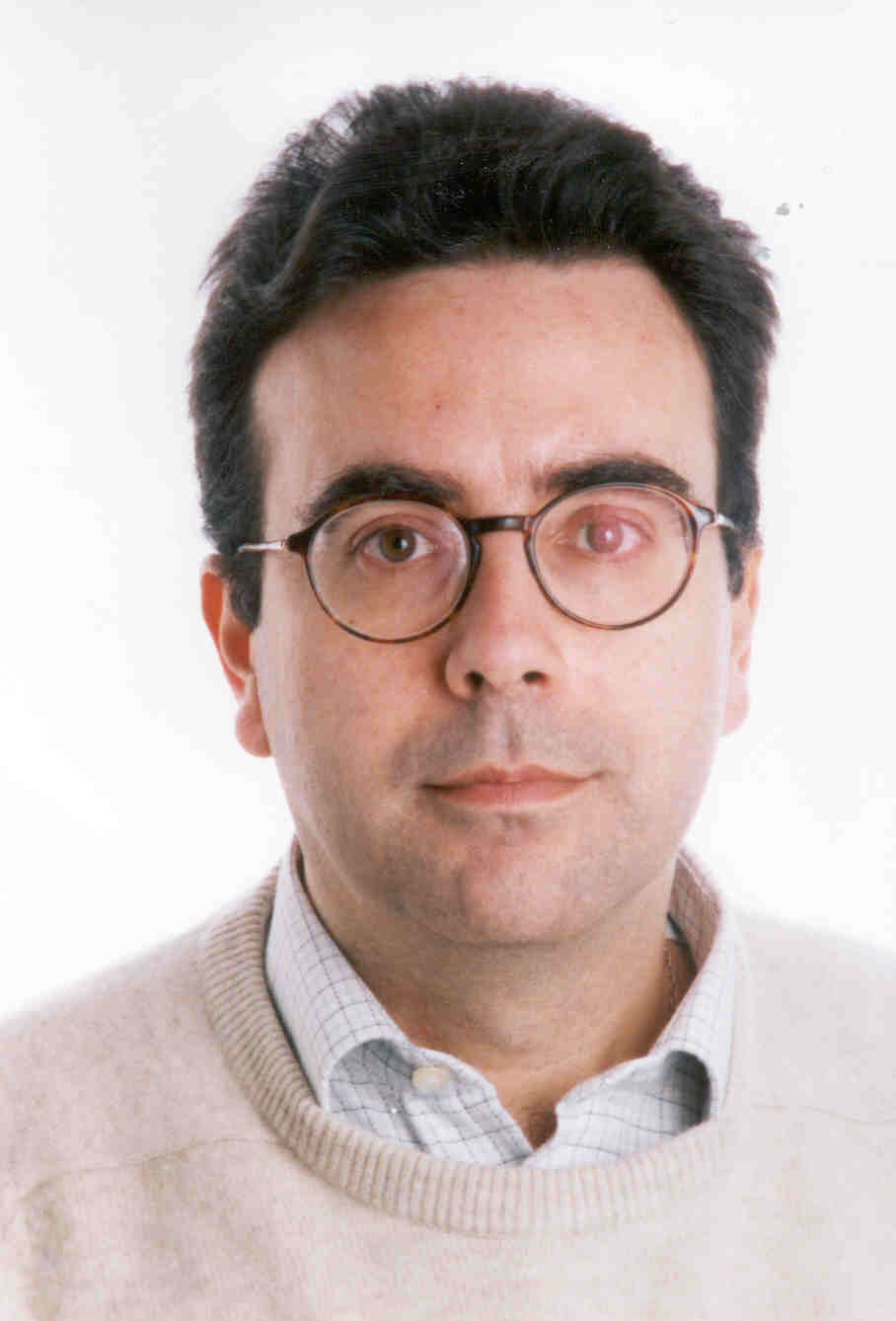
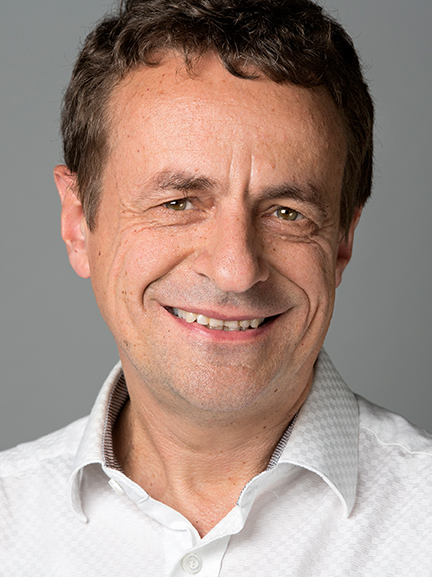
Aram Harrow is a Professor of Physics at the Massachusetts Institute of Technology (MIT) , affiliated with the MIT Center for Theoretical Physics and MIT Center for Quantum Engineering . He focuses on quantum information science and quantum algorithms , with additional interests in representation theory and optimization . His recent work explores quantum computing applications in chemical physics and statistical mechanics . Undergraduate and graduate degrees in Physics at MIT Faculty positions: MIT (2013-present), University of Washington (2010-12), University of Bristol (2005-10) Research Interests: His work bridges quantum information theory and many-body physics , including: Quantum algorithm design for chemistry and optimization Quantum circuit complexity and t-designs Entanglement dynamics in quantum systems Quantum-classical hybrid computing models Key Publications: Recent articles demonstrate quantum speedups for biomolecular free energy calculations , Hamiltonian simulation , and jet clustering algorithms . His research combines quantum complexity theory with practical implementations on near-term quantum devices. Scientific Awards: 2023 Simons Investigator 2018 APS Bennett Award 2017 IEEE Best Paper Award 2016 Kavli Frontiers Fellow Mentorship: He advises current PhD students Shankar Balasubramanian , Angus Lowe , and Norah Tan , with 12 former advisees including Anand Natarajan and Saeed Mehraban . His 2026 recruitment seeks one new graduate student.
Jose Israel Rodriguez is an Associate Professor in the Department of Mathematics at the University of Wisconsin-Madison. His research bridges applied algebraic geometry and algebraic statistics, focusing on nonlinear algebra, maximum likelihood estimation, monodromy, and polynomial systems in engineering and science applications. Primary Affiliation: Department of Mathematics , UW-Madison Additional Affiliations: Department of Electrical & Computer Engineering , Institute for Foundations of Data Science Research Interests : Applied algebraic geometry for nonlinear eigenvalue problems and kinematics Algebraic statistics in nearest point problems and likelihood geometry Numerical methods for monodromy, Galois groups, and polynomial optimization Teaching and Mentorship : Co-organized the Collaborative Undergraduate Research Laboratory (CURL) for Spring 2020 Advises PhD students Julia Lindberg and Zinan Wang , with Bernd Sturmfels as his own PhD advisor Developed software tools like Multiregeneration and Decomposable Sparse Polynomial Systems Academic Contributions : Authored over 20 peer-reviewed publications in journals like SIAM Journal on Applied Algebra and Geometry, Foundations of Computational Mathematics, and Journal of Symbolic Computation Organized international conferences including Monodromy and Galois Groups in Enumerative Geometry and SIAM AG19 Active member of the SIAM community and developer of the Matroids Day seminar
Diego Garlaschelli is Professor of Theoretical Physics at the IMT School for Advanced Studies in Lucca, Italy, and at the Lorentz Institute for Theoretical Physics, University of Leiden, the Netherlands. He leads the NETWORKS research unit at IMT and the Econophysics and Network Theory group at Leiden. He is also an external faculty member at the Complexity Science Hub in Vienna and an associate member of the Enrico Fermi Research Center in Rome. His affiliations reflect a strong international and interdisciplinary research profile in network science and statistical physics. He holds a master's degree in theoretical physics from the University of Rome III (2001) and a PhD in Physics from the University of Siena (2005). His postdoctoral experience includes positions at the Australian National University, the University of Siena, the University of Oxford, and the Sant’Anna School of Advanced Studies in Pisa. Garlaschelli’s research spans network theory, statistical physics, econophysics, financial complexity, ecological networks, and social dynamics. He applies maximum entropy models, information theory, and random graph frameworks to understand complex real-world systems. His teaching includes courses in Network Theory, Econophysics, and Complex Systems at both PhD and MSc levels. The 15 most recent publications highlight a consistent focus on network reconstruction, ensemble inequivalence, renormalization, and applications to financial and socio-economic systems. Key themes include statistical inference in networks, resilience, and multi-scale modeling, with publications in top journals such as Nature Reviews Physics , Physics Reports , Science , and Physical Review Letters . His scientific awards include the Best Paper Award at the 6th International Workshop on Self-Organizing Systems (2012) and the Jan Kijne Prize (2013) as supervisor. He has secured multiple grants from NWO, the European Union, and the Royal Society, and has supervised over 40 students at PhD, master’s, and bachelor’s levels. He also mentors postdocs and visiting scientists. Garlaschelli leads and organizes major international workshops and schools in network science and complex systems. He serves on scientific committees and is an active referee for journals like Nature and Physical Review Letters , as well as funding agencies including the ERC and NWO.
Jose Israel Rodriguez is an Assistant Professor in the Department of Mathematics at the University of Wisconsin-Madison, with additional affiliations in the Department of Electrical & Computer Engineering and the Institute for Foundations of Data Science. He joined UW Madison in Fall 2020 after completing postdoctoral positions at the University of Chicago (with Lek-Heng Lim) and Notre Dame (with Jonathan Hauenstein). Rodriguez earned his PhD in 2014 from UC Berkeley under the supervision of Bernd Sturmfels. His research focuses on applied algebraic geometry and algebraic methods for statistics, with particular interests in nonlinear algebra and nonlinear eigenvalue problems, algebraic statistics and nearest point problems, and applications of monodromy and Galois groups. Rodriguez has made significant contributions to numerical algebraic geometry, particularly in solving polynomial systems, maximum likelihood estimation, and Euclidean distance degree calculations. His work bridges theoretical mathematics with practical computational methods. Rodriguez's recent publications demonstrate a strong trend toward developing numerical methods for solving complex algebraic problems with applications in statistics, optimization, and engineering. His research shows increasing sophistication in handling decomposable systems, multiparameter eigenvalue problems, and braid group computations, often implementing these methods in software tools like Macaulay2. His work connects abstract algebraic geometry with concrete computational approaches. NSF Postdoctoral Fellow Provost's Postdoctoral Scholar Rodriguez currently advises PhD students Julia Lindberg (expected graduation May 2022, joint with B. Lesieutre) and Zinan Wang. He has organized numerous seminars and conferences including SIAM_SAGA, Algebra in Statistics and Computation Seminar, and Applied Algebra Seminar. His research has been supported by various grants that enable his work in numerical algebraic geometry and its applications. Rodriguez is actively involved in the algebraic geometry and statistics communities, organizing several seminars and minisymposia at major conferences. He has developed several software tools including implementations for decomposable sparse polynomial systems, multiregeneration, algebraic optimization, Galois groups, and maximum likelihood obstruction functions. His work connects theoretical mathematics with practical computational applications across various domains.
Dr. Alan Huang is a Senior Lecturer at the School of Mathematics and Physics, University of Queensland. He holds a PhD in Statistics from the University of Chicago (McCormick Fellowship) and an Honours degree in Science (Advanced Mathematics) from the University of Sydney. His academic career includes lecturing roles at the University of Wisconsin-Madison and the University of Technology Sydney before joining UQ. Research Focus: Biostatistics, nonparametric methods, and statistical modeling for dispersed counts. Key Projects: Bayesian methods for agricultural data, trend analysis of pesticide concentrations in the Great Barrier Reef, spectral water quality analysis. Article Trends: His work spans generalized linear models, count data analysis, and environmental statistics, with recent emphasis on Conway-Maxwell-Poisson regression and time-series modeling. Collaborations include environmental science applications. Awards: McCormick Fellowship (University of Chicago). Supervision: Currently advising PhD research on count data methods. Past supervision includes topics in geotechnical uncertainty and rock mechanics. Collaborates with Queensland Department of Environment and Science on water quality projects.
Professor Hakan Ali Çırpan is a distinguished faculty member at Istanbul Technical University's Faculty of Electrical and Electronics Engineering, where he serves as Professor in the Department of Electronics and Communication Engineering. He also holds the position of Vice Dean at Istanbul Technical University since 2021. With over three decades of academic experience, Professor Çırpan has established himself as a leading researcher in signal processing and communications. His educational background includes: PhD from Stevens Institute of Technology (1993-1997) Master's degree in Electrical-Electronic Engineering (with thesis) from Istanbul University (1989-1992) Bachelor's degree in Electrical and Electronic Engineering from Uludağ University (1985-1989) Professor Çırpan's research spans multiple domains within signal processing and communications. His primary interests include wireless communications, radar systems, machine learning applications in communications, and electronic warfare. His work on channel estimation, orthogonal frequency division multiplexing, and maximum likelihood methods has been particularly influential. He has pioneered research in areas such as source localization, spectrum sensing, and physical layer security. His recent work focuses on 5G/6G networks, AI-enhanced communications, and integrated sensing and communication systems. Analysis of his recent publications (2023-2025) reveals a strong focus on next-generation wireless technologies, particularly 5G/6G networks, AI integration in communications, and electronic warfare applications. His research demonstrates a consistent pattern of addressing fundamental challenges in signal processing while adapting to emerging technological needs. A significant portion of his recent work involves machine learning applications for spectrum management, optimization techniques for radar systems, and novel approaches to network slicing and resource allocation. His notable scientific achievements include: ASELSAN ACADEMY THESIS COMPETITION WINNER (2020) Professor Çırpan has supervised 59 theses throughout his career, mentoring numerous graduate students in the fields of signal processing and communications. He has secured significant research funding, including the "AI-Enhanced 5G/6G Networks with Integrated Camera and ISAC Systems" project (2023-2024) and the "Railway Vehicle Infrastructure New Generation Secure Communication Systems" TÜBİTAK project with a budget of ₺955,000. His research has practical applications in defense systems, railway communications, and next-generation wireless networks. His laboratory work focuses on wireless communications systems, radar signal processing, and AI-enhanced communication technologies. Professor Çırpan leads research teams working on projects related to 5G/6G networks, electronic warfare countermeasures, and secure communication systems. His group collaborates with industry partners like ASELSAN and conducts research with practical applications in national defense and critical infrastructure.
Jaouad Mourtada is an Assistant Professor in the Department of Statistics at ENSAE/CREST, École Nationale de la Statistique et de l'Administration Économique since September 2020. Previously, he was a postdoctoral researcher at the Laboratory for Computational and Statistical Learning at the University of Genoa (2019-2020). He completed his PhD in Statistics at École Polytechnique under the supervision of Stéphane Gaïffas and Erwan Scornet. His educational background includes a Master's degree in Mathematics with specialization in Probability and Random Models (2016), a Master's degree in Fundamental Mathematics (2015), and a Bachelor's degree in Mathematics from Pierre and Marie Curie University and École Normale Supérieure (2013). Dr. Mourtada's research focuses on the intersection of statistics and learning theory, with particular interest in high-dimensional statistics, online learning, and density estimation. His work explores the complexity of prediction and estimation problems through rigorous theoretical analysis. His research spans statistical learning theory, robust statistics, and the theoretical foundations of machine learning algorithms. His publication record since 2017 demonstrates consistent contributions to top-tier venues in statistics and machine learning, with recent work focusing on universal coding, aggregation methods, robust regression, and the theoretical analysis of kernel methods and random forests. His research shows a progression from online learning and expert aggregation to more complex statistical learning problems involving high-dimensional data and model misspecification. He teaches courses including Statistical Learning Theory for Master 2 Data Science students and Probability Theory at ENSAE. His teaching spans theoretical foundations of machine learning and core probability concepts for advanced statistics students.
Yang Song is an incoming Assistant Professor in Electrical Engineering and Computing and Mathematical Sciences at the California Institute of Technology (Caltech). Prior to joining Caltech, he leads the Strategic Explorations team at OpenAI. He received his Ph.D. in Computer Science from Stanford University under the supervision of Stefano Ermon and completed his Bachelor's degree in Mathematics and Physics from Tsinghua University. His educational background includes: Ph.D. in Computer Science, Stanford University Bachelor's in Mathematics and Physics, Tsinghua University Dr. Song's research focuses on building powerful AI models capable of understanding, generating, and reasoning with high-dimensional data across diverse modalities. He is particularly known for inventing foundational concepts and techniques in score-based diffusion models, which have revolutionized the field of generative AI. His work bridges theoretical advances with practical applications, particularly in image generation, medical imaging, and solving inverse problems. His research has demonstrated how score-based models can achieve state-of-the-art results in image generation while maintaining flexibility for various applications including medical image reconstruction. Analysis of his publication record reveals a strong trajectory in generative modeling, with a particular emphasis on score-based approaches and diffusion models. His work consistently addresses fundamental challenges in generative modeling including sample quality, training stability, computational efficiency, and application to real-world problems. His most recent work on consistency models represents a significant advancement toward making generative models practical for real-time applications. His notable achievements include: ICLR 2021 Outstanding Paper Award for Score-Based Generative Modeling through Stochastic Differential Equations NeurIPS 2021 Spotlight Presentation for Maximum Likelihood Training of Score-Based Diffusion Models Multiple ICLR Oral presentations for his work on consistency models Developing foundational techniques that power many modern AI image generation systems His GitHub repository for score-based generative modeling has gained significant traction in the research community, with over 1,700 stars, reflecting the impact of his work. His research bridges theoretical machine learning with practical applications, particularly in medical imaging where his techniques have shown promise for improving image reconstruction in CT and MRI.
Enrique Sentana is a Professor of Economics at CEMFI (Centro de Estudios Monetarios y Financieros) in Madrid, Spain. He is also a Research Fellow at the CEPR Financial Economics Programme and a Senior Research Associate at the LSE Financial Markets Group. His academic career spans prestigious institutions including the London School of Economics and the University of Alicante. Degrees: PhD in Economics (LSE, 1991), MSc in Econometrics and Mathematical Economics (LSE, 1987), Licenciado en Ciencias Económicas y Empresariales (University of Alicante, 1985) Dr. Sentana specializes in Econometrics , with a focus on Asset Pricing , Financial Economics , and VIX Derivatives . His methodological contributions include work on ARCH models, indirect estimation, and identification issues in econometrics, advancing volatility modeling and financial risk assessment. His research trends highlight innovations in empirical asset pricing , nonlinear time series , and financial market linkages . Notable achievements include the Rey Jaime I Prize in Economics (2014) , Fellowships at the Econometric Society and Journal of Econometrics , and prestigious prizes from the University of London and LSE. Scientific Awards: Rey Jaime I Prize in Economics (2014) Fellow of the Econometric Society (2012) Fellow of the Journal of Econometrics (2010) Sayers Prize, University of London (1992) Ely Devons Prize, London School of Economics (1987) Dr. Sentana has advised 10 PhD students at CEMFI and held editorial roles including Managing Editor of the Review of Economic Studies and Co-Editor of the Journal of Financial Econometrics . He has also served as Executive Vice-President of the Econometric Society and Treasurer of its European Standing Committee.
Spencer L. Bowen, Ph.D., serves as Assistant Professor of Radiology at UT Southwestern Medical Center where he leads PET research within the Radiology Research section. His work develops nuclear tomographic imaging tools to advance precision medicine for oncology, neurology, and cardiology applications through innovative scanner technologies and quantitative imaging methodologies. Dr. Bowen earned his bachelor's degree in biomedical engineering from the University of Washington and doctoral degree from the University of California at Davis, followed by a research fellowship at Massachusetts General Hospital. His academic journey includes prior appointment as Research Assistant Professor at the Fralin Biomedical Research Institute and Virginia Tech-Wake Forest University School of Biomedical Engineering. His research program investigates advanced acquisition techniques, reconstruction algorithms, and post-processing methods for quantitative hybrid PET-CT/MR systems. Key focus areas include attenuation correction methodologies, partial volume correction, dedicated breast imaging systems, and cardiac PET quantification. This work bridges engineering innovation with clinical applications to improve diagnostic accuracy and treatment monitoring across multiple disease domains. Dr. Bowen's publication record demonstrates consistent contributions to medical imaging science, with recent emphasis on quantitative cardiac PET, attenuation correction techniques, and dedicated breast imaging systems. His 2016 study on partial volume correction methods in aging research and 2023 work on cardiac PET attenuation correction represent significant methodological advances in the field. As an active scientific contributor, Dr. Bowen serves as reviewer for leading journals including the Journal of Nuclear Medicine, Medical Physics, Physics in Medicine and Biology, and IEEE Transactions on Nuclear Science and Medical Imaging. His work has received notable recognition including a cover feature in the Journal of Nuclear Medicine. The Bowen Lab maintains active collaborations across medical imaging disciplines and currently recruits PhD graduate students to advance nuclear tomography research. Dr. Bowen's mentorship extends through his role as faculty advisor and his participation in graduate training programs focused on biomedical imaging technologies.
Bernd Sturmfels is a leading mathematician serving as Director of the Max Planck Institute for Mathematics in the Sciences in Leipzig since 2017. He is also Professor Emeritus of Mathematics, Statistics, and Computer Science at the University of California, Berkeley, and holds honorary professorships at the Technical University of Berlin and the University of Leipzig. His research bridges pure and applied mathematics, with foundational contributions to algebraic geometry, combinatorics, and computational biology. Education: Sturmfels earned dual Ph.D. degrees in 1987 from the University of Washington and Technische Universität Darmstadt, followed by an honorary doctorate from Goethe University Frankfurt in 2015 and additional honorary doctorates from the University of Bern (2023) and the University of Chicago (2024). Research Interests: His work spans algebraic geometry , combinatorics , commutative algebra , algebraic statistics , convex optimization , and computational biology . He explores deep connections between abstract algebraic structures and practical applications in statistics, optimization, and the life sciences. Publications and Trends: With over 300 research articles and 11 books, his recent work (2022–2025) focuses on advanced topics like Grassmannian geometry, tropical implicitization, quantum chemistry applications, and algebraic statistics. His research increasingly integrates computational methods with theoretical insights, addressing problems in machine learning, phylogenetics, and optimization. Awards and Honors: Sturmfels has received numerous prestigious awards, including: George David Birkhoff Prize in Applied Mathematics (2018) SIAM von Neumann Lecturership (2010) Humboldt Senior Research Prize (2007–2008) David and Lucile Packard Fellowship (1992–1997) Fellowships of the AMS and SIAM Membership in the Berlin-Brandenburg Academy of Sciences and Humanities Mentoring and Grants: He has supervised 60 doctoral students and numerous postdocs, with many securing positions at leading institutions. His mentoring philosophy emphasizes diversity and excellence, as highlighted in his Notices of the AMS article. Funding sources include the NSF, DARPA, and the German National Science Foundation (DFG). Labs and Teams: At the Max Planck Institute, he leads the Nonlinear Algebra group, fostering interdisciplinary collaboration between mathematics and the sciences. His team focuses on developing algebraic methods for data analysis, optimization, and theoretical physics.
Debabrota Basu is a tenured faculty member (Inria Starting Faculty Position - ISFP) at the Scool team (previously called SequeL) of Inria Centre at University of Lille in France. He teaches postgraduate-level courses on privacy, responsible machine learning, and research methods in AI at École normale supérieure-PSL University, Université de Lille, and Centrale Lille. He is also a member of the ELLIS Society (European Laboratory for Learning and Intelligent Systems) and the Paris unit of ELLIS. Dr. Basu earned his PhD in Computer Science from the Department of Computer Science, School of Computing, National University of Singapore, advised by Stéphane Bressan and Pierre Senellart. Prior to that, he obtained a B.E. degree with Honours in Electronics and Telecommunication Engineering from Jadavpur University. Before joining Inria, he was a postdoctoral researcher at Chalmers University of Technology's Data Science and AI Division. Dr. Basu's research focuses on constructing algorithms for developing efficient, robust, private, and ethical learning machines that solve real-world problems. His methodological approach blends statistics, machine learning, and optimization. His application interests span sustainable agro-ecology, medical and pharmaceutical applications, energy-efficient autonomous systems, and algorithmic audits. Recent collaborations include the Inria-Indian Statistical Institute associate team SeRAI for developing Sequential Testing and Learning Algorithms for Verifiably Robust and Responsible AI, and the Inria-INRAE collaboration on Resilient Agricultural Decision Making under Environmental Risks. His publication record demonstrates expertise in bandit algorithms, reinforcement learning, and privacy-preserving machine learning. Recent work shows a strong theoretical foundation with practical applications, particularly in pure exploration bandits, differential privacy mechanisms, constrained optimization, and fairness verification. His research bridges the gap between theoretical guarantees and real-world deployment challenges across multiple domains. Dr. Basu has received notable recognition for his contributions: Best Student Paper Award at ACM EAAMO 2022 for 'On Meritocracy in Optimal Set Selection' Young researcher (JCJC) grant from the French National Research Agency (ANR) in 2022 in 'Artificial Intelligence and Data Science' He leads the project 'RL under Real-life Constraints: Regrets and Algorithms' and supervises PhD students and postdoctoral researchers. His research is supported by multiple projects including REPUBLIC ('Vers l'IA responsable avec l'apprentissage par renforcement sous contraintes') and 'Foundations of robustness and reliability in artificial intelligence.' Dr. Basu actively collaborates with institutions worldwide, including establishing the RELIANT associate team with Kyoto University for investigating structured multi-armed bandit problems.
Tian Han is an Assistant Professor at the Department of Computer Science within the Charles V. Schaefer, Jr. School of Engineering and Science at Stevens Institute of Technology. His research focuses on artificial intelligence (AI) and machine learning, particularly in developing statistical learning methods for probabilistic models and building explainable, controllable AI systems. He holds a PhD in Statistics from UCLA (2019) and a degree in Computer Science from HKUST (2013). His research interests span unsupervised/semi-supervised learning, probabilistic generative modeling, explainable AI, and computer vision. Notable contributions include work on latent space energy-based models, hierarchical feature learning, and robust representation techniques. Han has served as an Area Chair/Senior Program Committee member at conferences like CVPR, NeurIPS, and AAAI. Education: PhD in Statistics, UCLA (2019) MSc/BS in Computer Science, HKUST (2013) His publications emphasize advancements in energy-based models, latent space hierarchies, and generative AI. Recent work includes enforcing sparsity in latent representations for robust AI systems (WACV 2024), molecule design via latent space modeling (UAI 2023), and context-aware health prediction (AAAI 2022). He received the NSF CAREER Award (2024) for his research. Han teaches courses on machine learning fundamentals, deep learning, and computing foundations at Stevens.
Marcelo Pereyra is a Professor in Statistics at the School of Mathematical & Computer Sciences of Heriot-Watt University and the Maxwell Institute for Mathematical Sciences in Edinburgh, UK. His academic journey began with a double M.Eng. degree from ITBA (Argentina) and INSA Toulouse (France), followed by a M.Sc. from INSA Toulouse in 2009. He earned his Ph.D. in Signal Processing from the University of Toulouse in 2012, after which he served as a Research Fellow in Statistics at the University of Bristol from 2012 to 2016. In 2017, he joined Heriot-Watt University as an Assistant Professor in Statistics, was promoted to Associate Professor in 2019, and subsequently to Professor in Statistics in 2023. His educational background includes: Ph.D. in Signal Processing, University of Toulouse (2012) M.Eng. (double degree) from ITBA (Argentina) and INSA Toulouse (France), with M.Sc. from INSA Toulouse (2009) Professor Pereyra's research advances the statistical foundations of quantitative and scientific imaging. He has made important contributions to Bayesian imaging sciences and developed significant connections between statistical, variational, and machine learning approaches to imaging. His specific interests include robust uncertainty quantification in imaging inverse problems, automatic calibration and verification of statistical image models, scalable Bayesian computation algorithms derived from stochastic diffusion processes, and applications of imaging with high social or environmental value. His work sits at the intersection of statistics, computational mathematics, and imaging science, with a strong emphasis on developing mathematically rigorous methods that provide reliable uncertainty quantification alongside point estimates. His recent publications demonstrate a clear trajectory toward integrating modern machine learning techniques, particularly diffusion models and generative approaches, with traditional Bayesian statistical methods for imaging problems. The research spans applications from medical imaging to astronomical observations and industrial inspection, with consistent emphasis on uncertainty quantification. His work increasingly focuses on developing scalable computational methods that can handle the high-dimensional nature of modern imaging problems while maintaining statistical rigor. Professor Pereyra has received numerous prestigious awards throughout his career: SIAM SIGEST Award in Imaging Sciences for contributions to proximal Markov chain Monte Carlo methodology Marie Curie Intra-European Fellowship for Career Development (2013) Brunel Postdoctoral Research Fellowship in Statistics (2012) Postdoctoral Research Fellowship from French Ministry of Defence (2012) Leopold Escande PhD Thesis award from the University of Toulouse (2012) INFOTEL R&D award from the Association of Engineers of INSA Toulouse (2009) ITBA R&D award from the Buenos Aires Institute of Technology (2007) Professor Pereyra is deeply committed to developing early career talent, currently supervising five PhD students and two Postdoctoral Research Associates (PDRAs), having previously supervised four PhD students and three PDRAs to completion. His research has received significant support from Heriot-Watt University and the UK Engineering and Physical Sciences Research Council (EPSRC). He is known for fostering multidisciplinary collaboration, having organized eleven international interdisciplinary research meetings in the UK since 2012 and chaired the IMA Conference on Inverse Problems in Edinburgh (2022). As a leader in his field, Professor Pereyra has held Invited Professor positions at prestigious institutions including Institut Henri Poincaré (Paris, 2019), Ecole Normale Supérieure Lyon (2023), and Université Paris Cité (2024). He frequently delivers invited talks at leading mathematical centers worldwide (CIRM, BIRS, IHP, Flatiron, Hausdorff School, INI, and ICMS) to promote multidisciplinary collaboration in imaging sciences.
Professor Grant Hillier is a Professor of Econometrics within the Department of Economics at the University of Southampton. He is responsible for Senior Recruitment and serves as a Fellow of CeMMAP (Centre for Microdata Methods and Practice), a leading research center in Microeconometrics. Born in Adelaide, Australia, he earned his first degree there before completing his doctoral research at the University of Pennsylvania under a Fulbright Scholarship. His research focuses on inference in structural models, hypothesis testing theory, multivariate models, and financial econometrics, with recent work exploring properties of Wishart matrices. He has held the role of Associate Editor of Econometric Theory (1987–2012) and received the Econometric Theory Plura Scripsit Award in 2008 for significant contributions to econometric theory. His academic career includes extensive contributions to econometric methodology, spatial autoregressive models, and nonparametric testing. He collaborates with researchers such as Raymond Kan and Federico Martellosio on topics like matrix properties and spatial econometrics. His work bridges theoretical advancements and practical applications in econometric analysis. Education: B.A. (Adelaide, Australia), Ph.D. (University of Pennsylvania, USA). Key Roles: CeMMAP Fellow, Editor of Econometric Theory . Awards: Econometric Theory Plura Scripsit Award (2008). Research Areas: Wishart matrices, hypothesis testing, spatial econometrics, structural models. His publications span high-impact journals like Journal of Econometrics and Econometric Theory , addressing foundational econometric challenges and methodological innovations.