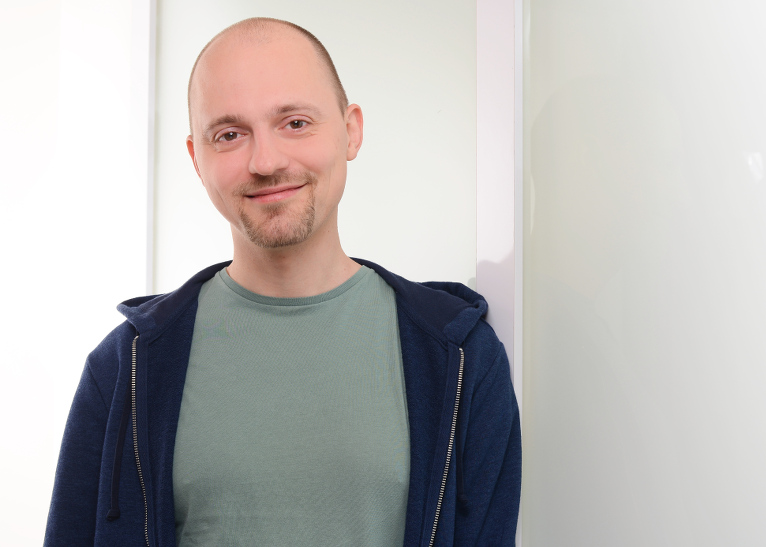
Karl Bringmann is a Professor at Saarland University since November 2019 and is affiliated with the Max Planck Institute for Informatics, where he works in the Department of Algorithms and Complexity. He has established himself as a leading researcher in theoretical computer science, particularly in fine-grained complexity and algorithm design. His work bridges theoretical insights with practical applications in optimization problems. Bringmann's research focuses on conditional lower bounds (often based on the Strong Exponential Time Hypothesis) and algorithm design, with particular emphasis on optimization problems, string algorithms, and computational geometry. His work has significant implications for fundamental problems like Subset Sum, Knapsack, and Integer Programming, with applications ranging from scheduling to post-quantum cryptography. He develops innovative approaches combining modern algorithmic techniques, mathematical structure theory, and fine-grained complexity to design faster algorithms and establish optimality. His publication record shows a consistent trend toward developing near-optimal algorithms for fundamental problems, with significant contributions to fine-grained complexity theory. His work often establishes tight conditional lower bounds while simultaneously providing matching upper bounds, creating a comprehensive understanding of problem complexity. He has made notable advances in string algorithms (particularly edit distance), geometric problems, and optimization. ERC Starting Grant 2019: Technology Transfer between Integer Programming and Efficient Algorithms (TIPEA) EATCS Presburger Award for Young Scientists 2019 Heinz Maier-Leibnitz-Prize 2019 EATCS Distinguished Dissertation Award 2015 Google European Doctoral Fellowship 2012-2014 Bringmann leads the ERC-funded TIPEA project (2019-2024), which investigates fundamental optimization problems with the goal of developing next-generation industrial solvers. He advises several PhD students including Nick Fischer, Alejandro Cassis, and Vasileios Nakos, and has served on numerous program committees for top theoretical computer science conferences including STOC, FOCS, SODA, and ICALP. His teaching includes advanced courses on Fine-Grained Complexity Theory and Competitive Programming.