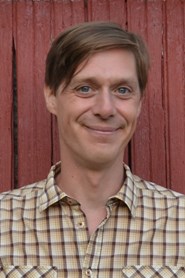
Joachim Toft is a Professor in the Department of Mathematics at Linnaeus University (formerly Växjö University), where he has been employed since February 2004. Prior to this position, he served as an assistant professor at Blekinge Institute of Technology in Karlskrona, Sweden. He completed his PhD in mathematics at Lund University in 1997 and was employed as a teaching assistant master at Kristianstad University from 1995 to 1998. Currently, he holds editorial positions for the Journal of Pseudo-Differential Operators and Applications and Annals of Functional Analysis, and serves as a member of the International Society of Analysis, its Applications and Computations (ISAAC). Professor Toft's research primarily focuses on pseudo-differential calculus and related mathematical fields. His work encompasses Fourier analysis, time-frequency analysis, harmonic analysis, basic operator theory, generalized functions (particularly Gelfand-Shilov spaces and Gevrey classes), and micro-local analysis. While these areas form the core of his theoretical work, he also explores applications to wave phenomena, including physics interpretations, non-stationary filters in signal analysis, and geophysics. His research approach emphasizes functional analysis, harmonic analysis, and basic operator theory more frequently than is typical within these specialized fields. The recent publication record demonstrates a strong focus on extending pseudo-differential operator theory to more generalized function spaces, including quasi-Banach spaces, Orlicz spaces, and Pilipović spaces. His work shows a clear progression toward developing more comprehensive frameworks for time-frequency analysis and operator theory, with particular attention to continuity properties, spectral invariance, and characterization of operators in various function spaces. The collaboration network spans multiple international institutions, reflecting the global nature of modern mathematical research. Professor Toft is actively involved in three major research groups at Linnaeus University: the International Center for Mathematical Modeling (ICMM), Scientific Computing and Partial Differential Equations, and Waves, Signals and Systems. His current research project focuses on developing Hörmander-Weyl calculus within the framework of ultra distributions, aiming to create calculi feasible for objects more complex than standard distributions.