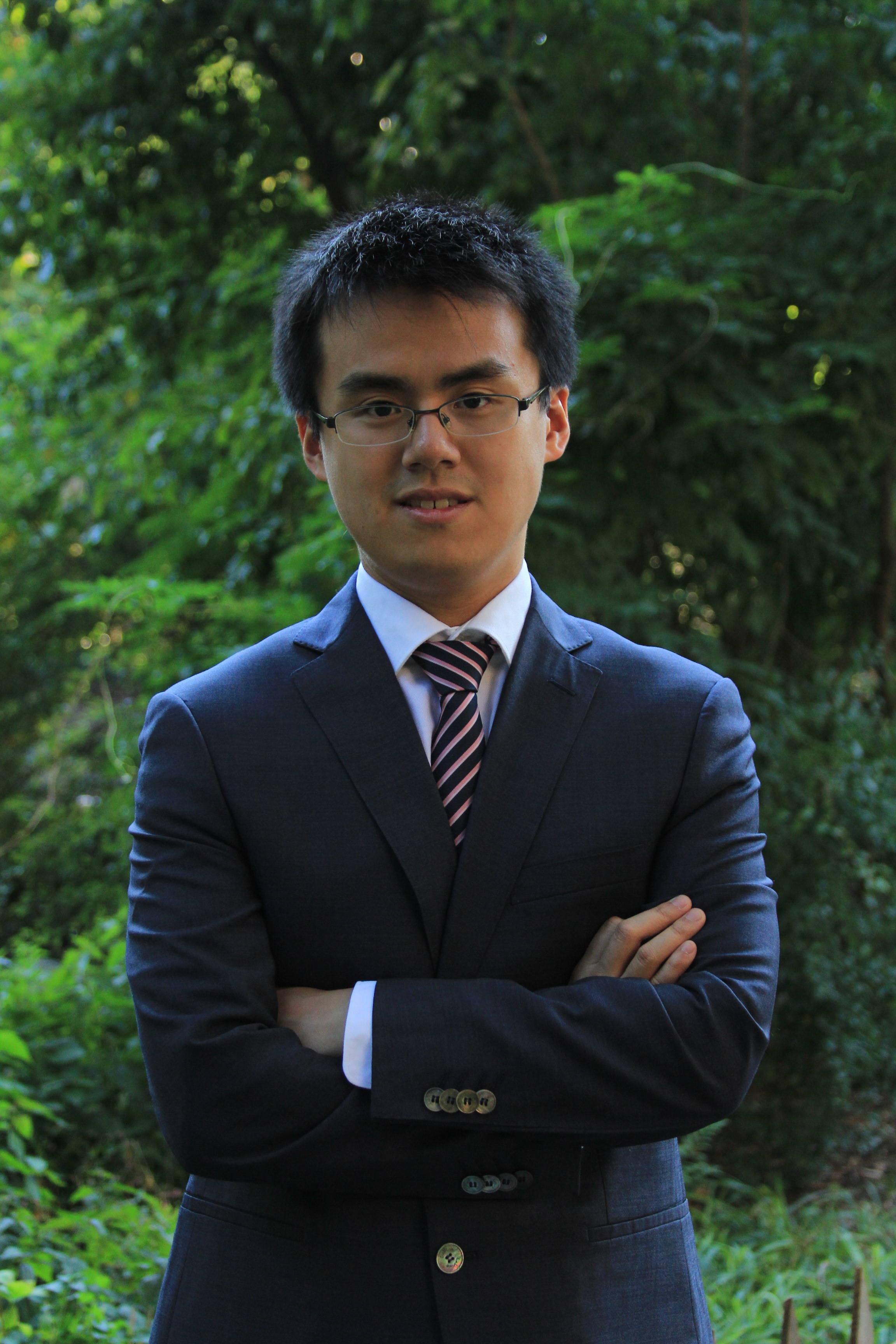
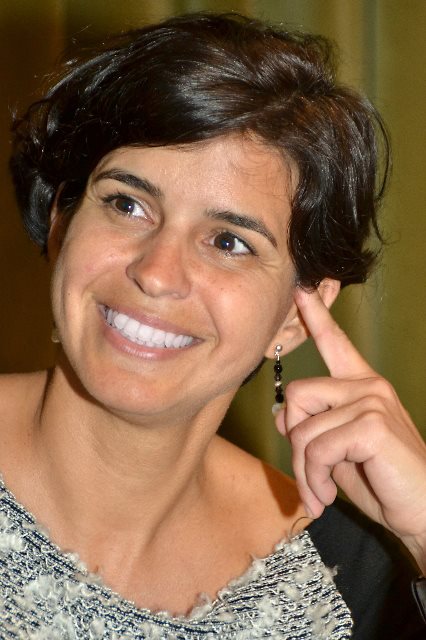
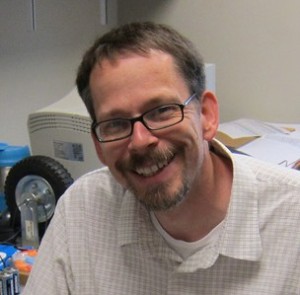
Athanasios Rontogiannis is an Associate Professor at the School of Electrical and Computer Engineering of the National Technical University of Athens (NTUA). He holds a PhD in Signal Processing from the National University of Athens (1997) and has held roles including Research Director at the National Observatory of Athens (2017–2021). His research focuses on signal processing, machine learning, and hyperspectral image analysis. Education: MEng (Electrical Engineering, NTUA, 1991), M.A.Sc. (University of Victoria, Canada, 1993), PhD (Signal Processing, National University of Athens, 1997). Research interests include adaptive algorithms, sparse representations, and tensor models. He has served on editorial boards of IEEE Transactions on Signal Processing and EURASIP journals, receiving an honorary distinction in 2020. He is a Senior Member of IEEE and affiliated with EURASIP and the Technical Chamber of Greece. Key contributions span hyperspectral unmixing, Bayesian algorithms, and space data exploitation. His work integrates machine learning for applications in space science and signal processing.
Garnet K. Chan is the Bren Professor of Chemistry and Director of the Rudolph A. Marcus Center for Theoretical Chemistry at the California Institute of Technology. He received his B.S. from the University of Cambridge in 1996 and his M.A. and Ph.D. from the University of Cambridge in 2000. Dr. Chan's research lies at the interface of theoretical chemistry, condensed matter physics, and quantum information theory, focusing on quantum many-particle phenomena and the numerical methods to simulate them. His group has developed numerous methodologies including density matrix renormalization and tensor network algorithms, canonical transformation-based down-foldings, local quantum chemistry methods, quantum embeddings, and new quantum Monte Carlo algorithms. His work addresses problems that appear naively exponentially hard but where understanding of physics, particularly entanglement structure, allows for calculations of polynomial cost. Analysis of his recent publications reveals a strong focus on quantum simulation techniques, particularly tensor network methods applied to strongly correlated systems. His research spans fundamental theoretical developments to practical applications in quantum computing, molecular simulation, and materials science, with increasing integration of machine learning techniques and GPU acceleration in computational chemistry frameworks. Dr. Chan leads an active research group at Caltech dedicated to simulating chemical and physical systems at the level of many-particle quantum mechanics. His group has welcomed numerous researchers including Kasra Hejazi, Zuxin Jin, Zhihao Cui, Ke Liao, Henrik Larsson, and Wenyuan Liu. He teaches courses in Physical Chemistry (Ch 21 abc) and Advanced Quantum Chemistry (Ch 225), contributing significantly to theoretical chemistry education at Caltech.
Abdulkadir C. Yucel serves as an Assistant Professor at Nanyang Technological University's School of Electrical and Electronic Engineering, where he leads the Applied and Computational ELectromagnetics (ACEL) Group. His research spans applied electromagnetics, radar imaging, and AI-driven electromagnetic analysis with applications in smart cities, neurotechnology, and quantum systems. Education: Ph.D. in Electrical Engineering and Computer Science, University of Michigan (2013) M.S. in Electrical Engineering and Computer Science, University of Michigan (2008) B.S. in Electronics Engineering, Gebze Institute of Technology (2005, Summa Cum Laude) Yucel's research focuses on developing advanced computational techniques for electromagnetic analysis, particularly through machine learning applications in radar detection, uncertainty quantification, and integral equation solvers. His team pioneers innovations in tree radar systems for root imaging, through-wall sensing, and bio-electromagnetic analysis for MRI/TMS applications. Recent work integrates deep learning with tensor decomposition to accelerate EM simulations. Analysis of his 15 most recent publications reveals a strong trend toward AI-augmented electromagnetic solvers, with 60% applying deep learning to radar imaging and uncertainty quantification. Key domains include tree defect detection (24%), bio-electromagnetic dosimetry (16%), and accelerated computational methods (28%), demonstrating cross-cutting applications from forest health monitoring to medical safety. Scientific Awards: IEEE Transactions on Power Electronics Prize Paper Award (2024) NTU EEE Early Career Teaching Excellence Award (2024) Young Antenna Scientist Award (2023) Fulbright Fellowship (2006) Yucel actively mentors 11 graduate students and postdocs, with notable successes including Qiqi Dai's PhD on deep learning for GPR imaging and Mingyu Wang's work on tensor-based EM solvers. His research is supported by Singapore's National Research Foundation and industry partnerships, with recent grants focusing on standoff tree radar systems and neural network-accelerated EM analysis. The ACEL Group maintains collaborations with MIT, KAUST, and National Supercomputing Center Singapore. The ACEL Group operates advanced radar testbeds including custom tree radar systems and MRI safety validation platforms, with recent deployments highlighted in NTU's social media and National Supercomputing Center newsletters. Current projects focus on real-time tree health monitoring and AI-driven electromagnetic compatibility analysis for next-generation wireless systems.
Nima Lashkari is an Assistant Professor of Physics and Astronomy at Purdue University, affiliated with the College of Science . His research focuses on quantum field theory (QFT), quantum gravity, black hole physics, and quantum information theory. He holds a Ph.D. in Theoretical Physics from McGill University (2012) and a B.Sc. in Physics from Sharif University of Technology (2006). Prior to Purdue, he held postdoctoral positions at MIT, the University of British Columbia, and Stanford University, and was a member of the School of Natural Sciences at the Institute for Advanced Study (2018–2019). His research explores operator algebras in quantum gravity, local S-matrix formalisms, and multipartite entanglement. Notable interests include renormalization group flows as quantum error correction, eigenstate thermalization in QFT, and holographic principles. He is a member of the It from Qubit collaboration , focusing on non-perturbative quantum field theory and gravity through quantum information lenses. Lashkari’s work has contributed to understanding gravitational dynamics via entanglement, modular theory applications in QFT, and the interplay between quantum information and spacetime geometry. His recent talks include discussions on modular intersections, time interval algebras, and gravitational energy theorems derived from information inequalities.
Daniele Venturi is a Professor of Applied Mathematics at the University of California, Santa Cruz, where he has been faculty since 2015, rising from Assistant Professor to full Professor by 2021. Previously, he was a Research Assistant Professor at Brown University from 2010-2015. His academic journey began at the University of Bologna, where he earned both his combined B.S./Sc.M. in Mechanical Engineering (2002) and Ph.D. in Applied Physics with a focus on thermo-fluid dynamics (2006). University of Bologna: B.S./Sc.M. Mechanical Engineering (2002), Ph.D. Applied Physics (2006) Brown University: Research Assistant Professor (2010-2015) UC Santa Cruz: Assistant to Associate to Full Professor (2015-present) Professor Venturi's research spans multiple cutting-edge areas in computational mathematics. His primary interests include stochastic modeling and uncertainty quantification, numerical tensor methods for high-dimensional PDEs, data-driven modeling approaches, approximation of functional-differential equations, and theoretical/computational fluid dynamics. His work bridges theoretical mathematical frameworks with practical computational implementations, particularly focusing on overcoming the curse of dimensionality in complex systems. His recent research has been heavily focused on hierarchical tensor methods for solving high-dimensional partial differential equations. The analysis of his publication record reveals a strong emphasis on developing computational frameworks that address high-dimensional challenges in uncertainty quantification and model reduction. His work frequently intersects machine learning techniques with traditional numerical methods, particularly in developing physics-informed neural networks and multifidelity modeling approaches. A consistent theme across his publications is the development of mathematical frameworks that maintain computational tractability while preserving physical fidelity in complex systems. Professor Venturi has secured substantial research funding from major agencies including the Air Force Office of Scientific Research (AFOSR), Department of Energy (DoE), National Science Foundation (NSF), Army Research Office (ARO), and Defense Advanced Research Projects Agency (DARPA). His most significant current grant is a 2024-2029 AFOSR MURI award totaling $7.5M as co-PI for 'Tensor Network for simulating kinetic systems.' 2024-2029: AFOSR MURI, $7.5M (co-PI) 2023-2027: DoE, $3.8M (co-PI) 2023-2026: AFOSR, $2.5M (co-PI) 2020-2025: NSF TRIPODS, $2.3M (co-PI) At UC Santa Cruz, Venturi teaches a range of courses including Fundamentals of Uncertainty Quantification, Applied Dynamical Systems, Nonlinear Dynamical Systems, and Numerical Methods for Differential Equations. His teaching spans both undergraduate and graduate levels, reflecting his expertise across theoretical and computational mathematics. His lecture notes for these courses are publicly available and demonstrate his commitment to pedagogical excellence in complex mathematical subjects.
David Hong is an Assistant Professor in the Department of Electrical and Computer Engineering at the University of Delaware. He holds a PhD from the University of Michigan, where he was an NSF Graduate Research Fellow, and previously served as an NSF Postdoctoral Research Fellow at the University of Pennsylvania. His research focuses on developing robust methods for analyzing heterogeneous and high-dimensional data, particularly through low-rank matrix and tensor techniques. Applications span medical imaging, radar systems, genomics, and astronomy. He emphasizes theoretical guarantees and practical algorithms for signal extraction and inverse problems. Education: PhD in Electrical Engineering and Computer Science (University of Michigan), NSF Postdoctoral Research Fellowship (University of Pennsylvania). Research Interests: Low-rank matrix/tensor methods, heterogeneous data analysis, unsupervised learning, and applications in healthcare, imaging, and sensor systems. His work addresses noise robustness, scalable algorithms, and real-world deployment challenges. Scientific Awards: Recipient of the NSF Postdoctoral Research Fellowship (2020) and NSF Graduate Research Fellowship (2015). Advising & Grants: Advisor to graduate students in machine learning and signal processing (no named advisees listed). Active NSF grant recipient for foundational and applied research in data science. Labs/Teams: Engaged in interdisciplinary collaborations through the University of Delaware's Center for Computational Research and Data Science initiatives.
Peter Zoller is a Professor of theoretical physics at the University of Innsbruck and Scientific Director at IQOQI Innsbruck (Austrian Academy of Sciences). His research focuses on quantum optics, many-body quantum physics, and quantum information science, with a strong emphasis on quantum simulation of gauge theories and atomic systems. He has trained 34 PhD students and hosted 57 postdoctoral researchers, fostering collaborations between theory and experiment. His group, the Zoller Group, explores quantum phenomena such as lattice gauge theories, entanglement dynamics, and topological order using advanced quantum simulation techniques. Key research interests include atomic physics, quantum gases, and applications of quantum technologies to high-energy physics problems. Recent work addresses string breaking in quantum simulators, entanglement Hamiltonians, and scalable architectures for fermionic quantum processors. Collaborations span institutions like Harvard, MIT, and the University of Innsbruck’s experimental teams. His contributions bridge foundational physics with cutting-edge quantum technologies, aiming to solve problems inaccessible to classical methods.
Athanasios Liavas is a Professor at the Technical University of Crete in the School of Electrical and Computer Engineering , specializing in Signal Processing for Telecommunications and Information Theory . He has held administrative roles as Department Chair (2009-2011), Vice Chair (2011-2013), and Dean of the ECE School (2017-2021). Education: Diploma (1989) and PhD (1993) in Computer Engineering and Informatics from the University of Patras. Professional Background: Postdoctoral Marie Curie Fellow at INT, Evry (1996-1998); Lecturer at University of Ioannina (1999-2001); Assistant/Associate Professor at University of the Aegean (2001-2004) and Technical University of Crete (2004-present). His research focuses on Signal Processing for Telecommunications , Information Theory , and Tensor Decomposition . Recent work involves nonnegative tensor factorization , parallel algorithms , and fMRI data analysis , with applications in wireless communications and medical imaging . Articles show trends in optimization algorithms , LDPC code design , and MIMO system robustness . Scientific Awards include: Marie Curie Fellowship (1996-1998) Associate Editor, IEEE Transactions on Signal Processing (2005-2009) Elected Member, IEEE Signal Processing for Communications and Networking Technical Committee (2006-2011) He has taught courses like Telecommunications Systems II , Wireless Communications , and Information Theory , and supervised students such as Despoina Tsipouridou (PhD) and Alex Balatsoukas-Stimming (Graduate). He leads projects like Partensor (Parallel Tensor Toolbox) and COOPCOM (Cooperative Communications), and contributes to labs including the Telecommunications Laboratory .
Anru Zhang is the tenured Eugene Anson Stead, Jr. M.D. Associate Professor with joint appointments in Biostatistics & Bioinformatics, Computer Science, Electrical and Computer Engineering, and Statistical Science at Duke University. He holds a Ph.D. from the University of Pennsylvania (2015, advised by T. Tony Cai) and a B.S. in Mathematics from Peking University (2010). Current roles: Associate Professor at Duke (2024–present), previously Assistant Professor at UW-Madison (2018–2021) Research focus: Tensor learning, high-dimensional statistics, EHR analysis, and healthcare applications Mentorship: Supervises active research team including postdocs (Jianbin Tan, Qiuyi Wu) and PhD students (Runshi Tang, Yinrui Sun) Research Trends : His recent publications emphasize tensor methods in biomedical data (EHR, microbiome, Alzheimer’s), Riemannian optimization for high-dimensional problems, and hybrid statistical-computational approaches. Key themes include healthcare AI, EHR analysis, and non-convex optimization. Scientific Awards : COPSS Emerging Leader Award (2024) IMS Tweedie New Researcher Award (2022) ASA Gottfried E. Noether Junior Award (2021) NSF CAREER Award (2020) AMIA Data Science Outstanding Paper Award (2023) Advising & Grants : Mentored 16+ students/postdocs, including Yuetian Luo (IMS Lawrence D. Brown Award) and Yuchen Zhou (IMS Hannan Travel Award). Current grants include NIH-funded projects on sepsis detection, mental health AI, precision genetic testing, and telehealth interventions, plus NSF CAREER funding for statistical inference in high-dimensional structures. Labs & Teams : Leads a research group at Duke focusing on tensor learning, statistical theory, and healthcare AI applications. Collaborates with Duke’s AI Health initiative and serves as Associate Editor for leading journals like Annals of Statistics and JASA.
Hossein Valavi is a Lecturer and Assistant Director of Undergraduate Studies at Princeton University, contributing to advancements in computer architecture and hardware acceleration. His research focuses on in-memory computing, neural networks, and energy-efficient systems, with notable work in reconfigurable architectures and mixed-signal processing. He has received multiple teaching awards, including recognition for innovative pandemic-era Car Lab courses and collaborative work honored by the Edison Patent Award. His academic contributions span academic positions since 2018, emphasizing both research and pedagogical excellence. Key technical areas include scalable in-memory computing systems, analog neural network accelerators, and low-power matrix factorization algorithms. His work addresses critical challenges in data movement reduction and hardware-software co-design for modern computing systems. Awards: Teaching Excellence Awards (2021, 2023), Edison Patent Award (2023) Grants & Projects: Leading developments in in-memory computing accelerators and embedded microprocessor designs Research teams under his guidance have produced impactful IP in semiconductor layouts, CNN accelerators, and programmable architectures, aiming to bridge theoretical computer science with practical hardware implementations.
Kejun Huang is an Assistant Professor in the Department of Computer and Information Science and Engineering at the University of Florida's Herbert Wertheim College of Engineering. His primary research area is Machine Learning, with additional interests in algorithms, computer vision, and data science. He received his Ph.D. in Electrical Engineering from the University of Minnesota in 2016. His research focuses on machine learning, signal processing, optimization, and statistics. Recent work tackles unsupervised learning challenges and AI-powered medical research through NIH-funded projects. Dr. Huang's publications demonstrate consistent focus on optimization techniques for tensor decomposition, dictionary learning identifiability, and nonnegative matrix factorization. Key themes include algorithmic efficiency and theoretical guarantees in machine learning models.
Marta Casanellas is a full professor in the Department of Mathematics at the Polytechnic University of Catalonia (UPC) and a researcher at the Centre de Recerca Matemàtica. She teaches at the Faculty of Mathematics and Statistics, ETSEIB, and FIB. She earned her PhD in mathematics from the University of Barcelona under RM Miró-Roig, focusing on algebraic geometry and liaison theory. After completing a postdoc at UC Berkeley with a Fulbright Scholarship, she shifted her research to applications of algebraic geometry in computational biology, particularly phylogenetics. Her educational background includes a PhD from the University of Barcelona (2002), followed by a postdoctoral fellowship at UC Berkeley (2002-2003) supported by a Fulbright Scholarship. She obtained a prestigious Ramón y Cajal contract at UPC in 2003, which marked her transition to interdisciplinary research at the intersection of mathematics and biology. Casanellas' research focuses on applying algebraic and geometric techniques to phylogenetics, with particular emphasis on evolutionary models, phylogenetic invariants, and computational methods for genomic data analysis. Her work bridges pure mathematics (particularly algebraic geometry) with biological applications, developing mathematical frameworks to reconstruct evolutionary histories and understand genomic relationships. She has published extensively in both mathematics journals like Advances in Mathematics and biology journals like Molecular Biology and Evolution. Her recent publications demonstrate a consistent focus on developing algebraic methods for phylogenetic analysis, with increasing attention to heterogeneous evolutionary processes across lineages, time-reversible models, and computational implementations of theoretical results. The trend shows progression from theoretical foundations in algebraic geometry toward increasingly sophisticated and applicable computational methods for biological data. Fulbright Scholarship for postdoctoral research at UC Berkeley Ramón y Cajal contract (2003) Casanellas has supervised PhD students including A. Kedzierska (co-supervised with R. Guigó of the CRG). She has served as principal investigator for three competitive Spanish government projects involving fifteen researchers each. She has held significant academic leadership roles including Deputy Director of Research of the Department of Mathematics at UPC (2015-2018), head of studies for the Degree in Data Science and Engineering at UPC (2018-2022), and currently coordinates UPC's PhD in Bioinformatics program and Bachelor's Degree in Bioinformatics. She leads the BIO-GEOMAP research group focused on applying mathematical techniques to biological problems.
Miaoyan Wang is an Associate Professor in the Department of Statistics at the University of Wisconsin-Madison, part of the School of Computer, Data & Information Sciences. She holds early tenure and is a faculty affiliate in the Mathematical Foundations of Machine Learning, Institute for Foundations of Data Science (IFDS), and Center for Demography of Health and Aging (CDHA). She is currently on sabbatical as a visiting associate professor at Stanford University and Lawrence Livermore National Laboratory. Education: PhD in Statistics from the University of Chicago (2015), BS in Mathematics from Fudan University (2010). Postdoctoral training included positions at UC Berkeley (Computer Science) and the University of Pennsylvania (Math+X). Research focuses on statistical machine learning, with emphasis on matrix/tensor data analysis, high-dimensional statistics, nonparametric learning, and applications in genetics. Her work bridges theory and practice, addressing challenges in computational efficiency and statistical optimality for complex data structures. Awards include the prestigious NSF CAREER Award (2022), multiple best paper awards (ASA, IMS, NEURIPS), and recognition from ASHJ and IGES. Her group has secured grants totaling $3.4 million, including NSF funding for foundational machine learning research and collaborative projects in population genomics. Advising includes PhD students Chanwoo Lee and Jiaxin Hu, with former students Yuchen Zeng and Zhuoyan Xu. She teaches advanced statistical methods and computational courses, emphasizing rigorous theoretical foundations and practical applications. Key collaborations include work on tensor decomposition algorithms, statistical genetics, and interdisciplinary projects with biology and computer science departments. Her lab contributes open-source software tools for data analysis, including packages for tensor block models and multiway clustering.
Florent Krzakala is a Full Professor at École polytechnique fédérale de Lausanne (EPFL) in Switzerland, holding positions across multiple departments including the School of Basic Sciences (SB), School of Engineering (STI), and specifically within the Department of Physics (IPHYS) and Department of Electrical Engineering (IEM). He leads the Information, Learning and Physics Laboratory (IdePHICS) and maintains an office at ELD 239, Station 11, 1015 Lausanne. His research bridges statistical physics and computational disciplines, with significant contributions to understanding the theoretical foundations of machine learning and optimization problems. Dr. Krzakala received his MSc in Physics from Orsay, France in 1999, followed by a PhD in Statistical Physics from Orsay, Paris XI, France in 2002, and completed a postdoctoral position at Roma La Sapienza in 2004. This strong foundation in physics has informed his interdisciplinary approach to computational problems. His research interests span Statistical Physics, Machine Learning, Probability and Statistics, Computer Science, Information Theory, Inference on Graphs, Random Constraint Optimization, and Computational Optics. Krzakala's work focuses on applying methods from statistical physics to problems in theoretical computer science, probability, and machine learning. He investigates how concepts from disordered systems and phase transitions can illuminate computational barriers in optimization and inference tasks. His research has particular relevance for understanding the behavior of neural networks, compressed sensing, and high-dimensional statistical models. Analysis of his recent publications reveals a strong trend toward understanding the fundamental limits of learning in high-dimensional settings, with particular emphasis on phase transitions, statistical-to-computational gaps, and the theoretical properties of deep learning architectures. His work frequently bridges rigorous mathematical analysis with practical machine learning applications, demonstrating how insights from statistical physics can inform algorithm design and theoretical understanding in AI. Krzakala actively mentors the next generation of researchers, supervising numerous PhD students whose work continues to advance these interdisciplinary fields. His laboratory serves as a hub for researchers exploring the intersection of physics and computation, fostering collaborations across traditional disciplinary boundaries. He teaches advanced courses including Fundamentals of Inference and Learning, Statistical Physics, and Statistical Physics for Optimization & Learning, which examine the connections between physical principles and computational methods. His educational materials, including lecture notes on statistical physics methods in optimization and machine learning, have become valuable resources for students and researchers worldwide. As founder and scientific advisor of the startup Lighton, Krzakala has also demonstrated a commitment to translating theoretical insights into practical applications, particularly in the realm of optical computing for machine learning tasks.
Dr. Tim Oates is a Professor in the Department of Computer Science and Electrical Engineering at the University of Maryland, Baltimore County . His research spans machine learning, artificial intelligence, and brain-machine interfaces, with a focus on weakly supervised methods, human-in-the-loop reinforcement learning, and grounded policy development for robotics. Ph.D., Computer Science, University of Massachusetts, Amherst, 2000 M.S., Computer Science, University of Massachusetts, Amherst, 1997 B.S., Computer Science and Electrical Engineering, 1989 Current research threads include: Developing non-invasive brain injury severity assessment via medical time series Modeling human brain development through computational frameworks Designing algorithms for autonomous robotic learning Recent publications highlight AI security mechanisms (backdoor detection via tensor decomposition, matrix factorization) Medical applications (3D artery reconstruction, skin lesion diagnosis, EEG denoising) Neuro-symbolic integration (holographic representations, language-guided reinforcement learning) Mathematical reasoning (schema-based problem solving, subitizing algorithms) Contact: oates@cs.umbc.edu | Office: 336 Information Technology and Engineering (ITE) Building