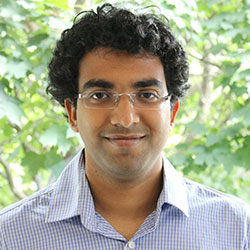
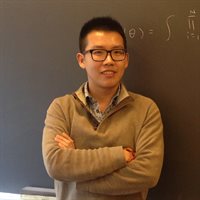
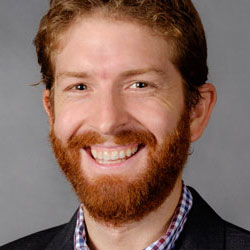
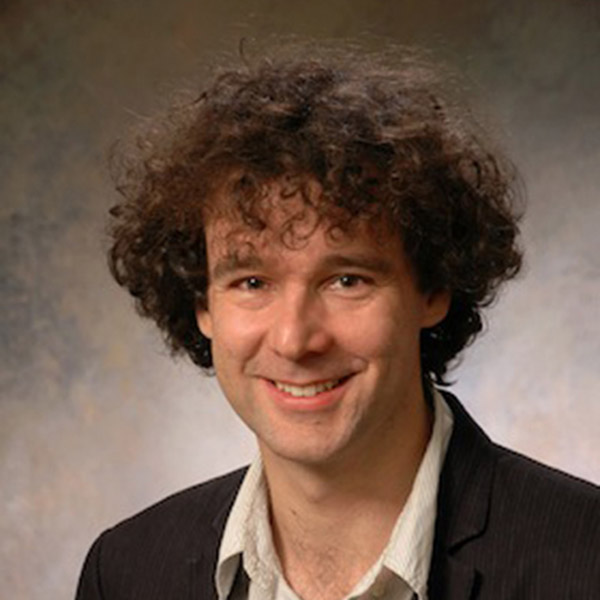
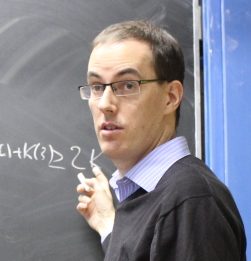
Dr. Vijayaraghavan Aravindan is an Associate Professor in the Department of Computer Science at Northwestern University, with a courtesy appointment in Industrial Engineering & Management Sciences. He is a core member of the Theory CS Group and serves as the Site Director for the NSF-funded Institute for Data, Economics, Algorithms, and Learning (IDEAL). His research focuses on theoretical computer science, particularly algorithmic foundations of machine learning, quantum information, and beyond worst-case analysis. Education: Ph.D. and M.A. in Computer Science, Princeton University B.Tech. in Computer Science and Engineering, Indian Institute of Technology Madras Research Interests: His work bridges theoretical computer science and machine learning, emphasizing efficient algorithms for high-dimensional data, quantum entanglement certification, and adversarial robustness. He explores paradigms such as smoothed analysis and stability-based approaches to provide practical algorithmic guarantees. Awards & Grants: NSF CAREER Award Google Research Scholar NSF AITF Grants (CCF-1637585, CCF-2154100) Advising & Teaching: He advises PhD students on topics like quantum computing, robust machine learning, and optimization. Courses taught include graduate algorithms, theoretical foundations of data science, and quantum computation. His lab collaborates on projects at IDEAL and with institutions like Carnegie Mellon University and TTI Chicago. Professional Leadership: Served as FOCS 2024 General Chair and organizes the McCormick Theory Workshops. Active on program committees for ICML, COLT, and NeurIPS.
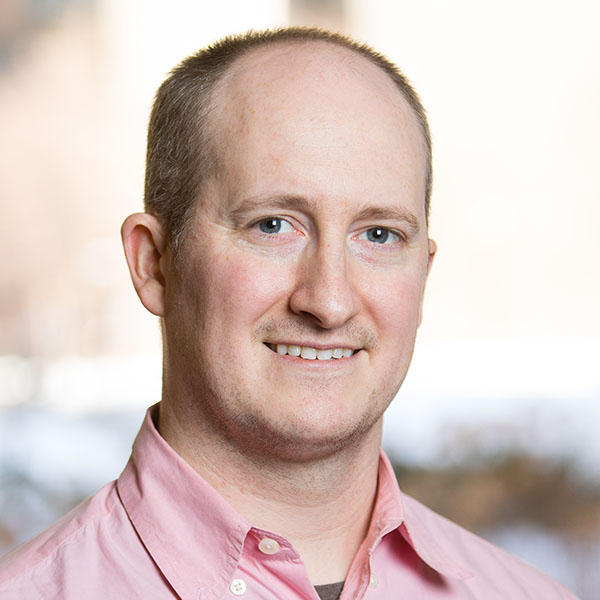
Eric F. Lock is an Associate Professor in the Division of Biostatistics & Health Data Science at the University of Minnesota's School of Public Health. He is also a Member of the Masonic Cancer Center (MCC) and has been at the University of Minnesota since 2014, after completing his PhD in Statistics from the University of North Carolina in 2012 and a postdoctoral fellowship in Statistical Genomics at Duke University in 2014. Lock's research focuses on developing methods for the analysis of multi-faceted high-dimensional data, particularly in "omics" fields such as genomics, metabolomics, and proteomics. His work emphasizes the integrated analysis of data from multiple sources (e.g., gene expression, metabolomics, imaging) or measured in multiple dimensions (e.g., multiple tissue types or body regions). He also specializes in exploratory factorization and clustering methods, and Bayesian nonparametric inference. His recent publications demonstrate significant contributions to tensor data imputation (BAMITA), matrix decomposition (EV-BIDIFAC), and methods for handling complex genomic data. His work bridges statistical theory with practical applications in molecular biology, addressing challenges in data integration across multiple biological measurement platforms. Delta Omega, Honorary Society in Public Health (2019) As an active researcher and educator, Lock serves on dissertation committees, including for Mykhaylo M. Malakhov who recently defended his PhD at the University of Minnesota School of Public Health. He is involved in organizing and participating in major conferences such as STATGEN 2025, demonstrating his leadership in the biostatistics community.
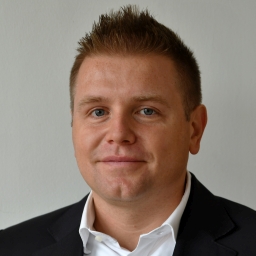
David Sherman is an Associate Professor in the Department of Mathematics at the University of Virginia, part of the College of Arts & Sciences. His research focuses on functional analysis and operator algebras, with specialized interests in noncommutative L p spaces, operator theory within von Neumann algebras, model theory of operator algebras, and noncommutative convexity. He has contributed to foundational studies of noncommutative L p spaces, isometries between operator algebras, and applications of logic to operator algebras. Recent teaching includes advanced calculus, linear algebra, and operator theory courses. His work bridges pure mathematics with interdisciplinary themes, such as applying set-theoretic methods to algebraic structures and exploring connections between operator algebras and logic. Sherman has co-authored significant papers on topics like support expansion C*-algebras and quantization of coarse spaces, reflecting his expertise in modern operator theory. His research outputs emphasize structural properties of operator algebras, with notable contributions to the classification of II₁ factors and model-theoretic approaches to noncommutative systems. While no specific awards are listed, his extensive publication record and teaching roles highlight his academic impact. Sherman maintains administrative involvement in undergraduate mathematics programs and graduate initiatives at UVA.
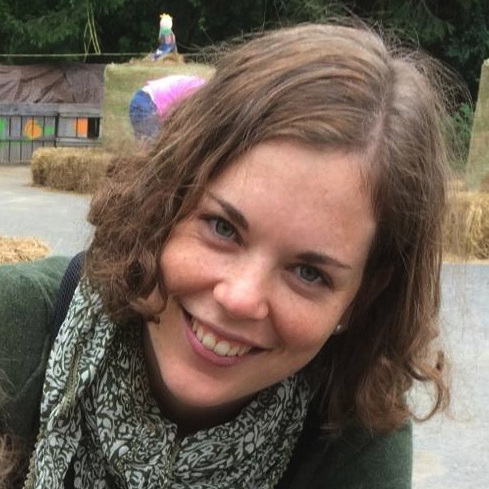
Elizaveta Rebrova is an Assistant Professor in the Department of Operations Research and Financial Engineering (ORFE) at Princeton University. She is also associated with the Program in Applied and Computational Mathematics (PACM) and the Center for Statistics and Machine Learning (CSML). Education: Specialist degree from Moscow State University (2012), PhD in Mathematics from University of Michigan (2018 under Roman Vershynin) Prior Appointments: Postdoctoral Scholar at Lawrence Berkeley National Lab (2021), Assistant Adjunct Professor at UCLA Mathematics Department (2018-2021) Her research focuses on randomized numerical linear algebra , mathematics of data science , and high-dimensional probability . Key interests include developing algorithms for large-scale data with non-trivial structure, robust and interpretable learning, and stochastic optimization. Her recent work analyzes algorithmic convergence in structured settings, tensor-based data compression, and nonnegative matrix/tensor factorization under constraints. Recent publications span topics in randomized NLA , robust solvers , tensor methods , and nonnegative matrix factorization . Notable trends include improving convergence rates for iterative methods, handling adversarial noise in linear systems, and leveraging tensor structures for efficient data recovery. She supervises Ph.D. students including Jackie Lok, Shambhavi Suryanarayanan, and Sofiia Shvaiko. Her teaching at Princeton covers graduate probability theory (ORF526), convex optimization (ORF523), and network science (ORF387), with prior teaching roles at UCLA and University of Michigan.
Konrad Kowalczyk is an Associate Professor at AGH University of Science and Technology in Krakow, Poland, where he heads the Signal Processing Group within the Faculty of Computer Science, Electronics and Telecommunications. With extensive international experience from institutions including Queen's University Belfast, Stanford University, and Fraunhofer Institute, he has established himself as a leading researcher in audio and speech signal processing. His academic journey includes B.Eng. and M.Sc. degrees from AGH University (2005), a Ph.D. from Queen's University Belfast (2009), and a Habilitation in ICT from AGH University (2020). B.Eng. and M.Sc. in Electronics and Telecommunications, AGH University of Krakow (2005) Ph.D. in Electronics, Queen's University Belfast, UK (2009) Habilitation (D.Sc.) in Information and Communication Technology, AGH University of Krakow (2020) Kowalczyk's research spans multiple cutting-edge areas in audio processing, with particular focus on speech and audio signal processing enhanced by machine learning techniques. His work integrates deep neural networks with traditional signal processing methods to address challenges in array signal processing , speech enhancement , and speaker recognition . The research group he leads explores innovative applications in distributed signal processing for IoT , acoustic event detection , and spatial audio rendering , bridging theoretical advances with practical implementations. His recent publications demonstrate a clear trend toward integrating deep learning with traditional signal processing techniques, particularly in speaker diarization, source separation, and robust speech recognition. The research increasingly focuses on real-world applications requiring reverberation-robust processing , distributed microphone array systems , and end-to-end neural architectures that can operate in challenging acoustic environments. There's a noticeable shift toward more complex, integrated systems that combine multiple signal processing tasks. Stanislaw Staszic Medal for best graduate of AGH (2005) IEEE Best Student Paper Contest finalist (2007) AES Student Technical Paper Award winner (2008) Best Student Paper Award at IWAENC conference (2014) Best Paper Awards at IEEE SPA conferences (2016, 2019) Polish Ministry of Science Scholarship for Distinguished Young Scientists (2016-2019) Prime Minister Award for outstanding scientific achievements (2020) As Principal Investigator, Kowalczyk leads multiple significant research projects including "Acoustic Intelligence" (2024-2028) funded by National Science Center, and "Deep extraction for robust speech recognition" (2023-2028). He has successfully secured funding from prestigious programs including First TEAM from the Foundation for Polish Science, and EU FP7 projects. His research group actively supervises Ph.D., M.Sc., and B.Eng. students, with strong connections to international institutions including Aalto University and IEEE Signal Processing Society. The research output includes numerous journal publications, conference papers, patents, and software implementations that have advanced the field of audio signal processing. Kowalczyk leads the Signal Processing Group at AGH University, which focuses on developing innovative solutions for speech and audio processing challenges. The group maintains strong collaborations with international institutions including Aalto University (Finland), and participates in European research initiatives. Their work spans theoretical development through practical implementation, with applications ranging from medical voice assistants to distributed acoustic sensor networks.
Dr. HanQin Cai is the Paul N. Somerville Endowed Assistant Professor in the Department of Statistics and Data Science at the University of Central Florida (UCF), also serving as Director of the Data Science Lab. He holds a joint appointment with the Department of Computer Science. His research focuses on theoretical and algorithmic foundations of mathematical optimization, data science, and machine learning, with emphasis on non-convex algorithms, adversarial attacks, signal/image processing, and deep learning integration. He has secured NSF grants totaling over $2.6M, including a $121K single-PI grant and a $2.49M co-PI grant. His work has been recognized with the UCF OSCaR Award (2025) and IEEE Senior Member status (2024). Education: PhD in Applied Mathematical and Computational Sciences from University of Iowa (2018), with M.S. in Mathematics (2014) and M.C.S. in Computer Science (2017). Previously served as a Postdoc at UCLA Mathematics Department under Dr. Wotao Yin. Research highlights include: query-efficient zeroth-order optimization, robust signal processing with corrupted data, adversarial attacks on neural networks, and tensor-based methods for high-dimensional data analysis. His recent publications explore advanced techniques in matrix recovery, tensor decompositions, and explainable AI. Grants & Awards: NSF DMS-2304489 (2022–2025), NSF DUE-2321986 (2024–2029), UCF OSCaR Award, IEEE Senior Membership. Labs & Teams: Directs UCF's Data Science Lab, collaborates across disciplines in statistics, computer science, and engineering.
Dora Erdos is a Senior Lecturer and Director of Undergraduate Studies in the Department of Computer Science at Boston University. She specializes in algorithmic challenges, data mining, and combinatorial optimization with a focus on network-based problems. Her work bridges theoretical computer science and practical applications in education technology and network analysis. Education: PhD in Computer Science, Boston University (2015) MSc in Pure Mathematics, Eotvos University (Advisor: Andras Frank) Postdoctoral Research at Brown University's Raphael Lab (Advisor: Ben Raphael) Research Interests: Erdos investigates algorithms for network analysis, including centrality measures, graph reconstruction, and optimization problems in educational systems. She develops scalable methods for tensor factorization and content placement in navigational networks. Her work often integrates combinatorial approaches with real-world applications. Professional Roles: As Director of Undergraduate Studies, Erdos oversees academic advising and curriculum development. She emphasizes student accessibility, maintaining office hours and encouraging direct communication via email (edori@bu.edu). Recent Research Trends: Her publications (2011–2017) focus on network-centric problems such as centrality evaluation frameworks, boolean tensor decomposition, and team formation algorithms for educational scheduling. These contributions highlight her dual expertise in theoretical algorithm design and applied educational technology.
Yubai Yuan is an Assistant Professor of Statistics at the Pennsylvania State University, affiliated with the Department of Statistics within the Eberly College of Science. He holds a PhD from the University of Illinois Urbana-Champaign (2020) and completed postdoctoral research at UC Irvine. His research focuses on network science, causal inference, and statistical machine learning, with applications to neuroscience and social systems. Notable awards include the 2022 NSF-Simons Center Fellow Award and the 2019 ASA Student Paper Award. Education: PhD in Statistics (UIUC, 2020), MS in Statistics (Sun Yat-sen University, 2016), BS in Mathematics (Shandong University, 2012). Research interests span complex network analysis, optimal transport, active learning, and mediation analysis. Current projects include de-confounding causal inference and hypergraph modeling. Teaching includes courses on probability theory and statistical modeling at Penn State. Advises PhD students Yuanchen Wu (active learning on graphs) and Siyu Huang (latent network structures). Collaborates with the Center for Social Data Analytics and organizes workshops in statistical network science. Publications emphasize methodological advancements in network analysis, causal pathways, and data integration. Recent work addresses disaster response via social media data and neuronal activity analysis using optimal transport frameworks.
Dr. Yunxiao Chen is an Associate Professor in the Department of Statistics at the London School of Economics and Political Science (LSE), where he co-leads a psychometric lab with Professor Irini Moustaki. Previously, he was an Assistant Professor at Emory University (2016–2018) and earned his PhD in Statistics from Columbia University (2016). His research focuses on developing statistical and computational methods for social data science, addressing challenges in high-dimensional data analysis, latent variable models, and educational assessment. Education: PhD in Statistics, Columbia University, 2016 Research Interests: High-dimensional factor models (matrices, tensors, counting processes) Dynamic behavioral data analysis Sequential decision theory in personalized learning Statistical inference for large-scale item response data Applications in education, psychology, and marketing Publications: Recent work includes advancements in factor analysis, change-point detection, and DIF statistical inference Key journals: Journal of the American Statistical Association , Psychometrika , Journal of Machine Learning Research Awards: 2024 Psychometrics Society Best Reviewer Award 2022 Early Career Award 2018 NCME Loyd Dissertation Award Advising & Grants: Accepts PhD students in statistical methodology Funded by National Academy of Education/Spencer Fellowship (2018–2020) and IEA R&D grants (2022–2023) Labs & Teams: Runs LSE’s psychometric lab focused on educational measurement Collaborates with interdisciplinary teams on machine learning applications
Dr. Grey Ballard is an Associate Professor in the Department of Computer Science at Wake Forest University . He earned a B.S. in Math and Computer Science (2006), M.A. in Math (2008) from Wake Forest, and PhD in Computer Science (2013) from the University of California, Berkeley. He was a Truman Fellow at Sandia National Laboratories before joining Wake Forest. Research Focus: Ballard develops communication-optimal algorithms for high-performance computing , particularly in tensor decompositions , symmetric matrix computations , and nonnegative matrix factorization . His work combines numerical linear algebra with parallel algorithm design to reduce data movement costs in distributed systems. Publications demonstrate expertise in communication lower bounds , randomized tensor rounding , and visualization tools for parallel algorithms. He has contributed software packages such as TuckerMPI , GentenMPI , and PLANC for large-scale data compression and clustering. Scientific Awards: Wake Forest Excellence in Research Award NSF CAREER Award SIAM Linear Algebra Prize Three Conference Best Paper Awards (SPAA, IPDPS, ICDM) C.V. Ramamoorthy Distinguished Research Award (UC Berkeley) ACM Doctoral Dissertation Award – Honorable Mention Teaching: Courses include Introduction to Computer Science , Numerical Linear Algebra , and Parallel Algorithms . He has developed educational tools using the Thread-Safe Graphics Library to visualize parallel dynamic programming and collective communication.
Rong Chen is a Distinguished Professor and Chair of the Department of Statistics at Rutgers University, within the School of Arts and Sciences. With a Ph.D. from Carnegie Mellon University, Professor Chen has established himself as a leading researcher in statistical time series analysis, Monte Carlo methods, and their applications across various fields. Professor Chen's research focuses on: Nonlinear and Multivariate Time Series Analysis Monte Carlo Methods, Statistical Computing and Bayesian Analysis Statistical Applications in Science, Engineering and Business His research trajectory has evolved significantly over the years, beginning with foundational work on nonlinear time series and moving toward more complex high-dimensional tensor time series analysis. Recent publications show a strong emphasis on matrix and tensor factor models for high-dimensional time series, reflecting the growing importance of analyzing complex structured data in modern applications. His work bridges theoretical statistical innovation with practical problem-solving across finance, engineering, and computational biology. Professor Chen has been recognized for his contributions to the field with prestigious fellowships: ASA Fellow (American Statistical Association) IMS Fellow (Institute of Mathematical Statistics) As Chair of the Department of Statistics, Professor Chen oversees academic programs including the Master in Financial Statistics and Risk Management (FSRM) and the Master in Data Science (Statistics Track) programs. His leadership extends to guiding research directions in the department and fostering collaborations across disciplines. Professor Chen has secured numerous research grants supporting work in time series analysis, statistical computing, and applications in finance, engineering, and bioinformatics. Professor Chen's research group maintains active collaborations with researchers in finance, engineering, and computational biology, applying statistical innovations to real-world problems including financial time series analysis, protein folding studies, HIV infection dynamics modeling, wind power forecasting, and nuclear material detection systems.
Akshay Krishnamurthy is an Adjunct Assistant Professor at the University of Massachusetts Amherst and a Senior Principal Research Manager at Microsoft Research NYC. His research focuses on machine learning and statistics, particularly interactive learning frameworks, reinforcement learning, and generative AI. He holds a PhD from Carnegie Mellon University and a B.Sc. from UC Berkeley. Education: PhD in Computer Science, Carnegie Mellon University (2015) B.Sc. in Electrical Engineering and Computer Science, UC Berkeley (2010) Research Interests: His work emphasizes feedback-driven data collection in machine learning, including contextual bandits, reinforcement learning, and their applications to language models and generative AI. Recent focus areas include sample-efficient exploration and decision-making under limited feedback. Awards: National Science Foundation Graduate Research Fellowship (2010) Best Student Paper Award at Asilomar Conference (2013) Grants & Collaborations: Active in interdisciplinary collaborations, including organizing workshops on foundations of post-training in generative AI. His research bridges theoretical guarantees with practical applications in reinforcement learning and decision-making systems. Labs/Teams: Leads research initiatives at Microsoft on generative AI, reinforcement learning, and scalable machine learning systems.
Risi Kondor is an Associate Professor in the Departments of Statistics and Computer Science at the University of Chicago. His research focuses on machine learning, group theory applications, and equivariant neural networks. He develops algorithms respecting geometric and physical symmetries, with contributions to graph learning, quantum mechanics modeling, and multiresolution matrix factorization. Key projects include the development of Covariant Compositional Networks (CCNs) for graph-structured data and N-body networks for molecular simulations. He has created software tools like GraphFlow, SnOB (FFT for symmetric groups), and Mondrian for high-performance computing. His work bridges algebraic methods (e.g., Fourier analysis on permutation groups) with machine learning, addressing challenges in multi-object tracking, computer vision, and materials science. Risi Kondor holds grants including a DARPA Young Faculty Award ($500K, 2016–2018) and NSF funding for non-commutative harmonic analysis in machine learning. His research emphasizes theoretical foundations and practical applications, advancing areas like equivariant architectures, multiscale analysis, and symmetry-aware machine learning systems.
Prof. Cevdet Aykanat is a Professor of Computer Engineering at Bilkent University, Ankara, Turkey. He earned his BS/MS in Electrical Engineering from METU and PhD from Ohio State University as a Fulbright scholar. His research focuses on parallel computing, sparse matrix algorithms, graph partitioning, and high-performance computing for big data. He has been affiliated with Bilkent since 1989 and has held roles like Associate Provost. Education: BSc/MSc (METU Electrical Engineering), PhD (Ohio State University Electrical & Computer Engineering). Research interests include parallel scientific computing, combinatorial optimization, distributed systems, and large-scale data analysis. His work spans over 100 publications in top journals like IEEE Transactions and SIAM, with 5,500 citations and an H-index of 40. Awards: 1996 TUBITAK Investigator Award, 2007 METU Parlar Science Award. He led 6 TUBITAK projects and participated in EU-funded projects like PRACE-1IP to PRACE-6IP. Publications emphasize efficient parallel algorithms for sparse computations, graph partitioning, and distributed systems. His work addresses latency reduction, load balancing, and scalable data processing in HPC environments. Grants: Funded by TUBITAK, Intel SSD, and EU programs. Academic service includes editorial roles at IEEE Transactions on Parallel and Distributed Systems.
Lars Grasedyck is a Professor of Numerical Analysis at RWTH Aachen University. His research focuses on hierarchical matrices, tensor approximation, and numerical methods for partial differential equations and matrix equations. He has contributed to applications in biomedical engineering, particularly EEG/MEG inverse problems, and is involved in software development (HLIB, HLIB-pro). Education: Diploma and Ph.D. in Mathematics at Christian-Albrechts-Universität zu Kiel (1998, 2001), Postdoctoral work at Max Planck Institute, Leipzig (2002-2010). Research: Specializes in high-dimensional numerical methods, low-rank matrices, and tensors with applications in PDEs, uncertainty quantification, and biomedical modeling. Projects: Leads DFG-funded initiatives on adaptive tensor networks for parametric PDEs and tumor progression modeling. Advising: Supervises doctoral students including Thong Le, Maren Klever, and Dieter Moser. Software: Developed HLib and HLib-pro for hierarchical matrix computations. Conferences: Active in GAMM Fachausschuss Numerische Analysis, organizing workshops and symposia globally.