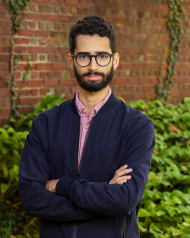
Giulia Guidi is an Assistant Professor of Computer Science at Cornell University, affiliated with the Cornell Ann S. Bowers College of Computing and Information Science. She leads the Cornell High-Performance Computing (HPC) Group and is an Affiliate Faculty at Lawrence Berkeley National Laboratory’s Performance and Algorithms Research Group. Her research focuses on high-performance computing for computational sciences, sparse linear algebra, and scalable software infrastructure for parallel systems. She holds a PhD in Computer Science from UC Berkeley (2022) and has been recognized with awards including the 2024 SIAG/Supercomputing Early Career Prize and the 2023 ISSNAF Young Investigator Award. Her work addresses challenges in genomics, population genetics, and scalable computational methods through collaborations like the NSF-funded 'ACED' project with April Wei’s Lab. Guidi mentors a diverse group of PhD, MEng, and undergraduate students, emphasizing parallel programming and HPC applications. Her lab’s research spans GPU-accelerated algorithms, sparse matrix computations, and bioinformatics tools like the Popcorn and BELLA aligners. She is also a Graduate Field Faculty in Computational Biology and Applied Mathematics at Cornell.
Soheil Mohajer is an Associate Professor in the Department of Electrical and Computer Engineering at the University of Minnesota. His research focuses on Information Theory, Wireless Networks, Distributed Storage Systems, Bioinformatics, and Dynamic Systems. Accepting new graduate research students His research includes Distributed Optimization with applications in wireless networks, Group Testing for secure distributed computation, and Coded Caching techniques. Recent work explores Fact-Checking Algorithms and Matrix-Vector Computation Security . Key trends in his publications include: Optimization algorithms for distributed systems Error correction and security in networked environments Information theory applications in storage and communication Machine learning for reliability assessment Projects and grants: Fake News Detection (USDOD Air Force, 2023-2025) CAREER: Coded Caching for Wireless Networks (NSF, 2018-2025) Repair-Efficient Cloud Storage (NSF, 2016-2021) He leads the Information Processing Group , focusing on collaborative research in networked systems and information theory.
Jonathan Leake is an Assistant Professor in the Department of Combinatorics and Optimization at the University of Waterloo. His research lies at the intersection of combinatorics, optimization, and theoretical computer science, with a focus on log-concave and Lorentzian polynomials and their applications in discrete and continuous settings. Assistant Professor, University of Waterloo (2022–present) Dirichlet Postdoctoral Fellow, TU Berlin (2020–2022) Postdoctoral Fellow, Institut Mittag-Leffler, Stockholm (Spring 2020) Postdoctoral Fellow, KTH, Stockholm (Fall 2019) James H. Simons Fellow, Simons Institute, UC Berkeley (Spring 2019) His research explores the deep connections between algebraic structures and combinatorial phenomena, particularly through polynomial capacity and Lorentzian polynomials. He applies these tools to problems in optimization, sampling, and representation theory. His work often involves developing new algebraic and analytic techniques to tackle longstanding conjectures and algorithmic challenges. The recent publications highlight a consistent focus on Lorentzian polynomials, capacity bounds, and their applications in combinatorics, optimization, and theoretical computer science. Key themes include matroid theory, log-concavity, sampling algorithms, volume approximation, and connections to Lie theory and representation theory. The research spans both theoretical developments and algorithmic applications, often in collaboration with leading researchers in the field. Dirichlet Postdoctoral Fellowship, TU Berlin Postdoc Fellowship in Algebraic and Enumerative Combinatorics, Institut Mittag-Leffler James H. Simons Fellowship, Simons Institute, UC Berkeley Jonathan Leake has advised or collaborated with several researchers, though formal advisees are not listed in the provided text. His work has been supported by prestigious fellowships and collaborations with institutions such as the Simons Institute and TU Berlin. He has taught courses including CO 250: Introduction to Optimization, MATH 239: Introduction to Combinatorics, and CO 739: Lorentzian Polynomials at the University of Waterloo and TU Berlin. While specific lab or research group names are not mentioned, Leake's collaborative work with researchers like Petter Brändén, Nisheeth Vishnoi, and Leonid Gurvits suggests active participation in research teams focused on algebraic combinatorics, optimization, and theoretical computer science. His publicly shared code for sampling from HCIZ densities and verifying positivity in Lie-theoretic contexts indicates an active computational research component.
Dacheng Xiu is the Joseph Sondheimer Professor of Econometrics and Statistics at the Booth School of Business , University of Chicago, and an Affiliated Faculty in the Department of Statistics. He serves as a Research Associate at the National Bureau of Economic Research and holds editorial roles at journals like Journal of Business & Economic Statistics and Journal of Financial Econometrics . PhD and MA in Applied Mathematics from Princeton University BS in Mathematics from University of Science and Technology of China His research focuses on statistical methodologies for financial data , including risk measurement , portfolio management , and empirical asset pricing using high-frequency data and machine learning . Recent work analyzes text data and large language models for economic forecasting. Editorial leadership includes Co-Editor and Associate Editor roles at top journals like Journal of Finance and Annals of Statistics . His lab ( Risk Lab ) specializes in systemic risk assessment through transaction-level data analysis. 2024 Dimensional Fund Advisors Prize 2023 GSU-RFS FinTech Conference Best Paper Award 2022 Society for Financial Econometrics Fellow 2018 Swiss Finance Institute Outstanding Paper Award
Professor Arokia Nathan is affiliated with the Department of Engineering at the University of Cambridge , where he holds the Chair in Photonic Systems and Displays. His work bridges semiconductor device engineering, flexible electronics, and intelligent systems. Specializes in Thin-Film Transistors (TFTs) for displays and sensors Key contributions to digital microfluidics and neuromorphic computing Focus on ultra-low-power and high-frequency CMOS circuits Advances in oxide semiconductor materials and hybrid electronics Recent publications highlight trends in neuromorphic perception , flexible battery technologies , and RF/wireless communication systems . His research also emphasizes bioinspired robotics , wearable electronics , and intelligent IoT devices .
Cécile Münch-Alligné is a Professor in Hydraulic Energy at the University of Applied Sciences and Arts Western Switzerland (HES-SO) in Sion, where she serves as the Head of the Hydroelectricity Research Group and the Renewable Energy Program. She leads the Hydro Alps Lab, which conducts applied research in hydropower combining experimental and numerical approaches. Her work focuses on enhancing the flexibility of both small and large hydropower plants, with particular emphasis on adapting these systems to the evolving energy landscape and integration of renewable energy sources. Her educational background includes a BSc in Energy and Environmental Techniques, an MSc in Engineering, and a BSc in Industrial Systems, all from HES-SO Valais-Wallis. Her research spans multiple domains within hydraulic engineering and renewable energy systems, with particular expertise in CFD simulation, numerical methods, and hydraulic machine design. Münch-Alligné's research interests primarily center around improving hydropower flexibility through innovative approaches such as hydraulic short-circuit operating modes, variable speed operation, and energy recovery systems in water networks. She investigates both large-scale pumped storage power plants and micro-hydropower systems for urban water networks, with a strong focus on practical implementation and commercialization of research findings. Her work bridges theoretical modeling with experimental validation to address real-world challenges in the energy transition. Her research has been published extensively in leading journals, covering topics from Pelton turbine dynamics and Francis turbine vortex analysis to micro-turbine implementations in drinking water networks. The publications reveal a clear trend toward enhancing operational flexibility of hydropower systems to better integrate with intermittent renewable energy sources, with increasing emphasis on practical demonstration projects and commercial applications. As Principal Investigator, she has led multiple significant research projects including the SCCER 4 WP 3.2.0 2017-2020 (Supply of Electricity), Hydrolienne pour canaux artificiels Centrale de Lavey, and SOLUTION DE TRANSFERT D'ENERGIE PAR POMPAGE-TURBINAGE A PETITE ECHELLE. These projects, totaling over 2 million CHF in funding from sources including CTI, OFEN, and industrial partners, demonstrate her ability to secure substantial research funding and collaborate effectively with both academic and industry partners. Münch-Alligné leads the Hydro Alps Lab research team, which includes numerous researchers such as Steiner Amandus, Walpen Olivier, Vaccari Aldo, and others. Her collaborative approach extends to partnerships with institutions like Stahleinbau GmbH and The Ark Energy, facilitating the transfer of knowledge from research to industry application. The lab's work spans from fundamental fluid dynamics research to full-scale demonstration projects, creating a comprehensive pipeline from theory to practical implementation.
Giorgio Satta is a Full Professor at the Department of Information Engineering , University of Padua, Italy. He received his Ph.D. in Computer Science from the University of Padua in 1990. His career includes research positions at Fondazione Bruno Kessler (Trento) and the University of Pennsylvania (IRCS). Research Focus : His work centers on computational linguistics and formal language theory , with emphasis on: Parsing algorithms (CCG, TAG, LCFRS) Computational complexity of grammar formalisms Probabilistic language modeling Dependency parsing and synchronization techniques Professional Service : He chaired the European Chapter of the ACL (2009-10), served on editorial boards for Computational Linguistics , Transactions of the ACL , and co-chaired ACL-2001/IWPT-2001. Teaching : Current courses include Automata, Languages, and Computation and Natural Language Processing (2024-25).
Dominik Huber is a Ph.D. candidate and researcher at the Technical University of Munich , affiliated with the Chair of Computer Architecture & Parallel Systems . His work focuses on Dynamic Resource Management in High-Performance Computing (HPC) , with expertise in Parallel & Distributed Programming Models and Hardware-aware programming . He has actively contributed to teaching courses like Parallel Programming Systems and Advanced Computer Architecture . His research emphasizes adaptive resource allocation in hybrid HPC clusters, leveraging technologies such as MPI Sessions , PMIx , and frameworks like LAIK and XBraid . Recent projects include the DynRes software suite for dynamic resource management and collaborations on quantum-HPC integration. Huber has advised students on topics ranging from Dynamic Resource Management in Charm++ to CI Systems for HPC Software , and his publications address challenges in malleability, scheduling, and power-constrained environments. Current affiliations include participation in the SEANERGYS (EuroHPC) and PlasmaPEPS projects.
Pedro Paredes is a Lecturer in the Department of Computer Science at Princeton University . He completed his PhD in 2022 at Carnegie Mellon University under Ryan O'Donnell , following undergraduate and master's degrees from the University of Porto where he was advised by Pedro Ribeiro . He received the SEAS Excellence in Teaching Award in 2025. Education PhD, Carnegie Mellon University (2022) MSc & BSc, University of Porto (2017) Research Interests Specializes in Theoretical Computer Science , particularly Spectral Graph Theory , Pseudorandomness , Coding Theory , and Quantum Information Theory Contributes to Subgraph Analysis and Network Science through collaborative works Publication Trends Focuses on Expander Graphs and their applications in Quantum Computing , with recent works on Quantum LDPC Codes and Approximate Unitary Designs Develops algorithms for Spectral Graph Operations and Graph Expansion with mathematical rigor Engages in Interdisciplinary Research connecting Time Series Analysis with network theory Awards SEAS Excellence in Teaching Award (2025) Teaching & Outreach Teaches Algorithms and Data Structures at Princeton Organizes Competitive Programming Club at Princeton Active in Computer Science Education and Math Olympiads
Andrea Simonetto is a Research Professor at the Applied Mathematics Unit (UMA) , ENSTA Paris, Institut Polytechnique de Paris. His work spans optimization, control theory, and learning algorithms for large-scale and streaming data , with applications in smart grids, intelligent transportation, personalized health, and quantum computing. Current research focuses on online algorithms for time-varying optimization , personalized optimization for cyber-physical systems , and variational quantum algorithms . Past contributions include theoretical and algorithmic advances in convex/non-convex optimization, distributed optimization (robotic networks, smart grids), and signal processing for sparse reconstructions and parallel computing in particle filtering. Key application domains include renewable energy integration , quantum state preparation , and human-in-the-loop control systems . His research is published in journals like ACM Transactions on Quantum Computing , IEEE Control Systems Letters , and Automatica .
Levent Dumenci serves as Professor in the Department of Epidemiology and Biostatistics at Temple University's College of Public Health since July 2015. His NIH-funded research (NIMH, NCI) focuses on psychometric test development and discrete latent variable modeling of behavioral data. He is the author of Latent Kappa and provides statistical consultation for quasi-experimental and non-experimental research designs across public health disciplines. His educational foundation includes: PhD in Psychometrics (Major) and Statistics (Minor) from Iowa State University MS in Psychometrics from Iowa State University BS in Psychology from Hacettepe University Dumenci's research integrates structural equation modeling, multitrait-multimethod matrix specification, and statistical modeling of observed/unobserved heterogeneity. His work advances methodologies for situational specificity of behavioral ratings, latent agreement modeling, and health literacy assessment. This interdisciplinary approach bridges biostatistics, epidemiology, and clinical measurement with emphasis on rigorous quantitative analysis of complex health data. His extensive publication record demonstrates consistent focus on orthopedic outcomes (particularly knee arthroplasty), where he applies advanced statistical techniques to patient-reported outcomes, pain assessment, and recovery trajectories. Significant contributions also appear in cancer health literacy, neighborhood-level adverse childhood experiences indices, and opioid use patterns in surgical recovery. His methodological innovations frequently address limitations in minimal clinically important difference estimation and patient outcome classification. Dumenci actively contributes to academic service through NIH/NSF study sections and editorial boards of two international journals. He mentors students through statistical consultation for externally funded projects and teaches core courses including Biostatistics for Health Professions (EPBI 5001) and Structural Equation Modeling (EPBI 8201). He directs the Biostatistics Core at Temple University, which provides statistical methodology support across public health research domains including clinical trials, observational studies, and community-based interventions. His team specializes in complex data modeling for behavioral health, chronic disease management, and health disparities research.
Jayneel Parekh is a Postdoctoral Researcher in the MLIA (Machine Learning and Artificial Intelligence) team at ISIR (Institut des Sciences et Industries du Réel), Faculty of Science, Sorbonne University, working with Prof. Matthieu Cord. His research focuses on understanding and enhancing large multimodal models, with applications across audio, visual, and multimodal domains. Parekh completed his PhD at LTCI, Telecom Paris under Prof. Florence d'Alche and Prof. Pavlo Mozharovskyi, researching neural network interpretability applied to image and audio data. He earned his undergraduate degree in Electrical Engineering from IIT Bombay, where he worked with Prof. Preeti Rao and Prof. Yi-Hsuan Yang on Speech-to-Singing conversion. His research spans neural network interpretability, audio processing, computer vision, and multimodal models, with emphasis on explainable AI. His work demonstrates a consistent trajectory from foundational audio/image interpretability methods to cutting-edge large multimodal model analysis, showing increasing complexity and impact across NeurIPS, ICML, and ICCV publications. L2I paper awarded 2nd prize for STIC Best Scientific Contribution 2023 Top Reviewer at NeurIPS 2023 Parekh actively contributes to the academic community through workshop organization (ICCV on Explainable Computer Vision, ELLIS Unconference on Robustness/Fairness/Explainability) and presentations at institutions including IIT Jodhpur, Deezer Research, and IBM Research. His collaborative network spans MPI Informatics, TU Darmstadt, TU Munich, and Télécom Paris.
Dr Jack Betteridge is an Honorary Research Fellow in the Department of Mathematics, Faculty of Natural Sciences, at Imperial College London. His work bridges computational mathematics with environmental sciences, focusing on numerical methods for atmospheric and oceanic systems. His research interests include: Numerical and Computational Mathematics Atmospheric Sciences Oceanography Physical Geography and Environmental Geoscience Computation Theory and Mathematics Distributed Computing Analysis of his 2019-2024 publications reveals deep engagement with finite element methods, particularly through the Firedrake project for automated PDE solutions. His work emphasizes high-performance computing applications in geophysical fluid dynamics, developing novel preconditioners and solvers for atmospheric modeling while contributing to computational education for mathematicians.
Sjoerd Dirksen is a Professor of Mathematics for Data Sciences at Utrecht University since May 2025, having previously served as an Associate Professor for Applied Mathematics (2019-2025) and Junior Professor at RWTH Aachen University (2014-2019). He is affiliated with the Mathematical Institute within the Faculty of Science at Utrecht University, where his office is located in the Hans Freudenthal Building. His research interests focus on high-dimensional probability theory and its applications in data science, machine learning, and signal processing. Specifically, he investigates randomized data dimension reduction methods using structured random matrices, theory for deep learning including random neural networks, high-dimensional covariance estimation for wireless communication systems, and statistical postprocessing of weather forecasts in collaboration with the Royal Netherlands Meteorological Institute (KNMI). Previously, he worked on compressed sensing, sharp estimates for stochastic processes in Banach spaces, and noncommutative analysis. Analysis of his recent publications (2018-2024) reveals a strong focus on quantization effects in high-dimensional data processing, particularly one-bit compressed sensing and covariance estimation under coarse quantization. His work bridges theoretical mathematics with practical applications in signal processing, wireless communications, and meteorological forecasting, demonstrating a consistent trajectory from foundational mathematical research to applied data science problems. Dirksen's academic career shows progression from postdoctoral work at the Hausdorff Center for Mathematics in Bonn to independent research positions. His publication record demonstrates significant contributions to the mathematics of data science, with papers appearing in top journals across mathematics, statistics, and signal processing. His research combines deep theoretical insights with practical applications, particularly in the areas of dimensionality reduction and high-dimensional statistics.
Marie-Christine Düker is an Assistant Professor in the Department of Statistics and Data Science at Friedrich-Alexander University (Germany). Her research focuses on high-dimensional statistics, time series analysis, functional data analysis, and extreme value theory with applications in economics, psychology, chemistry, and ecology. Previously, she was a postdoctoral associate at Cornell University's Department of Statistics and Data Science under David Matteson. She earned her PhD in Mathematics from Ruhr-University Bochum under Herold Dehling and spent part of her doctoral studies at the University of North Carolina at Chapel Hill with Vladas Pipiras. Current Position: Assistant Professor, Department of Statistics and Data Science, Friedrich-Alexander University Previous Academic Affiliation: Postdoctoral Associate, Cornell University Education: PhD in Mathematics, Ruhr-University Bochum; Part-time research at University of North Carolina Research Interests: Her work spans high-dimensional time series under long-range dependence and nonstationarity, discrete data modeling, nonlinear dynamics, dimension reduction, and change-point analysis. Applications include econometrics, neuroscience, chemical data analysis, and ecological forecasting. Recent Publications: Her 2025-2024 work covers Hilbert space-valued linear processes, kernel estimation for nonlinear dynamics, confidence interval approximations, and latent Gaussian count time series. Earlier papers address simultaneous diagonalization, long-run variance matrices, and transition rate estimation challenges. Contact: marie.dueker@fau.de