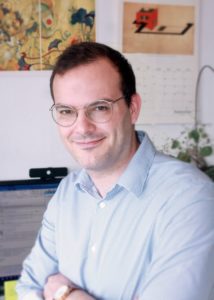
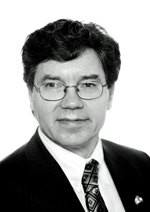
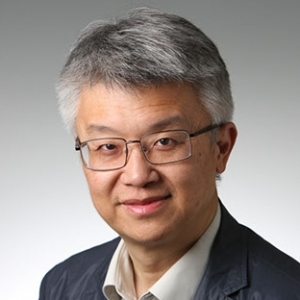
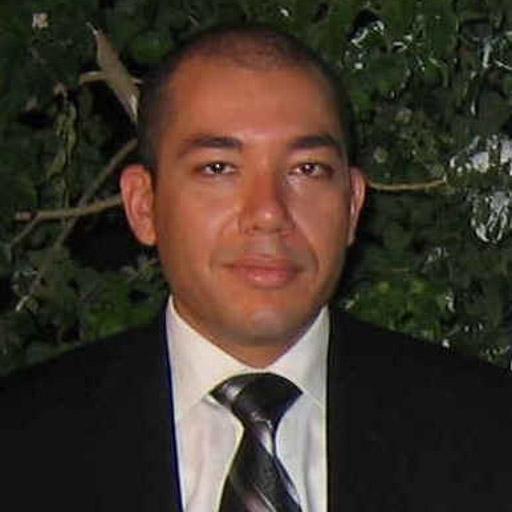
Andrew Jirasek is a Professor at the Irving K. Barber Faculty of Science , University of British Columbia Okanagan , and serves as the Associate Dean for Graduate and Postdoctoral Training . He leads the Analytics in Medical Sciences (AiMS) Institute with a focus on Medical Physics and Radiation Oncology Physics , particularly utilizing Raman spectroscopy and 3D radiation dosimetry for cancer treatment verification. PhD from University of British Columbia His research involves developing polymer gel dosimeters for 3D radiation dose verification in complex therapies like volumetric modulated arc therapy (VMAT) , collaborating across physics, oncology, and engineering . He also investigates optical technologies to monitor biological responses during radiotherapy using Raman spectroscopy with machine learning for data analysis. Recent publications highlight advancements in 3D gel dosimetry , Raman spectroscopy for metabolic profiling , and iterative image reconstruction algorithms . His work spans dosimeter technology development , radiation therapy quality assurance , and clinical applicability studies for novel treatment verification methods.
James Forbes is an Associate Professor in the Department of Mechanical Engineering at McGill University. He holds the title of William Dawson Scholar and is affiliated with the Dynamics Estimation & Control of Aerospace & Robotics Systems research group. His primary research focus is on Dynamics and Control, with emphasis on navigation, guidance, and control (GNC) techniques for robotic systems. He teaches courses such as MECH 309 (Numerical Methods), MECH 412 (System Dynamics), and advanced topics in control systems. Forbes earned his Ph.D. in Aerospace Science and Engineering from the University of Toronto, following an M.A.Sc. from the same institution and a B.A.Sc. in Mechanical Engineering from the University of Waterloo. His research interests include nonlinear state estimation (batch methods, filtering), control synthesis via optimization (LQR, LMI approaches), and data-driven modeling using Koopman operator techniques. Applications span unmanned aerial vehicles (UAVs), autonomous underwater vehicles (AUVs), and SLAM systems. He has developed the navlie Python package for state estimation on Lie groups. Notable awards include the William Dawson Scholar distinction. His recent work focuses on multi-UAV localization, robust control algorithms, and sensor fusion techniques. He collaborates on projects involving UWB-based positioning and inertial navigation systems.
Andrei L. Badescu is a Professor of Actuarial Science and Director of the Master of Financial Insurance in the Department of Statistical Sciences at the University of Toronto. His academic leadership spans editorial roles at Insurance: Mathematics and Economics and program direction for graduate actuarial programs. His educational foundation includes: BSc in Mathematics and Economics from Bucharest University of Economic Studies (1998) MSc in Mathematics and Economics from Bucharest University of Economic Studies (2000) PhD in Actuarial Science from Western University (2004) He completed postdoctoral training at the University of Waterloo (2006) before joining the University of Toronto faculty in 2006. Research interests evolved from foundational work in Risk and Ruin Theory using Matrix Analytic Methods to contemporary applications in Stochastic Claim Reserving, Dependence Modelling, and Predictive Analytics. Current emphases include Telematics risk assessment and Insurance Data Science, leveraging advanced statistical techniques for real-world insurance challenges. Recent publications (2021-2025) reveal a strategic shift toward data-driven insurance solutions. Key trends include micro-level claim reserving via inverse probability weighting, telematics-based driving risk modeling using unsupervised learning, and mixture-of-experts frameworks for portfolio ratemaking. These works bridge traditional actuarial science with machine learning, particularly in handling censored data and operational risk. Professor Badescu mentors five doctoral students (Spark Tseung, Sebastian Calcetero, Ian Weng, Sophia Chan, Hassan Abdelrahman) and two master's students (Kaihua Sun, Yifeng Ge). His administrative leadership includes directing the Master of Financial Insurance program and previously overseeing the Data Science concentration in the Master of Applied Computing. His research group develops practical tools like the LRMoE.jl software package for actuarial loss modeling, while future work targets telematics integration and insurance-specific artificial intelligence applications.
Bradley Rodgers is an Associate Professor in the Department of Mathematics and Statistics at Queen's University, affiliated with the Faculty of Arts and Science. He holds a PhD from the University of California, Los Angeles (2013) and a BSc from Purdue University. His research focuses on analytic number theory, random matrix theory, and their interconnections, particularly in understanding the distribution of prime numbers and zeros of the Riemann zeta-function. He has conducted postdoctoral research at the University of Zurich and the University of Michigan before joining Queen's in 2018. Education: PhD in Mathematics, University of California Los Angeles (2013) BSc in Mathematics, Purdue University Research Interests: Rodgers explores the intersection of analytic number theory and random matrix theory, investigating phenomena such as the statistical distribution of primes, autocorrelations of characteristic polynomials, and the application of probabilistic methods to number-theoretic problems. He also studies the role of randomness in discrete mathematical structures. Recent Work: His recent publications address topics like the VC-dimension of random subsets, large prime factors in sequences, and Gaussian behavior of squarefree integers in short intervals. These contributions highlight his expertise in bridging number theory with probabilistic and algebraic frameworks. Professional Engagement: Rodgers maintains an active research profile with collaborations and grants focusing on his core areas, though specific grants or teams are not detailed in the provided materials.
Harry Joe is a Professor in the Department of Statistics at the University of British Columbia (Vancouver Campus). His primary research focuses on dependence modeling, copula theory, multivariate analysis, and applications in biostatistics, finance, and psychometrics. He has advised students including Xiaoting Li, Xinyao Fan, and Pavel Krupskiy. Research Interests: - Advanced copula constructions (e.g., vine copulas) - Extreme value theory and tail dependence - Applications in financial risk, biomedical research, and educational measurement - Multivariate time series analysis and non-Gaussian models Publications highlight contributions to copula-based classification methods (2024), factor copula models (2015), and dynamic dependence modeling (2020). His work bridges theoretical developments with practical applications across disciplines. Teaching and advising emphasize methodological innovation. Current research explores high-dimensional dependence structures and computational methods for complex data. No lab/team affiliations explicitly noted in provided materials.
Paul Shipley is an Associate Professor in the Department of Chemistry within the Irving K. Barber Faculty of Science at the University of British Columbia Okanagan. He also serves as Associate Dean of the College of Graduate Studies. His research focuses on natural products chemistry, metabolomics, and NMR-based analysis of medicinal plants and bacteria to investigate chemical differences between species and samples. His work has applications in discovering biological activities, optimizing natural health product formulation, identifying adulterated products, and classifying species by their chemistry. Dr. Shipley's educational background includes: PhD from the University of Washington Dr. Shipley's research centers on organic chemistry and natural products biosynthesis, with particular emphasis on the biochemistry of secondary metabolism in plants and bacteria. His laboratory develops and applies nuclear magnetic resonance (NMR) metabolomics approaches to define the complex chemistry of medicinal plants, which traditionally has been challenging due to the estimated 30,000 distinct phytochemicals present in an average plant tissue. His work bridges analytical chemistry, plant biochemistry, and statistical analysis to create robust methods for species differentiation and chemical profiling. Specifically, his lab investigates NMR-based chemical approaches for medicinal plant analysis across various species, comparing results with LC/MS metabolomic analysis and chromatographic separation methods. They develop statistical tools to discriminate between true and false positives in significance analysis and optimize NMR experiments for best discrimination between sample types, with applications in hawthorn chemotaxonomy, cranberry analysis, and other medicinal plant studies. Dr. Shipley's recent publications demonstrate a strong focus on NMR-based metabolomics applied to plant chemistry, particularly for species identification and quality control of natural health products. His work spans multiple plant genera including Crataegus (hawthorn), Vaccinium (cranberry), and Artemisia (sagebrush), with consistent methodological development in statistical analysis and NMR techniques. A notable trend is the application of machine learning algorithms to refine metabolomic data interpretation and the development of robust models for distinguishing between closely related plant species and varieties. His research program has contributed significantly to: Development of new NMR-based approaches for plant metabolome analysis Creation of statistical tools for metabolomic data refinement Chemotaxonomic studies of medicinal plants with pharmacological relevance Identification of cardioprotective compounds in hawthorn species As a graduate student supervisor in the Department of Chemistry, Dr. Shipley mentors students in organic chemistry, natural products biosynthesis, and analytical methodology development. His research program involves multiple funding sources supporting NMR metabolomics instrumentation, plant collection and analysis fieldwork, statistical methodology development, and collaborative studies with pharmacology and botanical researchers. Dr. Shipley leads a research laboratory focused on NMR-based metabolomics of medicinal plants and bacteria. His team develops advanced statistical and methodological tools for model improvement in metabolomic analysis, with particular expertise in distinguishing between closely related plant species and varieties. The lab collaborates across disciplines, integrating chemical analysis with biological activity studies to connect phytochemical profiles with potential pharmacological relevance, particularly in cardioprotective compounds found in hawthorn and urinary tract health applications of cranberry compounds.
Mohammad Narimani is a Senior Lecturer in the Department of Mechatronic Systems Engineering at Simon Fraser University’s Faculty of Applied Sciences. He holds a PhD in Mechatronics Engineering from King's College London (2011), a MASc in Electrical Engineering from Isfahan University of Technology (2001), and a B.Sc. in Electrical Engineering from Sharif & Isfahan University of Technology (1997). His teaching focuses on core mechatronic disciplines, including Control Theories, Mechatronic Design, Signal Processing, and Digital Logic Circuits. Dr. Narimani’s research spans multiple domains: Biomedical Engineering : Developing machine learning models for healthcare applications like blood pressure estimation and spinal injury detection. Control Systems : Stability analysis in fuzzy logic-based systems and nonlinear control theory. Renewable Energy : Investigating fuel cell dynamics during oxygen starvation to improve efficiency and safety. Machine Learning : Multimodal sensing for activity recognition and physical monitoring systems. Recent work emphasizes practical applications such as wearable sensor integration for health monitoring and smart home systems. His articles reflect a trend toward combining traditional engineering principles with modern AI-driven methodologies. Advising and grants: No formal advisees listed, but his courses (e.g., MSE 381 Feedback Control Systems, MSE 250 Electric Circuits) suggest involvement in student mentorship. No specific grants mentioned in available texts. Lab affiliations: Active within the Faculty of Applied Sciences’ research ecosystem, though specific lab names are not detailed in the provided materials.
Pavlos Motakis is an Assistant Professor in the Department of Mathematics and Statistics at York University, Toronto, Canada. He holds a PhD in Mathematics from the National Technical University of Athens. Previously, he was a J.L. Doob Research Assistant Professor at the University of Illinois at Urbana-Champaign and a Visiting Assistant Professor at Texas A&M University. His research focuses on functional analysis, particularly the study of operators on Banach spaces, algebras of operators, and the local and asymptotic structure of Banach spaces. Key interests include hereditarily indecomposable Banach spaces, L∞-spaces, and metric characterizations of non-local properties. Recent work explores topics such as orthogonal factors of operators on Rosenthal spaces, variants of the James Tree space, and reflexive Calkin algebras. His publications reflect a deep engagement with advanced structural properties of Banach spaces and operator algebras. Dr. Motakis currently holds no listed scientific awards but maintains an active research agenda in pure mathematics. His advising and grant activities are not detailed in available records, though his academic career demonstrates consistent contributions to functional analysis through teaching and research. He is affiliated with the Faculty of Science at York University, contributing to both undergraduate and graduate programs in mathematics and statistics. His office is located in the Ross Building, S618.
François Bouffard is an Associate Professor at McGill University's Faculty of Engineering, specializing in Power Engineering and Systems Control. He holds the William Dawson Scholar title and serves as Associate Chair (Undergraduate Affairs). His research focuses on smart grids, renewable energy integration, and advanced control systems. Research interests include optimizing power systems through data-driven methods, demand response mechanisms, and energy storage solutions. He contributes to projects like the Group for Research in Decision Analysis (GERAD), emphasizing sustainable energy systems and grid resilience. Recent work explores flexibility in smart grid architectures, cold load management, and multi-agent reinforcement learning for energy systems. His publications highlight optimization techniques, stochastic modeling, and machine learning applications in energy control. Awarded the William Dawson Scholar distinction, his work bridges theoretical advancements with practical grid operations. He collaborates on interdisciplinary projects addressing energy transition challenges, such as hybrid storage systems and distributed energy resource coordination.
Richard J. Caron is a Professor at the University of Windsor's College of Engineering, specializing in operational research and mathematical optimization. He has supervised students including Nooshin Nekoiemehr, Qiqi Zhang, and Anqi Chen. His team won the first practice prize at the national conference of the Canadian Operational Research Society. His research focuses on mathematical programming, constraint analysis, and optimization algorithms. Recent publications examine simplex algorithms, matrix inequalities, and probabilistic methods for extreme point identification. Dr. Caron's awards include the First Practice Prize from the Canadian Operational Research Society for developing cargo optimization tools for Air Canada. His work demonstrates consistent contributions to optimization theory and computational mathematics throughout his career.
Daniel Shun Chung Yang is a Professor in the Department of Biochemistry & Biomedical Sciences at McMaster University, with an extensive scholarly record spanning five decades from 1975 to 2024. His academic career demonstrates remarkable longevity and consistent research productivity, with teaching assignments scheduled through 2025 indicating his current active status at the institution. Dr. Yang's research program centers on protein structure and function, with particular emphasis on antifreeze proteins and their molecular interactions with ice. His work bridges structural biology, biochemistry, and biophysics, employing techniques including X-ray crystallography, computational modeling, and protein engineering. The scholarly trajectory reveals evolution from foundational structural studies to more complex investigations of protein-ice recognition mechanisms and applications in cryoprotection. Analysis of his publication history shows consistent contributions to understanding how antifreeze proteins recognize and bind to ice crystals through specific surface motifs, with significant work on type III antifreeze proteins from fish species. His research has expanded into related areas including potassium channel structure, protein engineering for stability enhancement, and more recently, applications in stem cell biology and materials science. As an educator, Dr. Yang has taught core biochemistry courses including Protein Structure and Enzyme Function (BIOCHEM 2BB3), Proteins and Nucleic Acids (BIOCHEM 3G03), and Research and Experimental Design (HTHSCI 3V03) across multiple academic years from 2017 through 2025, demonstrating his ongoing commitment to undergraduate and graduate education at McMaster University.
Hausi Müller is a Professor in the University of Victoria 's Department of Computer Science under the Faculty of Engineering & Computer Science . He serves as Chair of the IEEE Quantum Technical Community and co-founded the IEEE International Conference on Quantum Computing & Engineering . His academic journey began with a Ph.D. in Computer Science from Rice University (1986), followed by a Master's degree (1984) and a Dip.-Ing. from Swiss Federal Institute of Technology (1979). Research Interests: Dr. Müller's work spans quantum software engineering , self-adaptive systems , cyber-physical systems , and program understanding . He pioneered the Rigi reverse engineering tool and developed frameworks like SAVI for adaptive video analytics. Recent Publications: His 2025 articles focus on penalty-free quantum optimization and hybrid quantum software engineering , while 2024 contributions explore quantum cryptography education and notation translation tools . Earlier works address energy consumption modeling and cyber-physical system design . Awards: 2024 IEEE Computer Society Distinguished Leadership Award 2023 IEEE iCON Award for Quantum Week 2011 IBM Canada CAS Research Project of the Year for Personal Context Sphere 2012 CASCON Best Paper Award for SmarterDeals Fellow of the Canadian Academy of Engineering (FCAE) and Canadian Software Engineering Association (FCSSE) Grants & Projects: 2024-29 NSERC Quantum Software Consortium 2023-28 NSERC Discovery Grant for Hybrid Quantum Systems 2021-25 IBM CAS Cognitive Digital Twin Framework 2018-25 NSERC CREATE for Dependable IoT Applications Leadership: Dr. Müller has held multiple IEEE leadership roles since 2015, including Vice President of IEEE CS Technical & Conferences Board (2016-18), and active involvement in organizing international workshops in Shonan (Japan) and Dagstuhl (Germany).
Mostafa Nasri serves as an Instructor in the Department of Mathematics and Statistics at the University of Winnipeg within the Mathematics and Statistics Faculty. Holding a Ph.D. from IMPA, he completed postdoctoral fellowships at Laval University, University of Montreal, and McGill University before joining his current institution. His academic credentials include: Ph.D. in Mathematics, IMPA- Instituto Nacional de Matemática Pura e Aplicada (2008) M.Sc. in Mathematics, Amirkabir University of Technology (2004) B.Sc. in Mathematics, Sharif University of Technology (2002) Dr. Nasri's research integrates Mathematical Analysis and Operations Research with specialized expertise in Functional Analysis, Optimization, and Applied Mathematics. His theoretical work examines Schauder bases, composition operators, and Dirichlet spaces, while his Optimization research develops augmented Lagrangian methods for equilibrium problems and variational inequalities. Applied contributions include contact dynamics modeling for multibody systems and HIV infection dynamics. Analysis of his 2023-2025 publications reveals intensified focus on Functional Analysis (particularly Dirichlet spaces and operator theory) alongside persistent development of optimization algorithms, with applied mechanics and mathematical biology research continuing at reduced frequency. No scientific awards are documented in available materials. Current information indicates no graduate student advising or active research grants at the University of Winnipeg. Prior industry collaboration with CM Labs Simulations Inc. and Canadian university departments demonstrates applied research experience, though no current laboratories or dedicated research teams are specified.
Xin Wang is a Chancellor's Professor in the Department of Mechanical and Aerospace Engineering at Carleton University. His research focuses on fracture mechanics, fatigue analysis, and structural integrity assessment with applications in pressure vessels, offshore engineering, and aerospace materials. He holds a B.Sc. from Dalian University of Technology and M.Sc./Ph.D. degrees from the University of Waterloo. Education: B.Sc., Dalian University of Technology M.Sc., University of Waterloo Ph.D., University of Waterloo Research Interests: Dr. Wang specializes in numerical and analytical fracture mechanics, fatigue assessment of welded structures, and finite element method applications. His work bridges laboratory testing with full-scale engineering structures, particularly in pipeline steels and composite materials. Recent studies emphasize ductile fracture arrest methodologies and crack propagation under varying constraint conditions. Awards: Carleton University Research Achievement Award (2007-2008) Professional Activities: He serves on international conference committees for ASME and ASTM, and has organized major events like the 12th International Conference on Fracture (ICF 12). His research integrates experimental and computational approaches to advance fracture mechanics in industrial applications. Research Facilities and Teams: His work leverages advanced computational tools and laboratory testing facilities at Carleton University's Mechanical and Aerospace Engineering Department, focusing on real-world structural challenges in energy and aerospace sectors.
Prof. Nizar Bouguila is a Professor at the Concordia Institute for Information Systems Engineering (CIISE), Concordia University, and holds the Concordia University Research Chair in Applied Artificial Intelligence. His research focuses on machine learning, data clustering, smart building systems, and energy management. He actively supervises graduate students in Computer Science, Electrical and Computer Engineering, and Information Systems Security programs. Dr. Bouguila's work integrates probabilistic models, deep learning, and domain adaptation techniques. He has pioneered methods in energy disaggregation, load forecasting, and anomaly detection in smart infrastructure. His recent projects address challenges in occupant behavior prediction, speech emotion recognition, and fake news detection using Arabic datasets. Key research themes include: Probabilistic clustering with Bayesian nonparametric mixtures Smart building analytics via IoT and sensor data Domain adaptation for cross-domain learning Explainable AI in energy systems His 2023-2025 publications emphasize: Advanced transformer networks for load forecasting Graph neural networks in transportation Multimodal data fusion for anomaly detection Topic modeling for short texts Dr. Bouguila's advising spans multiple engineering and computer science disciplines, reflecting his interdisciplinary research profile.