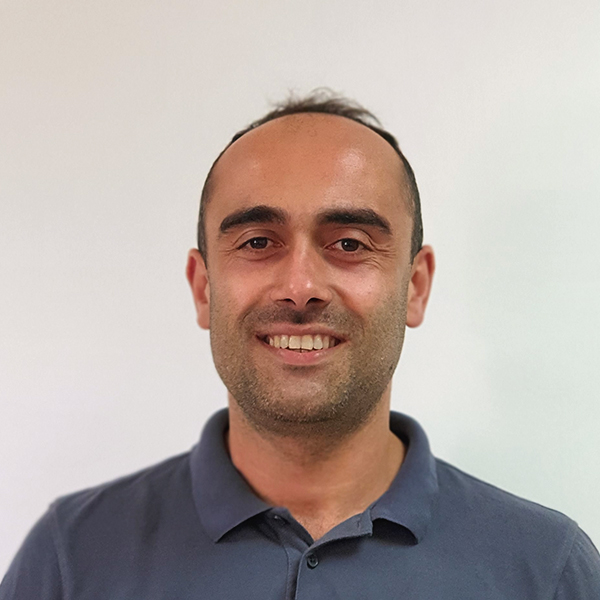
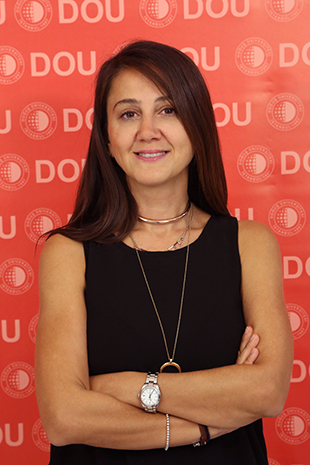
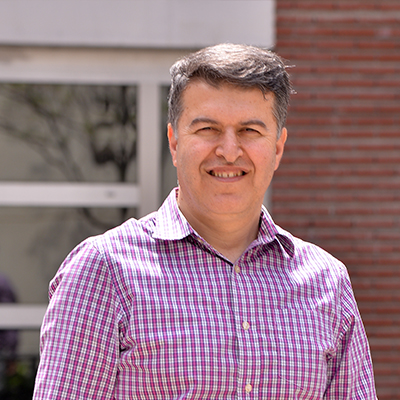
Ali Mostafazadeh is a Professor at the Department of Mathematics, College of Sciences, Koç University. His research spans Mathematical Physics, focusing on Quantum Mechanics, Scattering Theory, and PT-Symmetry. He has made significant contributions to understanding non-Hermitian Hamiltonians, electromagnetic wave propagation, and geometric scattering phenomena. Education: PhD in Physics (1994) from The University of Texas, BA in Physics and Mathematics (1989) from Boğaziçi University His work explores the intersection of mathematics and physics, particularly through spectral singularities, transfer matrix methods, and nonlinear optical systems. Recent publications highlight advancements in broadband directional invisibility, exact Born approximations, and time-dependent Hilbert spaces in quantum systems. 2011 Outstanding Success Award 2007 TÜBİTAK Science Award 2006 Werner-von-Siemens Excellence Award 2001 TÜBA Outstanding Young Scientists Award 2001 Parlar Foundation Research Incentive Award
Dr. Ahmet Acar is an Associate Professor at the Department of Biological Sciences, Middle East Technical University (METU), Ankara, Turkey. He leads the Cancer Precision Medicine and Drug Resistance Laboratory, focusing on understanding mechanisms of drug resistance in cancer. His research integrates experimental models, next-generation sequencing, and deep learning to address clinical challenges in cancer therapy. Dr. Acar holds a B.Sc. from METU's Biological Sciences department and a Ph.D. from the Cancer Research UK Manchester Institute. He completed postdoctoral training at the Institute of Cancer Research, London, and the University of Manchester. Research Interests: Drug resistance mechanisms, precision oncology, tumor microenvironment modeling, patient-derived organoids, computational pathology, and evolutionary cancer biology. His lab develops 2D/3D co-culture systems, PDO biobanks, and AI-driven histopathology tools to improve treatment strategies. Recent Work Trends: Recent publications emphasize tumor evolution modeling, matrix mechanics in drug resistance, and AI applications in histopathology. Collaborations with hospitals in Turkey and Europe support PDO biobank initiatives. His team explores evolutionary steering strategies to exploit collateral drug sensitivities. Labs/Teams: Precision Medicine and Drug Resistance Lab at METU focuses on interdisciplinary approaches combining wet-lab experiments with computational methods. Current projects include ex vivo tumor modeling and AI-driven diagnostic tools for oncology.
Mine Uysal is a Researcher at Yıldız Technical University, Faculty of Mechanical Engineering, Department of Mechanical Engineering. Her academic journey includes a BSc (2005), MSc (2010), and PhD (2015) in Mechanical Engineering from Pamukkale University and Yıldız Technical University, respectively. She began postdoctoral research at the University of Kentucky (College of Engineering) in 2017. PhD, Mechanical Engineering (2015, Yıldız Technical University) MSc, Mechanical Engineering (2010, Pamukkale University) BSc, Mechanical Engineering (2005, Pamukkale University) Her research focuses on advanced materials behaviors, including functionally graded materials, polymers, adhesively bonded joints, and finite element modeling for engineering systems. Key areas include composite structures, thermal/mechanical loading effects, and sustainable manufacturing techniques like nanofluid-assisted machining. Scientific contributions include 15 recent articles spanning topics such as delamination analysis in bonded beams, sustainable machining optimization, buckling behavior of graded polymers, and fracture mechanics in composite materials. Her work integrates finite element methods with experimental validation for adhesive joints and sandwich structures. Collaborative projects include research funded by The Scientific and Technological Research Council of Turkey (TUBITAK) and international postdoctoral work at the University of Kentucky.
Doç. Dr. Muhammed Aras is an Associate Professor in the Department of Mechanical Engineering at Baskent University (Başkent Üniversitesi), with a research focus on sustainable machining processes, tool wear monitoring, and surface roughness optimization. His work spans advanced manufacturing technologies, energy storage systems, and biomedical device design. PhD in Manufacturing Engineering (2018), Gazi Üniversitesi MSc in Mechanical Education (2013), Gazi Üniversitesi BSc in Mechanical Engineering (2010), Tabriz Islamic Azad University Research interests include sustainable machining (dry/hard turning, cooling-lubrication strategies), tool wear analysis (CBN, ceramic and coated inserts), and surface integrity optimization using AI-based methods (firefly algorithm, TOPSIS, Grey Relational Analysis). His 15 most recent articles (2017-2024) examine topics like: Surface roughness prediction in dry hard turning Energy storage technology viability assessments Cutting parameter optimization for various steels Acoustic/vibration monitoring in machining He has received scientific awards including the Teşvik Ödülü (Encouragement Award, 2015). His patent on an automatic orthognathic surgery articulator and book chapters on tool monitoring systems demonstrate his multidisciplinary impact.
Fatih Ecevit is Full Professor of Mathematics at Boğaziçi University, serving as Vice Chair of the Mathematics Department. Former research associate at Max-Planck-Institut für Mathematik in den Naturwissenschaften, Leipzig (2005-2007). Research develops computational methods for high-frequency scattering problems, including: Boundary element methods for wave propagation Asymptotic analysis of scattering phenomena Galerkin formulations for integral equations Lattice sum evaluations in graph theory Principal investigator for TÜBİTAK-funded project: 'Hybrid integral equation methods for high-frequency scattering problems' (2017-2020). Teaches graduate and undergraduate courses in numerical analysis, partial differential equations, and real analysis.
Başar Öztayşi is a Professor at the Department of Industrial Engineering , Istanbul Technical University , with expertise in fuzzy logic, multi-criteria decision making, and decision science. He has held administrative roles including Associate Professor (2017–present), Deputy Director of the Institute (2016–2017), and Assistant Professor (2013–2017). Fields of Study : Fuzzy Logic, Multi-criteria Decision Making, Decision Science Contact : oztaysib@itu.edu.tr , +90 212 293 1300 Research Interests focus on applying fuzzy set theory to complex decision problems, including financial management, risk assessment, and smart city energy systems. His work extends to industry 4.0 applications and process mining in e-commerce. Recent Publications (2024) analyze fuzzy approaches in financial management, risk assessment, and Industry 4.0, with subfields spanning bibliometric trends, allocation optimization, and sustainable energy planning. Earlier works explore AHP matrix consistency, file distribution models, and customer segmentation. Awards : Best Paper Award, FLINS 2018 Science - Art Awards
Professor Vakur B. Erturk is a distinguished faculty member in the Department of Electrical and Electronics Engineering at Bilkent University's Faculty of Engineering. With a PhD from The Ohio-State University (2000), his academic journey spans over two decades of impactful research and teaching. His research focuses on advanced computational electromagnetics, specializing in closed-form Green's function representations, conformal antenna design, structural health monitoring systems, and metamaterial applications. His work bridges theoretical electromagnetics with practical engineering solutions, particularly in wireless sensing and high-frequency electromagnetic analysis. Professor Erturk's publication record demonstrates consistent innovation, with recent work emphasizing efficient computational methods like the multilevel fast multipole algorithm (MLFMA) for multiscale electromagnetic problems. His research shows strong continuity in antenna theory while expanding into metamaterial-inspired sensors and structural monitoring systems. Best master thesis award (1996) He actively mentors graduate students, with over 30 PhD and MSc graduates who have contributed significantly to fields including computational electromagnetics, antenna design, and wireless sensor development. His research group maintains strong collaborations with institutions like Middle East Technical University and researchers in metamaterials and structural health monitoring. Professor Erturk teaches core courses including Microwave Engineering, Antenna Engineering, and Computational Methods in Electromagnetics, shaping the next generation of electrical engineers through rigorous theoretical and practical instruction.
Assoc. Prof. Dr. Serkan Arıkan is a faculty member at Boğaziçi University's Faculty of Education, Department of Mathematics Education. His research focuses on educational measurement, computerized adaptive testing, non-routine problem solving, and large-scale assessment frameworks like PISA and TIMSS. He has developed psychometric tools for STEM competency evaluation and conducted bias detection studies in international exams. Education : PhD in Secondary Science and Mathematics Education (METU, 2010), Postdoc (Tilburg University, 2015) Awards : Outstanding Achievement in Teaching Award (2021-2022) Research Trends : His recent work includes psychometric validation of self-compassion scales, extending the Community of Inquiry framework for technology integration, and adaptive test design using multiple matrix sampling. He investigates how socioeconomic factors, item bias, and emotional skills intersect with academic performance. Projects : Leads TÜBİTAK-funded AI-based test design and computerized adaptive mathematics test initiatives. Conductor of Boğaziçi University Adaptive Testing Laboratory.
Alp Bassa is a Professor of Mathematics at Boğaziçi University, affiliated with the Department of Mathematics. He holds a Ph.D. in Mathematics from Universität Duisburg-Essen (2007) and dual bachelor's degrees in Computer Engineering and Mathematics from Middle East Technical University (2004). His research focuses on Number Theory, Algebraic Geometry, and their applications in Cryptography and Finite Fields. Education: Ph.D. in Mathematics, Universität Duisburg-Essen, 2007 Bachelor of Science in Computer Engineering & Mathematics, Middle East Technical University, 2004 Research Interests: Professor Bassa investigates algebraic structures over finite fields, including Drinfeld modules, function fields, and their cryptographic applications. His work bridges Number Theory and Geometry, with contributions to coding theory and the construction of algebraic curves with optimal properties. Recent Projects: TÜBİTAK 2509: Curves over Finite Fields, Jacobian Varieties, and Abelian Varieties (2018–2020) BAP-10540: Curves over Finite Fields and Irreducible Polynomials (2015–2017) Teaching: Recent courses include foundational mathematics (Math 101, Math 102), advanced topics (Math 344, Math 525), and specialized courses in cryptography and algebraic geometry.
Assoc. Prof. Dr. Arife Yurdakul is a faculty member in the Department of Metallurgical and Materials Engineering at Düzce University’s Faculty of Engineering, Turkey. She currently holds the academic rank of Associate Professor and actively contributes to both teaching and research in advanced ceramics and composite materials. Research Focus: Ceramic matrix composites and zirconia-based toughening mechanisms Processing of yttria-, ceria-, and magnesia-stabilized zirconia powders and sintered bodies Glass-fiber reinforcement in cementitious and polymer matrices Microstructural characterization from macro to atomic scale using electron microscopy Industrial applications including welding pins, ceramic bushings, and dental ceramics Across sixteen peer-reviewed publications (2009-2025), Dr. Yurdakul demonstrates a sustained trajectory in engineering high-performance ceramics. Her recent work emphasizes co-doped zirconia composites that achieve simultaneous gains in hardness and fracture toughness, while earlier studies systematically explored glass fiber durability in alkaline environments and novel glass compositions optimized for fiber drawing. Scientific Awards & Distinctions: No specific awards or honors are mentioned in the provided materials. Advising & Funding: No named graduate students, ongoing projects, or grant details are supplied. Laboratories & Teams: While the Faculty of Engineering at Düzce University hosts modern ceramics and microscopy laboratories, explicit laboratory affiliations or research group names are not stated.
Assoc. Prof. Dr. Gonca Bilge Özel is an Associate Professor at Yeditepe University, Faculty of Engineering, Food Engineering Department. She also serves as Vice Dean of the Faculty of Engineering since 2023. Previously, she was an Associate Professor at Konya Food and Agriculture University, where she held administrative positions as Department Head (2021) and Deputy Department Head (2019). Current Position: Associate Professor, Yeditepe University, Faculty of Engineering, Food Engineering Department Administrative Role: Vice Dean of Faculty of Engineering (2023-present) Previous Position: Associate Professor at Konya Food and Agriculture University (2018-2022) Dr. Özel received her PhD in Food Engineering from Hacettepe University (2010-2016), with a thesis on "Laser-induced plasma spectroscopy in elemental analysis of foods." She also holds a Master's degree in Bioengineering (2008-2010) and an undergraduate degree in Food Engineering (2003-2008), both from Hacettepe University. Her research primarily focuses on food analysis using advanced spectroscopic techniques, particularly Laser-Induced Breakdown Spectroscopy (LIBS). She has made significant contributions to food authenticity, adulteration detection, elemental analysis, and non-thermal food processing methods like pulsed electric field technology. Her work spans across various food matrices including dairy products, meat, coffee, grains, and beverages. Dr. Özel has led and participated in numerous research projects, including EU-funded H2020 projects and national TÜBİTAK projects. She has supervised multiple Master's theses and is currently supervising PhD students. Her research has resulted in numerous publications in high-impact journals and several patents related to LIBS applications in food analysis. Poster Prize at 8th International Conference on Laser induced breakdown spectroscopy (LIBS 2014) As an educator, Dr. Özel teaches undergraduate courses such as Food Engineering Operations and Process Design, Food Process Engineering, and Food Chemistry, as well as graduate courses in Advanced Analytical Methods and Biosensors. She has also been involved in industry collaborations with companies like Deltamed Life Sciences and NANOSENS Advanced Technologies.
Burhaneddin İzgi serves as an Associate Professor in the Department of Mathematics Engineering at Istanbul Technical University, where he maintains an active research profile with projects extending through 2025. His work bridges theoretical mathematics with computational applications, particularly in game-theoretic problem solving. Research interests center on Game Theory and Stochastic Differential Equations, with specialized focus on matrix norm-based solution methods for zero-sum, fuzzy, and stochastic matrix games. Recent work integrates Artificial Intelligence techniques to address large-scale game complexity, reflecting interdisciplinary innovation across Numerical Analysis and Fuzzy Mathematics. Article trends (2022-2025) reveal consistent advancement of matrix norm methodologies across diverse game types, increasingly incorporating machine learning for computational efficiency. Publications demonstrate strong theoretical grounding in Mathematics while addressing practical applications in finance (e.g., IPO modeling) and decision systems. Scientific recognition includes: 2210 - Yurt İçi Yüksek Lisans Burs Programı (2008) 2211 - Yurt İçi Doktora Burs Programı (2010) Matematik Bölüm Birinciliği (2008) Üniversite İkinciliği ödülü (2008) Research funding includes TUBITAK-supported projects such as 'Stokastik Oyunlar İçin Matris Norm Tabanli Yeni Çözüm Yöntemleri Ve Yapay Zeka Uygulamalari' (2021-2023) and current grants developing chaos theory approaches for stochastic matrix games (2024-2025), demonstrating sustained external validation of his research program.
Dr. Ayşe İLGÜN KAMANLI is a Lecturer at the Faculty of Economics and Administrative Sciences of Doğuş University, Turkey, with academic roles since 2016. She holds a PhD in Management and Organization from Marmara University and has an extensive record in business administration. Education : BSc in Business Administration (Doğuş University), MSc in Business Administration (Doğuş University), PhD in Management and Organization (Marmara University) Her research focuses on organizational commitment , family business institutionalization , leadership styles , and corporate social responsibility . She has supervised 14+ theses on topics ranging from employee motivation to family business sustainability. The trends in her publications emphasize: Organizational performance in SMEs Workplace stress and retention CSR in education and healthcare sectors Political marketing discourse Transactional leadership impacts Institutional theory applications She received the Journal Best Paper Certificate in 2016. Her work spans both national and international publications, including a 2024 book chapter on green transformation in business.
Prof. Bahattin Koç is a Professor at Sabancı University's Faculty of Engineering and Natural Sciences, coordinating the Manufacturing Engineering Program. He holds a Ph.D. and has extensive experience in academia and industry, including roles at The State University of New York at Buffalo. His research focuses on 3D bioprinting, additive manufacturing, computational geometry, and nanotechnology-driven manufacturing processes. Research Interests: 3D bioprinting for tissue engineering, computational geometry for additive manufacturing, heterogeneous and multi-functional object modeling, nano-micro additive manufacturing, and hybrid manufacturing processes. His work integrates advanced design and manufacturing techniques to address challenges in biomedical and industrial applications. Grants and Funding: Secured significant grants including £815,625 from UK EPSRC (2018-2021), €1.4M from DiCoMI H2020 RISE (2018-2022), and $5M from the Turkish Ministry of Development. Projects include bone defect repair, bioprinting of patient-specific scaffolds, and advanced composite manufacturing. Students and Collaborations: Advised over 30 graduate students and researchers. Notable collaborations include work with Penn State University, University of Buffalo, and industry partners like TUSAS Engine Industries. He is a founding member of Sabancı University's Integrated Manufacturing Center and serves on TÜBİTAK advisory boards. Awards and Recognition: Co-inventor of patents such as the 'Method For Three Dimensional Printing Of Heterogeneous Structures' and 'Resorbable Laminated Repair Film'. Recognized for contributions to biofabrication and manufacturing innovation.
Şükran Uygun is an Associate Professor at Gaziantep University's Faculty of Arts and Sciences, Department of Mathematics, where she has held positions since 2003. She earned her PhD in Mathematics from Selçuk University (2013) and a Master's in Mathematics from Gaziantep University (2005). Education: PhD (2013) - Selçuk University MS (2005) - Gaziantep University BS (2002) - Gaziantep University Her research focuses on number theory, matrix analysis, and special sequences, particularly bi-periodic Pell/Jacobsthal sequences and their matrix representations. She has published extensively on spectral norms of circulant/Toeplitz matrices and applications to coding theory. Recent publications analyze advanced encryption schemes using Fibonacci matrices, complex Jacobsthal numbers, and binomial transforms of generalized sequences. Her work connects Pell/Jacobsthal sequences with Chebyshev polynomials and explores negative-index extensions. Awarded twice by TÜBİTAK for publication excellence, she has supervised 15 graduate theses and taught courses in numerical analysis, special functions, and differential equations.