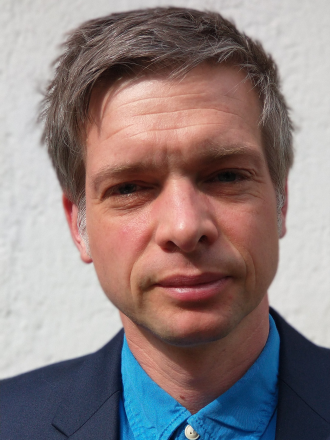
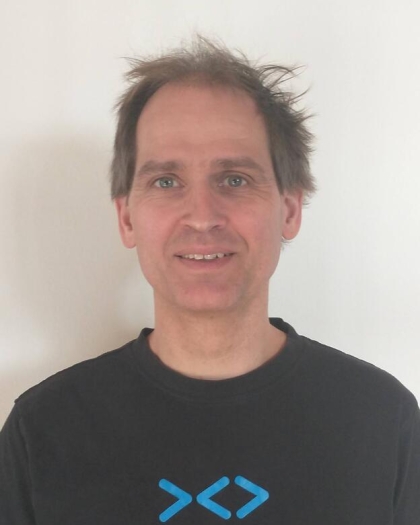
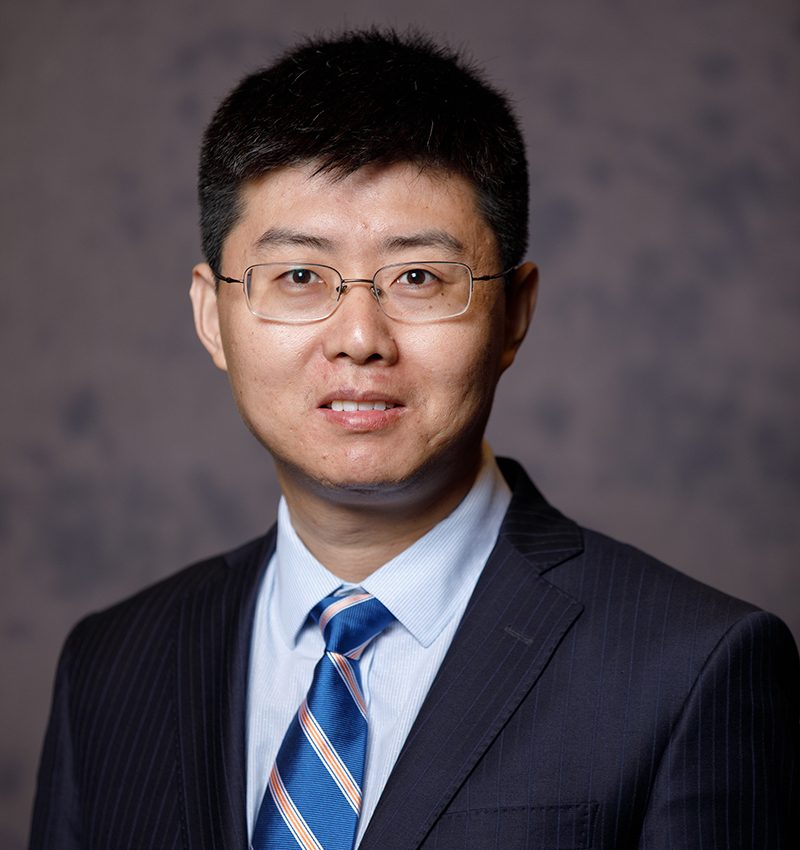
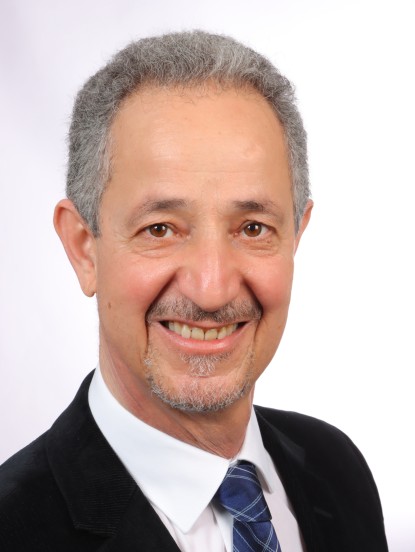
Prof. Henning Bruhn-Fujimoto is a faculty member at the Institute for Optimization and Operations Research at Ulm University. His research focuses on graph theory, combinatorial optimization, and discrete mathematics , with notable contributions to Erdős-Pósa properties, cycle packing, and algorithmic graph theory. He teaches courses in mathematical foundations of machine learning and combinatorics. Academic Background: - Habilitationsschrift : Graphs and their Circuits (2009) - PhD Thesis: Infinite circuits in locally finite graphs (2005) - Diploma Thesis: Generating the cycle space by induced non-separating cycles (2001) Research Interests: - Structural graph theory and algorithm design - Optimization in discrete systems - Applications of combinatorial mathematics Thesis Supervision: He regularly oversees bachelor's and master's theses in optimization, graph theory, and related fields. Notable past thesis topics include elevator system optimization, Erdős-Posa properties in graphs, and container ship unloading algorithms. Labs/Teams: His work is centered within the Institute's optimization group, collaborating with researchers on projects involving graph algorithms and combinatorial optimization.
Serena Ng is the Edwin W. Rickert Professor of Economics at Columbia University and an Affiliated Faculty member in the Department of Statistics. Her research spans econometrics, empirical macroeconomics, time series analysis, and big data methods, with a focus on factor models, missing data, and macroeconomic forecasting. She has developed influential datasets such as FRED-MD and FRED-QD, widely used in macroeconomic research. Her research interests include: High-dimensional econometric modeling Factor analysis and principal components Missing data and matrix completion Dynamic modeling of disasters and climate shocks Macroeconomic forecasting and nowcasting Structural vector autoregressions and DSGE identification Her recent publications (2021–2025) reflect a strong trend toward integrating machine learning and computational methods into econometric modeling, particularly in handling large datasets, imputing missing values, and analyzing the macroeconomic impact of climate and disaster shocks. She has also contributed to foundational work in uncertainty measurement and time-varying parameter models. Her scientific contributions are recognized through extensive publication in leading journals. While no specific awards are listed, her editorial and collaborative roles (e.g., with the Journal of Econometrics) indicate high standing in the profession. She advises doctoral students in economics and statistics, though no names are publicly listed. She has received funding from major institutions including the National Science Foundation and NIH for interdisciplinary research. Her work bridges econometrics with environmental and health economics, particularly in projects related to climate adaptation and disaster impacts. She maintains a laboratory-like research group focused on macroeconometric modeling and big data analysis, contributing to the development of tools for real-time economic monitoring and policy analysis.
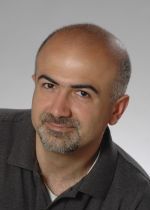
Babak Ayazifar is a Teaching Professor at UC Berkeley's EECS department since 2005. He holds a BS from Caltech (1989) and SM/PhD from MIT (2003). His work focuses on signal processing, education innovation, and curriculum development. He has won prestigious teaching awards including the Goodwin Medal (1999) and IEEE’s Mac Van Valkenburg Award (2012). His research bridges graph signal processing and pedagogical methodologies, with notable contributions to scalable educational tools like Jupyter notebooks. Education: BS Electrical Engineering, California Institute of Technology (1989) SM/PhD Electrical Engineering and Computer Science, MIT (2003) Key Roles: Visiting Senior Lecturer at MIT (2013–2014) Faculty co-advisor for Tau Beta Pi since 2009 Co-inventor of U.S. Patent 5,387,940 (video compression) Teaching Contributions: Developed EECS 16A curriculum Pioneer of interactive lab tools for signal processing education Advocate for TA mentoring and teaching excellence His research integrates signal processing fundamentals with educational innovation, emphasizing practical applications and student engagement. Recent work includes leveraging graph theory for signal analysis and Fourier pedagogy reform.
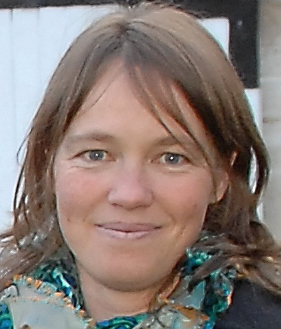
Professor Stefano Romeo leads the Human Translational Genetics group at Karolinska Institutet's Department of Medicine, Huddinge, where his research bridges genetics, metabolism, and clinical medicine to address metabolic diseases. His work focuses on uncovering genetic and molecular mechanisms underlying liver diseases, diabetes, and cardiovascular conditions through innovative translational approaches. Professor Romeo's research has significantly advanced our understanding of metabolic dysfunction-associated steatotic liver disease (MASLD), identifying key genetic variants including PNPLA3 and MBOAT7 genes. He pioneered the development of multilineage 3D in vitro models for fatty liver disease and discovered a protective genetic variant in the PSD3 gene. His landmark achievement is the identification of two distinct MASLD types with different cardiometabolic risk profiles using compartmentalized polygenic risk scores, which has major implications for targeted treatment approaches. In cardiovascular research, Professor Romeo has developed machine learning algorithms for diagnosing familial hypercholesterolemia and elucidated the role of lipoprotein(a) as an independent cardiovascular risk factor. His integrated approach combines genomics, bioinformatics, molecular biology, and clinical investigations to translate discoveries into practical applications. Research Focus Areas: Genetic basis of metabolic liver diseases Cardiometabolic risk stratification 3D disease modeling and therapeutic testing Polygenic risk scoring for precision medicine Molecular pathways in lipid metabolism Professor Romeo's work has resulted in numerous high-impact publications in journals including Nature Medicine and Journal of Hepatology, demonstrating his leadership in translating genetic insights into improved disease prediction, prevention, and therapeutic outcomes for patients with metabolic disorders.
Sylvie Putot is a Professor of Computer Science at École Polytechnique, where she focuses on formal verification of numerical programs and cyber-physical systems. She leads the Cosynus team at LIX laboratory and organizes the LIX Seminar series. Current affiliation: École Polytechnique (Computer Science Department) Prior affiliation: CEA LIST (developer of FLUCTUAT static analyzer) Her research spans formal methods for cyber-physical systems , emphasizing reachability analysis , invariant synthesis , and probabilistic verification . She combines abstract interpretation with zonotopic domains and constraint programming to address numerical stability and safety in AI-driven control systems. Recent publications highlight work on Safe AI through Formal methods (SAIF project) , including probabilistic guarantees for neural networks and applications in mobile robotics. Her team’s best paper award at EMSOFT 2015 recognized scalable quadratic invariant computation for embedded systems. Scientific awards: Best paper award, ACM SIGBED International Conference on Embedded Software (EMSOFT 2015) She has supervised numerous PhD students in topics like mobile robotics , neural network verification , and numerical error analysis . Active in ANR projects (COVERIF, MALTHY, DEFIS) and currently leads the PEPR IA initiative on AI validation.
Morten Brun is an Associate Professor at the Department of Mathematics, University of Bergen. His research spans computational topology, persistent homology, and applications in biology and data science. Email: morten.brun@uib.no Research Interests: He specializes in topological data analysis, focusing on sparse nerves, relative persistent homology, and computational geometry. His work applies topological methods to biological problems, including drug resistance modeling in tuberculosis and immune profiling in multiple sclerosis. Recent Publications: His 2025 work includes hypercubic modeling of tuberculosis drug resistance and high-dimensional immune profiling post-stem cell transplantation. Earlier articles explore computational topology techniques (2017-2024) and interdisciplinary applications in toxicology and systems biology.
Ashwinkumar Venkatanaga Machanavajjhala is an Adjunct Associate Professor of Computer Science at Duke University's Trinity College of Arts & Sciences since 2024, with prior roles as Associate Professor (2018-2024) and Assistant Professor (2012-2018). His research focuses on differential privacy, secure multi-party computation, and privacy-preserving data analysis frameworks. Education: Ph.D. from Cornell University (2008) His work spans privacy-preserving algorithm design, synthetic data generation, and privacy-utility trade-offs. Recent research themes include differential privacy for aggregate queries, foreign key constraints in database systems, and policy-aware privacy frameworks . Grant projects like RAISE: C-Accel Pilot and RAPID: Poirot highlight his leadership in privacy and data security initiatives. Scientific contributions include groundbreaking work on ϵktelo for differentially private algorithms, DP-Sync for update pattern privacy, and Blowfish Privacy for customizable privacy definitions. Awards include the NSF CAREER Award (2013) for early-career impact. In outreach, he led the Bass Connections Faculty Team (2018-2019) addressing vaccine misinformation in Durham. Teaching includes COMPSCI 891: Special Readings in Computer Science (Summer 2022).
Dr. Shunqiao Sun is an Assistant Professor in the Department of Electrical and Computer Engineering at The University of Alabama, College of Engineering. He joined the faculty in August 2019 as a tenure-track professor after working at Aptiv’s radar core team in Malibu, California. His research focuses on advanced signal processing, machine learning, and optimization for automotive and MIMO radar systems in autonomous vehicles. Ph.D. : Electrical and Computer Engineering, Rutgers University, 2016 M.S. : Electrical Engineering, Fudan University, 2011 B.S. : Electrical Engineering, Southern Yangtze University, 2004 Dr. Sun's research lies at the intersection of statistical and sparse signal processing , mathematical optimization , and machine learning , with applications in automotive radar , MIMO radar , and autonomous driving . His work emphasizes sparsity-oriented frameworks, AI-powered radar perception, and high-resolution 4D sensing. He leads a dynamic research group focused on next-generation radar technologies for intelligent transportation systems. His recent publications demonstrate a strong trend in deep learning for radar signal recovery , collaborative radar imaging , direction-of-arrival estimation with sparse arrays , and integrated sensing and communication . Several of his papers are among the most downloaded and cited in IEEE journals, including top articles in IEEE Signal Processing Magazine and IEEE Journal of Selected Topics in Signal Processing. Scientific Awards and Honors: NSF CAREER Award (2024) NSF CRII Award (2022) IEEE AESS Robert T. Hill Best Dissertation Award (2016) Best Student Paper Award at IEEE SAM Workshop (2020) Rutgers ECE Academic Achievement Award (2015–2016) University of Alabama Hewson Engineering Faculty Fellow (2025) Dr. Sun is actively involved in academic service and leadership. He is an Associate Editor for IEEE Signal Processing Letters and IEEE Open Journal of Signal Processing . He serves as Vice Chair of the IEEE Signal Processing Society’s Autonomous Systems Initiative and is an elected member of the IEEE Sensor Array and Multichannel (SAM) Technical Committee and the Integrated Sensing and Communication (ISAC) Technical Working Group. He has co-organized numerous workshops and special sessions at ICASSP, EUSIPCO, and IEEE Radar Conference. His lab has secured significant research funding from the National Science Foundation , NXP Semiconductors , MathWorks , and NOAA . He mentors multiple Ph.D. students, several of whom have interned at leading industry labs such as NXP and GM Cruise. He has co-organized the Workshop on Signal Processing for Autonomous Systems (SPAS) at ICASSP and EUSIPCO and delivered invited seminars at institutions including TU Delft, UC Davis, and Lehigh University.
Abdelhak M. Zoubir is a Professor of Signal Processing and Head of the Signal Processing Group at Technische Universität Darmstadt, Germany. He has held leadership roles including Head of the Department of Electrical Engineering and Information Technology (2012–2014 and 2020–2022), and President of the European Association for Signal Processing (EURASIP, 2017–2018). His research focuses on statistical signal processing with applications in radar imaging, biomedical engineering, and automotive systems. Zoubir has authored over 500 publications and is a Fellow of IEEE and EURASIP. He currently leads projects on radar communication integration, robust signal processing algorithms, and radiation-hardened sensor development. Education: Dipl.-Ing. (BSc/MSc) from Fachhochschule Niederrhein and Ruhr-Universität Bochum, followed by a Dr.-Ing. (PhD) in Electrical Engineering from Ruhr-Universität Bochum (1992). Research Interests: Bootstrap techniques, robust detection/estimation, cooperative sensor networks, radar for landmine detection, and automotive safety systems. He has pioneered methods in robust statistical signal processing, including low-rank matrix completion and sparsity-aware algorithms. Recognition: Recipient of the IEEE Meritorious Service Award (2018), IEEE Signal Processing Magazine Best Paper Award (2017), and the M. Barry Carlton Award (2014). He has been a keynote speaker at major conferences such as ICASSP and EUSIPCO, and served as Editor-in-Chief of the IEEE Signal Processing Magazine (2012–2014). Current Projects: Focus on automotive radar signal processing, radiation-hardened sensors (MALTA), and distributed learning robustness. His work bridges theoretical advancements with practical applications in defense, healthcare, and automotive industries.
Qiyang Han is an Associate Professor in the Department of Statistics at Rutgers, The State University of New Jersey, within the School of Arts and Sciences. His research lies at the theoretical interface of statistics, probability, and algorithms, with a strong focus on foundational and high-dimensional problems. His research interests include mathematical statistics , high-dimensional probability , empirical process theory , nonparametric and shape-restricted inference , and Bayesian nonparametrics . He also investigates high-dimensional statistics , convex optimization , and large-scale iterative algorithms , with increasing attention to gradient descent dynamics and message passing methods. His recent publications reveal a consistent focus on precise asymptotic analysis, universality phenomena, and inference under geometric constraints. Themes across his work include robustness, adaptivity, and the theoretical underpinnings of modern statistical learning in overparameterized regimes. Ph.D. in Statistics, University of Washington, 2018 Supervised by Professor Jon A. Wellner He has collaborated with prominent researchers such as C.-H. Zhang, Bodhisattva Sen, Kengo Kato, and Richard J. Samworth. His work is published in top journals including The Annals of Statistics , Journal of the Royal Statistical Society Series B , and IEEE Transactions on Information Theory . Although no formal advising list is provided, his collaborative output suggests active mentorship and research leadership. He is involved in theoretical research with implications for machine learning, signal processing, and statistical inference. His lab or research group focuses on developing rigorous mathematical frameworks for understanding complex statistical algorithms and models, particularly in high-dimensional settings.
Mitra Baratchi is an Associate Professor at the Leiden Institute of Advanced Computer Science (LIACS) , Leiden University. She leads the Spatio-temporal data Analysis and Reasoning (STAR) research group, co-leads the Automated Design of Algorithms (ADA) group, and founded the Special Interest Group on Spatio-Temporal Data Mining (SIG-SDTM) . PhD from University of Twente (Mobility Data) Master’s/Bachelor’s in Computer Engineering, Iran Research Interests focus on automated pattern extraction from spatio-temporal data across urban, environmental, and industrial domains. Key applications include: Automated Machine Learning (AutoML) for Earth Observations Time-Series Forecasting for public health (e.g., pandemic modeling) Urban Mobility Optimization with ESA, Honda, and municipalities Reliable Vehicular Communication Systems Smart Garments for Health Risk Detection Geocast Protocols for Internet-wide Communication Grant Highlights include €120K NWO-Aspasia, €2.9M Marie Skłodowska-Curie, €350K NWO-KLEIN, and €135K Center for BOLD Cities funding. She has supervised 12 PhD students and 4 current Master’s students since 2011, with notable best paper award at WWIC'16. Teaching includes Machine Learning (2020-present) and Urban Computing (2018-present) at Leiden, plus past courses in Data Visualization, Software Engineering, and Research Methods.
Jeongsub Choi is an Assistant Professor in the Department of Management Information Systems at West Virginia University's John Chambers College of Business and Economics. His work bridges machine learning, data mining, and business intelligence with applications in strategic management, patent analysis, and advanced manufacturing. Ph.D. in Industrial and Systems Engineering, Rutgers University M.S. in Statistics, Rutgers University M.S. in Industrial and Systems Engineering, Rutgers University Choi's research focuses on sparse learning models, network analysis, and virtual metrology systems for semiconductor manufacturing. His work spans predictive maintenance, competitor detection, and anomaly identification in dynamic networks. Recent publications highlight trends in sensor optimization, fault diagnosis, and technology lifecycle modeling. Applications span semiconductor manufacturing, financial transaction networks, and patent citation analysis.
Jonathan A. Kelner is a Professor of Applied Mathematics at the Massachusetts Institute of Technology (MIT) and a member of the Computer Science and Artificial Intelligence Laboratory (CSAIL) . His research bridges pure mathematics and algorithms, focusing on spectral graph theory, combinatorial optimization, and distributed computing.
Virginia Vassilevska Williams is a Professor at the Massachusetts Institute of Technology (MIT) Department of Electrical Engineering and Computer Science (EECS), affiliated with MIT CSAIL. She earned her Ph.D. in Computer Science from Carnegie Mellon University in 2008 and held postdoctoral positions at the Institute for Advanced Study (Princeton), UC Berkeley, and Stanford. Education: B.S. in Mathematics and Engineering from Caltech (2003); Ph.D. in Computer Science from CMU (2008) Her research focuses on combinatorial and graph-theoretic approaches to computational problems, including shortest paths , pattern detection , fine-grained complexity , and computational social choice for analyzing election manipulation and tournament structures. Recent publications highlight advances in sparse graph algorithms , cycle detection , and approximate counting using matrix multiplication techniques. She co-organized programs at the Simons Institute (2023) and Dagstuhl Seminars (2016). Scientific Awards NSF CAREER Award Google Research Fellowship Alfred P. Sloan Research Fellowship Thornton Family Faculty Research Innovation Fellowship Invited Speaker at ICM 2018 She advises current Ph.D. students including John Kuszmaul , Yael Kirkpatrick , and Zixuan Xu . Former students like Amir Abboud (Weizmann Institute) and Nicole Wein (U. Michigan) have achieved academic and industry positions.
Dr. Eleanor (Ellie) Browne is an Associate Professor in the Department of Chemistry at the University of Colorado Boulder and a Fellow at the Cooperative Institute for Research in Environmental Sciences (CIRES). Her research focuses on atmospheric chemistry, particularly the formation and growth of aerosol particles and their role in climate, air quality, and planetary habitability. Education: Ph.D. in Chemistry, University of California, Berkeley (2012) Research Interests: Dr. Browne's research integrates field measurements, laboratory experiments, and instrument development to understand the chemistry of aerosol formation and growth in Earth’s atmosphere and beyond. Her group investigates new particle formation in agricultural environments, organic haze formation in planetary atmospheres (including Titan and early Earth), and the atmospheric fate of organosilicon compounds. A major theme of her work is the development of novel mass spectrometry techniques and data visualization tools to probe atmospheric composition with unprecedented detail. Scientific Awards: 2025 RIO Faculty Fellow, CU Boulder and CU System 2023 Rising Star in Environmental Research, National/International Recognition 2022 ACS Environmental Au Rising Star in Environmental Research 2021 CIRES IRP Award for aerosol chemical characterization method development 2019 American Society for Mass Spectrometry Research Award 2012 NOAA Climate and Global Change Postdoctoral Fellowship 2010 NASA Earth Systems Science Fellowship Research Group & Collaborations: Dr. Browne leads the Browne Research Group, which is jointly affiliated with the Department of Chemistry and CIRES. The group conducts field campaigns at the DOE ARM Southern Great Plains site and develops advanced instrumentation for chemical ionization mass spectrometry. She is also active in interdisciplinary training programs, including CECA (CIRES Center for Education and Collaboration in the Atmosphere), which supports graduate students and postdocs across CU Boulder. Labs & Facilities: Her group operates environmental simulation chambers for studying Titan-like and Archean atmospheres, and develops custom mass spectrometry tools for real-time aerosol characterization. The team also maintains a strong collaboration with the DOE Atmospheric Radiation Measurement program, leveraging long-term measurements for process-level understanding of atmospheric chemistry.