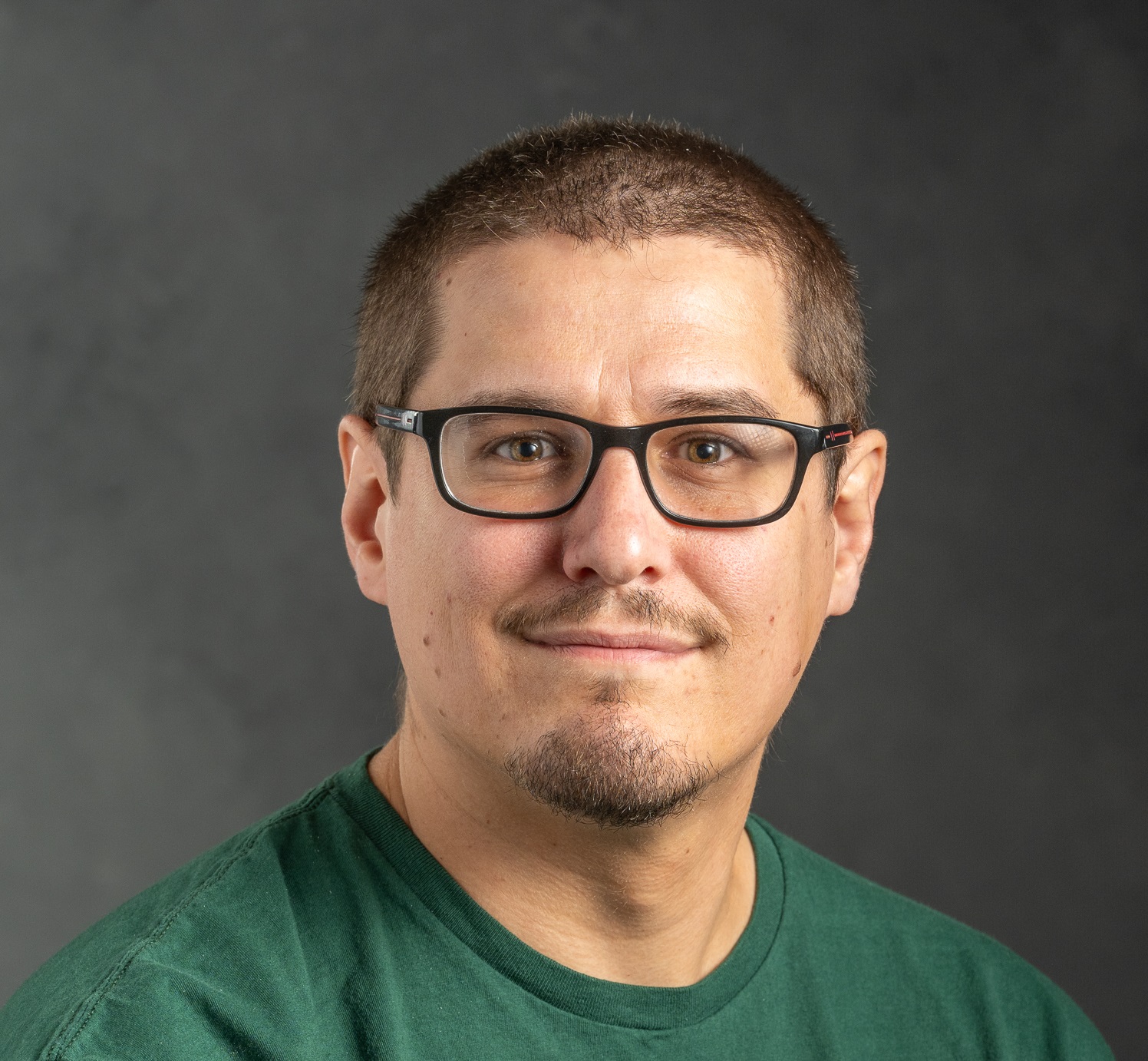
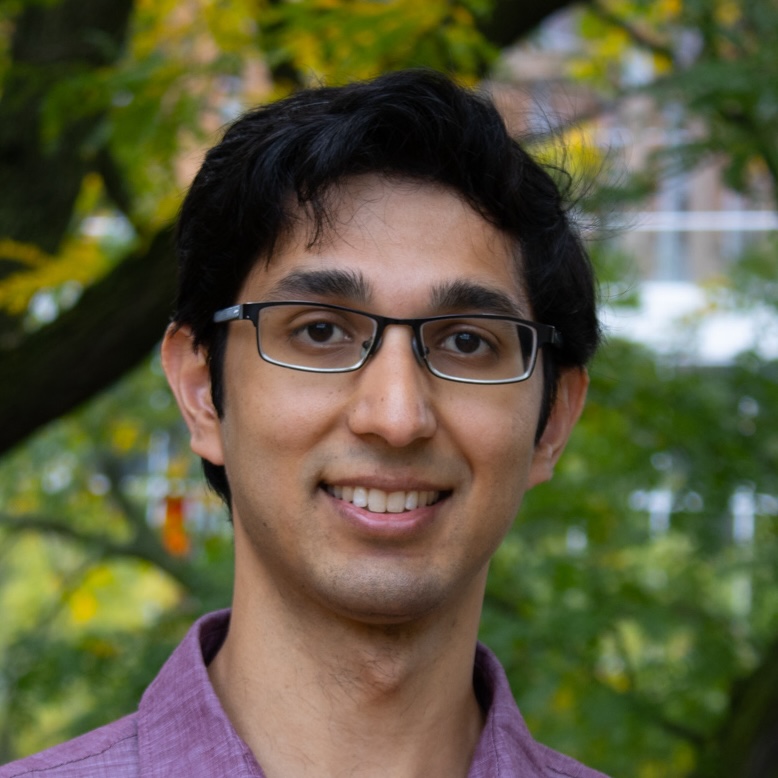
Christian A Parkinson is an Assistant Professor at Michigan State University , affiliated with the Departments of Mathematics and Computational Mathematics, Science and Engineering. His research spans mathematical modeling, computational methods, and interdisciplinary applications in epidemiology, control theory, and differential geometry. Research Interests : Mathematical epidemiology, path planning algorithms, reaction-diffusion systems, stochastic modeling, differential geometry, and network science. Email : chparkin@msu.edu His recent publications focus on: Hamilton-Jacobi equations for optimal path planning in multi-agent systems Reaction-diffusion models for epidemics with human behavior Differential geometry approaches to hyperbolic surfaces Network models for disease-opinion coevolution Environmental crime modeling using level sets He teaches MTH 890: Readings in Mathematics , emphasizing advanced computational and theoretical frameworks.
Jadranka Kolenović-Đapo is a Professor at the Faculty of Philosophy, University of Sarajevo, where she serves as Vice Dean for Teaching, Education, and Student Affairs. Her research spans personality psychology, social interactions, and cognitive reasoning, with a focus on adolescents and athletes. She has contributed extensively to understanding self-esteem development, humor styles, and psychosocial adjustment in post-conflict societies. Current position: Vice Dean for Teaching, Education, and Student Affairs Institution: Faculty of Philosophy, University of Sarajevo Main research areas: Personality traits, cognitive reasoning, self-efficacy, humor studies Her recent publications highlight the interplay between personality dimensions (e.g., the Dark Triad) and behavioral outcomes, including workplace stress and social interactions. She has validated multiple psychological scales for assessing competencies in sports and self-esteem metrics in youth populations. Key trends in her work include analyzing linguistic violence, imagined contact theory, and psychosocial resilience in clinical and educational contexts. Her interdisciplinary approach bridges psychology, linguistics, and sports science.
Professor Spiridon Ivanov Penev is a leading academic in the School of Mathematics and Statistics at the University of New South Wales. He holds a PhD in Mathematical Statistics from Humboldt University (Berlin, Germany) and has been affiliated with UNSW since 1992, progressing from Lecturer to Professor in 2019. His research spans wavelet methods, saddlepoint approximations, structural equation models, and stochastic risk analysis. Education: PhD in Mathematical Statistics, Humboldt University Current Affiliation: Department of Statistics, School of Mathematics and Statistics, UNSW His work focuses on advanced nonparametric techniques, including wavelet-based signal recovery with adaptive sampling rates, and robust inference in structural equation models. He has developed bias-corrected reliability measures for psychometric applications and contributed to stochastic optimization problems in finance and engineering. Recent publications highlight his expertise in semiparametric regression, robust portfolio optimization, and marine engineering applications using machine learning. Key trends include the use of Bregman divergence for shape-preserving estimation and Markov chain methods for climate model weighting. Scientific Awards: DAAD award Elected member of the International Statistical Institute (ISI) He has supervised numerous grants as Chief Investigator, including Australian Research Council projects and industry collaborations. Administrative roles include membership in the School of Mathematics and Statistics Executive Committee. Teaching duties span advanced statistical inference, multivariate analysis, and data science applications.
Thomas G. J. Chandler is an Assistant Professor in the Department of Mathematics at the University of North Carolina at Chapel Hill, with his office located in Phillips Hall 396. Prior to joining UNC Chapel Hill, he was a Van Vleck Visiting Assistant Professor in the Department of Mathematics at the University of Wisconsin-Madison. Dr. Chandler completed his MMath and DPhil in the Oxford Centre for Industrial and Applied Mathematics at the Mathematical Institute, University of Oxford. His doctoral research, supervised by Prof. Dominic Vella, explored the mechanics of thin elastic materials and their interaction with soft matter. His postdoctoral research at Wisconsin, supervised by Prof. Saverio Spagnolie, focused on the interaction of anisotropic fluids with soft matter. Dr. Chandler's research focuses on solving physically motivated problems using applied mathematics techniques, particularly asymptotic, numerical, and complex analysis. His primary research areas include fluid dynamics (especially nematic liquid crystals and active matter), solid mechanics (particularly thin elastic materials), and mathematical biology. He investigates how active stresses in anisotropic fluids interact with deformable bodies, how geometry affects the rigidity of thin elastic sheets, and how turgor pressure influences cellular structures in biological systems. His research combines analytical methods, particularly complex variable techniques, with numerical simulations to address problems at the intersection of mathematics, physics, and biology. Dr. Chandler's work has revealed fundamental insights into phenomena such as curvature-induced rigidity in thin elastic materials, the mechanics of pressurized cellular sheets, and the interaction of deformable bodies with active nematic fluids. Dr. Chandler has published extensively in high-impact journals including Physical Review Research, Journal of Fluid Mechanics, SIAM Journal on Applied Mathematics, and Proceedings of the Royal Society A. His research demonstrates a consistent trajectory from fundamental mathematical theory to applications in materials science and biological systems. As an educator, Dr. Chandler teaches a variety of mathematics courses at UNC Chapel Hill. In Fall 2025, he will be teaching Math 383: First Course in Differential Equations. His previous teaching includes courses in Linear Algebra, Differential Equations, Applied Dynamical Systems, and The Theory of Single Variable Calculus. At the University of Oxford, he served as a Class Tutor and Teaching Assistant for graduate-level courses in Fluid Mechanics, Elasticity, and Solid Mechanics.
Margherita Fantoli is a tenure track lecturer at the Faculty of Arts at KU Leuven, affiliated with the Cultural Studies Research Group. She is an active member of multiple research institutes including DigiSoc – KU Leuven Institute for Digital Society and LECTIO – KU Leuven Institute for the Study of the Transmission of Texts, Ideas and Images in Antiquity, the Middle Ages and the Renaissance. Her institutional involvement extends to the Faculty Council of Arts and the POC Digital Humanities. Dr. Fantoli's research spans Digital Humanities with a focus on historical linguistics, classical studies, and book history. Her work integrates computational methods with traditional humanities scholarship, particularly in analyzing ancient Greek and Latin texts, knowledge transmission networks, and multilingualism in historical contexts. She specializes in using digital tools to explore cultural transmission from antiquity through the Renaissance, with particular attention to network analysis of historical texts and academic communities. Her recent publications demonstrate a strong trend toward computational approaches to historical scholarship, particularly through the STUDIUM.AI project which maps knowledge networks around the premodern University of Leuven (1425-1797). Her work bridges classical philology with digital methods, examining topics such as canon formation in antiquity, multilingualism in early modern book catalogues, and the presence of classical texts in later periods. She frequently collaborates across disciplines, working with computer scientists, historians, and linguists. Dr. Fantoli serves as promoter or co-promoter on multiple significant research projects including CLARIAH-VL+ (toward the 'SSH Open Science Cloud' in Flanders), studies on the coherence of scientific language in ancient technical texts, and investigations into canon formation in Greco-Roman antiquity. Her teaching portfolio includes courses on data processing, linked data scholarship, and introduction to Digital Humanities, reflecting her commitment to training the next generation of digitally literate humanities scholars. She is actively involved with the Cultural Studies Research Group in Leuven, contributing to their mission of exploring cultural transmission across historical periods. Through her leadership in the STUDIUM.AI project and other digital initiatives, she helps build infrastructure for connecting historical knowledge networks and making premodern scholarship more accessible through digital means.
Professor Isabella Dobrescu is Head of the School of Economics at the University of New South Wales (UNSW) Business School and co-chair of the STEP UP initiative in Education. She serves as an editor for the Journal of Pension Economics & Finance and maintains an active research program spanning labor economics, public finance, health economics, and applied econometrics. Her educational background includes a Ph.D. in Economics with Honors from the University of Padua (2009), an M.Sc. in Economic Mathematical Modeling Summa cum Laude from West University of Timisoara (2005), and dual bachelor's degrees in Economics from Nottingham Trent University and Finance Summa cum Laude from West University of Timisoara (2003). Dobrescu's research has evolved from structural work on consumption and saving dynamics to pioneering applications combining theory, empirical analysis, and randomized controlled trials to improve educational outcomes through technology. Her recent work focuses on financial literacy interventions for high school students through the STEP UP program, while maintaining her longstanding research on aging populations, retirement decision-making, and risk behavior. Her publication portfolio demonstrates consistent output across labor economics, health economics, and applied econometrics, with recent emphasis on educational technology interventions and financial decision-making in retirement contexts. The research shows methodological diversity spanning structural modeling, nonparametric partial identification techniques, and experimental approaches. UNSW Business School Research Impact Award (2021) UNSW President's Award for Building Collaborations (2019) UNSW Scientia Education Fellowship (2017) Australian Government Office of Learning & Teaching Citation (2016) ARC Early Career Research Fellowship (2012) Dobrescu has secured over AU$2.5 million in competitive research funding since 2010, including major ARC Linkage grants and substantial UNSW strategic investments. She leads the STEP UP initiative which has received over AU$650,000 in funding for financial literacy outreach programs. Her collaborative approach is evident in numerous multi-investigator projects with colleagues including Bateman, Thorp, Motta, and Newell across economics, finance, and education domains. As Head of the School of Economics and co-chair of STEP UP, Dobrescu leads research teams focused on educational interventions using technology, retirement decision-making, and the economics of aging. Her Playconomics platform represents a significant innovation in experiential economics education, receiving media coverage from major outlets including The Sydney Morning Herald and The Australian.
Dr Jack Cunliffe is a Senior Lecturer in Quantitative Methods and Criminology at the University of Kent's School of Social Sciences, serving as Director of Studies for Criminology since joining in 2015. His academic journey began with a mathematics undergraduate degree, followed by a PhD in Social Policy from the London School of Economics, and prior government experience in the Home Office and Ministry of Justice. His educational background includes: PhD in Social Policy, London School of Economics (thesis on structural equation modelling of area characteristics as offending risk factors) Undergraduate degree in Mathematics Dr Cunliffe's primary research focuses are cybercrime (particularly online drug trade and fraud) and policy evaluation (assessing prison interventions and drug diversion schemes). He actively contributes as the School of Social Sciences champion for the Institute of Cyber Security for Society and collaborates across disciplines on identity fusion, charitable giving during the pandemic, and primary school civic education. His methodological expertise lies in advanced quantitative analysis of administrative and survey data. His publication record (2017-2025) demonstrates a cohesive research trajectory: early work centered on cryptomarkets and darknet drug trade (2017-2019), evolving into prison rehabilitation interventions (2024-2025) and pandemic-related social behavior (2023). These publications, appearing in high-impact journals like Nature Human Behaviour and BMJ, reflect interdisciplinary collaboration and a commitment to addressing pressing societal issues through rigorous quantitative methods. No scientific awards, fellowships, or medals are documented in the provided information. Dr Cunliffe has led quantitative components of major projects including the Ministry of Justice-funded Prison Leavers Project and evaluations of police drug diversion schemes. He mentors PhD students in cybercrime and policy evaluation and has designed significant curriculum reforms for Kent's criminology program. His grant portfolio reflects strong partnerships with government agencies and interdisciplinary academic teams. As the School of Social Sciences representative for the Institute of Cyber Security for Society, Dr Cunliffe fosters cross-school collaboration on cybercrime research. He also plays a central role in the criminology program's academic leadership, having overseen a comprehensive curriculum redesign and teaching advanced quantitative methods and cybercrime courses.
Dr. Nina Berlinger is a researcher and educator specializing in mathematics education at the University of Münster. She is actively involved in teaching courses related to primary school mathematics education, inclusive teaching practices, and the development of mathematical talents in young children. Her work focuses on creating inclusive learning environments that cater to diverse student needs while fostering mathematical excellence. Dr. Berlinger's research interests center on inclusive mathematics education and the identification and nurturing of mathematical talents in primary school children. She has developed approaches for natural differentiation in mathematics classrooms, allowing all students to engage with challenging mathematical content at their appropriate level. Her work emphasizes creating open, substantial problem fields that provide opportunities for mathematical exploration regardless of students' prior knowledge or abilities. She investigates how spatial reasoning relates to mathematical talent development in young children and develops practical teaching strategies for educators. Her publications reveal a strong focus on inclusive mathematics education, with particular emphasis on how to design classroom settings that simultaneously support students with varying abilities while challenging mathematically talented children. She has contributed significantly to the understanding of natural differentiation in mathematics classrooms and has developed practical teaching materials like the "Mathematische Weltreise" station learning concept. Her work often bridges theory and practice, providing concrete examples like the "Wege in Manhattan" problem that demonstrate how open mathematical problems can create inclusive learning opportunities. Dr. Berlinger has received recognition through numerous publications in mathematics education journals and has presented her work at various national conferences. Her collaborative projects, particularly the "Inklusiver Mathematikunterricht" initiative, demonstrate her commitment to translating research into practical classroom applications. She actively supervises bachelor's theses and teaches multiple courses each semester, including lectures on "Lernende und Mathematik" (Learners and Mathematics) and specialized seminars on differentiating mathematics instruction for primary school children, with particular attention to mathematically talented students. She also leads seminars on promoting mathematically talented children through the MaZ (Math Center Münster) program. Dr. Berlinger is part of a research team working on inclusive mathematics education, collaborating with colleagues like Prof. Dr. Daniel Frischemeier, Prof. Dr. Marcus Nührenbörger, and Dr. Marcus Veber. Together, they have developed comprehensive approaches to inclusive mathematics teaching and teacher education.
Professor Caterina Zeppieri is a faculty member at the Institute for Analysis and Numerics within the Faculty of Mathematics and Computer Science at the University of Münster, Germany. She serves as an investigator in Mathematics Münster and specializes in optimization and calculus of variations. Her research spans multiple collaborative projects within the Excellence Cluster EXC 2044. Her primary research interests focus on Calculus of Variations , Homogenization Theory , and Free-Discontinuity Problems , with significant contributions to the mathematical understanding of material science phenomena. Her work bridges theoretical mathematics with practical applications in material modeling, fracture mechanics, and multi-scale analysis. She has developed sophisticated mathematical frameworks for understanding stochastic homogenization, phase-field approximations, and gradient damage models in heterogeneous materials. Analysis of her recent publications reveals a consistent trajectory toward increasingly complex multi-scale problems involving randomness and discontinuities. Her work demonstrates deep connections between Γ-convergence theory, stochastic processes, and applications to material science, particularly in modeling fracture phenomena and composite materials. A notable trend is her development of global methods that unify deterministic and stochastic approaches to homogenization problems. Zeppieri actively contributes to teaching at the University of Münster, regularly offering courses on Partial Differential Equations, Calculus of Variations, and Advanced Topics in Mathematical Modeling. Her teaching spans both undergraduate and graduate levels, including specialized seminars on cutting-edge research topics in her field. She is deeply involved in the EXC 2044 collaborative research center, particularly in project units C1 (Evolution and asymptotics), C2 (Multi-scale phenomena and macroscopic structures), and C3 (Interacting particle systems and phase transitions), where she contributes her expertise in variational methods and homogenization to multi-disciplinary research efforts.
Professor Shanlin Fu is a distinguished academic at the University of Technology Sydney (UTS), holding the position of Professor in the School of Mathematical and Physical Sciences and affiliated with the Centre for Forensic Science. He serves as the Program Director for the Bachelor of Forensic Science program and is a Research Integrity Adviser for the Faculty of Science. With over $10 million in competitive research funding from ARC, NHMRC, and other national and international schemes since 2008, Professor Fu leads the Drugs and Toxicology Group, focusing on developing sensitive methods for clinical diagnosis, therapeutic drug monitoring, and drugs of abuse testing. Professor, UTS School of Mathematical and Physical Sciences (2019-present) Associate Professor, UTS School of Chemistry and Forensic Science (2015-2019) Senior Lecturer, UTS School of Chemistry and Forensic Science (2008-2014) Professor Fu earned his PhD in Medicinal and Pharmaceutical Chemistry from the University of Sydney (1989-1992), an MSc in Phytochemistry from Peking Union Medical College (1982-1985), and a BSc in Biology from Nanjing Normal University (1978-1982). Prior to his academic career at UTS, he served as a Senior Hospital Scientist at the Northern Sydney Area Health Service (2000-2008) and as a Senior Research Scientist at The Heart Research Institute (1993-2000). Professor Fu's research spans analytical chemistry, forensic chemistry, medical biochemistry, pharmacology, pharmaceutical sciences, forensic toxicology, and clinical toxicology. His work focuses on three main areas: Forensic Chemistry concerning identification of drugs of abuse including new psychoactive substances; Forensic Toxicology focusing on detection of drugs in biological matrices for clinical and medico-legal purposes; and Clinical Toxicology aiming to understand mechanisms of substance abuse harms. His research has strong real-world applications, with his patented 'Cathinone Test' already commercialized for law enforcement and potential healthcare settings. Analysis of Professor Fu's recent publications reveals a strong emphasis on developing innovative analytical methods for drug detection, particularly for new psychoactive substances. His work increasingly incorporates multi-omics approaches (metabolomics, lipidomics, proteomics) and machine learning techniques to enhance detection capabilities. There's a clear trend toward translating laboratory research into practical field applications, with numerous color spot tests and portable detection methods being developed for law enforcement use. His research also shows expanding applications in equine doping control and postmortem analysis. Vice-Chancellor's Medal for Research Excellence through Collaboration or Partnership (2023) UTS Teaching and Learning Award for Team Teaching (2022) MAPS Research Translation Award (2022) As a member of the HDR Panel since 2022, Professor Fu actively supervises Masters Research and PhD students in forensic science. His extensive grant portfolio includes leadership of the ARC Research Hub for Integrated Device for End-user Analysis at Low-levels and the Australian Centre for cannabinoid clinical and research excellence (ACRE). He has established key collaborations with Australian Federal Police, NSW Forensic and Analytical Science Service, Racing NSW, and international institutions including University of Copenhagen and University of Dundee. His research impact extends beyond academia through commercialization of detection technologies that improve efficiency and accuracy of illicit drug detection. Professor Fu heads the Drugs and Toxicology Group at the Centre for Forensic Science, which maintains strong industry partnerships with forensic laboratories and law enforcement agencies. His group is currently developing a multiplexer device that can simultaneously detect multiple new psychoactive substances including cathinones, NBOMEs, piperazines, and fentanyl analogues. The group's work bridges fundamental research with practical applications, with several technologies moving from the laboratory to real-world implementation in forensic and healthcare settings.
Peter Hastie is a Wayne T. Smith Distinguished Professor in the School of Kinesiology at Auburn University. With over 224 peer-reviewed publications, he is recognized as the top physical education scientist in the United States and ranks fourth globally. His work focuses on innovative pedagogical approaches, particularly the Sport Education Model, and has been adopted internationally across diverse educational contexts. Expertise: Sport Education Model, physical education curriculum design, teacher development, and motor skill progression in children. Global Impact: Implemented educational frameworks in Saudi Arabia, Russia, Spain, Ireland, Portugal, and China, contributing to widespread curriculum adaptations and teacher training programs. Hastie’s research emphasizes student engagement, inclusive education, and interdisciplinary integration (e.g., combining mathematics with PE). He co-created Auburn’s ActiveU and ActiveMe online physical education resources, now adopted by institutions nationwide and in multiple languages. Awards & Recognition: 2024 Creative Research and Scholarship Award from Auburn University. Inducted into the National Academy of Kinesiology, reflecting his status as a leading scholar and practitioner. Hastie has delivered keynote speeches on six continents, advanced the understanding of skill development in children with disabilities, and contributed to policy discussions on health-related fitness education. His work bridges research and practice, influencing both academic discourse and real-world teaching methodologies.
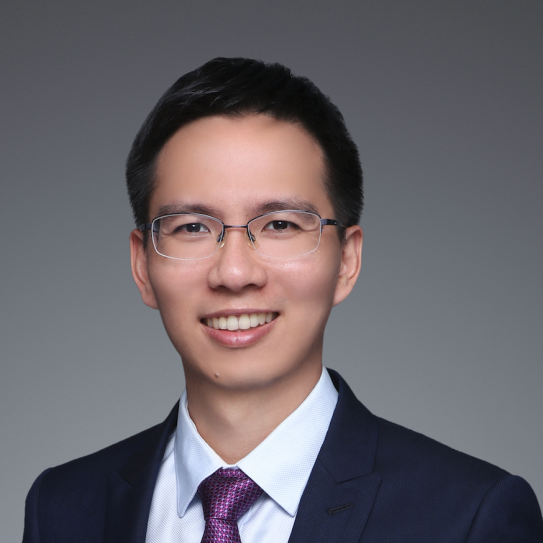
Zhibin Chen is an Assistant Professor of Engineering at NYU Shanghai and concurrently a Global Network Assistant Professor within the broader New York University system. Since January 2019 he has led research and teaching activities at the Division of Engineering and Computer Science in Shanghai, while maintaining university-wide collaborations through his Global Network appointment. Education Ph.D. in Transportation Engineering, University of Florida (2017) Research Interests Dr. Chen’s scholarship centres on Transportation Network Modeling and Optimization , Intelligent Transportation Systems , and Discrete Optimization . He integrates operations research, data science, and engineering to address emerging challenges in electric mobility, autonomous vehicles, and large-scale urban networks. Recent thrusts include: Data-driven analytics of electric-vehicle charging behaviour under usage heterogeneity. Optimization of charging and swapping infrastructure for electric buses and trucks. Network-level deployment and control strategies for connected and automated vehicles. Day-to-day traffic dynamics and equilibrium models with elastic demand. Pricing, policy, and incentive design for sustainable transportation systems. Scientific Awards Stella Dafermos Best Paper Award – awarded at the 95th Transportation Research Board Annual Meeting. Ryuichi Kitamura Paper Award – also conferred at the 95th TRB Annual Meeting. Editorial & Professional Service Dr. Chen currently serves on the Editorial Advisory Board of Transportation Research Part C: Emerging Technologies , shaping the editorial direction of the leading journal in his field. Grants & Collaborations While specific grant identifiers are not disclosed in the provided text, Dr. Chen’s extensive publication record in top-tier journals ( Transportation Science , Transportation Research Parts B, C, D , IEEE ITS , Applied Energy ) and his editorial role indicate sustained research funding and active collaboration with international partners across North America and China. Laboratories & Teams Operating within the Division of Engineering and Computer Science at NYU Shanghai , Dr. Chen leads a research group focused on next-generation mobility analytics, leveraging the university’s interdisciplinary ecosystem and NYU’s Global Network resources to advance smart and sustainable transportation.
Tej Chajed is an Assistant Professor in the Department of Computer Science at the University of Wisconsin-Madison, where he conducts research in formal verification of systems software. His work focuses on building and proving the correctness of critical systems, particularly file systems and concurrent software. Dr. Chajed earned his PhD from MIT in the PDOS group, followed by a one-year postdoc at VMware Research before joining UW-Madison. His academic journey reflects a strong commitment to bridging theoretical formal methods with practical systems implementation. Chajed's research centers on formal verification techniques for systems software, with particular emphasis on concurrent and crash-safe systems . His work aims to eliminate bugs in critical software through mathematical proofs of correctness. Key contributions include DaisyNFS (a verified concurrent file system), the Perennial framework for reasoning about crash safety, and Goose for connecting proofs to Go code. His research spans the intersection of programming languages, operating systems, and formal methods, developing practical tools that bring verification to real-world systems. His recent publications demonstrate a consistent trajectory toward more practical and scalable verification techniques for increasingly complex systems. The research shows progression from foundational verification frameworks to applied work on specific systems like file systems, journaling, and distributed protocols. A notable trend is the focus on making verification more accessible and practical for systems developers, bridging the gap between theoretical formal methods and real-world software engineering. Dr. Chajed serves on numerous program committees including OSDI 2025 PC, PLDI 2024 PC, SySDW 2023 PC, ECOOP 2023 ERC, CPP 2023 PC, POPL 2023 PC, PLDI 2022 PC, POPL 2022 AEC, EuroDW 2021 PC, POPL 2021 AEC, PLDI 2020 AEC, POPL 2020 AEC, and SOSP 2019 AEC, reflecting his standing in the systems and programming languages research community. In teaching, Chajed has developed and instructed courses on systems verification, operating systems, and protocol verification. He previously helped create MIT's 6.826 (Principles of Computer Systems) during his PhD. His passion for technical communication was cultivated during his time as a Communication Fellow in the EECS Communication Lab at MIT, where he continues to offer guidance to students on writing and presentation skills. His research group at UW-Madison focuses on advancing the state of the art in systems verification, with current projects centered around practical verification frameworks for concurrent and crash-safe systems.
Dr. Jeffrey Lyons is an Associate Professor in the Department of Mathematical Sciences at The Citadel, part of the Swain Family School of Science and Mathematics. He specializes in fractional calculus, differential equations, and boundary value problems. His teaching spans from foundational courses like College Algebra and Calculus to advanced topics such as Applied Engineering Mathematics and Differential Equations. Dr. Lyons holds a Ph.D. in Mathematics (2011) from Baylor University, with prior positions at Trinity University, University of Hawaii, and Nova Southeastern University. His research focuses on theoretical and applied aspects of fractional boundary value problems, including fixed point theorems and solution differentiation under varying boundary conditions. Notable awards include the 2011 Chancellor’s Award for Excellence in Teaching and several research grants supporting collaborative work across institutions. His recent publications explore topics like positive solutions for fractional BVPs, Caputo derivatives, and dynamic equations on time scales. These contributions highlight advancements in analytical methods and their applications in mathematical modeling. Dr. Lyons actively participates in academic communities, presenting at international conferences such as the 10th AIMS Conference in Madrid, Spain.
Mark D. Smucker is a Professor in the Department of Management Science and Engineering at the University of Waterloo, cross-appointed with the David R. Cheriton School of Computer Science (Faculty of Mathematics). His research focuses on interactive information retrieval systems, including search engines and recommendation systems, aiming to enhance evaluation methods for better prediction of human search performance. He co-organized the TREC Health Misinformation Track (2019–2022) and currently co-leads the TREC DRAGUN Track, addressing health misinformation and trustworthiness assessment in news. Education: PhD (Computer Science, UMass Amherst, 2008), MSc (Computer Science, UW-Madison, 1996), BSc (Physics & Computer Science, Iowa State, 1994). Research interests include design/analysis of interactive IR systems, evaluation frameworks, and human-computer interaction. He has been recognized with the ACM SIGIR 2012 Best Paper Award and teaching excellence awards from the University of Waterloo. Teaching includes courses like Search Engines (MSCI/MSE 541/720) and Databases/Software Design (MSCI 245). Active in organizing TREC tracks and publishing over 50 peer-reviewed articles.