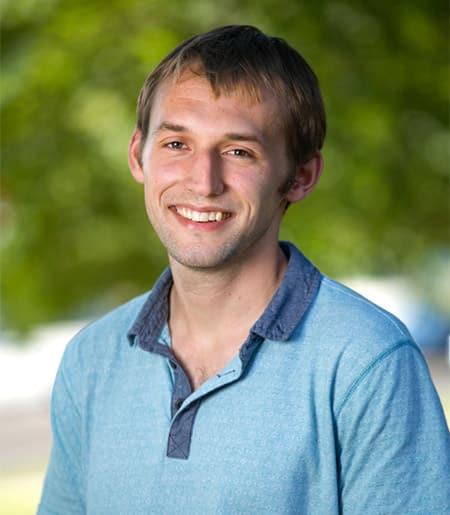
Jessica Young Schmidt is an Associate Teaching Professor in the Department of Computer Science at North Carolina State University, serving as ABET Coordinator since 2017 and Course Coordinator for CSC226: Discrete Mathematics. Her primary focus is undergraduate education, particularly CSC116: Introduction to Computing – Java and CSC226, where she implements flipped classroom models and comprehensive end-of-semester exercises. Her educational background includes: Ph.D. in Computer Science, North Carolina State University, 2012 M.S. in Computer Science, North Carolina State University, 2009 B.S. in Computer Science and Mathematics, Roanoke College, 2007 Dr. Schmidt's research centers on computer science education, emphasizing active learning, instructional design, and software engineering pedagogy. She has pioneered methods like collaborative software engineering exercises for CS1 materials and frameworks for assessing critical thinking, with her work on end-of-semester integration earning a SIGCSE 2020 award. Her publications reveal an evolution from privacy policy analysis (2009-2012) toward educational innovation in recent years. Her scholarly contributions demonstrate consistent focus on curriculum development and assessment, particularly in integrating software testing throughout computer science education and enhancing student comprehension through structured reflection. She has received the following recognition: Third Best Paper, SIGCSE 2020 Technical Symposium (Experience Reports and Tools Track) As ABET Coordinator, Dr. Schmidt drives curriculum assessment and continuous improvement, while her CSC226 coordination ensures pedagogical consistency across sections. Her teaching innovations directly support student success in foundational computer science concepts.
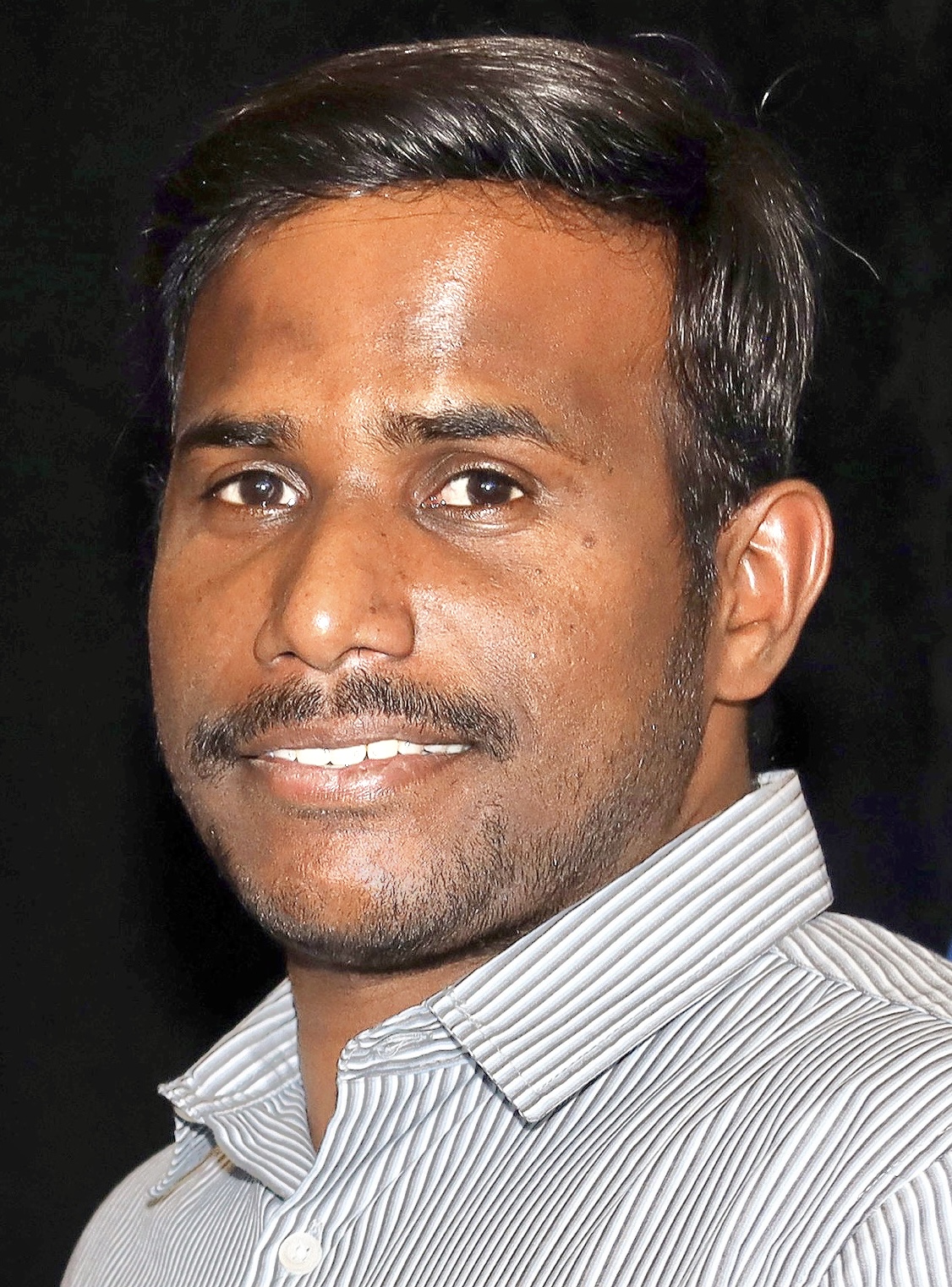
Dr. Sirojan Tharmakulasingam serves as a Lecturer and Research and Development Coordinator at the Signals, Information & Machine Intelligence lab within the Faculty of Engineering at the University of New South Wales (UNSW) Sydney. His work bridges theoretical machine learning with practical applications in edge computing and high-performance systems. His research spans multiple cutting-edge domains including machine learning, artificial intelligence, data science, edge computing, and high-performance computing. Dr. Tharmakulasingam specializes in developing next-generation inference models by integrating machine learning, signal processing, mathematical modeling, and computing across diverse data types including images, video, audio, and quantum molecular data. His work has significant implications for scientific computing, telecommunications, and healthcare applications. Analysis of his publication trends reveals a strong focus on practical AI implementations, with increasing emphasis on edge computing solutions, quantum applications, and energy-efficient models. His recent work demonstrates progression from foundational machine learning techniques toward specialized applications in scientific computing and real-time systems. Dr. Tharmakulasingam holds a Doctor of Philosophy from UNSW Sydney and a Bachelor of Science of Engineering from the University of Moratuwa in Sri Lanka. His academic journey reflects a strong foundation in both theoretical and applied engineering principles. As Research and Development Coordinator for the Signals, Information & Machine Intelligence lab, he oversees critical research infrastructure and collaborations. His work location in Room 447 of the EE&T Building (G17) places him at the heart of UNSW's engineering research ecosystem, with access to the Mark Wainwright Analytical Centre's extensive facilities.
John Copp is an Adjunct Assistant Professor in the Department of Computing and Software at McMaster University , specializing in wastewater treatment modeling and process control. His work bridges environmental engineering with computational methods, focusing on simulation benchmarks, digital twin applications, and real-time monitoring systems. Adjunct Assistant Professor, Computing and Software, McMaster University Research Interests include: Wastewater treatment process modeling Respirometry-based control strategies Digital twin development for water resource recovery Automation and fault detection systems Biological nutrient removal optimization His scholarly output spans over 25 years with notable trends in: Development of benchmark simulation models (BSM1, BSM2) Integration of anaerobic digestion with activated sludge processes Multi-biomass modeling for enhanced nutrient removal Machine learning applications in water quality monitoring
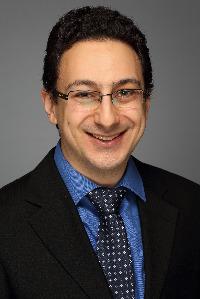
Angelos Georghiou is an Associate Professor of Operations Management at the Department of Business and Public Administration, University of Cyprus. He previously held academic positions as Assistant Professor at McGill University (2016–2019), Post-Doctoral Researcher at MIT (2012–2013), and Postdoctoral Researcher at ETH Zurich (2013–2016). His work bridges computational methods in stochastic and robust optimization with applications in healthcare, energy systems, and operations management. Ph.D. in Operations Research, Imperial College London (2012) M.Sci. in Mathematics, Imperial College London (2008) His research focuses on stochastic optimization , robust optimization , and decision rules , addressing challenges in healthcare analytics , energy-efficient control systems , and machine learning integration . Recent publications in Management Science and Operations Research highlight his contributions to decision-dependent information discovery and computational frameworks. Key trends in his 15 most recent articles include: Advancing robust optimization techniques for multistage problems Applications in healthcare (psychiatric risk prediction) and energy systems Integration of machine learning with stochastic programming Development of tractable algorithms for complex decision environments Scientific Awards : Esdras-Minville Best Student Paper Award (2023) He serves on editorial boards of Operations Research Letters (Area Editor) and Management Science , and collaborates with institutions like MIT, ETH Zurich, and McGill University. His work with undergraduate students includes a 2021 paper in SIAM Undergraduate Research Online .
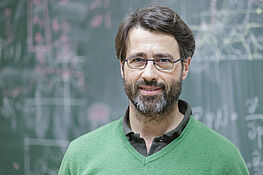
Burkhard Schipper serves as Professor of Economics at the University of California, Davis, with affiliated status in the Graduate Group of Applied Mathematics. His academic trajectory spans over two decades, establishing him as a leading theorist in strategic decision-making frameworks with applications across economics, finance, and political science. His educational foundation includes: Diplom-Volkswirt, University of Bonn (2000) Dr. rer. pol., Economics, University of Bonn, European Doctoral Program (2003) Schiper's research program centers on game theory, microeconomic theory, and experimental economics, with pioneering contributions to modeling unawareness in strategic interactions. His theoretical work develops formal frameworks for agents operating with incomplete awareness of game structures, while his experimental research investigates biological determinants of economic behavior, particularly steroid hormones' influence on risk attitudes and competitive bidding. This dual approach bridges abstract theory with empirical validation, yielding insights applicable to financial markets, policy design, and organizational behavior. Recent publications (2022-2025) demonstrate consistent focus on unawareness extensions across diverse contexts—from macroeconomic policy to auction design—while maintaining empirical rigor through experimental methods. His work shows increasing integration of biological variables with strategic models, reflecting interdisciplinary innovation in economic theory. His scientific recognition includes: UC Davis Hellman Fellowship (2009-10) Young Economist Award, European Economic Association (2003) Schiper secures major research funding from the Army Research Office and National Science Foundation, supporting his unawareness modeling and experimental programs. As Editor-in-Chief of the B.E. Journal in Theoretical Economics and Associate Editor of Mathematical Social Sciences, he actively shapes scholarly discourse. His teaching encompasses undergraduate and doctoral courses in microeconomics and game theory, transmitting advanced theoretical frameworks to new generations of economists. Though not explicitly detailed in source materials, his research likely operates through UC Davis' experimental economics laboratories with interdisciplinary collaboration across the Graduate Group of Applied Mathematics.
Sophia Natasha Wilson is a Research Fellow in the Department of Computer Science (DIKU) at the University of Copenhagen, specializing in machine learning applications across interdisciplinary domains. She is affiliated with the SCIENCE AI Centre and holds a cross-departmental position at the Niels Bohr Institute . Her research bridges theoretical machine learning with practical implementations in healthcare, quantum computing, and environmental sustainability. University of Copenhagen Department of Computer Science (DIKU) Niels Bohr Institute SCIENCE AI Centre Her research focuses include: Quantum-enhanced machine learning algorithms Explainable AI for healthcare applications Environmental sustainability in computing Emotion-aware language models Quantum computing hardware optimization Public health risk modeling Her recent publications demonstrate cross-disciplinary work in quantum machine learning (hybrid optical processors, qubit stabilization), health informatics (hypothyroidism analysis, nursing values evaluation), and ethical AI (sustainable AI, fairness in recommender systems). Technical work also appears in non-Euclidean generative models and real-time adaptive systems . Current projects include quantum dot array simulation (QDarts platform) and federated learning for personalized medicine . She contributes to the TreeSense center for remote sensing of global tree resources and works on climate-aware AI frameworks.
Christoph Dellago is a full Professor of Computational Physics at the Faculty of Physics of the University of Vienna, where he has been a faculty member since 2003. He currently serves as Director of the Erwin Schrödinger Institute for Mathematics and Physics, Head of the Computational and Soft Matter Physics Group, and Project lead of EuroCC Austria - National Competence Centre for Supercomputing. Previously, he served as Dean of the Faculty of Physics (2009-2012) and Coordinator of the Doctoral College Advanced Functional Materials (DCAFM). Full Professor, Faculty of Physics, University of Vienna (2003-present) Director, Erwin Schrödinger Institute for Mathematics and Physics (2017-present) Head, Computational Physics and Soft Matter Group (2024-present) Coordinator, Doctoral College Advanced Functional Materials (DCAFM) Austrian Representative, Council of CECAM Dellago received his PhD in Physics from the University of Vienna in 1996, followed by postdoctoral research at UC Berkeley as a Schrödinger Fellow of the Austrian Science Foundation. His research focuses on developing computational methods to study rare events in condensed matter systems, particularly transition path sampling methodology for simulating nucleation, chemical reactions, and biomolecular reorganizations. He has pioneered the application of machine learning to molecular structure recognition and potential energy surfaces. Recent work examines self-assembly of nanocrystals, biopolymer folding, aqueous interfaces, phase separation in alloys, thermo-polarization, cavitation, and freezing phenomena. Analysis of Dellago's recent publications (2023-2025) reveals a strong emphasis on machine learning applications in computational physics, particularly neural network potentials for simulating water interfaces, crystal defects, and phase transitions. His work bridges traditional statistical mechanics with modern computational techniques, creating powerful tools for studying complex dynamical processes that occur on timescales far beyond conventional molecular dynamics simulations. The publications demonstrate increasing integration of machine learning with rare event sampling methods, reflecting the cutting-edge direction of computational statistical mechanics. Förderpreis der Stiftung Futura zur Förderung junger Südtiroler im Ausland (1997) The Raymond and Beverly Sackler Prize in the Physical Sciences (2005) UNIVIE Teaching Award of the University of Vienna (2014) Dellago leads an active research group with multiple PhD students and postdocs, focusing on computational statistical mechanics. His group develops trajectory-based sampling methods and machine learning approaches for molecular simulation. He has secured significant funding through EuroCC Austria and various research platforms including the Research Platform Accelerating Photoreaction Discovery and the Research Platform Erwin Schrödinger International Institute for Mathematics and Physics. His research has been supported by numerous grants enabling advanced computational infrastructure for high-performance simulations. The Dellago Group operates within the Computational and Soft Matter Physics division at the University of Vienna, with strong connections to the Research Network Data Science. The group collaborates extensively with international research institutions and maintains close ties with the Erwin Schrödinger Institute, which Dellago directs. Their research environment combines theoretical physics, computational chemistry, and machine learning expertise to tackle fundamental questions in condensed matter physics and soft matter systems.
David M. Labyak is an Assistant Professor at Michigan Technological University's College of Engineering, affiliated with both the Manufacturing and Mechanical Engineering Technology and Mechanical and Aerospace Engineering departments. He teaches courses in computer-aided engineering, finite element methods, dynamic systems control, machine design, robotics dynamics, and Industry 4.0 concepts. PhD in Mechanical Engineering-Engineering Mechanics (2003) and MS in Mechanical Engineering (2000) from Michigan Tech Over 24 years of industrial experience in automotive, aerospace, mining, and consulting sectors His research interests span solid mechanics, finite element analysis, vibration analysis, machinability of metals, biomechanics, and helmet design optimization. Collaborative work includes dynamic testing, acoustic modeling, and workforce development initiatives. Recent publications highlight interdisciplinary work in vibration testing, metalcasting, and educational frameworks. Key areas include defect detection in additive manufacturing, dynamic fixture design, and experiential learning for mechatronics.
Scott McCrickard is an Associate Professor at the Department of Computer Science within the College of Engineering at Virginia Tech . He serves as the Co-director of Virginia Tech's Human-Centered Design Program , integrating interdisciplinary approaches into his research and teaching. Ph.D. , Computer Science, Georgia Tech (2000) M.S. , Computer Science, Georgia Tech (1995) B.S. , Mathematical Sciences (Computer Science emphasis), University of North Carolina at Chapel Hill (1992) McCrickard’s research focuses on Human-Computer Interaction (HCI) , particularly in outdoor environments. His work explores how technology can enhance experiences in nature, including the use of smartwatches for group fitness interventions, AR mobile games for social bonding, and diary studies as pedagogical tools. He also investigates mobile application development for low-literacy populations and social media integration in design processes. Recent publications highlight trends in HCI education , outdoor technology adoption, and social gaming dynamics . Key themes include leveraging diary methods for learning, designing context-aware notification systems , and analyzing indigenous knowledge preservation through self-organized online communities. As part of his leadership in the Human-Centered Design Program, he bridges computer science with design theory , emphasizing usability and social impact in technological solutions.
Dr. Elian Fink is an Associate Professor in the School of Psychology at the University of Sussex, focusing on developmental psychology and child social development. His research explores socio-cognitive antecedents of peer relationships, bullying behavior across neurotypical and neurodivergent groups, and parental influences on children’s social competencies. He holds a PhD in Developmental Psychology from the University of Sydney and has held academic roles including Senior Research Associate at the University of Cambridge and Visiting Scholar at the Centre for Family Research. Dr. Fink’s work is funded by grants such as the ESRC’s 'School Readiness: Connecting Viewpoints on Child and Family Well-being' and the LEGO Foundation’s study on children’s relationships through play. His research emphasizes longitudinal studies, cross-cultural comparisons, and collaborations with institutions like the Centre for Family Research and PEDAL at the University of Cambridge. Teaching interests include the Psychology of Childhood, Developmental Psychology, and Children’s Peer Relationships. He advises undergraduate, postgraduate, and PhD students, with drop-in hours for academic support. Key research themes include: Socio-cognitive foundations of peer relationships Bullying behaviors and neurodiversity Parenting and language environments in early childhood School readiness and well-being across cultures Recent studies investigate links between spatial language and numeracy, mental health trends during the pandemic, and cross-cultural validation of child well-being measures.
Svanhild Breive is an Associate Professor at the Department of Mathematical Sciences, University of Agder. Her research focuses on mathematics education in early childhood settings, particularly exploring how play and inquiry-based approaches enhance mathematical learning in kindergartens and early primary years. She has contributed significantly to understanding teacher-child interactions, classroom orchestration, and the role of physical environments in fostering mathematical thinking. Her work examines key themes such as the balance between structured and free play, embodied cognition in mathematics, and the application of semiotic theories to analyze learning processes. She has published extensively in journals like For the Learning of Mathematics and European Early Childhood Education Research Journal , and co-authored influential books including Lekende læring og lærende lek i begynneropplæringen (2022) and the Lekbasert læring series. Her research often intersects with broader educational psychology topics, such as curriculum design for preschool systems and the impact of pedagogical frameworks on child development. Collaborations with projects like the Agder Project highlight her commitment to evidence-based early education practices.
Kuldeep S. Meel is the Stephen Fleming Early-Career Associate Professor at Georgia Institute of Technology's School of Computer Science and an Associate Professor at the University of Toronto (currently on leave). His research focuses on the intersection of Formal Methods and Artificial Intelligence, emphasizing scalable automated reasoning techniques. He holds prestigious awards including the 2022 ACP Early Career Researcher Award and the 2019 NRF Fellowship for AI. His work has been recognized with multiple best paper awards at conferences like ICLP, CAV, and IJCAI. Meel's research spans automated reasoning, formal methods, and their applications in AI. He has developed influential tools like ApproxMC and UniGen, advancing model counting and uniform sampling. His academic journey includes roles at NUS and collaborations with institutions globally. Teaching excellence is highlighted by NUS Annual Teaching Awards (2022, 2023). Awards include Distinguished Paper Awards at CAV-23 and CAV-24, and 1st place in Model Counting Competitions. His lab has produced notable advisees securing tenure-track positions worldwide. Current projects explore distribution testing, probabilistic reasoning, and AI verification.
Alex Townsend is an Associate Professor of Mathematics at Cornell University, affiliated with the College of Arts and Sciences. He holds the Stephen H. Weiss Junior Fellowship and has been recognized for both research and teaching excellence. His research focuses on numerical analysis, scientific computing, and theoretical aspects of deep learning, with contributions to spectral methods, low-rank techniques, and computational algebraic geometry. Education: Townsend earned a DPhil (PhD) in Mathematics from the University of Oxford in 2014. Research Interests: Townsend's work spans several areas: novel spectral methods for differential equations, low-rank matrix and tensor techniques, theoretical foundations of deep learning, and computational algebraic geometry. His research emphasizes developing fast, accurate, and robust numerical algorithms with applications in science and engineering. Teaching & Mentoring: Townsend is a dedicated educator, having taught courses at MIT and Cornell on topics ranging from linear algebra and numerical analysis to advanced graduate-level subjects like kernel-based learning and top-ten algorithms of the 20th century. He has mentored numerous PhD students and postdocs, many of whom now hold academic and industry positions. Awards & Honors: 2022 Stephen H. Weiss Teaching Award 2022 Simons Fellowship in Mathematics 2018 SIAG/LA Early Career Prize 2015 Leslie Fox Prize in Numerical Analysis Grants & Funding: Townsend has secured significant funding, including an NSF CAREER grant (2021), to support his work on operator learning and spectral methods. Labs & Collaborations: While not tied to a specific lab, his research frequently intersects with computational mathematics and machine learning communities. He collaborates widely, contributing to open-source tools like Chebfun and Diskfun.
Louis Narens is a Professor at the University of California, Irvine (UCI), holding dual affiliations in the Department of Cognitive Sciences and the Department of Logic and the Philosophy of Science. His work bridges mathematical rigor with psychological and philosophical inquiry, focusing on foundational issues in measurement theory, probability, and metacognition. Narens is renowned for his contributions to abstract measurement theory, as seen in his influential books like Abstract Measurement Theory (1985) and Theories of Meaningfulness (2002). His research explores how quantitative frameworks can be applied to subjective phenomena such as perception, belief systems, and cognitive processes. Key areas of investigation include: Foundations of probability and support theory Psychophysical laws and perceptual scaling Metamemory mechanisms and judgment accuracy Philosophical implications of measurement invariance His articles analyze topics like evolutionary color categorization, scientific belief systems, and the theoretical underpinnings of psychological measurement. Narens collaborates across disciplines, engaging with cognitive scientists, philosophers, and mathematicians to advance interdisciplinary understanding. Despite his prolific output, he has not been explicitly noted for receiving major scientific awards in the provided materials.
Prof. Dr. Klaus Schmid is a Professor in the Department of Software Systems Engineering at the University of Hildesheim, part of the Faculty of Mathematics, Natural Sciences, Economics, and Computer Science. His research focuses on Machine Learning Operations (MLOps), software product lines, adaptive systems, and variability modeling. He leads projects such as EXPLAIN and ReGaP, emphasizing explainable AI and industrial MLOps integration. His work addresses challenges in Cyber-Physical Production Systems (CPPS), including data management, model calibration, and domain knowledge integration. Key research interests include MLOps architecture design, variability modeling transformations (e.g., UVL to IVML), and incremental verification techniques for software product lines. He has published extensively in venues like IEEE ETFA, IEEE Software, and SPLC conferences. Notable achievements include a Best Paper Award for work on control patterns in self-adaptive systems. Collaborations with industry partners highlight his focus on bridging academic research and practical industrial applications. Prof. Schmid’s contributions extend to tool development, such as EASy-Producer for variability-aware software ecosystems, and frameworks for environment modeling in adaptive systems. His research addresses both foundational challenges (e.g., syntax-preserving slicing) and applied topics like MLOps platform comparisons and industrial case studies in Industry 4.0.