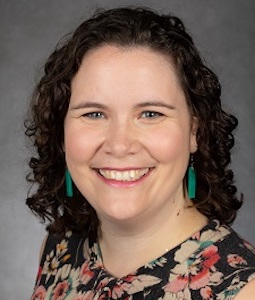
Anne Föhr is a Doctoral Researcher at the Department of Education, University of Helsinki, Finland. She is affiliated with the Helsinki research community of special educational needs (SEN) and participates in the Doctoral Programme in Cognition, Learning, Instruction and Communication. Master’s Degree in Education, Early Childhood Education (2024) Bachelor’s Degree in Education, Early Childhood Education (2021) Bachelor’s Degree in Hospitality Management, Production and Management of Services (2006) Her research focuses on understanding the early development of mathematical learning difficulties, particularly in preschoolers. This work intersects with special education and developmental assessment, aiming to improve early numeracy interventions and co-development of skills. Key projects include the FUNA-JR study (2023-2025), funded by the Ministry, where she collaborates with P. Aunio and A. O. Vanhala. She has contributed to oral presentations, such as the 2024 co-presentation on early numeracy development at the University of Turku.
Prof. Dr. Uta Häsel-Weide is a full Professor for Special Educational Needs in Mathematics at Paderborn University's Faculty of Computer Science, Electrical Engineering and Mathematics, where she leads the Mathematics Education department and the AG Häsel-Weide research group. She holds additional leadership roles as Director at PLAZ Professional School and subject specialist for the Primary School Association. Her research focuses on: Mathematics education in inclusive classrooms Diagnosis and support for learning difficulties Classroom interaction and cooperation Teacher professional development Teaching-learning laboratories as professionalization spaces She has received significant recognition including: Tandem-Fellowship for Innovation in University Teaching (2017) Polytechnik Prize nomination (2019) She currently advises doctoral candidates and teaches courses on inclusive mathematics education, arithmetic didactics, and diversity in mathematics classrooms. Her pedagogical innovation includes developing the Lehr-Lern-Labor ZahlenRaum to bridge theory and practice in teacher education.
Dr. Joshua K. Hartshorne is a Research Associate Professor in the Department of Communication Sciences and Disorders at MGH Institute of Health Professions, where he leads the Advanced Analytics and Artificial Intelligence Group. His research bridges cognitive science and computational methods to investigate language acquisition and cognitive development. Education: B.A., Mathematics, Oberlin College A.M., Psychology, Harvard University Ph.D., Psychology, Harvard University Research Focus: Dr. Hartshorne examines why children outperform adults in language learning and why some children face language difficulties. His lab applies computational modeling, machine learning, and crowdsourcing to analyze language acquisition patterns, bilingualism, and neurocognitive variations in conditions like autism. Lab & Affiliations: He directs the Advanced Analytics and Artificial Intelligence Group, developing innovative methods to accelerate psychological and linguistic research through big data analysis and AI-driven approaches.
Assoc. Prof. Ľudmila Jašková serves as Associate Professor in the Department of Didactics of Mathematics, Physics and Informatics at Comenius University's Faculty of Mathematics, Physics and Informatics (Bratislava, Slovakia). Her office (I 13) and active teaching schedule confirm current engagement in both research and education. Her research pioneers accessible computer science education for blind students , with three interconnected focus areas: Analysis of programming competition tasks (iBobor/Bebras) for blind learners Development of tactile microworlds and programming environments Design of adapted programming languages for secondary education This work bridges theoretical CS education with practical accessibility solutions, directly addressing barriers in computational thinking development. Her 2019-2021 publications demonstrate consistent output at major international venues (ISSEP, Constructionism), showing progression from problem analysis toward solution implementation. Teaching responsibilities span foundational courses ( Programming , Web Technologies ) and advanced pedagogy ( Selected Chapters in CS Teaching Theory ), reflecting dual expertise in computer science and education methodology. International collaborations with institutions across Slovakia, Czech Republic, Cyprus, and Ireland amplify her research impact through cross-cultural validation of accessibility approaches. While no specific lab is named, her work operates within the department's didactics framework, leveraging university resources for empirical studies with blind student populations. Prospective collaborators should note her unique niche at the intersection of inclusive education, programming pedagogy, and assistive technology design.
Dr. Leslie Rogers serves as Assistant Professor in the Department of Education within Montana State University's College of Education, Health & Human Development. Her teaching portfolio includes core special education courses like EDSP 306 (Exceptional Learners) and EDSP 410 (Supervised Division of Learners Through Collaboration), with scheduled offerings through Fall 2025 across multiple semesters. Her research program centers on evidence-based interventions for diverse learners, specifically focusing on Professional Development models, SRSD-based Writing Instruction, Greene's Collaborative Problem Solving for Behavioral Interventions, and Parent-Teacher Collaboration frameworks. This work consistently addresses practical challenges in middle school special education settings, emphasizing actionable strategies for creating inclusive classrooms. Recent publications (2020-2025) reveal evolving trends toward cross-institutional professional development models, technology-integrated interventions, and nuanced examinations of parent-teacher dynamics. Her work appears in specialized journals like Learning Disabilities: A Contemporary Journal and School University Partnerships , demonstrating strong connections between research and classroom practice. Dr. Rogers' scientific recognition includes: Higher Education Consortium award (2024) Bobcat Pounce award (2024) Small Grant for Technology Integration (2024) Anti-racist Teaching Practices certification (2022) Her advising approach integrates research and teaching, with active grant funding supporting intervention development. Professional service includes ThinkSRSD Board membership, Council for Exceptional Children committee work, and journal reviewing for School-University Partnerships and Journal of Positive Behavior Interventions , reflecting deep community engagement. While not leading a formal laboratory, Dr. Rogers cultivates research opportunities through professional networks like ThinkSRSD and Bozeman Area SEPTA, emphasizing collaborative problem-solving approaches to special education challenges.
Pirjo Aunio is a Professor of Special Education at the University of Helsinki's Department of Educational Sciences since 2013, where she leads the Helsinki Special Education Research Community (Helsinki SEN). She serves as Director of the Doctoral Program in Cognition, Learning, Teaching and Communication, and as a supervisor in the Doctoral Program in School, Education, Society and Culture. Additionally, she holds a distinguished visiting Professor position in Early Childhood Education at the University of Johannesburg, South Africa. Professor Aunio's research focuses on mathematical skills development, learning difficulties in mathematics, assessment of mathematical performance, and evidence-based interventions. Her work examines the multifactorial nature of early numeracy skills, the development of assessment tools like the FUNA-DB and FUNA-JR, and the interplay between motor skills, executive functions, and mathematical development in children. She has published over 120 peer-reviewed articles and has developed practical assessment and intervention tools used by educators worldwide. Her recent research output shows a strong focus on systematic reviews and meta-analyses of mathematical interventions, particularly examining word problem-solving skills, early numeracy assessment tools, and the relationship between physical activity and mathematical development. Her work demonstrates an interdisciplinary approach connecting educational psychology, cognitive science, and practical classroom applications. Proposal for Nomination for the best PhD thesis for Association for Finnish Education (2007) The best PHD thesis in Faculty of Behavioral Sciences (2007) Professor Aunio has supervised numerous doctoral students and leads major research projects including a multi-country study across South Africa, Tanzania, Kenya and Namibia focused on children's mathematical, language, executive functions and motor skills development. She also leads a research consortium with University of Helsinki, Åbo Akademi, University of Turku and University of Jyväskylä developing digitalized assessment tools for children aged 5-16 years. Her work has significant impact on educational practice through evidence-based instruments for identifying children with mathematical learning difficulties and supporting their learning. She leads the Helsinki research community of Special Educational Needs (Helsinki SEN) and has developed the ThinkMath online service, which provides research-based support for children's mathematical and thinking skills development. Her research consortium has created assessment tools like the FUNA-DB and FUNA-JR that are used internationally to identify and support children with mathematical learning difficulties.
Mary Bridget Kustusch is an Associate Professor in the Department of Physics and Astrophysics within the College of Science and Health at DePaul University. She specializes in Physics Education Research (PER) with a focus on how students develop conceptual understanding of physics through multiple representations and embodied experiences. Dr. Kustusch earned her BS in Physics from North Park University and her PhD in Physics from North Carolina State University. She completed a two-year postdoctoral fellowship at Oregon State University working on the Paradigms in Physics project. Her educational background has shaped her interdisciplinary approach to physics education research. Her research explores the connections between mathematics and physics learning, with particular emphasis on kinesthetic and embodied experiences as mediating resources for students. Current research projects focus on group decision-making processes and the development of meta-cognitive and sense-making skills in physics problem-solving. Drawing from physics, education, and cognitive psychology traditions, she employs mixed-methods research approaches that directly inform curriculum design and teacher development programs. Dr. Kustusch is an active member of the American Association of Physics Teachers and American Physical Society, where she has served as an invited speaker and session organizer at national conferences. Her scholarly work has been published in leading journals including American Journal of Physics , Physical Review Special Topics - Physics Education Research , The Physics Teacher , and Journal of College Science Teaching . As an educator, she applies her research findings to develop effective teaching strategies, particularly in thermodynamics and electromagnetism instruction. Her publications on right-hand rules, thermodynamic derivatives, and everyday science phenomena have influenced physics teaching practices at multiple institutions. A native Chicagoan, Dr. Kustusch maintains strong community connections, spending time with her extended family and enjoying the city's cultural offerings. She relaxes by knitting or reading science fiction and detective stories with tea. Not having owned a car since 2004, she frequently walks to the 'L' train for her commute to DePaul's campus.
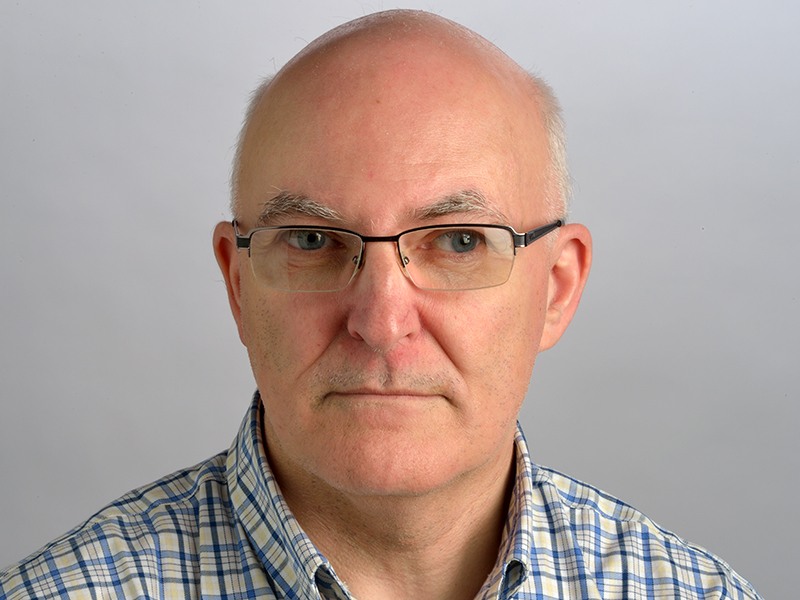
Dr. Brian Williamson serves as a Lecturer in Statistics within the Department of Mathematics at the University of Bolton's School of Engineering. He teaches statistics modules across all academic levels from undergraduate to master's programs, functioning as the department's dedicated statistician. His educational background includes: PhD, University of Wales, Bangor (Statistical Modeling) Research focuses on Statistical Modeling (critiquing and adapting models to real-world scenarios) and Mathematics Education (innovative teaching methods for diverse learners including primary students, adults, and neurodiverse individuals). His work emphasizes accommodating multiple learning styles through creative pedagogical approaches, informed by his own educational journey. Dr. Williamson implements an open-door policy providing one-to-one student support at any time, reflecting his belief that personalized assistance transforms mathematical understanding. This philosophy originated from overcoming primary school math difficulties through individualized tutoring, which ignited his passion for the subject.
Liina Malva is a lecturer at Tallinn University and practicing special education teacher at a K-9 school, specializing in mathematics learning difficulties and dyscalculia research. Her dual academic-practitioner role bridges theoretical research with classroom implementation. Her educational credentials include: MA in Educational Sciences MA in Special Education PhD in Educational Sciences (University of Tartu) Her research program centers on identifying and addressing dyscalculia through innovative assessment frameworks and developmental mathematics interventions, with current focus on certification through The Dyscalculia Association (UK). This work directly informs her K-9 school practice where she implements special needs assessments in mathematics and language development. At Tallinn University, she actively supervises graduate research through master's and doctoral thesis guidance while teaching specialized courses on learning difficulties. Her professional trajectory demonstrates strong integration of academic scholarship with frontline educational practice in special needs contexts.
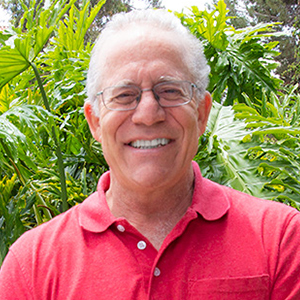
Randy Philipp serves as Professor in the School of Teacher Education at San Diego State University (SDSU), where he teaches mathematics methods courses for elementary and secondary teacher preparation programs. His contact information includes email rphilipp@sdsu.edu and office phone 619-594-1371 in North Education Building 99. His academic background includes: Ph.D. in Mathematics Education (Minors: Mathematics and Educational Psychology) from University of Wisconsin-Madison M.S. and B.A. in Mathematics from California State University-Northridge Single Subject Teaching Credential in Mathematics from California State University-Northridge Professor Philipp's research examines how students conceptualize mathematical abstractions through real-world contexts, particularly focusing on integer reasoning in financial scenarios and teacher noticing of children's cognitive processes. His work bridges historical perspectives of mathematical development with contemporary classroom practice, emphasizing diagnostic approaches to mathematical difficulties. Through his graduate seminars and methods courses, he prepares educators to implement learning trajectories and responsive teaching strategies. His publication record demonstrates consistent contributions to mathematics education literature, with recent work appearing in top-tier journals including the Journal for Research in Mathematics Education and Educational Studies in Mathematics. Professor Philipp's professional journey—from inner-city teaching to Peace Corps service in Liberia to doctoral studies under Tom Carpenter—shapes his commitment to contextualized, student-centered mathematics instruction that addresses diverse learning needs.
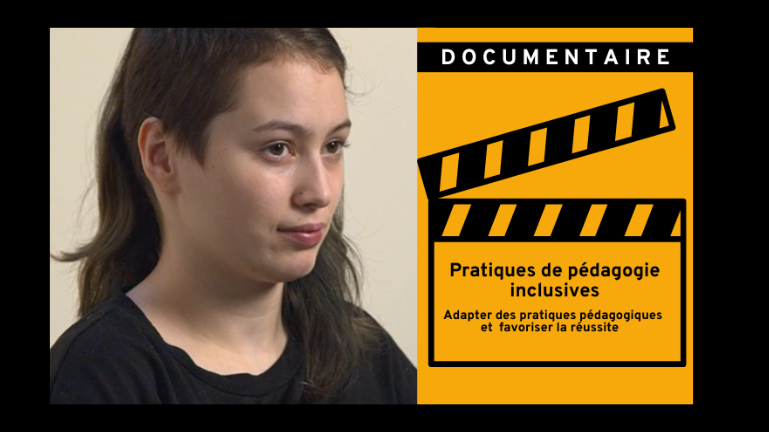
Simon Larose is a Full Professor in the Department of Teaching and Learning Studies at the Faculty of Education, Université Laval. He serves as Director of GRIP Education (Research Group on Psychosocial Maladjustment in Children) and is a researcher with the Research Group on Motivation and Academic Success. Professor Larose was appointed to the FRQSC Board of Directors and maintains strong connections with the Quebec Ministry of Education and various school service centers across Quebec. Professor Larose's research focuses on school transitions and school and community mentoring . His work examines how mentoring relationships, social support systems, and inclusive teaching practices affect student adjustment during critical educational transitions, particularly from secondary to college. He has conducted extensive research on students with disabilities, academic perseverance, and dropout prevention in STEM fields. His recent work includes the development of the FORTUNE program to address learning gaps in elementary school students following the pandemic and a documentary on inclusive teaching practices for students with disabilities. With over 100 publications to his credit, Professor Larose has established himself as a leading researcher in educational transitions and mentoring. His work is characterized by strong methodological rigor, particularly in quantitative approaches, and a commitment to translating research findings into practical applications for educators. His projects often involve large-scale collaborations with school boards, government agencies, and community organizations, ensuring that his research has direct relevance to educational practice. Major research grants and recognition: Social Sciences and Humanities Research Council of Canada (SSHRC) funding for multiple projects Fonds de recherche du Québec - Société et culture (FRQSC) grants Canadian Institutes of Health Research (CIHR) funding Mitacs funding for mentoring research Ministry of Education funding for school-based interventions As an educator, Professor Larose teaches courses on adolescent development, quantitative research methodology, and college teaching. He has supervised numerous graduate students throughout his career, with a focus on developing researchers who can bridge the gap between educational theory and practice. His current research continues to address pressing issues in Quebec's educational system, particularly in the areas of inclusive education and academic perseverance.
Dimitar Atanasov, PhD, serves as an Associate Professor in the Department of Informatics at New Bulgarian University (NBU), where he has taught since 2009 across multiple programs including Network Technologies, Informatics, Psychology, and Telecommunications. His academic foundation includes a PhD in Probability Theory and Mathematical Statistics (2007). His research spans Statistics, Probability Theory, and their applications in educational measurement, cognitive diagnosis, and stochastic modeling. Key focus areas include robust statistical estimation, branching processes, test equating, and psychometric modeling for educational assessment. He has developed original teaching materials for courses in statistics, probability, data warehousing, and game theory. At NBU, he teaches core courses including Probability Theory and Statistics, Applied Statistics, and specialized topics like Image Classification and Data Theory. His work demonstrates strong interdisciplinary connections between statistical methodology and practical applications in education, linguistics, epidemiology, and computer security. He actively contributes to the academic community as a member of the editorial board of Mathematics and Informatics journal and participates in the Bulgarian Statistical Society and Bulgarian Society for Research and Evaluation in Education. Professor Atanasov has collaborated on national and international projects, particularly in educational assessment systems. His technical expertise includes MATLAB programming for statistical simulation and algorithm development, with applications in test scoring, equating, and automated test assembly systems developed for institutions like Saudi Arabia's National Center for Assessment.
Dr. Roman Asshoff is a Lecturer at the Center for Didactics of Biology within the Faculty of Biology at the University of Münster, Germany. He holds a PhD in Biology from the University of Basel (2005) and a Master's in Supervision and Counseling from Bielefeld University (2019). His academic positions include roles as a scientific employee at Münster (2007-2010) and a substitute professor at Universität Siegen (2010-2011). His research focuses on innovative biology education methodologies, particularly examining: Digital tool integration (TPACK framework, Global Change App) Conceptual understanding of biological systems (carbon cycle, evolution) Live-animal pedagogy for attitude change Outdoor/experiential learning efficacy Teacher training and curriculum development Recent publications demonstrate strong emphasis on technology-enhanced learning, climate education, and reducing biological misconceptions. Dr. Asshoff has received the Goldener Hans teaching award (2013) and maintains memberships in professional organizations including the Association for Biology, Biosciences and Biomedicine (VBIO) and the German Association for Mathematical and Science Teaching (MNU). He actively advises student research and teaches courses covering human biology pedagogy, field excursion methodology, and contemporary trends in biology education. His work involves collaboration with interdisciplinary teams across evolutionary biology, physiology, and educational technology domains.
David Earls serves as a Lecturer in the Department of Mathematics at Emmanuel College, holding a Ph.D. in Mathematics Education from the University of New Hampshire alongside advanced degrees in Mathematics and Computer Science. His teaching portfolio includes foundational courses such as College Algebra, Calculus I, and Applied Math for Management. His educational background comprises: Ph.D. Mathematics Education, University of New Hampshire M.S. Mathematics, Tufts University B.A. Mathematics and B.A. Computer Science, Brandeis University Dr. Earls specializes in undergraduate mathematics education research, with concentrated expertise in student comprehension of sequences/series in second-semester calculus and proof understanding within abstract algebra and real analysis. His work addresses critical learning barriers through empirical studies of student reasoning and instructor practices, aiming to transform pedagogical approaches in challenging mathematical domains. He emphasizes connecting mathematical concepts to real-world applications to foster student appreciation. Analysis of his recent publications reveals consistent focus on diagnostic assessment of student misconceptions in convergence testing and proof comprehension, with methodological emphasis on classroom-based observational studies. These contributions advance evidence-based teaching strategies for core undergraduate mathematics topics. His scientific recognition includes: Summer Teaching Assistant Fellowship (STAF) - Summer 2015 Summer Teaching Assistant Fellowship (STAF) - Summer 2016 Co-Teaching Assistant of the Year - 2016-2017 While no formal student advisement or grant funding is documented, Dr. Earls demonstrates exceptional commitment to undergraduate instruction through his research-practice integration. He highlights Emmanuel students' strong motivation and collaborative spirit as key enablers for effective mathematics education. His background in computer programming informs his pedagogical approach to making abstract mathematical concepts tangible.
Philip LaPorta serves as Lecturer and Learning Assistant Co-coordinator in Rowan University's Department of Physics & Astronomy within the College of Science & Mathematics, specializing in innovative physics pedagogy for introductory courses. His educational credentials include: Ph.D. in Physics, Lehigh University M.S. in Physics, Lehigh University B.S. in Physics, Muhlenberg College Dr. LaPorta pioneers active learning methodologies through Learning Assistants—undergraduate peer mentors trained in physics education research. His dynamic lecture approach transforms traditional physics instruction into interactive experiences where Learning Assistants facilitate real-time problem-solving and conceptual reinforcement. His teaching excellence is recognized through: Advisor of the Year (2023-2024), awarded 2024 Rowan Student Nominated Last Lecture Speaker (2022, 2016) As Learning Assistant Co-coordinator, he develops pedagogical training curricula that prepare undergraduates to implement evidence-based teaching strategies. His ExpertTA Liaison role integrates digital homework systems to personalize student practice and identify conceptual difficulties for targeted intervention during active learning sessions. He cultivates a collaborative educational ecosystem where Learning Assistants gain leadership experience while expanding instructional capacity in high-enrollment physics courses, directly contributing to improved student engagement and success rates.