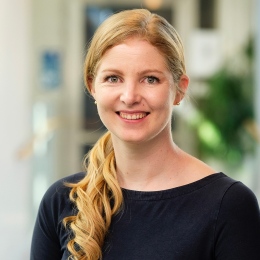
Samantha Ehrlich is a Researcher and Test developer at the Department of Teaching and Learning , Stockholm University , affiliated with the PRIM research group focused on mathematics assessment and competence evaluation. Her research examines how test question design influences mathematical knowledge assessment, analyzing cognitive demand and difficulty patterns in national/international tests (PISA, TIMSS, Swedish Scholastic Aptitude Test). Current projects include ASSESS (graduate school on educational assessment systems) and optimal calibration of test questions in computerized achievement testing. Workplace: Arrhenius Laboratory, Room E575 , with postal address under the Department of Subject Didactics.
Assoc. Prof. Davut Hotaman is an academic at Yildiz Technical University's Faculty of Education in the Educational Sciences department. He holds a PhD in Elementary Education from Marmara University (2008) and has been an Associate Professor since 2018. His office is located in B317 at the Davutpaşa Campus, Istanbul, with contact number +90 212 383 4827. Education: Doctorate (Marmara University, 2008), Postgraduate (Hacettepe University, 1995), Undergraduate (Hacettepe University, 1988) Research Areas: Social Sciences, Education, Teacher Training, Educational Data Mining, Curriculum Development, Online/Distance Education His research focuses on educational assessment , online learning challenges , and curriculum design for elementary and higher education. Key publications analyze the effects of formative assessment on academic achievement, content organization strategies in primary education, and remote teaching impacts on student behavior. Recent articles (2024-2025) examine emergency remote teaching outcomes, student difficulties in distance education , and digital equity in gifted education . Projects include studies on remote learning implementation at Yildiz Technical University and curriculum adaptation during the pandemic. Supervised Theses: 3 postgraduate works on teacher expectations, gifted education, and assessment methods Books Authored: Chapters on learning theories, motivation, and educational sociology in edited volumes (2018-2021) Conference Papers: 12 presentations (2000-2021) on educational policy, data mining, and student behavior
Valentín Iglesias Sarmiento is a full-time Professor in the Department of Evolutionary Psychology and Communication at the Faculty of Education and Social Work, University of Vigo, since 2014. His research focuses on developmental and educational psychology, particularly in mathematical cognition, executive functioning, and learning difficulties. PhD in Psychology from the University of Vigo (2008) with a thesis on arithmetic domain learning difficulties. Master's in Psychological Intervention in Development and Education, specializing in developmental disorders and disabilities. His work examines precursors of academic performance in Early Childhood and Primary Education classrooms, alongside both typical and atypical developmental processes. He contributes to high-impact journals and participates in competitive research projects. He is affiliated with two research groups: Psychology of Education and Development at UVigo and Theoretical and Applied Approaches to Executive Functioning at UNED .
Assoc. Prof. PINAR FETTAHLIOĞLU is an Associate Professor in the Primary Education Department at Çukurova University's Faculty of Education, where she has served since 2020. Previously, she was an Assistant Professor in the Mathematics and Science Education Department from 2014 to 2018 and continued in that role until present. Her academic journey includes research assistant positions at both Çukurova University (2006-2008) and Gazi University (2008-2013). Dr. Fettahlıoğlu earned her Doctorate (2008-2012) and Postgraduate degree (2005-2008) in Primary Education with a specialization in Science Education from Gazi University and Çukurova University respectively. Her undergraduate studies (2001-2005) focused on Science Education Teacher Training at Gazi University. Her research focuses on environmental education, science education, and teacher training in natural sciences, with particular emphasis on argumentation-based and problem-based learning approaches, STEM education, and critical thinking development. She has extensively explored how these methods impact environmental literacy, self-efficacy beliefs, and cognitive structures of pre-service science teachers. Analysis of her recent publications reveals a consistent focus on developing environmentally responsible behaviors through innovative teaching methods. Her work demonstrates how argumentation and problem-based learning approaches enhance pre-service teachers' environmental literacy, critical thinking skills, and conceptual understanding of scientific concepts. She has also made significant contributions to STEM education research, examining how these integrated approaches affect teacher candidates' cognitive development and teaching competencies. Scientific Awards: ESERA Travel Award (2012-Continues) Bilim Projeleri Şenliği Danışmanlığı Batı Koleji (April 2012) Derneğe Yardım Eğitenler Kültür ve Dayanışma Derneği (February 2011) Okula Yapılan Destek Şırnak Valiliği İstiklal İlköğretim Okulu (March 2004) Dr. Fettahlıoğlu has been actively involved in numerous research projects, primarily funded by TUBITAK and higher education institutions. Her current research focuses on sustainable environmental education, green initiatives for the future, and STEM education applications. She serves as Head of Department in the Primary Education Department since 2019 and has supervised thesis work, contributing to the development of future educators in science and environmental fields. She is an active member of several professional organizations including NATIONAL GEOGRAPHY (2012-Continues), NARST (2010-Continues), and ESERA (2009-Continues), demonstrating her commitment to advancing science education research and practice.
Carlotta Mummolo is an Associate Professor at the Department of Mechanics, Mathematics & Management at Politecnico di Bari. Her research focuses on biomechanics, robotics, and motor control with applications in dynamic walking, balance stability, and aging-related locomotive decline. Current affiliation: Politecnico di Bari (Department of Mechanics, Mathematics & Management) Academic rank: Associate Professor Research areas: Biomechanics, Robotics, Human-Robot Interaction Mummolo's work addresses the characterization of human balance through computational models, soft contact effects in legged systems, and transdisciplinary studies of aging-related locomotion changes. She explores stability criteria for biped robots and develops metrics for motor task difficulty. Her recent research trends include integrating reinforcement learning with muscle control, analyzing gait stability in aging populations, and optimizing contact-dependent balance in robotic systems. Key methodologies involve analytical-stochastic modeling and state-space characterization of dynamic systems. Carlotta Mummolo's publications demonstrate interdisciplinary collaboration between robotics and human biomechanics, with implications for rehabilitation technologies and humanoid robot design.
Erica Mason is an Assistant Professor in Special Education at the University of Illinois Urbana-Champaign's College of Education. Her research bridges special education and mathematics education, focusing on teachers’ conceptions of disability and capability through research-practice partnerships. She employs critical special education frameworks and investigates classroom autonomy dynamics between general and special educators. Department of Special Education, College of Education Assistant Professor since 2019 Her research interests include: Anti-deficit mathematics instruction for students with disabilities Teacher autonomy and job satisfaction dynamics Deficit language persistence in inclusive education Equity-driven mathematics pedagogy Progress monitoring frameworks for special education Recent publications examine: Autonomy-satisfaction relationships in special education (2023) Racial consciousness in mathematics instruction (2023) Math intervention intensity models (2022) Disability studies in education (2025) Scientific contributions include: Co-developer of mathematics intervention frameworks Critical analyses of inclusionary practices Quantitative studies on teacher satisfaction Qualitative investigations of student camouflaging
Brigitte Stanké is an Associate Professor at the School of Speech-Language Pathology and Audiology, University of Montreal, specializing in literacy development and learning disorders. With dual doctorates in Biomedical Sciences and extensive training in speech therapy, audiology, and statistical mathematics, she bridges neurological, linguistic, and quantitative perspectives. Doctorate in Biomedical Sciences, University of Montreal Master's & Bachelor's in Speech Therapy & Audiology Bachelor of Science & Master's in Statistical Mathematics Her research focuses on reading/spelling disorders (dyslexia, dysorthography), universal pedagogy frameworks, assistive technologies for writing, and dyscalculia. She develops tools like ÉQOL (Quebec Lexical Spelling Scale) and investigates errorless learning models. Recent publications emphasize: Universal Design for Learning (UDL) implementation Lexical spelling acquisition through graphotactic/morphological instruction Assistive technology impacts on writing self-efficacy and anxiety reduction Longitudinal studies on orthographic development She has created pedagogical software (e.g., Madame Mo) and practical resources (e.g., The Wise Apprentice: Learning to Read and Spell ). Her work informs both clinical practice and inclusive education policies.
Erik Barendsen serves as Professor of Science Education at Radboud University and Professor of Computing Education at the Open University of the Netherlands, directing the Institute for Science Education Office while chairing the Subject Didactics and Educational Development group. His work integrates research with practical STEM education development across Dutch institutions. His research prioritizes: Science and computing education frameworks Scientific and digital literacy advancement Context-based STEM pedagogy Computational thinking curriculum integration Teachers' pedagogical content knowledge (PCK) development Recent publications analyze digital problem-solving strategies, programming difficulties for novices, and computational thinking in mathematics through qualitative methodologies. This body of work consistently informs teacher training and curriculum design across European educational contexts. Barendsen actively supervises bachelor's and master's theses in biology, computing science, and physics programs while advising national educational policy. His leadership at the Institute for Science Education drives collaborative projects with schools to implement evidence-based teaching practices and digital literacy initiatives.
Eleni Tzanaki is an Assistant Professor in the Department of Mathematics & Applied Mathematics at the University of Crete, Greece. Her office is located in room Δ330 at the Voutes Campus in Heraklion. She can be contacted via telephone at +30-2810-393747 or by email at etzanaki@uoc.gr. Her academic work spans both pure mathematics and educational research, with a particular focus on algebraic and geometric combinatorics as well as innovative approaches to science and physics education. Dr. Tzanaki's research interests center on algebraic and geometric combinatorics, with specific focus areas including: Combinatorics of Coxeter groups Hyperplane Arrangements Polytopes Poset structures, lattices, and patterns Real rootedness of polynomials Her publication record demonstrates a dual research trajectory. From 2016-2021, her work was predominantly in pure combinatorial mathematics, focusing on hyperplane arrangements, lattice paths, and combinatorial structures related to Coxeter groups. More recently (2022-2025), she has expanded her research to include educational applications, particularly examining how artificial intelligence tools like ChatGPT can be effectively integrated into junior high school physics education. This interdisciplinary approach connects her mathematical expertise with practical educational challenges, exploring innovative teaching methods like flipped classrooms and escape-room activities. Dr. Tzanaki appears to be actively involved in interdisciplinary collaborations that bridge mathematics, computer science, and education. Her work on fractal geometry across science, computer science, and art lessons demonstrates her commitment to cross-disciplinary approaches. She is investigating how emerging AI technologies can enhance physics instruction and address student misconceptions in areas like hydrostatic pressure and buoyancy, while maintaining her foundational work in combinatorial mathematics.
Georgios Polydoros is a Lecturer at the Department of Mathematics, University of Crete. His academic role involves teaching responsibilities, with a focus on mathematics education and technology integration. His office location is D-328, and he can be contacted via email at georgiospolydoros@math.uoc.gr. His research interests center on innovative educational approaches, particularly: Mathematics pedagogy for students with learning disabilities AI-driven interventions to reduce math anxiety Technology-enhanced learning environments Game-based mathematics education Digital transformation in schools His work consistently addresses how technology can bridge educational gaps. Analysis of his recent publications reveals a strong emphasis on technology-mediated solutions for mathematics education. Key themes include AI applications for personalized learning, serious games for skill development, and strategies for supporting students with learning difficulties. His research frequently examines pandemic-era educational challenges, digital tool efficacy, and cognitive aspects of mathematics learning. No scientific awards or honors are mentioned in the available information. There is no available information regarding student advising, research grants, laboratory affiliations, or team collaborations in the provided text.
Jin Wang is an Assistant Professor at the UCLA School of Education and Information Studies, University of California, Los Angeles, where she investigates how the developing brain supports language acquisition and academic achievement in children. Research Focus: Dr. Wang combines behavioral assessments with advanced neuroimaging techniques—functional MRI, structural MRI, and diffusion tensor imaging—to construct a comprehensive neurocognitive model of phonological, semantic, and syntactic development during the first decade of life. Her work explores how these linguistic mechanisms influence reading and mathematical skills across typically and atypically developing populations. Using both cross-sectional and longitudinal designs, her laboratory aims to uncover individual differences in neural maturation that predict educational outcomes, ultimately informing evidence-based interventions for children at risk for language-based learning difficulties. Contact: Moore Hall, Room 3321 2043 Portola Plaza Los Angeles, CA 90095 Email: jwang@seis.ucla.edu
Hedda Novang Wahl is a PhD candidate at the Institute of Education , University of Oslo , within the Faculty of Educational Sciences . Her research focuses on developmental psychology, particularly the development of mathematical skills and learning difficulties in mathematics, with applications in special needs education. Email: h.n.wahl@iped.uio.no Research Interests include understanding factors contributing to mathematical learning difficulties, psychometric assessment of anxiety scales, and pedagogical strategies for ordinary and special needs education contexts. Her work aligns with the Literacy and Numeracy in Context (LiNCon) research group. Education highlights: Master’s Degree in Special Needs Education (2016-2018) from the University of Oslo, General Teacher Education (2009-2013) from Oslo Metropolitan University, and a one-year French program (2013-2014) at the University of Caen, Normandy.
Geoffrey G. Pinchbeck is a faculty member at Carleton University’s School of Linguistics and Language Studies. He holds PhDs in Education (Languages and Literacy) and Medical Biochemistry from the University of Calgary, along with an M.Ed in TESL. His career spans teaching, research, and service in applied linguistics and language pedagogy. His research focuses on corpus linguistics , second language acquisition , and academic English . He explores the operationalization of academic English , computer-assisted language learning (CALL) , and content and language integrated learning (CLIL) . His work has implications for vocabulary diagnostic tools and text readability metrics. His refereed publications and conference presentations examine lexical and derivational morphology , word list validation , and mathematics education pedagogy . Recent collaborations highlight interdisciplinary approaches to language assessment and curricular design . Excellence in Graduate Teaching Award, Western University (2017) EuroSLA Doctoral Student Travel Grant (2017) AAAL ‘Educational Testing Services Graduate Student Award’ (2016) Pinchbeck has served as Strand Coordinator for Vocabulary and Lexical Studies at AAAL annual meetings (2020–2021) and contributed to graduate student award committees. His work bridges language research and mathematical pedagogy , emphasizing accessibility and student engagement.
Clemens Brunner is a Researcher at the Institute of Psychology within the Faculty of Natural Sciences at the University of Graz. His work bridges electrical/biomedical engineering and cognitive neuroscience, specializing in the neural mechanisms of arithmetic processing and numerical cognition. He actively develops open-source neuroimaging tools used globally in EEG research and sleep analysis. His research focuses on EEG oscillations, biosignal processing, and machine learning applications in cognitive neuroscience. Key interests include arithmetic fact learning, neural correlates of numerical order processing, and non-invasive brain stimulation effects on mathematical cognition. His expertise spans Python programming, statistical analysis, and contributions to major scientific libraries like scikit-learn and SciPy. Analysis of his recent publications reveals consistent emphasis on electrophysiological signatures of arithmetic processing, with growing integration of computational methods and neuromodulation techniques. His work demonstrates strong methodological innovation through open-source software development for EEG analysis and sleep staging. Brunner contributes to the University of Graz's "Brain and behavior" research network, developing tools like MNELAB, SleepECG, and XDF.jl that enhance reproducibility in neuroscience. His collaborations extend to major projects including MNE-Python and BNCI Horizon 2020, advancing brain-computer interface methodologies and neuroimaging standards.
Cécile Ouvrier-Buffet is a University Professor of Mathematics Teaching at Université Paris-Est Créteil Val de Marne (UPEC) . She conducts her research within the André Revuz Didactics Laboratory (LDAR, EA 4434) , a multi-institutional unit that also federates Paris Diderot, Cergy-Pontoise, Artois and Rouen. Education & Academic Trajectory While the page does not detail her own degrees, her extensive record of doctoral supervisions, editorial boards and international scientific responsibilities attests to a full professorial status within the French higher-education system. Research Interests Her work centres on the didactics of mathematics , with four inter-connected thrusts: Epistemological and cognitive analysis of students’ mathematical activity (definitions, proofs) Design and study of Inquiry-Based Education in mathematics and experimental sciences from primary school to university Investigation of Mathematical Learning Disabilities (dyscalculia, algebra-related disorders) Teaching and learning of discrete mathematics at tertiary level Keywords that recur in her publications include epistemology, didactics, proof, definitions, learning disabilities, inquiry-based learning . Publications & Scholarly Impact Across the last decade her output has blended theoretical advances with empirical classroom studies. A strong collaborative orientation is evident in multi-author works on dyscalculia, while single-authored pieces model definitional processes or analyse inquiry situations. Recent papers in Journal of Mathematical Behavior and Educational Studies in Mathematics consolidate her international reputation. Scientific Awards & Distinctions The page lists no named prizes, but highlights a dense portfolio of scientific responsibilities that function as peer recognition: President of the French Association for Research in Mathematics Didactics (ARDM) since 2019 Member of the French Mathematical Society Education Commission (2012-2019) Scientific committee memberships for ANR, IREM network, and several leading journals Co-editor-in-chief of Recherches en Didactique des Mathématiques (2016-2019) Doctoral Supervision & Grants She has directed or co-directed 5 completed PhDs and currently supervises 4 ongoing theses . Her research has been supported by: Hubert-Curien CEDRE / EMa2S project (co-direction of two theses) ANR IDEX IMEP on modelling and investigation (2014-2016) ECOS-Sud Chile comparative study on analysis teaching (2014-2016) PIA Incitative Amont project on inquiry processes in mathematics and science (2014-2015) Founding member of the international RITEAM network on mathematical learning disorders (2017-) Participant in GDR DEMIPS on didactics, epistemology and computer-science interfaces (2020-) Laboratory & Team All research is carried out within the LDAR , a multi-site laboratory whose Paris-Diderot premises are located at Sophie-Germain building, Paris 13. The lab focuses on learning, teaching and training in mathematics, physical sciences and natural sciences across all educational levels.