Stefano Farinella is a Doctoral Researcher and Project Lead affiliated with the University of Hamburg. He is part of the Cluster of Excellence 'Understanding Written Artefacts' (UWA) and the research group 'G Keeping Note(book)s'. His work focuses on early modern scientific practices, particularly analyzing the working notes of Thomas Harriot (1560–1621) to explore knowledge production and epistemological processes. Farinella’s research emphasizes the materiality of notes, spatial organization in manuscripts, and the role of notation in scientific development. He leads the project Knowledge Transformation and Strands of Notation: Thomas Harriot’s Working Notes (2023–2025) and has presented at conferences such as Mathematical Notes: Materiality and Epistemology (2025) and Solving Problems (2024). His activities include organizing workshops and delivering lectures on topics like shipbuilding manuscripts and the epistemology of rough notes. Contact: stefano.farinella@uni-hamburg.de , Office 2010, Warburgstraße 26, Hamburg.
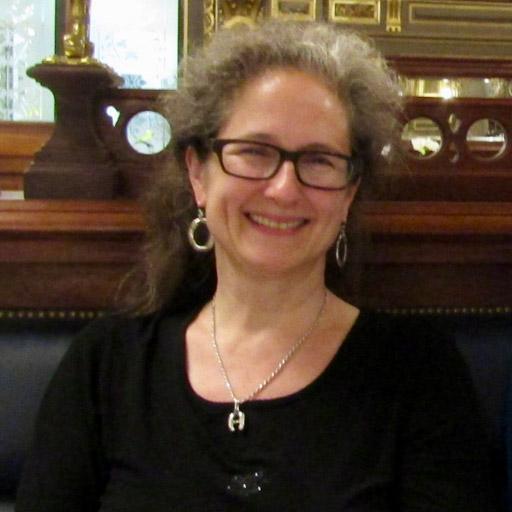
Helena P. Osana is a Professor in the Department of Education at Concordia University and currently serves as a Visiting Professor at the University of Wisconsin-Madison while on sabbatical. She holds the Concordia University Research Chair in Mathematical Cognition and Instruction and focuses on children’s mathematical thinking, instructional interventions, and professional development for teachers. Ph.D. in Educational Psychology (University of Wisconsin-Madison, 1998) M.A. in Mathematics and Science Education (University of British Columbia, 1989) B.Sc. in Mathematics and Statistics (McGill University, 1986) Her research explores how children interpret mathematical representations (e.g., manipulatives, diagrams) and how instructional strategies can enhance conceptual understanding in areas like fractions, place value, and number sense. She emphasizes the role of analogical reasoning, symbolization, and the integration of conceptual and procedural knowledge in learning mathematics. The trends in her recent publications highlight empirical studies on manipulatives, contextual effects on problem-solving, dual representation, and relational thinking in elementary and secondary students. Her work often involves classroom-based interventions and collaborations with teachers to bridge cognitive theory and pedagogical practice. Scientific Awards and Grants : Concordia University Research Chair in Mathematical Cognition and Instruction SSHRC Grant: Fostering conceptual understanding of number and place value with manipulatives SSHRC Grant: Instructional factors affecting integrated mathematical knowledge in second-graders SSHRC Grant: Improving children’s understanding of mathematical equivalence Dr. Osana advises graduate students in the Department of Education and leads the Mathematics Teaching and Learning Lab (MTLL) , which investigates classroom-based strategies to support children’s mathematical thinking from preschool to eighth grade. Her findings inform professional development programs for teachers, particularly in early mathematics education.
Jenna DiVincenzo is an Assistant Professor in the Elmore Family School of Electrical and Computer Engineering at Purdue University, where she conducts research at the intersection of programming languages, software engineering, and formal methods. Her work focuses on making verification techniques more usable and scalable for developers. Dr. DiVincenzo earned her PhD in Software Engineering from Carnegie Mellon University in December 2023, where she was co-advised by Dr. Jonathan Aldrich and Dr. Joshua Sunshine. Her dissertation focused on gradual verification technology for recursive heap data structures. She also holds a BS in Mathematics and Computer Science from Youngstown State University. Her primary research area is gradual verification, which seamlessly combines static (compile time) and dynamic (run time) verification techniques to support incremental specification and verification of code. She takes a holistic approach to research, exploring new techniques through mathematical formalizations, user studies, and tool development. Her current projects include gradual verification for Rust, proof synthesis and repair for gradual verifiers, educational impact of gradual verification, evaluating gradual verifiers' soundness, and gradual program analysis. Analysis of her recent publications reveals a strong focus on practical verification techniques that balance developer productivity with software assurance. Her work consistently bridges theoretical foundations with practical implementation, often incorporating empirical evaluation through user studies and performance measurements. She has made significant contributions to understanding how to make verification more incremental and accessible to developers. Google PhD Fellow NSF GRFP Fellow 2022 Rising Star in EECS Dr. DiVincenzo is actively mentoring PhD students in her research group, with recent student achievements including Craig Liu winning first place in the undergraduate category of the SPLASH'24 SRC and Conrad Zimmerman receiving an NSF GRFP award. She previously interned at IBM Research, MIT Lincoln Laboratory, and contributed to language designs for Penrose and Obsidian. Her research has been supported by various grants, though specific current grants aren't detailed in the provided text. Her lab focuses on building practical verification tools, with projects including Gradual C0 (a gradual verifier for recursive heap data structures) and developing gradual verification techniques for Rust. She collaborates with researchers across institutions, including Dr. Lin Tan at Purdue on LLM applications for verification.
Michael W. Trosset is a Professor of Statistics and Director of Graduate Studies at Indiana University Bloomington's Department of Statistics. With a PhD in Statistics from UC Berkeley (1983) and a BA in Mathematics from Rice University (1978), he brings over 40 years of academic experience to his role. His career includes faculty positions at the University of Arizona (14 years) and the College of William & Mary (8 years) before joining Indiana University. Professor Trosset's educational background includes: B.A. in Mathematics and Mathematical Sciences, Rice University, 1978 Ph.D. in Statistics, University of California Berkeley, 1983 His research focuses on computational statistics and statistical learning, with particular expertise in multidimensional scaling, manifold learning, and high-dimensional data analysis. He investigates how proximity data can be represented in Euclidean space and how dimension reduction techniques can inform subsequent statistical inference. His work spans theoretical foundations and practical applications in network analysis, particularly random dot product graphs. Professor Trosset's publication record shows consistent contributions to statistical methodology, with recent work emphasizing the theoretical underpinnings of manifold learning for statistical inference. His research bridges computational mathematics, statistical theory, and practical data analysis applications, particularly in high-dimensional settings where traditional multivariate methods face challenges. As an educator, Professor Trosset has developed a distinctive approach that emphasizes understanding statistical principles rather than treating methods as black boxes. He is the author of the textbook An Introduction to Statistical Inference and Its Applications with R (2009) and teaches courses ranging from introductory statistics to advanced topics in statistical computing and high-dimensional data analysis. His teaching philosophy centers on helping students understand why statistical methods work, with emphasis on mathematical notation and computational implementation using R. He encourages students to move beyond superficial coverage of many topics to develop deeper understanding of fewer methods. His courses typically include custom R functions to illustrate statistical concepts and algorithms. Professor Trosset maintains an active research collaboration with Carey Priebe at Johns Hopkins University, co-teaching the course 'Manifold Learning for Subsequent Inference' and publishing jointly on topics related to statistical inference on network data using dimension reduction techniques.