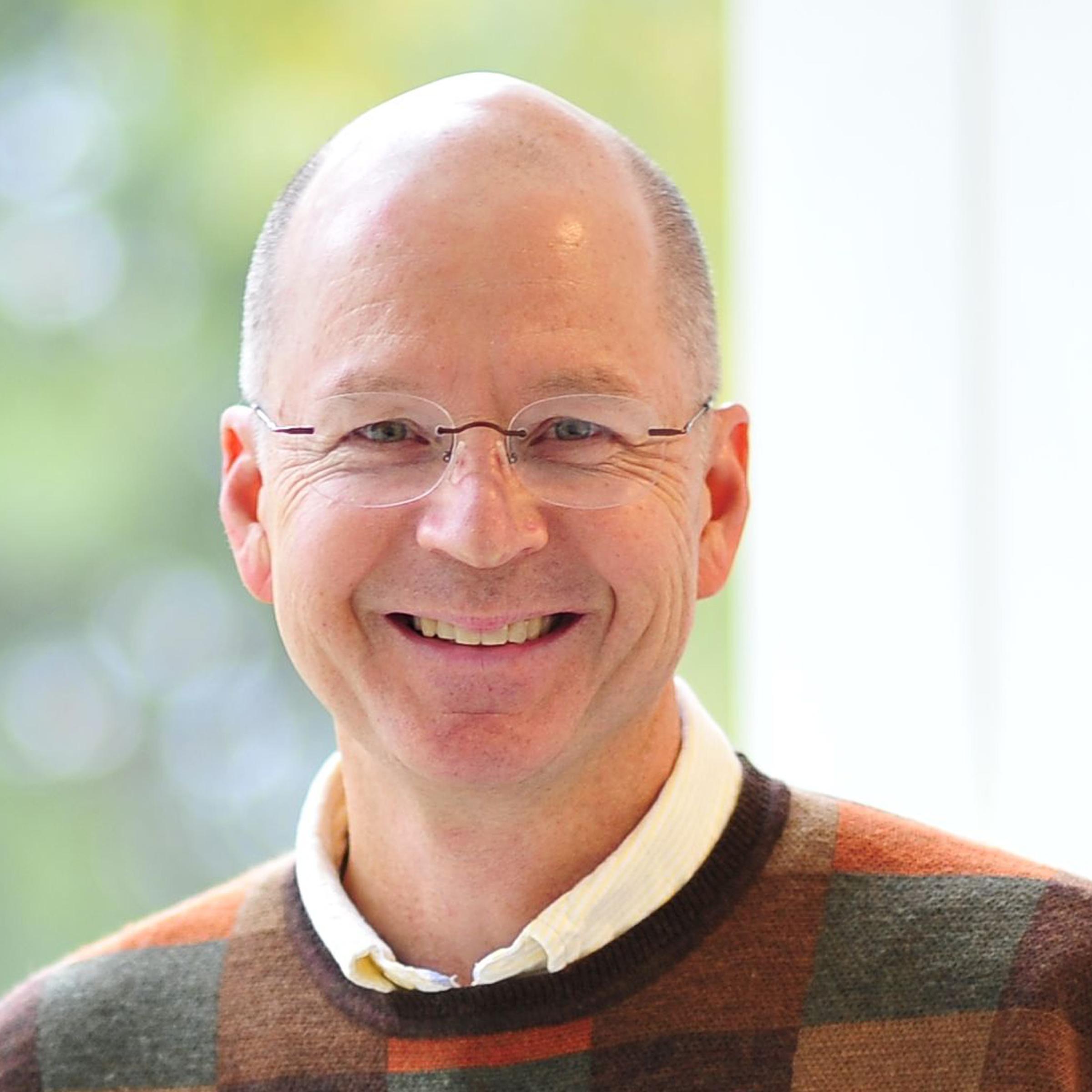
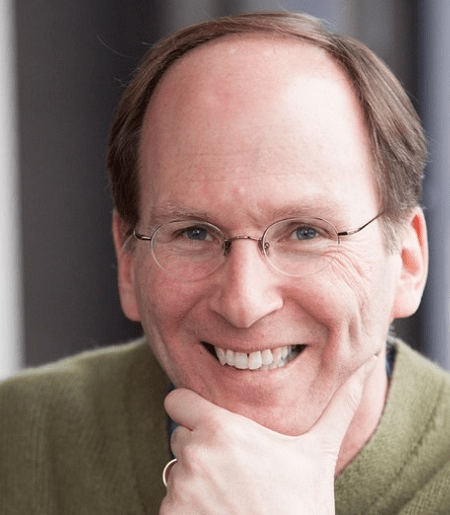
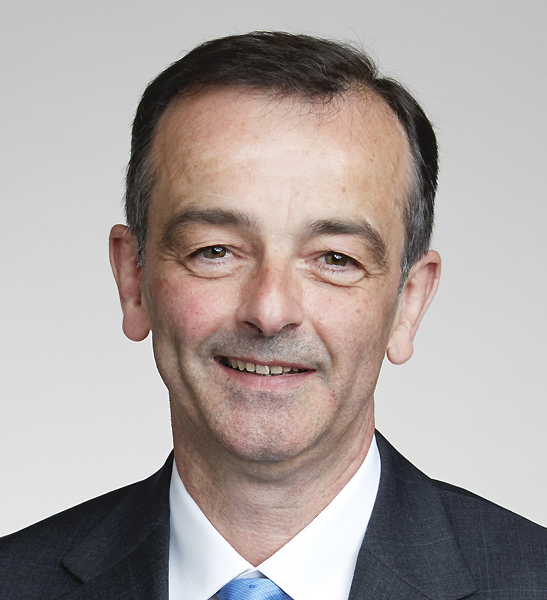
Brian Conrad is a Professor of Mathematics at Stanford University, specializing in number theory and arithmetic geometry. He holds a position in the Department of Mathematics and has contributed extensively to algebraic geometry, algebraic number theory, and representation theory. His research encompasses foundational work on reductive groups, pseudo-reductive groups, and their applications in arithmetic contexts. Dr. Conrad is an editor for the Journal of the AMS, Algebra and Number Theory, and IMRN. He has organized numerous learning seminars, including those on étale cohomology and the BSD conjecture, and has taught advanced courses on algebraic geometry, class field theory, and modular forms. His work bridges classical algebraic geometry with modern arithmetic applications, emphasizing foundational proofs and geometric intuition. His editorial roles and seminar leadership reflect his commitment to advancing mathematical exposition and education. Education details are not explicitly provided in the texts, but his academic trajectory includes significant contributions to the field through publications and mentorship. Dr. Conrad's research has led to advancements in areas such as the classification of algebraic groups, étale cohomology, and the arithmetic of elliptic curves. His collaborative work with mathematicians like Chai, Oort, and Prasad has produced influential monographs, including Pseudo-reductive Groups and Complex Multiplication and Lifting Problems .
Julie Bergner is a Professor in the Department of Mathematics at the University of Virginia. She is currently on sabbatical during 2024-25 as a Visiting Fellow at Clare Hall, University of Cambridge. Her research focuses on Homotopy Theory, Algebraic Topology, Algebraic K-Theory, and Category Theory, with a particular emphasis on higher category theory and homotopical algebraic structures. University of Virginia (Professor, Department of Mathematics) University of Cambridge (Visiting Fellow at Clare Hall, 2024-25) Her work spans 2-Segal objects, model categories, Waldhausen constructions, and applications to topological field theories. She has received NSF CAREER awards for her research on equivariant topological field theories and higher cluster categories. Her recent publications explore combinatorial models, enriched categories, and homotopy limits in the context of functor calculus and higher structures. Julie Bergner contributes to mathematical exposition through articles on writing papers in the mathematical sciences and homotopy theory applications. She is actively involved in the department's topology seminar and supports collaborative learning initiatives. Her research has implications in algebraic topology, category theory, and their interdisciplinary applications.
Noga Alon is a Professor at Princeton University (previously at Tel Aviv University since 1985), renowned for transformative contributions to Combinatorics and Theoretical Computer Science. His work bridges deep mathematical theory with computational applications, earning him the 2024 Wolf Prize and 2022 Shaw Prize in Mathematical Sciences. Education Ph.D. in Mathematics, Hebrew University of Jerusalem, Israel (1983) Research Interests Alon pioneers combinatorial methods with profound impacts across mathematics and computer science. His expertise spans Graph Theory, Combinatorial Algorithms (including Streaming Algorithms), Circuit Complexity, and Combinatorial Geometry/Number Theory. He innovatively applies Algebraic and Probabilistic Methods to solve fundamental problems, such as necklace splitting and signrank applications, driving advancements in both pure and applied domains. Scientific Awards 1989 Erdos Prize, Israel 1991 Feher Prize, Israel 1997 Member of the Israel National Academy of Sciences 2000 Polya Prize, SIAM, USA 2001 Bruno Memorial Award, Israel 2005 Landau Prize, Israel 2005 EATCS-ACM Goedel Prize 2008 Israel Prize in Mathematics 2008 Member of the Academia Europaea 2011 EMET Prize 2015 Fellow of the American Mathematical Society 2015 Łojasiewicz Lecture at Jagiellonian University 2017 Fellow of the Association for Computing Machinery 2021 Leroy P. Steele Prize for Mathematical Exposition (with Joel Spencer) 2022 Shaw Prize in Mathematical Sciences 2024 Wolf Prize in Mathematics Advising and Grants While Alon has undoubtedly mentored numerous students during his tenure at Tel Aviv University and MIT, specific advisee names are not documented in the source material. Similarly, grant funding details remain unspecified despite his extensive research output.
Prof. Jürg Kramer is a Professor of Mathematics at Humboldt University of Berlin, affiliated with the Faculty of Mathematics and Natural Sciences and the Institute of Mathematics. His research focuses on Arakelov geometry, automorphic forms (particularly modular forms), and their intersections. Notable contributions include advancements in arithmetic intersection theory with logarithmic singularities and sup-norm bounds for modular forms. He is also deeply engaged in mathematics education, leading initiatives for teacher training and promoting mathematical talent through networks like the Berlin School Mathematics Network. Active in academic service, he served as EMS Education Committee Chair (2017–2022) and President of the German Mathematical Society (2013/14). His work bridges pure mathematics with pedagogical innovation, emphasizing public understanding through popular science publications. Research: Arakelov geometry, modular forms, L-functions, hyperbolic geometry methods Education: Teacher training programs, math talent promotion, textbook authorship Affiliations: Leibniz Institute for Science and Mathematics Education (IPN), EMS, Deutsche Akademie der Technikwissenschaften Key educational contributions include Felix-Klein teacher training programs and co-authoring standards for mathematics teacher education. His publications span advanced mathematical research and accessible expositions on topics like Fermat’s Last Theorem and Riemann Hypothesis.
Professor Jason Dykes is a leading figure in the field of information and geovisualization at City, University of London, where he holds the position of Professor in the Department of Computer Science and co-directs the giCentre , a renowned research centre in visualization. He is affiliated with the School of Mathematics, Computer Science and Engineering and maintains an active research and teaching profile. His academic journey includes a PhD in Geography from the University of Leicester and extensive leadership in both research and education. Education: PhD in Geography, University of Leicester, 2000 MSc in Geographic Information Systems, University of Leicester, 1991 BA/MA in Geography, University of Oxford, 1989 Jason Dykes' research is centered on designing visual methods and tools for exploring, analyzing, and presenting information, with a strong emphasis on geographic data. His work integrates cartography, information visualization, GIScience, and human-computer interaction , leading to the development of innovative techniques such as geowigs, ODmaps, BallotMaps, and AttributeSignatures. He has published extensively in top-tier journals like IEEE Transactions on Visualization & Computer Graphics, with over 20 papers in the last decade, and co-authored the seminal book Exploring Geovisualization (2005). His research is supported by major funders including EPSRC and the EU, with projects like RAMP VIS (Covid-19 response) and VALCRI (criminal intelligence). The most recent articles highlight a consistent trend in applied and human-centered visualization , focusing on responsive design, education, pandemic modeling, and novel visual metaphors for complex data. His work increasingly emphasizes methodological rigor, design exposition, and the role of visualization in interdisciplinary and emergency contexts. Scientific Awards and Recognition: National Teaching Fellow, Higher Education Academy (2005) Best Paper Awards at GIS Research UK (consecutive years) Honorable Mentions, IEEE InfoVis (2009, 2010, 2016, 2018) Security Innovation Commercialisation Award (EU, 2022) Research Supervisor of the Year, City Student Union (2020) Innovations in Teaching Award and multiple teaching grants at City Jason Dykes has supervised eight PhD students to completion and advised many others, including notable researchers like Roger Beecham, Sarah Goodwin, and Susanne Bleisch. His teaching includes modules such as Visualizing Society and Data Presentation. He has received significant grant funding from UK research councils and the EU for projects like DIVA, VALCRI, and RAMP VIS. His service to the community includes leadership roles in IEEE VIS, ICA Commission on GeoVisualization, and editorial positions at IEEE TVCG and the Journal of Visualization and Interaction. He leads the giCentre , a dynamic research group that fosters innovation in visualization, and has been instrumental in establishing the field’s educational and methodological foundations through participation in Dagstuhl seminars and publications on visualization pedagogy.
Subhabrata Sen is an Assistant Professor of Statistics at Harvard University, located in Science Center 713, Cambridge. His research focuses on Applied Probability, Statistics of Networks, Signal Detection, and Machine Learning. He holds a PhD from Stanford University (2017), advised by Amir Dembo and Andrea Montanari, and prior degrees from the Indian Statistical Institute, Kolkata. His work bridges statistical theory, high-dimensional data analysis, and applications in networks and physics-inspired methods. Key contributions include foundational studies on spin glasses, community detection, and causal inference in complex systems. His research often employs mean-field techniques and explores universality principles in estimation problems. Selected awards and recognition are not explicitly mentioned in the provided text. His advising and grants include postdoctoral mentoring at Microsoft Research and MIT (2017-19). He collaborates on projects involving spectral methods, random matrix theory, and multi-layer network analysis. Labs/teams: Active in Harvard's Statistics Department research groups focused on statistical theory and network science. Maintains an academic website with preprints and resources.
Ravi Vakil is the Robert Grimmett Professor of Mathematics at Stanford University and the President of the American Mathematical Society (AMS). He specializes in algebraic geometry, with contributions to enumerative geometry, moduli spaces, intersection theory, and Schubert calculus. His research interests also extend to mathematics education and public outreach. He earned his Ph.D. from Harvard University under Joe Harris. Vakil is renowned for his book The Rising Sea: Foundations of Algebraic Geometry , set for publication by Princeton University Press in 2025. He co-founded MathOverflow and Proof School, and serves on editorial boards of journals like Algebra and Number Theory and Involve . His awards include the AMS Centennial Fellowship, Coxeter-James Prize, Sloan Fellowship, and the Chauvenet Prize for mathematical exposition. He has advised numerous Ph.D. students and is known for his dedication to teaching, receiving the Dean’s Award for Distinguished Teaching. Vakil actively participates in academic service, including roles on the AMS Board and the National Math Stars advisory board. His research explores foundational questions in algebraic geometry, often with connections to combinatorics and representation theory.
Dr. Richard M. Green is a Professor of Mathematics at the University of Colorado Boulder, where he has been teaching since at least 2001. He holds a Ph.D. from the University of Warwick (1995) and specializes in algebraic combinatorics and representation theory. His teaching portfolio includes undergraduate courses like Calculus 3 and Number Theory, as well as graduate courses in Algebra and Ring Theory. Education: Ph.D. in Mathematics, University of Warwick, 1995 Dr. Green's research focuses on the intersection of algebra and combinatorics, with particular emphasis on Coxeter groups, Hecke algebras, and diagram algebras. His work explores the combinatorial structures underlying representation theory, including Kazhdan-Lusztig theory, heaps of pieces, and minuscule representations. He has made significant contributions to understanding the structure of cellular algebras and their connections to Lie theory. His 2013 book "Combinatorics of Minuscule Representations" (Cambridge University Press) is a major reference in the field. Analysis of Dr. Green's recent publications reveals a continued focus on Coxeter groups and their generalizations, with increasing attention to 2-roots, orthogonal structures, and connections to Weyl groups. His work demonstrates a consistent thread connecting combinatorial structures with representation-theoretic phenomena, particularly in the context of Kazhdan-Lusztig theory and cellular algebras. The research shows progression from foundational work on Temperley-Lieb algebras to more sophisticated analyses of Coxeter group structures and their applications. Dr. Green has authored numerous scholarly publications and his book "Combinatorics of Minuscule Representations," which has established him as a leading researcher in algebraic combinatorics. His Erdős number is 3, indicating significant connections to the broader mathematical community. As an educator, Dr. Green has supervised numerous undergraduate and graduate students through coursework and independent studies. His teaching spans the mathematics curriculum from introductory calculus to advanced graduate algebra. He has taught a wide range of courses including MATH 2400 (Calculus 3), MATH 3110 (Number Theory), MATH 3170 (Combinatorics 1), and graduate courses MATH 6130/6140 (Algebra 1/2) and MATH 6250 (Theory of Rings). His teaching philosophy emphasizes clear exposition of complex mathematical concepts. Dr. Green maintains active research collaborations and contributes to the academic community through publications and participation in the Rocky Mountain Algebraic Combinatorics Seminar. His work continues to influence both theoretical developments in algebraic combinatorics and pedagogical approaches to advanced mathematics.
Lloyd Nicholas Trefethen is Professor of Numerical Analysis and Fellow of Balliol College at the University of Oxford, a position he has held since 1997. He also has concurrent appointments as Global Distinguished Professor of Mathematics and Computer Science at New York University (2013–2019) and has served as Von Neumann Professor at TU Munich and Matheon Professor at TU Berlin in 2010. Education: PhD (Computer Science/Numerical Analysis), Stanford University, 1982 MS (Computer Science/Numerical Analysis), Stanford University, 1980 AB summa cum laude (Applied Mathematics), Harvard College, 1977 Research Interests: Trefethen’s work centers on numerical mathematics, with particular emphasis on spectral methods , numerical linear algebra , approximation theory , numerical conformal mapping , quadrature , and pseudospectra . His research often bridges rigorous mathematical theory and practical algorithms, most notably through the widely used Chebfun software system. Recent publications illustrate a trend toward developing fast, high-accuracy algorithms for solving classical problems such as the Laplace and Helmholtz equations, rational approximation via the AAA algorithm, and stability analysis in fluid mechanics without traditional eigenvalue techniques. Scientific Awards: Pólya Prize for Mathematical Exposition (SIAM, 2017) Naylor Prize (London Mathematical Society, 2013) Gold Medal (Institute of Mathematics and its Applications, 2011) Fellow of the Royal Society (2005) Member of the US National Academy of Engineering (2007) ERC Advanced Grant (2012–2017) Honorary doctorates from Stellenbosch University and University of Fribourg (2019) Advising & Grants: Trefethen has supervised 24 PhD/DPhil students at MIT, Cornell, and Oxford; twelve have launched academic careers. He has held major grants including an ERC Advanced Grant on “Computing with functions instead of numbers” (€2.4 M, 2012–2017) and EPSRC funding for the Chebfun System (2006–2010). Labs & Teams: He leads the Chebfun Team at Oxford, an interdisciplinary group developing open-source software for numerical computing with functions. The team collaborates globally with researchers in mathematics, computer science, and engineering.
David Mount is a Professor in the Department of Computer Science at the University of Maryland, with an additional appointment at the University of Maryland Institute for Advanced Computer Studies (UMIACS). His primary research focus is Computational Geometry, particularly in designing, analyzing, and implementing data structures and algorithms for geometric problems. Applications of his work span image processing , pattern recognition , information retrieval , and computer graphics . He is a Fellow of the ACM and has received the ACM Recognition of Service Award twice. A member of the Algorithms and Theory Group, Mount has authored over 200 publications, many of which are available on Google Scholar, DBLP, and ArXiV. Research Focus Computational Geometry Algorithm Design and Analysis Geometric Data Structures Nearest Neighbor and Range Searching Clustering Algorithms Recent Publications Mount's recent publications (2023-2025) emphasize non-Euclidean geometry (e.g., Hilbert metric), dynamic geometric structures , and approximation algorithms for polytopes, Voronoi diagrams, and Delaunay triangulations. Collaborative works with students and researchers address challenges in kinetic data compression , label tracking , and geometric software development (e.g., Ipelets for polygonal geometry). Professional Activities Editorial Board Member, TheoretiCS (2021-present) Senior Associate Editor, ACM Trans. on Spatial Algorithms and Systems (2013-2020) Program Committee Member, FOCS , ESA , SODA , and other major conferences Awards ACM Fellow ACM Recognition of Service Award (twice)
M. Burak Erdoğan is a Professor and J. L. Doob Scholar in the Department of Mathematics at the University of Illinois, Urbana-Champaign. He holds a PhD from the California Institute of Technology (2001) and has held academic positions including Visiting Assistant Professor at UC Berkeley (2002-2004) and postdoctoral research at IAS, Princeton (2001-2002). His primary research interests are in Harmonic Analysis and Dispersive Partial Differential Equations, with a focus on wave operators, Schrödinger equations, and fractal solutions. Erdoğan has advised numerous PhD students, including William Green, Faruk Temur, and Ebru Toprak (recipient of the 2019 AWM Dissertation Prize). His grants include NSF awards (DMS-2154031, DMS-1501041) and a Simons Collaboration Grant (634269). His work spans theoretical and applied mathematics, with contributions to dispersive estimates, nonlinear wave dynamics, and geometric analysis. Key recent research includes studies on higher-order Schrödinger operators, Dirac equations, and fractal measures. He maintains active involvement in academic service, including organizing the Harmonic Analysis and Differential Equations Seminar at UIUC.
Steven Strogatz is the Susan and Barton Winokur Distinguished Professor for the Public Understanding of Science and Mathematics, and a Stephen H. Weiss Presidential Fellow at Cornell University's College of Arts and Sciences, Department of Mathematics. He holds a Ph.D. from Harvard University (1986). His research focuses on nonlinear dynamics, complex systems, and applied mathematics, with notable contributions to synchronization in networks, mathematical biology, and science communication. Strogatz is renowned for his books, including Infinite Powers and The Joy of x , and his media work, such as the New York Times column and Quanta Magazine's The Joy of Why podcast. He has received prestigious awards like the National Award for Science Communication and the George Pólya Prize for Mathematical Exposition. His academic roles include teaching courses on nonlinear dynamics and supervising research. Strogatz's work bridges academia and the public, emphasizing the beauty and relevance of mathematics. His research extends to modeling social networks, epidemic dynamics, and urban mobility systems, with applications in physics, biology, and technology.
Martin Bridson serves as President of the Clay Mathematics Institute since 2018 and holds the Whitehead Professorship of Pure Mathematics at the University of Oxford's Mathematical Institute, where he has been a Fellow of Magdalen College since 2007. Previously, he was Head of Oxford's Mathematical Institute (2015-2018), Professor of Pure Mathematics at Imperial College London (2002-2007), and Professor of Topology at Oxford (1999-2002). His academic journey began with undergraduate studies at Hertford College, Oxford, followed by PhD work at Cornell University. Bridson's research centers on Geometric Group Theory, Topology, and Spaces of Non-Positive Curvature. His work explores the deep connections between algebraic structures and geometric properties, particularly focusing on metric geometry, profinite completions, and the topology of non-positively curved spaces. His influential monograph "Metric Spaces of Non-Positive Curvature" (co-authored with André Haefliger) has become a foundational text in the field. His recent publications (2024-2025) demonstrate continued leadership in geometric group theory, with significant contributions to profinite rigidity, CAT(0) geometry, and automorphism groups. These works reveal evolving research directions toward computational aspects of group theory and deeper connections with low-dimensional topology. Steele Prize for Mathematical Exposition (2020, with Haefliger) Fellow of the Royal Society (2016) Fellow of the American Mathematical Society (2015) Royal Society Wolfson Research Merit Award (2012) London Mathematical Society Whitehead Prize (1999) Bridson has secured major research funding including EPSRC Senior Fellowships (2007-2012, 1997-2002), EPSRC Platform Grants (2010-2015), and multiple NSF grants. His leadership extends to directing the Mathematical Institute at Oxford and presiding over the Clay Mathematics Institute, where he influences global mathematical research directions. His collaborative work spans institutions including Princeton, Geneva, and Lausanne, reflecting his international research network.
Wayne Aitken is a Professor of Mathematics at California State University, San Marcos , where he focuses on expository writing, educational materials, and research in foundational mathematics. His work spans algebra, number theory, and topology, with a strong emphasis on rigorous exposition and pedagogical clarity. Academic Affiliation: Professor of Mathematics at California State University, San Marcos Contact: waitken@csusm.edu Research Interests: Wayne’s research and writing center on algebra, number theory, and topology. He has produced extensive essays on topics such as Galois theory, Dedekind domains, freely representable groups, and the foundations of mathematics. His work often bridges abstract concepts with accessible frameworks for graduate and advanced undergraduate students. Article Trends: His recent and ongoing publications include translations with commentary (e.g., Emil Artin’s L-series), expository guides on number systems and topology, and in-depth reports on algebraic structures. These works emphasize logical rigor, historical context, and pedagogical utility. Collaborations: He has co-authored works with L. Holt (on number systems) and F. Lemmermeyer (on the Hasse principle). His expository projects include translations, worksheets, and multi-part topology reviews. Future Projects: He plans to expand his writings to cover topics like Naive class theory (NBG set theory) and further foundational areas such as category theory and geometry.
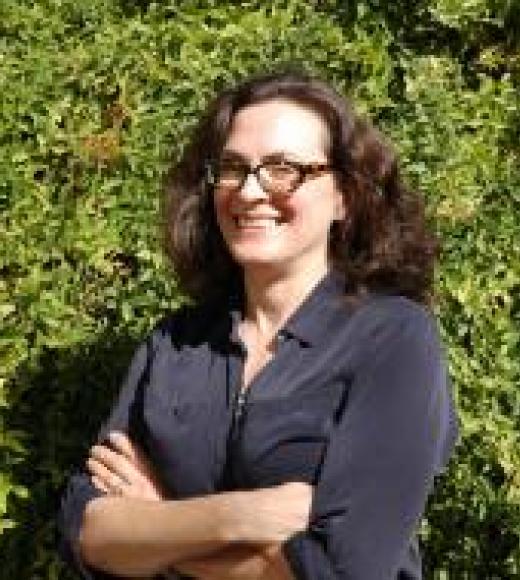
Katharine Burnett is a Professor of Art History, Chair of the Department of Art History, and Director of the Global Tea Initiative at the University of California, Davis. She holds a Ph.D. from the University of Michigan, along with M.A. and B.A. degrees from Wellesley College. Her research focuses on Chinese art and visual culture from 1550 to the present, with special emphasis on art theory, politics, tea trade impacts, and material culture. Her teaching covers Chinese art history from antiquity to modernity, including courses on painting, collecting practices, and global tea culture. Notable awards include the George Wittenborn Memorial Book Award (2017) and recognition as a leading tea educator (2019). She leads initiatives like the Global Tea Initiative, exploring tea’s cultural and scientific dimensions across Asia and beyond. Her publications span scholarly articles on Ming and Qing art criticism, global art markets, and contemporary Chinese artists. Key themes include originality in art theory, transnational art exchanges, and the intersection of politics with visual culture.