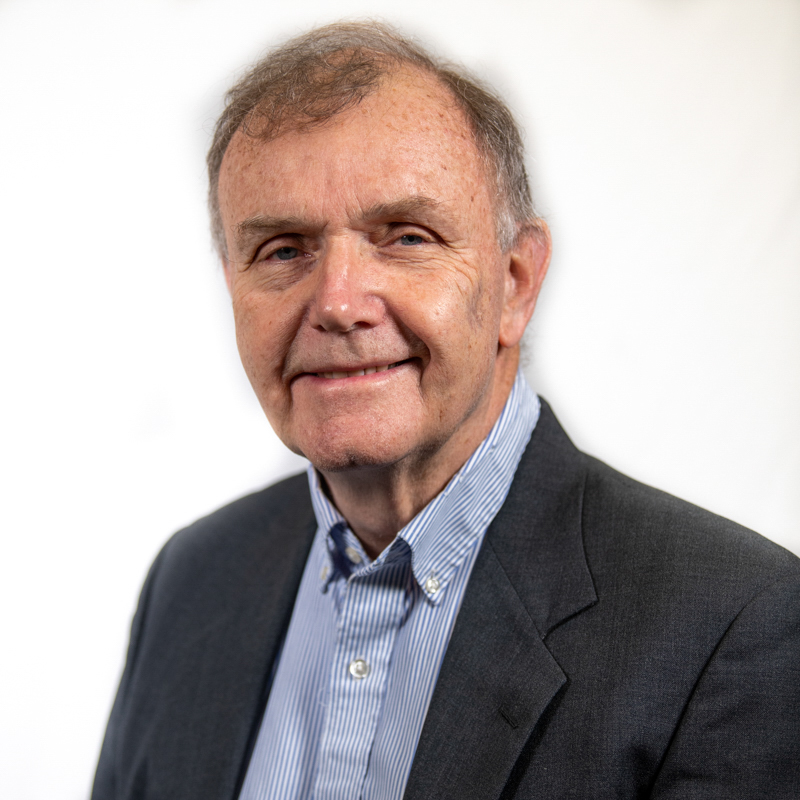
Greg Durrett is an Associate Professor in the Department of Computer Science at University of Texas at Austin, leading the TAUR Lab (Text Analysis, Understanding, and Reasoning ). His research focuses on advancing Large Language Models (LLMs) for knowledge-intensive tasks in medical information processing scientific discovery legal reasoning . He received his B.S. in Computer Science and Mathematics from MIT (2010) and Ph.D. in Computer Science from UC Berkeley (2016). His work develops techniques to train LLMs with new capabilities augment models for reliability assess model outputs improve reasoning frameworks . His 15 most recent publications (2021-2025) span knowledge propagation in LLMs chain-of-thought reasoning code generation benchmarks multi-modal reasoning fact verification discourse analysis . Scientific honors include NSF CAREER Award (2024) NSF grants (2018, 2024) Bloomberg Data Science Grant (2017) Facebook Fellowship (2014) Best Paper Finalist (EMNLP 2013) . Teaching: CS388: Natural Language Processing (graduate) CS371N: NLP (undergraduate) High school NLP module .
John MacFarlane is a Professor of Philosophy at the University of California, Berkeley , with affiliations to the Group in Logic and the Methodology of Science and co-organizer roles in the Meaning Sciences Club and Townsend Center Working Group . His research spans philosophy of language, philosophical logic, metaphysics, epistemology, philosophy of mathematics, history of logic , and ancient philosophy , particularly Aristotle . He has held visiting positions at institutions like École des Hautes Études en Sciences Sociales (EHESS), Paris . Education : Ph.D. in Philosophy (2000, University of Pittsburgh), M.A. in Classics (1997) and Philosophy (1994), A.B. summa cum laude in Philosophy (1991, Harvard). Research Interests focus on semantic relativism , particularly assessment sensitivity as explored in his book Assessment Sensitivity: Relative Truth and Its Applications (Oxford, 2014). He investigates how epistemic modals and vagueness interact with truth evaluation. His work in philosophical logic includes a textbook Philosophical Logic: A Contemporary Introduction (Routledge, 2021). Secondary interests include ancient philosophy (Aristotle, Plato), formal logic , and fiddlosophy . Article Trends reveal contributions to relativism , epistemic modals , vagueness , and logicism . His recent work (2025) examines Plato’s Protagoras and belief utility , while 2022–2020 articles address semantic indecision and probabilistic knowledge . Earlier works (2008–2000) include foundational studies on Frege, Kant, and Aristotle . Scientific Awards include a 2023 Residential Fellowship at Wissenschaftskolleg, Berlin (declined), 2016–17 Fellow at IEA Paris , and 2015 American Academy of Arts and Sciences membership . He has received multiple Humanities Research Fellowships at Berkeley (2016, 2008, 2003) and Research Enabling Grants (2000–2009). Advising includes supervising 15+ PhD students in areas like logic, epistemology, and philosophy of language . Notable advisees include Richard Lawrence (2017) and Sophie Dandelet (2021). He also guided honors theses at Berkeley, such as Benjamin Logan’s work on epistemic modals (2018). Labs and Teams involve co-organizing the Townsend Center Working Group in History and Philosophy of Logic, Mathematics, and Science and contributing to the Group in Logic and Methodology of Science . His interdisciplinary approach integrates philosophy, logic, and computational tools , including creating Pandoc for document conversion.
Mark Aleksanyan is a Professor of Accounting and Finance at the University of Glasgow's Adam Smith Business School, serving as Associate Head of the Accounting and Finance subject group since 2004. He holds a PhD in Accounting and Finance from the University of Glasgow (2004), an MPhil in International Finance (2000), and a bachelor’s degree in Mathematical Economics from Yerevan State University (1997). Prior to academia, he worked as a financial analyst, economist at the Armenian Ministry of Finance, and assistant to the Prime Minister of Armenia (1996–1999). Research Interests Focuses on relationships between market actors (sell-side/buy-side analysts, investor relations officers), equity valuation, corporate reporting, and empirical accounting. His work explores technology’s impact (e.g., generative AI) on financial information practices and regulatory frameworks like MiFID II. Current projects include analyzing the role of state visits in cross-border M&A and media effects on insider trading. Grants & Funding Received grants totaling over £100k from bodies like the Institute of Chartered Accountants of Scotland (2019), the Foreign and Commonwealth Office (2018), and the Adam Smith Research Foundation (2010). Teaching Teaches Financial Analysis & Equity Valuation (MSc), Financial Statement Analysis & Valuation (BSc), and PhD masterclasses. Previously instructed International Corporate Finance and MBA courses. Editorial Roles Serves as Associate Editor for Qualitative Research in Financial Markets and on editorial boards of Review of Business and Economics Studies and Behavioral Research .
Dr Cosette Crisan is an Associate Professor (Teaching) in Mathematics Education at University College London’s IOE, ranked World Number 1 in Education. She specializes in curriculum design, subject-specific mentoring, and integrating digital technologies into mathematics education. Prior to joining UCL IOE in 2010, she taught mathematics at secondary and university levels for 16 years. Her research focuses on enhancing mathematics teaching practices through collaborative mentorship frameworks and technology integration. She co-leads the Curriculum and Subject Specialism Research Group and the ROPE group, driving pedagogical innovation. Notable achievements include the 2021 UCL Faculty Education Team Award for pandemic-era teaching support and leadership roles such as Academic Head of Learning and Teaching (2020–2023). She holds a PhD in Mathematics Education from London South Bank University and is a Principal Fellow of the Higher Education Academy. Current initiatives include developing a Mathematics and Secondary Mathematics Education BSc (QTS) Teacher Degree Apprenticeship program. Her research emphasizes revitalizing geometry education and preparing mentors to effectively guide novice teachers. Publications span topics like computer-aided assessment (STACK), pandemic-era teaching adaptations, and cross-cultural mentorship studies. Dr Crisan’s work bridges theory and practice, advocating for mathematics education as a design science. She actively contributes to the London Mathematical Society’s Education Committee, promoting public engagement with mathematics. Awards include the UCL Faculty Education Team Award (2021) and recognition for her role in transitioning teaching to online platforms during the pandemic. Her teaching portfolio includes leadership of the MA Mathematics Education program and supervision of doctoral candidates. Recent interests include exploring intersections between mathematics and cognitive neuroscience, inspired by her daughter’s career path.
Susanne Prediger is a Professor at the Institute for Development and Research in Mathematics Education (IEEM) at Technische Universität Dortmund and Vice Director of the Department of Subject-Related Knowledge Transfer at the Leibniz Institute for Science and Mathematics Education (IPN). She directs the DZLM research network (German Center for Mathematics Teacher Education) and holds leadership roles in mathematics education research. Her research focuses on: Design and Research on Professional Development of Mathematics Teachers and Facilitators Topic-Specific Design Research in Mathematics Education for Secondary Schools Diversity in Classrooms (especially Language Diversity) Empirical Studies on Students' Conceptions in Arithmetic, Algebra, and Stochastics Networking of Theories in Mathematics Education Research Recent work explores AI-driven formative assessment, educational innovation implementation, and inclusive pedagogical strategies for teaching percentages. She leads projects like ALwAI, Startchancen-Kompetenzzentrum Mathematik, and DigiProMIN. Current roles include: Vice Director (half-time), Department of Subject-Related Knowledge Transfer, IPN Director of DZLM Research Network, IPN (since 2021) Full Professor at IEEM, TU Dortmund University (since 2006) Her academic background spans Mathematics and History studies at Technical University of Darmstadt and Université Bordeaux I, a PhD in Mathematical Logic and Universal Algebra (1998), and a Habilitation in Mathematics Education (2004).
Sara Hennessy is a Professor of Educational Dialogue and Pedagogical Inquiry at the Faculty of Education, University of Cambridge , where she teaches and supervises Masters and doctoral students. She serves as Research Director of the £30m+ FCDO-funded EdTech Hub and leads the Cambridge Educational Dialogue Research (CEDiR) Group . Her research spans high- and low-income countries, focusing on classroom dialogue analysis, technology-mediated pedagogy, and teacher professional development. Education: BSc in Social Psychology (LSE), MA (Cantab), PhD in Psychology (UCL) Professional Memberships: American Educational Research Association (AERA), British Educational Research Association (BERA), European Association for Research into Learning and Instruction (EARLI) Research Interests: Hennessy’s work examines how digital technologies can enhance classroom dialogue and collaborative learning, particularly in sub-Saharan Africa. She developed the T-SEDA toolkit for classroom dialogue analysis, which underpins multimedia professional development resources. Her projects include Camtree (global practitioner research platform) and the EdTech Hub , investigating equitable uses of educational technology in low-income contexts. Publications: Her recent articles analyze mixed-methods approaches to classroom dialogue, technology’s role in Tanzanian teacher development, and linguistic considerations in resource localization. Earlier works focus on interactive whiteboards, OERs, and socio-cultural perspectives on technology integration. Scientific Awards: ESRC Research Fellowship (2007-2010): Consolidated practitioner-researcher collaboration methodologies Editorial Roles: Former editor of the British Journal of Educational Technology (2016-2024) and editorial board member of the International Journal of Science Education .
Manuel DeLanda is a New York-based cross-disciplinary theorist and artist. He holds the rank of Professor at The European Graduate School / EGS and serves as a lecturer at Princeton University's School of Architecture and Pratt Institute's Graduate Architecture and Urban Design program. His academic career includes past roles as a Fellow at Princeton's Institute for Advanced Study (2000/01) and teaching positions at the University of Pennsylvania and Columbia University. Education: BFA from the School of Visual Arts (New York), PhD from the European Graduate School (2010). Research interests span philosophy, complexity theory, materialism, science studies, and Deleuzean thought. His work integrates interdisciplinary approaches to topics like assemblage theory, urban capitalism, morphogenesis, and the philosophy of science. Key themes include the application of mathematical concepts (topology, chaos theory) to social and historical analysis, and rethinking materialist frameworks across disciplines. Notable contributions include books such as War in the Age of Intelligent Machines , A Thousand Years of Nonlinear History , and Assemblage Theory . His lectures (e.g., on economic agglomeration, urban capitalism, and Deleuzean philosophy) reflect his commitment to bridging abstract theory with empirical analysis. Labs/Teams: No specific lab affiliations mentioned, but his work is collaborative through academic networks and interdisciplinary projects in architecture, urbanism, and philosophy.
Prof. Dr. Johanna Heitzer is a University Professor for Mathematics Education at RWTH Aachen University since 2011. She leads the Teaching and Research Area of Mathematics Education within the university's mathematics department. Her office is located in Room 352 of the Kreuzherrenstraße 2 building in Aachen. She serves as co-editor of the journal 'mathematik lehren,' co-author of the 'Mathematics - New Ways' textbook series, and holds numerous committee positions including membership in the Faculty Advisory Board and Structural Commission of the Center Council. 1989: High school diploma 1989-1994: Mathematics and Physics Teacher Training at RWTH Aachen 1994-1996: Traineeship at Aachen Teacher Training College 1997: Research assistant at University of Münster 1998-2007: Mathematics and Physics teacher at Korschenbroich Gymnasium 2007-2010: Scientific assistant and doctorate at RWTH Aachen 2011-present: University Professor at RWTH Aachen Professor Heitzer's research focuses on the training and further education of mathematics teachers, development of contemporary teaching materials, applied and interdisciplinary mathematics, and the transition from school to university. Her work emphasizes concept formation, linguistic communication in mathematics, and the historical development of mathematical ideas as teaching resources. She investigates mathematics-specific learning and cognitive processes through multiple research projects including the Aachen school-university project iMPACt. Her recent scholarly output demonstrates a strong trend toward integrating digital technologies in mathematics education, particularly 3D printing and e-learning tools. She has increasingly focused on the social relevance of mathematics, exploring concepts of fairness, sustainability, and citizen empowerment through mathematical modeling. Her work bridges theoretical mathematics education with practical classroom applications, maintaining a strong connection to both historical perspectives and contemporary educational challenges. Special prize from Sparkasse Bad Hersfeld-Rotenburg for best mathematics Abitur (1989) Borchers Plaque for doctoral examinations passed with distinction (2011) DMV honor as Mathemaker of the Month (2013) Brigitte Gilles Prize 2013 for the MINT-L4 Center Professor Heitzer has supervised numerous doctoral students, serving as primary or secondary advisor for at least nine PhD dissertations between 2016-2021. Her research projects include the School-University Project MathePlus Aachen (iMPACt), e-Learning 'Mathematics for Civil Engineers,' and the development of mathematics items for StudiChecks NRW. She has secured funding through the Quality Initiative for Teacher Education (both phases) and participates in the ComeIn project focused on digitalization in teacher training. Her grants consistently emphasize practical applications of mathematics education research with direct impact on classroom practice. As a founding member of the MINT-L4@RWTH center and initiator of the working group Mathematical Education for Sustainable Development, Professor Heitzer has established significant collaborative structures. She participates in the Subject Didactics Forum at the Teacher Training Center of RWTH Aachen and has served in leadership roles including Chair of the Center Council (2014-2016) and Board member of the Teacher Training Center (2014-2017). Her work connects with national and international networks through her membership in the Society for Mathematics Education (GDM), the German Association for Mathematics and Science Education (MNU), and the German Mathematical Society (DMV).
Christian List is Professor of Philosophy and Decision Theory at Ludwig Maximilian University of Munich, where he serves as Co-Director of the Munich Center for Mathematical Philosophy (MCMP). Previously, he was Professor of Philosophy and Political Science at the London School of Economics until 2020. His work bridges philosophy, economics, and political science with a particular focus on individual and collective decision-making and the nature of intentional agency. Professor List's research spans multiple interconnected domains: theories of individual and collective choice (particularly social choice theory and judgment aggregation), free will and consciousness, the philosophy of mind and action, and the foundations of the social sciences. His work on group agency, developed in his influential book Group Agency with Philip Pettit, has reshaped debates about corporate entities and collective intentionality. His more recent work on free will, culminating in his book Why Free Will is Real , presents a scientifically grounded defense of free will against reductionist skepticism. His recent publications reveal a sophisticated integration of formal methods with deep philosophical questions, particularly regarding consciousness, probability aggregation, and the relationship between different levels of explanation. List's work consistently demonstrates how mathematical precision can illuminate fundamental philosophical problems while maintaining relevance to broader social and scientific contexts. Scientific Awards and Recognition: Elected Fellow of the British Academy (2014) Member of Academia Europaea (2023) Member of the Bavarian Academy of Sciences and Humanities (2022) Joseph B. Gittler Award from the American Philosophical Association (2020) Philip Leverhulme Prize in Philosophy (2007) 5th Social Choice and Welfare Prize (2010) List has supervised numerous PhD students and early-career researchers, many of whom have gone on to prominent positions in philosophy and related fields. His collaborative work with Franz Dietrich on judgment aggregation has been particularly influential. As Co-Director of the Munich Center for Mathematical Philosophy, he has secured substantial research funding and established MCMP as a leading international hub for formal and mathematical approaches to philosophical problems. Through the Munich Center for Mathematical Philosophy, List leads a vibrant research community that brings together philosophers, economists, political scientists, and mathematicians to tackle foundational questions using rigorous formal methods. The center hosts regular workshops, seminars, and visiting scholars, creating a dynamic intellectual environment that bridges disciplinary boundaries.
Dr. Adam Storring is a Visiting Research Fellow at King’s College London’s Department of War Studies, School of Security Studies. His research bridges cultural/intellectual history with military operations, focusing on King Frederick II of Prussia (1740–1786). He holds a PhD from the University of Cambridge (2018), supervised by Christopher Clark, and previously held fellowships at the Lichtenberg-Kolleg (Göttingen) and multiple German institutions. His work challenges traditional narratives of Frederick II’s militarism, emphasizing French intellectual influences and subjective military thought. Education: BA History (St. John’s College, Cambridge, 2001); MPhil Historical Studies (2007); PhD History (2018) Awards: 2019 André Corvisier Prize (top global military history dissertation) Roles: Member of the Bibliographical Committee of the International Commission of Military History; peer reviewer for War in History and National Science Centre, Poland His research redefines Frederick II’s military ideas as rooted in French Enlightenment thought rather than German militarism. He examines temporality in warfare, collective strategy formation in Prussia, and Russia’s role in the Seven Years War. His publications analyze battles like Zorndorf (1758) and challenge the notion of warfare as purely mathematical. Teaching includes courses on modern war history, international relations, and historiography. He combines rigorous archival work with interdisciplinary approaches, integrating history of science and classical scholarship into military studies.
Peg Rawes is Professor of Architecture and Philosophy at University College London's Bartlett School of Architecture , where she directs research and leads the MA Architectural History program. Her work bridges architectural theory with philosophy, focusing on relational architectural ecologies through three intersecting areas: human/nonhuman life practices, planetary poetics, and housing ecologies. Director of Research, UCL Bartlett School of Architecture (2023-present) REF2029 Lead for Bartlett School EDICPI for EU TACK project (2020) BAUHOW5 PI for European architecture schools partnership (2016-20) Research explores biophilic design , decolonial architecture , and feminist spatial practices across three streams: Architectural ecologies : Human/nonhuman relations in 'Bioprotopia' (2023), vulnerability visualization (2021) Planetary poetics : Climate emergency dialogues (2021), Irigarayan aesthetics (2020) Housing biopolitics : Care frameworks (2017), Spinozist ethical ratios (2015) Key funded collaborations include EU TACK's Communities of Tacit Knowledge (2020) and AHRC's Equal by Design (2016). She contributes to architectural peer review for journals and international research councils while maintaining global partnerships with institutions like Cornell , ETH Zurich , and University of Minnesota .
Robert R. Edwards serves as the Edwin Erle Sparks Professor of English and Comparative Literature at Pennsylvania State University within the College of the Liberal Arts. His office is located in Burrowes Building, where he maintains regular office hours including scheduled appointments for Fall 2025. As a distinguished scholar in medieval literary studies, Professor Edwards has established himself as a leading authority on Chaucer, medieval drama, and book history. Professor Edwards specializes in Book History and Textual Studies with particular expertise in Medieval Literature. His research focuses on Chaucer studies, continental and Latin literary relations, and authorship in trilingual England. His scholarly approach integrates historical context with literary analysis, examining how medieval writers engaged with classical traditions while developing innovative narrative forms. His work reveals the complex interplay between textual production, cultural identity, and literary innovation in the medieval period. His publication record demonstrates consistent scholarly productivity spanning several decades, with significant contributions to understanding medieval literary theory, authorship concepts, and cross-cultural literary relations. His works show an evolving trajectory from foundational studies of medieval poetics to more nuanced examinations of specific authors and textual traditions, particularly focusing on how medieval writers negotiated classical heritage with contemporary cultural concerns. Professor Edwards has edited significant works including John Lydgate's writings and essay collections on medieval love, desire, and sexuality. His scholarly editing demonstrates commitment to making primary medieval texts accessible while providing critical frameworks for contemporary interpretation. His research continues to influence how scholars understand the development of literary consciousness in the medieval period.
Karen Barad is Distinguished Professor of History of Consciousness at the University of California, Santa Cruz, with joint appointments in Philosophy and Feminist Studies. She holds a Ph.D. in theoretical particle physics from SUNY Stony Brook and previously held a tenured position in a physics department before transitioning to interdisciplinary work. At UCSC, she is affiliated with the Humanities Division and serves as faculty in the History of Consciousness Department and Philosophy Department. Barad earned her Ph.D. in Physics from SUNY Stony Brook, building a foundation in theoretical particle physics before moving toward more interdisciplinary work. Her unique trajectory from physics to philosophy and feminist studies has shaped her distinctive approach to questions of matter, meaning, and ethics. Barad's research spans multiple disciplines including science studies, multispecies studies, physics, nuclear studies, continental philosophy, epistemology, ontology, ethics, politics, and philosophy of physics. Her theoretical framework of "agential realism" has significantly influenced feminist theory, science studies, and philosophy. She approaches questions of matter, meaning, and ethics through the lens of quantum physics, developing concepts like intra-action, diffraction, and entanglement as philosophical tools. Her work challenges traditional boundaries between subject/object, nature/culture, and human/non-human. Her publications over the last two decades reveal a consistent engagement with the intersections of science, philosophy, and ethics, particularly focusing on how material-discursive practices shape reality. Barad's work increasingly addresses ecological concerns, nuclear legacies, and questions of justice, demonstrating how scientific concepts can inform ethical and political thought. Her writing moves fluidly between theoretical physics, feminist theory, and philosophical inquiry, creating new pathways for understanding the entanglement of matter and meaning. honorary doctorate from Gothenburg University Fulbright fellowship Kresge College Teaching Award Barad has received significant recognition for her scholarship and her research has been generously supported by major funding organizations including the National Science Foundation, the Ford Foundation, the Hughes Foundation, the Irvine Foundation, the Mellon Foundation, and the National Endowment for the Humanities. As Co-Director of the Science & Justice Graduate Training Program at UCSC, Barad has mentored numerous graduate students and shaped interdisciplinary research connecting scientific inquiry with questions of social justice. Her collaborative work with scholars like Jenny Reardon has helped establish science & justice as a vital field of inquiry. Barad's approach to mentoring emphasizes the ethical responsibilities inherent in scientific and philosophical practices. Through her leadership in the Science & Justice Research Center, which she helped found, Barad has fostered innovative collaborations across disciplines, creating spaces where scientists, humanists, and social scientists can work together on pressing contemporary issues. Her work continues to influence multiple fields, with ongoing projects exploring nuclear colonialism, ecological ethics, and the material consequences of scientific practices.
Alexander M. Petersen is an Associate Professor and Graduate Chair in the Management of Complex Systems (MCS) department and the Ernest and Julio Gallo Management of Innovation Sustainability and Technology (MIST) graduate group at the University of California Merced (UCM). He is affiliated with the School of Engineering and serves as a key faculty member driving research and academic programs in complex systems and innovation management. His educational background includes a Ph.D. (2011) and M.A. (2008) from Boston University, and a B.S. (2003) in physics and mathematics from the University of Utah. Prior to joining UC Merced, he was a tenure-track faculty member at the IMT Institute for Advanced Studies Lucca in Italy. Petersen's research focuses on the evolution of large multiscale socio-economic systems by applying concepts and methods from complex systems, statistical physics, management, and innovation science. His work spans Science of Science, Computational Social Science, Complex Systems, Quantitative Finance, and Sports Analytics. He has made significant contributions to understanding research collaboration networks, innovation dynamics, convergence science, and the impact of socio-economic shocks on various systems. His publication record demonstrates a clear trend toward increasingly complex interdisciplinary work, particularly in convergence science and network analysis. His most recent publications (2024-2025) focus on global science structure, disruption metrics, national park systems, and the impact of crises on economic behavior. These works often integrate multiple disciplinary perspectives and leverage large-scale data analysis. NSF award #1738163 for research on convergence science Petersen has advised numerous graduate students, including current PhD student Andrea del Pilar Montaño Ramirez and former students Felber J. Arroyave Bermudez (PhD in Environmental Systems) and Dr. Dong Yang (MCS Postdoctoral Scholar). His research has been supported by competitive grants and has resulted in publications in high-impact journals including Nature Communications, Science Advances, and Research Policy. He is actively involved in developing new academic programs, including upcoming B.A. majors in Management of Innovation, Sustainability & Technology (2025) and Data Science & Analytics (Fall 2024). His lab focuses on complex systems analysis, with current projects examining university digital media networks, disruption metrics in science, and the integration of regional innovation systems. The research group maintains an active presence in the science of science community, regularly presenting at conferences like the Science of Team Science conference (INSciTS).
Prof. Dr. Poldi Kuhl is a Professor of Educational Psychology at Leuphana University , Lüneburg, since 2021. Affiliated with the Institute of Psychology in Education (IPE) and the Center for Empirical Research on Language and Education (ERLE) , Kuhl specializes in educational psychology, developmental psychology, and inclusive education. Their research focuses on data-driven decision-making, digital learning platforms, academic language demands, and teacher professional development. Education: Diploma in Psychology (2003) and PhD in Philosophy (2008) from Freie Universität Berlin. Kuhl’s recent work examines how academic language features affect learning outcomes, digital data utilization in primary education, and mental health literacy among teachers. Their publications span topics from virtual reality training tools to inclusive teaching strategies in mathematics. Kuhl’s career includes leadership roles at the Research Data Center (FDZ) at the Institute for Quality Improvement in Education (IQB) and a Junior Professorship at Leuphana University. They have collaborated with institutions like the Universitat Oberta de Catalunya and the Max Planck Institute for Human Development .