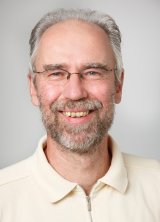
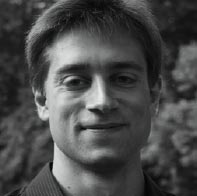
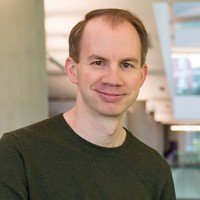
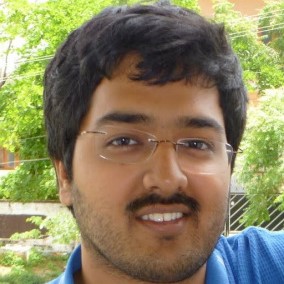
Klaus Ritzberger is a Professor of Economics at the Department of Economics, Royal Holloway, University of London. He holds academic affiliations at multiple institutions, including the Institute for Advanced Studies (IHS) in Vienna and the Vienna Graduate School of Finance (VGSF). His career spans leadership roles, such as Chairman of the Department of Economics and Finance at IHS (1999–2005) and numerous visiting professorships globally. Education: Magister rer.soc.oec. (1982), University of Vienna Doktor rer.soc.oec. (1987), University of Vienna Habilitation in Economic Theory (1996), University of Vienna Research focuses on game theory, economic theory, and general equilibrium. His work explores strategic stability, evolutionary game theory, and institutional economics. Recent contributions include analyses of bankruptcy in uncertain equilibria and multi-lateral bargaining dynamics. Awards include the Economic Theory Fellow (2011) and multiple Oskar Morgenstern Awards. He has secured grants for projects like 'Foundations of the Theory of Extensive Form Games' (2009–2013) and serves on editorial boards of journals like Economic Theory and International Journal of Game Theory .
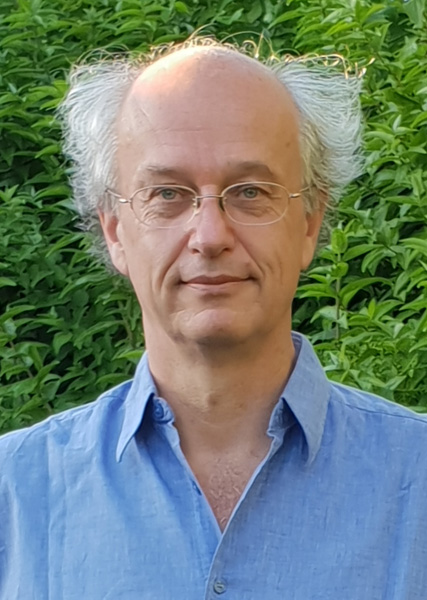
Pierre Colmez is a French mathematician affiliated with the École Polytechnique (1993-2010) and the National Center for Scientific Research (CNRS) at the Institut de Mathématiques de Jussieu since 2010. His academic journey includes postdoctoral positions at the Institut Joseph Fourier (Grenoble) and the Max Planck Institute for Mathematics (Bonn). Ph.D. in 1988 (Grenoble) under Jean-Marc Fontaine and John Coates École Polytechnique: Professor (2006-2010), Teaching Professor (1993-2005) Colmez’s research lies at the intersection of arithmetic geometry , Galois representations , p-adic Hodge theory , and the Langlands program . His work explores connections between automorphic forms, p-adic analysis, and cohomological structures in number theory. His most recent publications focus on p-adic cohomology, Drinfeld towers, and syntomic complexes, reflecting his expertise in advanced topics of nonarchimedean geometry and Galois cohomology . Collaborations with Gabriel Dospinescu and Wiesława Nizioł highlight his contributions to modern arithmetic geometry. Prix Léonid Frank (2016) Aisenstadt Chair (2015) Prix Fermat (2005) Prix Gabrielle Sand et Guido Triossi (1999) Colmez has held editorial roles at Astérisque (1999-2004), directed the SMF Mathematical Documents collection (2001-2016), and served on editorial boards for Annales de l'ENS and Publications de l'IHES . His academic network includes collaborations with Laurent Berger, Christophe Breuil, and Jean-Pierre Serre.
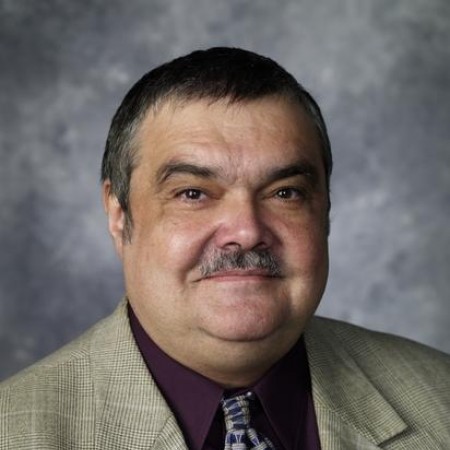
Titu Andreescu is a retired Associate Professor in the Science/Mathematics Education Department at the University of Texas at Dallas (UTD), affiliated with the School of Natural Sciences and Mathematics. He holds a Ph.D., M.S., and B.A. in Mathematics from the University of West Timisoara, Romania. His research focuses on enhancing mathematics education through problem-solving initiatives, particularly via AwesomeMath—a program encompassing summer camps, correspondence courses, and journals for gifted students. He specializes in Diophantine Analysis, particularly quadratic equations and their applications in advanced mathematics. Andreescu has authored numerous publications, including textbooks like Complex Numbers from A to Z and contributed to Olympiad problem design for competitions such as the IMO and W.L. Putnam. He has received prestigious awards, including the Edith May Sliffe Award and led the U.S. IMO team to historic victories, including a first-place finish in 1994. His professional roles include directing the Mathematical Olympiad Summer Program (MOSP) and serving as a coach for national teams in Romania and the U.S. Key projects include keynote speaking at international math camps and consulting for competitions. He has secured grants totaling over $800,000 for mathematics education initiatives, including funding from Akamai Technologies and the U.S. Army Research Office.
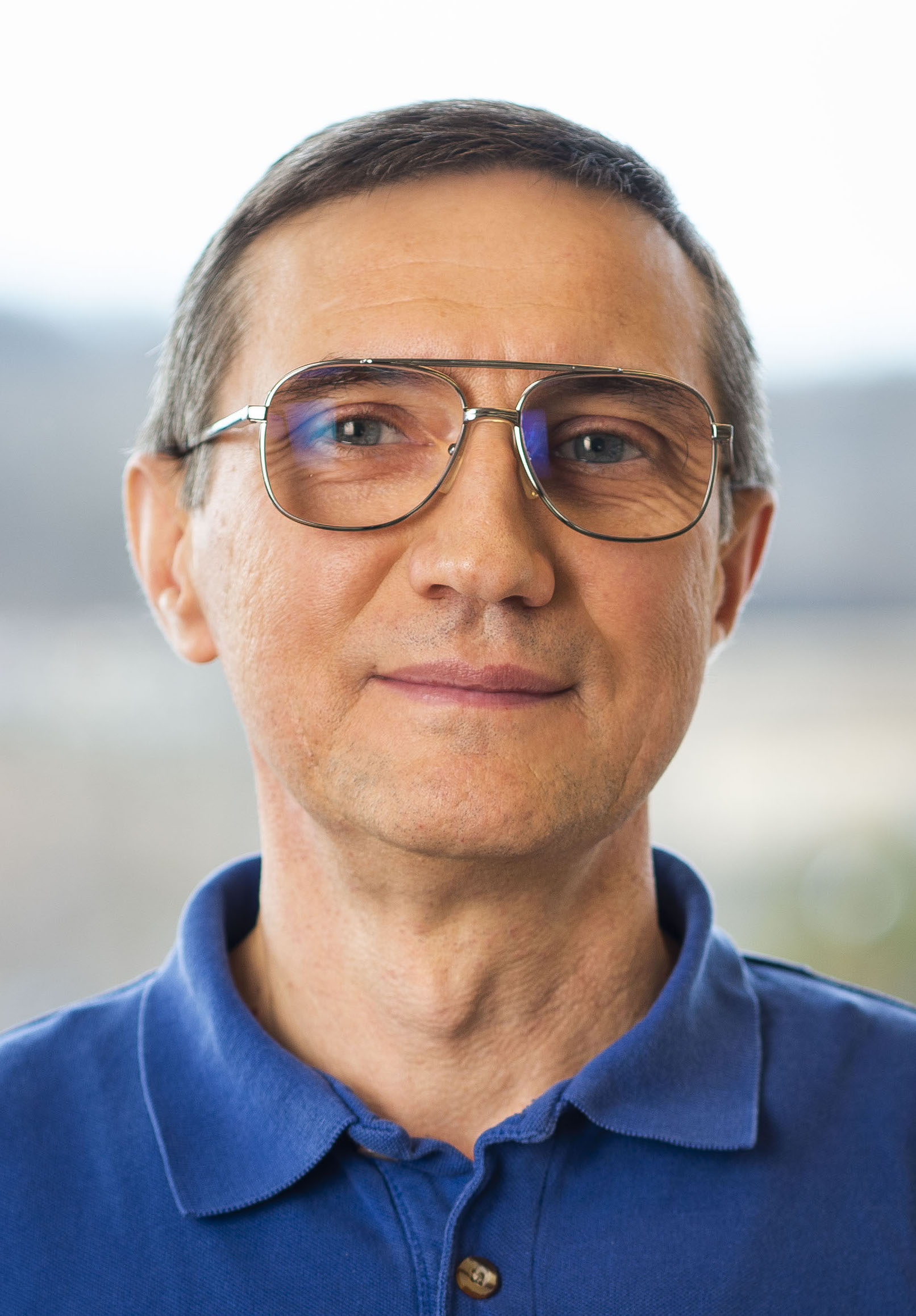
Victor M. Yakovenko is a Professor of Physics at the University of Maryland, College Park, and a Fellow of the American Physical Society. His research spans econophysics, condensed matter theory, and theoretical physics, with a focus on income/wealth distribution, entropy in economics, and quantum materials. He holds a Ph.D. in Theoretical Physics from the Landau Institute for Theoretical Physics (1987) and joined UMD in 1993, becoming a Full Professor in 2004. Notable awards include the Packard Fellowship and Sloan Research Fellowship. Research interests include applications of statistical physics to economic systems, dynamics of population growth, CO₂ emissions, and optical control of magnetism. He leads the Condensed Matter Theory group and is affiliated with the Joint Quantum Institute (JQI). Recent talks address econophysics, population trends, and interdisciplinary collaborations. Publications span econophysics models, energy inequality analysis, and topological materials. Grants include an Institute for New Economic Thinking (INET) project on income distribution. His work bridges physics and socioeconomic systems, with media coverage in New Scientist , Science , and public policy discussions.
Dr. Hossein Alizadeh Otorabad is a Research Fellow at the Department of Engineering, School of Computing and Engineering, University of Huddersfield. He joined the Institute of Railway Research (IRR) in 2019 and was promoted to Research Fellow in 2022. His work focuses on finite element analysis, railway engineering, and thermal dynamics in wheel-rail interactions. BSc in Solid Mechanics, Tehran Polytechnic University MSc in Applied Mechanics, Khajeh Nasir Toosi University (2002) PhD in Railway Engineering (2018), focusing on wheel-flat fatigue crack initiation His research expertise spans Railway Engineering , Finite Element Analysis , and Thermal Modeling , with a particular focus on wheel-flat dynamics and fatigue analysis. He has contributed to studies on dynamic load effects in railway crossings, temperature evolution during wheel flat formation, and elasto-plastic behavior in railway wheels. Recent publications show a strong emphasis on Railway Systems (2018-2024), covering topics like: Dynamic load prediction in crossings Thermal analysis of wheel-rail sliding Contact mechanics in flatted wheels Fatigue life evaluation under transient loads His work aligns with UN Sustainable Development Goals for sustainable infrastructure and transportation systems. Scientific Recognition: h-index of 31 (Scopus metrics) 16+ citations for elasto-plastic wheel analysis Contributions to key railway engineering conferences At IRR, he conducts FE analysis, laboratory/field testing of railway assets, hammer testing, and signal processing. He previously received funding from Iran's Ministry of Science for sabbatical research at TU Delft's Material Science and Engineering department.
Prof. Dr. Martin Epkenhans is a faculty member at the University of Münster, affiliated with the Department of Mathematics and Computer Science. He is based at Einsteinstrasse 62, Münster, Germany, and can be contacted via email at martin.epkenhans@uni-muenster.de or by phone at +49 251 83-33934. His research interests lie primarily in theoretical mathematics, including logic, analysis, numerics, and algebraic structures. The department hosts several research groups such as Theoretical Mathematics, Logic, and Analysis and Numerics, suggesting a strong foundational and pure mathematics focus. No recent publications are listed in the provided text, so no trend analysis can be performed. Similarly, no scientific awards are mentioned in the available information. There is no information available regarding student advising, research grants, or leadership in specific labs or research teams. Further details about academic supervision or funded projects are not provided in the source material.
Bonnie Berger is the Simons Professor of Mathematics at the Massachusetts Institute of Technology and head of the Computation and Biology group at MIT's Computer Science and AI Lab. She holds additional appointments as an Associate Member of the Broad Institute, Faculty member of Harvard/MIT Health Science & Technology, and Affiliated Faculty of Harvard Medical School. Her career has been dedicated to pioneering computational approaches in molecular biology, where she has been instrumental in defining the field. Professor Berger's research focuses on designing algorithms to extract biological insights from large-scale data sets. Her work spans Compressive Genomics, Network Inference, Structural Bioinformatics, Genomic Privacy, and Medical Genomics. She actively collaborates with experimental biologists to maximize the power of computation for biological discovery, developing methods that address the challenges of modern high-throughput biological data. Her recent publications demonstrate a strong trend toward integrating machine learning with structural biology and genomic privacy. The articles show increasing sophistication in using deep learning for protein structure prediction, developing privacy-preserving techniques for genomic data sharing, and creating efficient algorithms for massive biological data sets. Her work bridges theoretical computer science with practical biological applications. Professor Berger's scientific recognition includes: Election to the National Academy of Sciences (2021) ISCB Accomplishments by a Senior Scientist Award SIAM Sonya Kovalevsky Lecture Prize Fellowships in ACM, ISCB, AMS, and other prestigious societies Multiple RECOMB Test of Time Awards NIH Margaret Pittman Director's Award She has mentored numerous students who have gone on to make significant contributions in computational biology, including Ellen Zhong, Yun William Yu, and Hyunghoon Cho. Her lab receives substantial research funding supporting projects in genomic privacy, structural bioinformatics, and compressive algorithms for biological data. Professor Berger serves on the Executive Editorial Board of the Journal of Computational Biology and multiple other editorial boards. The Computation and Biology group at MIT CSAIL, which she leads, is at the forefront of developing computational methods for biological discovery. The group combines expertise in algorithms, machine learning, and biology to tackle fundamental challenges in genomics and structural biology. They are currently organizing the Machine Learning in Structural Biology workshop at NeurIPS 2025, highlighting their leadership in this rapidly evolving interdisciplinary field.
Golnoosh Farnadi is an Associate Professor at the Department of Computer Science and Operational Research at the University of Montreal and an Assistant Professor at the School of Computer Science at McGill University. She holds a Canada-CIFAR Chair in Artificial Intelligence and serves as a Senior Academic Member at Mila - Quebec Institute for Artificial Intelligence. Her interdisciplinary work bridges computer science, operations research, and ethical AI considerations. Her educational background includes a Ph.D. in Computer Science from KU Leuven and Ghent University (2017), followed by postdoctoral positions at the University of Montreal/MILA (2018-2020) and the University of California, Santa Cruz (2017-2018). Her research focuses on algorithmic fairness, responsible AI, deep learning, and probabilistic models, with applications spanning healthcare, recommender systems, and public policy. Farnadi's recent publications demonstrate a strong emphasis on addressing fairness in machine learning systems, with particular attention to cultural diversity in recommender systems, fairness in healthcare optimization (particularly kidney exchange programs), and mitigating hallucinations in large language models. Her work consistently combines theoretical rigor with practical applications, often employing novel mathematical frameworks to tackle complex ethical challenges in AI. Among her notable recognitions are the Google Scholar Award (2021), Facebook Research Award (2021), Google Award for Inclusion Research (2023), and being named one of the 100 Brilliant Women in AI Ethics (2023). She was also recognized as a Rising Star in AI Ethics in 2021. Farnadi supervises numerous graduate students through her EQUAL Lab (EQuity & EQuality Using AI and Learning algorithms), which focuses on developing AI systems that promote fairness and equity. Her teaching includes courses on Responsible AI, Machine Learning, and Trustworthy Machine Learning at both McGill University and HEC Montreal.
Vasily Pestun is a Permanent Professor of theoretical physics at the Institut des Hautes Études Scientifiques (IHÉS) in Bures-sur-Yvette, France, a position he has held since 2014. Previously he was a member at the Institute for Advanced Study (2011–2014) and a Junior Fellow of the Harvard Society of Fellows (2008–2011). Education Ph.D. in Physics, Princeton University (2008). Thesis: Wilson loops in supersymmetric gauge theories under the supervision of Edward Witten. B.S. & M.S. in Physics (summa cum laude), Moscow Institute of Physics and Technology (MIPT) (2003). Research Interests Pestun’s research lies at the intersection of quantum field theory, string theory and integrable systems . He is renowned for developing supersymmetric localization techniques that yield exact results in strongly-coupled supersymmetric gauge theories placed on curved manifolds. His recent work explores deep connections between quiver gauge theories , conformal field theories , quantum algebras and integrable systems , with applications to the geometric Langlands programme . Selected Awards & Honours Hermann Weyl Prize (2016) ERC Starting Grant QUASIFT (2015–2020) Junior Fellow, Harvard Society of Fellows (2008–2011) Porter Ogden Jacobus Fellowship, Princeton University (2007–2008) Centennial Fellowship, Princeton University (2003–2008) Joseph Henry Merit Prize, Princeton University (2003) Pomeranchuk Fellowship, ITEP (2003) Russian Federation President Fellowship (1997) Gold Medal, 28th International Physics Olympiad (1997) Grants & Funding Principal Investigator, ERC Starting Grant Quantum Algebraic Structures In Field Theories (QUASIFT) – €1.5 million (2015-2020) Professional Service & Outreach Pestun serves as an editor for Letters in Mathematical Physics and regularly referees for leading journals. He has organised several high-profile meetings and schools, including the 2018 month-long programme “Localization Techniques in Quantum Field Theories” at Stony Brook, and the 2019 IHES conference “Higher Structures in Holomorphic and Topological Field Theory”. He has given more than 100 invited lectures and seminar talks world-wide.
Martin Nilsson Jacobi serves as President and CEO of Chalmers University of Technology, holding the position of the institution's fourteenth President since September 2023. He simultaneously maintains his academic standing as Professor of Complex Systems at the university, demonstrating his dual commitment to academic leadership and scholarly work. Professor Nilsson Jacobi's research portfolio spans theoretical physics, complex systems theory, and ecological applications. His work bridges multiple disciplines, creating innovative approaches to understanding natural systems through mathematical and computational frameworks. His research trajectory shows an evolution from theoretical physics to complex ecological systems, with particular emphasis on spatial patterns, ecosystem stability, and marine conservation strategies. His scholarly output demonstrates consistent productivity across multiple domains. The most recent publications (2020-2022) focus on complex ecological communities, spatial coherence in heterogeneous landscapes, and species-area relationships, while earlier work (2010-2015) explored self-assembly systems, hierarchical dynamics, and theoretical approaches to complex systems. This progression reflects his ability to apply fundamental theoretical concepts to increasingly complex real-world ecological challenges. Lifetime member of the Swedish Royal Academy of Engineering Sciences (IVA) Professor Nilsson Jacobi has held significant leadership roles beyond his current presidency, including serving as chairman of the Faculty Senate and Head of Department at Chalmers. His international research experience includes collaborations with Los Alamos National Laboratory and the Nordic Institute for Theoretical Physics (NORDITA), highlighting his global scientific engagement. He has successfully secured research funding through multiple projects supported by the Swedish Research Council and the European Commission, demonstrating his ability to lead substantial research initiatives.
Christopher Ramsey is an Associate Professor and Interim Chair of the Department of Mathematics and Statistics within the Faculty of Arts and Science at MacEwan University in Edmonton, Alberta. He holds a PhD in Pure Mathematics from the University of Waterloo (2013), an MMath from Waterloo, and a BSc Honours from the University of Regina. Dr. Ramsey's research centers on operator algebras and functional analysis, with particular emphasis on non-selfadjoint operator algebras and multivariable operator theory. His work explores connections between analysis and algebra, studying algebras of infinite matrices and their applications to group theory, dynamical systems, free probability, and quantum information theory. He also investigates aperiodic order and its mathematical structures. His recent publications (2020-2025) demonstrate a consistent focus on operator algebras, with significant contributions to C*-algebras, tensor algebras, and their applications. The research spans theoretical foundations in functional analysis while connecting to diverse fields including symbolic dynamics, aperiodic structures, and quantum information. His work often bridges abstract algebraic structures with concrete analytical problems. Dr. Ramsey has received notable recognition including an NSERC Discovery Grant (2019), a MacEwan University Project Grant (2019), and an NSERC Postdoctoral Fellowship (2013). He serves as Editor-in-Chief of the MacEwan University Student eJournal (MUSe) and Associate Editor of the Canadian Transactions of Operator Theory. As an educator, Dr. Ramsey teaches various mathematics courses and supervises senior students' independent studies. His academic service includes editorial work and active participation in the Canadian Mathematical Society. His research program continues to develop connections between operator algebras and their diverse applications across mathematical disciplines.
Klaus Schmidt is a Professor of Economics at Ludwig Maximilian University of Munich, holding the chair in the Department of Economics within the Faculty of Economics. His research focuses on theoretical and applied aspects of contract theory, game theory, and industrial organization, with significant contributions to understanding venture capital finance, privatization, and fairness in economic behavior. His educational background includes a Ph.D. in Economics from the University of Bonn (1991) with the dissertation "Commitment in Games with Asymmetric Information" and Habilitation (1994) with "Contracts, Competition, and the Theory of Reputation". Early academic support included scholarships from Studienstiftung des Deutschen Volkes (1982-87) and a German Academic Exchange Service grant (1988/89). Professor Schmidt's research centers on contract theory applications across diverse domains. His work on fairness and reciprocity (notably with Ernst Fehr) revolutionized behavioral contract theory, while contributions to venture capital finance and privatization established foundational frameworks for analyzing incomplete contracts in real-world settings. He employs rigorous game-theoretic modeling to address incentive problems in procurement, privatization, and organizational design. His publication record since 1991 reveals consistent focus on contract-theoretic problems, with increasing emphasis on behavioral aspects after 1999. Key thematic clusters include venture capital finance (2002-2003), fairness/reciprocity (1999-2000), and privatization/incomplete contracts (1995-1996), demonstrating evolution from pure theory to policy-relevant applications. Gossen Prize of the German Economic Association (2001) Commerzbank Prize of the Berlin-Brandenburg Academy of Sciences (2001) Teaching Prize of the Bavarian ministry of science (2000) Walter-Adolf-Jörn Prize (1993) German Academic Exchange Service Grant (1988/89) Studienstiftung des Deutschen Volkes Scholarship (1982-87) Professor Schmidt has secured major research funding including German Science Foundation grants for "Incomplete Contracts" (1999-present) and "Venture Capital Finance" (1998-present). His teaching excellence was recognized with Bavaria's highest teaching award (2000), and he maintains active collaboration with leading economists including Ernst Fehr and Monika Schnitzer. While specific student mentorship details aren't documented, his extensive publication record and seminar leadership indicate significant academic supervision.
Aditya T Siripuram is an Associate Professor at the Indian Institute of Technology Hyderabad (IITH), holding joint appointments in the Department of Electrical Engineering and the Department of Artificial Intelligence. He completed his PhD at Stanford University and holds B.Tech and M.Tech degrees from IIT Bombay. Education: PhD in Electrical Engineering, Stanford University (2017) - GPA: 4.17/4 M.Tech in Electrical Engineering, IIT Bombay (2009) - GPA: 9.79/10 B.Tech in Electrical Engineering, IIT Bombay (2009) - GPA: 9.79/10 Research Interests: His research spans Fourier analysis, signal processing, machine learning, convex and combinatorial optimization, with applications in AI/ML and applied mathematics. His work particularly focuses on computational aspects of Fourier analysis, including fast DFT computation for structured signals, convolution idempotents, and graph-based signal processing techniques. His recent research directions involve developing efficient algorithms for computing Discrete Fourier Transforms for signals with structured frequency support, investigating relationships between additive structures in frequency domains and computational complexity, and exploring graph learning techniques under spectral constraints. Awards and Recognition: Excellence in Teaching Award, IIT Hyderabad (2019, 2022) Stanford Graduate Fellowship Qualcomm Innovation Fellowship (awarded to his PhD student Charantej Reddy P in 2021) Teaching and Service: He has taught courses including AI1110 Probability and Stochastic Processes, EE5609 Matrix Theory, EE5606 Convex Optimization, and EE5328 Introduction to Submodular Functions. He serves as Departmental Undergraduate Committee Chair for the Department of AI at IITH (2020-present) and was MTech Admissions Coordinator for the same department (2019-2022). Research Group: He currently advises three PhD students working on signal processing based graph learning techniques, DFT computation for structured signals, and coded computing problems.
Eugene Feinberg is a Distinguished Professor in the Department of Applied Mathematics and Statistics at Stony Brook University's College of Engineering and Applied Sciences. He is renowned for his extensive contributions to Markov Decision Processes (MDPs), stochastic optimization, and inventory control. Research Interests: His work spans theoretical and applied aspects of Markov Decision Processes , stochastic optimization , inventory control , healthcare decision-making , and machine learning . He has particularly focused on solving complex decision-making problems under uncertainty, with applications ranging from operations research to medical decision-making. Scientific Awards: He has been honored with the title of Distinguished Professor , recognizing his outstanding contributions to his field. Advising and Grants: While specific details on students and grants are not provided, his prolific publication record and faculty status suggest active involvement in advising and securing research funding. Contact and Resources: His university webpage can be accessed at http://www.ams.sunysb.edu/~feinberg/ , and his Google Scholar profile is available at https://scholar.google.com/citations?user=LLt--pgAAAAJ&hl=en .
Jong-Yeon Lee is an Assistant Professor in the Department of Physics at the University of Illinois Urbana-Champaign, where he joined in 2023 after completing postdoctoral research at the Kavli Institute for Theoretical Physics. His work bridges condensed matter physics and quantum information science through investigations of quantum many-body phenomena. His educational background includes: B.S. in Physics and Mathematics from California Institute of Technology (2015) Ph.D. in Physics from Harvard University (2020) Professor Lee's research focuses on exotic quantum phenomena where information theory intersects condensed matter systems. He develops frameworks for understanding decoherence in topological phases, quantum criticality in open systems, and non-equilibrium dynamics using advanced numerical methods. His work on "decohered" quantum systems reveals how information-theoretic transitions relate to boundary quantum criticality, with implications for quantum computing robustness. His publication record shows consistent innovation in quantum information preservation under decoherence, topological phase characterization, and computational studies of correlated electron systems like twisted bilayer graphene. Recent work emphasizes decoding protocols for topological order recovery and information capacity under environmental entanglement. He was awarded the Richard P. Feynman Prize in Theoretical Physics during undergraduate studies at Caltech. Professor Lee actively recruits graduate students and postdoctoral researchers, teaching graduate courses including PHYS 598 Special Topics in Physics. His group focuses on quantum simulation platforms and theoretical frameworks for noisy quantum systems. At Illinois, he contributes to the theoretical condensed matter and quantum information research ecosystem, developing collaborations across physics and engineering disciplines.