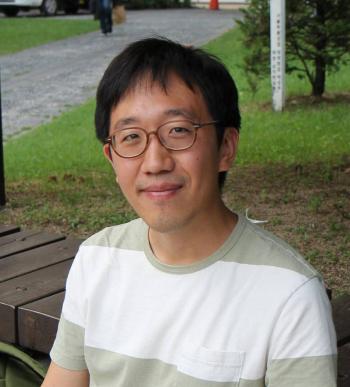
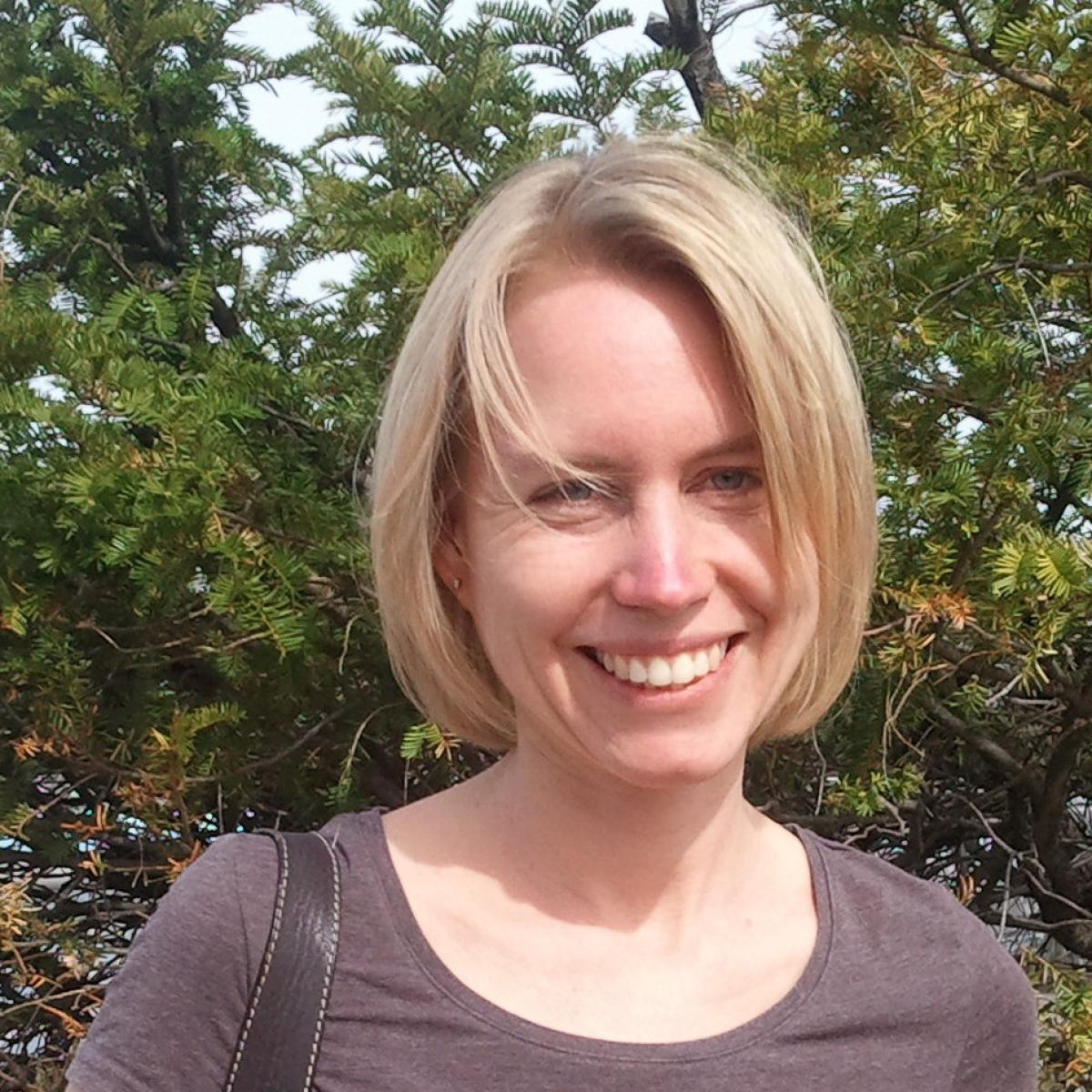
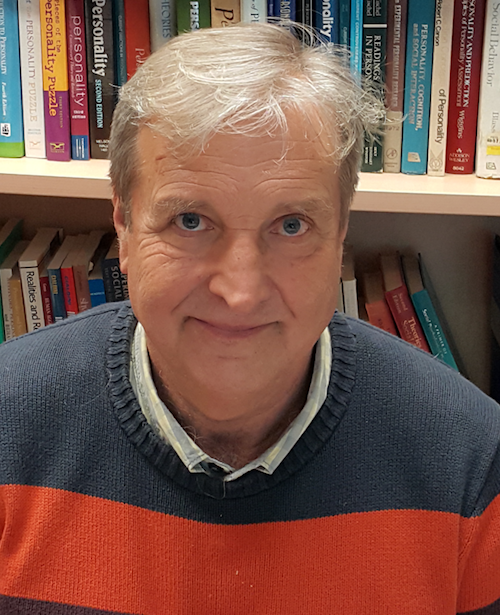
June Huh is a Mathematics Professor at Princeton University's Department of Mathematics. His research focuses on the interplay between algebraic geometry, combinatorics, and matroid theory, with notable contributions to Hodge theory, tropical geometry, and log-concavity phenomena. He is actively involved in collaborative projects such as the FRG initiative on matroids, graphs, and algebraic geometry. Key research interests include matroid polytopes, Chow rings, Lagrangian geometry, and combinatorial applications of Hodge-Riemann relations. His work bridges discrete and continuous mathematics, with implications for enumerative geometry and geometric combinatorics. Recent publications explore topics like volume polynomials, Bergman fans, and singular Hodge theory in combinatorial geometries. He has received funding for interdisciplinary research through grants like the FRG Collaborative Research program. His contributions highlight innovative methods in geometric and algebraic combinatorics.
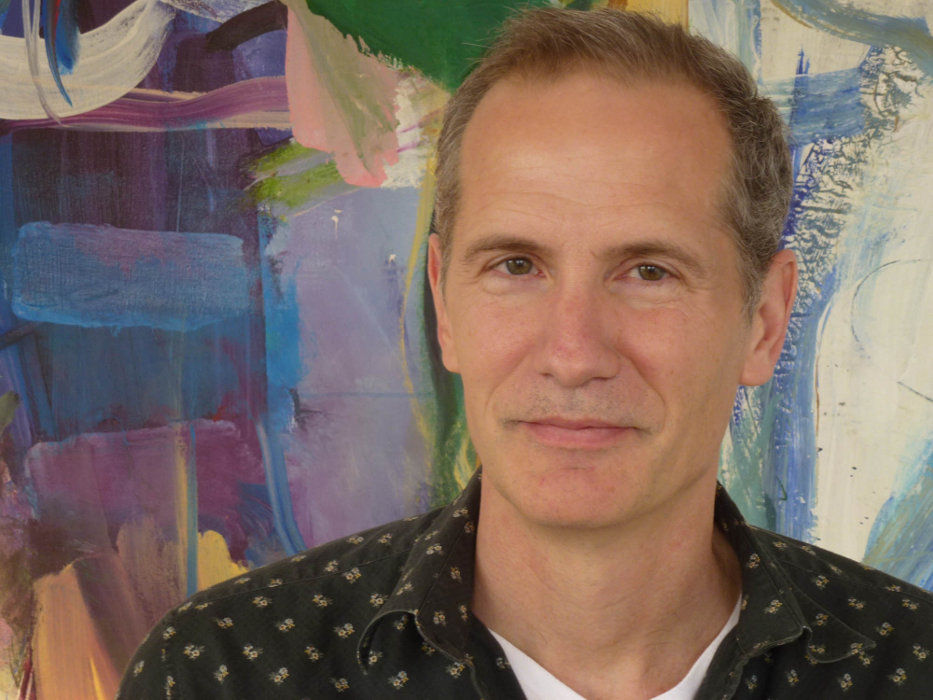
Greta Panova is a Gabilan Distinguished Professor of Science and Engineering and a Professor of Mathematics at the University of Southern California (USC). Her research focuses on Algebraic Combinatorics, with connections to representation theory, statistical mechanics, probability, and computational complexity theory. She also engages in molecular biology modeling. Panova holds editorial roles at journals including the Electronic Journal of Combinatorics, Arnold Mathematical Journal, and Communications of the American Mathematical Society. She is a writer/editor for the Putnam Mathematical Competition (2023-2025) and is currently supported by NSF grants in the CCF division. Her research interests span Algebraic Combinatorics, Representation Theory, Statistical Mechanics, Probability, and Computational Complexity Theory. Specific areas include Kronecker and Littlewood-Richardson coefficients, asymptotic behavior of combinatorial structures, and the interplay between algebraic structures and computational complexity. She also explores applications in molecular biology, particularly protein dynamics in DNA lesions. NSF grants in CCF division (current) Editorial roles at Electronic Journal of Combinatorics, Arnold Mathematical Journal, and others Contributor to the Putnam Mathematical Competition Panova's research is supported by NSF grants, focusing on computational complexity and algebraic combinatorics. She has advised students in areas related to her research, though specific names aren’t listed here. Grants have funded explorations into geometric complexity theory, asymptotic combinatorics, and molecular biology modeling. Her work involves collaborations across disciplines, including statistical mechanics and integrability, as highlighted in her white paper contributions.
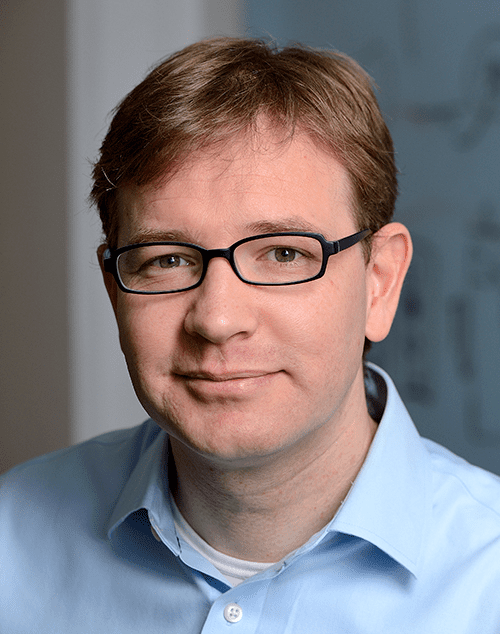
Michael J. Shelley is the Lilian and George Lyttle Professor of Applied Mathematics and holds joint appointments in Mathematics, Neural Science, and Mechanical Engineering at New York University's Courant Institute of Mathematical Sciences. He also serves as Co-Director of the Applied Mathematics Laboratory and Director of the Center for Computational Biology at the Flatiron Institute. Education: PhD (Applied Mathematics) from the University of Arizona (1985), MS (Applied Mathematics) from the University of Arizona (1984), BA (Mathematics) from the University of Colorado (1981). Research: Focuses on complex phenomena in active matter, biophysics, and complex fluids. Key areas include fluid-structure interactions (e.g., swimming/flying mechanics), cytoskeletal dynamics, and collective behavior in biological systems. Collaborates closely with experimentalists through the Applied Math Lab and Flatiron Institute. Labs & Affiliations: Co-Director, Applied Mathematics Laboratory; Director, Center for Computational Biology (Simons Foundation); affiliated with NYU’s Courant Institute and Department of Mathematics. Notable Work: Models for microtubule-motor assemblies, active suspensions, and fluid-structure interactions. Pioneered computational frameworks for Stokes suspensions and fiber dynamics in viscous fluids.
Prof. Tobias Müller is a Professor at the Bernoulli Institute for Mathematics, Computer Science and Artificial Intelligence at the University of Groningen. His academic journey includes previous positions at Utrecht University, CWI (Centrum Wiskunde & Informatica), Tel Aviv University, and Eindhoven University of Technology, with a doctorate from the University of Oxford under Colin McDiarmid. His research focuses on combinatorics, probability theory, random graphs, percolation, discrete and stochastic geometry, and combinatorial game theory. He has contributed extensively to understanding complex networks, hyperbolic models, and geometric random structures. Research Interests: Random Graphs and Percolation Theory Discrete and Stochastic Geometry Hyperbolic Network Models Probabilistic Combinatorics Geometric Probability Graph Algorithms and Connectivity Notable Contributions: Analysis of Voronoi and Poisson-Voronoi percolation in hyperbolic planes. Studies on Mallows random permutations and their cycle structures. Research on component games and logical limit laws in graph theory. Investigations into the geometry and properties of random geometric graphs. Grants & Collaborations: Active in organizing workshops and conferences on random graphs and geometric networks, including the BIRS Workshop on Random Geometric Graphs and the STAR Workshops series. Labs/Teams: Member of the Bernoulli Institute’s research groups, focusing on stochastic studies, combinatorics, and algorithmic methods.
Associate Professor Samantha Schulz is a sociologist of education at The University of Adelaide's School of Education, within the Faculty of Arts, Business, Law and Economics. She specializes in educational justice, focusing on First Nations education, race critical theory, affect studies, and gender equity. Her work spans international contexts including Kenya, India, China, and Australia's APY Lands. She is co-convenor of the Pedagogies for Justice Research Group, affiliated with CRESI and the Fay Gale Centre for Research on Gender. As Program Director for the Master of Teaching program, she emphasizes socially engaged pedagogies. Recent research includes the ARC-funded 'Culturally Responsive Schooling' project (2022-24) and studies on gender-based violence in educational settings. Her publications explore decolonial methodologies, critical race theory, and the intersection of affect and pedagogy. Her grants include leadership roles in projects addressing Indigenous sovereignty in education, culturally responsive curriculum design, and restorative practices. Notable collaborations involve UniSA and Open University of Cyprus. She co-edits the Routledge 'Local Global Issues in Education' series and actively publishes on topics ranging from toxic masculinity in academia to anti-racist policy frameworks. Her advising focuses on fostering critical scholarship in Masters and PhD candidates, with research supervision emphasizing justice-oriented educational practices. She leads initiatives like 'Teaching in an era of digital influence' and has contributed to policy discussions on preventing violent extremism in schools. Her work bridges theoretical rigor with practical advocacy for marginalized communities in education systems globally.
Christopher Honey is an Associate Professor in the Department of Psychological & Brain Sciences at Johns Hopkins University, affiliated with the Krieger School of Arts & Sciences. His research focuses on computational cognitive neuroscience, exploring how the brain processes sequential information such as language and memory. He holds a PhD from Indiana University and has held positions at Princeton University and the University of Toronto before joining JHU in 2016. Education: PhD in Psychological and Brain Sciences, Indiana University Postdoctoral Fellowship at Princeton University with Uri Hasson Bachelor’s in Applied Mathematics and English Literature, University of Cape Town Research Interests: Neural dynamics of memory and perception Temporal processing in the brain Cognitive modeling using computational methods Neuroimaging data standards (e.g., BIDS) Publications highlight his work on brain state fluctuations, neuroimaging data structures, and memory enhancement. His lab develops tools for analyzing fMRI and EEG data, emphasizing real-world applications like smartphone-based cognitive interventions. Lab and Collaborations: Active projects on narrative processing and hippocampal replay Development of open-source neuroscience tools like iELVis Focus on translational research for aging populations
Jonathan Hauenstein is the Robert and Sara Lumpkins Collegiate Professor in the Department of Applied and Computational Mathematics and Statistics at the University of Notre Dame, serving as Department Chair. He holds a Ph.D. from Notre Dame (2009) and M.S. from Miami University (2005). His research focuses on numerical algebraic geometry and computational methods for solving nonlinear equations, implemented in the Bertini software package. Applications span engineering, ecology, sports science, and machine learning. Education: Ph.D., Applied and Computational Mathematics, University of Notre Dame (2009) M.S., Mathematics, Miami University (2005) Research Interests: Development of numerical algorithms for polynomial systems, real algebraic geometry, and scientific computing. Key areas include homotopy continuation methods, parameter space decomposition, and applications in mechanism design, ecological modeling, and sports biomechanics. His work bridges theoretical mathematics with practical computational tools. Awards: Sloan Research Fellowship DARPA Young Faculty Award Army Research Office Young Investigator Award Office of Naval Research Young Investigator Award College of Science Research Award Advising & Grants: Advised numerous undergraduates, graduate students, and postdoctoral researchers. Active in securing grants for computational mathematics projects, including NSF-funded initiatives. His work emphasizes interdisciplinary collaboration between mathematics and engineering. Labs/Teams: Leads computational algebraic geometry research groups at Notre Dame, focusing on software development (e.g., Bertini) and numerical methods innovation.
Oleg Kozlovski is an Associate Professor at the University of Warwick. His research focuses on dynamical systems, ergodic theory, mathematical physics, and financial mathematics. He has held an EPSRC Advanced Fellowship (2001–2006) for research in Complex Dynamics and Fast Dynamo Theory. His work combines pure mathematical analysis with applications to economics and physics. Teaching responsibilities include MA132 Foundations. His research explores hyperbolicity, rigidity phenomena, and bifurcation theory in dynamical systems. Notable contributions include studies on unimodal maps' density in C^k topologies and rigidity of real polynomials. Grants include £1.9M EPSRC funding for foundational dynamical systems research. His work bridges pure mathematics with applied fields like economic modeling and nonlinear dynamics.
Michele DiBenedetto is an Assistant Professor in the Department of Mechanical and Aerospace Engineering at Princeton University, associated with the High Meadows Environmental Institute (HMEI). Her research focuses on environmental fluid mechanics, ocean waves, and turbulent flows, with applications in contaminant transport, biomonitoring, and ocean sensing. She holds a PhD from Stanford University (2019) and moved to Princeton in 2025 after serving as an Assistant Professor at the University of Washington (UW). Her work integrates laboratory experiments, mathematical modeling, and field observations to study interdisciplinary challenges like plastic pollution, renewable energy, and air-sea interactions. Key achievements include an NSF CAREER Award (2023) and NOAA Sea Grant funding (2024). She advises a team of graduate and undergraduate students, including Carlos, Julio, Andrew, and Ethan, whose research contributes to understanding particle dynamics in turbulent systems. Notable projects include investigating buoyant particles in wind-driven ocean boundary layers and developing methods to track particle orientation using collimated light. Her lab’s move to Princeton in 2025 marks a strategic shift to enhance collaborations in environmental fluid mechanics. Publications span experimental fluid mechanics and environmental applications, emphasizing ocean transport and marine biology.
Stefanie Jegelka is an Associate Professor (currently on leave) at the Massachusetts Institute of Technology's Department of Electrical Engineering and Computer Science, and a Humboldt Professor at Technical University of Munich. At MIT, she is a member of CSAIL (Computer Science and Artificial Intelligence Laboratory), IDSS (Institute for Data, Systems, and Society), the Center for Statistics and Machine Learning, and is affiliated with the Operations Research Center. Her educational background includes a PhD from ETH Zurich and the Max Planck Institute for Intelligent Systems, followed by postdoctoral research at UC Berkeley's AMPlab and computer vision group. Her research program focuses on algorithmic machine learning, with particular emphasis on exploiting mathematical structure for discrete and combinatorial machine learning problems, robustness in learning systems, and developing methods for scaling machine learning algorithms to large datasets. She has made significant theoretical contributions to submodular optimization and its applications in machine learning. Jegelka's publication record demonstrates a consistent focus on the intersection of discrete mathematics and machine learning. Her work spans theoretical foundations of optimization with discrete structures, applications in computer vision, and practical algorithms for submodular function optimization. Her research has evolved from foundational work on submodular functions to broader applications in deep learning and robust machine learning systems, showing increasing impact through numerous workshop best paper awards and high-impact conference publications. NSF CAREER Award Google Research Award German Pattern Recognition Award (Mustererkennngspreis) ICML Best Paper Award Sloan Research Fellowship DARPA Young Faculty Award NSF BIGDATA Award ONR MURI NSF AI Institute for Optimization Professor Jegelka has advised several successful students including Keyulu (recipient of MIT's George M. Sprowls Ph.D. Thesis Award), Derek (NSF Fellowship recipient), Ching-Yao (IBM Fellowship recipient), and Nisha (now Assistant Professor at Georgia Tech). Her research has been generously supported by multiple NSF grants, DARPA awards, and industry funding from Google, Two Sigma, and Adobe. She has also organized multiple workshops and tutorials on discrete optimization and submodularity in machine learning. At MIT, Jegelka is affiliated with the Center for Statistics and Machine Learning and collaborates with researchers across CSAIL. Her work bridges theoretical computer science, optimization, and practical machine learning applications, with recent focus on high-dimensional learning dynamics and in-context learning as evidenced by her group's multiple papers at leading conferences like ICLR.
Prof. Dr. Wolfgang Steimle is a Professor at the Institute of Mathematics within the Faculty of Mathematics, Natural Sciences and Technology at the University of Augsburg, Germany. He serves as the Erasmus representative for the Institute and is a core member of the Differential Geometry research team, collaborating with Professors Bernhard Hanke and Peter Quast. His office is located in space 3020 (L1) with contact email wolfgang.steimle@math.uni-augsburg.de. Steimle completed his academic training at the University of Münster, earning a diploma (Master's equivalent) in 2007 with thesis "Whitehead-Torsion und Faserungen" and a PhD in 2010 under Tom Farrell and Wolfgang Lück with dissertation "Obstructions to Stably Fibering Manifolds". His research centers on Differential Geometry and Algebraic Topology , with primary focus on manifold classification , automorphisms of manifolds , Algebraic K- and L-theory , and positive scalar curvature . He bridges abstract homotopy theory with geometric applications, particularly through cobordism categories, Waldhausen K-theory, and the assembly map. His work connects higher category theory with classical manifold problems, yielding insights into metric spaces and curvature constraints. Analysis of his recent publications reveals a dominant trend in applying stable infinity-categories to geometric topology, with significant contributions to Hermitian K-theory and the topology of positive scalar curvature metrics. His research consistently integrates algebraic techniques with differential geometric structures, advancing understanding of manifold automorphisms and classification. As an educator, Steimle has taught extensively across all levels, including Bachelor courses in Linear Algebra and Topology, Master lectures in Algebraic Topology and K-Theory, and specialized seminars on Lie Groups, Reflection Groups, and Cobordism Categories. He has supervised doctoral researchers including Georg Frenck, Helge Frerichs, Andreas Huber, and Lukas Schönlinner within the Differential Geometry group.
Ignasi Sau Valls is a Directeur de Recherche (DR2) at CNRS, affiliated with the LIRMM laboratory at Université de Montpellier, France. He is a member of the AlGCo team, focusing on algorithms for graphs and combinatorics. His academic background includes dual degrees in Mathematics and Telecommunications Engineering from UPC (Barcelona), a PhD in joint supervision between UPC and Projet Mascotte (Sophia Antipolis), and a postdoctoral position at the Technion (Israel). He has been with CNRS since 2010 and was promoted to his current role in October 2024. He also served as a Visiting Professor at UFC (Brazil) from 2016–2017. His research interests lie primarily in Graph Theory and Parameterized Complexity , with a focus on structural graph properties, kernelization, and algorithm design. He has made significant contributions to problems involving minor-closed graph classes, treewidth, and graph modification. His work bridges theoretical foundations with algorithmic applications, particularly in discrete optimization and network problems. The recent articles highlight a strong trend in parameterized algorithms, especially for graph modification, kernelization, and structural graph problems. Topics such as hitting minors, dynamic programming on tree decompositions, and edge contractions reflect a deep engagement with structural parameterizations and fixed-parameter tractability. His publications frequently appear in top-tier journals like SIAM Journal on Computing, Journal of Combinatorial Theory, and Algorithmica, as well as major conferences such as ICALP, SODA, and IPEC. Best paper award of Track C of ICALP'10 Best student paper award of WG'09 Ignasi Sau has been a principal investigator of the ANR JCJC project ELIT (ANR-20-CE48-0008-01), funded with 169k€ from 2021 to 2026. He serves as an editor for DMTCS and Information and Computation , and has held significant organizational roles, including PC member of numerous conferences (MFCS, WG, IPEC, COCOON) and as co-chair and main organizer of WG 2019, ICGT 2022, and JCALM 2023. He has delivered invited courses at international schools in France, Argentina, and Brazil. He is actively involved in the research community through editorial duties, conference organization, and collaborative research. His lab affiliation is the AlGCo team at LIRMM, a leading group in algorithmic graph theory and combinatorics.
Rachel Sippy is a Research Fellow at the University of Cambridge , specializing in epidemiology and infectious disease dynamics within the Department of Psychiatry . Her work bridges public health, climate science, and computational methods.
Dr. Andrzej Nowak is a Professor of Psychology at the Charles E. Schmidt College of Science, Florida Atlantic University , where he has created a unique interdisciplinary research program since 1991. His work bridges social psychology, computational modeling, and complex systems theory. University of Warsaw, Psychology Stanford University, 1974-1975 M.A. and Ph.D. in Psychology from University of Warsaw (1978, 1987) Nowak's research focuses on applying dynamical systems theory to understand social processes through computational modeling. He investigates: Emergent properties of social systems Self-organization in group dynamics Conflict and radicalization mechanisms Synchronization of psychological states Behavioral economics and social dilemmas Technology-mediated social transitions His publications demonstrate interdisciplinary breadth across psychology, computational science, and socioeconomic modeling. While many articles (1990-2010) focus on social impact theory and neural network applications, recent work (2008-2010) expands to intractable conflict modeling, social entrepreneurship, and cross-scale systemic dynamics. Dr. Nowak has co-edited multiple volumes on: Complex human dynamics Computer modeling of social processes Non-equilibrium social science He has developed simulation platforms like Attractor for multi-stakeholder negotiation training and contributed to understanding: Warsaw as an emergent structure Polish political cleavage stability Behavioral economics foundations
Don Blasius is a Professor of Mathematics at the University of California, Los Angeles (UCLA), serving as Managing Editor of the Pacific Journal of Mathematics and chair of the Mathematics-Economics Interdisciplinary Program (IDP). His research focuses on number theory, arithmetic geometry, and automorphic forms within the Department of Mathematics. His work centers on the deep connections between modular forms, elliptic curves, and fundamental conjectures in arithmetic geometry. Key investigations include generalizations of the Shimura-Taniyama conjecture, applications of Hilbert modular forms to Diophantine problems, and the role of Hodge theory in understanding algebraic cycles. His research frequently bridges automorphic representations with Galois cohomology to explore L-functions and arithmetic structures. Blasius's publication record reveals consistent thematic development since the 1990s, with increasing focus on modular forms and their geometric implications. His work demonstrates strong collaborative patterns, particularly with J. Rogawski on Shimura varieties and M. Borovoi on period torsors, while maintaining independent contributions to conjectural frameworks in number theory. No scientific awards were mentioned in the provided text. No information regarding student advising or research grants was provided in the text. He is an active member of the UCLA Number Theory Group, which drives collaborative research in modular forms, Diophantine equations, and related areas of pure mathematics through seminars and joint projects within the Department of Mathematics.