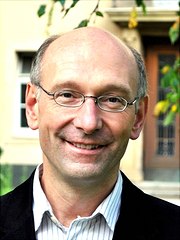
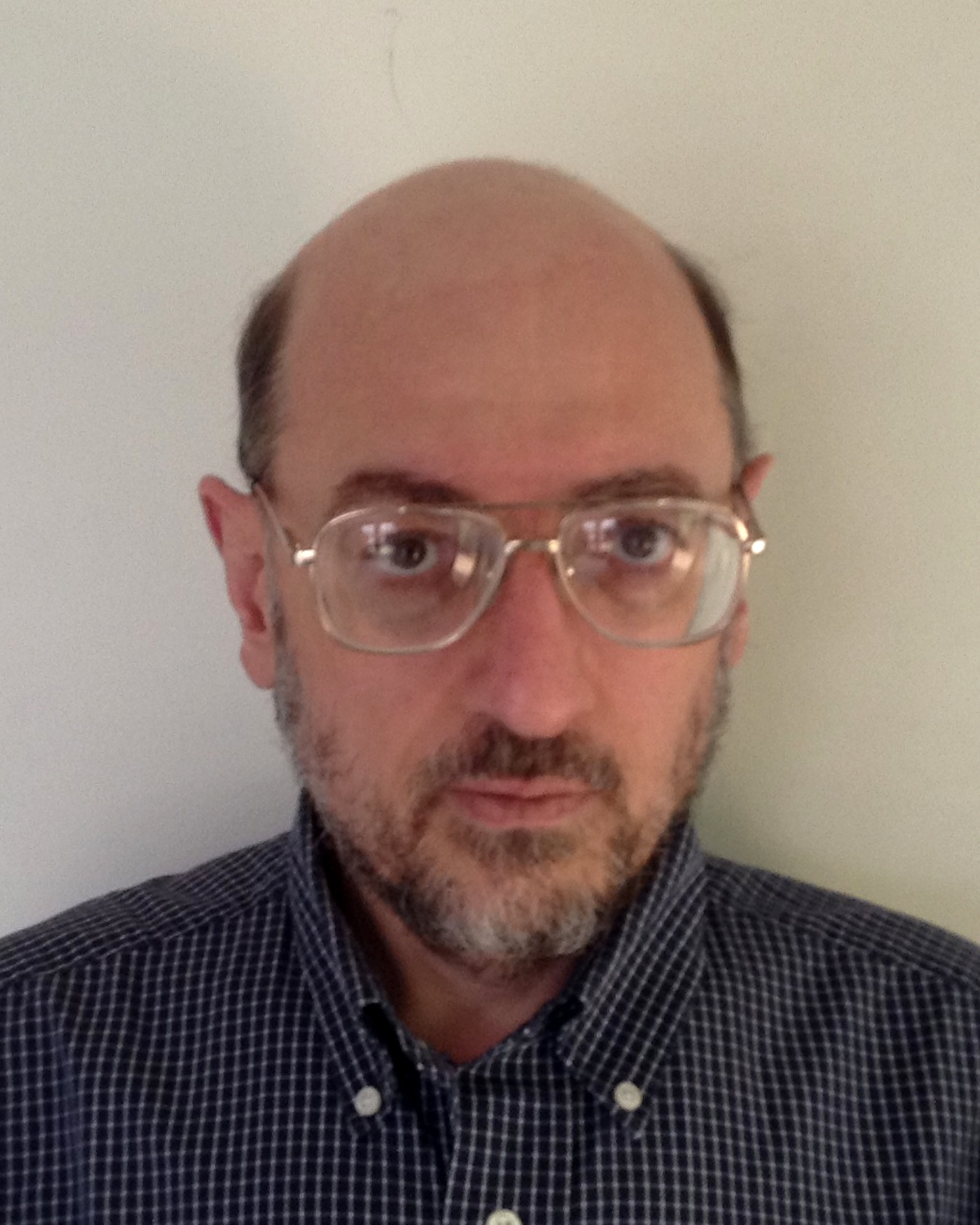
Prof. Dr. Wolfgang Hillert is a leading physicist at the University of Hamburg , serving as the Bjørn-Wiik Professor for Accelerator Physics since 2016. Affiliated with the Institute of Experimental Physics under the Faculty of Mathematics, Informatics and Natural Sciences, he specializes in Accelerator Physics , Superconducting Accelerator Technology , and Free-Electron Lasers (FEL) . His work focuses on polarized electron beams, SRF cavity optimization, and gravitational wave detection methods. Education: Physics degree from University of Bonn (1987), Promotion in Atmospheric Physics (1992), Habilitation in Physics (2001) Leadership Roles: Head of Accelerator Physics Group (2016–present), Managing Director of Institute of Experimental Physics (2019–2021) Research Trends: His recent work spans superconducting RF cavities for gravitational wave detectors ( 2025 ), resonant slow extraction in electron boosters, and atomic layer deposition of superconducting thin films. Publications highlight advancements in beam dynamics , cryogenic systems , and terahertz generation . Teaching & Outreach: He has lectured on Accelerator Physics since 2002 and engaged in public science communication, including talks on Physics of Music (2005–2021) and teacher training programs at DESY. Labs & Collaborations: Leads the Accelerator Physics Group at DESY, collaborates on projects like XFELO and BGO-OD beamline , and contributes to international schools (CAS) and symposia.
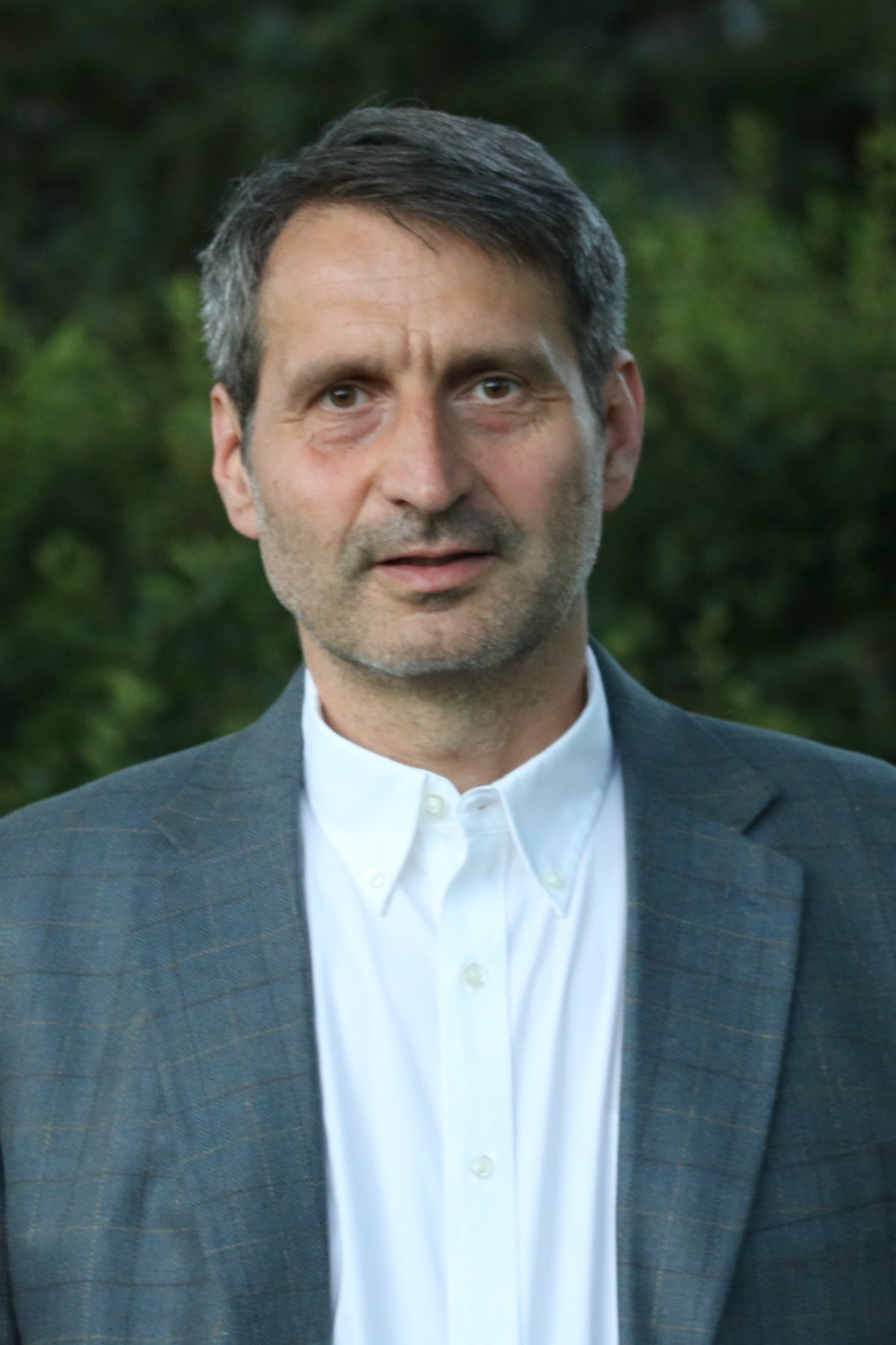
Malte Laurens Kampschulte serves as Assistant Professor at the Department of Mathematical Analysis, Faculty of Mathematics and Physics, Charles University in Prague. He leads research within S. Schwarzacher's fluid structure interaction group and the OP JAK project FerrMion, following his role as Substitute Professor at the University of Leipzig during Summer 2024. His academic credentials include: B.Sc in Mathematics (2009) and Computer Science (2010) from RWTH Aachen M.Sc in Mathematics (2012) from RWTH Aachen Ph.D. in Mathematics (2018) with thesis "Gradient flows and a generalized Wasserstein distance in the space of Cartesian currents" Dr. Kampschulte's research centers on fluid structure interaction, calculus of variations, partial differential equations, and geometric measure theory. His work examines variational aspects of Eulerian-Lagrangian frameworks, relaxation methods for generalized solutions, topological invariants in PDEs, and current transport on manifolds. This integrated approach bridges theoretical analysis with physical applications in continuum mechanics. Analysis of his 2023-2024 publications reveals concentrated focus on three-dimensional fluid-structure systems with viscoelastic solids, compressible fluids, and self-collision phenomena. Key contributions include global weak solution frameworks for contact problems, variational approaches to hyperbolic evolutions, and regularity analysis for free surface dynamics—demonstrating both mathematical rigor and physical relevance. As Principal Investigator for the PRIMUS grant "Qualitative and quantitative Analysis for non-linear non-uniformly elliptic models" (previously held by Anna Balci), he oversees active research funding while mentoring through an open PostDoc position. His leadership extends to the FerrMion project where he develops mathematical frameworks for fluid-matter interactions. Based in the Department of Mathematical Analysis at Charles University, Dr. Kampschulte collaborates within S. Schwarzacher's research group to advance mathematical understanding of fluid-structure systems through both theoretical innovation and computational modeling.
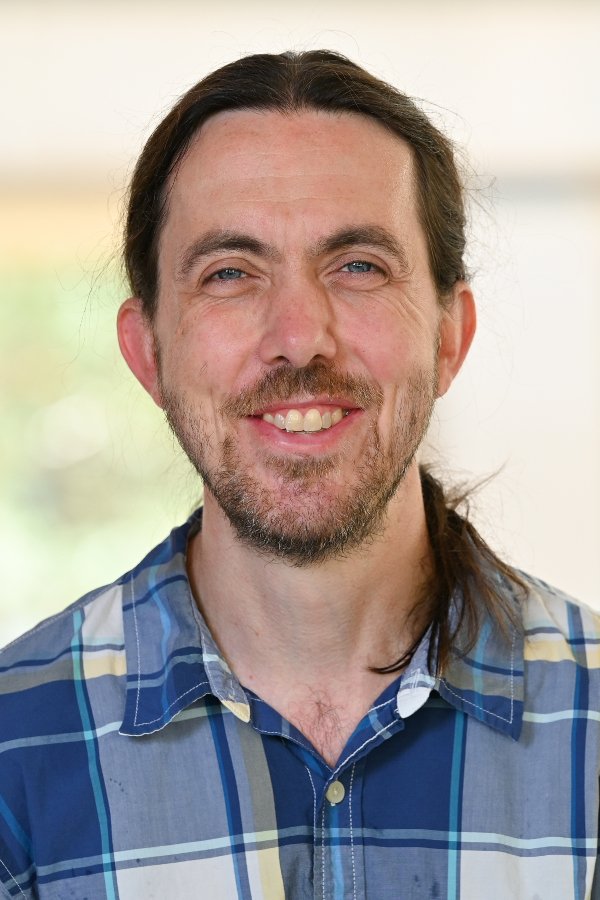
Kazuo Habiro is a Professor at the University of Tokyo , affiliated with the Faculty of Science, Department of Mathematics . His work bridges topology and algebraic structures, focusing on quantum invariants of 3-manifolds and links. Research Interests: Specializing in low-dimensional topology , quantum topology , and algebraic topology , Habiro explores connections between topological spaces and quantum algebra. Recent interests include homological algebra, such as group homology and Hochschild homology. Selected Publications highlight his contributions to quantum invariants, Kirby calculus, and clasper theory, reflecting interdisciplinary trends in geometric topology and quantum field theory. Awards & Memberships: Geometry Prize of the Mathematical Society of Japan (2008) Editor for Quantum Topology
Dr. Shabnam Sadeghi Esfahlani is an Associate Professor in Robotics at the School of Engineering and the Built Environment, Anglia Ruskin University , where she serves as Deputy Leader of the BORI research group and leads the Automation & Robotics MSc program. Her interdisciplinary expertise spans mechatronics, artificial intelligence, virtual reality, and serious games , with a focus on applications for rehabilitation, medical training, and autonomous systems . As a Chartered Engineer and Senior Fellow of the Higher Education Academy , she has secured significant funding from Innovate UK, Horizon 2020, and GCRF , with grants exceeding £3 million. Education PhD in Mechanical Engineering, Anglia Ruskin University BSc (First Class) in Statistics & Mathematical Science, Shahid Beheshty University Her research integrates AI with robotics for societal impact, exemplified by the open-source SROBO ground robot and projects like Rehabgame and the Assistive Feeding Robot . She has published over 45 peer-reviewed articles and contributes to academic communities as a journal guest editor and conference organizer . Key collaborations include IET, IMechE, and the Nuffield Foundation as a mentor for young students. Scientific Awards & Recognitions: Chartered Engineer (CEng), Engineering Council UK Senior Fellow (SFHEA), Higher Education Academy Student-Voted 'Made a Difference Award' (2018) Post-Graduate Certificate in Higher Education
Kirill Serkh is an Assistant Professor in the Department of Mathematics at the University of Toronto, with a cross-appointment to the Department of Computer Science. His research focuses on advanced numerical methods for solving complex mathematical problems. Key Research Areas: Numerical analysis, Scientific computing, Partial differential equations, Numerical linear algebra, Quadrature and approximation theory, Special functions His recent work explores high-order numerical schemes for PDEs on non-smooth domains, adaptive methods for oscillatory integrals, and efficient evaluation of Newtonian potentials. He has contributed to the development of hybrid boundary integral methods and spectral techniques for challenging computational problems. While no specific scientific awards are mentioned in the provided text, his publications demonstrate expertise in computational mathematics and interdisciplinary applications in fluid dynamics, wave propagation, and machine learning. His methodological innovations span both theoretical and applied domains.
Professor Robert Mokaya OBE FRS is Provost and Deputy Vice-Chancellor at the University of Sheffield, joining in 2024 after serving as Pro Vice-Chancellor for Global Engagement at the University of Nottingham. As Professor of Materials Chemistry within the School of Mathematical and Physical Sciences, he leads significant research in porous materials for energy applications. His distinguished academic career spans over three decades with major contributions to materials chemistry and sustainable energy solutions. Mokaya received his B.Sc. in Chemistry from the University of Nairobi (1988) followed by a Ph.D. from the University of Cambridge (1992). His academic journey includes a Research Fellowship at Trinity College, Cambridge (1992), an EPSRC Advanced Fellowship (1996), and progressive appointments at Nottingham University culminating in Professor of Materials Chemistry (2008). His research focuses on the design, synthesis and characterization of novel porous materials with applications in hydrogen storage, CO2 capture, and sustainable energy. His work particularly emphasizes templated porous solids, zeolite templated carbons, and mesoporous molecular sieves. Mokaya's research group has pioneered approaches to optimize porosity in carbon materials for enhanced gas storage capacity. Mokaya's extensive publication record demonstrates consistent leadership in porous materials research with recent work emphasizing practical applications for sustainable energy storage solutions. His articles show a clear progression from fundamental materials characterization to applied energy storage technologies, with particular emphasis on optimizing pore structures for specific gas storage requirements. OBE (2022) for services to the Chemical Sciences Fellow of the Royal Society (FRS) (2023) Royal Society Wolfson Research Merit Award holder (2017-2022) President-Elect of the Royal Society of Chemistry (2024-2026) Mokaya has secured significant research funding supporting his work on sustainable materials for energy applications. His leadership extends to capacity building in porous materials research globally, with particular focus on developing nations. He has supervised numerous PhD students and postdoctoral researchers who have gone on to establish their own research programs in materials science. His research laboratory focuses on the synthesis and characterization of advanced porous materials, with specialized equipment for gas sorption analysis, materials synthesis, and electrochemical characterization. Mokaya leads international collaborations focused on sustainable energy materials, with particular emphasis on creating practical solutions for clean energy storage challenges.
Vladimir Sverak serves as a Distinguished McKnight University Professor in the School of Mathematics at the University of Minnesota, where he maintains an active research program and teaches graduate courses in partial differential equations. His office is located in Vincent Hall 236 (206 Church Street SE, Minneapolis, MN 55455) with contact details including email sverak@umn.edu and phone (612) 625-1899. As of 2020, he continues to instruct courses such as Complex Analysis (Math 5583) and Topics in PDE (Math 8590), demonstrating ongoing academic engagement. Professor Sverak's research centers on fundamental questions in partial differential equations, particularly concerning existence, uniqueness, and singularity formation in fluid dynamics systems. His work focuses extensively on Navier-Stokes and Euler equations, examining behavior in critical function spaces where standard analytical methods often fail. He employs both rigorous mathematical techniques and numerical investigations to explore phenomena like non-uniqueness, blowup scenarios, and scale-invariant solutions, contributing significantly to the theoretical understanding of fluid mechanics. Analysis of his 15 most recent publications (2012-2017) reveals consistent thematic focus on Navier-Stokes equations, with particular attention to borderline spaces, axisymmetric flows, and singularity analysis. His collaborative approach is evident through frequent co-authorships with leading researchers including G. Seregin, H. Jia, and T. Gallay, reflecting the interdisciplinary nature of modern mathematical fluid dynamics research. His scientific recognition includes: Distinguished McKnight University Professor Research support comes from the National Science Foundation (grant DMS 1956092), while his teaching contributions span both foundational and advanced topics. Course materials for offerings like Elementary Partial Differential Equations (Math 5587/5588) and Introduction to Ordinary Differential Equations (Math 5525) remain accessible through university platforms, demonstrating commitment to pedagogical resources. Though student advising details aren't specified, his graduate-level course instruction indicates active mentorship within the mathematics community. Professor Sverak's work continues to advance mathematical fluid dynamics through rigorous analysis of nonlinear PDEs, maintaining strong connections between theoretical developments and physical fluid behavior while contributing to both research and education in mathematical sciences.
Tyler Lawson is a Professor in the School of Mathematics at the University of Minnesota, holding the distinguished Albert and Dorothy Marden Professorship. His office is located in Vincent Hall 323 at 206 Church Street SE, Minneapolis, MN 55455, and he can be reached at tlawson@umn.edu or (612) 625-6802. Professor Lawson's research focuses on algebraic topology and K-theory, with significant contributions to homotopy theory, quandles, stable homotopy theory, and braided Hopf algebras. His work bridges abstract algebraic structures with topological applications, particularly exploring connections between category theory and homotopy-theoretic constructions. He has made notable advances in understanding filtrations and derived spaces, the generating hypothesis in stable homotopy theory, and the homotopy theory of quandles as they relate to knot invariants. Analysis of his recent publications reveals a strong emphasis on structural theorems in algebraic topology, with particular attention to equivariant phenomena, rational homotopy theory, and connections to arithmetic statistics. His research demonstrates sophisticated interplay between combinatorial structures and topological invariants, often revealing unexpected connections between seemingly disparate mathematical domains. Albert and Dorothy Marden Professor Professor Lawson actively advises graduate students and participates in the topology seminar series at the University of Minnesota, where he has presented on topics ranging from filtrations and derived spaces to the generating hypothesis. His research program includes collaborations with mathematicians across institutions, contributing to advancements in homotopy theory and its applications to other mathematical fields. He maintains an active research group focused on exploring the frontiers of algebraic topology and its connections to related disciplines.
Dr. Dibakar Ghosal is an Associate Professor in the Department of Earth Sciences at the Indian Institute of Technology Kanpur (IIT Kanpur). He leads the Crustal Imaging Laboratory (CIL) which is equipped with state-of-the-art seismic data acquisition setup and processing software for both land and marine seismic datasets. His research spans exploration seismology, tectonic studies, and algorithm development for subsurface imaging across diverse geological settings. Dr. Ghosal's educational background includes: PhD in Geophysics (2008-2013) from Institut de Physique du Globe de Paris (IPGP), France M.Sc. in Geophysics (2004-2006) from Indian Institute of Technology Kharagpur, India B.Sc. in Geology, Mathematics and Physics (2001-2004) from Jadavpur University, India His research focuses on three major themes: (1) Tectonic studies across Himalaya, Sumatra-Andaman, and Bay of Bengal using high-resolution seismic datasets; (2) Development of algorithms for petrophysical parameter estimation of hydrocarbon and ore reserves; and (3) Ambient Noise and earthquake data analysis. His work integrates field data acquisition, computational modeling, and advanced algorithm development to address fundamental questions in Earth sciences, with particular emphasis on crustal architecture and resource exploration. His recent publications demonstrate expertise in crustal imaging techniques, tectonic analysis of subduction zones, and algorithm development for seismic data processing. The research spans diverse geographical regions including the Himalayas, Sumatra-Andaman region, Bay of Bengal, and Southern Indian Ocean, with applications to hydrocarbon exploration, tectonic studies, and crustal architecture analysis. Dr. Ghosal has received several prestigious fellowships and awards: 2023: Scientific High Level Visiting Fellowship (SSHN) from French Institute in India (IFI) 2022: INSA visiting scientist fellowship 2019: Visiting Faculty at IPG Paris, France 2019: Visiting Faculty at NTU Singapore 2014-2015: Postdoctoral fellowship, Geocentrum, Uppsala University, Sweden 2008-2012: PhD fellowship, IPG Paris, France Dr. Ghosal actively mentors students and has supervised numerous PhD, MTech, and BS-MS students. His research is supported by multiple sponsored projects from DST-SERB, MoES, ONGC, and other funding agencies. He has successfully completed projects on topics including seismic imaging of the Himalayan foothills, gas hydrate reservoir modeling, and petrophysical property estimation. He leads the Crustal Imaging Laboratory (CIL) at IIT Kanpur, which conducts field work across various regions of India including the Himalayas and offshore areas. The laboratory is equipped with RAUs, 3C Tromino sensors, seismic thumpers, and advanced processing servers. He collaborates with national institutions including NIO Goa, IISER Pune, and NGRI, as well as international institutions such as IPG Paris, Uppsala University, and Texas A&M University.
Ashis Mandal is an Associate Professor in the Department of Mathematics and Statistics at Indian Institute of Technology Kanpur . He specializes in algebraic topology, deformation theory of algebraic structures, and operads, contributing extensively to these fields through research and teaching. Education PhD , Mathematics (2008), Indian Statistical Institute, Kolkata — Thesis: Versal deformations of Leibniz algebras under Prof. Goutam Mukherjee M.Sc. , Pure Mathematics (2002), University of Calcutta B.Sc. , Mathematics (2000), University of Calcutta Research Interests His work spans a rich intersection of algebraic topology , deformation theory , and homological algebra . Key areas include: Hom-Lie-Rinehart algebras and their deformations Operads and higher algebraic structures Leibniz algebras and cohomology Hom-Gerstenhaber algebras and Courant algebras Research Trends Mandal’s publications reflect a consistent trajectory in exploring algebraic deformations and homological structures . His 2019 and 2018 works delve into hom-Lie-Rinehart and Gerstenhaber algebras, expanding the theoretical framework. Earlier works (2007–2013) laid foundational insights into Leibniz algebras and their cohomological properties. The research spans pure algebra , category theory , and mathematical physics . Awards & Fellowships MATRICS Grant (2019) — SERB, DST, India (3-year research grant) AFR Postdoctoral Fellowship (2010) — Luxembourg National Research Fund N.B.H.M. Postdoctoral Fellowship (2009) — National Board for Higher Mathematics, India C.S.I.R. Research Associateship (2009) — Council of Scientific & Industrial Research, India JRF & Lectureship Eligibility (2002–2003) — CSIR-UGC NET, Indian Statistical Institute Research Groups & Collaborations He leads and collaborates in several interdisciplinary research groups: Lie algebroids over algebraic spaces — with Abhishek Sarkar Higher structures — with Apurba Das Quadratic Lie and Leibniz algebras — with Alice Fialowski Hom-Algebraic structures — with Satyendra Kumar Mishra Contact Office: FB 523, Department of Mathematics and Statistics, IIT Kanpur, Kanpur-208016, India Phone: +91-512-259-6783 Email: amandal@iitk.ac.in
Luca Frediani is a Professor in Theoretical and Computational Chemistry at the Hylleraas Center, Department of Chemistry, UiT The Arctic University of Norway. His research focuses on advanced quantum chemistry methods, including density functional theory, multiwavelet basis sets, and solvation modeling. He actively develops computational tools like MRChem and VAMPyR for molecular electronic structure calculations. Current affiliation: UiT The Arctic University of Norway Research group: Theoretical and Computational Chemistry Teaching: KJE-2001 Theoretical Chemistry and Spectroscopy His work spans relativistic quantum chemistry, numerical methods for response properties, and benchmarking of basis set limits. Publications emphasize eliminating basis set errors, multiwavelet applications, and polarizable continuum models for solvation. He collaborates extensively on software development for quantum chemistry. Recent articles highlight multiwavelet-based DFT at the basis set limit, noise-tolerant force calculations, and relativistic effects in electronic structure. Sub-fields include scalar relativity, cavity-free solvation, and metal-ligand interaction accuracy.
Andrew Sabelhaus is an Assistant Professor of Mechanical Engineering at Boston University, focusing on control-oriented approaches to soft and flexible robot locomotion. His work integrates modeling, feedback control, and mechanical design to balance autonomous decision-making with embodied intelligence, enabling safe operation in unstructured environments. His research spans soft robotics , actuator design , and feedback systems , with applications in medical devices, underwater locomotion, and autonomous systems. Recent work emphasizes real-time trajectory generation , control barrier functions , and self-sensing actuators . 2025: Soft Robotics for Cardiac Interventions 2025: Thermoelectric Actuators 2025: Differential Flatness in Motion Planning 2024: CAREER Award in Safe Autonomy Key contributions include Dismech , a discrete geometry-based simulator, and advancements in shape memory alloy artificial muscles . He received his Ph.D. from the University of California, Berkeley.
Oguz Durumeric is an Associate Professor in the Department of Mathematics at the University of Iowa, part of the College of Liberal Arts and Sciences. His research focuses on differential geometry, medical image analysis, and geometric topology. He earned his PhD from SUNY Stony Brook and has contributed to interdisciplinary applications of geometry in medical imaging, particularly in lung biomechanics and radiation therapy planning. Education: PhD in Mathematics from SUNY Stony Brook. Research Interests: Dr. Durumeric’s work bridges pure and applied mathematics. In differential geometry, he explores knot energies and curvature properties. In medical imaging, he develops advanced registration techniques for 4DCT and MRI data to study lung ventilation patterns and improve cancer treatment accuracy. His geometric topology research includes ideal knot structures and conformal transformation analysis. Recent Research Trends: His articles highlight innovations in medical image registration (e.g., lung motion artifact correction, out-of-phase ventilation detection) and geometric models for biomedical applications. He also addresses foundational challenges like shape collapse in large-deformation registration. Grants & Collaborations: While specific grants are not listed, his work implies collaboration with medical imaging labs and oncology teams. No formal advisees are documented here. Labs/Teams: Affiliated with the University of Iowa Mathematics Department’s research groups in geometry and applied mathematics. His website provides further details on ongoing projects.
Dr. Pedro Mediano is a Lecturer in Computing at Imperial College London's Department of Computing (Faculty of Engineering). His research focuses on complex systems, information theory, and their applications in neuroscience, artificial intelligence, and cognitive science. He is affiliated with the Artificial Intelligence Network and leads interdisciplinary projects exploring synergistic interactions in brain dynamics, psychedelic neurodynamics, and causal emergence. Key research areas include quantifying high-order interactions in complex systems, developing information-theoretic tools for analyzing neural data, and modeling consciousness through integrated information theory. Mediano has pioneered frameworks like the Shannon invariants for scalable information decomposition and developed software tools such as THOI for analyzing higher-order interactions. Recent work examines how psychedelics alter brain entropy, the role of metastability in cognitive processes, and the computational principles underlying causal emergence in machine learning models. His studies integrate mathematical rigor with empirical neuroscience, bridging theoretical and applied domains. Mediano has collaborated on whole-brain models of psychedelic-induced neural complexity and explored the interplay between oxygen metabolism and brain evolution. He holds affiliations with Imperial's AI Network and regularly publishes in top journals across computational neuroscience and complexity science. Current projects include developing open-source tools for information decomposition and investigating the neural correlates of consciousness under altered states.
Dr. Levon Asryan is an Associate Professor in the Department of Materials Science and Engineering at the Virginia Polytechnic Institute and State University , with a research focus on semiconductor laser theory , quantum dot systems , and optoelectronic device physics . His work spans quantum dot lasers , quantum well heterostructures , and nanostructured optoelectronic devices . Dr. Asryan holds a Ph.D. in Physics and Mathematics and a Doctor of Sciences degree, both from the Ioffe Institute in St. Petersburg, Russia. He has made significant contributions to the theoretical modeling of semiconductor laser dynamics , particularly in carrier capture processes , modulation bandwidth limitations , and temperature stability mechanisms . With over 90 publications, his recent work focuses on asymmetric barrier layer designs for improved quantum dot laser performance , addressing challenges in carrier leakage , parasitic recombination , and thermal management . He has pioneered models for double tunneling-injection architectures and electroneutrality violation analysis in semiconductor lasers. Scientific recognition includes the 2001 Russian Federation State Prize and the 2001 IEEE Best Paper Award . He is a Senior Member of SPIE (2019) and IEEE (2005) , with patents and book chapters on quantum dot laser theory . His research continues to shape next-generation optoelectronic devices through fundamental and applied investigations.