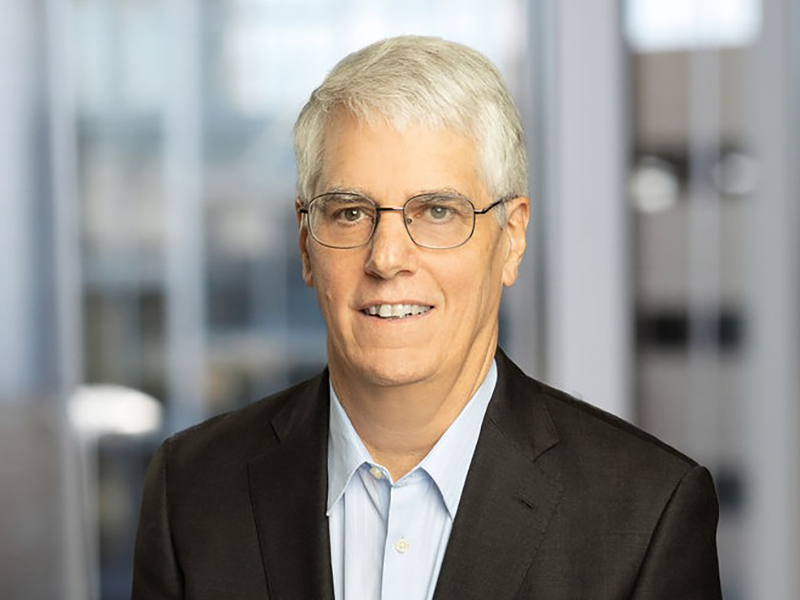
Peter Winkler is William Morrill Professor of Mathematics and Computer Science at Dartmouth College, conducting research in discrete mathematics, probability, and theoretical computer science. His work connects combinatorial problems with statistical physics and algorithmic complexity. Key research areas include: Probabilistic methods in combinatorics and game theory Phase transitions in discrete structures Geometric probability and optimization Mathematical puzzles and paradoxes Winkler's publications resolve fundamental questions in pursuit-evasion theory, geometric set optimization, and combinatorial phase transitions. His work on mathematical puzzles has influenced both academic research and popular mathematics. Current projects explore limit permutations, abelian networks, and new puzzle collections. Honored with the Mathematical Association of America's Lester R. Ford Award and David P. Robbins Prize, Winkler has held visiting positions at the Institute for Advanced Study and Mathematical Sciences Research Institute.
Professor Fan Hongjin serves as Director Professor in the Division of Physics & Applied Physics at Nanyang Technological University's School of Physical & Mathematical Sciences, with a courtesy appointment in the School of Chemistry, Chemical Engineering and Biotechnology. He leads the SMILE research group focusing on sustainable energy materials and has established himself as a leading researcher in aqueous battery systems and electrocatalysis. His research interests span nanomaterials and nanotechnology, semiconductor nanocrystals, surfaces and coatings, with particular focus on aqueous batteries (especially zinc-based systems), electrocatalysis for hydrogen generation and CO2 reduction, and energy storage materials . Fan's group pioneered research on aqueous zinc-ion batteries since 2018 and has developed innovative approaches to hydrogel electrolytes, iodine conversion chemistry, and dual-plating strategies for large-scale energy storage. His publication record demonstrates consistent high-impact research, with 15 recent articles (2024-2025) appearing in journals including Nature Communications , Journal of the American Chemical Society , Energy & Environmental Science , and Joule . These works collectively advance understanding of zinc-halogen battery chemistry, strain engineering in catalysts, and novel electrolyte design principles. Highly Cited Researcher by Clarivate Analytics (2016-present) Fellow of Royal Society of Chemistry (FRSC, 2018) Young Scientist Award by Singapore Institute of Physics Editor-in-Chief of Materials Today Energy (since 2021) Member of editorial boards for Energy & Environmental Sciences, Advanced Science, Small, and other top journals Professor Fan actively mentors PhD students including Rao Ruijun, Annisaa Hayya Arundati, Liu Qingyi, and Wu Jiawen, with recent successes including Yang Jin-Lin winning the MRSS Metal in Physics (July 2025). His research group continues to expand with new members joining regularly, reflecting ongoing research momentum and funding support in the sustainable energy field. The group maintains strong industry and academic collaborations across Asia, Europe, and North America.
Rob Silversmith is a Warwick Zeeman Lecturer in the Warwick Mathematics Institute at the University of Warwick, with a focus on algebraic geometry and combinatorics. Starting Fall 2025, he will transition to an Assistant Professor role at Emory University. His academic journey includes a Ph.D. from the University of Michigan (2017), advised by Yongbin Ruan, and postdoctoral positions at Northeastern University and the Simons Center for Geometry and Physics. His research interests span algebraic geometry—particularly moduli spaces of curves, tropical geometry, and combinatorial structures—as well as connections to string theory, geometric rigidity, and dynamics. Key contributions include work on Gromov-Witten invariants, cross-ratio degrees, and the T-graph of Hilbert schemes. His recent publications (2021–2025) explore topics such as moduli spaces, tropical geometry, and combinatorial algebraic geometry, reflecting a blend of geometric and computational methods. Notable collaborations include work with R. Cavalieri, T. Kelly, and R. Ramadas on projects like Genus-zero r-spin theory and Equations at infinity for critical-orbit-relation families of rational maps . Rob has advised no listed graduate students but has contributed to interdisciplinary projects involving computer-aided conjecture-making. His scholarly activities include organizing seminars and maintaining an active presence in geometric research communities. He is affiliated with the Warwick Mathematics Institute and holds a position in the Zeeman Building. His work frequently intersects with combinatorial and computational approaches to algebraic geometry, emphasizing explicit polynomial constructions and data-driven conjectures.
Assoc Prof Frederique Elise Oggier is an Associate Professor in the School of Physical and Mathematical Sciences, Division of Mathematical Sciences at Nanyang Technological University (NTU). She holds a PhD from the Swiss Federal Institute of Technology (EPFL) and has held visiting positions at Caltech and the Research Center for Information Security (Tokyo). Her research focuses on algebraic coding theory, lattice-based cryptography, and applications of number theory to secure and reliable communication systems. Education: Bachelor’s and Master’s in Mathematics from the University of Geneva PhD in Mathematics from EPFL Research Interests: Her work bridges abstract algebra with practical coding challenges, emphasizing lattice codes for wiretap channels, distributed storage systems, and security protocols. Specialized in algebraic structures like cyclic division algebras and modular lattices, her contributions advance both theoretical foundations and real-world implementations of secure communication systems. Publications: Her recent work addresses cutting-edge topics such as MDS codes, non-GRS code constructions, and lattice-based security in noisy channels. These contributions highlight her expertise in coding theory and its interdisciplinary applications. Grants/Advising: While specific grants are not detailed, her prolific publication record reflects sustained research activity. She advises on projects related to distributed storage and secure coding, though student names are not listed in the provided texts. Labs/Teams: Affiliated with NTU’s mathematical sciences division, she collaborates with global researchers on projects such as lattice coding for 5G/6G systems and cryptographic protocols leveraging algebraic number theory.
Adrian Clingher is an Associate Professor in the Department of Mathematics and Statistics at the University of Missouri-St. Louis (UMSL), within the College of Arts and Sciences. His research spans algebraic geometry, mathematical physics, and data science, with particular focus on K3 surfaces, modular forms, and string dualities. PhD in Mathematics, Columbia University (2002) Research interests include: Algebraic Geometry of special surfaces and fibrations Mathematical aspects of string theory dualities Data science and machine learning applications Moduli spaces and lattice polarizations Connections between algebraic geometry and number theory Recent work (2021-2025) examines K3 surfaces with specific automorphism groups, Néron–Severi lattice structures, and isogenies of abelian varieties. Publications often involve collaborations with A. Malmendier, C. Doran, and T. Shaska, exploring geometric structures relevant to theoretical physics. As Graduate Director for UMSL's Master's Program in Mathematics, Clingher oversees both Traditional Mathematics and Data Science emphases. Teaching includes courses like Discrete Structures and Statistical Learning & Modeling (Spring 2025). Contact: clinghera@umsl.edu | Office: ESH 350 | Phone: (314) 516-6338
Adam Bouland is an Assistant Professor of Computer Science at Stanford University, where he leads the CS Theory Group. His research focuses on quantum computation, computational complexity theory, and their connections to physics. He completed his Ph.D. at MIT under Scott Aaronson, followed by postdoctoral research at UC Berkeley and the Simons Institute under Umesh Vazirani. His research explores fundamental questions in quantum computing including quantum complexity classes, quantum supremacy demonstrations, pseudorandom quantum states, quantum algorithm design, and connections to high-energy physics through AdS/CFT correspondence. Recent work investigates computational aspects of quantum systems, quantum learning theory, and noise resilience in quantum devices. Professor Bouland leads an active research group including 6 PhD students and 1 postdoctoral researcher, with joint appointments across Computer Science, Physics, and ICME departments. He regularly teaches graduate courses on Quantum Computation (CS259Q) and Quantum Complexity Theory (CS359D). His service includes program committee membership for major theoretical computer science conferences including FOCS, STOC, ITCS, and QIP.
Guangbo Xu is an Associate Professor in the Department of Mathematics at Rutgers University. He is actively involved in research within symplectic geometry and related fields. Affiliation: Department of Mathematics, Rutgers University Contact: gx49@math.rutgers.edu Research Interests: His work focuses on advanced topics in symplectic geometry, gauge theory, and quantum field theory, addressing problems in Floer homology, Gromov-Witten invariants, and moduli spaces of holomorphic curves. Recent Publications: Guangbo Xu's recent publications explore the intersection of symplectic geometry with theoretical physics, particularly the Gauged Linear Sigma Model (GLSM), virtual cycles, and cohomological splitting. His studies also delve into gluing techniques for vortices and the adiabatic limit of geometric equations. Grants: He is currently supported by an NSF grant (DMS-2345030) for his research. Organizational Roles: Xu co-organizes the Rutgers Symplectic Seminar and contributes to symplectic summer school events.
Lina von Sydow is a Professor in Computational Science at Uppsala University's Department of Information Technology. She serves as Section Dean for the Mathematical-Computer Science Section since July 2023. Her academic journey includes becoming an Associate Professor in 2000, Senior Lecturer since 1997, and leading the Department of Information Technology from 2018 to 2023. PhD in Domain Decomposition Methods (1995, Uppsala University) Postdoctoral Fellow at Oxford University (1996-1997) Her research spans computational science with dual focuses on Computational Finance and Ice Sheet Modeling . In finance, she develops numerical methods for option pricing using PDEs, radial basis functions, and stochastic volatility models. In climate science, she contributes to ice sheet dynamics through full Stokes models and adaptive time-stepping approaches, particularly in simulating grounding line migration. Recent publications (2025) address gender disparities in IT education, including comparative analysis of admission trends and intervention studies to boost female enrollment. Earlier works (2020-2015) focus on high-order finite difference methods for financial derivatives, BENCHOP benchmarking projects, and preconditioning techniques for PDEs. Scientific awards include Excellent Teacher (2013) She actively collaborates on educational reforms, co-authoring studies like Gender-aware course reform in Scientific Computing (2013). Her leadership roles include Head of Department (2018-2023) and Section Dean (2023-present), influencing academic governance and interdisciplinary research. Labs and teams: Works with Uppsala University's Computational Science group, Elmer/ICE project collaborators (e.g., Per Lötstedt, Gong Cheng), and international partners in numerical finance and climate modeling.
Davide Cassi serves as Associate Professor of Physics of Matter at the University of Parma's Department of Mathematical, Physical and Computer Sciences since 2001, following his appointment as Researcher in Theoretical Physics (1995-2001). With over 30 years of academic service, he teaches Condensed Matter Physics, Soft Matter Physics, and Physics Applied to Gastronomy across undergraduate and graduate programs in Physics and Gastronomic Science. His educational background includes: Ph.D. in Physics, University of Parma (1988-1992) Master’s degree in Materials Science and Technology, University of Parma (1986-1988) Degree in Physics, University of Parma (1982-1986) Cassi's research integrates statistical mechanics with real-world applications through two primary lenses: complex network theory for ecological and social systems, and soft matter physics applied to culinary processes. His work on biodiversity loss prediction in agricultural networks and food preservation technologies demonstrates exceptional interdisciplinary reach. Recent publications reveal a strategic pivot toward AI-driven biodiversity conservation and network robustness modeling. Analysis of his 15 most recent publications (2023-2025) shows dominant themes in network vulnerability analysis (68% of works) and food-physics applications (27%), with emerging focus on machine learning integration for ecological modeling. His research bridges theoretical physics with practical solutions in food safety and ecosystem management. Key recognitions include: Grand Prix de la Science de l'Alimentation from Académie Internationale de la Gastronomie (2012-2013) Dual National Scientific Qualifications for Full Professorship (2022) in Theoretical Physics of Fundamental Interactions and Matter Cassi's academic contributions extend beyond publications to two international patents in food preservation technology and editorial leadership since 2007 for World Scientific's Series on Advances in Statistical Mechanics . His research program demonstrates consistent translation of theoretical physics into practical applications across gastronomy and ecology, with growing emphasis on AI-enhanced network analysis for sustainability challenges.
Konstantin Zarembo serves as a Professor within the Theoretical high energy, astroparticle and gravitational physics group at the Niels Bohr Institute, University of Copenhagen, focusing on fundamental theoretical physics research. His research program centers on String Theory and Quantum Field Theory , with particular emphasis on integrable structures in supersymmetric gauge theories. Key contributions include groundbreaking work on AdS/CFT correspondence, where he explores exact solutions through Bethe ansatz techniques, domain walls in ABJM theory, and boundary states in holographic dualities. His methodology combines advanced mathematical physics with quantum integrability to address non-perturbative phenomena in high-energy systems. Analysis of his 2021-2025 publications reveals a cohesive research trajectory centered on integrability applications across quantum field theory and string theory, with significant focus on 't Hooft loops, Gross-Neveu models, and eigenvalue systems. These works consistently appear in premier journals like Journal of High Energy Physics and Physical Review Letters, demonstrating sustained impact in theoretical physics. No scientific awards were documented in the source materials. Information regarding student supervision, grant funding, or collaborative projects beyond co-authorship was not provided in the available texts. Professor Zarembo operates within the Theoretical high energy, astroparticle and gravitational physics research group at the Niels Bohr Institute, contributing to Copenhagen's prominence in fundamental theoretical physics through his specialized expertise in integrable systems and holographic dualities.
Ian Tice is a Professor in the Department of Mathematical Sciences at Carnegie Mellon University. His research focuses on the analysis of nonlinear partial differential equations, particularly those arising in physics such as interfacial fluid mechanics and the Ginzburg-Landau model of superconductivity. Education: Ph.D. in Mathematics, Courant Institute, New York University Postdoctoral Appointments: Université Paris-Est Créteil, Laboratoire d'Analyse et de Mathématiques Appliquées Postdoctoral Appointments: Brown University, Division of Applied Mathematics Research Interests: Ian Tice specializes in the analysis of nonlinear partial differential equations , with particular focus on free and moving boundary problems , fluid mechanics , and vortices in superconductors . His work often involves the calculus of variations and tools from function space theory . He studies how singularities behave in physical systems, including surfaces of discontinuity in fluids and point singularities known as vortices in superconductors. Recent Research Trends: Professor Tice's recent work has centered on traveling wave solutions to free boundary problems in fluid dynamics, particularly for the Navier-Stokes equations. His research explores well-posedness, stability, and the behavior of solutions under various conditions including vanishing viscosity and surface tension limits. He has developed novel analytical techniques involving anisotropic Sobolev spaces and Nash-Moser implicit function theorems to address these challenging problems. Scientific Awards: Julius Ashkin Teaching Award (2019) NSF CAREER Award Research Support and Mentoring: Professor Tice has mentored numerous students and postdocs in the field of partial differential equations. His research has been supported by prestigious grants including the NSF CAREER Award. He has collaborated extensively with researchers including Yan Guo, Noah Stevenson, and others on fundamental problems in fluid dynamics and mathematical physics. His work has appeared in top journals including Archive for Rational Mechanics and Analysis, SIAM Journal on Mathematical Analysis, and Communications on Pure and Applied Mathematics. Research Environment: Professor Tice is affiliated with the Center for Nonlinear Analysis at Carnegie Mellon University, which provides a vibrant research environment for the study of nonlinear phenomena in mathematics and its applications. His work contributes to the center's mission of advancing the understanding of nonlinear partial differential equations and their applications to physical problems.
Patrick Desrosiers serves as an Adjunct Professor in the Department of Physics, Physical Engineering and Optics within Université Laval's Faculty of Science and Engineering, while conducting neuroscience research at the CERVO Brain Research Center. He co-directs Dynamica, a multidisciplinary complex systems research group, and participates in UNIQUE (neuroscience-AI integration) and CIMMUL (mathematical modeling applications). His academic training spans physics and mathematics at Université Laval, the University of Melbourne, and CEA-Saclay. Dr. Desrosiers' research centers on mathematical and computational neuroscience , with signature contributions in dimensionality reduction and network resilience analysis . His work bridges biological and artificial neural networks , zebrafish brain mapping , and neurovascular coupling using advanced techniques from spectral graph theory , random matrix theory , and dynamical systems . Current investigations focus on neural decoding under chronic stress and structural-functional relationships in brain networks. Analysis of his 2023-2025 publications reveals three dominant trajectories: (1) Low-dimensional representations for predicting cognitive decline and neural dynamics, (2) Network reconstruction methodologies applied to neuroscience and biodiversity, and (3) Development of computational tools like NeuroTorch for neural data analysis. His work consistently integrates mathematical rigor with biological relevance across species and scales. His recognition includes: Professeur étoile prize for exceptional teaching (Faculty of Science and Engineering, Université Laval, 2018) As Dynamica co-director, he mentors a research team comprising Antoine Légaré, Arthur Légaré, Benjamin Claveau, Jordan Charest, Marziyeh Pourmousavi, Pierre-Luc Larouche, Vincent Savard, Vincent Thibeault, and Zahra Yazdani. His collaborative framework connects physics, mathematics, and neuroscience to address fundamental questions in neural network organization, with funding evident through sustained publication output and lab operations. Dynamica Lab ( https://dynamicalab.github.io/ ) serves as the operational hub for his interdisciplinary research, maintaining active collaboration with CERVO Brain Research Center and international institutions.
Rudolf Zeidler is a Professor at the Institute of Mathematics of the University of Potsdam . His research lies at the intersection of geometry and topology , with a focus on problems involving scalar curvature , spin geometry , and index theory . Previously, he held positions at the University of Münster (2016–2025) and earned his doctoral degree in 2016 from the University of Göttingen under the supervision of Thomas Schick . Current Position: Professor, University of Potsdam Previous Affiliation: University of Münster Education: PhD in Mathematics, University of Göttingen (2016) Zeidler's research explores the interplay between scalar curvature , Dirac operators , and topological invariants . His work includes rigidity theorems for warped product metrics, band width estimates, and applications of coarse geometry to Kazhdan groups. He has led the ERC Starting Grant Project COMSCAL and participated in collaborative initiatives like the Cluster of Excellence Mathematics Münster and the CRC 1442 Geometry: Deformations and Rigidity . Key trends in his publications (2016–2025) reflect a deep engagement with spin manifolds , positive mass theorems , generalized Callias operators , and noncompact geometric rigidity . His methods often involve boundary value problems for Dirac operators and novel index-theoretic approaches. Scientific Awards: Heisenberg Programme (DFG) ERC Starting Grant COMSCAL Projects: DFG Priority Programme Geometry at Infinity CRC 1442 Geometry: Deformations and Rigidity
Pavel Galashin is an Associate Professor in the Department of Mathematics at the University of California, Los Angeles, where he joined in 2019 after completing his PhD at MIT under Alex Postnikov. His research focuses on algebraic combinatorics with emphasis on total positivity and cluster algebras. His primary research interests include algebraic combinatorics, total positivity, cluster algebras, amplituhedra, plabic graphs, positroids, and connections to mathematical physics. His work bridges combinatorics with algebraic geometry, representation theory, and theoretical physics, particularly in scattering amplitudes and integrable systems. Galashin's recent publications reveal a strong focus on braid varieties, positroid varieties, and their connections to cluster structures. His research shows significant interdisciplinary impact across combinatorics, algebraic geometry, and mathematical physics, with particular attention to geometric structures in scattering amplitudes and connections to knot theory. He has received an Alfred P. Sloan Research Fellowship and NSF funding through grants DMS-1954121 and DMS-2046915 (CAREER). Galashin advises multiple PhD students including Matthew Tyler, Ariana Chin, Thomas Martinez, and Olha Shevchenko, and co-mentors postdocs such as Terrence George and Colleen Robichaux. Together with Anton Bernshteyn, Terrence George, Igor Pak, and Colleen Robichaux, he organizes the UCLA Combinatorics Forum.
Dr. Robert D. Moser is a Professor at the University of Texas at Austin and holds the W.A. "Tex" Moncrief, Jr. Chair in Computational Engineering and Sciences I. He is affiliated with the Thermal and Fluid Systems program, the Institute for Computational Engineering and Sciences (ICES), and serves as Director of the DOE-funded Center for Predictive Engineering and Computational Sciences (PECOS). Ph.D. in Mechanical Engineering from Stanford University (1984) His research focuses on computational methods for turbulence modeling, cardiovascular fluid mechanics, and uncertainty quantification in complex physical simulations. He develops large-eddy simulation techniques for aerospace applications and biological flow analysis, while pioneering methods to characterize uncertainties in reentry vehicle simulations and turbulence modeling. Dr. Moser leads interdisciplinary research at PECOS and ICES, combining computational engineering with biomedical applications. His work spans theoretical turbulence physics, numerical methods for Navier-Stokes equations, and practical implementations for aerodynamic and medical device design.