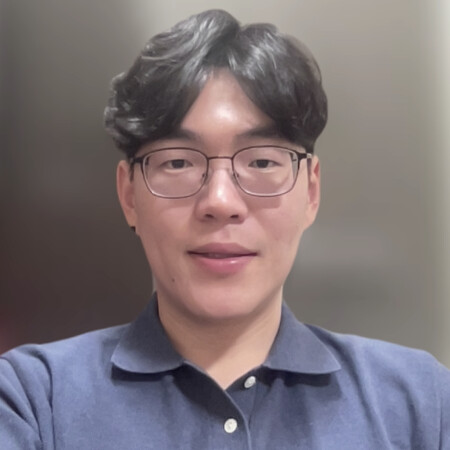
Hyunwoong "Woody" Chang is an Assistant Professor of Statistics in the Department of Mathematical Sciences at The University of Texas at Dallas. He holds a B.S. in Business/Mathematics from Seoul National University (2019) and a Ph.D. in Statistics from Texas A&M University (2024). His research focuses on structure learning of DAG models, convergence of Markov chains, and Bayesian learning methodologies. His work bridges statistical theory and computational methods, with applications in high-dimensional data analysis and model selection. Education: Ph.D. - Statistics, Texas A&M University (2024) B.S. - Business/Mathematics, Seoul National University (2019) Chang's research explores topics such as informed MCMC samplers, complexity analysis of Bayesian models, and Lipschitz continuous autoencoders for anomaly detection. His recent publications emphasize methodological advancements in DAG structure learning, regularization techniques, and rapid convergence algorithms. He currently holds no stated academic awards but actively contributes to statistical theory and computational efficiency in complex models. No advising or grant details are explicitly provided in the text. His affiliation with the School of Natural Sciences and Mathematics suggests involvement in interdisciplinary research teams, though specific lab affiliations are not mentioned.
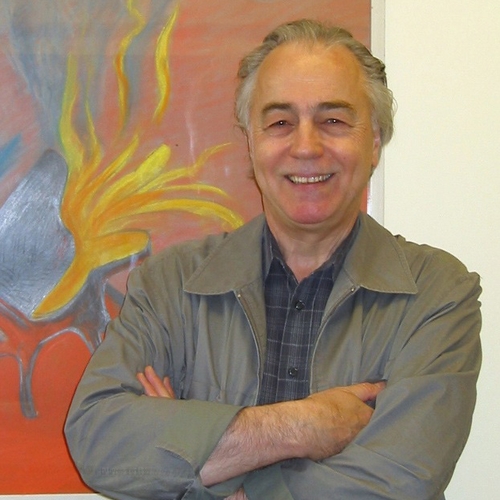
Alex Dempsey is an Assistant Professor (Educator) in the Department of Mathematical Sciences at the University of Cincinnati. He holds a PhD in Mathematics from North Carolina State University (2018), an MS in Mathematics from the same institution (2013), and a BS in Mathematics and Chemistry from Methodist University (2011). PhD: North Carolina State University, 2018 MS: North Carolina State University, 2013 BS: Methodist University, 2011 His research focuses on abstract algebra, specifically Lie and Leibniz algebras, with a 2014 publication in Communications in Algebra . His work bridges theoretical algebra with educational practices. Prior to academia, he served as a Research Engineer at NASA Langley Research Center (2017-2018) and held teaching roles at Rochester Institute of Technology (2018-2019) and the University of Kentucky (2019-2020). No scientific awards are explicitly listed in the provided information. His career trajectory reflects a transition from engineering research to mathematics education, emphasizing applied and theoretical algebra. Current affiliations include the University of Cincinnati’s Department of Mathematical Sciences.
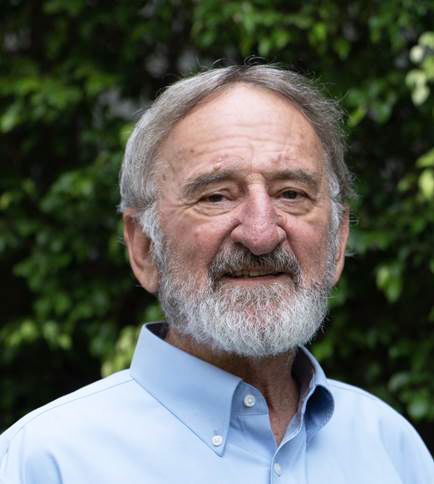
Guerino Mazzola is a Professor of Creativity, Improvisation, and Mathematical Music Theory at the School of Music, University of Minnesota. His academic career includes a PhD in Mathematics from Zurich University and postdoctoral work at Paris-Sud and Rome. He has been a key figure in developing mathematical music theory since 1980, authoring influential books such as The Topos of Music (2002) and Cool Math for Hot Music (2016). Education: PhD in Mathematics (Zurich University), Habilitation in Algebraic Geometry (1980), and Computational Sciences (1993). Research Interests: Mathematical foundations of music, gesture theory, performance analysis, computational musicology, and interdisciplinary creativity. Notable contributions include the Rubato software for performance analysis and the development of gesture theory applied to free jazz. He has received awards such as the Mexican Mathematical Society Medal (2000) and has been a visiting professor at prestigious institutions like the École Normale Supérieure in Paris. Teaching spans advanced courses on gesture theory, performance science, and music informatics, with a focus on bridging mathematical rigor and artistic creativity.
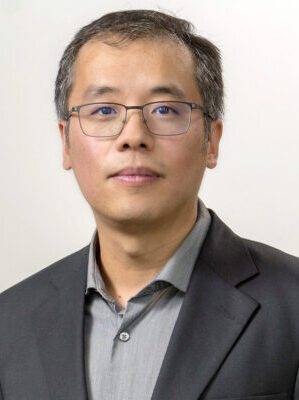
Professor Kirk R. Pruhs is a full Professor in the Department of Computer Science at the University of Pittsburgh's School of Computing and Information. He holds editorial roles at journals such as the Journal of Scheduling and ACM Transactions on Algorithms. His research focuses on algorithmic problems in green computing, scheduling, online optimization, and resource management. Pruhs has advised numerous PhD students and has a strong publication record in top venues like SODA, STOC, and FOCS. His work often addresses energy-efficient algorithms and computational resource management. Notable contributions include studies on stochastic scheduling, energy-efficient routing, and competitive analysis of online algorithms. Education: BS in Mathematics and Computer Science from Iowa State University (1984), PhD in Computer Science from University of Wisconsin-Madison (1989). Research Interests: Algorithmic challenges in green computing, fair allocation mechanisms, scheduling under uncertainty, and online optimization techniques. He explores how computational methods can improve energy efficiency and resource allocation in distributed systems. Recent articles focus on robust scheduling strategies, stochastic systems, and algorithmic approaches to network design and resource optimization. His work bridges theoretical computer science with practical applications in sustainable computing. Students: Includes Jonathan Beaver (2006), Mohamed Aly (2008), Christine Chung (2009), Daniel Cole (2013), Neal Barcelo (2015), Michael Nugent (2015), and Alireza Samadian Zakaria (2021). Labs/Teams: Engaged in algorithm design and analysis within the Department of Computer Science, contributing to initiatives in computational sustainability and high-performance computing.
Doug L. James is a Full Professor of Computer Science at Stanford University since 2015, following roles as Associate Professor at Cornell University (2006-2015) and Assistant Professor at Carnegie Mellon University (2002-2006). He holds a PhD in Applied Mathematics from the University of British Columbia (2001), alongside earlier degrees from the same institution and the University of Western Ontario. His research focuses on computer graphics, sound synthesis, and physically-based modeling, with notable contributions to fluid simulation, cloth animation, and medical modeling. Key achievements include the 2012 Technical Achievement Award from the Academy of Motion Picture Arts and Sciences for 'Wavelet Turbulence,' and the 2013 Katayanagi Prize. He serves as a consulting Senior Research Scientist at Pixar Animation Studios and has led roles like Technical Papers Chair at SIGGRAPH 2015. His work integrates physics-based principles with interactive systems, emphasizing real-time applications and data-driven methods. Research interests span sound synthesis for animations (e.g., cloth, water, impact sounds), deformable models for medical simulation, and tools like 'svMorph' for virtual surgery planning. His publications reflect a blend of algorithmic innovation and practical applications in film, gaming, and healthcare.
William Parnell is a Professor of Applied Mathematics at the University of Manchester's School of Mathematics. His research focuses on continuum mechanics, metamaterials, and industrial composites, with applications in soft tissue mechanics and acoustic wave manipulation. He leads the Mathematics of Waves and Materials (MWM) group and co-founded the Manchester Materials Modelling Centre (M3C). He has held roles including EPSRC Fellowship 'NEMESIS' (2014-2019) and its extension, contributing to transformative materials science. Education: BSc Mathematics (First Class), University of Bristol (1996-1999) MSc Mathematical Modelling and Scientific Computing (Distinction), University of Oxford (1999-2000) PhD in Applied Mathematics, University of Manchester (2001-2004) His research interests span elastic wave propagation, cloaking, and viscoelastic modeling. He has pioneered hyperelastic cloaking techniques and developed mathematical methods for metamaterials. His work contributes to UN Sustainable Development Goals related to advanced materials and digital innovation. Key achievements include the 2019 Whitehead Prize and over 80 publications. His grants include funding for microstructured material design and collaborations with Thales UK and the National Physical Laboratory. Grants & Awards: EPSRC Fellowships (NEMESIS and extension) Whitehead Prize (2019) Labs/Teams: MWM Group (focusing on waves and materials) M3C (Manchester Materials Modelling Centre)
Keith J. Holyoak is a Distinguished Professor in the Department of Psychology at the University of California, Los Angeles (UCLA), where he conducts foundational research in cognitive psychology. His work centers on human reasoning, learning, decision making, and problem solving, with a specific focus on the psychological mechanisms of analogy and relational knowledge across diverse domains including law, politics, mathematics, and science. He directs the Reasoning Lab at UCLA, integrating experimental, computational, and neuroimaging approaches to investigate cognitive processes. Education: Ph.D. from Stanford University Research Focus: Holyoak's research program systematically explores how analogy facilitates knowledge transfer and learning, examining the neural underpinnings of complex reasoning with emphasis on prefrontal cortex functions. His work bridges theoretical cognitive science with practical applications, investigating causal learning, deductive processes, and the constraints shaping human inference. Through computational modeling and cross-domain studies, he reveals universal principles governing relational reasoning while addressing domain-specific manifestations in scientific, legal, and social contexts. Publication Trends: His scholarly output demonstrates consistent evolution from foundational work on pragmatic reasoning schemas (1980s) toward integrated models of causal learning and Bayesian inference (2000s-2010s). Recent publications emphasize rational analysis frameworks, cross-species comparisons in causal cognition, and the role of invariance principles in knowledge generalization. The corpus reveals deep methodological pluralism—combining behavioral experiments, computational modeling, and neuroimaging—to address fundamental questions about the architecture of human thought. Research Infrastructure: Holyoak leads the Reasoning Lab (https://reasoninglab.psych.ucla.edu), which maintains a collaborative environment for interdisciplinary research. The lab's infrastructure supports advanced experimental paradigms, computational modeling suites, and neurocognitive investigations, facilitating research on analogical transfer, causal inference, and decision-making under uncertainty across the lifespan.
Lexin Li is a Professor in the Department of Biostatistics and Epidemiology at the University of California, Berkeley School of Public Health, with additional affiliations at the Helen Wills Neuroscience Institute, the UC Berkeley-UCSF Joint Program on Computational Precision Health, and the Center for the Theoretical Foundations of Learning, Inference, Information, Intelligence, Mathematics and Microeconomics at Berkeley (CLIMB). He received his BE in Electrical Engineering from Zhejiang University (1998) and PhD in Statistics from the University of Minnesota (2003), followed by postdoctoral training at UC Davis School of Medicine. He joined North Carolina State University as Assistant Professor in 2005, was promoted to Associate Professor in 2011, and served as visiting faculty at Stanford University and Yahoo Research Labs (2011-2013) before joining UC Berkeley as Associate Professor in 2014, where he was promoted to Full Professor in 2018. Dr. Li's research spans statistical methodology development for neuroimaging data analysis, tensor statistics, and machine learning applications to biomedical problems. His work focuses on brain connectivity and network analysis, imaging causal inference, tensor regression, dimension reduction, and statistical machine learning with applications to Alzheimer's disease, Parkinson's disease, and other neurological disorders. His methodological innovations bridge theoretical statistics with practical neuroscience applications, particularly in multimodal neuroimaging analysis and brain network modeling. His recent publications demonstrate a strong trajectory in integrating deep learning with classical statistical inference, particularly in tensor analysis, functional data modeling, and causal inference. The research shows increasing sophistication in handling high-dimensional, complex neuroimaging data while developing rigorous statistical frameworks for inference. His work increasingly focuses on multimodal data integration and developing methods that can handle the complexity of real-world neurological data. Dr. Li has received numerous prestigious honors including being elected as a Fellow of the American Statistical Association (2017), Fellow of the Institute of Mathematical Statistics (2021), Elected Member of the International Statistical Institute, and Fellow of the American Association for the Advancement of Science (2024). Fellow, American Statistical Association (2017) Fellow, Institute of Mathematical Statistics (2021) Elected Member, International Statistical Institute Fellow, American Association for the Advancement of Science (2024) Editor-in-Chief, Annals of Applied Statistics (2025-2027) As an academic leader, Dr. Li serves as Co-Director of the Biostatistics Program (2019-) and Director of Graduate Admissions (2015-) at UC Berkeley. He is an active editor, currently serving as Editor-in-Chief of the Annals of Applied Statistics (2025-2027), and has held associate editor positions at multiple top statistical journals including the Journal of the American Statistical Association and Journal of Computational and Graphical Statistics. He also serves as a Standing Member of the NIH Emerging Imaging Technologies in Neuroscience Study Section (2023-2027). His research has been supported by various NIH grants focused on statistical methodology for neuroimaging analysis. Dr. Li leads a vibrant research group focused on statistical neuroimaging and machine learning methodology, with strong connections to the Helen Wills Neuroscience Institute and collaborations across multiple departments at UC Berkeley. His team develops innovative statistical methods that address real challenges in neuroscience research while maintaining rigorous theoretical foundations. The group maintains active collaborations with neuroscientists and clinicians working on Alzheimer's disease, Parkinson's disease, and other neurological conditions.
Zachary E. Ross is a Professor of Geophysics at the California Institute of Technology (Caltech) and holds the William H. Hurt Scholar distinction since 2021. His research integrates machine learning, computational mathematics, and seismology to analyze earthquakes and fault zones using large seismic datasets. Education B.S., University of California, Davis (2009) M.S., California Polytechnic State University, San Luis Obispo (2011) Ph.D., University of Southern California (2016) His research focuses on high-resolution imaging of fault zones, understanding earthquake sequences in space and time, and applying artificial intelligence to seismic data analysis. He develops scalable algorithms for waveform inversion, ground-motion synthesis, and real-time seismic monitoring. Recent publications highlight his work on neural operators for wave propagation, AI-driven seismicity analysis, and induced earthquake dynamics. He teaches advanced courses including Ge 264 – Machine Learning in Geophysics and Ge 271 – Dynamics of Seismicity . Scientific Awards William H. Hurt Scholar (2021–present)
Paul Milgrom is the Shirley and Leonard Ely Professor of Humanities and Sciences in the Department of Economics at Stanford University , with courtesy appointments in the Department of Management Science and Engineering and the Graduate School of Business . As co-founder and chairman of Auctionomics , he applies auction theory to high-stakes bidding scenarios. Co-recipient of the 2020 Nobel Prize in Economic Sciences for auction theory advancements Distinguished Fellow of the American Economic Association (2020) 2018 John J. Carty Award (with Kreps and Wilson) Milgrom's research spans Auction Theory , Market Design , Game Theory , and Industrial Organization . His work on radio spectrum auctions has reshaped global telecommunications policy. Key award trends: 2018 : CME Group-MSRI Prize, John J. Carty Award 2014 : Golden Goose Award 2012 : BBVA Foundation Frontiers of Knowledge Award 2008 : Nemmers Prize His publications reveal expertise in mathematical economics , organizational theory , and telecommunications policy , with recent focus on AI/ML applications to market design and combinatorial auction complexity .
Ed Chien is an Assistant Professor at Boston University's Department of Computer Science within the College of Arts & Sciences. He specializes in applying differential geometry and topology to graphics, computational engineering, and machine learning. Previously, he was a postdoctoral researcher at MIT's CSAIL and Bar-Ilan University. His work focuses on mathematically rigorous solutions to problems in geometric data processing and optimal transport. Education PhD in Mathematics, Rutgers University (2015) A.B. in Mathematics & Physics, Dartmouth College (2009) Research Highlights Dr. Chien's research includes fundamental studies on hexahedral mesh topology for Finite Element Modeling, optimal transport applications in machine learning, and singularity-free geometric algorithms. His work bridges theoretical mathematics with computational tools for engineering and graphics. Publications span top venues like NeurIPS, Eurographics, and SIGGRAPH, reflecting contributions to geometry processing and machine learning intersections. Program committee roles include Eurographics SGP (2019) and AAAI (2020). Awards & Recognition No specific awards listed, but notable service includes program committee memberships and peer-reviewed contributions to leading conferences. Grants & Advising Active in mentoring through academic positions but no explicit grant details provided. Research focuses on advancing geometric algorithms and optimal transport methodologies.
Lutz Warnke is a Professor of Mathematics at the University of California, San Diego, with prior affiliations at Georgia Institute of Technology (where he received tenure in 2021) and Peterhouse, Cambridge University (Junior Research Fellow until 2016). His research focuses on probabilistic combinatorics, random graphs, phase transitions, and combinatorial probability, with applications to extremal combinatorics and Ramsey theory. Education : Ph.D. in Mathematics from the University of Oxford (2012), supervised by Oliver Riordan. Dr. Warnke's research explores the structure and evolution of random graphs and processes, including Achlioptas processes, Ramsey numbers, and extremal problems. His work often bridges probabilistic methods with algorithmic applications and theoretical computer science. His publications from 2022–2025 reveal trends in random graph isomorphisms, clique coloring thresholds, extremal subgraph counts, and hardness of online algorithms. Key subfields include percolation, phase transitions, and probabilistic methods applied to combinatorial structures. Scientific Awards : Dénes König Prize (2016), Alfred P. Sloan Research Fellowship (2018), NSF CAREER Award (2020), Richard Rado Prize (2014). Dr. Warnke actively supervises PhD students and postdocs, including Matthew Cho (PhD ongoing), Erlang Surya (PhD 2025), Emily Zhu (PhD 2025), and He Guo (PhD 2021). He has received teaching accolades at Georgia Tech and contributes to graduate courses in probabilistic combinatorics, random graph theory, and stochastic processes.
Jonathan Weare is a Professor of Mathematics at the Courant Institute of Mathematical Sciences, New York University. He holds affiliations with the Faculty of Arts and Science and the Graduate School of Arts and Science. His academic journey includes roles as an Associate Professor at the University of Chicago (2014–2019) and Assistant Professor (2011–2014), following postdoctoral work as a Courant Instructor at NYU. He earned his Ph.D. in Mathematics from UC Berkeley in 2007. His research focuses on stochastic algorithms and models, with applications in astrophysics, biophysics, computational chemistry, and climate science. Key areas include Monte Carlo methods, rare event simulation, and machine learning-driven scientific analysis. Collaborations with domain experts ensure his work addresses real-world challenges in diverse fields. Recent publications emphasize advancements in trajectory stratification, rare event prediction using machine learning, and efficient algorithms for high-dimensional problems. Notable contributions include the BAD-NEUS framework and AI-based solar system instability predictions. His group’s interdisciplinary approach bridges computational methods with scientific inquiry. Weare has advised numerous students and mentored postdocs, fostering talent in applied mathematics and computational science. His work on Mercury’s orbital dynamics and extreme weather prediction showcases the societal impact of his research. Current projects explore AI applications in weather modeling and rare event analysis, leveraging cutting-edge machine learning techniques. Labs/Teams: His research group at Courant develops stochastic algorithms and collaborates with interdisciplinary teams in computational chemistry, climate science, and astrophysics. Key collaborations include the University of Chicago and Columbia University.
Prof. Dr. Ruming Zhang is a Tenure-Track Professor at TU Berlin's Faculty II - Mathematics and Natural Sciences, leading the Analysis and Applications group since May 2023. He specializes in numerical methods for partial differential equations and inverse problems, with a focus on wave scattering and periodic structures. His research bridges theoretical analysis and computational techniques, addressing challenges in areas like photonic crystals and non-destructive testing. Education & Career: PhD in Mathematics (Chinese Academy of Sciences, 2014) Postdoctoral Researcher at Michigan Technological University Marie-Curie Fellow (University of Bremen, 2015-2018) Junior Group Leader at KIT (Karlsruhe Institute of Technology, 2018-2023) Research Interests: Analysis and numerical methods for PDEs, inverse scattering problems, waveguide analysis, periodic structures, and their applications in nanotechnology and engineering. His work emphasizes high-order numerical schemes and theoretical frameworks for ill-posed problems. Key Contributions: Development of nonuniform mesh methods for periodic surface scattering, high-order numerical techniques for bi-periodic structures, and monotonicity-based shape reconstruction in waveguides. His methods address challenges in computational wave physics and mathematical modeling. Awards: Richard-von-Mises Prize (GAMM, 2023) Marie-Curie Fellowship (EU FP7-PEOPLE, 2015-2017) Teaching & Mentorship: Offers courses on inverse problems, scattering theory, boundary element methods, and applied analysis. Advises students on thesis topics in mathematical theory for photonic crystals and wave propagation. Actively promotes interdisciplinary collaboration between mathematicians and engineers. Grants & Projects: DFG Grant (2019-2024): Higher-order methods for acoustic scattering in periodic structures Marie-Curie COFUND Fellowship (Bremen TRAC, 2015-2017) Labs/Teams: Leads the Analysis and Applications research group at TU Berlin, focusing on interdisciplinary projects combining mathematical theory with computational tools for real-world applications.
Aida Abiad Monge is an Associate Professor in the Department of Mathematics and Computer Science at Eindhoven University of Technology (TU/e), where she chairs the Algebraic Combinatorics group. She holds a 0.1fte position as an Associate Professor at Vrije Universiteit Brussel and is a guest researcher at Ghent University. Her research focuses on algebraic graph theory, including spectral graph properties, combinatorial optimization, and applications in quantum information theory and coding theory. Her academic career includes postdoctoral fellowships at Ghent University (2020-2023) and Vrije Universiteit Brussel (2020-2023). She has been awarded grants such as the NWO VIDI and BOF Postdoctoral Fellowship. Her editorial roles include serving on the boards of the Electronic Journal of Linear Algebra and The Electronic Journal of Combinatorics. Research Interests: Spectral graph theory, coding theory, quantum information, finite geometry Key Achievements: Over 60 publications, including works on sum-rank metric codes and cospectral hypergraphs Teaching: Courses like Algebraic Combinatorics and Combinatorics and Applications Her work bridges theoretical advancements with practical applications, particularly in optimizing coding schemes and analyzing graph structures through algebraic methods.