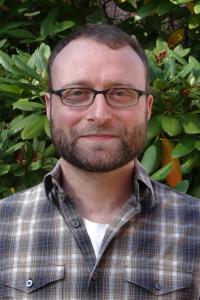
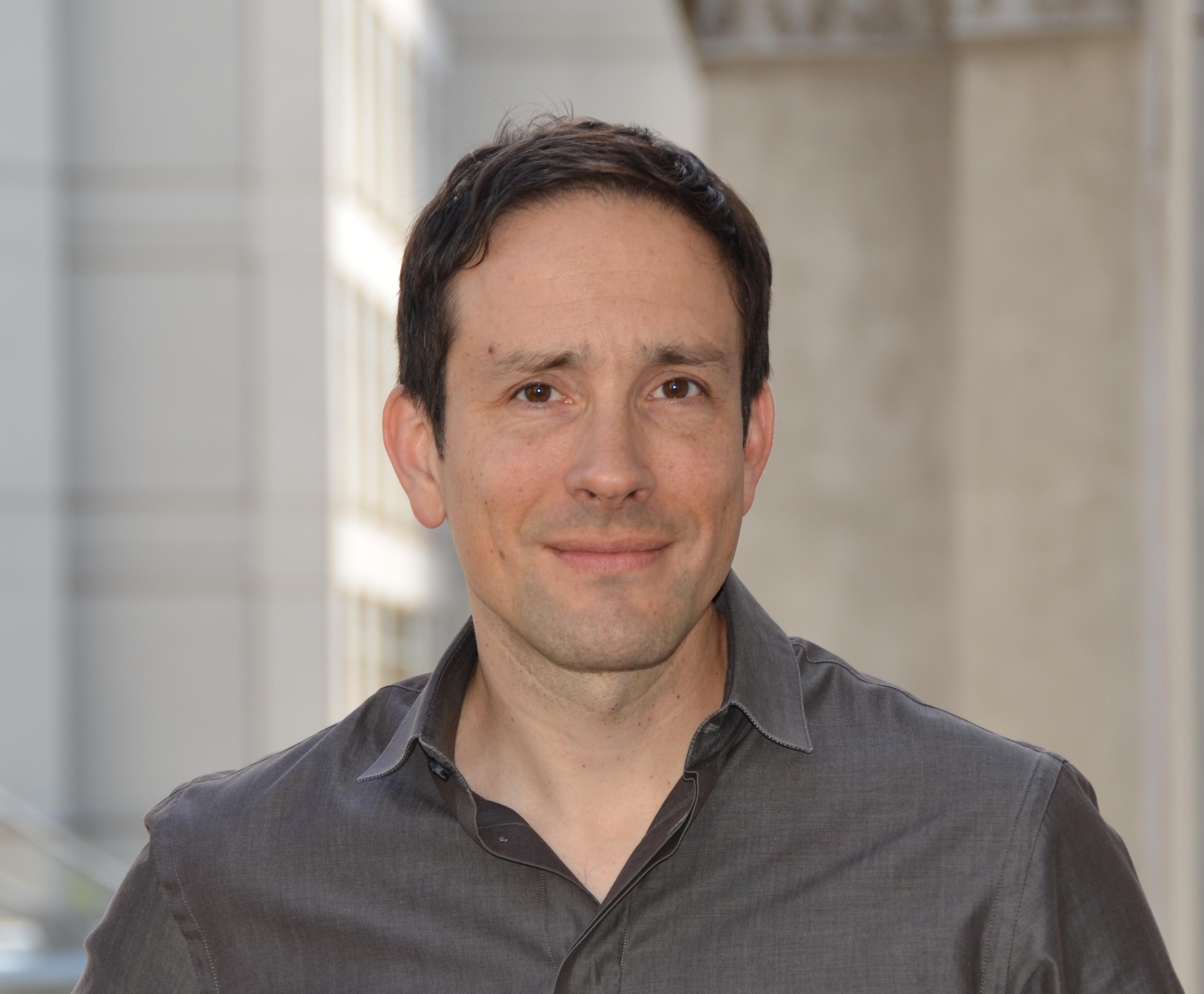
Richard Thomas FRS is a Royal Society Research Professor in the Department of Mathematics at Imperial College London, affiliated with the Faculty of Natural Sciences. His research focuses on algebraic geometry, Calabi-Yau manifolds, derived categories of coherent sheaves, and moduli problems. He holds a prestigious position as a Fellow of the Royal Society (FRS). His work bridges pure mathematics and theoretical physics, particularly in areas like mirror symmetry and string theory. Key themes include enumerative geometry, stability conditions, and geometric invariants. Recent publications (2020–2025) explore advanced topics such as wall-crossing phenomena, K-theoretic invariants, and applications of derived categories to moduli spaces. His contributions have significantly impacted modern algebraic geometry and its interdisciplinary connections.
Prof. Dr. Kai Cieliebak is a Professor of Mathematics at the University of Augsburg, where he holds the Chair of Analysis and Geometry within the Institute of Mathematics under the Faculty of Mathematics, Natural Sciences, and Materials Engineering. He has been at Augsburg University since 2012, following a professorship at Ludwig-Maximilians-Universität München from 2001-2012. His research group includes several researchers and postdocs working on symplectic geometry and related fields. Dr. Cieliebak earned his Diplom in mathematics summa cum laude from Ruhruniversität Bochum in 1992, with thesis on "Pseudo-holomorphe Kurven und periodische Orbits auf Cotangential Bündeln" under advisor H. Hofer. He completed his PhD in mathematics at ETH Zürich in 1996, with thesis "Symplectic boundaries: closed characteristics and action spectra," also advised by H. Hofer. His academic journey included positions at Harvard University, Stanford University, and research at IBM Zürich before his professorships in Munich and Augsburg. Prof. Cieliebak's research focuses on symplectic and contact geometry , with significant contributions to understanding symplectic manifolds, Lagrangian and Legendrian knots, Stein manifolds, and string topology. His work in Hamiltonian dynamics explores variational methods, periodic orbits, and celestial mechanics problems, particularly the restricted three-body problem. In global analysis , he investigates solution spaces of elliptic PDEs and symplectic field theory. His approach often bridges differential geometry, topology, and dynamical systems, with applications to mathematical physics. Over the past decade, Prof. Cieliebak's publications reveal a consistent focus on symplectic homology, Floer theory, and their applications to geometric problems. His work shows increasing integration of algebraic structures with geometric methods, particularly in cyclic homology and string topology. Recent research demonstrates strong collaboration with Urs Frauenfelder on celestial mechanics problems, applying symplectic techniques to the restricted three-body problem and related orbital dynamics. Prof. Cieliebak has secured significant research funding throughout his career, including multiple DFG grants under project codes CI 45/1 through CI 45/12, NSF grants, and participation in European Science Foundation networking programs. His most notable grants include "Foundations of Symplectic Field Theory" (2009-2015) and the current "Rabinowitz Floer Homology" project (since 2023), both in collaboration with U. Frauenfelder. He has mentored numerous researchers and maintains an active research group at Augsburg University, including postdocs and collaborators working on symplectic geometry problems. His team includes researchers such as Dr. Filip Broćić, Zhen Gao, Dr. Hanna Häußler, Emilia Konrad, Shuaipeng Liu, Dominik Meidert, Dr. Airi Takeuchi, Dr. Evgeny Volkov, Milan Zerbin, and PD Dr. Lei Zhao. Prof. Cieliebak has also organized numerous workshops on symplectic geometry, including the annual "Symplectic Field Theory" workshop series.
Sean Carroll serves as the Homewood Professor of Natural Philosophy at Johns Hopkins University and holds External Faculty status at the Santa Fe Institute. His research bridges cosmology, quantum mechanics, and philosophy, focusing on foundational questions about spacetime emergence, quantum interpretation, and complexity across cosmic scales. Carroll earned his Ph.D. from Harvard University in 1993. His academic trajectory reflects deep engagement with theoretical physics and philosophical inquiry, culminating in his current named professorship at Johns Hopkins. Carroll's research centers on the intersection of physics and philosophy, with significant contributions to quantum foundations, cosmology, and the nature of emergence. He is a leading proponent of the many-worlds interpretation of quantum mechanics and has pioneered work on the thermodynamic arrow of time, quantum decoherence, and the fine-tuning of initial cosmic conditions. His recent investigations explore discretized quantum systems, holographic principles in gravity, and the philosophical implications of quantum gravity. Analysis of his 2022-2025 publications reveals a pronounced shift toward computational approaches in quantum gravity, with increasing emphasis on finite-dimensional Hilbert spaces and GPU-accelerated modeling. His work consistently integrates quantum information theory with cosmological questions, particularly examining how spacetime geometry emerges from quantum entanglement and how complexity evolves in closed systems. Carroll's scientific recognition includes: National Science Foundation Fellowship NASA Fellowship Sloan Research Fellowship Packard Fellowship Fellow of the American Physical Society American Institute of Physics Award Fellow of the Royal Society Guggenheim Fellowship Fellow of the American Association for the Advancement of Science His research has been sustained through major fellowships from NSF, NASA, Sloan, and Packard foundations, enabling interdisciplinary collaborations across physics and philosophy. Carroll actively mentors graduate students at Johns Hopkins and contributes to public discourse through his popular science books (including the Biggest Ideas in the Universe series) and the weekly Mindscape podcast. As Fractal Faculty at the Santa Fe Institute, Carroll participates in cross-disciplinary research on complex systems, exploring how emergent phenomena arise from fundamental physical laws. His work bridges theoretical physics with broader questions about complexity in biological, cognitive, and social systems.
Kevin Costello is a Professor and the Krembil William Rowan Hamilton Chair in Theoretical Physics at the Perimeter Institute for Theoretical Physics. His research focuses on mathematical physics, particularly exploring string theory and quantum field theory through rigorous mathematical frameworks. Key areas include twisted holography, integrable systems, and the AdS/CFT correspondence. He holds prestigious awards such as the Royal Society Fellowship and the Leonard Eisenbud Prize for Mathematics and Physics. Costello’s work bridges advanced mathematical techniques with foundational questions in theoretical physics. His recent contributions include studies on celestial holography, self-dual gauge theories, and factorization algebras. He actively participates in academic seminars and teaches graduate courses on mathematical physics, emphasizing interdisciplinary approaches to understanding quantum phenomena. Awards: Royal Society Fellow (2018), Berwick Prize (2017), Leonard Eisenbud Prize (2020). Research Themes: Mathematical foundations of string theory, holographic dualities, integrable systems in gauge theories. His publications often explore cutting-edge topics like holographic correspondences in asymptotically flat spacetimes and algebraic structures in quantum field theory. Costello collaborates widely, contributing to both theoretical advancements and pedagogical initiatives in mathematical physics.
Julio Parra-Martinez is a Permanent Professor at the Institut des Hautes Études Scientifiques (IHES) since 2024. Originally from Spain, he completed his undergraduate studies at the University of Valencia, followed by a MASt in Applied Mathematics from the University of Cambridge in 2015, and a PhD in Physics from UCLA in 2020. Prior to joining IHES, he was a Sherman Fairchild Prize Postdoctoral Fellow at Caltech for three years and an Assistant Professor at the University of British Columbia for one year. His educational background includes: Undergraduate: University of Valencia, Spain MASt in Applied Mathematics: University of Cambridge (2015) PhD in Physics: University of California Los Angeles (2020) Parra-Martinez is a theoretical physicist specializing in quantum field theory, scattering amplitudes, gravitation, effective field theories, and string theory. His recent work focuses on importing techniques from particle physics to classical general relativity, with applications to gravitational-wave and black-hole physics. He has made significant contributions to understanding how scattering amplitude techniques, originally developed for particle colliders, can be applied to gravitational systems. His research bridges the gap between quantum field theory and classical gravity, particularly in the context of binary black hole systems and gravitational wave emission. His publication record shows a consistent focus on using scattering amplitude methods to tackle problems in gravitational physics. Over the past five years, he has published extensively on post-Minkowskian expansions, gravitational waveforms, soft theorems, and connections between quantum field theory and classical gravity. His work often involves collaborations with leading researchers in the field and demonstrates how techniques from particle physics can be adapted to gravitational systems, particularly in the context of extreme mass ratio binaries and gravitational wave physics. Among his notable scientific achievements are: Mayhew Prize (2015) Fulbright Fellowship (2015-2020) Sherman Fairchild Prize Postdoctoral Fellowship Parra-Martinez is actively involved in the theoretical physics community, with numerous upcoming seminars, talks, and lectures scheduled through 2026 at institutions worldwide including ICTP Trieste, Universidade de Sao Paulo, University of Southampton, and others. His research program continues to explore the connections between particle physics techniques and gravitational physics, with particular emphasis on gravitational wave astronomy and black hole physics.
Benjamin Gammage is a Benjamin Peirce Fellow in the Department of Mathematics at Harvard University. Beginning in Summer 2025, he will transition to an Assistant Professor position at the University of Toronto. His academic journey includes a PhD from UC Berkeley under David Nadler, where his thesis focused on microlocal sheaves and mirror symmetry, and an undergraduate degree with honors from the University of Chicago. Dr. Gammage's research centers on quantum geometry, exploring the deep connections between geometry, algebra, and mathematical physics. His work particularly focuses on homological mirror symmetry and 3d mirror symmetry, investigating how quantum field theories reveal profound relationships between seemingly different geometric spaces. He has made significant contributions to understanding how the structure of SYZ fibrations mediates mirror symmetry and how perverse schobers can categorify aspects of geometric representation theory. His research has followed a clear trajectory from foundational work on mirror symmetry for affine hypersurfaces toward increasingly sophisticated structures in 3-dimensional field theories. The most recent publications demonstrate a progression from studying 1- and 2-dimensional quantum field theories toward fully categorified 3d mirror symmetry, revealing deep structural connections between representation theory and symplectic geometry. 2023-present: Principal Investigator, NSF DMS grant #2305257 2020: NSF Postdoctoral Research Fellowship 2019: Kenneth Ribet and Lisa Goldberg Award in Algebra 2015: NSF Graduate Research Fellowship 2014: Paul R. Cohen Prize Dr. Gammage has served as a minor thesis advisor for Grant Barkley (2022) and has been actively involved in mentoring through Harvard's Graduate Admissions Committee and as a Math Includes mentor. His research is supported by significant grant funding, including his current NSF grant. He has organized numerous seminars including the Open Neighborhood Seminar, Relative Langlands seminar, and various topics in mirror symmetry and string theory. His collaborative work spans multiple institutions, with frequent collaborations at institutions including the University of Toronto, UC Berkeley, and various international research centers. His research program bridges pure mathematics with theoretical physics, creating new frameworks for understanding geometric structures through quantum field theory perspectives.
Pavel Etingof is Professor of Mathematics at the Massachusetts Institute of Technology (MIT), Department of Mathematics, where he has been a distinguished faculty member for many years. He serves as the Chief Research Adviser of MIT-PRIMES, an all-year high school math research program that provides exceptional research opportunities for talented high school students. Additionally, he holds the prestigious position of Editor-in-Chief of Selecta Mathematica. Professor Etingof's research spans multiple advanced areas of pure mathematics with a particular focus on representation theory, tensor categories, Lie algebras, Hecke algebras, and algebraic structures. His work consistently bridges algebra, geometry, and mathematical physics, revealing deep connections between abstract algebraic structures and physical phenomena. His research has evolved to increasingly explore tensor categories in positive characteristic, connections between representation theory and fractal structures, and applications to quantum field theory. His recent publications (2021-2025) demonstrate continued productivity and innovation, with numerous papers on tensor categories in various characteristics, representation theory of Lie groups, and connections to mathematical physics. These works show sophisticated exploration of representation theory in prime characteristic, novel applications to quantum field theory, and deep investigations into the structure of tensor categories. Editor-in-Chief of Selecta Mathematica Chief Research Adviser of MIT-PRIMES Professor Etingof has mentored numerous Ph.D. students at MIT and other institutions, establishing a significant mathematical genealogy in representation theory. His teaching includes advanced courses on algebraic groups, Lie theory, representation theory, and specialized topics. He has also co-organized many student seminars on cutting-edge mathematical topics including Deligne categories, symplectic reflection algebras, quantum cohomology, and double affine Hecke algebras, fostering collaborative research environments for students and colleagues.
Maxim Kontsevich is a permanent professor at the Institut des Hautes Études Scientifiques (IHÉS), holding the AXA Chair for Mathematics since 1995 and a visiting chair at Rutgers University (one month annually since 1997). Born in 1964 in Khimki, USSR, he earned his PhD from Bonn University in 1992. His career includes visiting positions at Harvard, the Institute for Advanced Study, and Berkeley, where he was a professor from 1993 to 1995. His research spans mathematical physics, algebraic geometry, and non-commutative geometry. Notable contributions include deformation quantization, mirror symmetry, and motivic integration. His work bridges algebraic structures with geometric and physical concepts, influencing areas like topological field theories, string theory, and integrable systems. Awardees of Fields Medal (1998), Crafoord Prize (2008), and Breakthrough Prize (2014), he also holds editorial roles at Compositio Mathematica and Publications Mathématiques IHÉS. His over 50 publications explore advanced topics such as quantum cohomology, Hodge theory, and categorical structures in geometry.
Laurens Lootens is a Researcher in the Department of Applied Mathematics and Theoretical Physics (DAMTP) at the University of Cambridge. His work focuses on theoretical physics, particularly in quantum lattice models, topological phases of matter, and mathematical structures underlying quantum systems. He is affiliated with the High Energy Physics research group within DAMTP. His research interests include dualities in quantum systems, matrix product operator symmetries, conformal field theories, and tensor network methods. Lootens explores topics such as entanglement in many-body systems, symmetry-protected topological phases, and the interplay between algebraic structures and physical phenomena. Publications highlight his contributions to understanding lattice representations of dualities, topological sectors in quantum models, and critical lattice models for conformal field theories. His work bridges theoretical frameworks with computational methods, advancing both fundamental physics and quantum information science.
Matt Kerr is a Professor of Mathematics at Washington University in St. Louis, where he has been affiliated since 2010. He holds a doctorate in Mathematics from Princeton University (2003) and has held prior positions at UCLA, the Max Planck Institute, the University of Chicago, and Durham University. His research focuses on Algebraic Geometry, Hodge Theory, and Mathematical Physics, with notable contributions to period maps, normal functions, and the arithmetic of motives. He has been awarded the Guido L. Weiss Teaching and Service Award (2024), a Simons Foundation Travel Grant (2024-2029), and the Barry M. Goldwater Scholarship (1996-1997). Dr. Kerr has organized numerous conferences, including the Western Algebraic Geometry Symposium (2023), and co-edited volumes such as Period Domains, Algebraic Cycles, and Arithmetic . He currently supervises four Ph.D. students (Xiaojiang Cheng, RJ Acuna, Devin Akman, Rachel Wu) and has mentored postdoctoral researchers like Ivan Horozov and Patricio Gallardo. His teaching spans advanced graduate courses (e.g., Complex Analysis, Algebraic Geometry) and undergraduate programs, including contributions to the Washington University Math Circle and the National Alliance for Doctoral Studies mentorship initiative. His work bridges pure mathematics and theoretical physics, particularly through studies of Feynman integrals, Calabi-Yau varieties, and quantum curves. He is actively involved in academic service, including roles on hiring committees, grant reviewing, and mentoring programs. Recent research themes include regulators of algebraic cycles, singularities in Hodge theory, and compactifications of moduli spaces. Grants: NSF grants (2011–2024), FRG grants, Simons Foundation awards, and EPSRC funding. Awards: Multiple teaching and service recognitions, including the 2024 Weiss Award. Publications: Over 40 peer-reviewed articles and books, including collaborations with leading mathematicians like Phillip Griffiths and Spencer Bloch.
Tim Cohen is an Associate Professor of Physics at the University of Oregon, with affiliations at CERN and EPFL's Lausanne Theory Physics Laboratory. He is based at the Institute for Fundamental Science within the Department of Physics at the University of Oregon's College of Arts and Sciences. His research focuses on theoretical particle physics, particularly exploring phenomena beyond the Standard Model. Dr. Cohen's research interests center on particle physics beyond the Standard Model, with specific expertise in Large Hadron Collider phenomenology, effective field theory, electroweak naturalness, and dark matter. His work bridges theoretical frameworks with experimental possibilities at major particle physics facilities. His research program encompasses both theoretical developments in quantum field theory and practical applications to collider physics and cosmology. Analysis of his recent publications reveals a strong focus on effective field theory applications, de Sitter space physics, and dark sector phenomenology. His work demonstrates sophisticated mathematical approaches to problems in quantum field theory while maintaining connections to observable phenomena at particle colliders and in cosmological settings. He frequently collaborates with researchers across institutions including CERN, EPFL, and various US universities. Dr. Cohen serves as a senior researcher with active roles at multiple institutions, contributing to major collaborative efforts such as the Snowmass community planning process for particle physics. His work appears in leading journals including Journal of High Energy Physics, Physical Review D, and Physics Letters B, demonstrating consistent productivity and impact in the field. His research group operates within the Institute for Fundamental Science at the University of Oregon, with additional connections to theoretical physics groups at CERN and EPFL. This international collaboration network enables him to work at the intersection of theoretical developments and experimental frontiers in particle physics.
Raphael Bousso is a Professor and holds the Chancellor's Chair in Physics at the University of California, Berkeley, within the Department of Physics. He maintains strong affiliations with the Lawrence Berkeley National Laboratory (LBNL) and the Berkeley Center for Theoretical Physics, reflecting his dual institutional presence in theoretical physics research. His academic journey commenced with a Ph.D. from Cambridge University in 1998, followed by pivotal postdoctoral appointments at Stanford University and the Kavli Institute for Theoretical Physics. In 2002/03, he was a fellow at Harvard University's physics department and the Radcliffe Institute for Advanced Study before joining UC Berkeley in July 2003. Bousso's research centers on quantum gravity and theoretical cosmology , where he confronts fundamental conflicts between quantum mechanics and general relativity. His seminal work on the black hole information paradox—particularly the 'firewall paradox'—challenges whether information is preserved during black hole evaporation. He has pioneered the covariant entropy conjecture and quantum focusing conjecture, reshaping understanding of holography. His landscape research in string theory provides critical frameworks for explaining the cosmological constant and matter abundance coincidences. Analysis of his publication record reveals persistent focus on holographic principles applied to black holes and cosmology. His work consistently bridges abstract quantum gravity concepts with observable cosmological phenomena, demonstrating exceptional continuity in addressing the measurement problem in eternal inflation and the implications of string theory's landscape. No specific scientific awards are documented in the provided materials, though his Chancellor's Chair appointment signifies institutional recognition of his scholarly impact. While student advising details are absent from the source text, his leadership of the Bousso Group drives collaborative research in quantum gravity. The text provides no explicit grant information, though his sustained publication output implies active research funding. He directs the Bousso Group at UC Berkeley, which serves as the primary research hub for exploring holography, black hole physics, and cosmological implications of string theory through theoretical and mathematical approaches.
Sheldon Katz is a Professor of Mathematics at the University of Illinois at Urbana-Champaign (UIUC), with a joint appointment in the Department of Physics. He holds a Ph.D. in Mathematics from Princeton University (1980) and a B.S. from MIT (1976). Previously, he was a Regents Professor of Mathematics at Oklahoma State University before joining UIUC in 2001. Katz's research focuses on algebraic geometry and mathematical physics, particularly string theory and supersymmetric quantum field theories. His work bridges geometry and physics, exploring topics like Gromov-Witten theory, toric varieties, and F-theory. He co-authored the influential book Mirror Symmetry and Algebraic Geometry (1999), a cornerstone in the field. His recent research includes studies on BPS invariants, Calabi-Yau manifolds, and topological string theory. Key contributions include analyses of F-theory, mirror symmetry, and geometric dualities in string compactifications. He teaches advanced courses in algebraic geometry and mathematical physics at UIUC. While no explicit awards are listed, his extensive publication record and academic leadership reflect significant contributions to the field. Katz’s work continues to explore the interplay between algebraic geometry and fundamental physics.
Professor Kellogg Stelle is a distinguished academic in the Department of Physics at Imperial College London, affiliated with the Faculty of Natural Sciences. He holds the title of Professor of Physics and is part of research groups including the Physics of Universe and Theoretical Physics. His academic career includes a PhD from Brandeis University (1972–1977) and an AB in History and Science from Harvard University (1966–1970). His research focuses on Atomic, Molecular, Nuclear, Particle and Plasma Physics; Mathematical Physics; Quantum Physics; Astronomical and Space Sciences; Pure and Applied Mathematics. He has made significant contributions to supergravity, string theory, and cosmology, exploring topics like higher-order gravity, braneworld models, and quantum gravity phenomena. His work often bridges theoretical frameworks and cosmological implications, emphasizing unification theories and symmetry principles. Professor Stelle’s publications reflect a deep engagement with advanced topics such as compactification on Calabi-Yau manifolds, localized gravity in braneworld scenarios, and the ultraviolet problem in supergravity. His research often intersects with cutting-edge areas like quantum geometry and holography, contributing to foundational debates in theoretical physics. Affiliations include the Physics of Universe and Theoretical Physics groups at Imperial College, reflecting his interdisciplinary approach to fundamental physics. He is fluent in French, Russian, Italian, and German, enhancing his international collaborations.
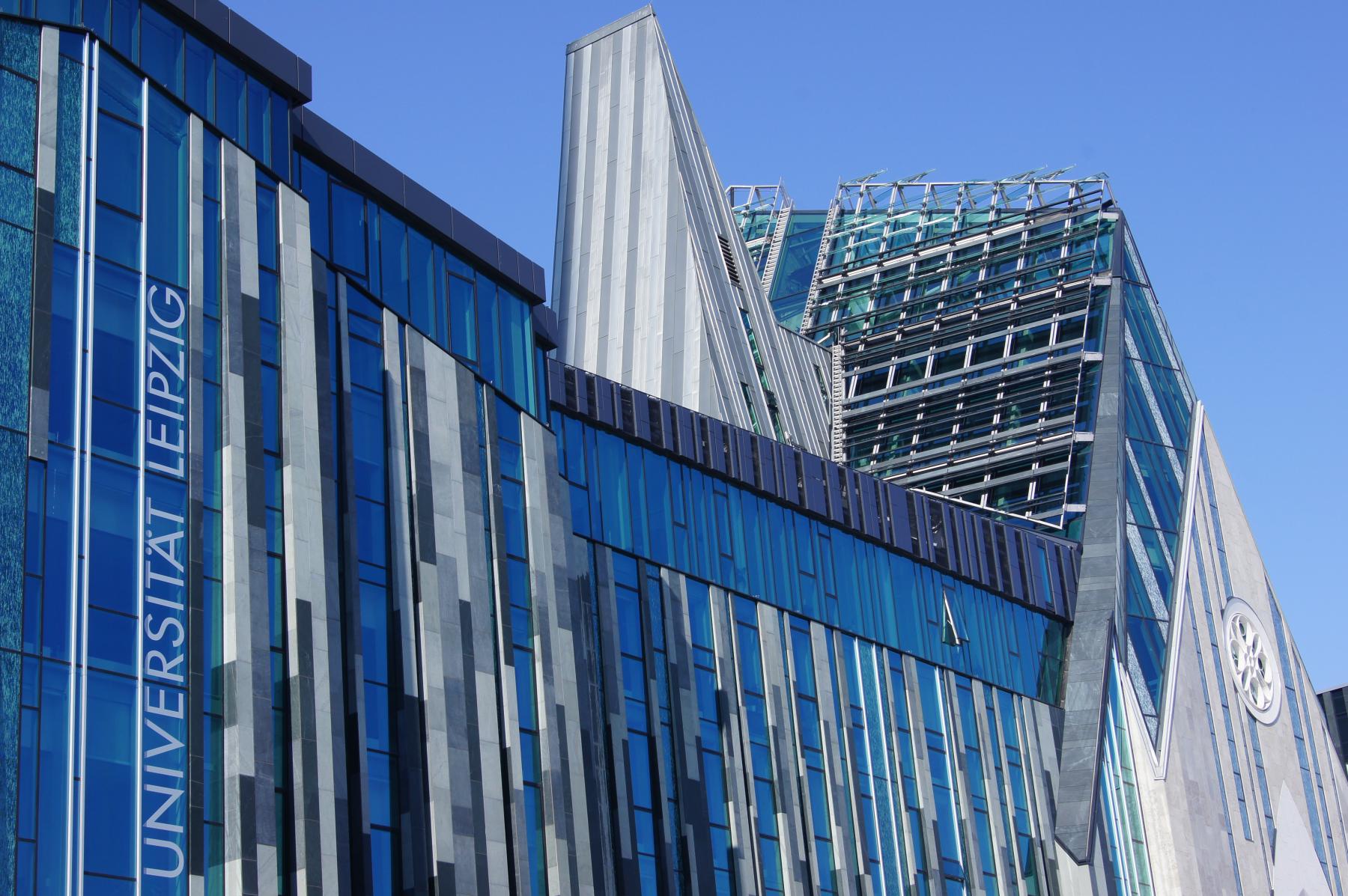
Hans-Bert Rademacher is a Professor of Differential Geometry at the University of Leipzig's Faculty of Mathematics and Computer Science, where he has held the chair since 1995. He completed his Habilitation in 1991 and earned his PhD (Dr.rer.nat., summa cum laude) in 1986 from Universität Bonn, following a Diploma in Mathematics (1983) from the same institution. Research Interests: His work focuses on differential geometry, including pseudo-Riemannian geometry, Finsler geometry, conformal geometry, Dirac operators and twistor spinors, Morse theory and closed geodesics, topology of free loop spaces, and discrete curve shortening. His research bridges geometric analysis and topology, particularly in the study of geodesic systems and curvature properties. Publication Trends: Recent articles center on closed geodesics in various geometric settings (spheres, Finsler manifolds, 3-manifolds), solitons in geometric flows, homology of loop spaces, and conformal geometry. His work frequently applies Morse theory to solve problems in global analysis and topology. Awards and Honors: University Medal (2021) Full Member, Saxon Academy of Sciences and Humanities (since 2010) Heisenberg Fellowship (1992-1995) Felix Hausdorff Memorial Prize (1985) National Mathematics Competition Winner (1978) Academic Service: He has supervised 12 PhD students and served as Dean (2011-2014) and Vice-Dean (2005-2008) of his faculty. He coordinated the Research Training Group "Analysis, Geometry and their interaction with the sciences" (2000-2010) and serves on editorial boards for several mathematics journals.



.jpg)