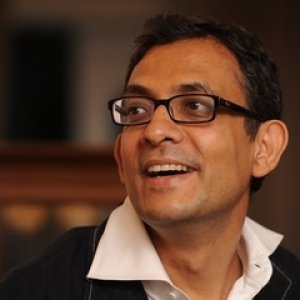
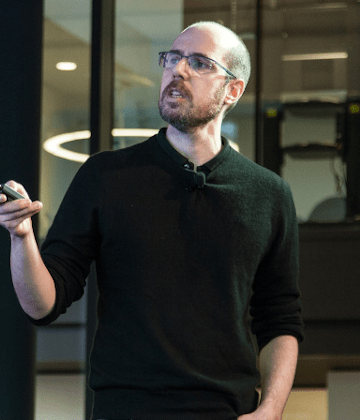
Abhijit Banerjee is the Ford Foundation International Professor of Economics at MIT and Director of the Abdul Latif Jameel Poverty Action Lab (J-PAL). A 2019 Nobel laureate in Economic Sciences, his research focuses on development economics, political economy, and poverty alleviation. He co-authored influential books like Poor Economics and Good Economics for Hard Times , emphasizing evidence-based policies and randomized controlled trials. Banerjee’s work addresses global challenges such as education, health, and social welfare, with notable contributions to microfinance, public health interventions, and anti-poverty programs. He holds leadership roles in global initiatives like the Global Education Evidence Advisory Panel and has advised governments worldwide. His research spans topics from police resource allocation in India to the impact of information during crises like demonetization and the pandemic. Education: Bachelor’s in Statistics, Presidency College, Kolkata M.A. in Economics, Jawaharlal Nehru University PhD in Economics, Harvard University Key Contributions: Co-founder of J-PAL, promoting evidence-based poverty reduction strategies. Pioneer in using randomized controlled trials (RCTs) for policy evaluation. Research on microfinance, education reforms, and health interventions in developing countries. Awards: Nobel Prize in Economics (2019), Infosys Prize in Social Sciences (2009), Member of the National Academy of Sciences (2020). Grants/Advisory Roles: Collaborations with institutions like the World Bank, UN, and governments on poverty, health, and education policies. Labs/Teams: J-PAL global network, Abdul Latif Jameel Poverty Action Lab.
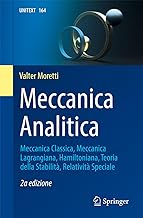
Valter Moretti is a Full Professor in the Department of Mathematics at the University of Trento. His academic career spans roles from Research Fellow to Full Professor, focusing on Mathematical Physics and Quantum Field Theory (QFT) in curved spacetime. He earned an MSc in Physics from Genova University and a PhD in Theoretical Physics from Trento University. Research Interests : Algebraic QFT, General Relativity, Quantum Mechanics, Operator Algebras, and Spectral Theory. His work bridges mathematical rigor with physical applications, particularly in quantum localization, entanglement, and curved spacetime phenomena. Publications : Authored 15+ recent papers on topics like quantum particle localization, entanglement certification, and QFT on curved backgrounds. Collaborated on a 2022 patent for generating entangled photon states. Awards : Holds a patent for a quantum-certified random number generator (2022). Supervision : Advised 8 PhD students, including N. Pinamonti, L. Franceschini, and C. van de Ven. Coordinated national and international research projects (e.g., H2020-MSCA-COFUND-2015). Labs & Collaborations : Affiliated with INFN, TIFPA-INFN, and Q@TN (Quantum@Trento). Organized conferences like Quantum Physics and Geometry (2014) and Quantum Machine Learning (2023). Teaching : Lectures on Analytical Mechanics, Quantum Relativistic Theories, and Special Relativity. Authored textbooks on Spectral Theory and Quantum Mechanics.
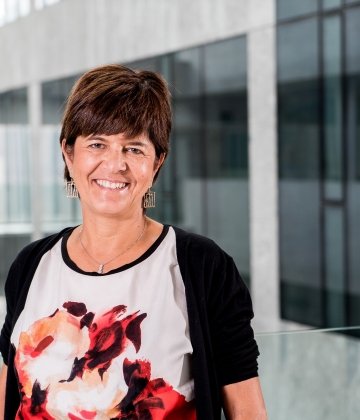
Dr. Sonia Petrone is a Full Professor of Statistics at Bocconi University's Department of Decision Sciences. She earned her PhD in Statistics from Bocconi University and has held academic positions at the University of Pavia and University of Insubria before joining Bocconi. Her extensive international experience includes research visits across North America, Latin America, Europe, India, and Russia. Her research specializes in Bayesian statistics, with contributions to foundational theory, predictive modeling, Bayesian nonparametrics, and stochastic processes. She currently directs the Bocconi Summer School in Advanced Statistics and Probability and previously led the PhD program in Statistics (2011-2018). Her research portfolio demonstrates consistent focus on Bayesian nonparametric methods, predictive modeling, and applications to complex data structures. Recent work explores urn processes, time series analysis, and network modeling using innovative Bayesian approaches. Awards & Honors: IMS Medallion Lecture Award (2018) ISBA Foundational Lecture Award (2016) Fellow of International Society for Bayesian Analysis Fellow of Institute of Mathematical Statistics Fellow of European Laboratory for Intelligent Systems Fellow of Bocconi Institute of Data Science She has held editorial leadership positions as Editor of Statistical Science (2020-2022) and Bayesian Analysis (2010-2014), and served as President of the International Society for Bayesian Analysis (2014).
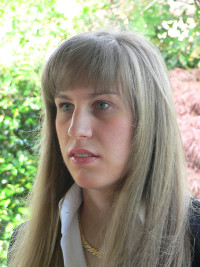
Giulia Giordano is a Full Professor in the Department of Industrial Engineering at the University of Trento, Italy, where she leads the Dynamical Networks and Systems Biology research group. She also holds a dual appointment as Visiting Professor and Delft Technology Fellow at the Delft Center for Systems and Control, Delft University of Technology, The Netherlands. Her career includes previous positions as Assistant Professor at Delft University of Technology (2017-2019), Postdoctoral Research Fellow at Lund University, Sweden (2016-2017), and Research Fellow at the University of Udine, Italy (2016). Giulia earned her Ph.D. in Industrial and Information Engineering: Automation (Excellent) from the University of Udine with a thesis titled "Structural Analysis and Control of Dynamical Networks." She completed her M.Sc. and B.Sc. in Electrical Engineering (both Summa cum laude) at the same institution. She also undertook research visits at Caltech (2012) as a SURF Fellow and at the University of Stuttgart (2015) as a DAAD Research Scholar. Her primary research focuses on the analysis and control of dynamical networks with applications in systems biology, mathematical ecology, and mathematical epidemiology. She develops mathematical frameworks that bridge control theory, network theory, and dynamical systems to address complex problems in biological systems. Her recent work spans epidemic modeling, opinion dynamics, biochemical networks, and neurological disorders, with a particular emphasis on structural analysis of networked systems. She employs both theoretical and computational approaches to understand system behavior under uncertainty. Giulia's publications reveal a strong interdisciplinary focus, spanning from theoretical control systems to practical applications in epidemiology and biology. Her recent work shows increasing emphasis on epidemic modeling (particularly related to mpox and SARS-CoV-2), network synchronization, and the application of control theory to biological phenomena like fibromyalgia pathogenesis and opinion formation. Many of her papers appear in top-tier control journals including Automatica and IEEE Transactions on Automatic Control. 2024: Outstanding Service as Associate Editor of IEEE Control Systems Letters 2021: SIAM Activity Group on Control and Systems Theory Prize 2020: Outstanding Reviewer, Annals of Internal Medicine 2017: NAHS Best Paper Prize and EECI PhD Award 2016: Outstanding TAC Reviewer, IEEE Transactions on Automatic Control Giulia actively mentors students and postdoctoral researchers, currently supervising five postdoctoral researchers and two Ph.D. students at the University of Trento. She has advised numerous M.Sc. and B.Sc. students on topics ranging from bio-inspired modeling to optimal control of epidemic systems. Her research is supported by competitive grants including the ERC Starting Grant INSPIRE (Integrated Structural and Probabilistic Approaches for Biological and Epidemiological Systems). She serves as Associate Editor for IEEE Control Systems Letters and Automatica, and is a Senior Member of IEEE and the Control Systems Society. Giulia leads the Dynamical Networks and Systems Biology research group at the University of Trento, which maintains strong international collaborations across Europe and North America. The group's work combines theoretical advances in control theory with practical applications to pressing problems in public health and biological systems, demonstrating the power of mathematical approaches to understanding complex phenomena in the life sciences.
Sandra Paterlini is a Full Professor in the Department of Economics and Management at the University of Trento, Italy. She holds academic roles including Co-Chair of the ERCIM Working Group on Optimization Heuristics and Vice-Chair of the IEEE Task Force on Portfolio Optimization. Her career includes visiting positions at institutions such as the University of Minnesota and Ludwig-Maximilians-Universität München. She earned a PhD in Computational Methods for Financial and Economic Decisions from the University of Bergamo, an MSc in Financial Mathematics from the University of Warwick, and a Laurea in Economics from the University of Modena and Reggio E. Her research focuses on quantitative finance, risk management, portfolio optimization, and network analysis, with applications to ESG, systemic risk, and financial stability. Key research contributions include methodologies for sparse graphical modeling, systemic risk analysis, and ESG scoring frameworks. She has received multiple awards for research excellence and serves on editorial boards of journals like Computational Statistics & Data Analysis and Frontiers in Applied Mathematics and Statistics . Her work bridges academia and policy, with contributions to the European Central Bank’s Financial Stability Directorate and involvement in global conferences on computational finance and econometrics.
Stefano Grivet-Talocia is a Full Professor at the Department of Electronics and Telecommunications at the Polytechnic University of Turin, where he also serves as Director of the Doctoral School and President of the Doctoral School Council. He is a member of the Interdepartmental Center SmartData@PoliTO - Big Data and Data Science Laboratory, the University Committee for Research, Technology Transfer and Services to the Territory, and the Commission for the Promotion of Library, Archive and Museum Heritage. His academic career spans over two decades at Politecnico di Torino, where he has established himself as a leading researcher in electromagnetic modeling and signal integrity. Grivet-Talocia earned his Laurea degree (summa cum laude) in Electronic Engineering in 1994 and his Ph.D. in Electronic and Communication Engineering in 1998, both from the Polytechnic University of Turin. Between 1994 and 1996, he conducted research at NASA/Goddard Space Flight Center in Greenbelt, Maryland. His educational background laid the foundation for his expertise in electromagnetic modeling, wavelet analysis, and signal processing. His research focuses on behavioral modeling, electromagnetic compatibility, macromodeling, model order reduction, numerical modeling, passivity, power integrity, signal integrity, transmission lines, and wavelets . Grivet-Talocia is particularly renowned for his work on passive macromodeling of interconnect structures, development of the TOPLine technique for transmission line simulation, and pioneering contributions to passivity enforcement algorithms. He has co-authored the first book entirely dedicated to Macromodeling (2016) and developed innovative approaches to waveform relaxation and wavelet-based signal processing. His recent publications (2024-2025) demonstrate continued leadership in model order reduction, with significant contributions to data-driven modeling of linear and nonlinear systems, power integrity analysis, and electromagnetic compatibility. His work spans both theoretical advances in numerical methods and practical applications in circuit design, with strong industry relevance particularly for semiconductor and electronic design automation companies. IEEE Fellow (2018-present) Three Intel SRS Grants (2022-2024) Three IBM SUR Grant Awards (2007-2009) Best Associate Editor Award - IEEE Transactions on Components, Packaging and Manufacturing Technology (2020) Multiple Best Conference Paper Awards (2006-2020) URSI Young Scientist Awards (1999) Ranked among the "top 2% worldwide researchers" (Stanford) since 2019 Grivet-Talocia actively supervises doctoral students including Michele Cusano, Sara Paknezhad Panahi, Antonio Carlucci, and Kun Zhao. He has secured numerous research grants from competitive national calls (PRIN) and commercial contracts with industry partners including Intel, IBM, Nokia, Hitachi, Infineon, and Cadence. His technology transfer activities include co-founding the spin-off IdemWorks (2007-2016), which was acquired by CST in 2016. He also developed the autoCircuits web service for automated circuit problem generation, widely used in electrical engineering education. He leads the EMC Group (Electromagnetic Compatibility) at DET and has been instrumental in establishing the Compact Dynamical Modeling research area. His work has practical applications in high-speed electronics design, with algorithms embedded in commercial tools like IBM PowerSPICE. Grivet-Talocia maintains strong industry connections through his research projects and serves as Associate Editor for IEEE Transactions on Components, Packaging and Manufacturing Technology.
Francesco Caravenna is a Full Professor at the Department of Mathematics and Applications of the University of Milan-Bicocca. His research focuses on Probability Theory and Mathematical Statistics, particularly in stochastic processes, disordered systems, and scaling limits. Editorial Roles: Associate Editor for The Annals of Applied Probability (2019) and Annales de l'Institut Henri Poincaré-Probabilités et Statistiques (2018). His recent work includes studies on the critical 2D stochastic heat flow, directed polymers, and the interplay between disorder and criticality. Publications emphasize rigorous mathematical analysis of stochastic partial differential equations, Gaussian multiplicative chaos, and universal scaling properties. He has received grants from MIUR and the Italian-French University (UniTO) for projects like Random Walks and Polymers (2019) and Large Scale Random Structures (2016). Scientific Awards: Fubini Award (2011), Mario Boella High School, with the Polymath Project and Subalpine Mathesis Association. His contributions span stochastic analysis, disordered systems, and interdisciplinary applications in statistical mechanics and financial modeling. Key themes include pathwise analysis, multiscale behavior, and critical phenomena in random systems.
Carlo Baldassi is an Associate Professor at Bocconi University, where he has served as Director of the BSc in Mathematical and Computing Sciences for Artificial Intelligence (BAI) since 2023/24. He holds a background in Theoretical Physics from the University of Trieste and a PhD in Computational Neuroscience from the University of Turin. His research focuses on applying Statistical Mechanics to Machine Learning and Neural Networks, particularly studying loss landscapes, optimization problems, and the role of quantum annealing in nonconvex learning. He teaches courses in Machine Learning, Artificial Intelligence, and Computer Science, emphasizing Python and Julia programming. His work bridges theoretical physics and AI, exploring topics like synaptic stochasticity in low-precision neural networks and the efficiency of quantum vs. classical annealing. He has published extensively in top journals such as Physical Review Letters and Proceedings of the National Academy of Sciences , contributing to foundational understanding of neural network dynamics and optimization techniques. Teaching includes Machine Learning and Artificial Intelligence Computer Science I Machine Learning II Machine Learning and Artificial Intelligence Lab Research emphasizes large-scale inference problems, with a focus on the interplay between statistical mechanics and modern AI architectures.
Matteo Penegini serves as an Associate Professor in the Department of Mathematics at the University of Genoa, where he holds a seat on the Department Board. His teaching portfolio spans multiple degree programs including Economic and Financial Sciences, Biomedical Engineering, and Mathematical Statistics, with courses such as General Mathematics, Geometry, and Linear Algebra and Analytic Geometry. His research centers on advanced Algebraic Geometry, specializing in the classification and structural analysis of algebraic surfaces and threefolds. Key investigations include triple covers of K3 surfaces, surfaces with pg=q=2 invariants, and projective varieties of general type. His work integrates cohomological methods, birational transformations, and moduli space theory to explore geometric genus constraints and Albanese map properties. Recent publications reveal a consistent focus on geometric invariants and covering spaces, with collaborative studies examining K3 surface covers (2022), surface families with specific Chern numbers (2021), threefold classification (2021), cohomology of irregular surfaces (2020), and Zariski multiplets from isogenous surfaces (2020). This trajectory demonstrates deepening engagement with Hodge theory and moduli problems in complex algebraic geometry.
Michele Salvi is an Associate Professor in Mathematics at Università degli Studi di Tor Vergata in Rome. He previously held a Marie Skłodowska-Curie fellowship, conducting research in Berlin, Munich, and Paris. His work focuses on Probability Theory, with emphasis on random processes in random media, random graphs, and statistical mechanics, bridging applications in Physics, Computer Science, and Biology. Random processes in random media Random graphs Mathematics of Neural Networks Stochastic homogenization Mixing times for Markov chains Statistical mechanics Salvi’s recent publications highlight interdisciplinary trends, particularly in the spectral analysis of deep neural networks, scale-free percolation dynamics, and spanning tree geometry in random environments. His collaborations span Europe, with projects involving probabilistic models in epidemiology, reinforcement learning, and stochastic homogenization. He has received the Marie Skłodowska-Curie fellowship, reflecting his international research experience. His work is aligned with the Department of Mathematics at Tor Vergata, which holds the "Department of Excellence" MatMod@TOV 2023-2027 grant.
Giacomo Fiumara is an Associate Professor at the University of Messina, Department of Mathematical and Computer Sciences, Physical Sciences and Earth Sciences. He holds academic rank since October 2021. Previously, he served as a Permanent Researcher (2008–2021) and secondary school teacher (1997–2008). He earned a Doctorate in Physics (1993) and a Degree in Physics (1989), both from the University of Messina. He is an associate member of the Accademia Peloritana dei Pericolanti and qualified as an associate professor in INF/01 and ING-INF/05 sectors. His research focuses on social network analysis, network science, data science, criminal networks, knowledge representation, bioinformatics, and computational modeling. He has supervised over 170 theses and advised PhD students in Mathematics and Computational Sciences. Key collaborations include work with Prof. Pasquale De Meo on criminal networks and complex systems, and international projects with institutions in the US, UK, China, and Australia. Teaching includes courses on Algorithms, Data Structures, Bioinformatics, and Machine Learning across Computer Science, Engineering, and Medical programs since 2000. He also contributed to international programs at Lviv Polytechnic, Birzeit University, Cluj-Napoca, and Murcia. His editorial roles include Associate Editor of IEEE Access and Academic Editor of Complexity. He holds a patent for predictive analysis of criminal organizations' social structures and has received FFABR research funding. Key awards include FFABR funding (2017) and recognition in the FFABR Unime 2020 II edition. He organized conferences like Crimenet 2014 and participated in high-profile events such as the 2022 Complex Networks conference in Palermo, presenting on quantum walks for criminal network analysis.
Roberto Pastres is an Associate Professor at the Department of Environmental Sciences, Informatics and Statistics, Ca' Foscari University of Venice. He specializes in ecology, with a focus on coastal ecosystems, aquaculture sustainability, and environmental modeling. His research integrates interdisciplinary approaches to address challenges in marine resource management, including aquaculture impacts, water quality, and climate change adaptation. Teaching: He teaches Environmental Modelling (Master's level) and Ecology courses in Environmental Engineering and Cultural Heritage programs. Recent teaching roles include: Environmental Modelling (6 cfu) for M.Sc. in Environmental Sciences Ecology of Cultural Heritage (6 cfu) for M.Sc. in Conservation Science Research Interests: Pastres' work spans ecological modeling, sustainable aquaculture practices, and ecosystem services valuation. Key projects include: Leading the GAIN H2020 project for green aquaculture intensification Contributing to EU-funded initiatives like BeBlue (aquaponics) and FORCE (Egyptian fisheries) Modeling coastal zone management strategies for the Venice Lagoon Grants & Projects: He coordinates or participates in multiple EU and national grants, including: H2020 GAIN (2018-2022): €6M for sustainable aquaculture innovation Interreg BeBlue (2023-2025): Promoting sustainable aquaponics Life12 NAT/IT/000331: Restoring Venice Lagoon seagrass beds Labs/Teams: Active in the Research Institute for Green and Blue Growth and the Interconnected Nord-Est Innovation Ecosystem. Collaborates with international teams on digital twin systems for aquaculture and precision farming tools.
Luca Chiantini is a Full Professor at the University of Siena's Department of Information Engineering and Mathematical Sciences. Born in Siena in 1957, he earned his Mathematics degree from the University of Siena in 1979 and held academic positions at the Polytechnic of Turin, University of Naples, University of Rome 'La Sapienza', and others before joining the University of Siena in 1995. His research focuses on Algebraic Geometry, Commutative Algebra, and applications in Tensor Analysis and Multilinear Algebra. Chiantini's work explores projective varieties, secant varieties, Waring decompositions, and geometric complexity theory. He has authored over 100 publications, including studies on interpolation in higher codimension, Geproci sets, and Terracini loci. Education: Degree in Mathematics from the University of Siena (1979), followed by CNR grants and a Brandeis University fellowship (1982-1983). Academic roles include Department Director (2006-2012) and Dean of the Academic Board (2011-2012). Research Interests: Algebraic Geometry (e.g., projective varieties, secant varieties), Commutative Algebra (Hilbert functions, determinantal representations), and applied areas like tensor decomposition, geometric complexity, and algebraic statistics. His work bridges classical and modern algebraic geometry, with contributions to tensor rank, identifiability, and secant defectivity. Key Projects: Studies on interpolation, secant varieties, and geometric configurations. Collaborations on tensor analysis with applications in statistics and theoretical physics. Active in academic service and education, teaching advanced geometry and mathematics pedagogy.
Luigi Ambrosio is a Full Professor at the Scuola Normale Superiore di Pisa (SNS), specializing in geometric measure theory, optimal transport, and partial differential equations. His research focuses on the interplay between geometric analysis, functional analysis, and calculus of variations, with applications to metric measure spaces and stochastic processes. He has organized numerous conferences and schools on optimal transport and geometric analysis, including the 2025 'XXXV Convegno Nazionale di Calcolo delle Variazioni.' Key research interests include the theory of currents, regularity of flows, and the application of optimal transport to problems in probability and geometry. Notable contributions include foundational work on metric Sobolev spaces, RCD spaces, and the analysis of geometric flows. Ambrosio frequently collaborates with leading institutions and has supervised numerous seminars on topics ranging from gradient flows to non-smooth geometric structures. His publications span over 150 papers, addressing topics such as the regularity of vector fields, entropy flows in Carnot groups, and the stability of action functionals. Recent works (2021–2025) explore superposition principles for currents, sharp PDE estimates for random matching, and embedding theorems for metric spaces. Ambrosio is also active in academic leadership, contributing to editorial boards and international research networks.
Simon Masnou is a Full Professor at Université Claude Bernard Lyon 1, affiliated with the Institut Camille Jordan (CNRS UMR 5208). He holds leadership roles as Head of the 'Applied Mathematics, Statistics' Master's degree and Head of the 'M2 Maths in Action' program. Previously, he served as Director of the Camille Jordan Institute (2018-2022). His research focuses on applied mathematics, image processing, shape optimization, and geometric measure theory, with contributions to variational models, geometric flows, and applications in computer vision and materials science. Education: PhD in Mathematics (1998, Paris Dauphine) and HDR (2008, Paris 6). Research projects include ANR STOIQUES (2024-2028), PEPR PDE-AI (2023-2028), and collaborations with industry on topics like defect prediction in aluminum production and high-dimensional data analysis. Teaching includes courses on linear algebra, optimization, and machine learning at undergraduate and graduate levels. Key contributions span phase field models, varifold-based surface approximation, and image inpainting. He supervises PhD students in geometric variational problems and computational methods. His work bridges theoretical mathematics with industrial challenges, addressing issues in materials science, medical imaging, and cultural heritage preservation.