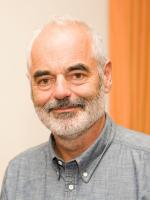
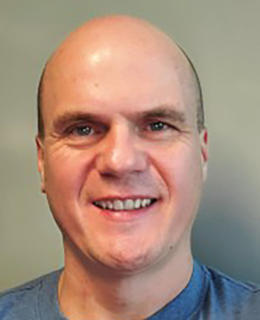
David Spiegelhalter is Professor of the Public Understanding of Risk at the University of Cambridge's Faculty of Mathematics. His research focuses on Bayesian statistics, public communication of uncertainty, biostatistics, and performance assessment in healthcare. He has contributed extensively to risk perception studies, particularly during the COVID-19 pandemic, and develops tools for statistical communication. Spiegelhalter's work bridges technical statistics with public understanding, emphasizing transparent communication of scientific uncertainty. His research interests include: Developing frameworks for trust in scientific advocacy Quantifying pandemic risks and public responses Creating accessible statistical tools for healthcare decisions His publications show consistent focus on: Public health communication strategies Philosophical foundations of probability Epidemiological modeling with recent emphasis on COVID-19 data interpretation.
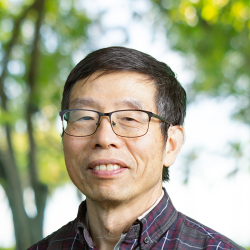
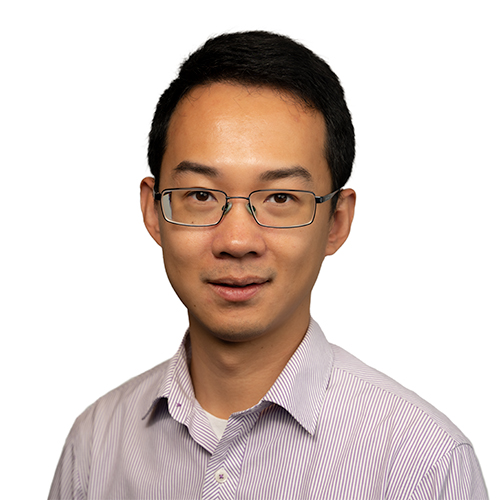
Professor Jiahua Chen is a faculty member in the Department of Statistics at the University of British Columbia (Vancouver Campus), holding the rank of Professor since 2001. He is a member of the Royal Society of Canada (2022) and has held a Canada Research Chair (Tier I) from 2007-2020. His research focuses on finite mixture models, density ratio modeling, variable selection, empirical likelihood, survey sampling, asymptotic theory, and experimental design. Education : - Ph.D. in Statistics, University of Wisconsin-Madison (1990) - M.Sc. in Systems Science, Academia Sinica, China (1985) - B.Sc. in Mathematics/Physics, University of Science and Technology of China (1982) Key Awards : - Gold Medal, Statistical Society of Canada (2014) - CRM-SSC Prize (2005) - Fellowships: ASA (2009), IMS (2005) Professional Contributions : - Editorships in journals like Canadian Journal of Statistics and Statistical Science - Leadership roles in statistical societies (e.g., President, International Chinese Statistical Association, 2005-2006) Software : - Developer of the MixtureInf2.0 R package for finite mixture model analysis.
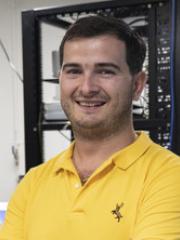
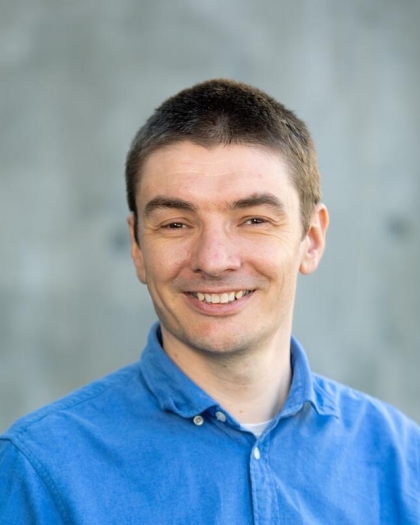
Dr Mickael Mounaix is a Research Fellow at the School of Electrical Engineering and Computer Science, University of Queensland. His research focuses on controlling the spatial and temporal properties of light through complex disordered materials (e.g., multimode fibers, biological tissues). He leads projects on optical time reversal, spatiotemporal beam shaping, and nonlinear light propagation. Key achievements include demonstrating time-reversed optical waves (Nature Communications, 2020) and controlling light delivery in multimode fibers (Nature Communications, 2019). His work has been featured in Phys.org and highlighted in international conferences like CLEO and ECOC. Education background: Ph.D. in Physics (university unspecified). Collaborations include Nokia Bell Labs, Crawford Hill Labs, and international institutions. His lab employs spatial light modulators and advanced software techniques for light manipulation. A fully funded Ph.D. project is currently available. Research interests span photonics applications in biomedical imaging and telecommunications, with a focus on overcoming scattering limitations in complex media. Recent innovations include programmable spatiotemporal exotic beams (2025) and high-dimensional light tomography (2023). His work bridges theoretical optics with experimental photonics, addressing challenges in light delivery and control. Media and outreach: UQ News press releases, YouTube abstracts, and pedagogical conference presentations (e.g., 75-minute CLEO 2020 talk). No explicit awards listed, but publications in top-tier journals highlight his contributions. Advising: No listed students yet. Grants: Not explicitly detailed in provided texts. Lab/teams: Focus on transmission matrix methods, spatiotemporal engineering, and optical time reversal systems. Ongoing projects include developing optical time reversers and analyzing multimode fiber characteristics without coherence (Referenceless 2023 work).
Noah Simon is an Associate Professor in the Department of Biostatistics at the University of Washington School of Public Health. His research focuses on high-dimensional statistical methods, machine learning, and their applications in biomedicine. He develops computational tools for genomic and clinical data analysis, including penalized regression techniques and adaptive clinical trial designs. Education: B.A. Mathematics, Pomona College (2008) Ph.D. Statistics, Stanford University (2013), advised by Robert Tibshirani Research Interests: Dr. Simon specializes in high-dimensional estimation, algorithm optimization, and clinical trial methodology. His work addresses challenges in biomarker discovery, imaging-based diagnostics, and genomic data analysis. Key areas include sparse-group lasso regularization, adaptive enrichment designs for personalized medicine, and scalable computational methods for big data. Grants & Funding: NIH Director's Early Independence Award ($250k/year, 2014–2019) Amazon and Google Cloud Computing Grants for biomarker research Awards: Forbes 30 Under 30 in Science (2015) NSF Graduate Research Fellowship Honorable Mention (2010) Weiland Fellowship (2011–2013) Advising: He mentors PhD and MS students in biostatistical methodology and data science, with current advisees including Jean Feng, Brayan Ortiz, and Jeremy Roth. Notable collaborations include work on neural activity detection via calcium imaging (SCALPEL) and nonparametric variable importance assessment using neural networks. Lab & Affiliations: Based at the Hans Rosling Center for Population Health, his group develops open-source software (e.g., sgl , standGL ) and contributes to biomedical data science initiatives at UW.
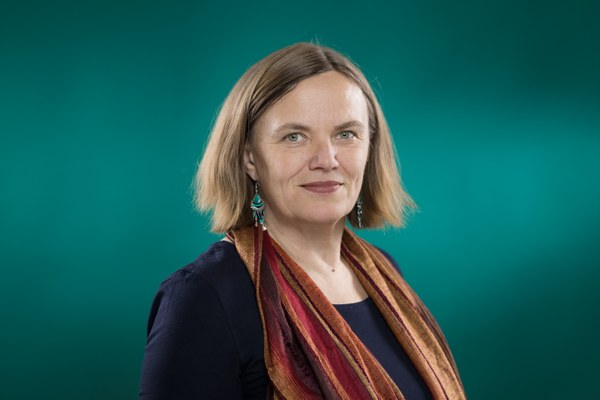
Natasha Fernandes is a Senior Lecturer in the School of Computing at Macquarie University. She holds a PhD in Computing from Macquarie University and École Polytechnique (France), and an undergraduate degree in Pure Mathematics and Computer Science from the University of Sydney. Her roles include involvement in the Data Horizons Research Centre and Future Communications Research Centre, alongside professional casual appointments in academic computing. Her research focuses on the mathematical foundations of data privacy, particularly differential privacy and its applications in natural language processing and machine learning. She develops privacy-preserving systems and tools using quantitative information flow techniques rooted in information theory. Key areas include privacy analyses for financial systems (e.g., Open Banking), API privacy, and optimizing utility in privacy pipelines. Fernandes has led or contributed to five research projects, including work on privacy analyses for financial transaction protocols and UAV-based machine learning systems. She received the 2021 John Makpeace Bennett Award for her doctoral research on differential privacy in metric spaces. Her academic journey combines industry experience as a backend software engineer with rigorous academic contributions, spanning over 21 peer-reviewed publications and collaborations across cybersecurity and privacy engineering domains.
Andrea Walther is a Professor of Mathematical Optimization at the Humboldt University of Berlin, holding a position within the Faculty of Mathematics and Natural Sciences. She leads the Mathematical Optimization research group at the Institute of Mathematics, focusing on algorithmic differentiation, nonlinear optimization, and applied mathematics. Her academic journey includes a Diploma in Business Mathematics (1996, University of Bayreuth), a PhD (1999, TU Dresden), and habilitation (2008, TU Dresden). She has held roles such as Junior Professor at TU Dresden (2007–2008) and Professor at the University of Paderborn (2009–2019) before joining Humboldt in 2019 as a MATH+ Professor. Education : 1991–1996: Studies in Business Mathematics, University of Bayreuth 1996: Diploma in Business Mathematics, University of Bayreuth 1999: PhD in Mathematics, TU Dresden 2008: Habilitation, TU Dresden Her research interests center on optimization methods, particularly algorithmic differentiation (e.g., ADOL-C software), nonsmooth optimization, and applications in engineering and machine learning. She leads initiatives like the Cluster of Excellence MATH+ and contributes to projects such as the Transregio 154. Key Projects: Co-PI of DFG Project 'Mixed-integer non-smooth optimization for gas market problems' (2020–2022) Principal Investigator in MATH+ Projects (EF3-7, AA2-7) Co-developer of ADOL-C, a widely used tool for algorithmic differentiation Notable awards include being a SIAM Fellow. Her work bridges theoretical advancements and practical applications, with contributions to energy sector optimization, inverse problems, and computational frameworks for solving complex systems.
Johan Jeuring is Professor of Software Technology for Learning and Teaching at Utrecht University's Department of Information and Computing Sciences. His research focuses on intelligent tutoring systems, computational thinking education, and game-based learning environments. Research Interests: Prof. Jeuring's work explores computational thinking pedagogy, automated feedback systems, and educational game design. His research bridges artificial intelligence with educational psychology to develop effective learning tools. Publications: Recent publications focus on augmented reality learning environments, programming education methodologies, automated assessment systems, and AI applications in education. His work combines empirical studies of learning behaviors with technological innovations in educational tools.
Elena Troubitsyna is a Professor of Computer Science with specialization in Software Engineering at KTH Royal Institute of Technology. Her research focuses on developing dependable, autonomous systems that ensure safety and reliability, particularly in complex environments like self-driving cars and drones. She employs rigorous mathematical modeling and verification techniques to address system complexity and real-time adaptability challenges. Her work emphasizes the co-engineering of safety and security in cyber-physical systems, integrating formal methods such as Event-B modeling with AI-driven solutions. Key research areas include cybersecurity for embedded systems, formal analysis of safety-security interactions, and resilient multi-agent systems. Elena has contributed to advancing methods for autonomous system navigation, fault tolerance, and privacy-preserving microservices architectures. Elena has organized international workshops like SENSEI (Safety-Security Interaction) and published extensively on topics such as model-driven engineering, formal verification of critical systems, and optimizing scheduling for distributed computing. Her research bridges theoretical foundations with practical applications, aiming to enhance societal trust in autonomous technologies.
Johan Jansson is an Associate Professor in Scientific Computing at KTH Royal Institute of Technology and BCAM (Basque Center for Applied Mathematics). He leads research in predictive Direct FEM Simulation (DFS) for aerodynamics and multiphase flows, and co-founded Icarus Digital Math as CEO. His work includes the FEniCS open-source finite element software project and MOOC-HPFEM educational initiatives. He holds roles as Director of the Center for Digital Math and collaborates internationally in computational science. Research focuses on high-performance computing (HPC), fluid-structure interaction (FSI), biomedical modeling, and renewable energy systems. Notable contributions include adaptive FEM frameworks for turbulent flow, vocal fold simulations, and wave energy converter modeling. His work bridges academic research with industrial applications, leveraging FEniCS-HPC and Unicorn solvers. Key achievements include election to the IVA Royal Swedish Academy of Sciences 100-list and securing the Severo Ochoa Center of Excellence Award. He has pioneered open-source tools like SimTek and contributed to major projects like the Salter Sink and vocal production modeling. Teaching responsibilities include courses on database technology, computational fluid mechanics, and research methodology. He actively engages in large-scale simulation projects involving marine energy, cardiac ablation protocols, and aerodynamic optimization.
Pavol Federl is an Assistant Professor (Teaching) in the Department of Computer Science at the University of Calgary, Faculty of Science. His research focuses on computational modeling in biological systems, particularly plant growth, fracture mechanics, and interdisciplinary applications of L-systems. He holds a PhD (2002), MSc (1997), and BSc (1995) in Computer Science from the University of Calgary. Research Interests Biological modeling using L-systems Fracture formation in growing materials Computer graphics and interactive simulation environments Plant growth dynamics and pattern formation His work integrates mathematical modeling with computational techniques to study natural phenomena, such as leaf venation patterns and tree bark fracture. Recent research highlights include: Developmental models of multicellular structures Finite element analysis of fracture dynamics Interactive design tools for bonsai tree modeling Grants and Advising No specific grants or advisees are listed in the provided text. His teaching includes courses such as CPSC 457: Principles of Operating Systems. Professional Contributions He has contributed to software development in virtual laboratories and license plate recognition systems, demonstrating expertise in both theoretical and applied computing.
Hantao Cui is an Associate Professor in the Department of Electrical and Computer Engineering at NC State University. He previously served as an Assistant Professor at Oklahoma State University (2021–2024) and earned his Ph.D. in Electrical Engineering from the University of Tennessee, Knoxville (2018). His research focuses on applying mathematical and computational methods to model, simulate, and analyze modern power systems, particularly those dominated by renewable energy sources and inverter-based technologies. He is the author of the ANDES simulation tool and a recipient of the NSF CAREER Award (2024) and the 2020 R&D 100 Award for his work on the CURENT Large-Scale Testbed. His expertise spans power electronics, grid stability, and cyber-physical system integration. Education: Ph.D. in Electrical Engineering, University of Tennessee, Knoxville (2018) M.S. in Electrical Engineering, Southeast University, China (2013) B.S. in Electrical Engineering, Southeast University, China (2011) Research Interests: Large-scale power system simulation and modeling Inverter-based resource control and grid stability Renewable energy integration and optimization Cyber-physical system testbed development Open-source software tools for power systems analysis Key Contributions: Developed ANDES, an open-source framework for power systems modeling Advanced virtual inertia scheduling (VIS) techniques for microgrids Pioneered data-driven adaptive control strategies for grid-forming inverters Awards & Honors: NSF CAREER Award (2024) R&D 100 Award (2020) Best Paper Award at IEEE PES General Meeting (2022) Senior Member of IEEE (2020) Grants & Labs: Principal Investigator for NSF-funded research on inverter-based grid stability Core contributor to the CURENT Large-Scale Testbed project
Eirik Keilegavlen is a Researcher at the Department of Mathematics, University of Bergen. His primary research focuses on developing mathematical models, numerical methods, and simulation tools for multiphysics processes in porous media, particularly in geothermal energy, CO 2 storage, and subsurface energy systems. He leads the development of the open-source software PorePy, designed for simulating processes in fractured porous media. His work emphasizes coupled problems involving fluid flow, heat transfer, and mechanical deformation. Key research interests include: Mathematical modeling of coupled thermal-hydro-mechanical processes Numerical discretization methods for fractured media Development of open-source simulation tools Applications in geothermal energy extraction and carbon sequestration Recent publications highlight advancements in: Uncertainty quantification for CO 2 leakage Viscous fingering in fractured reservoirs Automated solver selection for multiphysics systems Collaborations involve interdisciplinary teams addressing challenges in geothermal reservoir stimulation, fault mechanics, and high-performance computing. His work bridges theoretical developments with practical applications in energy and environmental systems.
Carolina Ruiz is the Associate Dean of Arts and Sciences and Harold L. Jurist Dean’s Professor of Computer Science at Worcester Polytechnic Institute (WPI). She holds a PhD in Computer Science from the University of Maryland College Park (1996) and has been at WPI since 1997, progressing from Assistant Professor to Full Professor. Her research focuses on Machine Learning, Artificial Intelligence, and Data Mining applied to medicine, health, and education. Notable projects include developing AI-driven methods for sleep analysis, behavioral health interventions like the SlipBuddy app, and interdisciplinary programs in Bioinformatics and Neuroscience. She leads the Knowledge Discovery and Data Mining Research Group and serves on WPI’s Academic Planning Committee. Ruiz has advised over 35 graduate students, 150 undergraduates, and 12 high school researchers, emphasizing vertical integration of research teams. She co-led a $1.2M NSF grant (2017-2021) bridging Biology and Computer Science education through transdisciplinary curricula. Key service roles include Associate Department Head of Computer Science and governance committees at WPI. Education: PhD Computer Science, University of Maryland (1996) MS Computer Science, Universidad de Los Andes (1990) BS Computer Science & Mathematics, Universidad de Los Andes (1988-1989) Ruiz’s research spans medical AI applications (stroke prediction, sleep modeling), educational technology (computational biology curricula), and wearable sensor analytics. Her work has been featured in media including Medical News Today and NSF-funded initiatives. She emphasizes translational research bridging academia and real-world societal challenges.
Şule Elmalı is an Assistant Professor in the Department of Mathematics and Science Education at the Faculty of Education, Sakarya University. Her academic work is centered on improving science education through innovative pedagogical approaches, teacher training, and technology integration. She teaches a range of undergraduate and graduate courses related to science teaching, environmental education, and STEM applications. Her research interests include science education, STEM education, environmental education, educational technology, pre-service teacher training, reflective thinking, and laboratory applications in biology. She has conducted studies on ecological footprint awareness, outdoor education, Web 2.0 tools, mobile applications in biology labs, and the impact of STEM programs on teacher autonomy and entrepreneurship skills. Her work emphasizes conceptual understanding in early science education, such as children's ideas about floating and sinking, and lunar observation experiences among teacher candidates. Her recent publications (2021–2024) span international journals like the Journal of Biological Education and Hacettepe University Journal of Education , focusing on dissection methods, professional development for science teachers, and nature-based learning. These works reflect a trend toward technology-enhanced, experiential, and inquiry-based science education, with a strong focus on teacher development and student conceptual change. TÜBİTAK Publication Incentive Award She has supervised academic contributions through course instruction and research projects, including a professional development program for science teachers in science and art centers. Her work also includes collaborations on research projects related to STEM education, nature-based programs for gifted students, and science center initiatives. She is actively involved in research projects such as the development and evaluation of technology-based in-service training programs for science teachers at science and art centers. She has also contributed to book chapters, such as 'From Theory to Practice: Bringing Life into the Classroom,' and presented at numerous international conferences. Her work bridges theory and practice in science education, aiming to enhance teaching quality and student engagement.
Yasir Zaki is an Assistant Professor of Computer Science at New York University Abu Dhabi and a Global Network Assistant Professor at the Courant Institute of Mathematical Sciences, NYU. He leads the Communication Networks Lab, focusing on next-generation communication systems, performance optimization, and digital equity. University: New York University Abu Dhabi School: Courant Institute of Mathematical Sciences Department: Department of Computer Science Academic Rank: Assistant Professor Email: yz48@nyu.edu Dr. Zaki holds an MSc and PhD in Communication and Information Technology from the University of Bremen, graduating with honors. His research centers on communication and wireless networks, cellular systems, congestion control, and enhancing internet access in developing regions. His work bridges theory and real-world impact, especially in digital inclusion and AI's role in education. His recent publications span top venues like PNAS, IEEE TCSS, and ACM IMC, covering topics such as satellite network performance, digital inequality (Lite-Web), AI in education, and Big Tech's global influence. These works reveal a strong trend toward socially impactful computing, network measurement at scale, and algorithmic transparency. Big Tech Dominance Despite Global Mistrust Perception of AI in Education YouTube's Political Bias Lite-Web for Digital Equity Satellite Network Analysis His research has been recognized through high-profile media coverage in Nature and The National , and his PhD student Hazem Ibrahim received the MIT Technology Review Arabia’s Innovators Under 35 MENA 2023 award. This reflects the lab's excellence in computational social science and AI policy. Dr. Zaki mentors students in the Capstone and Research Seminar courses and actively advises PhD and research assistants. He has secured research funding through NYUAD and collaborative projects, enabling field deployments in 56 countries. His lab, the Communication Networks Lab, fosters interdisciplinary work, involving researchers from computer science, social sciences, and policy.