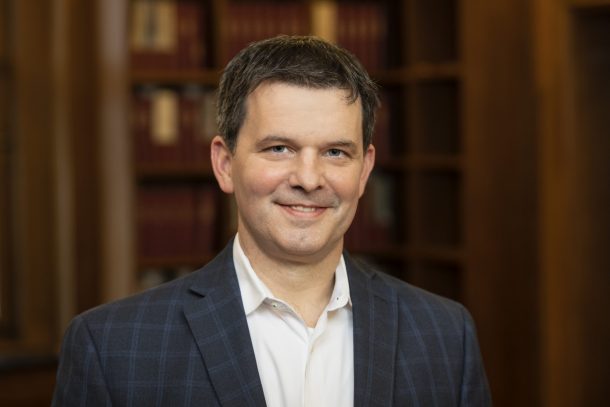
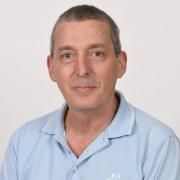
Prof. Peter Scholze is a leading mathematician at the University of Bonn and the Max Planck Institute for Mathematics (MPIM). He holds a professorship in the Mathematical Institute at the University of Bonn and is affiliated with MPIM as a principal investigator. His research focuses on arithmetic geometry, representation theory, and p-adic geometry, with notable contributions to perfectoid spaces, prismatic cohomology, and the geometrization of the local Langlands correspondence. Scholze has organized several advanced seminars (ARGOS) and taught courses on topics like condensed mathematics, p-adic geometry, and algebraic geometry. He collaborates widely with researchers such as Laurent Fargues and Bhargav Bhatt. His recent work includes groundbreaking papers on wild Betti sheaves, motivic geometrization of the local Langlands correspondence, and the Habiro ring of number fields. Scholze has pioneered the use of prismatic cohomology to unify p-adic Hodge theories and has developed foundational frameworks in derived algebraic geometry. His research also intersects with representation theory and topological cyclic homology. Affiliations: University of Bonn (Mathematical Institute), Max Planck Institute for Mathematics (MPIM) Research Groups: Arbeitsgruppe Arithmetische Geometrie und Darstellungstheorie Teaching: Recent courses include 'Selected Topics in Algebraic Geometry' and 'Six-Functor Formalisms'. His work frequently explores connections between algebraic geometry and number theory, with a focus on geometric approaches to arithmetic problems. Scholze is a key figure in modern arithmetic geometry, influencing both foundational theory and applied areas like the Langlands program.
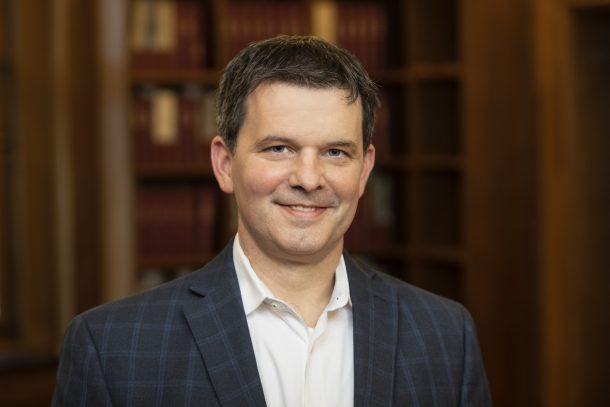
Jeffrey F. Brock is the Dean of the School of Engineering & Applied Science and the William S. Massey Professor of Mathematics at Yale University. He holds the Zhao and Ji Chair in Mathematics. His research focuses on low-dimensional geometry and topology, particularly hyperbolic geometry and its applications to data analysis. He completed his undergraduate studies at Yale and earned his Ph.D. from UC Berkeley. He held positions at Stanford, the University of Chicago, and Brown University, where he chaired the Mathematics Department from 2013 to 2017 and founded Brown’s Data Science Initiative in 2016. He joined Yale in 2018, serving as inaugural Dean of Science in the Faculty of Arts and Sciences until assuming his current role in 2022. He is a Guggenheim Fellow and Fellow of the American Mathematical Society. His research spans hyperbolic 3-manifolds, Teichmüller dynamics, and geometric methods in data science. Notable contributions include work on Thurston’s geometrization program, classification of hyperbolic manifolds, and applications of geometric topology to complex datasets. He co-authored foundational papers on ending laminations, Weil-Petersson geometry, and renormalized volume. His recent work bridges pure mathematics with applied challenges, such as algorithmic detection of medical imaging patterns. Awarded the Guggenheim Fellowship (2008) and AMS Fellow (2017), Brock has also led interdisciplinary initiatives at Brown and Yale. His administrative roles include overseeing engineering, natural sciences, and data science programs. Beyond academia, he co-founded the Vijay Iyer Trio, showcasing his passion for music performance and creativity.
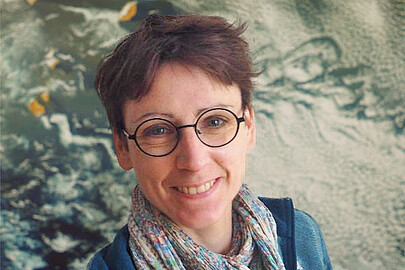
Angela Capel Cuevas is an Assistant Professor of Quantum Information Theory/Theoretical Quantum Computation at the University of Cambridge's Department of Applied Mathematics and Theoretical Physics (DAMTP). Previously, she held a Junior Professorship at Eberhard Karls Universität Tübingen (2021-2024) and was an MCQST Distinguished PostDoc at TU München (2020-2021). Her research focuses on the intersection of quantum information theory and quantum many-body systems, particularly studying thermalization dynamics via quantum functional inequalities. She is a recipient of the Simons Emmy Noether Fellowship and Forbes 30 Under 30 (Spain 2023). Education: PhD in Mathematics, Universidad Autónoma de Madrid/ICMAT (2015-2019) Master in Computational Engineering and Mathematics, URV/UOC (2016-2018) Bachelor in Mathematics, Universidad de Granada (2009-2014) Research: Angela's work applies analytic and geometric tools to quantum systems, emphasizing decay of correlations in Gibbs states and quantum dissipative evolutions. Key topics include entropy inequalities, modified logarithmic Sobolev inequalities, and thermalization rates in spin chains. Her recent work bridges quantum functional analysis with practical implications for quantum computing and thermalization phenomena. Grants & Roles: PI of CRC TRR 352 'Mathematics of Many-Body Quantum Systems' (7M€) Co-PI of QuantERA project TouQan (1.25M€) Organized workshops at BIRS and Tübingen (2023-2024) Awards: Simons Emmy Noether Fellowship (2023) Forbes 30 Under 30 (2023) Vicent Caselles RSME-FBBVA Award (2022) Labs/Teams: Leads a group studying quantum dissipative systems and thermalization at DAMTP. Collaborates with institutions globally on quantum functional inequalities and Gibbs state properties.
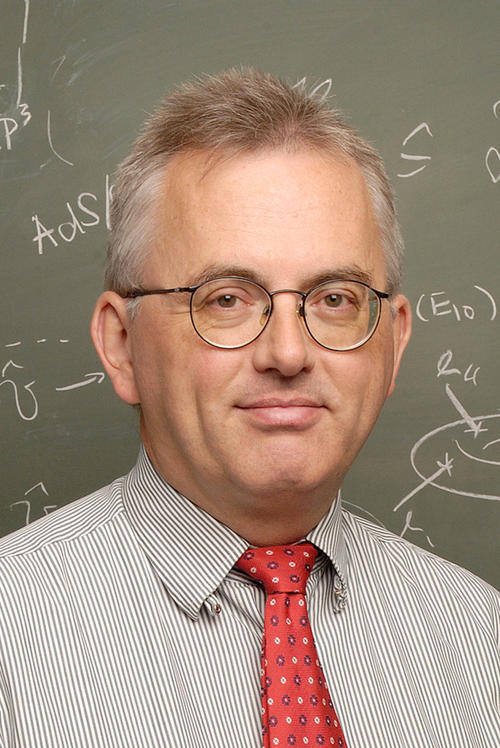
Daniel Louis Jafferis is a tenured professor of physics at Harvard University, renowned for his contributions to quantum gravity, supersymmetric quantum field theory, and string theory. His groundbreaking work includes the AdS-CFT correspondence for N=6 Chern-Simons theory and the formulation of the F-theorem in three-dimensional supersymmetric systems, as well as co-discovering traversable wormhole solutions equivalent to quantum teleportation protocols. Education: Bachelor's degree in Mathematics and Physics from Yale University (2001) PhD in Physics from Harvard University (2007), supervised by Cumrun Vafa Jafferis's research spans topological string theory, supersymmetric localization, and holography. His 2008 work with Aharony, Bergman, and Maldacena established foundational connections between M2-branes and AdS 4 ×S 7 gravity duals, while his 2016 work with Gao and Wall demonstrated wormholes without exotic matter. His 2012 New Horizons in Physics Prize recognized these insights into quantum information and gravity. Scientific Awards: Henry Primakoff Award (2012) New Horizons in Physics Prize (2019) Jafferis's recent publications focus on quantum teleportation, AdS-CFT correspondence, and supersymmetric field theories, with key themes including free energy minimization, entanglement entropy, and holographic dualities. His career includes postdoctoral research at Rutgers University (2007-2010) and temporary membership at the Institute for Advanced Study (2010-2011).
Prof. Dr. Dominik Schwarz is a faculty member at the Faculty of Physics , Bielefeld University. His research focuses on Cosmology and Particle Physics , particularly in the areas of Dark Energy , Dark Matter , Cosmological Inflation , and Large-Scale Structure Formation . He contributes to projects like the International LOFAR Telescope Consortium and the SFB-TRR 211 on strongly interacting matter. APART Fellow of Austrian Academy of Sciences Humboldt Fellow CERN Fellow His recent work explores the cosmic dipole anisotropy , axion density perturbations , and multi-wavelength cosmic web mapping . He also advances data science infrastructure through the PUNCH4NFDI consortium.
Bruce Allen is the Director of the Max Planck Institute for Gravitational Physics (Albert Einstein Institute) in Hannover, Germany, where he also heads the Observational Relativity and Cosmology department. He holds dual academic appointments as Honorary Professor of Physics at Leibniz Universität Hannover and Adjunct Professor of Physics at the University of Wisconsin-Milwaukee, USA. His career spans over three decades in gravitational physics research, with a leadership role in the LIGO Scientific Collaboration from 1997 to 2018. Dr. Allen's research focuses on gravitational wave detection and data analysis, early universe cosmology, de Sitter space, curved-space quantum field theory, cosmic strings, inflationary models of the early universe, and gravitational radiation emission by cosmic strings. His work extends to large-scale cluster computing and public distributed computing projects like Einstein@Home, which has led to significant discoveries in gravitational wave astronomy. His recent publications demonstrate expertise in pulsar timing arrays, Hellings-Downs correlation analysis, and optimization of computational methods for gravitational wave detection. Allen's scientific contributions have been recognized with numerous prestigious awards including the Richard A. Isaacson Award (2020), the Bruno Rossi Prize (2017), the Princess of Asturias Award (2017), and the Special Breakthrough Prize (2016), all shared with the LIGO team for groundbreaking gravitational wave discoveries. He is also an Elected Fellow of both the American Physical Society and the Institute of Physics, UK. As a research leader, Allen has secured approximately $10 million in research funding from the National Science Foundation (1987-2018) and has mentored numerous students and researchers in gravitational physics. His work on Einstein@Home has engaged the public in scientific discovery through distributed computing, leading to several important astrophysical findings including gamma-ray pulsar discoveries.
Professor Dejan Gajic is a mathematician specializing in mathematical physics and general relativity at Leipzig University's Faculty of Physics and Earth Sciences. He leads research on black hole dynamics, particularly extremal black holes, and was awarded a €1.5M ERC Starting Grant (2023) to study their mathematical properties. His work bridges partial differential equations and theoretical physics. Education: PhD in Mathematics from the University of Cambridge (201?), followed by research positions at Imperial College London, the University of Cambridge, and Radboud University. His research focuses on Einstein’s equations, black hole stability, and gravitational collapse. Research Interests: Mathematical theorems on extremal black holes’ dynamical properties, wave equations in curved spacetime, and asymptotic behavior of gravitational fields. Current projects include the ExBHGravRad initiative, exploring rapid-rotation black holes’ physical phenomena. Key Achievements: ERC Starting Grant (2023), selection from >2600 applicants. Plans include establishing a research group in Leipzig and enhancing the Center for Mathematical Physics (joint with Max Planck Institute for Mathematics in the Sciences). Labs/Teams: Leading the new black hole mathematics research group at Leipzig, collaborating with the Max Planck Institute. Aims to host international scholars and elevate Leipzig’s global profile in mathematical physics.
Hermann Nicolai is a Professor at the Max Planck Institute for Gravitational Physics (Albert Einstein Institute) in Potsdam-Golm, Germany. He holds honorary professorships at Humboldt Universität zu Berlin (since 1999) and Leibniz Universität Hannover (since 2005). His research focuses on theoretical physics, particularly symmetry principles, quantum gravity, and the unification of fundamental forces. Education: Studied physics and mathematics at TH Karlsruhe (now KIT), earned his PhD in 1978 from Universität Karlsruhe. He completed his habilitation in theoretical physics at Heidelberg University in 1983. Professional roles include research at CERN (1979–1986), professorships at Universität Karlsruhe and Universität Hamburg, and since 1997, he has been a Director and Scientific Member at the Max Planck Institute for Gravitational Physics. Research interests emphasize reconciling quantum theory with general relativity, exploring symmetry concepts central to unification theories. His contributions have advanced understanding of supergravity and non-perturbative approaches to quantum gravity. No specific articles or grants are detailed in the text. He has delivered notable lectures, including the 14th Einstein Lecture Dahlem (2015), highlighting symmetry’s role in physics unification.
Ryomei Iwasa serves as Associate Professor in the Department of Mathematical Sciences at the University of Copenhagen, where his research bridges algebraic geometry and algebraic topology through advanced investigations in motivic homotopy theory and cohomology frameworks. His core research spans Algebraic Geometry, Algebraic Topology, Motivic Homotopy Theory, and K-Theory, with specialized focus on motivic spectra, algebraic cobordism, and the structural relationships between cohomology theories and moduli spaces. Recent publications demonstrate deep engagement with foundational aspects of Milnor excision, cdh descent, and modulus conditions in cycle theory. Analysis of his publication trajectory reveals a concentrated effort toward geometrization of cohomology theories, particularly evident in his 2025 Journal of the American Mathematical Society paper on Conner-Floyd isomorphisms and ongoing seminar work. Collaborations with leading mathematicians including Toni Annala, Marc Hoyois, and Wataru Kai underscore his position at the forefront of these mathematical frontiers. Scientific recognition includes: ERC MOSHOT grant He actively directs a weekly seminar on geometrization of cohomology theories, structuring comprehensive explorations from filtered modules to de Rham cohomology and prismatization. The seminar program—featuring presentations by Qingyuan Bai, Adrien Morin, and Florian Riedel—demonstrates his commitment to advancing collective understanding and mentoring emerging researchers in specialized mathematical domains.
Prof. Dr. Gerhard Huisken is a Professor at Eberhard Karls University of Tübingen and Director of the Mathematical Research Institute Oberwolfach. His research focuses on geometric analysis, differential geometry, and mathematical relativity, with significant contributions to mean curvature flow, Ricci flow, and geometric evolution equations. He has authored numerous influential papers on topics such as curvature flows, singularity analysis, and applications to general relativity. Key positions include leadership at Oberwolfach and teaching roles in advanced courses like 'Mathematical Relativity' and 'Introduction to Ricci Flow'. His work bridges geometric analysis with physics, contributing to the Poincaré conjecture through Ricci flow studies. Collaborations include projects with S. Brendle and C. Sinestrari on convex solutions and flow surgeries. Research highlights include the Riemannian Penrose inequality, inverse mean curvature flow, and long-term behavior of geometric flows. His academic contributions are documented in top journals like Inventiones mathematicae and Journal of Differential Geometry .
Jean Laurens is a Group Leader at the Ernst Strüngmann Institute (ESI) for Neuroscience in Cooperation with Max Planck Society in Frankfurt, Germany, where he heads the Laurens Lab. His research focuses on understanding how we sense our own motion and orient ourselves in three-dimensional space through neural mechanisms. His research interests include: Three-dimensional navigation and the neural basis of the 'brain compass' through head-direction cells in the limbic system Sensory signals for spatial navigation and how the brain integrates self-motion signals with visual landmarks Self-motion sensation and how the brain merges multiple sensory signals from the inner ear, vision, and proprioception with motor commands Laurens employs a multidisciplinary approach combining mathematical modeling and extracellular neuronal recordings in behaving Marmoset monkeys. His work spans computational neuroscience, systems neuroscience, and vestibular research, with significant contributions to understanding 3D orientation coding, gravity sensing in neural circuits, and spatial cognition. Recent publications demonstrate his focus on neural attractor networks, multisensory integration, and the representation of spatial orientation relative to gravity. His laboratory team includes researchers Francesca Lanzarini, Farzad Ziaie Nezhad, and Deepak Surendran, with Sogand Ghiasi managing laboratory operations. The Laurens Lab has been featured in media outlets including Süddeutsche Zeitung, with coverage of their work on balance mechanisms published in November 2020 and an article titled 'Du kannst mich Affe nennen' published on August 30, 2024.
Jeffrey F. Brock is the Zhao and Ji Professor of Mathematics and Dean of the School of Engineering & Applied Science at Yale University. He also serves as the inaugural Dean of Science in Yale's Faculty of Arts and Sciences. His research focuses on low-dimensional geometry and topology, particularly hyperbolic geometry and its applications to data science. He has held leadership roles including Chair of Brown University's Mathematics Department (2013–2017) and founding Director of Brown’s Data Science Initiative (2016). Roles: Dean of Engineering, Mathematics Professor Key Affiliations: Yale University, Brown University Education: B.S. from Yale University, Ph.D. in Mathematics from U.C. Berkeley (under Curtis McMullen). Postdoctoral positions at Stanford and University of Chicago. Extensive academic leadership experience, including administrative roles at both Brown and Yale. Research Interests: Hyperbolic 3-manifolds, Teichmüller theory, geometric structures in data science. Notable contributions include geometric classification of hyperbolic 3-manifolds (with R. Canary and Y. Minsky) and advancing topological methods for analyzing complex data sets. Publications: Over 40 peer-reviewed articles, including foundational work on the ending lamination conjecture and Weil-Petersson geometry. Recent work applies geometric methods to machine learning and medical imaging. Awards: John Simon Guggenheim Fellowship (2008), Fellow of the American Mathematical Society (2017). Labs/Initiatives: Brown’s Data Science Initiative, geometric and topological data analysis projects.
Dr. Gaël Kermarrec is a researcher at the Boundary Layer Meteorology Group , part of the Institute of Meteorology and Climatology within the Faculty of Mathematics and Physics at Leibniz University Hannover . His work focuses on atmospheric turbulence, GNSS applications, and remote sensing for environmental monitoring. Boundary layer meteorology Turbulence theory GNSS signal processing Terrestrial laser scanning Climate change impacts Geodetic time series analysis His research integrates advanced mathematical models like LR B-splines and Matérn covariance with large eddy simulations to study: Atmospheric turbulence effects on optical/GNSS signals Hydrospheric mass loading Deformation analysis of terrain/port infrastructure Climatic sea-level changes Machine learning for remote sensing The 15 most recent articles (2025-2023) demonstrate his focus on: GNSS-based turbulence detection AI-enhanced climate mapping Advanced surface approximation techniques Multi-sensor data fusion Stochastic modeling of geodetic observations Environmental impacts on optical measurements He has developed tools like the Klimascanner QGIS plugin for urban climate resilience and contributes to: Understanding atmospheric scale lengths Improving TLS/GNSS deformation monitoring Analyzing hydrospheric changes Wavefront modeling Ionospheric corrections
Daniel Braun is a Professor at the University of Tübingen, affiliated with the Faculty of Mathematics and Natural Sciences and the Department of Physics. He holds the Theoretical Physics (Braun Chair) and has been active in academia since October 1, 2013. Email: daniel.braun@uni-tuebingen.de Research Interests: His work bridges quantum optics, metrology, and gravitational physics. He explores quantum-enhanced measurement techniques, nonlinear optical phenomena in curved spacetime, and mechanical systems for fundamental tests of physics. Institutional Affiliation: Institute for Theoretical Physics (ITP) Recent Publications (2025-2024): Focus on quantum-limited interferometry, machine learning applications in quantum channels, gravitational effects in particle accelerators, and nonlinear soliton dynamics in relativistic settings. Scientific Awards: No specific awards mentioned in the provided data.
Prof. Ady Arie is a Professor of Electrical Engineering at Tel Aviv University, where he serves as the Head of the Tel Aviv University Center for Light-Matter Interaction and holds the Marko and Lucie Chaoul Chair in Nano-Photonics. He has been a faculty member at the Iby and Aladar Fleischman Faculty of Engineering since 1993, previously serving as Head of the School of Electrical Engineering (2013-2017) and Vice Dean of Research (2011-2013). His educational background includes: B.Sc. in Mathematics and Physics from Hebrew University of Jerusalem (1983) M.Sc. in Physics from Tel-Aviv University (1986) Ph.D. in Engineering from Tel-Aviv University (1992) Prof. Arie's research spans multiple frontiers of optics and photonics. His work in nonlinear optics focuses on advanced frequency conversion techniques and shaping of light parameters using nonlinear photonic crystals. In quantum optics , he develops quantum light sources based on spontaneous parametric down conversion and explores applications in quantum sensing and communication. His plasmonics research investigates manipulation of surface plasmon polaritons on metal surfaces. In electron optics , he studies electron-matter-light interactions and techniques for sculpting electron wave functions. His lab also explores hydrodynamics through quantum simulations with water waves, creating analogies to quantum mechanical phenomena. Analysis of Prof. Arie's recent publications (2023-2025) reveals a strong focus on quantum technologies, particularly in quantum light generation, quantum sensing, and quantum information processing. His work increasingly integrates concepts from nonlinear optics, electron microscopy, and quantum physics, with growing emphasis on practical applications in quantum communication and computation. The research shows sophisticated manipulation of light-matter interactions across multiple platforms including nonlinear photonic crystals, plasmonic structures, and electron beams. Prof. Arie has received significant recognition for his work: Kadar Foundation Award for Excellence in Research (2016) Fellow of the Optical Society of America Editorial roles including Topical Editor of Optics Letters (2008-2014) and Associate Editor of Optica (since 2018) Prof. Arie leads the Nonlinear Optics and Wave Propagation Laboratory at Tel Aviv University, where his team investigates diverse wave phenomena from light frequency conversion to electron beam manipulation. He has served as chair of the national steering committee of the Israeli Planning and Budgeting Committee on Quantum Science and Technology. His research has been supported by various grants enabling the development of novel optical technologies and quantum systems. While specific grant details aren't provided in the text, his extensive publication record and leadership positions suggest substantial research funding. Prof. Arie's laboratory focuses on the intersection of classical and quantum wave phenomena. The lab investigates light manipulation through nonlinear optical processes, plasmonic structures, and electron microscopy techniques. Current research directions include quantum light generation, electron-photon interactions, and hydrodynamic analogs to quantum systems. The lab appears well-equipped for advanced optical experimentation with capabilities spanning visible to infrared wavelengths, nonlinear crystal engineering, and electron beam characterization.