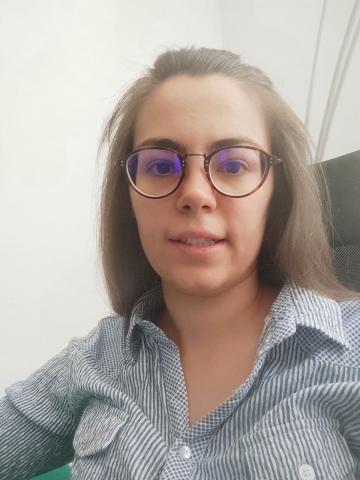
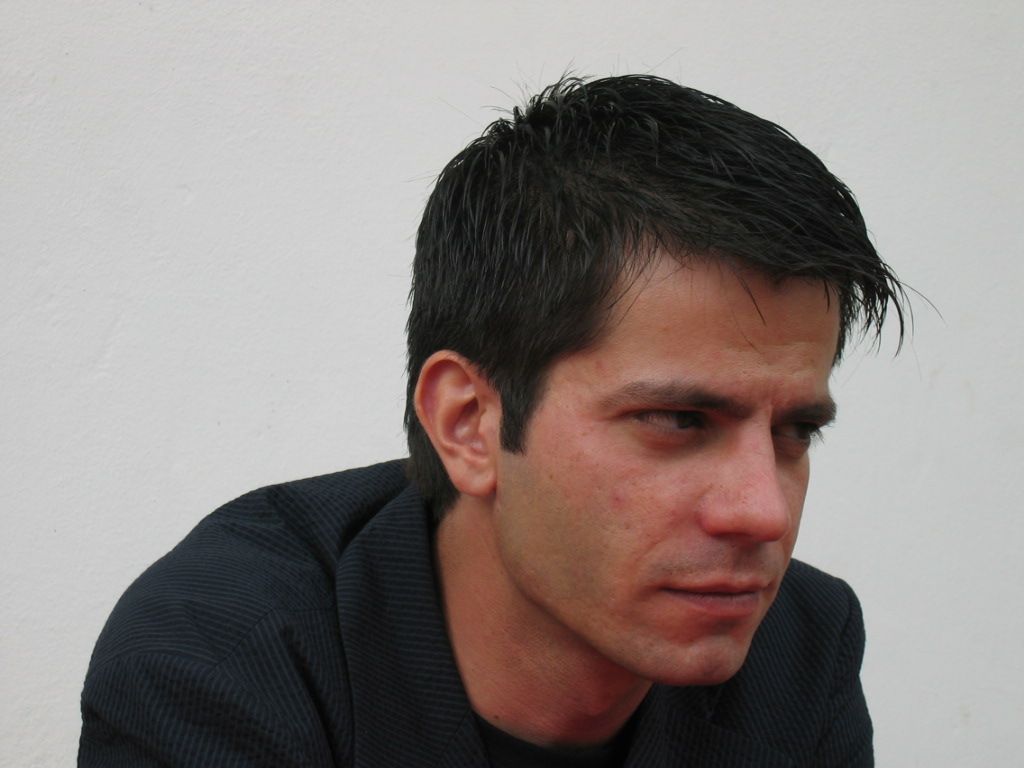
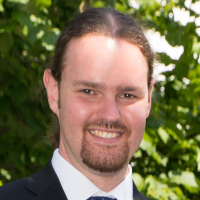
Rodica Toader is an Associate Professor at the Department of Life Sciences, University of Trieste. Her academic specialization is Mathematical Analysis, and she maintains an active role in academic governance. Professor Toader serves as a member of the Boards of Studies for the Science and Technology for Environment and Nature program (SM40 and SM40A), indicating her interdisciplinary contributions to environmental science education. Her position bridges mathematical methodology with life sciences applications, though specific research projects are not detailed in the available information. She can be contacted at rodica.toader@units.it or by telephone at 040 558 2620.
Carlos Esteban Budde is a Professor in both the Department of Economics and Management and the Department of Information Engineering and Computer Science at the University of Trento, Italy. His research focuses on rare event simulation, formal methods, and cybersecurity, with particular emphasis on developing automated algorithms for importance splitting techniques applicable to high-reliability systems and fault trees. Education: PhD in Computer Science (2012-2017) from National University of Córdoba, Argentina. Thesis: "Automation of Importance Splitting Techniques for Rare Event Simulation." MSc in Computer Science (2010-2012) from National University of Córdoba, Argentina. Final project: "Fully measurable non-determinism in continuous probabilistic processes." BSc in Computer Analyst (2007-2010) from National University of Córdoba, Argentina. Professor Budde's research centers on rare event simulation and formal methods for analyzing stochastic systems. His work develops theoretical frameworks for automated importance splitting algorithms that can handle general stochastic models beyond Markovian assumptions. He implements these techniques in practical tools like FIG (Finite Improbability Generator) for reliability analysis of high-criticality systems, with applications spanning cybersecurity, infrastructure maintenance, and safety-critical systems. His interdisciplinary approach bridges theoretical computer science with practical engineering challenges in system reliability. His recent publications demonstrate a strong focus on quantitative security analysis using attack and fault trees, with increasing integration of machine learning techniques for predictive maintenance. Budde has made significant contributions to rare event simulation methods applicable to non-Markovian systems, extending formal verification techniques to hybrid systems where traditional model checking approaches fail. His work consistently emphasizes practical implementation and empirical validation through diverse case studies. Scientific Awards: MSCA Postdoctoral Fellowship (2022) for "Projection of Security Vulnerabilities caused by Exploits in Dependencies" Best short-paper award at QEST 2020 for "The Dynamic Fault Tree Rare Event Simulator" Best MSc grade point average award from National University of Córdoba (2012) Flag bearer of the Faculty of Mathematics, Astronomy, Physics, and Computer Science (2011) Professor Budde has supervised numerous MSc and BSc theses at University of Twente and National University of Córdoba, with students working on topics including Bayesian network applications, predictive maintenance, fault tree analysis, and statistical model checking. His research is supported by multiple international projects including CS4E (Cyber Security for Europe, H2020), SEQUOIA (Smart maintenance optimization), and SUCCESS (SecUre aCCESSibility for IoT). As an active member of the research community, Budde serves on program committees for major conferences including TACAS, QEST, and CSF, and has organized workshops such as PM 2021. His work bridges theoretical computer science with practical applications in system reliability and cybersecurity.
Stefano Siboni serves as an Associate Professor within the Department of Civil, Environmental and Mechanical Engineering at the University of Trento. His academic role encompasses teaching fundamental courses in rational mechanics and linear algebra for bachelor's programs in Environmental and Territory Engineering and Civil Engineering, with research bridging mathematical physics and engineering applications. His research profile spans Theoretical Mechanics, Rational Mechanics, and Mathematical Physics, with significant contributions to Dynamic Systems modeling and Intelligent Structures. He applies advanced mathematical frameworks to Materials Science phenomena including Biomaterials, Porous Materials, and Hysteresis, while investigating surface interactions through Wettability, Surface Chemistry, and Physical Chemistry principles. The inclusion of Neolithic studies in his skillset reflects an unconventional interdisciplinary approach to material behavior analysis.
Claudio Agostinelli is a Full Professor at the Department of Mathematics, University of Trento. He teaches Advanced Statistical Methods Probability and Statistics Statistics of Stochastic Processes across various degree programs including Mathematics (LM), Computer Science (L), and Data Science (LM). His research focuses on statistical methodologies for data analysis, including Robust Statistics Computational Statistics Environmental Statistics Statistical Learning Multivariate Analysis Monte Carlo Methods Optimization Techniques
Stefano Berlato is a Tutor at the Department of Mathematics, University of Trento. He is actively involved in teaching cryptographic methods and advanced programming. Department: Mathematics Teaching Focus: Advanced Programming of Cryptographic Methods His research interests span cryptography, mathematics, and computer science, with a focus on secure programming techniques.
Michela Quadrini is an Assistant Professor at the University of Camerino with expertise spanning Bioinformatics , Computational Biology , and Graph Neural Networks . Her academic work focuses on RNA structure analysis, human activity recognition, and formal methods for collective adaptive systems. Research Interests include: RNA pseudoknots comparison and classification Machine learning applications in biomedical signal processing Spatial logics for complex system modeling Protein-protein interaction site prediction Ontology-based frameworks for activity recognition Publications demonstrate methodological innovation across: RNA structure alignment and translation tools (TARNAS) Graph neural network programming languages (μG) Stress detection from wearable sensor data Formal verification of collective systems Immunoinformatics feature engineering Technical Expertise combines computational biology with advanced machine learning techniques, evidenced by contributions to: Topological data analysis for RNA structures Convolutional neural network architectures Semantic ontologies in mechatronic systems Integral equation numerical methods
Edoardo Fadda is a Fixed-term tenure-track Assistant Professor at the Department of Mathematical Sciences (DISMA), Politecnico di Torino . He serves as a member of the College of Mathematical Engineering and College of Electronic, Telecommunications and Physics Engineering . Specializes in Operations Research and Mathematical Programming Active in stochastic optimization , reinforcement learning , and control applications Teaching roles include Optimization Methods for Control Applications and Stochastic Programming courses His research spans supply chain optimization , logistics , and AI-integrated decision systems , focusing on uncertainty modeling and multi-stage stochastic programming. He leads the Development of Decision Support Systems and the SUPERSONIC project for ecological logistics, alongside commercial consulting for RIDIX SPA through Fondimpresa contracts. Notable collaborations include Paolo Brandimarte and Francesca Maggioni . Edoardo supervises PhD candidates Alessia De Crescenzo (39th cycle) and Lorenzo Mazza (40th cycle). His publications emphasize stochastic customer behavior , perishable product policies , and kernel-based system identification , with applications in aerospace, smart cities, and industrial manufacturing.
Giulia Mesiano is a Fixed-term Assistant Professor at the Department of Applied Science and Technology (DISAT) , Politecnico di Torino . She serves as a course collaborator for Physics I in the College of Electronic, Telecommunications, and Physics Engineering and holds an invited membership in the College of Mathematical Engineering . Her research focuses on Biochemistry and Cancer Immunotherapy , with a particular emphasis on bioprinting technologies and tumor microenvironment modulation. Research Institute : Institute of Fundamental Physics and Materials for Nanotechnology (DISAT) Her recent work explores the multifunctional applications of ultrasound in 3D tissue models and the role of immune effectors in adoptive immunotherapy. Publications span topics including colorectal cancer vascular normalization , cancer stem cell immunotherapy , and MHC-unrestricted immune effectors . She supervises PhD student Giorgia Savino in the Chemical Engineering program.
Giovanni Noselli is an Associate Professor at SISSA - International School for Advanced Studies in Trieste, Italy, specializing in Solid and Structural Mechanics. He leads experimental and theoretical research at the SAMBA Lab , focusing on: Biological motility at micro-scale Structural and material instabilities Fracture mechanics of soft active materials Bio-inspired mechanical systems Additive manufacturing applications Research trends from his publications show interdisciplinary focus combining mechanics, biology, and materials science, with emphasis on: Flutter instability in soft/hard materials Hydrogel and gel-based systems Electro-mechanical actuation Nutation in plant systems Micro-swimming and crawling mechanisms Metamaterial design Scientific awards : Outstanding Ph.D. Thesis (2011, University of Trento) AIMETA Junior Prize in Structural Mechanics (2015) Key grants include: PRO3 Program (2022-2024, €65k) - Swarm intelligence in organism collectives PRIN DISCOVER (2023-2025, €75k) - Bioinspired actuator design GNFM Fellowship (2016, €4.5k) - Soft active material instabilities NOFYSAS Fellowship (2012-2016, €40k) - Biomimetic micro-robots
Fabio Guido Mario Salassa serves as an Associate Professor in the Department of Management and Production Engineering (DIGEP) at the Polytechnic University of Turin. He is a member of the Interdepartmental Center Ec-L - Energy Center Lab and actively participates in the College of Management and Production Engineering as well as the College of Computer, Film, and Mechatronics Engineering as an invited member. His research focuses on algorithm design, combinatorial optimization, exact algorithms, metaheuristics, and scheduling problems. His work bridges theoretical computer science with industrial applications, particularly in operations research and mathematical optimization. He specializes in developing optimization models for real-world industrial challenges including production scheduling, transportation logistics, and resource allocation. His recent publications demonstrate a strong focus on scheduling theory with applications to manufacturing systems, parallel machine environments, and workforce management. The research shows consistent contributions to solving complex optimization problems through innovative algorithmic approaches and mathematical formulations. Professor Salassa has supervised PhD student Elena Rener, whose thesis focused on Single Machine Rescheduling for New Orders. He has secured multiple commercial research contracts with companies including Protea S.r.l. and Sandeza S.r.l., focusing on optimization algorithms for waste calculation, production scheduling, and transportation problems. He teaches Operations Research and Optimization for Problem Solving courses across multiple academic programs including Management Engineering and Computer Science Engineering. His teaching spans from Bachelor to PhD levels, with recent courses scheduled through the 2025/2026 academic year.
Rosario Scatamacchia serves as an Associate Professor in the Department of Management and Production Engineering (DIGEP) at the Polytechnic University of Turin, where he is also a member of the Interdepartmental Center Ec-L - Energy Center Lab. His academic profile includes teaching courses such as Operations Research and Graphs and Combinatorial Optimization across undergraduate, Master's, and PhD programs in Management Engineering, Data Science, and related fields. Contact details include email rosario.scatamacchia@polito.it and phone +39 0110907261. His research centers on Operations Research with core expertise in: Combinatorial Optimization and Exact Algorithms Game Theory and Algorithmic Game Theory Discrete Mathematics applications Knapsack and NP-hard problem solving Work spans industrial and societal contexts including transportation logistics, network security, and environmental management systems. Recent publications (2021-2025) reveal consistent innovation in exact solution methods for combinatorial problems: Transportation and baggage handling optimization Critical infrastructure network analysis Game-theoretic equilibrium computation Wildfire prevention scheduling under constraints This body of work demonstrates strong interdisciplinary collaboration bridging theoretical computer science and practical engineering applications. No scientific awards were documented in the source materials. While teaching responsibilities are extensively detailed, the provided information does not specify graduate student advising relationships or research grant acquisitions. Professor Scatamacchia maintains active involvement in the Interdepartmental Center Ec-L - Energy Center Lab, contributing optimization expertise to energy systems research initiatives at the Polytechnic University of Turin.
Alessandra Bertapelle serves as Associate Professor and Head of the Department of Mathematics at the University of Padua. Her academic appointment resides within the Department of Mathematics, where she leads both research and administrative functions. Her research program centers on advanced mathematical frameworks: Arithmetic Geometry: Investigating Diophantine equations and schemes over number rings using geometric methods Cohomological Theories: Applying étale, motivic, and crystalline cohomology to arithmetic problems These specialties represent cutting-edge intersections of algebraic geometry and number theory, with implications for Langlands program components and rational point studies. Her work maintains strong connections to Grothendieck's foundational theories while addressing contemporary challenges in motivic integration.
Daniela Pietrobon is a Full Professor of Physiology at the Department of Biomedical Sciences, University of Padova. Her research focuses on neuronal calcium channels, calcium channelopathies of the central nervous system, and migraine pathophysiology. Education: Laurea in Chemistry (Magna cum Laude, 1979) from University of Padova. Research Interests: Multimodal neuroimaging, computational neuroscience, and biophysics of calcium channels. She investigates energy transduction in mitochondria and the role of ion channels in neurological disorders. Scientific Awards: Luigi Galvani Prize (1985) President of the Republic National Prize in Mathematical, Physical and Natural Sciences (2001) Leadership and Committees: Served on councils of the Italian Society of Pure and Applied Biophysics and IUPAB. Coordinated PhD programs in Molecular and Cellular Biology and Neurobiology at the University of Padova from 1996–2003 and 2005–2015, respectively.
Wolfgang Erb is an Associate Professor in Numerical Analysis at the Department of Mathematics “Tullio Levi-Civita”, University of Padua (Italy). He specializes in multivariate approximation and computational methods for inverse problems, with applications in biomedical imaging. Current Position: Associate Professor, University of Padua Previous Positions: Postdoctoral Fellow at University of Lübeck, Assistant Professor at University of Hawaii at Manoa Education: PhD in Mathematics, Technical University of Munich (2010) Research Interests: Wolfgang Erb's research focuses on mathematical models for signal processing, including: Lissajous curve-based approximation techniques Uncertainty principles applied to manifolds and graphs Kernel methods for learning on networks Fast reconstruction algorithms for inverse problems Applications in Magnetic Particle Imaging and biomedical imaging Recent Publications Trends: His work centers on numerical analysis and computational mathematics, particularly in polynomial interpolation frameworks and biomedical imaging applications. Facilities & Collaborations: Wolfgang engages with advanced university facilities including High Density EEG systems, MRI & PET scanners, and computational infrastructure at University of Padua. Teaching: He teaches “Mathematical Models and Numerical Methods for Big Data” in the Data Science master’s program.
Carla Bosia is an Associate Professor in the Department of Applied Science and Technology (DISAT) at Politecnico di Torino, where she conducts interdisciplinary research at the intersection of physics, biology, and mathematics. She serves as a course collaborator and instructor for Physics of Complex Systems and Physics II across multiple engineering programs, including Electronic, Telecommunications, Physics, Mechanical, Aerospace, and Automotive Engineering. Her research focuses on cell signaling, gene regulation, quantitative biology, and stochastic modeling , applying theoretical physics concepts to complex biological systems. Bosia's work explores how microRNAs regulate gene expression, how cells process information through signaling networks, and the physical principles underlying cellular decision-making processes. She combines mathematical modeling with experimental validation to understand phenomena like membrane trafficking, noise processing in biological systems, and the dynamics of competing endogenous RNA networks. Analysis of her recent publications (2019-2025) reveals a consistent focus on microRNA-mediated regulatory networks, membrane trafficking mechanisms, and mathematical modeling of biological processes. Her work demonstrates strong interdisciplinary collaboration across physics, biology, and computational science, often addressing fundamental questions in cellular regulation with quantitative approaches. Bosia actively supervises PhD students, including Elsi Ferro who completed research on 'Competition and band-pass filtering in biology' (2020-2024). She leads significant research projects including SIMBAD (2023-2027, EU-funded through MSCA) on statistical inference from multiscale biological data, and serves as Scientific Director for the vestibulomics project (2023-2025, PRIN-funded) focused on improving vestibulodynia diagnosis through omics approaches. Within the Institute of Condensed Matter Physics and Complex Systems (DISAT), she contributes to the Statistical Physics and Interdisciplinary Applications research team, where her work bridges theoretical physics with cutting-edge biological questions, contributing to both fundamental understanding and potential biomedical applications.